Verification of an Account for Services and Supplies to a Public Entity
Understanding this form
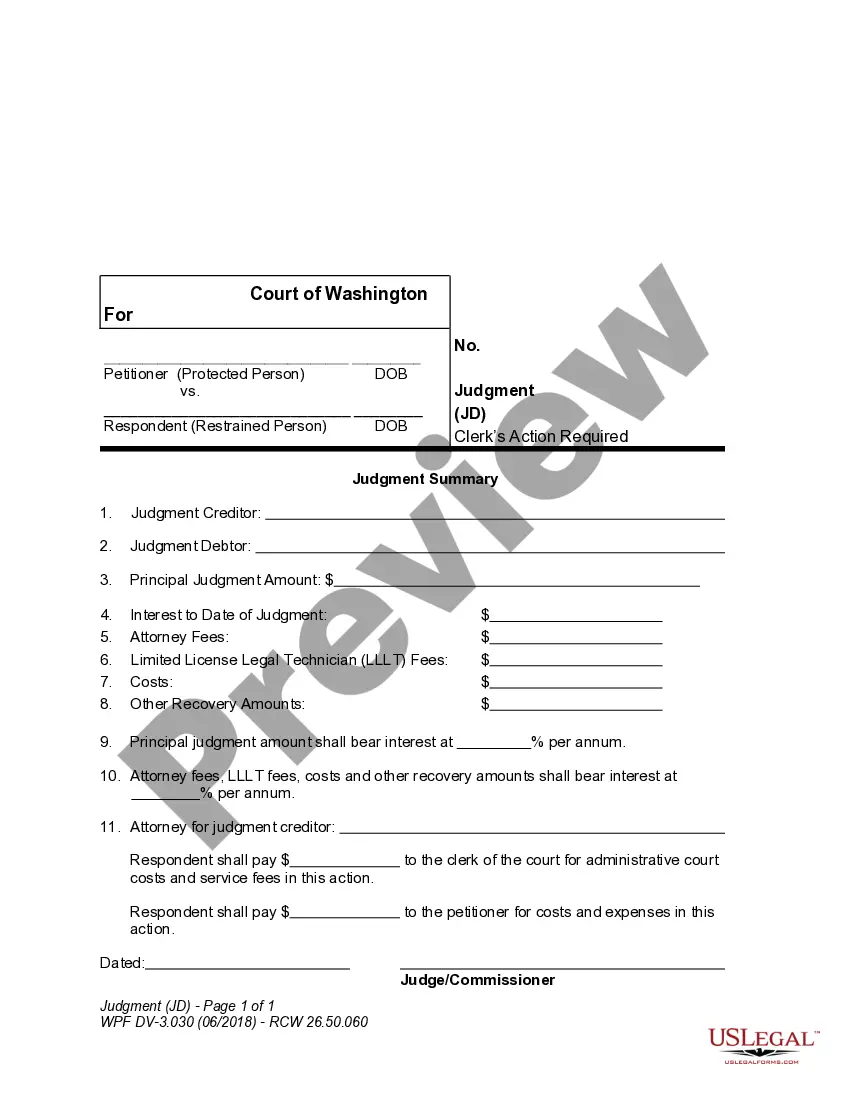
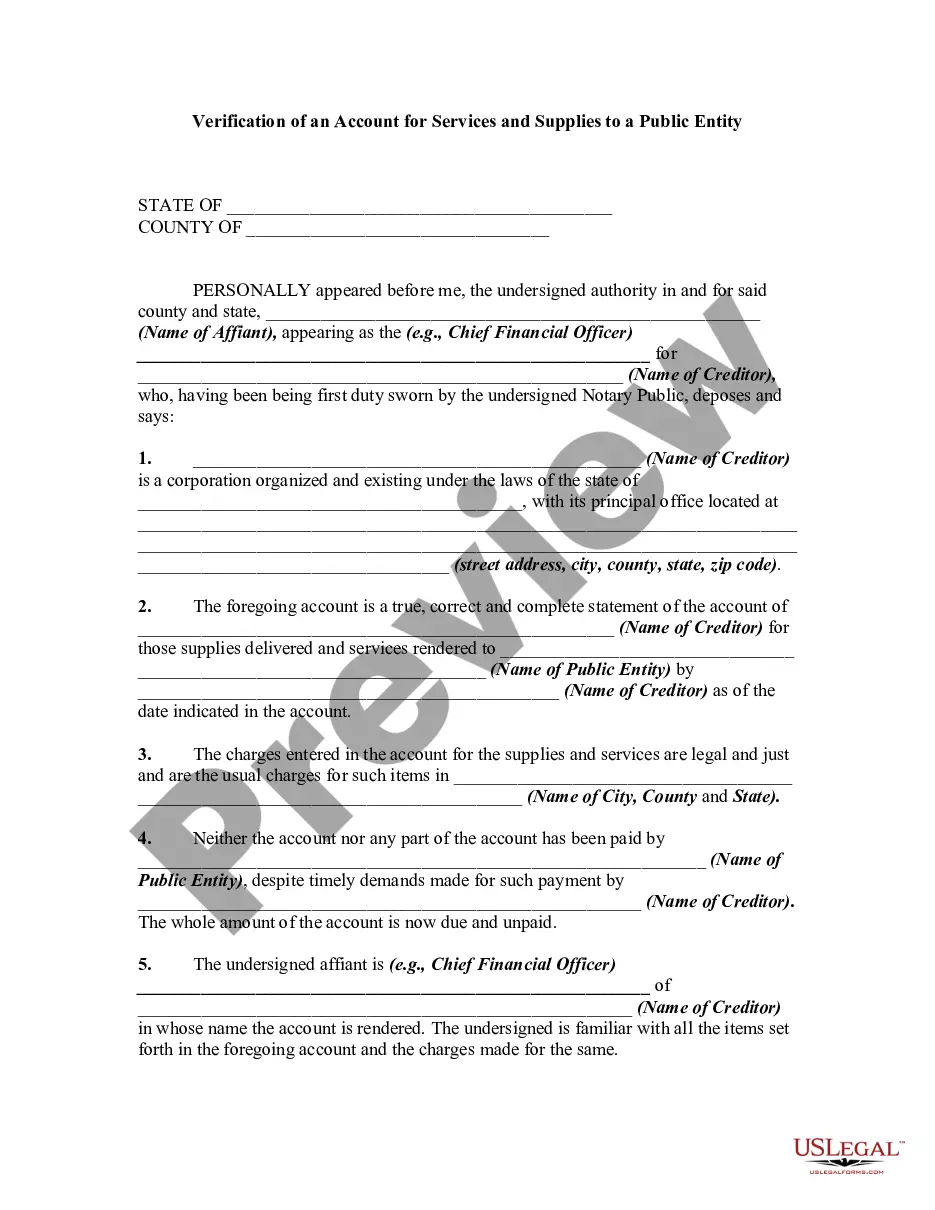
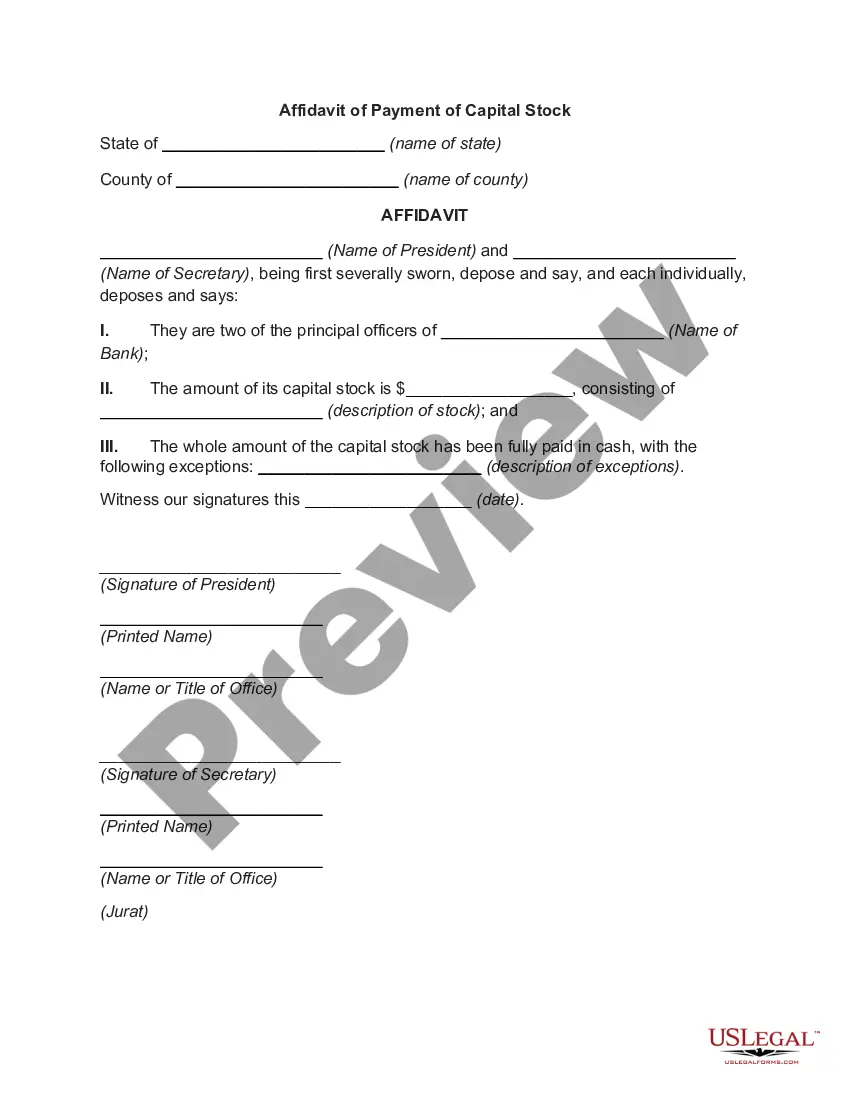
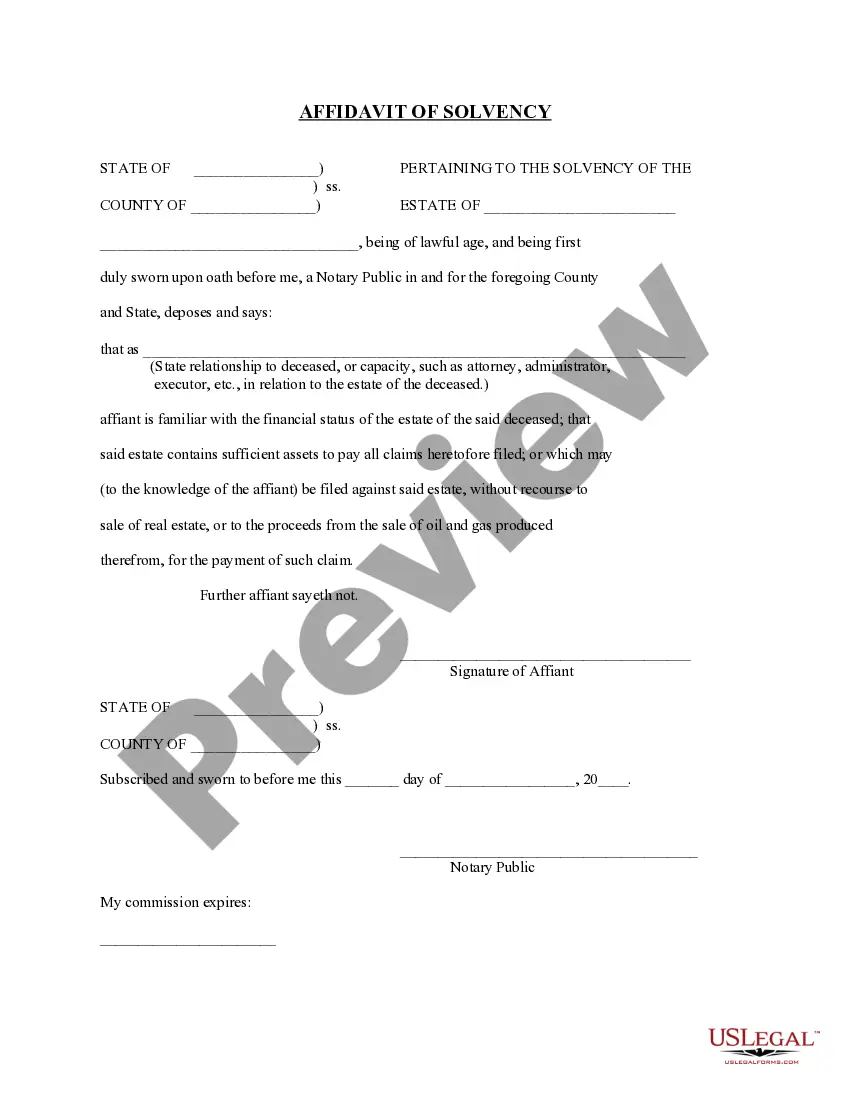
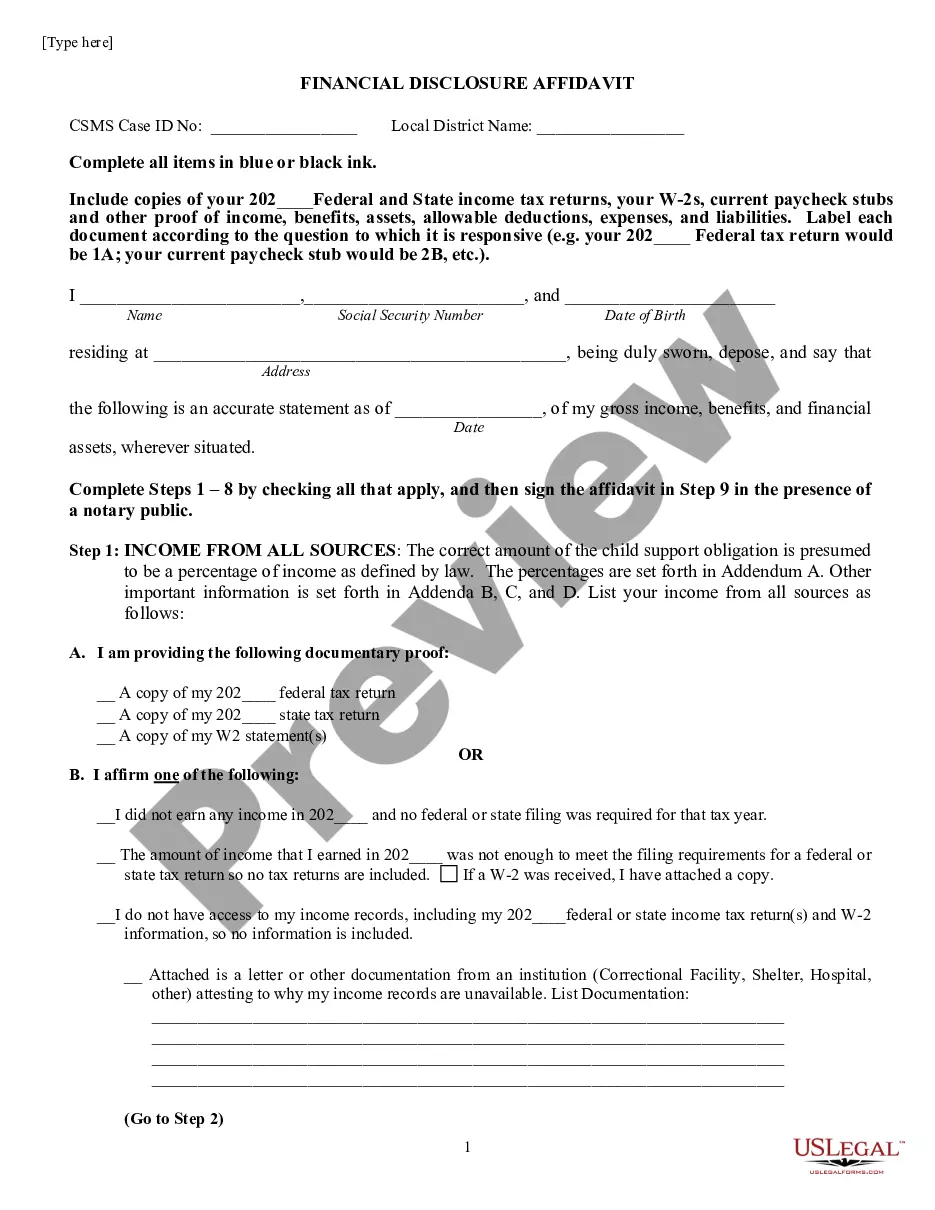
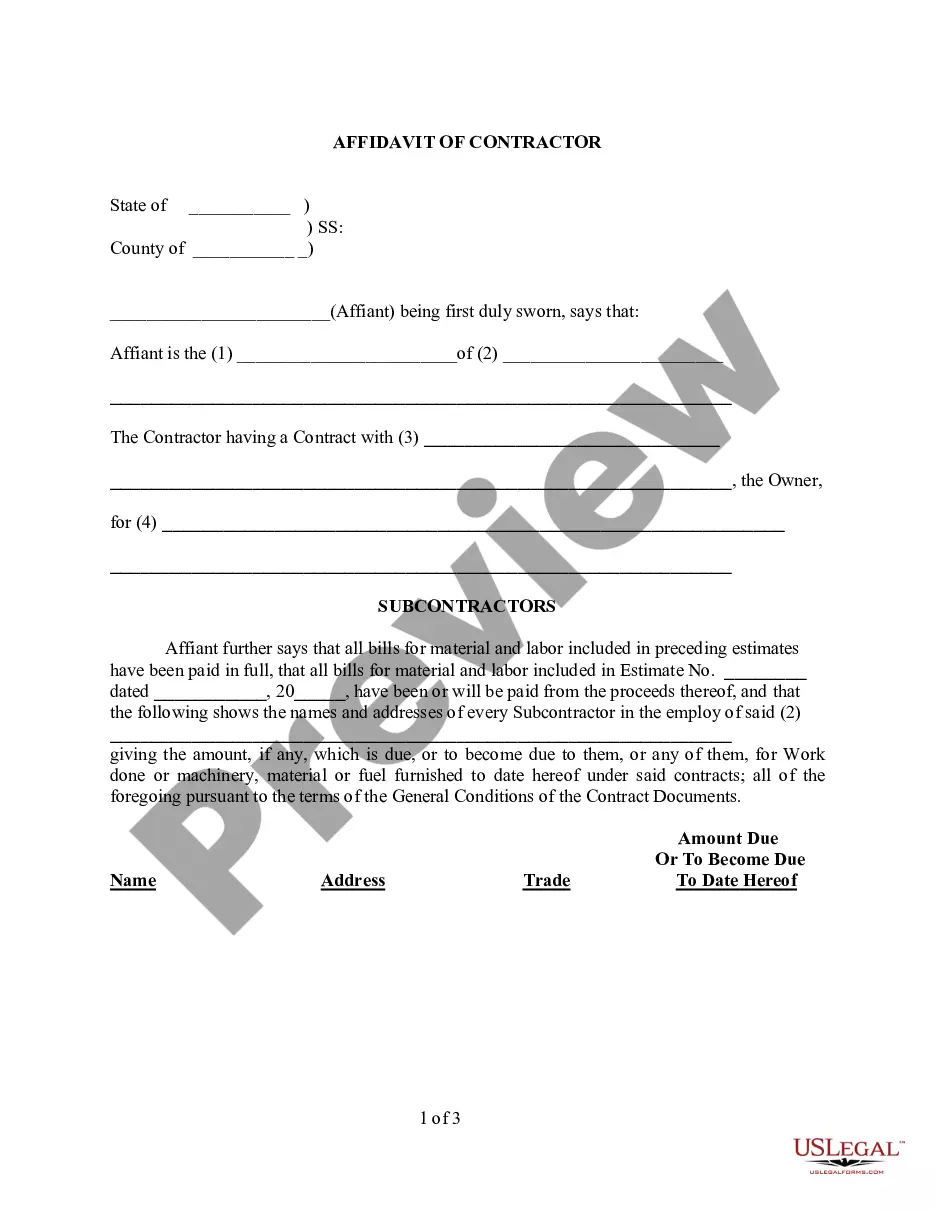
The Verification of an Account for Services and Supplies to a Public Entity is a legal document used to affirm the accuracy of an account relating to payments owed for services rendered or supplies provided to a public entity. This form often takes the shape of an affidavit, which is a sworn statement verifying the legitimacy of the claimed amount. Unlike general debt statements, this form includes detailed affirmations about the nature of the debt and the attempts to collect it, ensuring that it is treated as fact in legal discussions. It is important to note that this form may need to be tailored to comply with local laws depending on the jurisdiction.
What’s included in this form
- Name of the affiant and their role within the creditor entity.
- Name and legal status of the creditor entity.
- A detailed account statement of services rendered or supplies provided.
- Verification of the charges and their legal standing.
- Affirmation of non-payment by the public entity despite demands for payment.
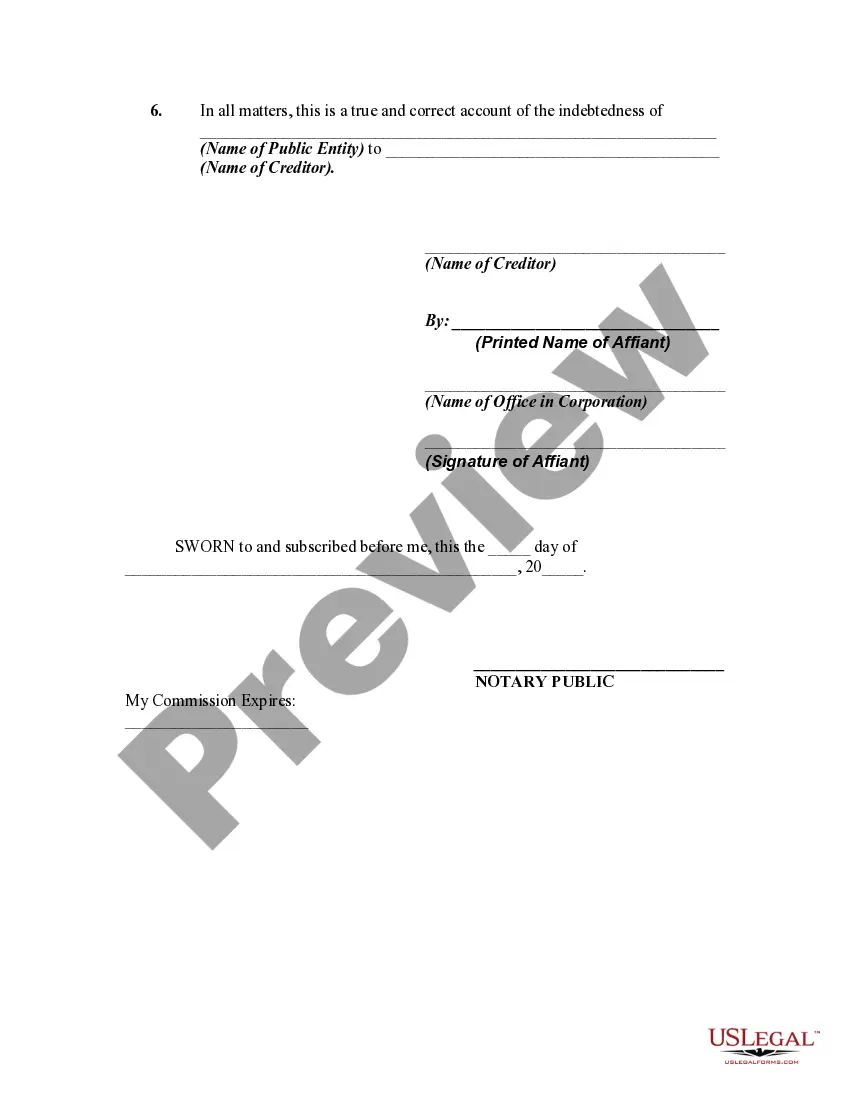
- Signatures of the affiant and notarization section.
Situations where this form applies
This form should be used when a creditor seeks to verify an outstanding claim against a public entity for services or supplies provided. It becomes essential in situations where formal disputes arise over payments, as it helps establish the legitimacy of the claim in a legal context. Organizations or individuals may use this form when initiating collection proceedings or when preparing to present a claim for litigation against a public entity.
Who needs this form
- Creditors seeking verification of unpaid accounts.
- Chief Financial Officers or financial officers of businesses providing services to public entities.
- Anyone involved in the collection of debts owed by government agencies.
Completing this form step by step
- Identify the parties involved, including the creditor and the public entity.
- Complete the affiant's details, including their name and position within the creditor organization.
- Provide a detailed account statement including the nature of services and supplies delivered.
- Affirm the legality of the charges and specify that payment has not been received.
- Include the affiant's signature and hire a notary public for the notarization of the document.
Does this form need to be notarized?
This form needs to be notarized to ensure legal validity. US Legal Forms provides secure online notarization powered by Notarize, allowing you to complete the process through a verified video call, available anytime.
Get your form ready online
Our built-in tools help you complete, sign, share, and store your documents in one place.
Make edits, fill in missing information, and update formatting in US Legal Forms—just like you would in MS Word.
Download a copy, print it, send it by email, or mail it via USPS—whatever works best for your next step.
Sign and collect signatures with our SignNow integration. Send to multiple recipients, set reminders, and more. Go Premium to unlock E-Sign.
If this form requires notarization, complete it online through a secure video call—no need to meet a notary in person or wait for an appointment.
We protect your documents and personal data by following strict security and privacy standards.

Make edits, fill in missing information, and update formatting in US Legal Forms—just like you would in MS Word.

Download a copy, print it, send it by email, or mail it via USPS—whatever works best for your next step.

Sign and collect signatures with our SignNow integration. Send to multiple recipients, set reminders, and more. Go Premium to unlock E-Sign.

If this form requires notarization, complete it online through a secure video call—no need to meet a notary in person or wait for an appointment.

We protect your documents and personal data by following strict security and privacy standards.
Typical mistakes to avoid
- Failing to include complete account details, which can lead to disputes.
- Not having the form notarized, if required by local laws.
- Submitting the form without verifying the accuracy of the debt information.
Why use this form online
- Immediate access to professionally drafted legal templates.
- Convenient editing options to customize the form for specific needs.
- Secure and reliable download process that preserves document integrity.
Looking for another form?









Form popularity
FAQ
The Codification has organized the thousands of GAAP pronouncements into four primary groupings that include presentation, financial statements accounts (assets, liabilities, equity, revenue and expenses), broad transactions and industry guidance.
Public entity includes the state, the Regents of the University of California, the Trustees of the California State University and the California State University, a county, city, district, public authority, public agency, and any other political subdivision or public corporation in the State.
A conduit bond obligor is an entity that is obligated for the repayment of conduit debt securities. As defined in the FASB ASC Master Glossary, conduit debt securities are municipal securities issued by state or local governments, agencies or instrumentalities on behalf of a third-party (e.g., an NFP).
A public service company (or public utility company) is a corporation or other non-governmental business entity (i.e. limited partnership) which delivers public services - certain services considered essential to the public interest.
(1) Public entity The term public entity means (A) any State or local government; (B) any department, agency, special purpose district, or other instrumentality of a State or States or local government; and (C) the National Railroad Passenger Corporation, and any commuter authority (as defined in section 24102(4) of
"Private entity" means any entity that is not a unit of government, including but not limited to a corporation, partnership, company, nonprofit organization or other legal entity or a natural person.
Although the California public schools system is under the policy direction of the Legislature, more local responsibility is legally granted to school districts and county education officials than to other government entities and officials.County offices of education provide services to school districts statewide.
A business entity that has securities that are not subject to contractual restrictions on transfer and that is by law, contract, or regulation required to prepare U.S. GAAP financial statements (including footnotes) and make them publicly available on a periodic basis is considered a public business entity.
Nonpublic entity means an entity other than one whose securities trade in a public market either on a stock exchange (domestic or foreign) or in the over-the-counter market, including securities quoted only locally or regionally, or an entity that makes a filing with a regulatory agency in preparation for the sale of