Answer to Complaint on Open Account and Alleging Nonconformity of Goods Cured by Conforming Delivery
About this form
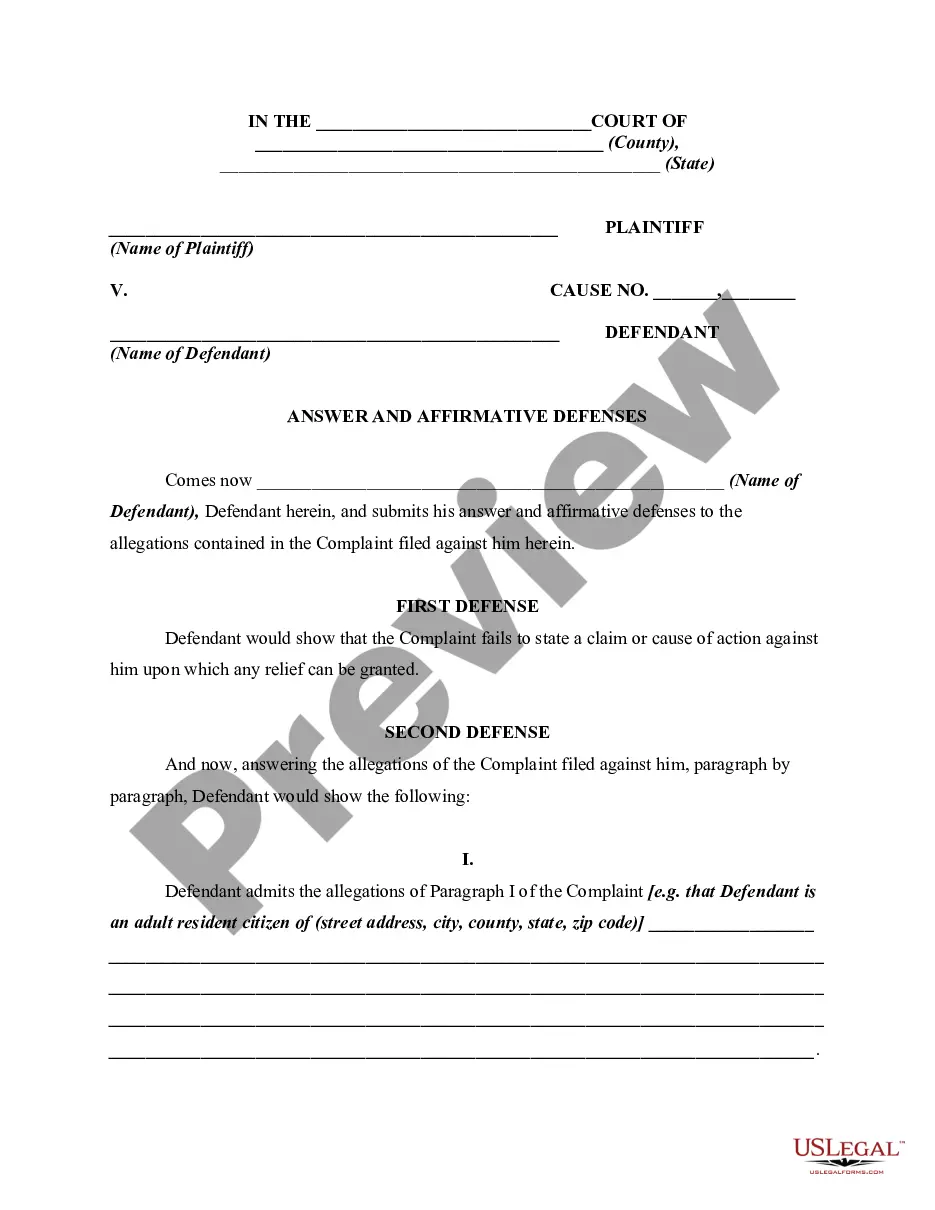
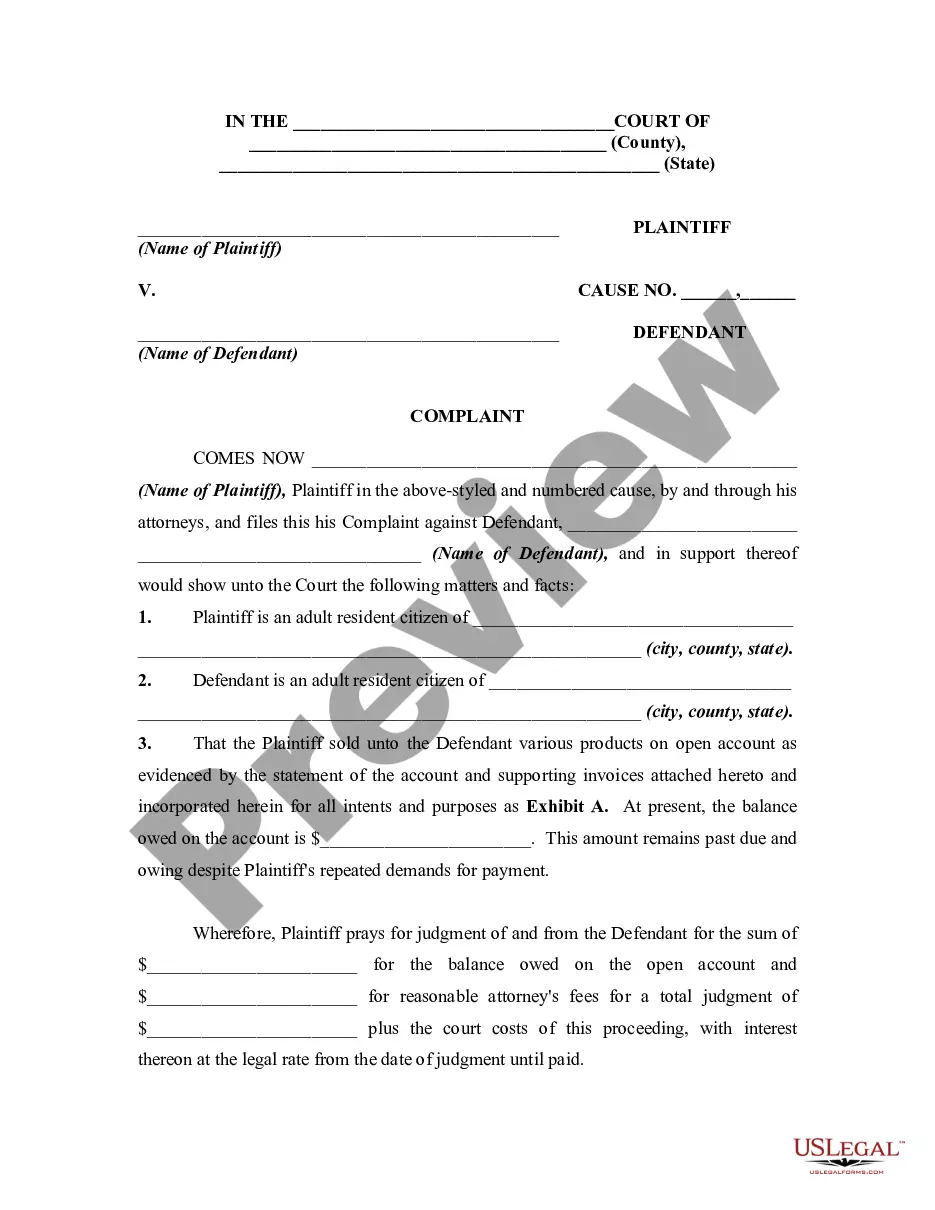
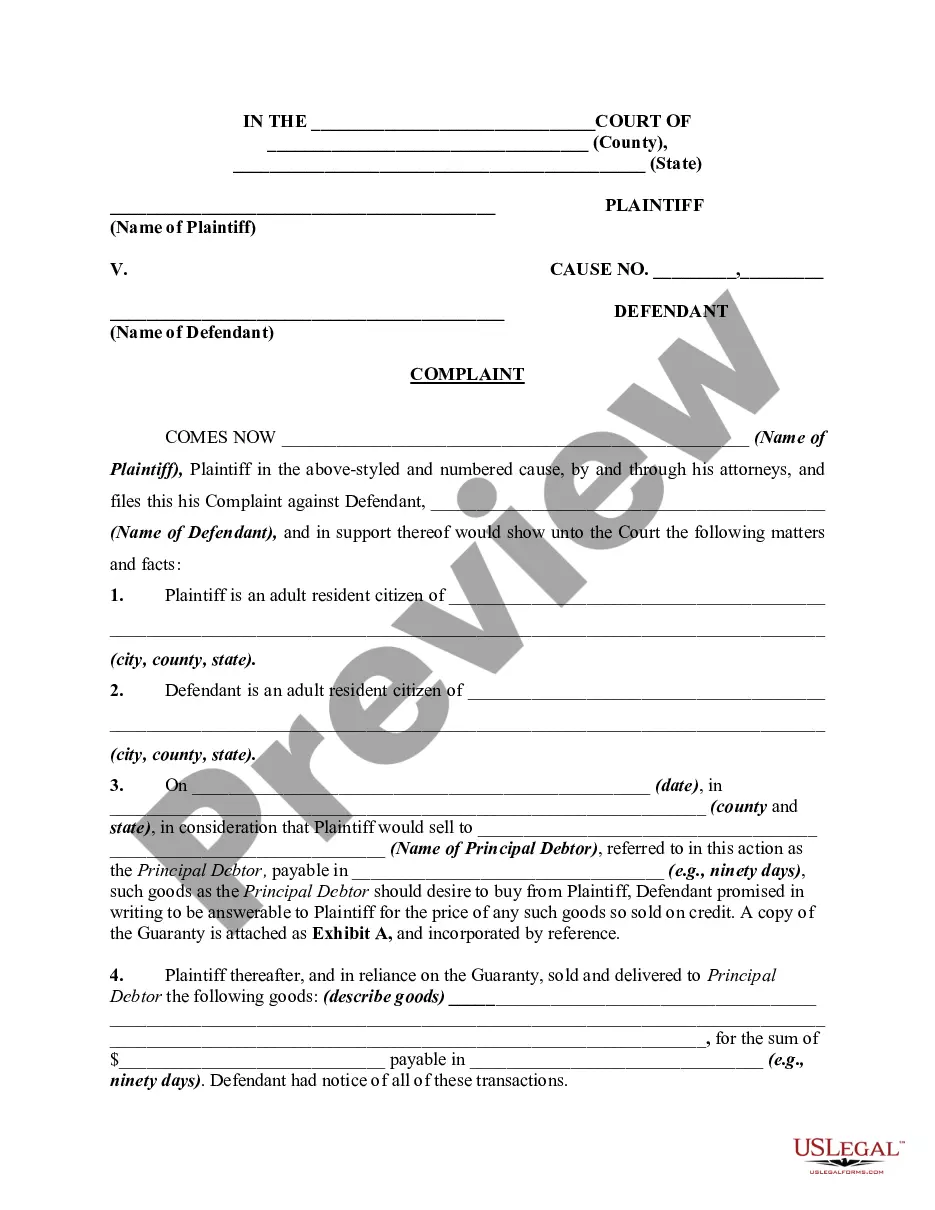
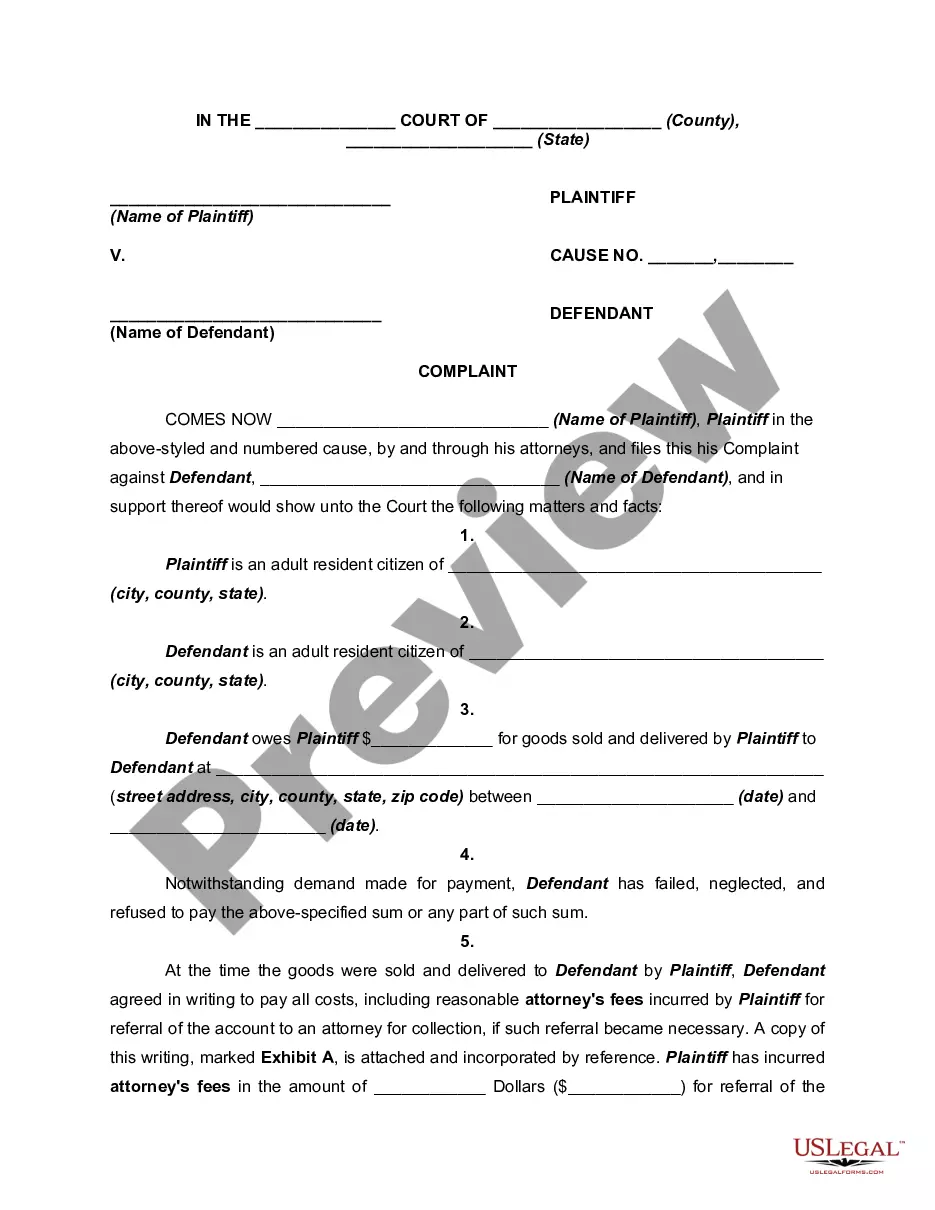
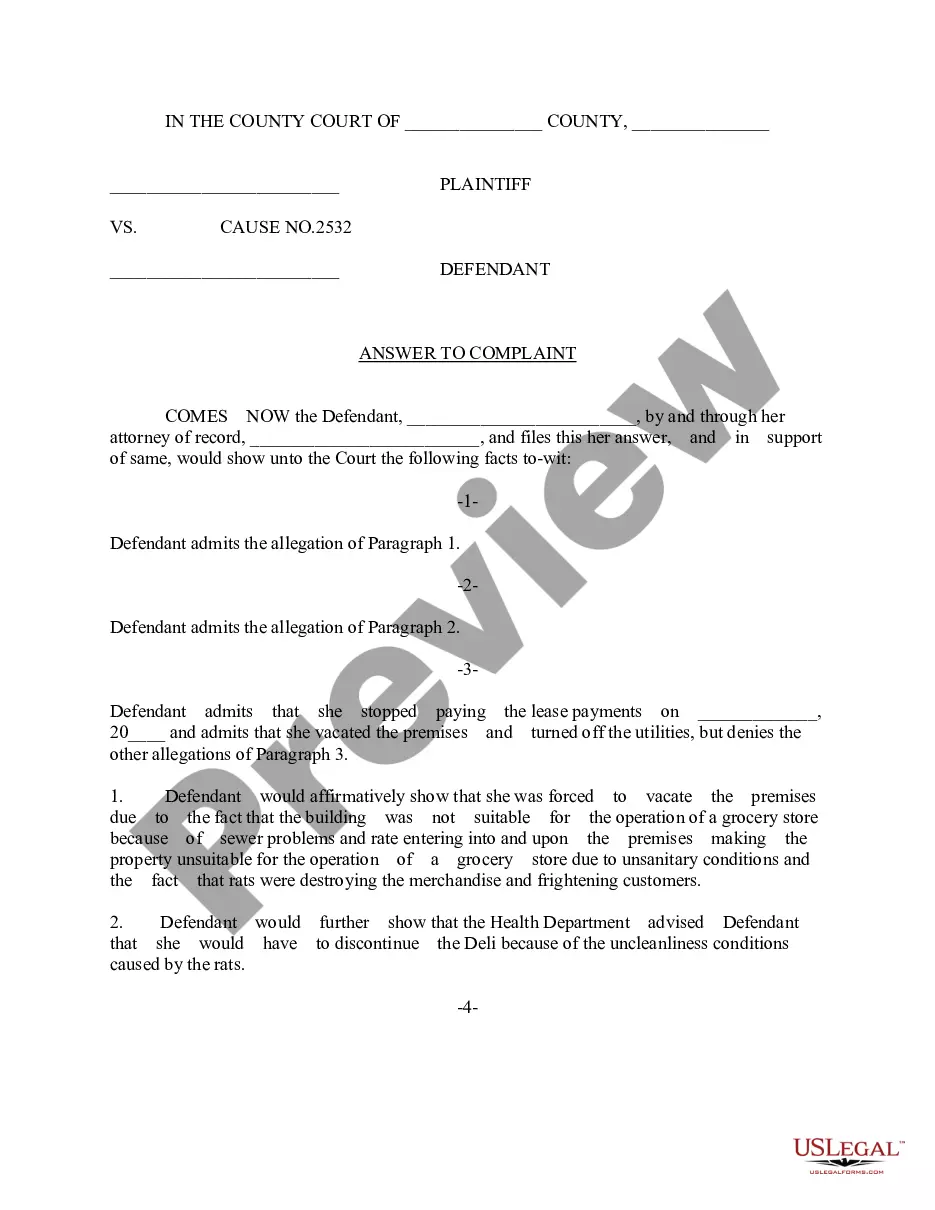
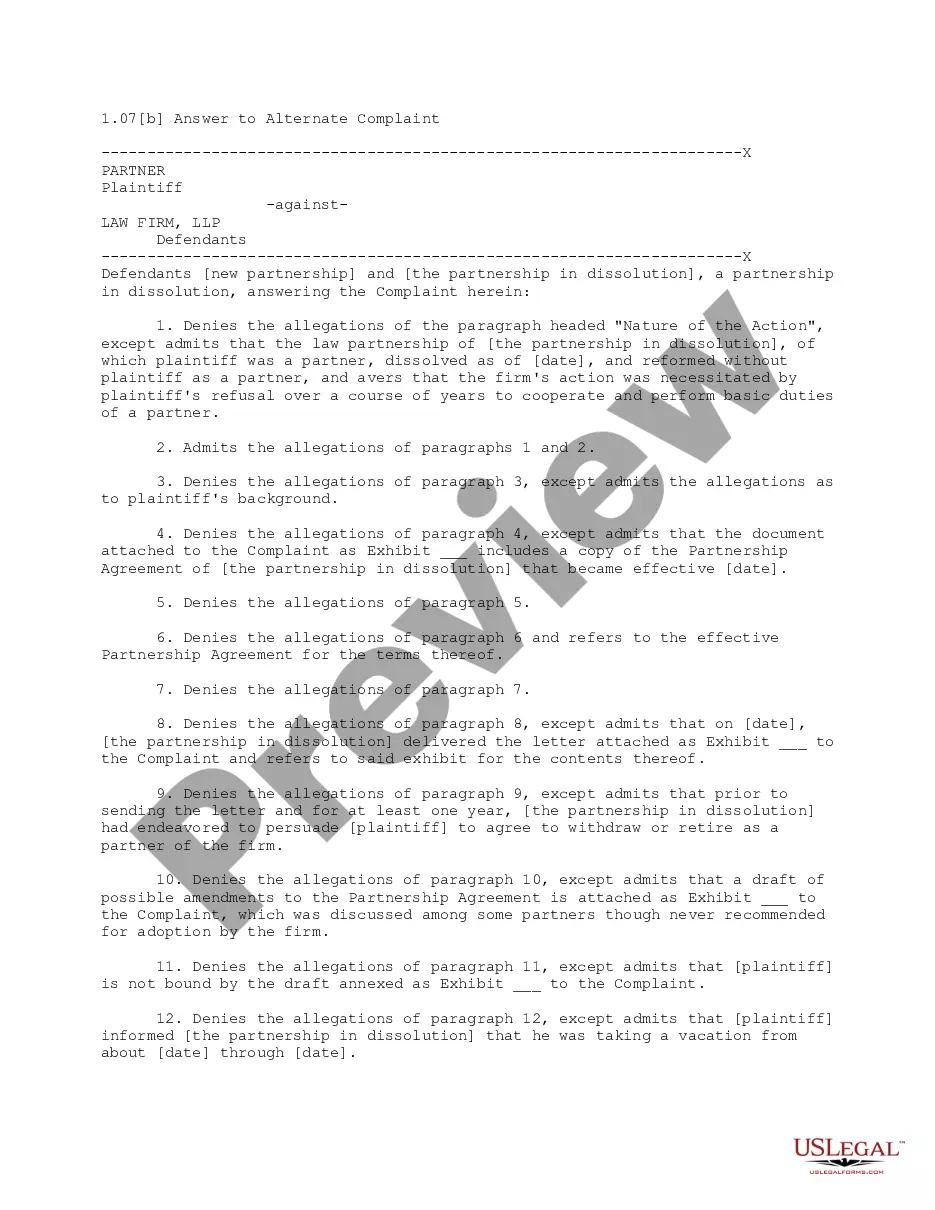
This form, titled "Answer to Complaint on Open Account and Alleging Nonconformity of Goods Cured by Conforming Delivery," is a legal document used by defendants to respond to a complaint regarding nonconforming goods delivered in a transaction. This form outlines the defendant's affirmative defenses and indicates whether they admit or deny specific allegations. Its primary purpose is to formally dispute claims made by the plaintiff and assert that any issues with the goods have been resolved through conforming delivery.
Key parts of this document
- Defendant's identification: Name and contact information of the defendant and their attorney.
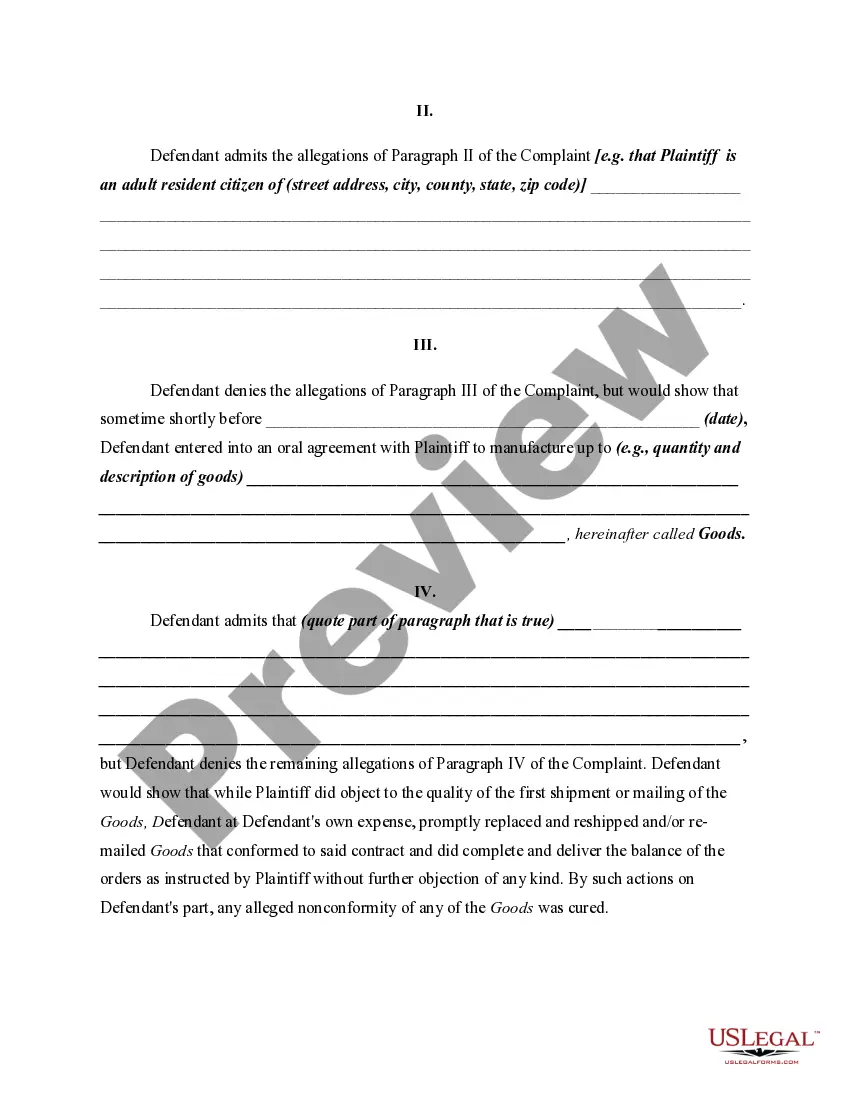
- Response to allegations: Admissions and denials related to each specific paragraph of the complaint.
- Affirmative defenses: Legal reasons why the defendant believes the claims should be dismissed.
- Cure of nonconformity: Statement asserting that any issues with the goods have been rectified.
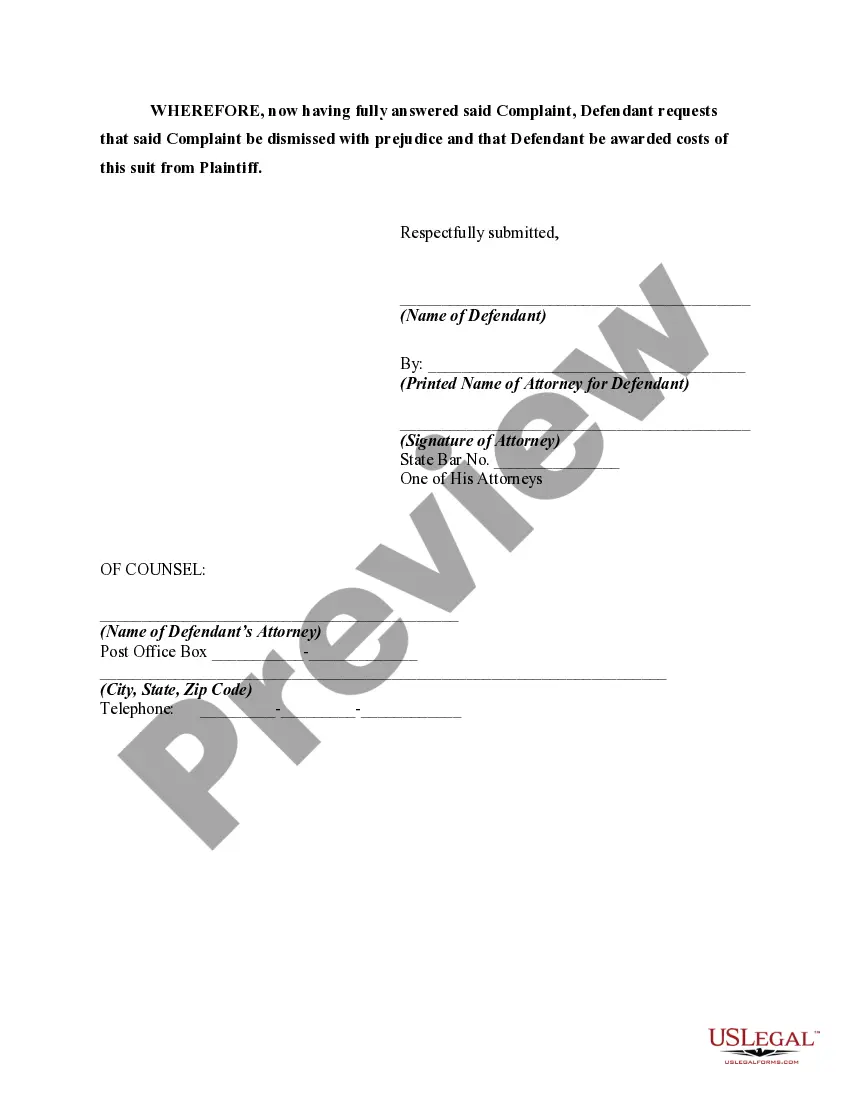
- Request for dismissal: Final request to the court to dismiss the complaint and award costs to the defendant.
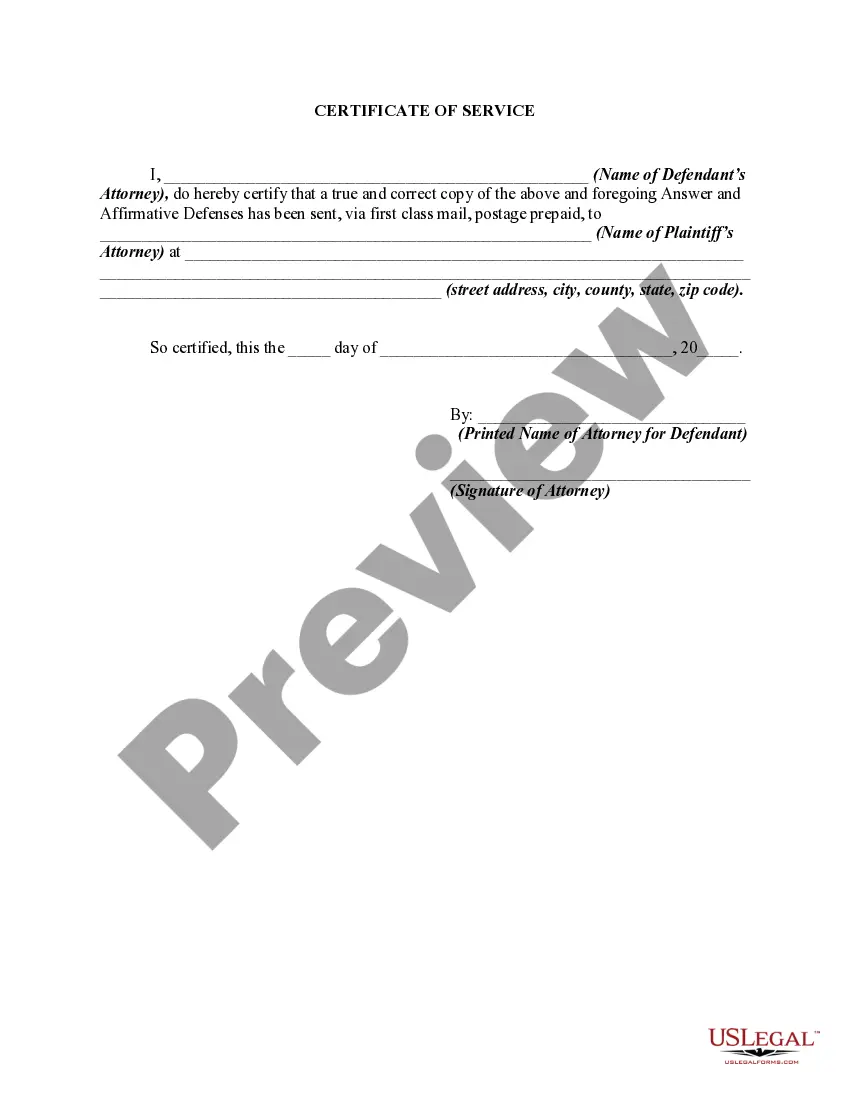
- Certificate of service: Confirmation that a copy of the answer has been sent to the plaintiff's attorney.
Common use cases
This form is used when a defendant receives a complaint alleging that the delivered goods do not conform to the agreed terms in a sales agreement. It should be completed whenever the defendant wishes to dispute the claims made in the complaint, especially when they have made efforts to remedy the situation by delivering conforming goods.
Who should use this form
- Defendants in a legal dispute regarding the sale of goods.
- Businesses involved in transactions where nonconforming goods were delivered.
- Individuals or entities accused of breaching contracts related to goods delivery.
- Legal representatives acting on behalf of defendants in such cases.
Completing this form step by step
- Identify the parties involved: Fill in the names of the plaintiff and defendant.
- Respond to each allegation: Address the claims paragraph by paragraph, indicating admissions and denials.
- State affirmative defenses: Clearly outline the legal reasons for disputing the complaint.
- Claim any corrective actions: Document any measures taken to resolve nonconformity, such as additional deliveries.
- Complete the certificate of service: Certify that the answer has been served to the plaintiff's attorney.
- Sign and submit the form: Ensure that all required signatures are obtained and file with the court as necessary.
Does this document require notarization?
This form does not typically require notarization unless specified by local law. It's always advisable to check specific state requirements regarding notarization and other formalities to ensure that your response is legally valid.
Get your form ready online
Our built-in tools help you complete, sign, share, and store your documents in one place.
Make edits, fill in missing information, and update formatting in US Legal Forms—just like you would in MS Word.
Download a copy, print it, send it by email, or mail it via USPS—whatever works best for your next step.
Sign and collect signatures with our SignNow integration. Send to multiple recipients, set reminders, and more. Go Premium to unlock E-Sign.
If this form requires notarization, complete it online through a secure video call—no need to meet a notary in person or wait for an appointment.
We protect your documents and personal data by following strict security and privacy standards.

Make edits, fill in missing information, and update formatting in US Legal Forms—just like you would in MS Word.

Download a copy, print it, send it by email, or mail it via USPS—whatever works best for your next step.

Sign and collect signatures with our SignNow integration. Send to multiple recipients, set reminders, and more. Go Premium to unlock E-Sign.

If this form requires notarization, complete it online through a secure video call—no need to meet a notary in person or wait for an appointment.

We protect your documents and personal data by following strict security and privacy standards.
Common mistakes
- Failing to respond to all paragraphs of the complaint.
- Not clearly stating affirmative defenses, which may weaken the position.
- Ignoring state-specific legal requirements when using the form.
- Omitting the certificate of service, which may lead to procedural issues.
- Failing to sign the form, rendering it invalid.
Benefits of using this form online
- Convenient access: Download the form anytime from anywhere.
- Editable templates: Customize the document to fit your specific case easily.
- Reliable resources: Forms are prepared by licensed attorneys, ensuring legal compliance.
- Time-saving: Quickly complete and file documents without dealing with physical paperwork.
- Prompt customer support: Get assistance with any questions you may have during the process.
Looking for another form?








Form popularity
FAQ
Contact the clerk's office of the court where the lawsuit was filed. You'll find a phone number and address for the clerk's office on your summons. The clerk will be able to tell you exactly what documents you should file with your answer and whether any filing fee is required.
You can file an answer or a general denial. Filing an answer. You can file a motion In certain situations, you can respond to the lawsuit by filing a motion (a request) that usually tells the court that the plaintiff made a mistake in the lawsuit. Talk to a lawyer!
Don't ignore it. If you do this, the court will simply rule in the issuer or debt collector's favor. Try to work things out. Answer the summons. Consult an attorney. Go to court. Respond to the ruling.
Comply With the Relevant Federal, State, and Local Rules. Research Before Writing. Allege Subject Matter Jurisdiction, Personal Jurisdiction, and Venue. Draft Concise and Plain Statement of the Facts. Draft Separate Counts for Each Legal Claim. Plead Facts With Particularity Where Necessary.
Write in the name and address of the person who filed the Complaint against you, or the name and address of their attorney. You can find this on the Summons that you received. At the end, add your address and phone number and sign the answer.
Fill out your court forms. Have your forms reviewed. Make at least 2 copies of all your forms. File your forms with the court clerk. Serve your papers on the other parent. File your Proof of Service. Go to your court hearing.
Provide the name of the court at the top of the Answer. You can find the information on the summons. List the name of the plaintiff on the left side. Write the case number on the right side of the Answer. Address the Judge and discuss your side of the case. Ask the judge to dismiss the case.
Provide the name of the court at the top of the Answer. You can find the information on the summons. List the name of the plaintiff on the left side. Write the case number on the right side of the Answer. Address the Judge and discuss your side of the case. Ask the judge to dismiss the case.
Read the summons and make sure you know the date you must answer by. Read the complaint carefully. Write your answer. Sign and date the answer. Make copies for the plaintiff and yourself. Mail a copy to the plaintiff. File your answer with the court by the date on the summons.