Appointment of Successor Trustee By Original Trustee Named in a Trust Agreement
What this document covers
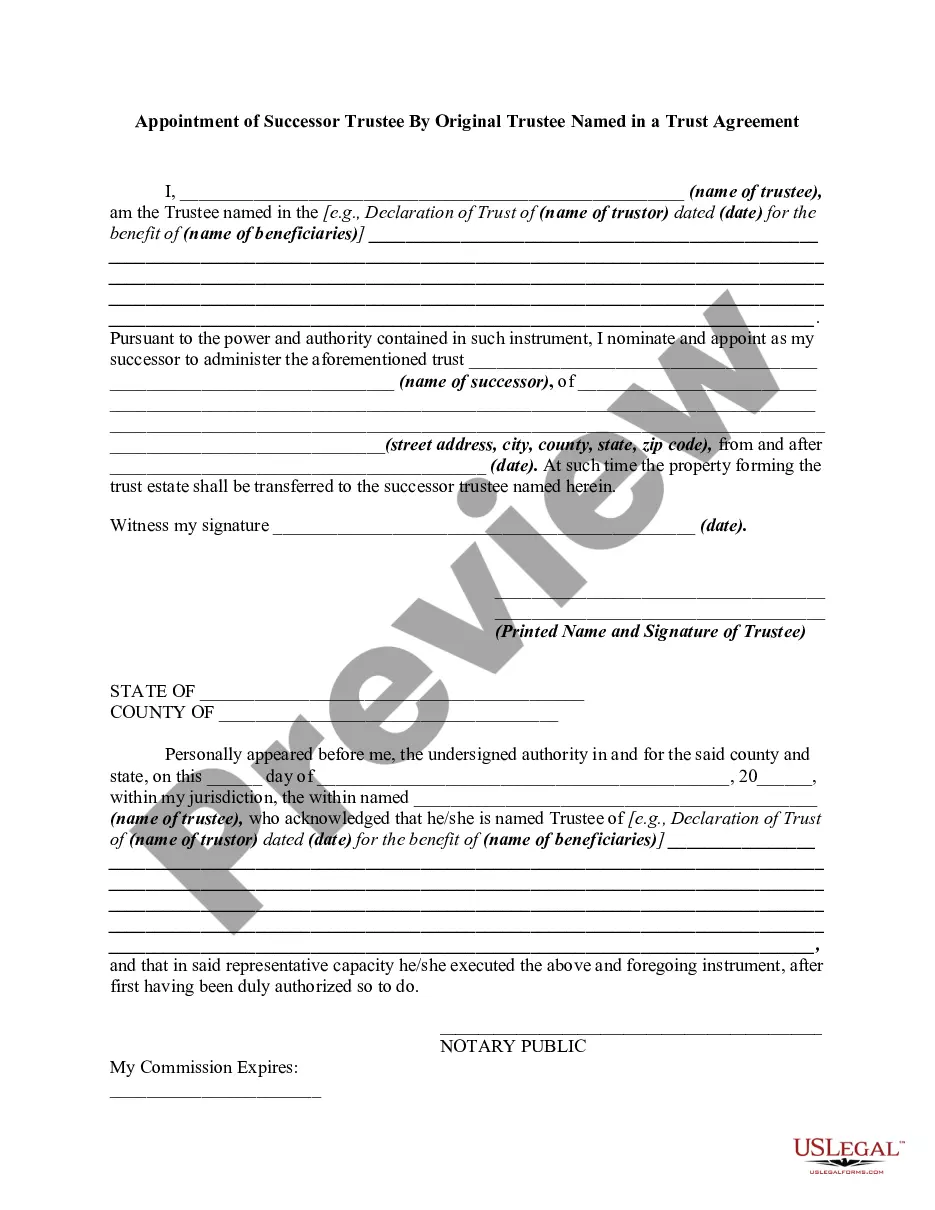
The Appointment of Successor Trustee by Original Trustee Named in a Trust Agreement is a legal document that facilitates the process of naming a new trustee to manage a trust when the original trustee is unable or has chosen to step down. This form is vital to ensure that the terms of the trust, as outlined in the trust agreement, are followed precisely when appointing a successor trustee. Unlike other trust-related forms, this document specifically addresses the substitution of the trustee, ensuring continuity in the administration of the trust for the benefit of the named beneficiaries.
Key components of this form
- Identification of the original trustee and the trust agreement.
- Name and address of the successor trustee.
- Date when the succession takes effect.
- Signature of the original trustee to validate the appointment.
- Notarization section for legal affirmation of the signatures.


When to use this form
This form should be used when an original trustee named in a trust agreement wishes to appoint a successor trustee. Common scenarios include when the original trustee is retiring, becoming incapacitated, or voluntarily resigning from their role. Using this document helps ensure that the trust is managed in accordance with its provisions and that there is no disruption in the management of trust assets.
Who should use this form
- Trustees who need to designate a successor trustee.
- Trustors looking to ensure smooth succession in a trust.
- Beneficiaries seeking clarity on the administration of the trust.
How to prepare this document
- Identify yourself as the original trustee and provide the name of the trust and the trustor.
- Nominate the new successor trustee by entering their name and contact details.
- Specify the effective date of the succession.
- Sign the form to confirm your appointment of the new trustee.
- Have the signature notarized if necessary.
Notarization requirements for this form
Yes, this form must be notarized to be legally valid. Notarization ensures that the signatures on the form are genuine and that the signing parties have the authority to execute the document. US Legal Forms offers integrated online notarization services, allowing you to complete this process securely via video call, no travel required, any time of day.
Get your form ready online
Our built-in tools help you complete, sign, share, and store your documents in one place.
Make edits, fill in missing information, and update formatting in US Legal Forms—just like you would in MS Word.
Download a copy, print it, send it by email, or mail it via USPS—whatever works best for your next step.
Sign and collect signatures with our SignNow integration. Send to multiple recipients, set reminders, and more. Go Premium to unlock E-Sign.
If this form requires notarization, complete it online through a secure video call—no need to meet a notary in person or wait for an appointment.
We protect your documents and personal data by following strict security and privacy standards.

Make edits, fill in missing information, and update formatting in US Legal Forms—just like you would in MS Word.

Download a copy, print it, send it by email, or mail it via USPS—whatever works best for your next step.

Sign and collect signatures with our SignNow integration. Send to multiple recipients, set reminders, and more. Go Premium to unlock E-Sign.

If this form requires notarization, complete it online through a secure video call—no need to meet a notary in person or wait for an appointment.

We protect your documents and personal data by following strict security and privacy standards.
Common mistakes
- Failing to include the full name and address of the successor trustee.
- Not specifying the effective date of the appointment.
- Skipping notarization if required by local law.
- Ignoring the terms laid out in the original trust agreement.
Why complete this form online
- Convenience of immediate access and download.
- Editability to tailor the form to specific needs and details.
- Reliability of professionally drafted legal content.
Legal use & context
- This form serves as a formal designation of a new trustee, ensuring legal recognition of the successor.
- Failing to follow the formâs requirements could result in disputes regarding trust management.
- It is an important component of estate planning and trust administration.
Summary of main points
- The Appointment of Successor Trustee form is crucial for estate management and trust administration.
- Properly completing and notarizing this form helps avoid legal complications in trust management.
- Consult local laws to ensure compliance with specific state rules when using this form.
Looking for another form?

Form popularity
FAQ
The form names a replacement trustee when the original trustee cannot continue or resigns, ensuring the trust terms are followed. It records the successor's identity and address, the date when the succession takes effect, and requires the original trustee's signature and notarization to validate the appointment.
No. A successor trustee is the person who will manage and administer the trust, not a beneficiary who receives benefits. This form names the successor trustee and records the effective date, but it does not alter beneficiary designations or rights defined in the trust agreement. Beneficiaries’ rights remain as specified in the trust.
It means a new trustee has been designated to take over duties from the original trustee. This form documents the appointment, identifying the original trustee and the trust, the successor's name and address, the date the succession takes effect, and the original trustee's signature plus notarization to authorize the change.
The first step is to acknowledge the appointment and review the trust documents to understand duties and scope. This form confirms the appointment and the effective date, after which the successor can begin administering the trust in accordance with the trust agreement and applicable terms, notifying beneficiaries as appropriate.
Not every trust must name a successor trustee. This form provides a mechanism to appoint one if the trust or stakeholders want a planned transition. The powers and duties still come from the trust agreement, and the form serves to record the appointment with the original trustee’s signature and the effective date.
This form is distinct because the appointment is made by the original trustee named in the trust agreement, not by a court or other party. It records the successor’s name and address, the effective date, and requires the original trustee’s signature and notarization, ensuring substitution of the trustee aligns with the trust terms.