Complaint for Past Due Promissory Note
What this document covers
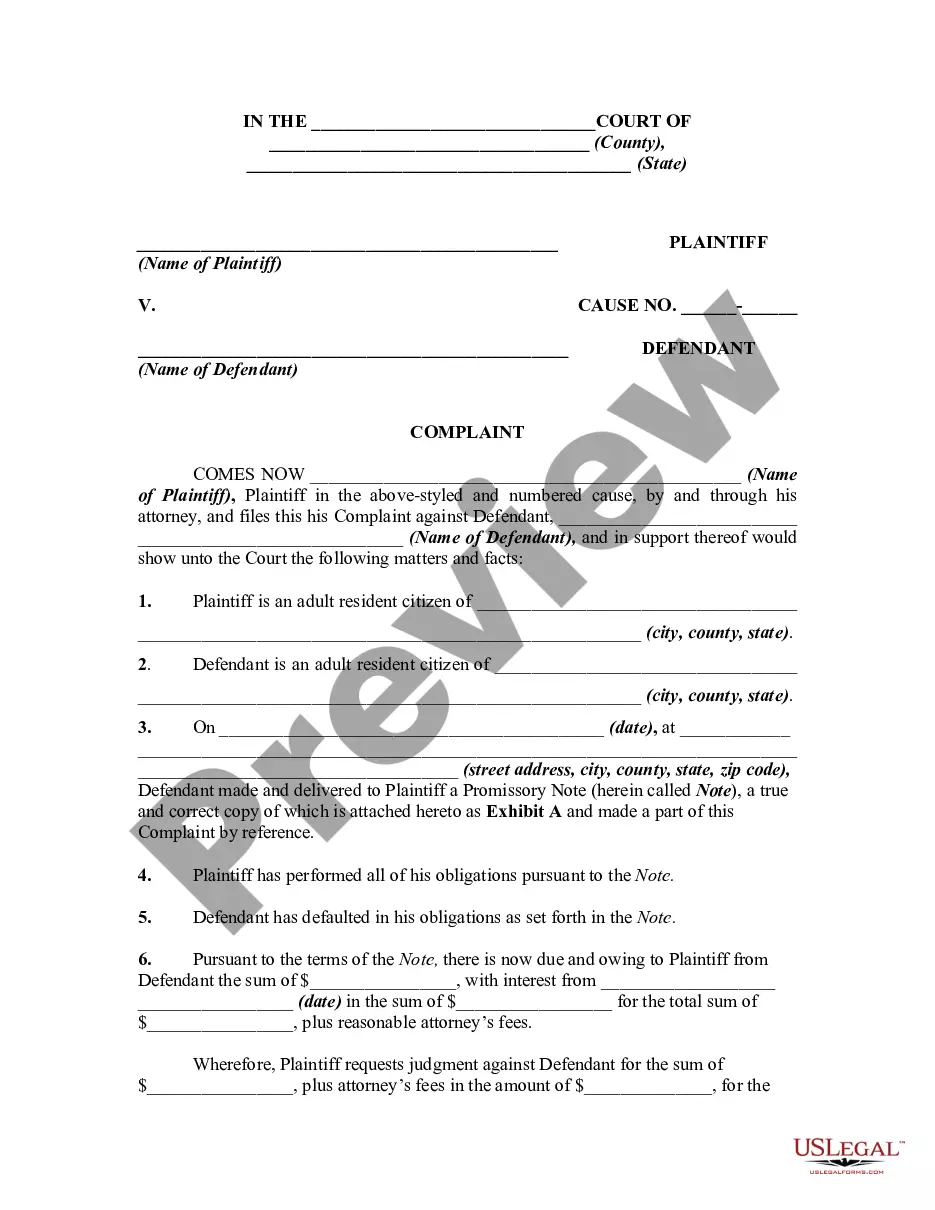
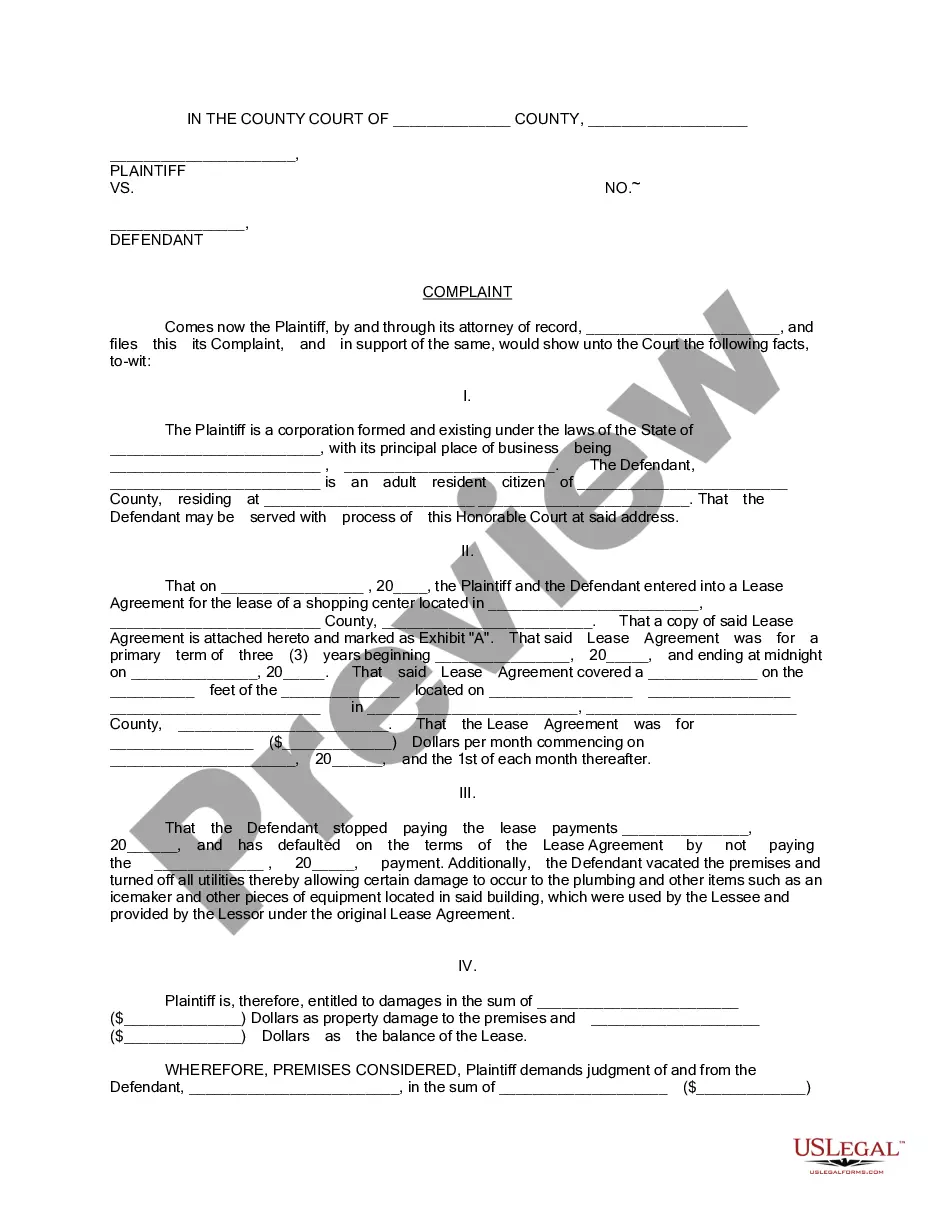
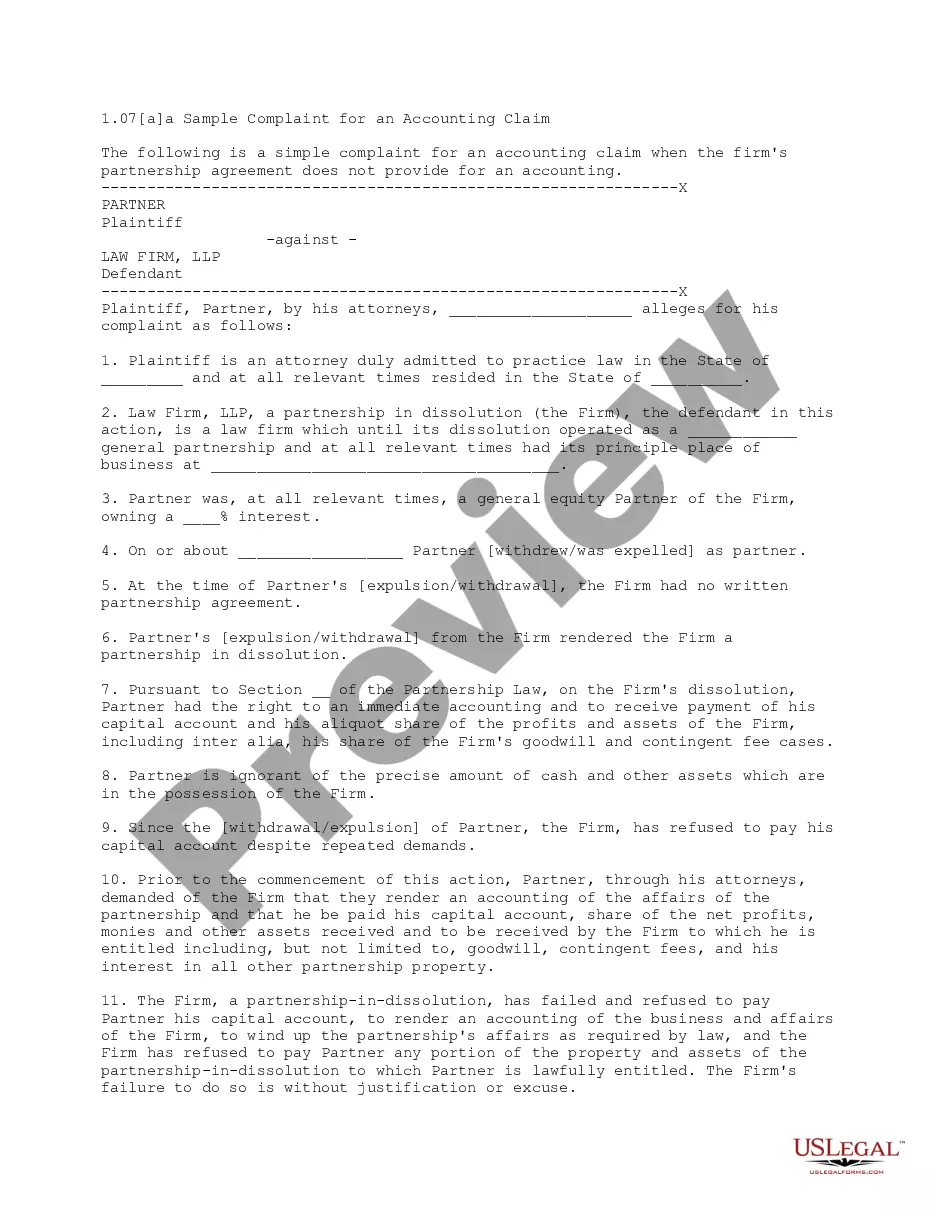
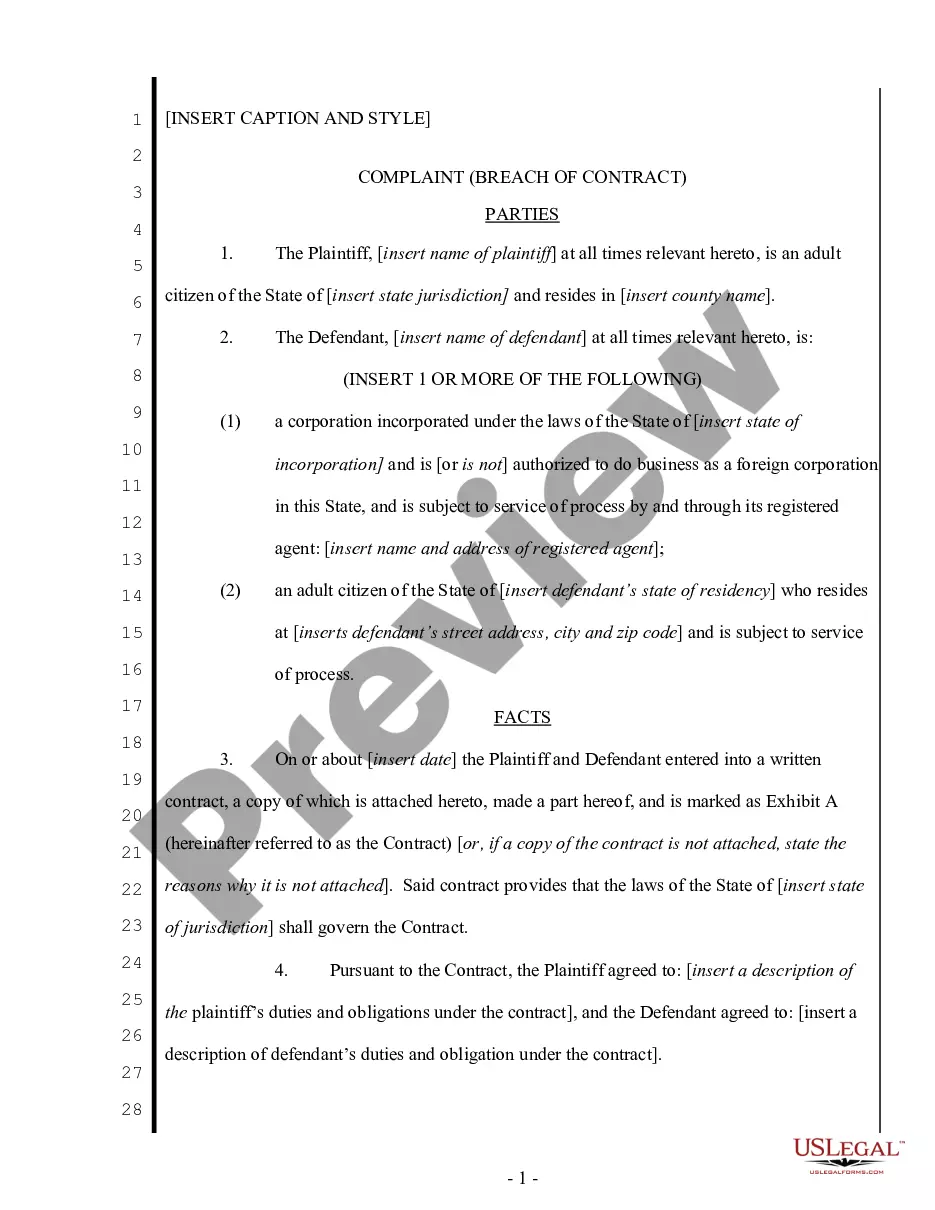
The Complaint for Past Due Promissory Note is a legal document used to initiate a lawsuit when a borrower fails to make payments as promised in a promissory note. This form follows the "notice pleadings" format established by the Federal Rules of Civil Procedure, ensuring clarity and compliance with legal standards. It serves as a foundational template that can be tailored to meet state-specific requirements, thus helping creditors seek repayment through a formal complaint in court.
Main sections of this form
- Identification of the plaintiff and defendant, including full names and addresses.
- A detailed description of the promissory note and the obligations it entails.
- Explanation of the plaintiff's performance under the note and the defendant's default.
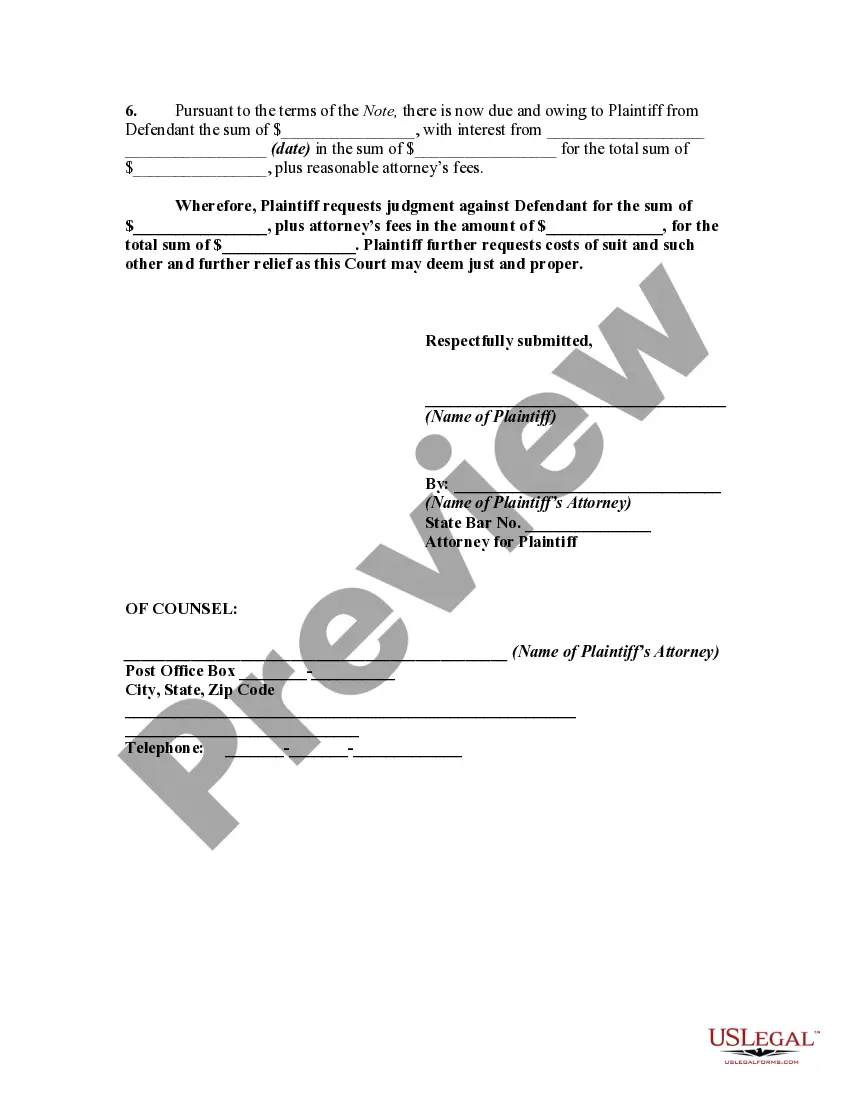
- Specific monetary amount owed, including any accrued interest and attorney fees.
- A request for judgment that outlines the total amount sought in the complaint.

Common use cases
This form should be used when a borrower has defaulted on payments as outlined in a promissory note. If you are a lender looking to recover owed money through legal action due to non-payment, this form serves as the initial step in filing a civil lawsuit against the borrower. It is appropriate in situations where informal collection efforts have failed and you require court intervention to secure payment.
Who can use this document
This form is intended for:
- Lenders or creditors who have issued promissory notes to borrowers.
- Individuals or parties seeking legal redress due to unpaid debts.
- Attorneys representing clients in debt collection cases.
Completing this form step by step
- Identify the parties by entering the full names and addresses of both the plaintiff and the defendant.
- Enter the date and location where the promissory note was issued.
- Attach a copy of the promissory note as Exhibit A and reference it in the Complaint.
- Fill in the amount owed and calculate any interest or attorney fees incurred.
- Sign the form and ensure it is filed with the appropriate court for your jurisdiction.
Is notarization required?
Notarization is generally not required for this form. However, certain states or situations might demand it. You can complete notarization online through US Legal Forms, powered by Notarize, using a verified video call available anytime.
Get your form ready online
Our built-in tools help you complete, sign, share, and store your documents in one place.
Make edits, fill in missing information, and update formatting in US Legal Forms—just like you would in MS Word.
Download a copy, print it, send it by email, or mail it via USPS—whatever works best for your next step.
Sign and collect signatures with our SignNow integration. Send to multiple recipients, set reminders, and more. Go Premium to unlock E-Sign.
If this form requires notarization, complete it online through a secure video call—no need to meet a notary in person or wait for an appointment.
We protect your documents and personal data by following strict security and privacy standards.

Make edits, fill in missing information, and update formatting in US Legal Forms—just like you would in MS Word.

Download a copy, print it, send it by email, or mail it via USPS—whatever works best for your next step.

Sign and collect signatures with our SignNow integration. Send to multiple recipients, set reminders, and more. Go Premium to unlock E-Sign.

If this form requires notarization, complete it online through a secure video call—no need to meet a notary in person or wait for an appointment.

We protect your documents and personal data by following strict security and privacy standards.
Common mistakes
- Failing to attach the promissory note as evidence.
- Incorrectly calculating the total amount due, including interest and fees.
- Omitting crucial party information like names and addresses.
- Not filing the complaint in the appropriate jurisdiction.
Why use this form online
- Convenience of downloading and completing the form at your own pace.
- Access to attorney-drafted templates ensures reliability and legal compliance.
- Ability to customize the form according to specific state requirements.
- Instant availability for those needing to act quickly on overdue payment issues.
Looking for another form?
Form popularity
FAQ
The owner of the promissory note can file a civil lawsuit against the signer of the note if the signer refuses to pay. The purpose of the lawsuit is to obtain a judgment against the note's signer, which will give the owner of the note the ability to pursue the signer's assets.
The lender can file a civil suit for recovering the money he owed through promissory note or loan agreement. He can do so under Order 37 of CPC which allows the lender to file a summary suit. He can file this suit in any high court, City Civil Court, Magistrate Court, Small Causes Court.
Whatever the scope of the promissory note, the basic tenet is that once it is signed by the involved parties, it becomes a legal instrument that can be enforced via legal remedy if one of the parties does not uphold their end of the bargain.
The debt owed on a promissory note either can be paid off, or the noteholder can forgive the debt even if it has not been fully paid.The value of the amount of debt forgiven may be deemed either taxable income, or a gift subject to the federal estate and gift tax.
A promissory note is a contract, a binding agreement that someone will pay your business a sum of money. However under some circumstances if the note has been altered, it wasn't correctly written, or if you don't have the right to claim the debt then, the contract becomes null and void.
Types of Property that can be used as collateral. Speak to them in person. Draft a Demand / Notice Letter. Write and send a Follow Up Letter. Enlisting a Professional Collection Agency. Filing a petition or complaint in court. Selling the Promissory Note. Final Tips.
What Happens When a Promissory Note Is Not Paid? Promissory notes are legally binding documents. Someone who fails to repay a loan detailed in a promissory note can lose an asset that secures the loan, such as a home, or face other actions.
The first step in enforcing an unsecured promissory note is to file a petition with the courts and get a judgment in your favor. Although this is a powerful legal enforcement of your rights under the promissory note, it does not in and of itself guarantee repayment of the note.
A promissory note is usually held by the party owed money; once the debt has been fully discharged, it must be canceled by the payee and returned to the issuer.