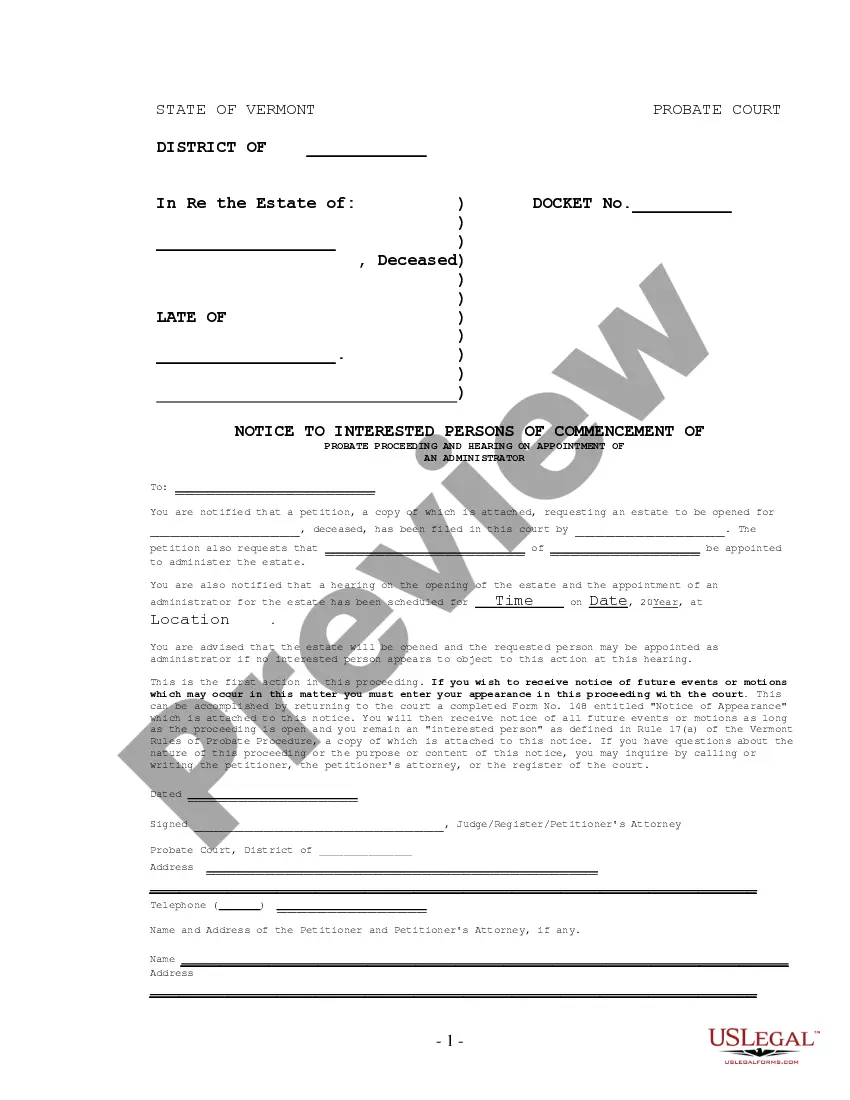
Answer by Defendant in a Civil Lawsuit Alleging the Affirmative Defense of the Cause of Action being Barred by Waiver of Terms of Contract by Plaintiff
What this document covers
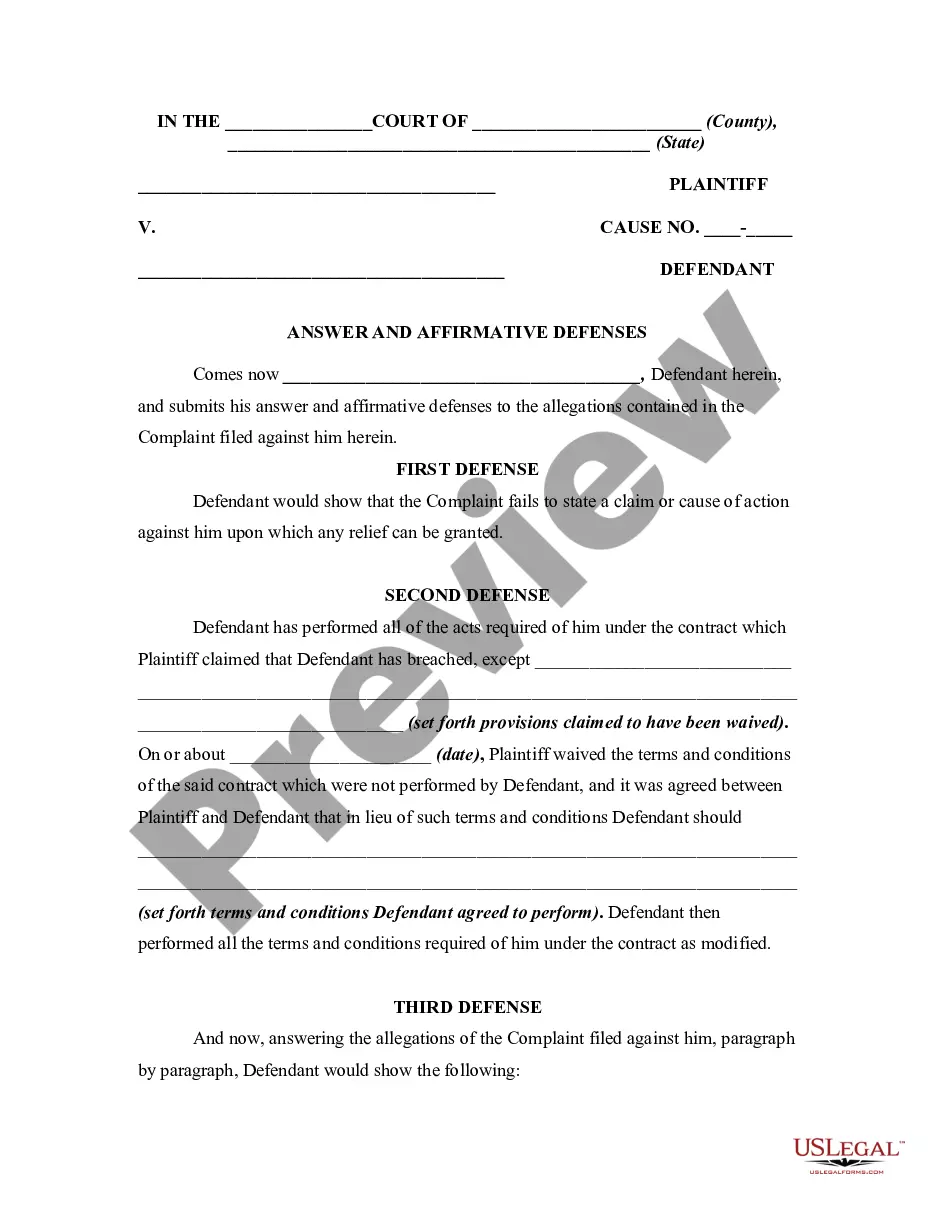
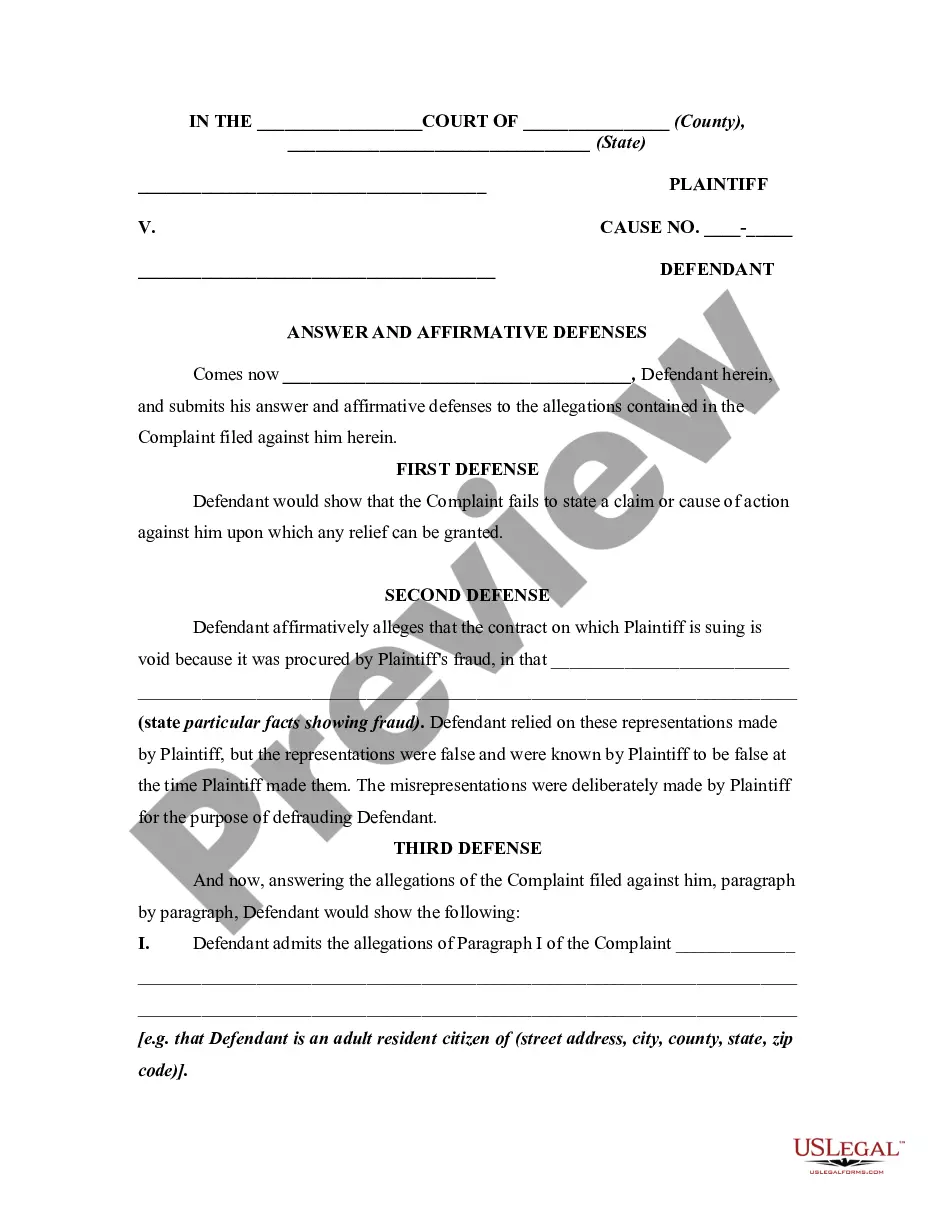
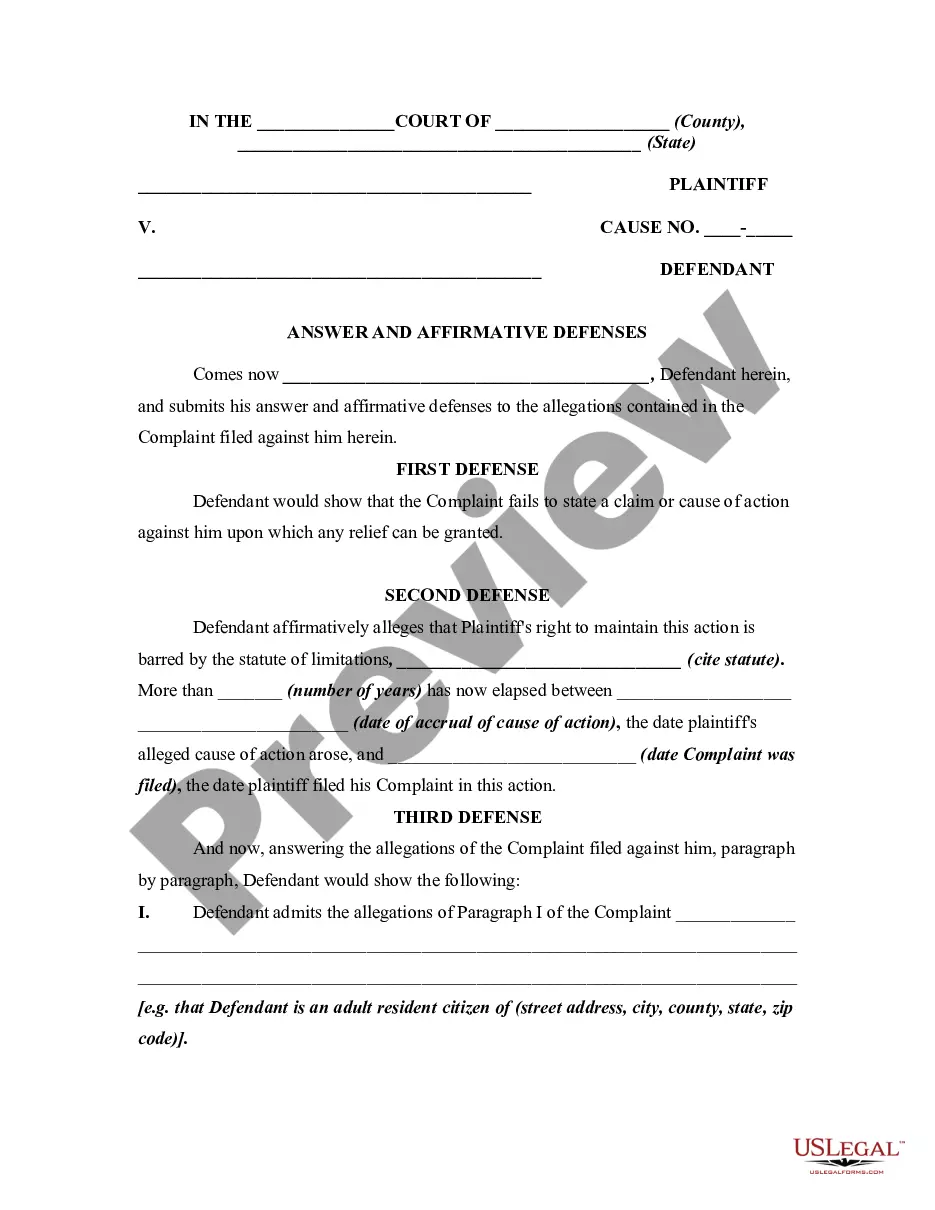
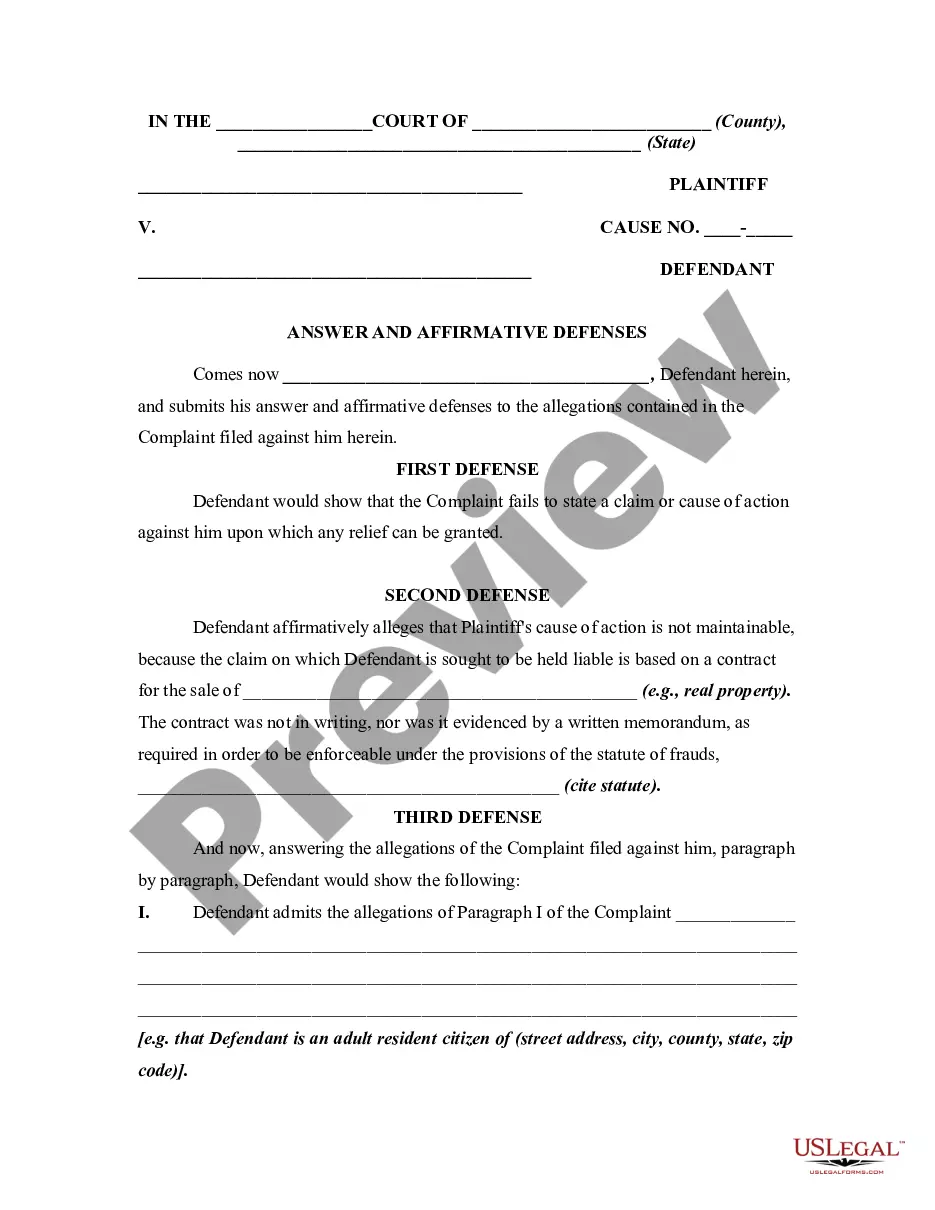
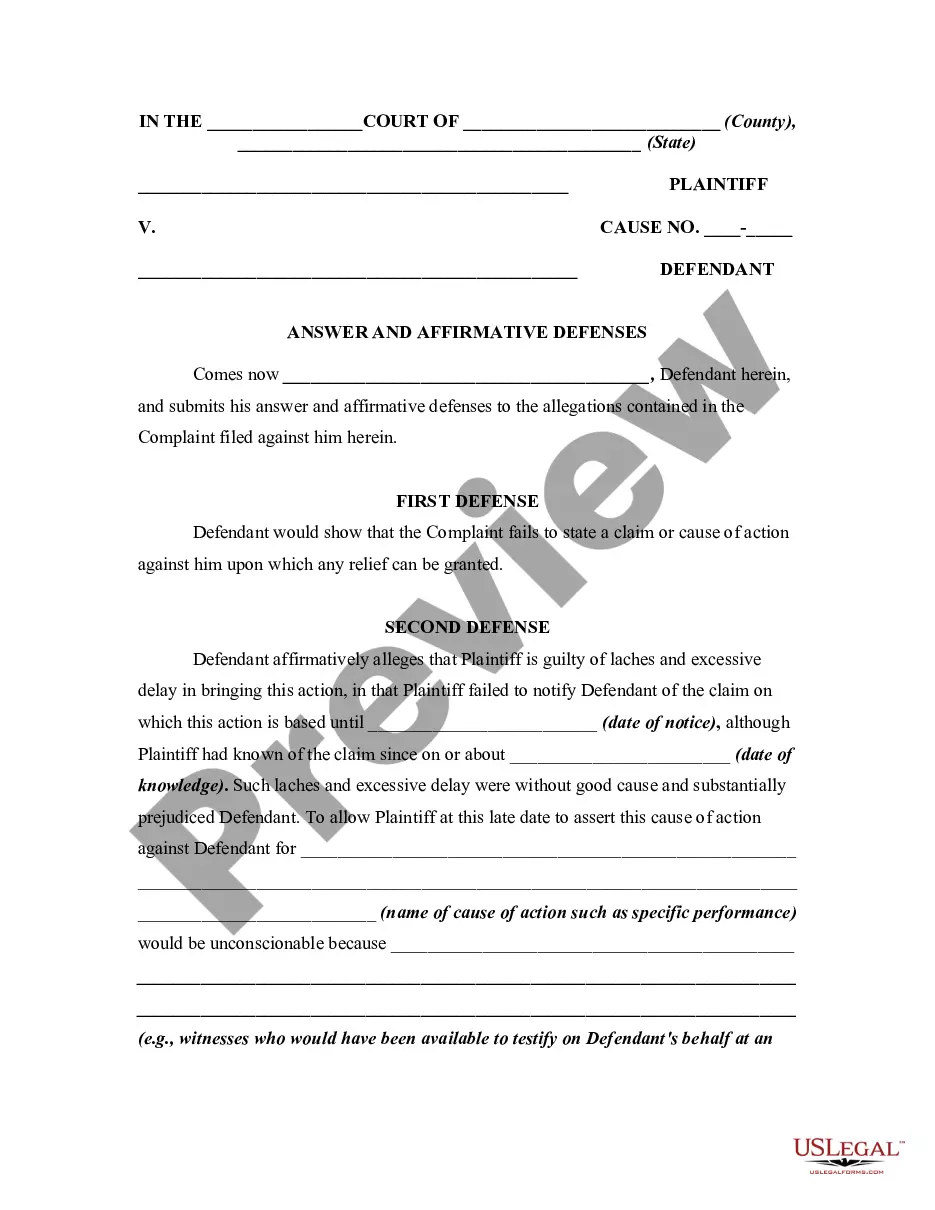
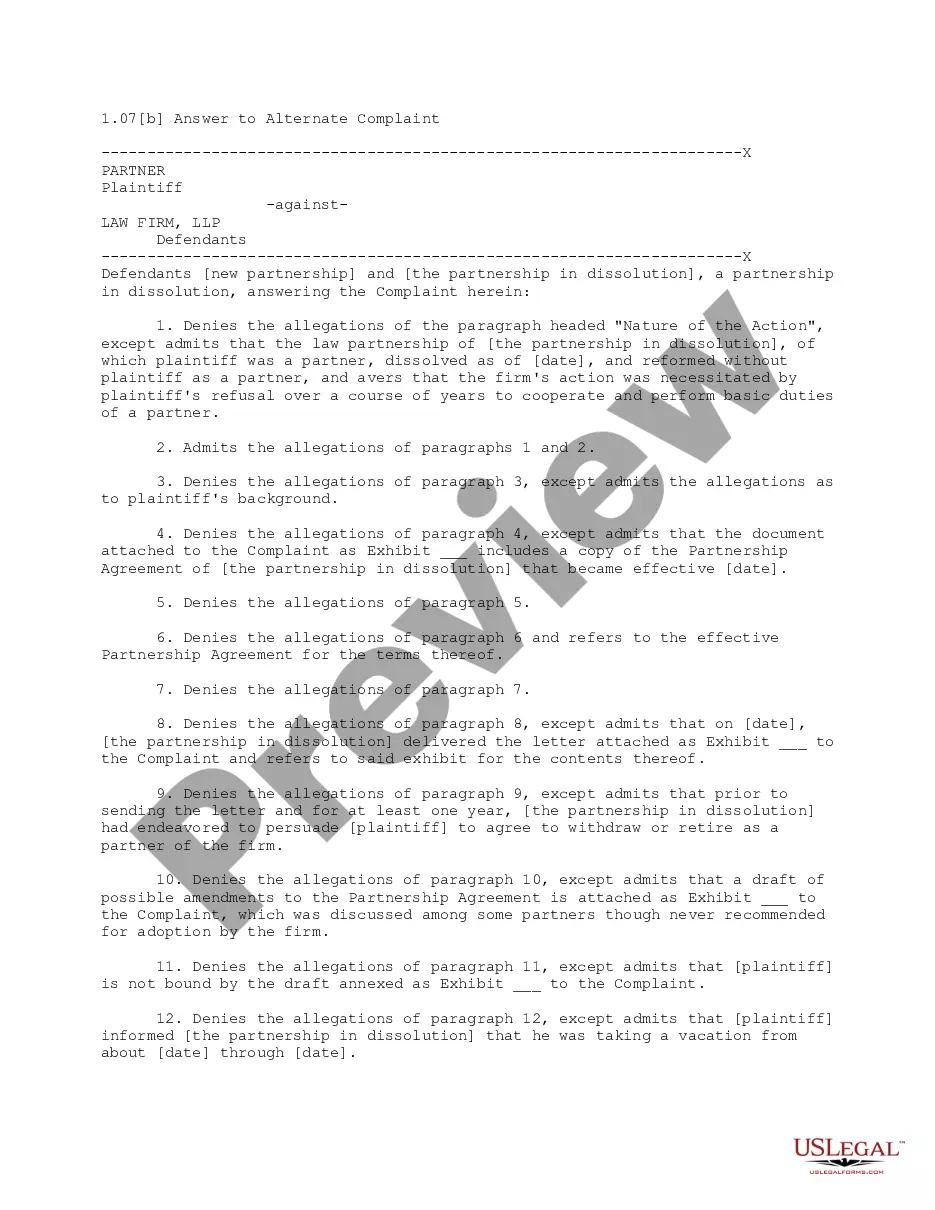
This form, titled "Answer by Defendant in a Civil Lawsuit Alleging the Affirmative Defense of the Cause of Action being Barred by Waiver of Terms of Contract by Plaintiff," allows a defendant to respond to a civil lawsuit while asserting an affirmative defense based on the waiver of contract terms. Unlike straightforward denial forms, this document provides a structured way for defendants to introduce new facts supporting their defense, such as actions taken by the plaintiff that may negate their claims. This form is crucial for effectively communicating a defendant's position in court, especially in complex cases involving contractual disputes.
Form components explained
- Defendant's identification and case caption.
- Affirmative defenses, including claims about waiver of contract terms.
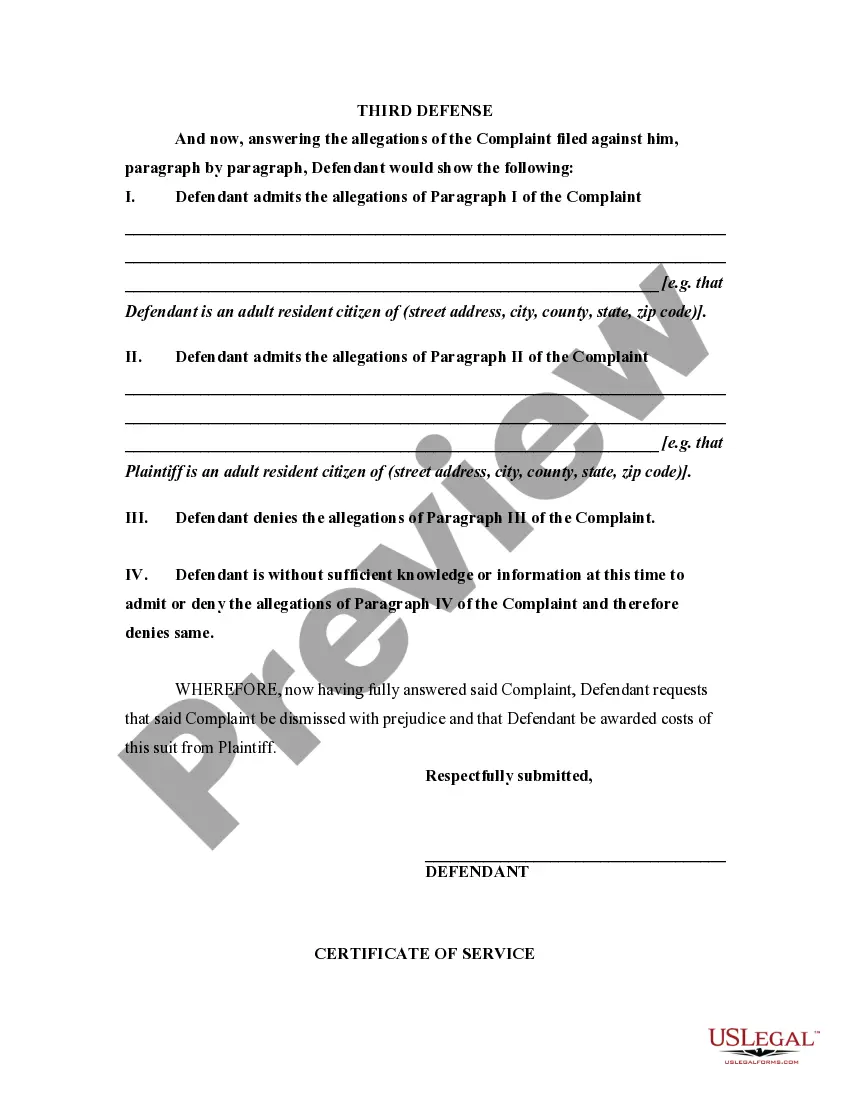
- Admission or denial of specific allegations from the complaint.
- A request for dismissal of the complaint with prejudice.
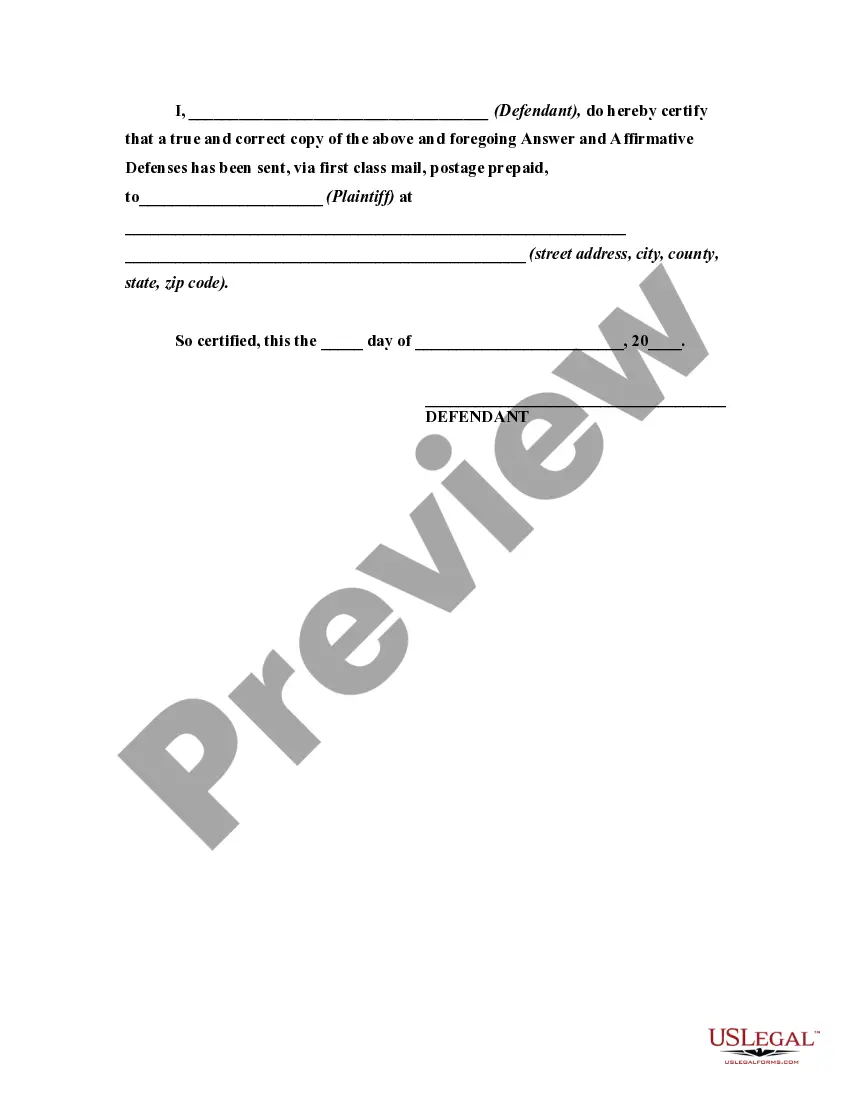
- Certificate of service indicating the delivery of the response to the plaintiff.
When to use this document
This form should be used when you are a defendant in a civil lawsuit who wishes to formally respond to the allegations made against you, while also claiming that certain contract terms have been waived by the plaintiff. It is appropriate in scenarios where you believe that the plaintiff has relinquished their rights to enforce the terms of a contract relevant to the dispute, thus potentially invalidating their claims.
Who this form is for
- Defendants in civil lawsuits involving allegations related to breach of contract.
- Individuals or businesses planning to assert an affirmative defense based on waiver.
- Anyone looking to organize their legal response in a structured manner.
Completing this form step by step
- Identify the defendant and plaintiff clearly at the beginning of the document.
- Specify the affirmative defenses you are claiming, particularly any waivers by the plaintiff.
- Make admissions or denials regarding the allegations as required, using specific details for clarity.
- Sign and date the form to authenticate your response.
- Complete the certificate of service to confirm that the plaintiff has received a copy of your answer.
Notarization guidance
This form does not typically require notarization unless specified by local law. It is advisable to check with your local court rules to determine if notarization is necessary in your specific case.
Get your form ready online
Our built-in tools help you complete, sign, share, and store your documents in one place.
Make edits, fill in missing information, and update formatting in US Legal Forms—just like you would in MS Word.
Download a copy, print it, send it by email, or mail it via USPS—whatever works best for your next step.
Sign and collect signatures with our SignNow integration. Send to multiple recipients, set reminders, and more. Go Premium to unlock E-Sign.
If this form requires notarization, complete it online through a secure video call—no need to meet a notary in person or wait for an appointment.
We protect your documents and personal data by following strict security and privacy standards.

Make edits, fill in missing information, and update formatting in US Legal Forms—just like you would in MS Word.

Download a copy, print it, send it by email, or mail it via USPS—whatever works best for your next step.

Sign and collect signatures with our SignNow integration. Send to multiple recipients, set reminders, and more. Go Premium to unlock E-Sign.

If this form requires notarization, complete it online through a secure video call—no need to meet a notary in person or wait for an appointment.

We protect your documents and personal data by following strict security and privacy standards.
Mistakes to watch out for
- Failing to respond to each allegation in the complaint accurately.
- Neglecting to include all affirmative defenses or waivers you intend to assert.
- Overlooking the certification of service, which may delay your responseâs acceptance.
- Using vague language rather than specific details when admitting or denying claims.
Benefits of completing this form online
- Convenient download option, allowing you to prepare your response whenever needed.
- Edit and tailor the form to fit your specific case circumstances.
- Access to forms drafted by licensed attorneys, ensuring legal accuracy.
- Immediate availability for urgent legal responses.
Legal use & context
- This form is a legal document used in civil litigation to assert defenses against claims.
- It provides a structured way to communicate essential information to the court regarding the defendant's position.
- Filing this form correctly is crucial for preserving legal rights and avoiding default judgments.
Summary of main points
- The form is essential for defendants to properly respond to lawsuits claiming a breach of contract.
- It allows for the introduction of affirmative defenses, such as waivers, to challenge the plaintiffâs claims.
- Proper completion and submission of the form can significantly impact the outcome of a civil lawsuit.
Looking for another form?

Form popularity
FAQ
A party presents a justiciable defense of estoppel if he or she shows a misrepresentation of a material fact upon which the party asserting estoppel detrimentally relied.
The most common negligence defenses are contributory negligence, comparative negligence, and assumption of risk. This article will discuss all three defenses, when they're used, and how they're established.
An affirmative defense operates to prevent conviction even when the prosecutor has proof beyond a reasonable doubt as to every element of the crime. Some jurisdictions place the burden on the defendant to prove the defense, while others require that the prosecution disprove the defense beyond a reasonable doubt.
An affirmative defense to a civil lawsuit or criminal charge is a fact or set of facts other than those alleged by the plaintiff or prosecutor which, if proven by the defendant, defeats or mitigates the legal consequences of the defendant's otherwise unlawful conduct.
An affirmative defense of intervening cause may be used if the defendant shows the court that, while the plaintiff suffered injuries or damages due to the defendant's negligence, those injuries or damages were made worse by the plaintiff's actions following that incident.
A new fact or set of facts that operates to defeat a claim even if the facts supporting that claim are true. A plaintiff sets forth a claim in a civil action by making statements in the document called the complaint. An affirmative defense is also allowed under rules of CRIMINAL PROCEDURE.
While the availability of an affirmative defense will depend on the state, there are generally two categories of affirmative defenses, justifications and excuses.
Affirmative defenses are legal defenses that raise new facts or issues not raised in the Complaint. If you want the court to consider your legal defenses you MUST include them in your Answer. Therefore, any possible defense you might want the court to consider at trial should be in your Answer.