Answer by Defendant in a Civil Lawsuit Alleging the Affirmative Defense of the Cause of Action being Barred by Laches
Understanding this form
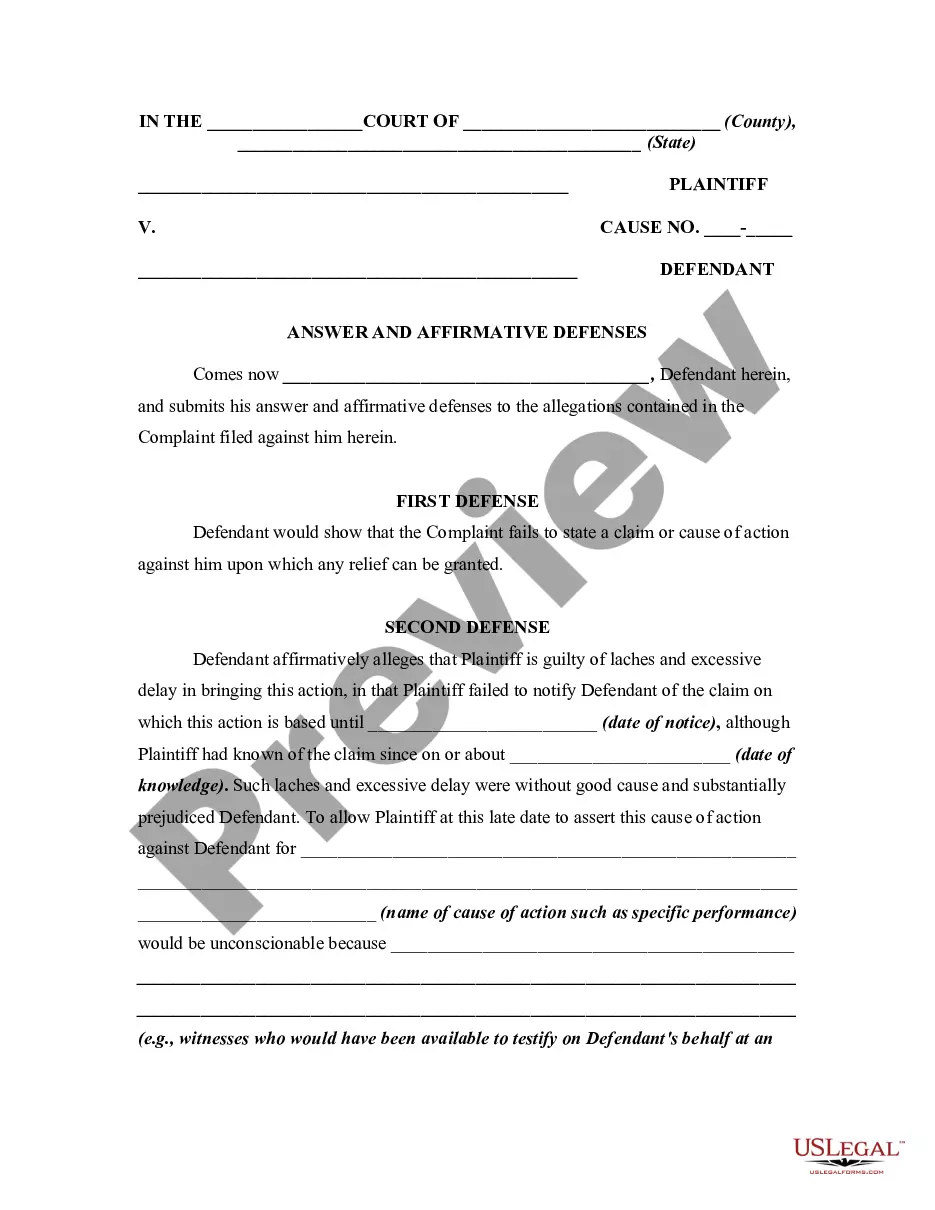
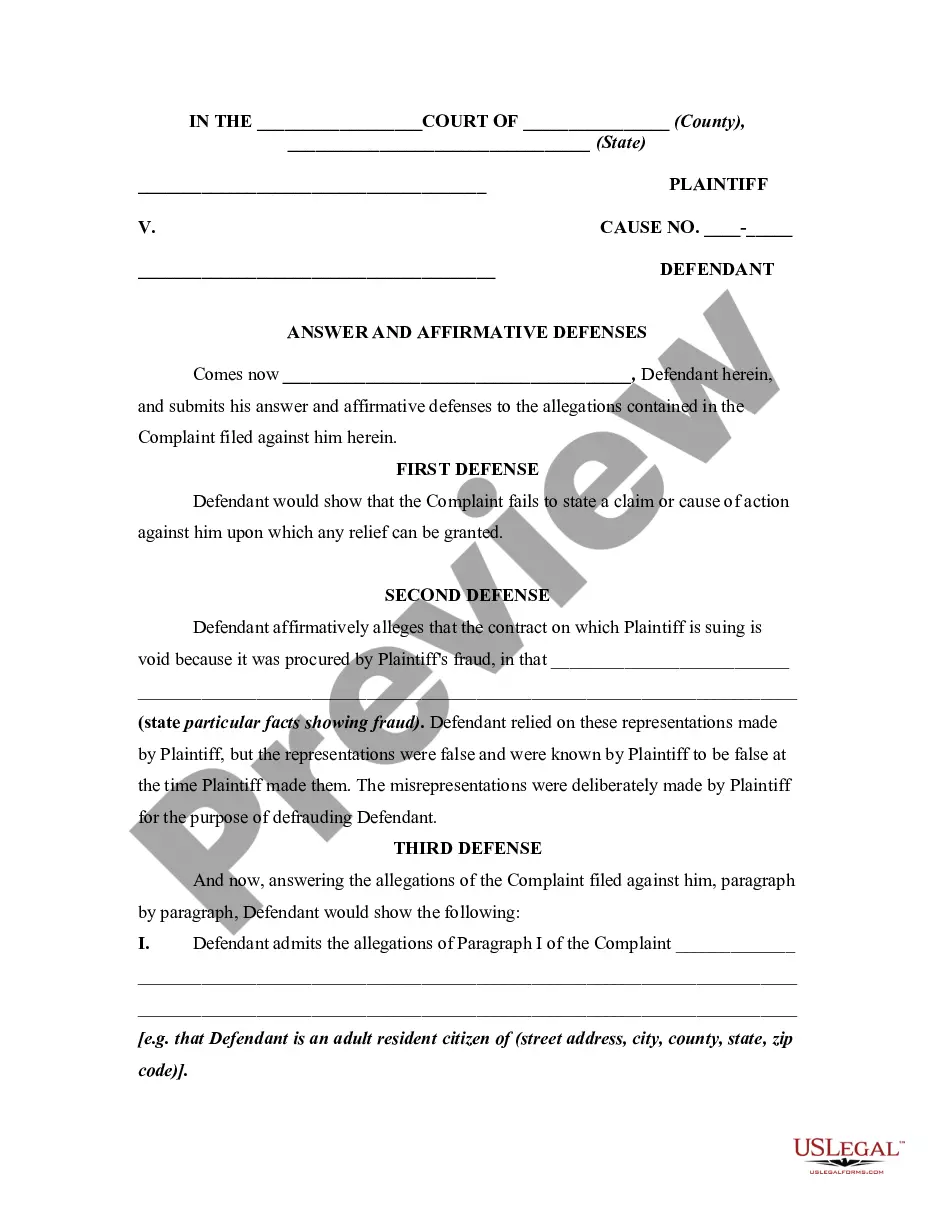
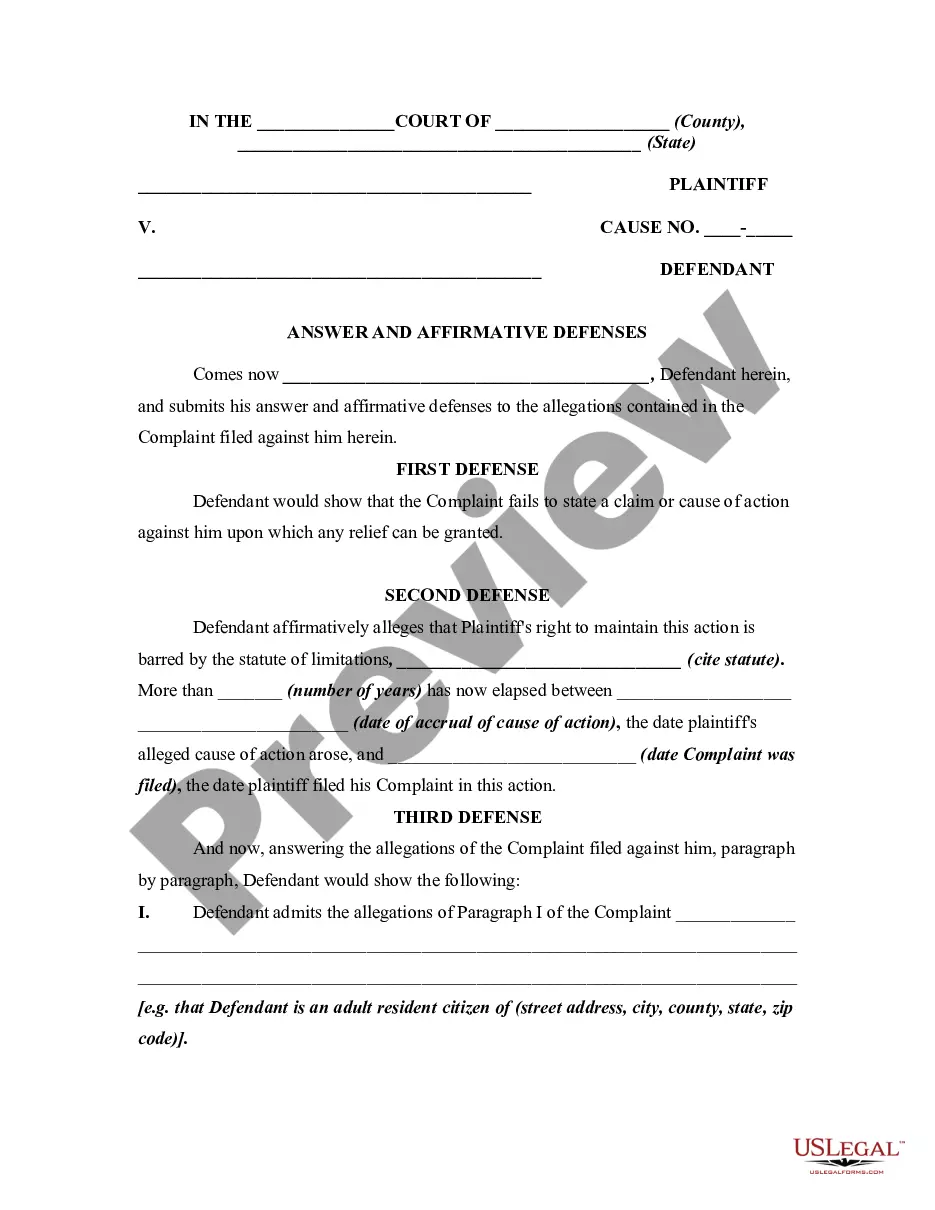
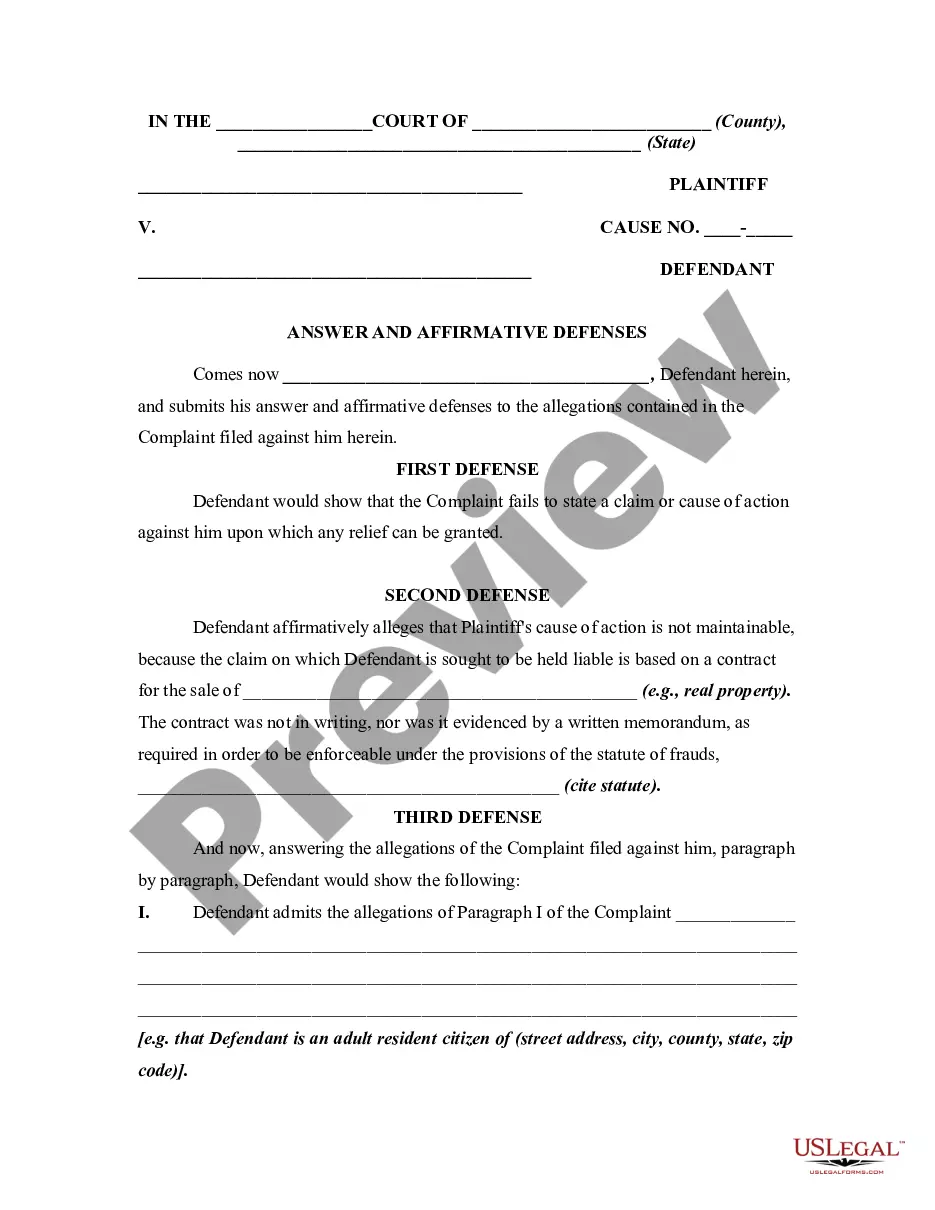
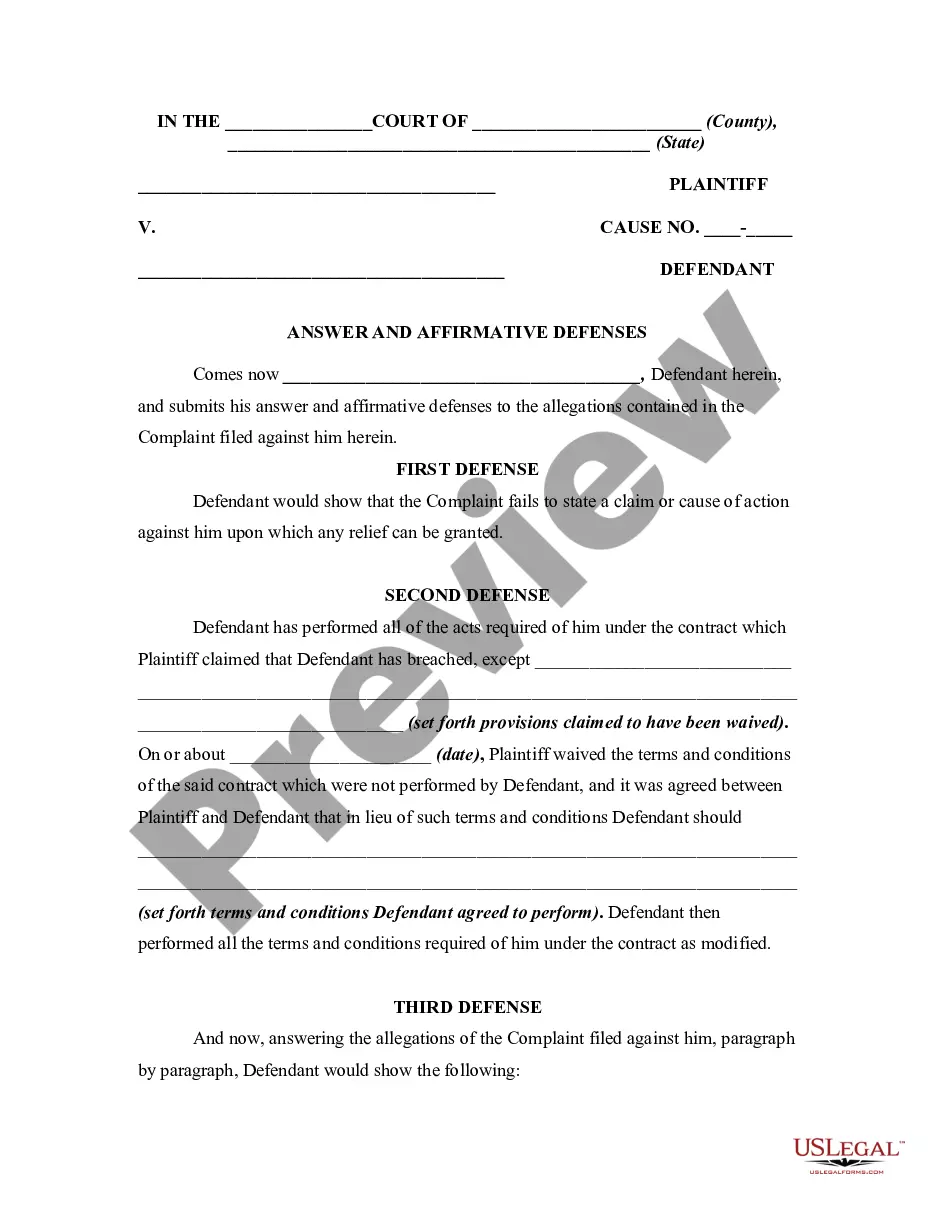
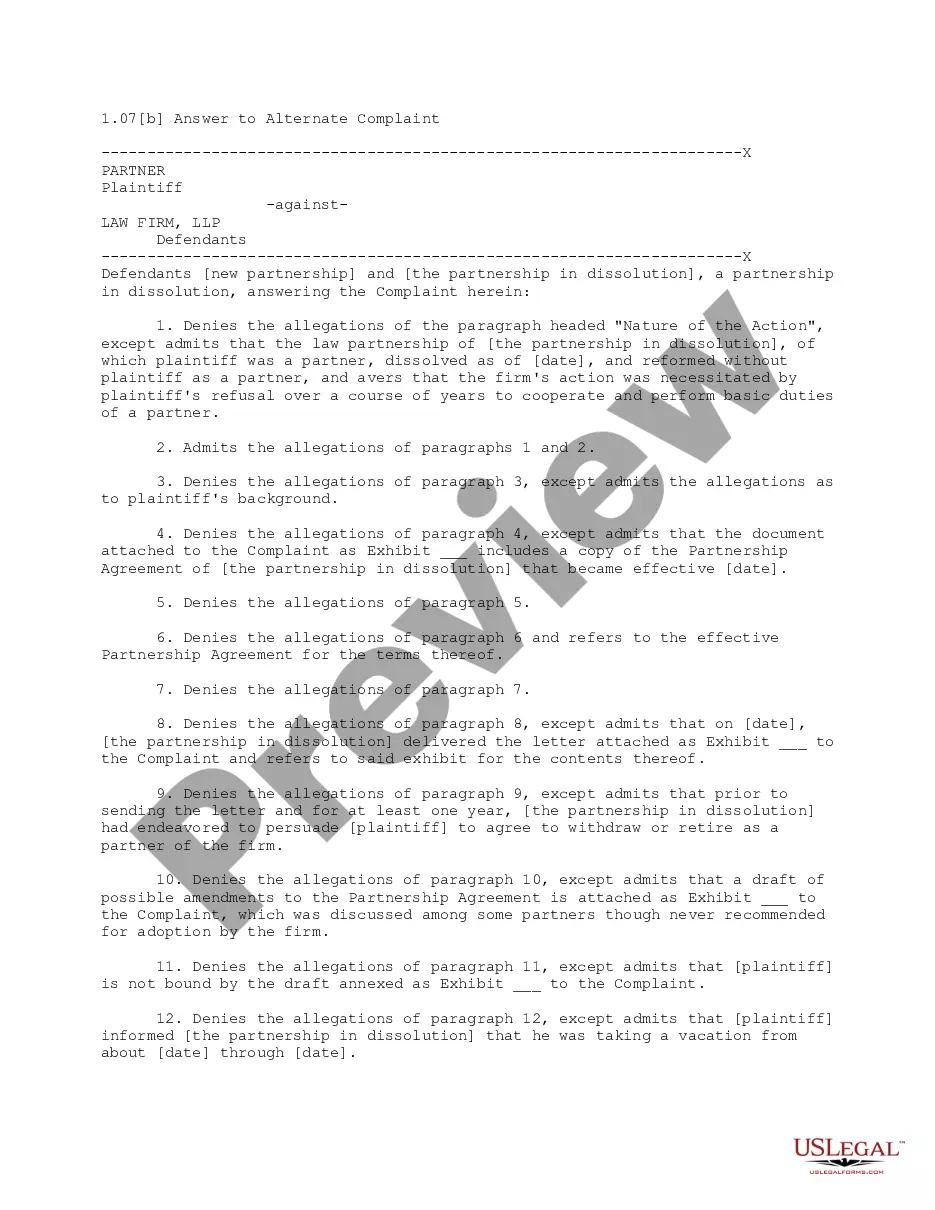
This form is known as the Answer by Defendant in a Civil Lawsuit Alleging the Affirmative Defense of the Cause of Action Being Barred by Laches. It allows a defendant to respond to a plaintiff's complaint while asserting the affirmative defense of laches, which claims that the plaintiff has unreasonably delayed in bringing their action, thereby prejudicing the defendant. This form differs from standard answers by specifically addressing the laches doctrine and providing a framework for the defense.
Main sections of this form
- Identification of parties involved in the lawsuit, including the plaintiff and defendant.
- Preliminary defenses asserting that the complaint fails to state a valid claim.
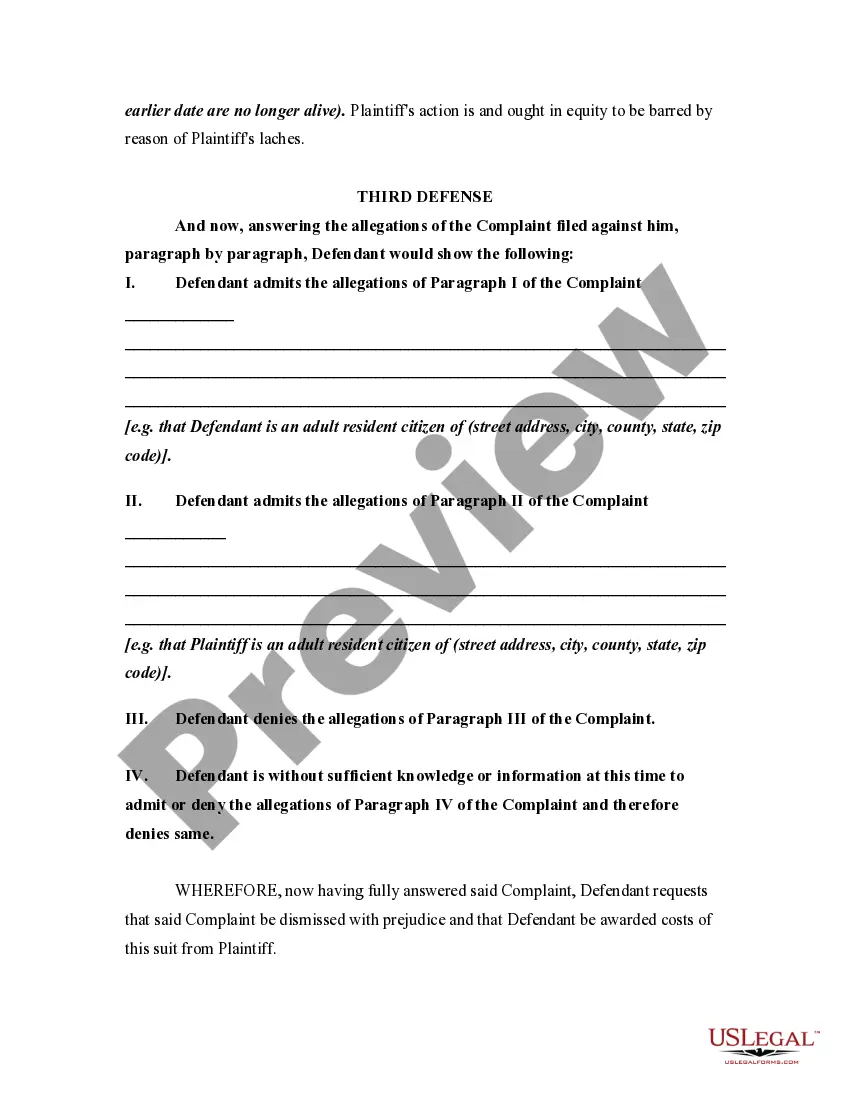
- Specific allegations regarding the defense of laches, including dates and relevant circumstances.
- Paragraph-by-paragraph response to the complaint, detailing admissions, denials, and lack of knowledge.
- A request for dismissal of the complaint with prejudice and for the recovery of costs.
When to use this document
Use this form when you are a defendant in a civil lawsuit and want to respond to the allegations while asserting that the case should be dismissed due to the plaintiff's unreasonable delay in bringing the claim. This is particularly relevant if you believe that this delay has caused you significant prejudice in defending against the claims made by the plaintiff.
Who can use this document
- Defendants in civil lawsuits who are facing accusations that may be barred by laches.
- Individuals who wish to assert defenses beyond mere denial of allegations.
- Parties seeking to dispute claims due to delays that have impacted their ability to defend themselves effectively.
How to prepare this document
- Identify and clearly state the parties involved (plaintiff and defendant) at the top of the document.
- Outline your defenses, starting with general objections to the complaint and then detailing your laches defense.
- Respond to each paragraph of the plaintiff's complaint, noting admissions, denials, or lack of knowledge where applicable.
- Include a closing statement requesting dismissal of the complaint and any costs incurred.
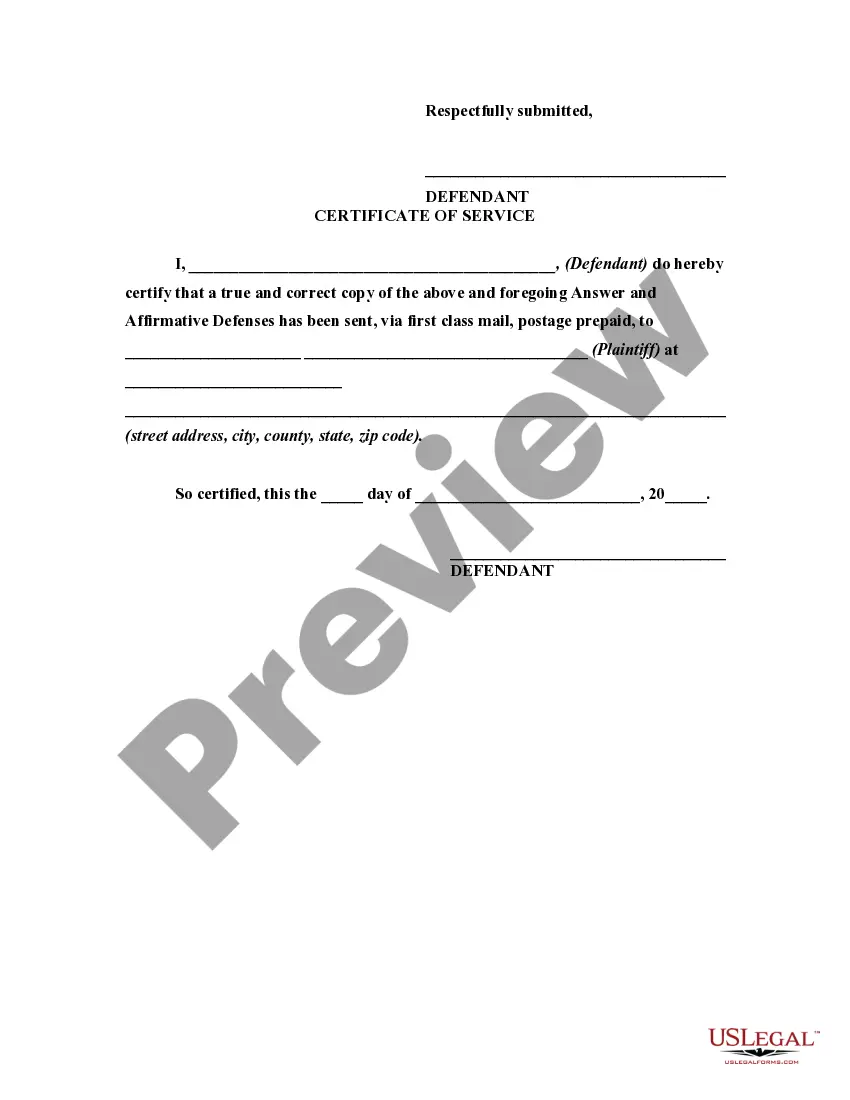
- Provide your certification of service to confirm the plaintiff has received a copy of your answer.
Does this form need to be notarized?
This form does not typically require notarization unless specified by local law. Itâs advisable to check with relevant state regulations or consult a legal professional for confirmation.
Get your form ready online
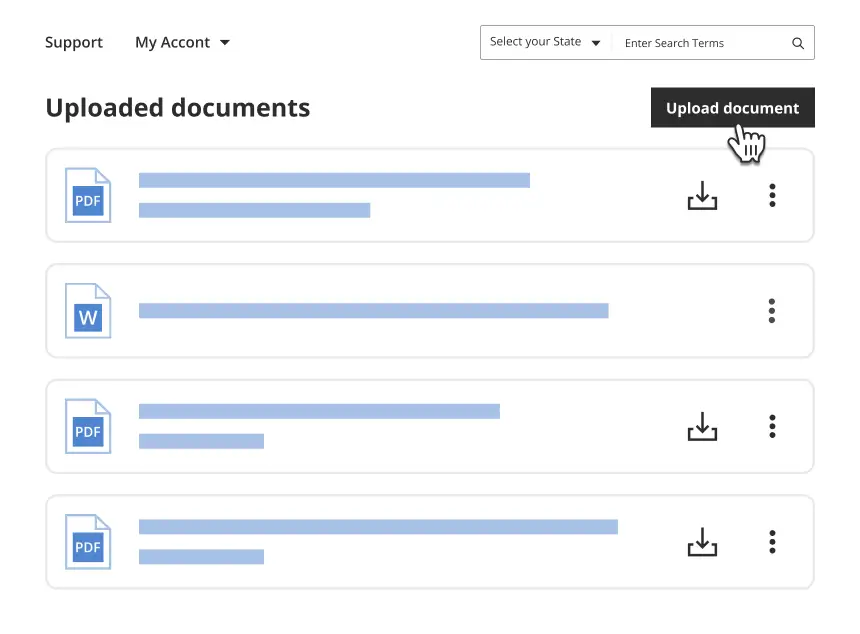
Our built-in tools help you complete, sign, share, and store your documents in one place.
Make edits, fill in missing information, and update formatting in US Legal Forms—just like you would in MS Word.
Download a copy, print it, send it by email, or mail it via USPS—whatever works best for your next step.
Sign and collect signatures with our SignNow integration. Send to multiple recipients, set reminders, and more. Go Premium to unlock E-Sign.
If this form requires notarization, complete it online through a secure video call—no need to meet a notary in person or wait for an appointment.
We protect your documents and personal data by following strict security and privacy standards.
Make edits, fill in missing information, and update formatting in US Legal Forms—just like you would in MS Word.
Download a copy, print it, send it by email, or mail it via USPS—whatever works best for your next step.
Sign and collect signatures with our SignNow integration. Send to multiple recipients, set reminders, and more. Go Premium to unlock E-Sign.

If this form requires notarization, complete it online through a secure video call—no need to meet a notary in person or wait for an appointment.
We protect your documents and personal data by following strict security and privacy standards.
Typical mistakes to avoid
- Failing to respond to all allegations in the complaint, which could limit defenses.
- Not providing enough detail about how the plaintiff's delay has prejudiced the defense.
- Using technical language that may confuse the court or the parties involved.
- Neglecting to confirm service of the answer to the plaintiff, which is essential for proper legal process.
Benefits of completing this form online
- Convenience of downloading and completing the form at your own pace.
- Editability allows customization to fit the specific context of your case.
- Access to legally vetted templates crafted by licensed attorneys, ensuring compliance with legal standards.
Legal use & context
- The doctrine of laches can be a decisive factor in civil disputes when delays have affected the defenseâs ability to argue their case.
- Properly asserting laches can potentially lead to dismissal of the complaint, emphasizing the need for timely action by plaintiffs.
Looking for another form?





Form popularity
FAQ
The name of the court - you can find this at the top of the Complaint you got. The Court Division - this is the county where the complaint was filed. The Docket No. The Plaintiff's name. The Defendant's name - your name. The kind of complaint you are answering.
An affirmative defense operates to prevent conviction even when the prosecutor has proof beyond a reasonable doubt as to every element of the crime. Some jurisdictions place the burden on the defendant to prove the defense, while others require that the prosecution disprove the defense beyond a reasonable doubt.
The defendant may also raise counterclaims or affirmative defenses. If a defendant does raise counterclaims in her answer, the plaintiff must respond to those counterclaims with a pleading called an "answer to a counterclaim." The form and content of an "answer to a counterclaim" is similar to that of an answer.
A party presents a justiciable defense of estoppel if he or she shows a misrepresentation of a material fact upon which the party asserting estoppel detrimentally relied.
An affirmative defense to a civil lawsuit or criminal charge is a fact or set of facts other than those alleged by the plaintiff or prosecutor which, if proven by the defendant, defeats or mitigates the legal consequences of the defendant's otherwise unlawful conduct.
Affirmative defenses are legal defenses that raise new facts or issues not raised in the Complaint. If you want the court to consider your legal defenses you MUST include them in your Answer. Therefore, any possible defense you might want the court to consider at trial should be in your Answer.