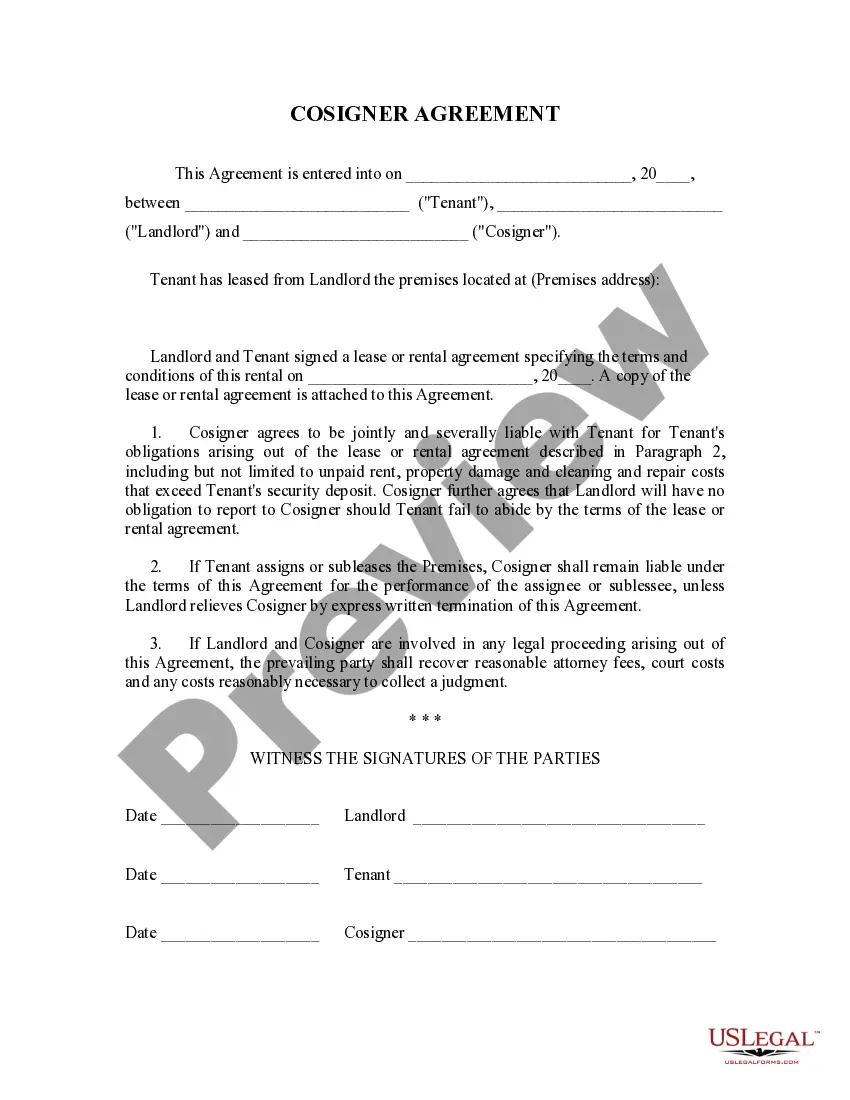
Consent, Waiver and Release from Liability, and Assumption of Risk for Teeth Whitening Treatment
Understanding this form
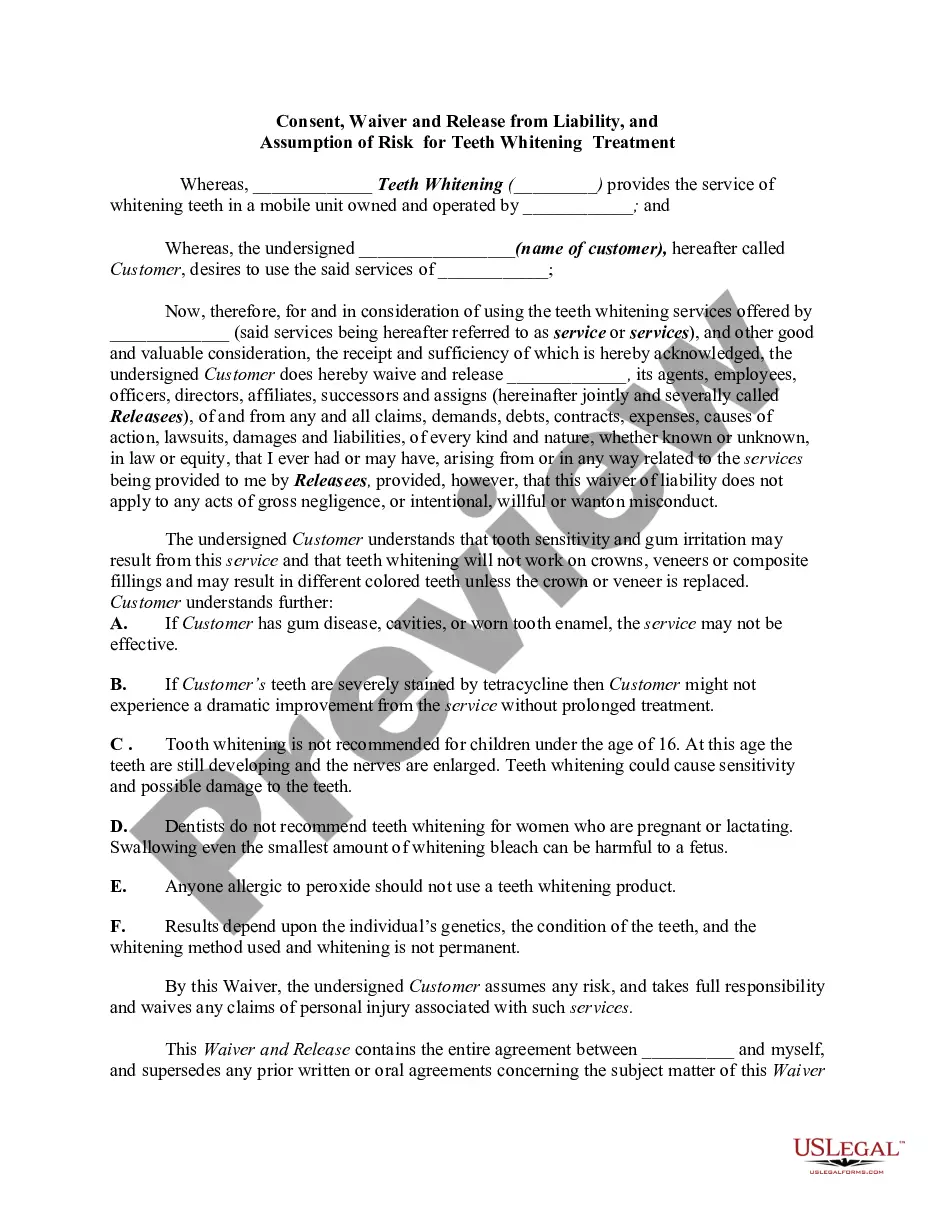
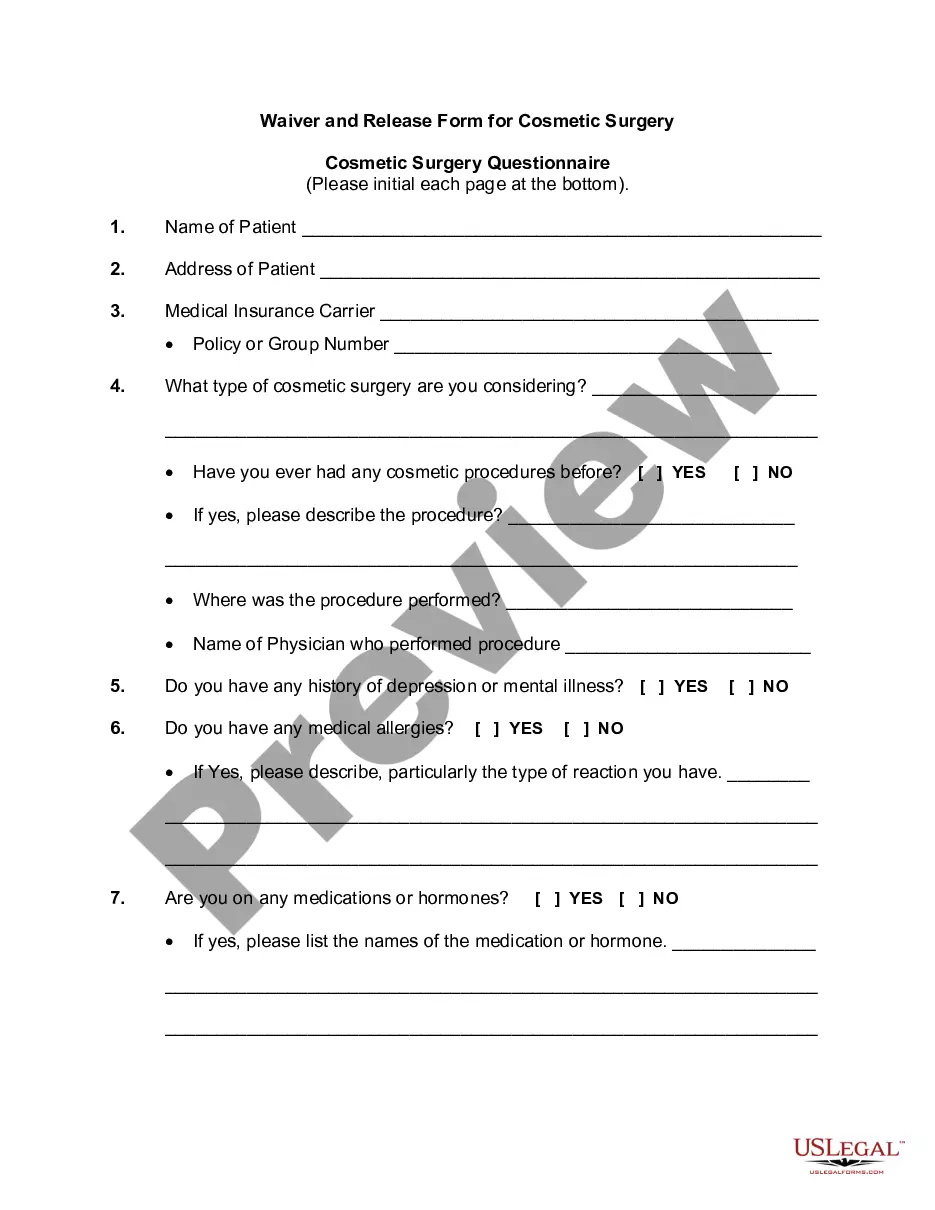
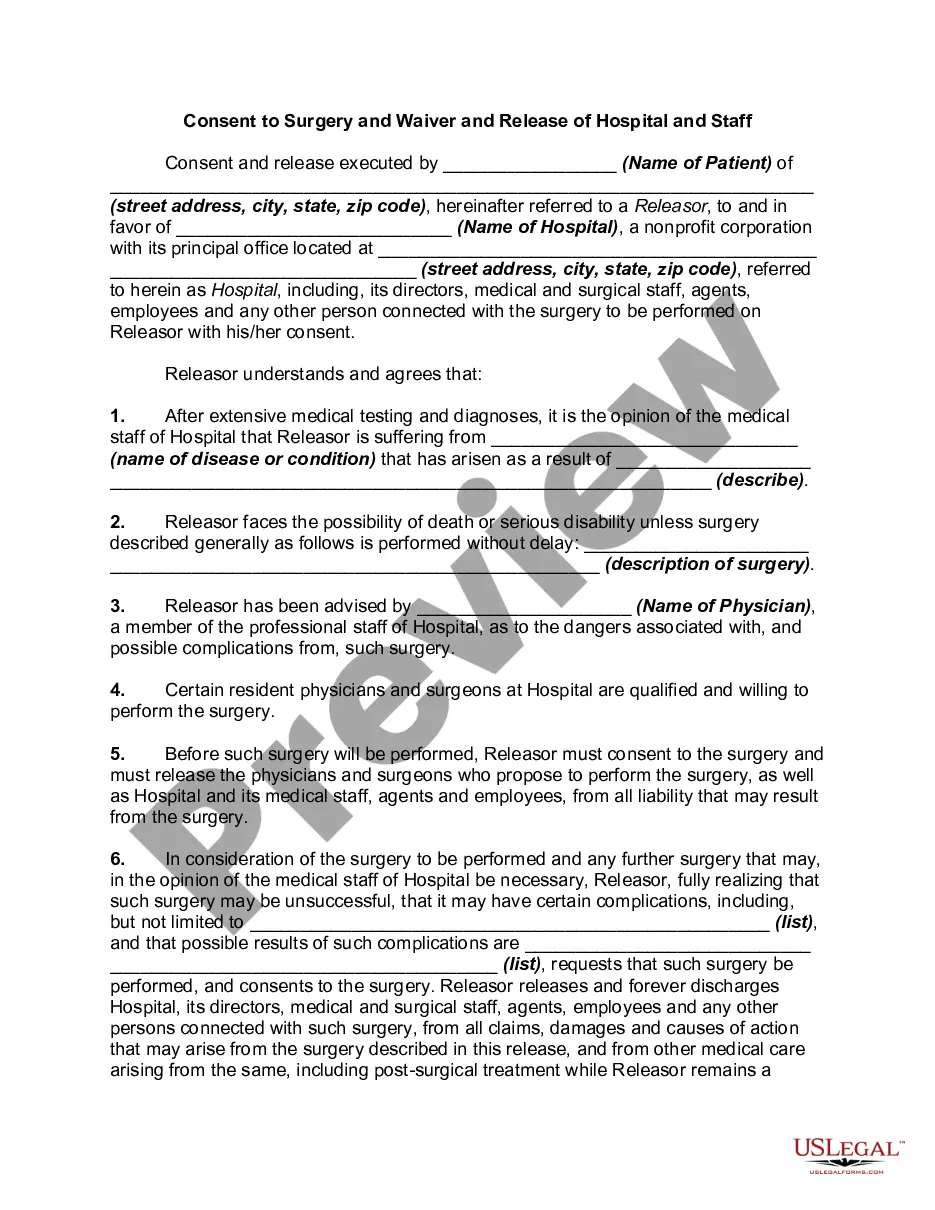
The Consent, Waiver and Release from Liability, and Assumption of Risk for Teeth Whitening Treatment is a legal document that allows customers to acknowledge and accept the risks associated with teeth whitening services. This form serves to protect the service provider from liability by having the customer voluntarily waive their right to sue for any injuries or adverse effects that may occur during or after the treatment. Unlike general waivers, this document specifically addresses the nuances related to cosmetic dental procedures and the inherent risks such as tooth sensitivity or gum irritation.
What’s included in this form
- Identification of the parties involved: the service provider and the customer.
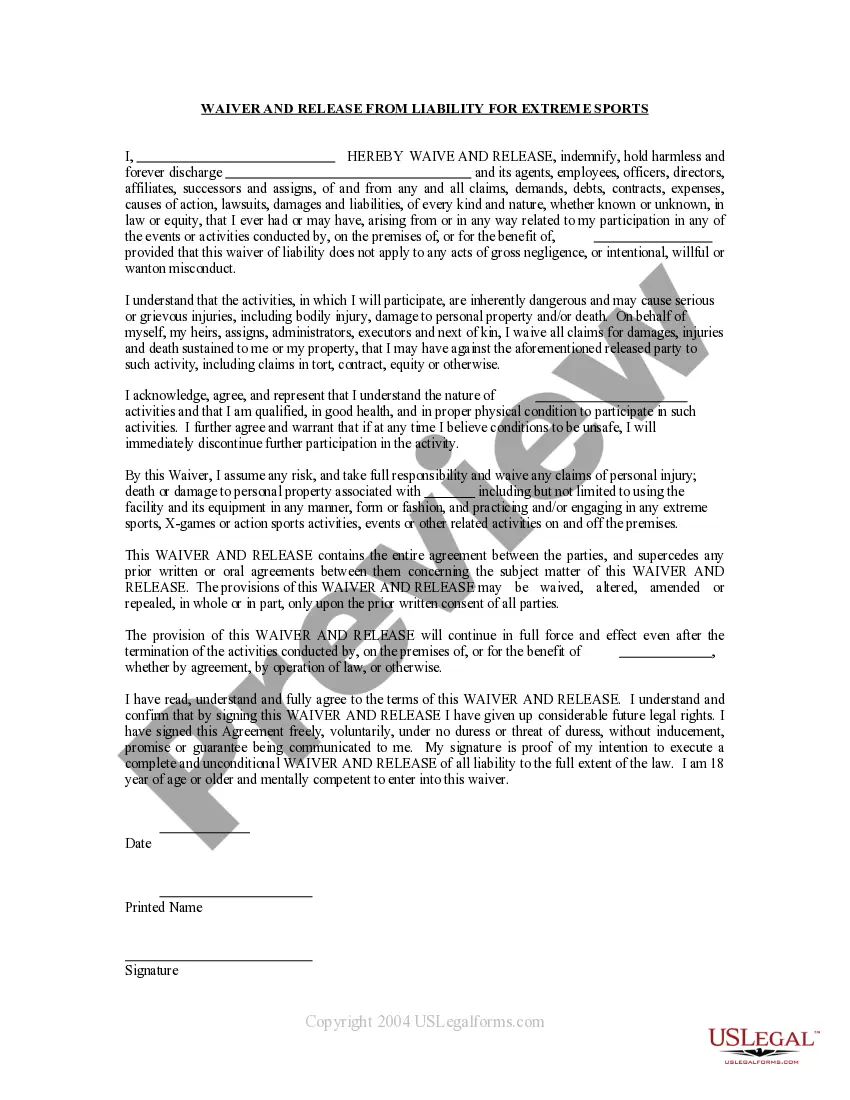
- A clear waiver release of liability, covering various claims related to the teeth whitening service.
- Acknowledgment of specific risks associated with teeth whitening, including potential outcomes and contraindications.
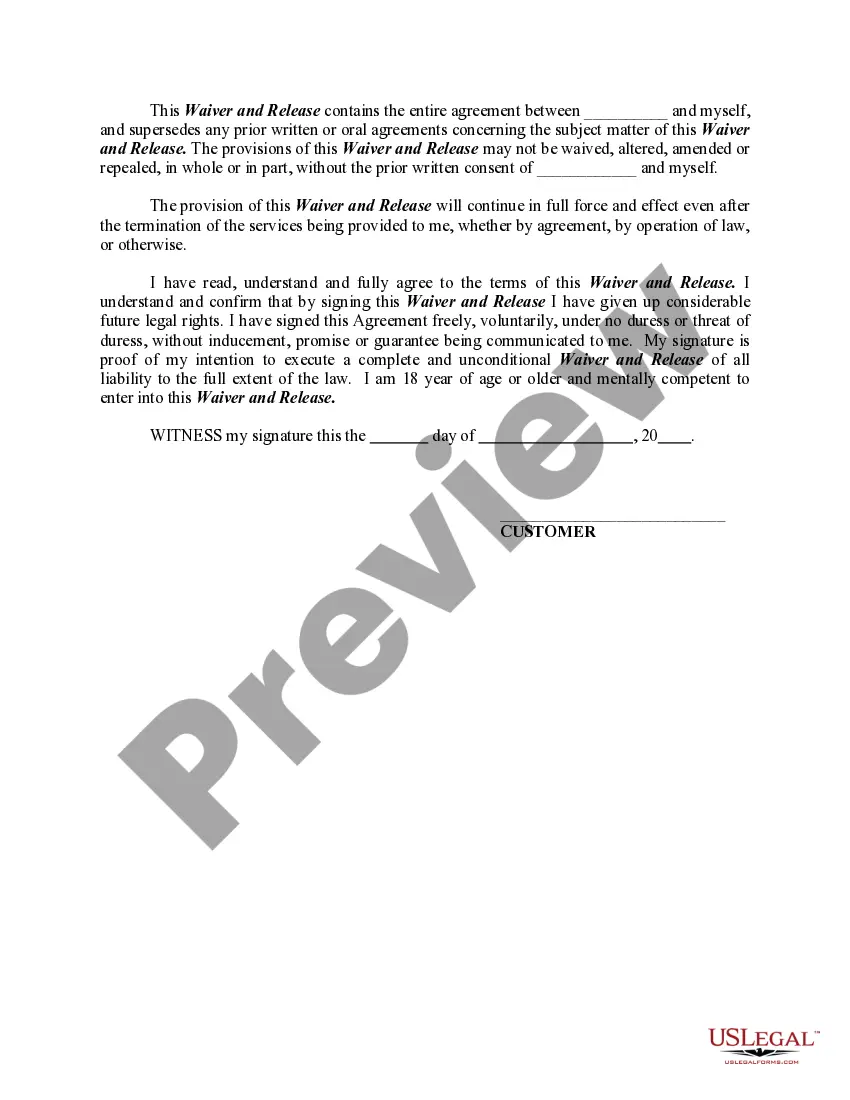
- Confirmation of the customer's age and competency to sign the document.
- A statement outlining the understanding that this waiver does not cover gross negligence or intentional misconduct.
When to use this form
This form should be used whenever a customer seeks teeth whitening services, particularly in settings where treatments are conducted outside a traditional dental office, such as mobile whitening units. It is crucial for the customer to understand and acknowledge the risks involved before undergoing the procedure. The form protects both the customer and the service provider by clearly outlining expectations and liabilities.
Who should use this form
- Customers planning to undergo teeth whitening treatments with a service provider.
- Service providers offering mobile teeth whitening services to clients.
- Minors' guardians when the treatment is sought for individuals under the age of 18.
How to complete this form
- Identify the service provider and specify their business name.
- Enter the name of the customer seeking teeth whitening services.
- Read and confirm the risks and conditions outlined in the waiver.
- Sign and date the document to indicate acceptance of the terms.
- Ensure a witness signs the agreement if required by local laws.
Notarization guidance
This form does not typically require notarization unless specified by local law. However, it is advisable to check state-specific regulations to ensure compliance and enforceability.
Get your form ready online
Our built-in tools help you complete, sign, share, and store your documents in one place.
Make edits, fill in missing information, and update formatting in US Legal Forms—just like you would in MS Word.
Download a copy, print it, send it by email, or mail it via USPS—whatever works best for your next step.
Sign and collect signatures with our SignNow integration. Send to multiple recipients, set reminders, and more. Go Premium to unlock E-Sign.
If this form requires notarization, complete it online through a secure video call—no need to meet a notary in person or wait for an appointment.
We protect your documents and personal data by following strict security and privacy standards.

Make edits, fill in missing information, and update formatting in US Legal Forms—just like you would in MS Word.

Download a copy, print it, send it by email, or mail it via USPS—whatever works best for your next step.

Sign and collect signatures with our SignNow integration. Send to multiple recipients, set reminders, and more. Go Premium to unlock E-Sign.

If this form requires notarization, complete it online through a secure video call—no need to meet a notary in person or wait for an appointment.

We protect your documents and personal data by following strict security and privacy standards.
Typical mistakes to avoid
- Failing to read the waiver thoroughly before signing.
- Not providing accurate information about dental health conditions.
- Overlooking the importance of having a witness for the signature if mandated.
Why use this form online
- Convenient access to legal forms anytime and from anywhere.
- Easy editing capabilities to customize for specific needs.
- Reliable templates drafted by licensed attorneys to ensure legal compliance.
Looking for another form?


Form popularity
FAQ
"Assumption of the risk" is a legal doctrine that may prevent an injured person from winning a personal injury lawsuit or getting an injury-related insurance settlement. The idea is that the plaintiff can't hold the defendant responsible if the plaintiff knowingly exposed him or herself to the possibility of an injury.
In summary: The assumption of risk doctrine does have a place in cases in which a patient rejected proper treatment despite appropriate warning but it does not apply, through informed consent, to cases in which the patient agreed to a recommended treatment after having been warned of its risks.
Voluntary assumption of risk means that when a person engages in an activity, and they accept and are aware of the risks inherent in that activity, they cannot later complain if they sustain an injury during the activity.
Primary vs. "Primary" assumption of risk occurs when the plaintiff knows about a particular risk andthrough words or conductaccepts that risk, thereby relieving the defendant of its duty of care. The primary assumption of risk defense operates as a complete bar to recovery.