Agreement to Sell Business by Sole Proprietorship Including Right to Tradename and Business Franchise with Assignment of Franchise Subject to Franchisor Approval
What this document covers
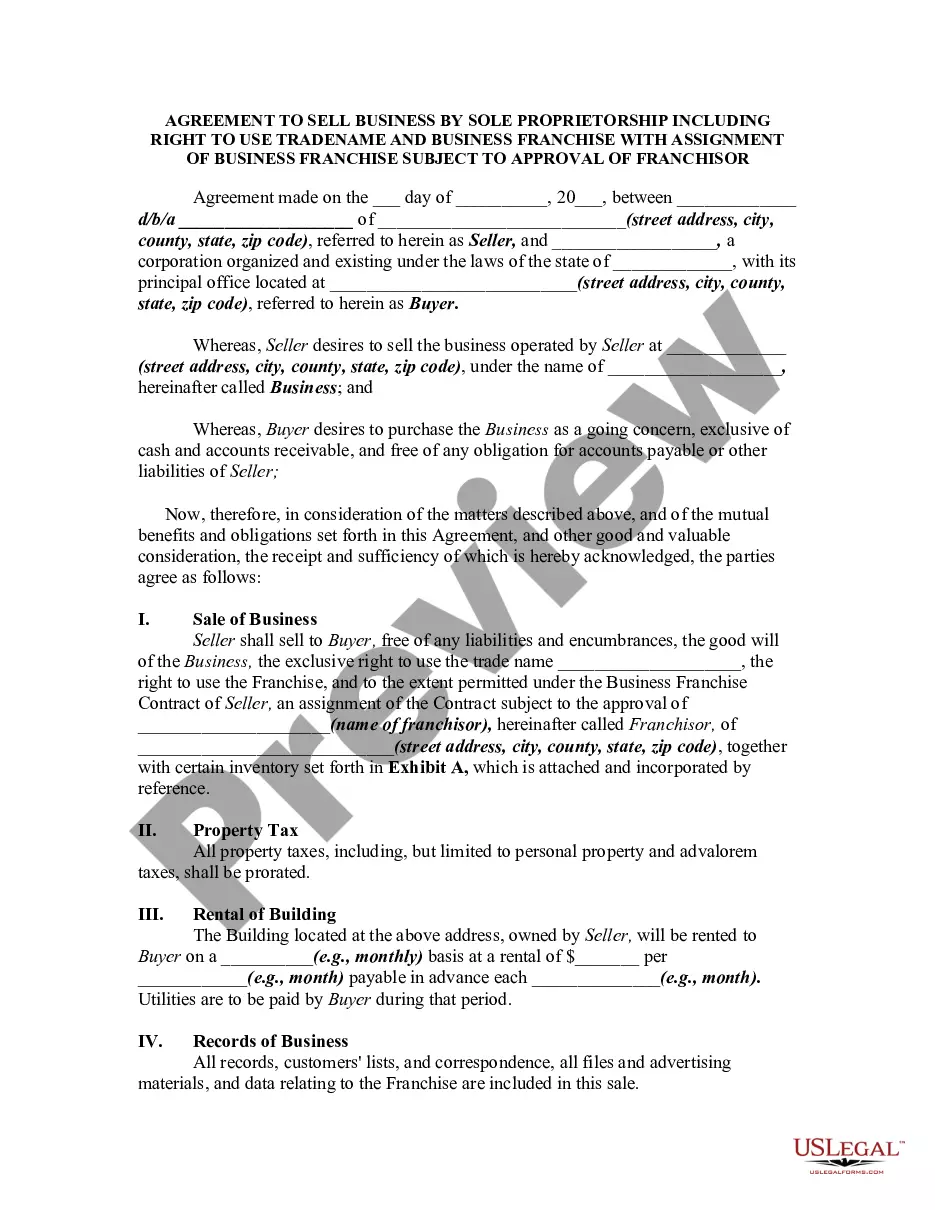
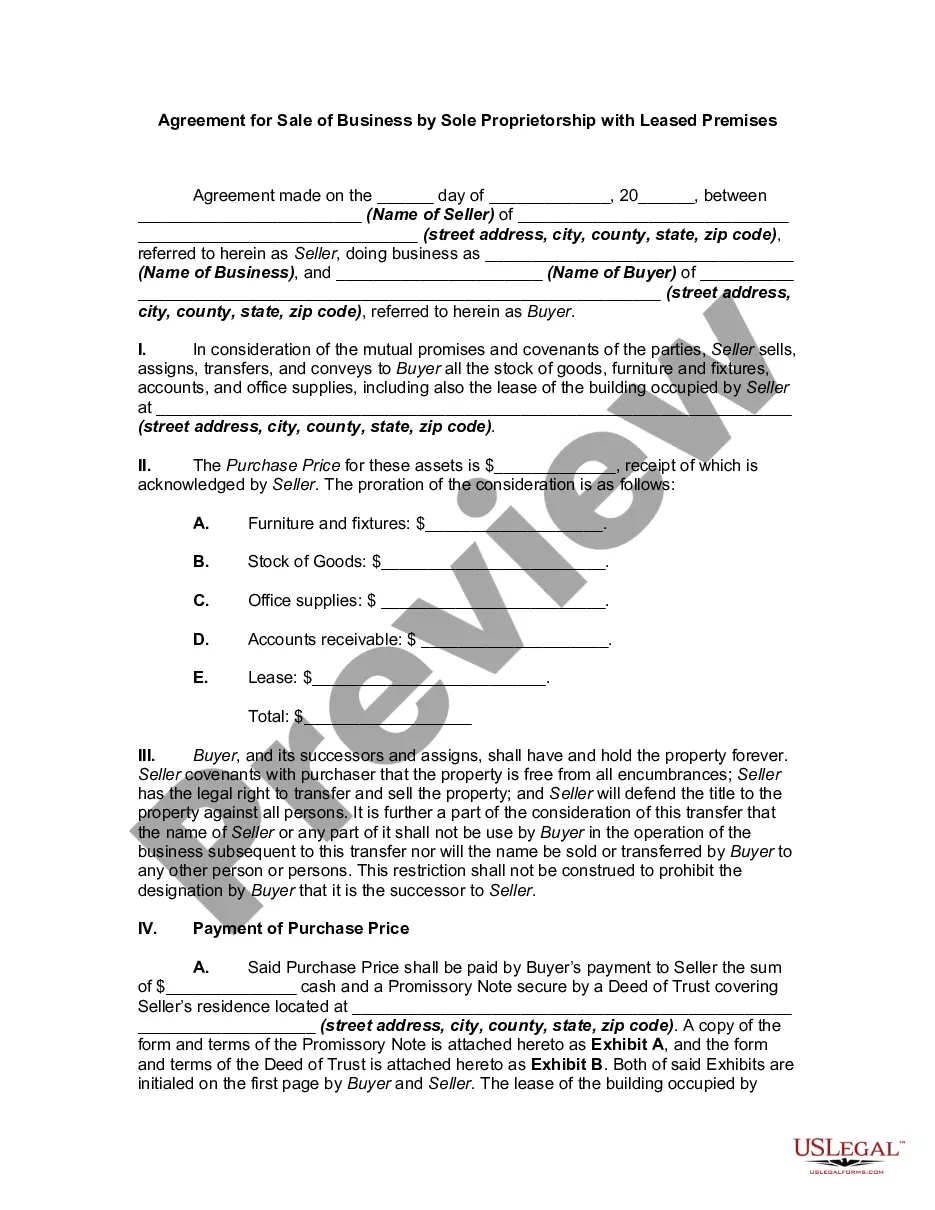
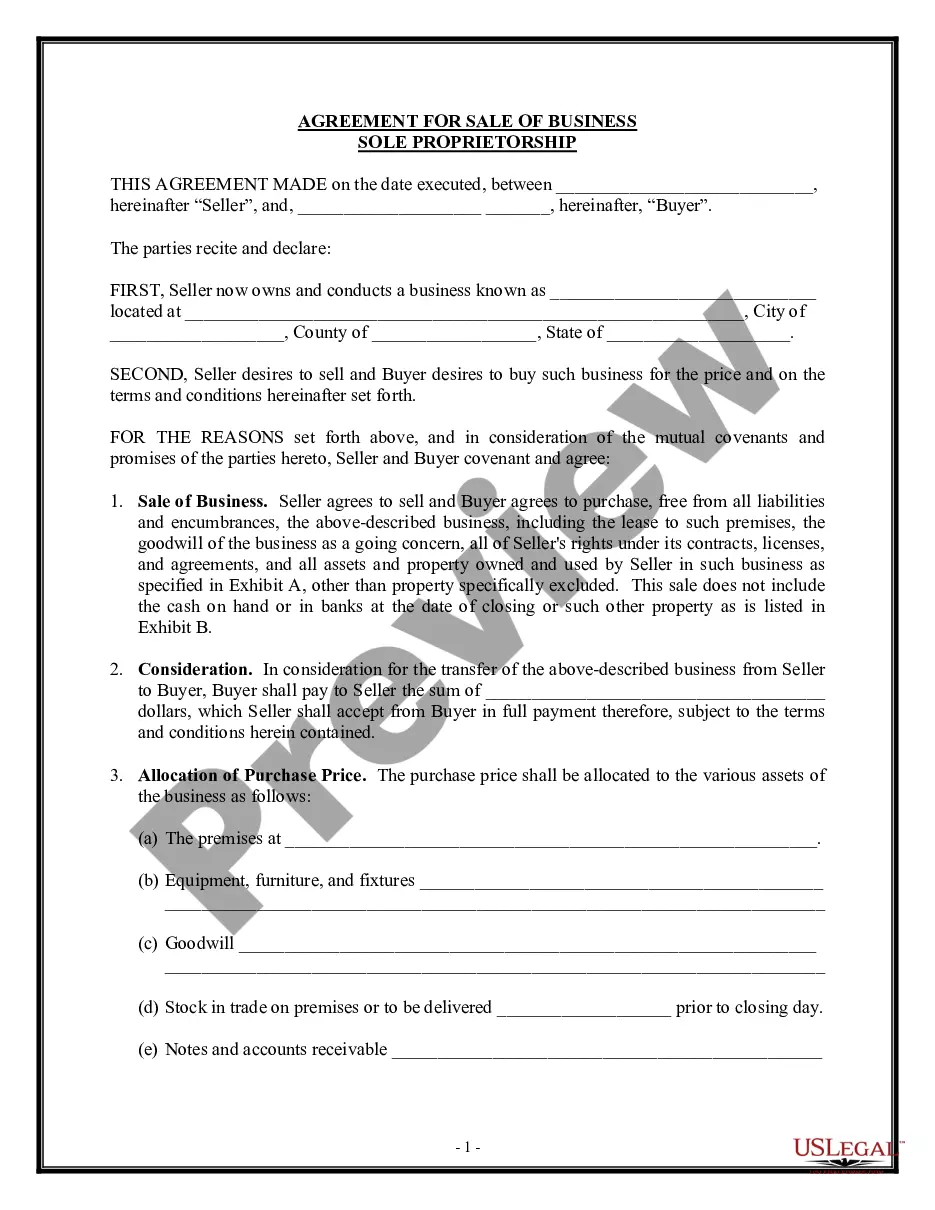
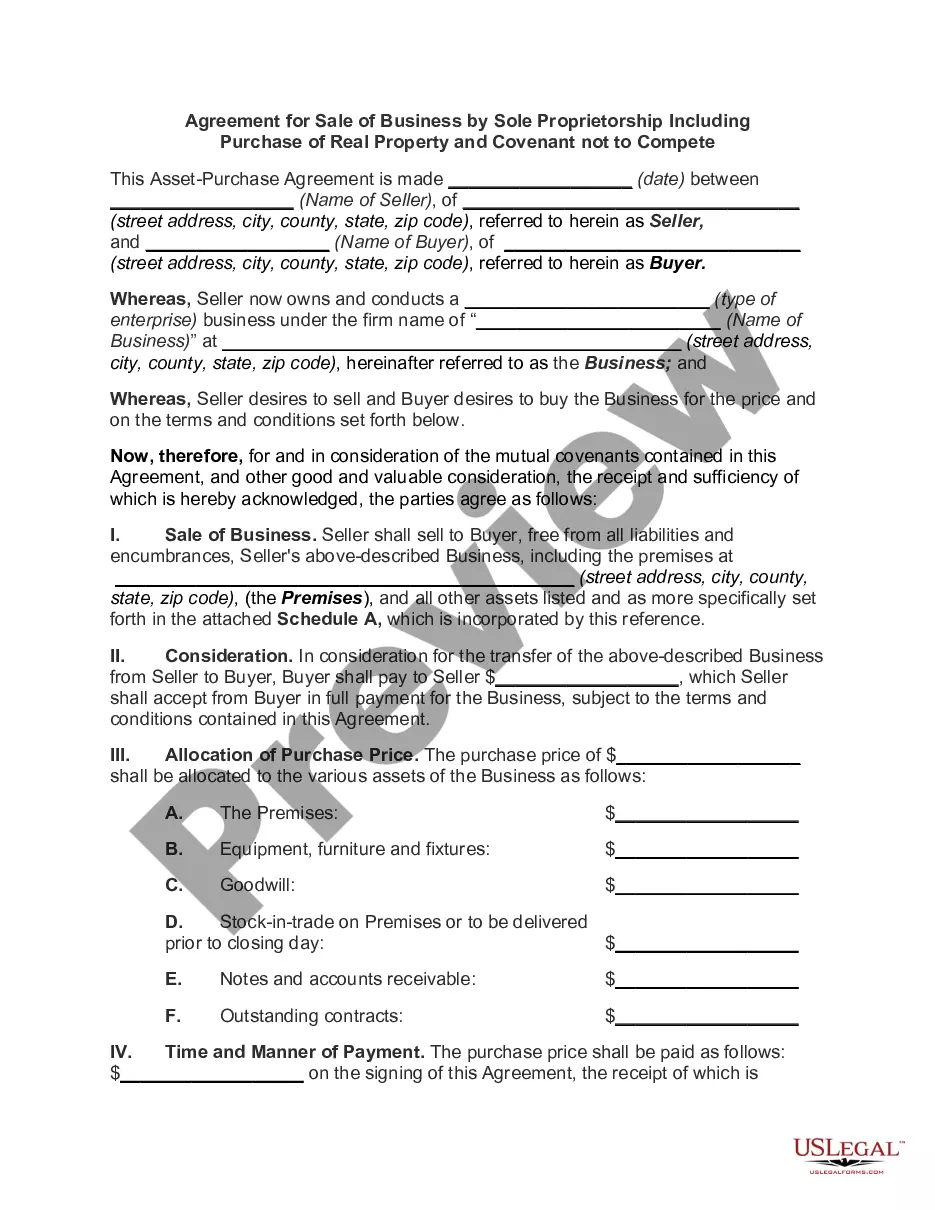
The Agreement to Sell Business by Sole Proprietorship is a legal document that facilitates the sale of a business operated by a sole proprietorship, including the rights to its tradename and franchise. This form outlines the terms of the sale, including the transfer of ownership and any obligations between the seller and buyer, distinguishing it from standard sales agreements. It ensures that both parties understand the specifics of the transaction, including franchisor approval if applicable.
What’s included in this form
- Parties involved: Identifies the seller and buyer by name and address.
- Description of the business: Details the business being sold, including its location and tradename.
- Sale terms: Defines what is included in the sale and outlines any liabilities.
- Property tax and rental agreement: Specifies how property taxes will be handled and rental terms for the property.
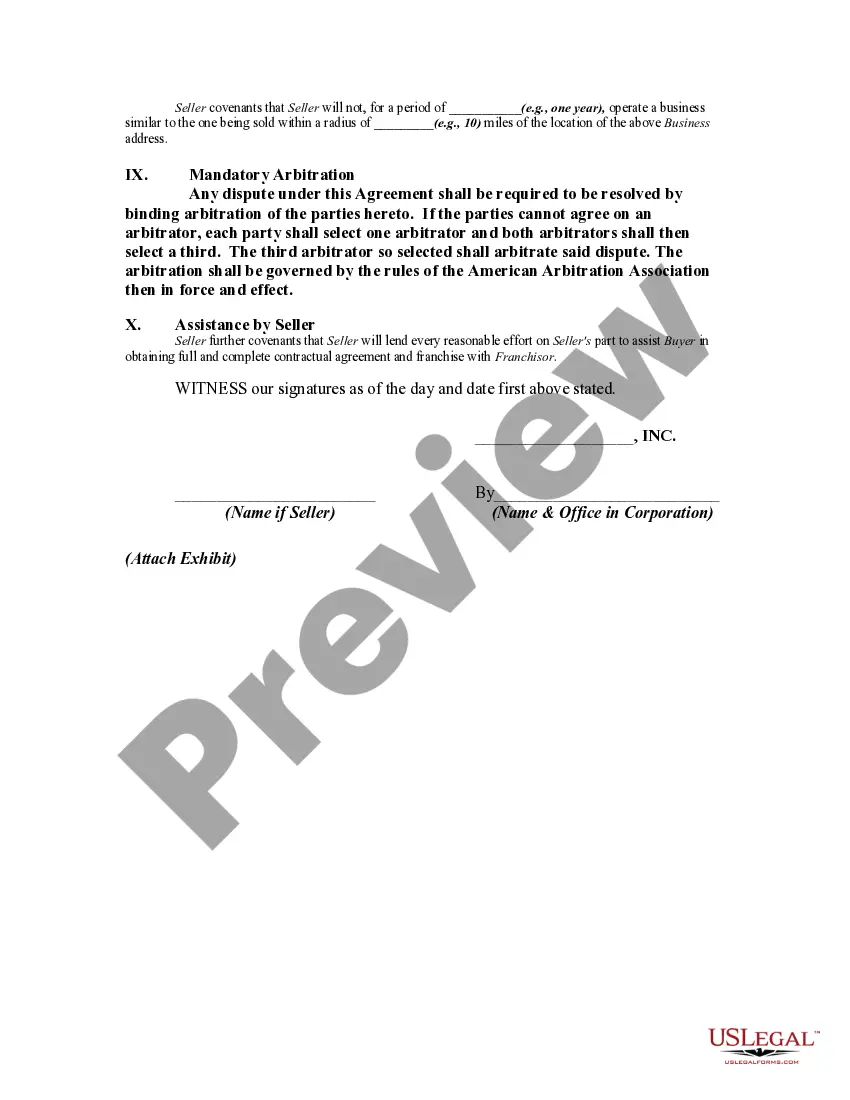
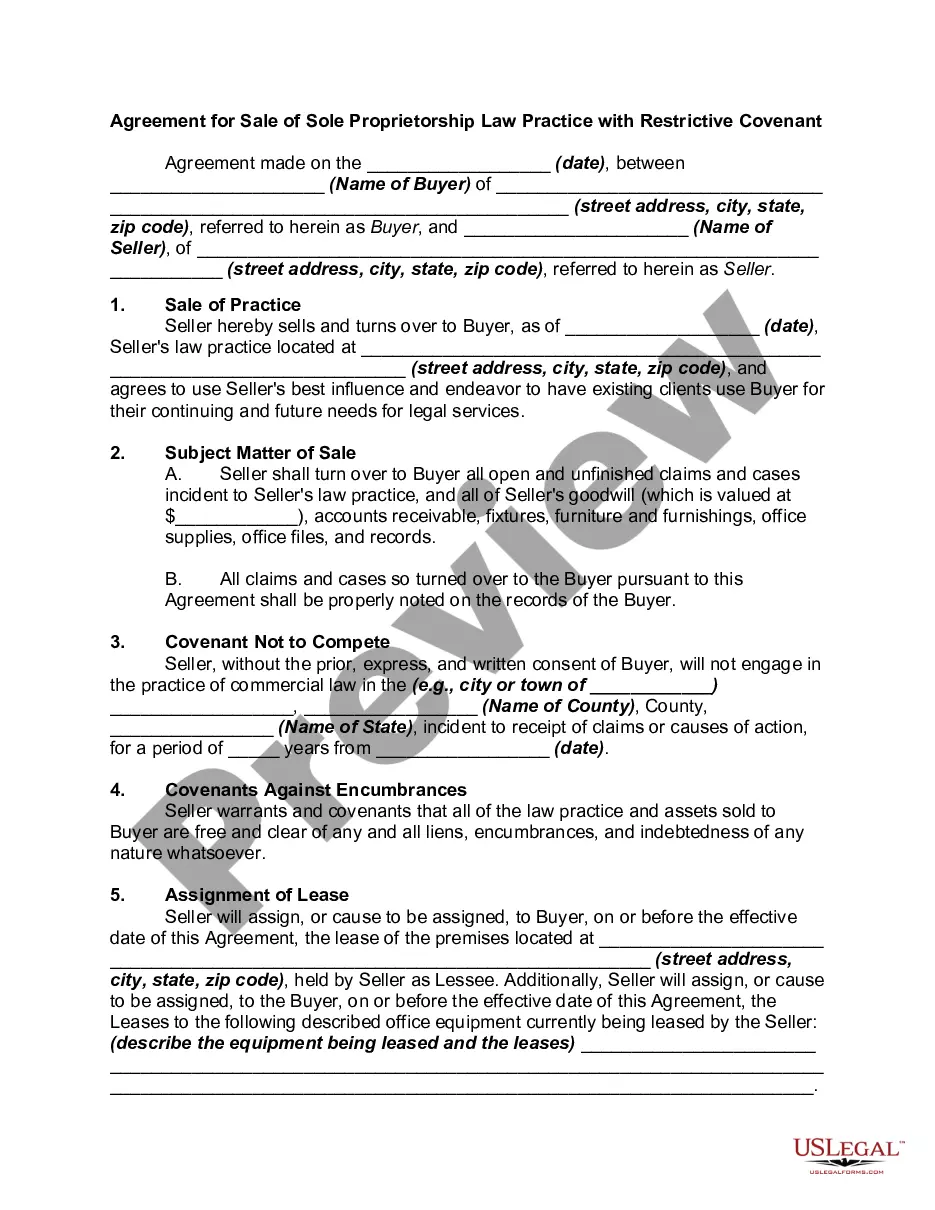
- Covenant against competition: Prohibits the seller from operating a similar business within a specified radius and time.
- Dispute resolution: Mandates arbitration for any disputes arising from the agreement.
When this form is needed
This form should be used when a sole proprietor wants to sell their business to another entity, especially when the business holds specific trademark or franchise rights. It is particularly important in situations where the business is operational, and the buyer wants to ensure a smooth transition without assuming unnecessary liabilities or debts.
Who can use this document
- Sole proprietors looking to sell their business.
- Buyers interested in purchasing an existing sole proprietorship.
- Franchise owners wanting to transfer their business while complying with franchisor requirements.
- Legal professionals advising clients in business transactions.
Instructions for completing this form
- Identify the parties: Enter the names and addresses of both the seller and the buyer.
- Describe the business: Specify the business name and its location.
- State the sale terms: Clearly outline the assets sold, including inventory and tradename rights.
- Detail financial obligations: Enter the purchase price and allocation among different assets.
- Include any additional agreements: State rental terms or competitive restrictions if applicable.
- Sign the document: Make sure both parties sign and date the agreement for it to be enforceable.
Does this form need to be notarized?
Notarization is generally not required for this form. However, certain states or situations might demand it. You can complete notarization online through US Legal Forms, powered by Notarize, using a verified video call available anytime.
Get your form ready online
Our built-in tools help you complete, sign, share, and store your documents in one place.
Make edits, fill in missing information, and update formatting in US Legal Forms—just like you would in MS Word.
Download a copy, print it, send it by email, or mail it via USPS—whatever works best for your next step.
Sign and collect signatures with our SignNow integration. Send to multiple recipients, set reminders, and more. Go Premium to unlock E-Sign.
If this form requires notarization, complete it online through a secure video call—no need to meet a notary in person or wait for an appointment.
We protect your documents and personal data by following strict security and privacy standards.

Make edits, fill in missing information, and update formatting in US Legal Forms—just like you would in MS Word.

Download a copy, print it, send it by email, or mail it via USPS—whatever works best for your next step.

Sign and collect signatures with our SignNow integration. Send to multiple recipients, set reminders, and more. Go Premium to unlock E-Sign.

If this form requires notarization, complete it online through a secure video call—no need to meet a notary in person or wait for an appointment.

We protect your documents and personal data by following strict security and privacy standards.
Avoid these common issues
- Failing to specify all included assets can lead to confusion.
- Overlooking the need for franchisor approval can void the agreement.
- Not properly defining the rental terms may cause future disputes.
- Neglecting to address property taxes may lead to unexpected liabilities for the buyer.
Why use this form online
- Easy access to professionally drafted forms tailored for your needs.
- Ability to edit and customize the document to fit specific circumstances.
- Secure and reliable process to save time and reduce errors.
- Convenience of downloading and printing directly from home.
Looking for another form?



Form popularity
FAQ
Introduction. Agreement Parties. Franchise Fees. Franchise Agreement Terms. Franchisors Responsibilities. Franchisee Responsibilities. Advertising. Rights. Selling/Transfer of Franchise. Confidentiality. Renewal and Termination. Severability. Jurisdiction.
Single Unit Franchise. Single Unit Franchise (or Direct Unit Franchise) is the most traditional and historically the most common form of franchising. Multi Unit Franchise. Area Development Franchise. Master Franchise.
There are three primary ways to get out of a franchise agreement. The most common way to get out of a franchise agreement is to transfer or sell the business. In certain cases, a unilateral or mutual termination may be possible.
Agreement, Territory Area, Area Licensee, Authorized deductions, Gross Receipts, License Network, The System Manual, Trademarks, Start Date, Trade name, Termination, Transfer of license.
This document spells out the expectations, obligations, permissions and restrictions for operating the franchise. A franchise agreement also outlines a fee schedule that the franchisee pays to the franchisor, including amounts or percentages and the frequency of payments.
Master Franchise Agreement. Area Representative. Area Development Agreement.
Learn the 4 main types of franchise arrangements: single unit, multi unit, area developer and master franchise. The franchising industry is very versatile, with multiple franchises, industry options and investment ranges.