Release of Liability of Employer - Ski Trip
What this document covers
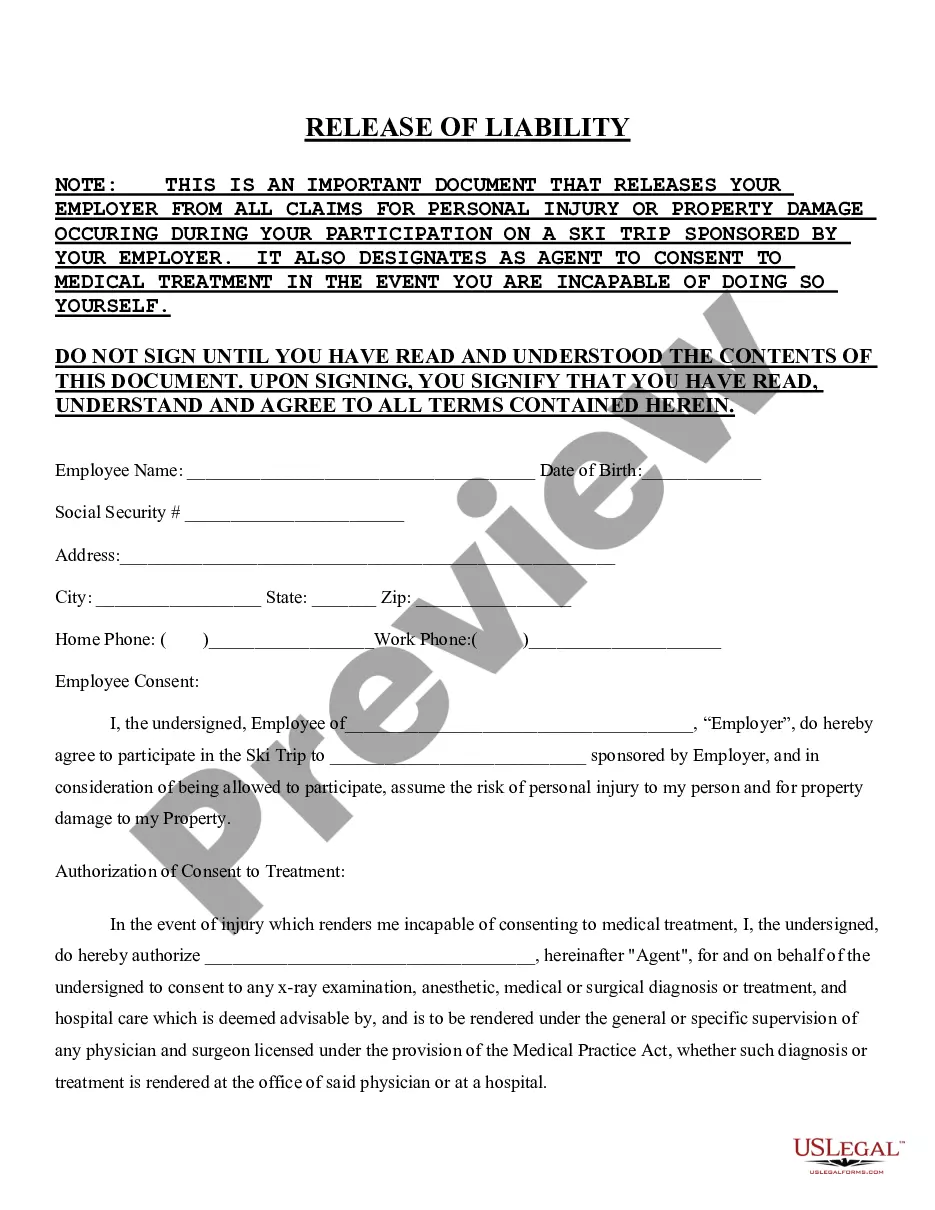
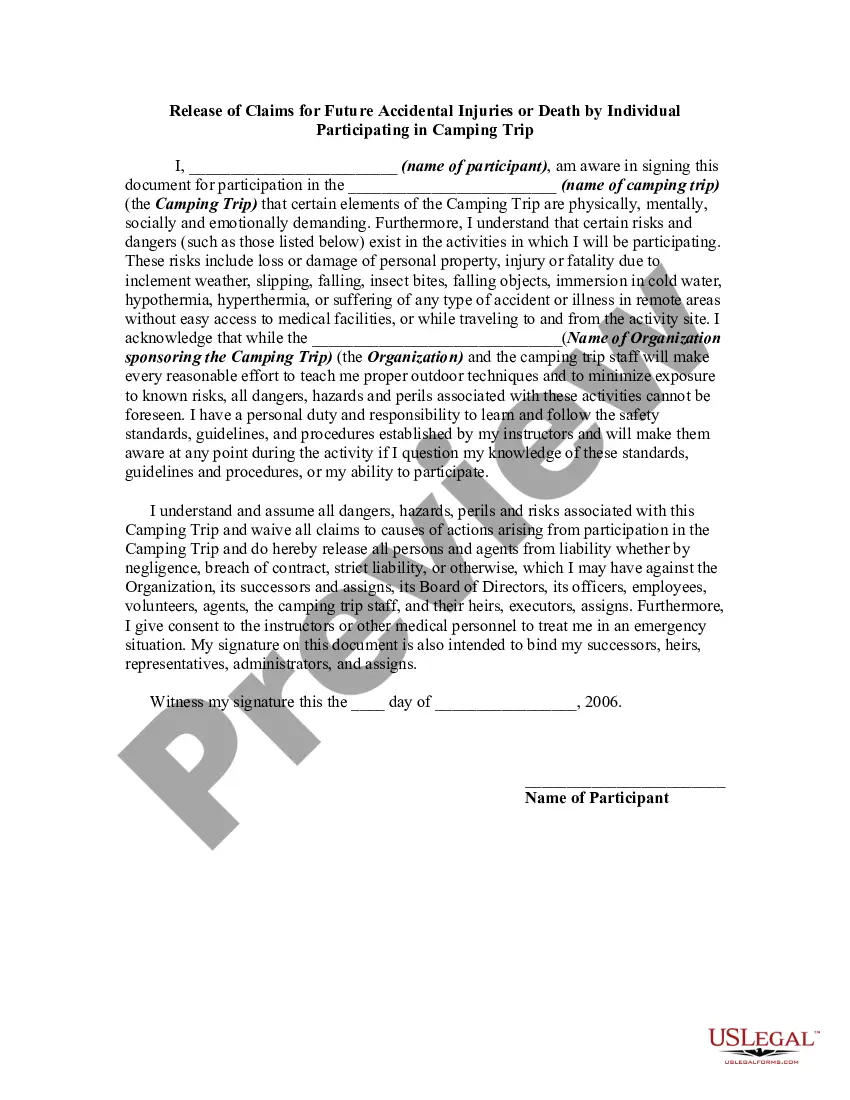
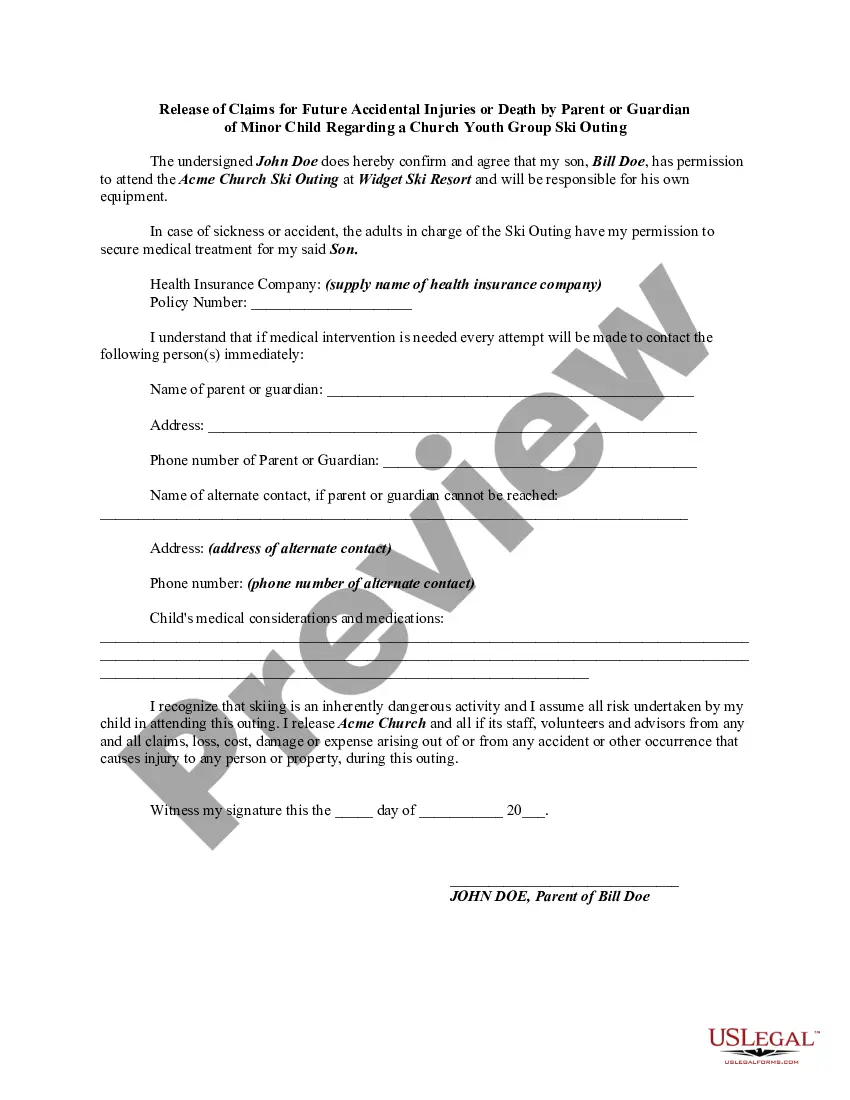
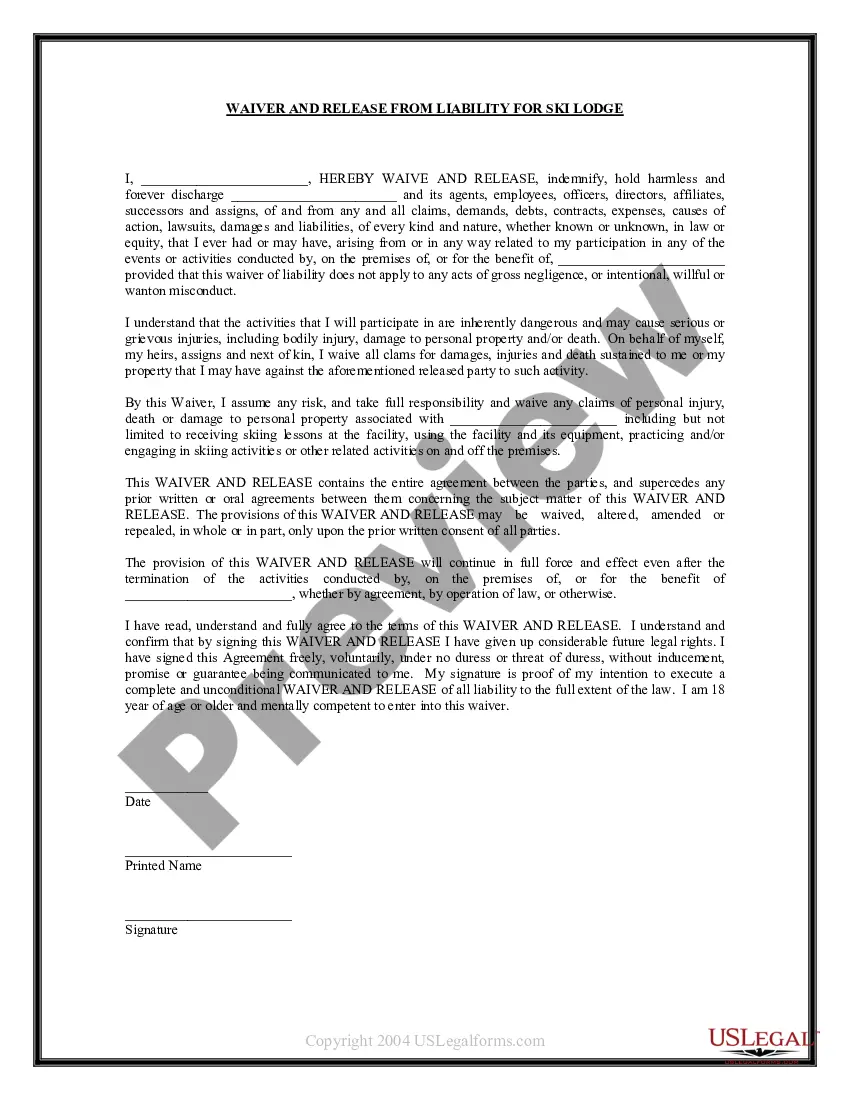
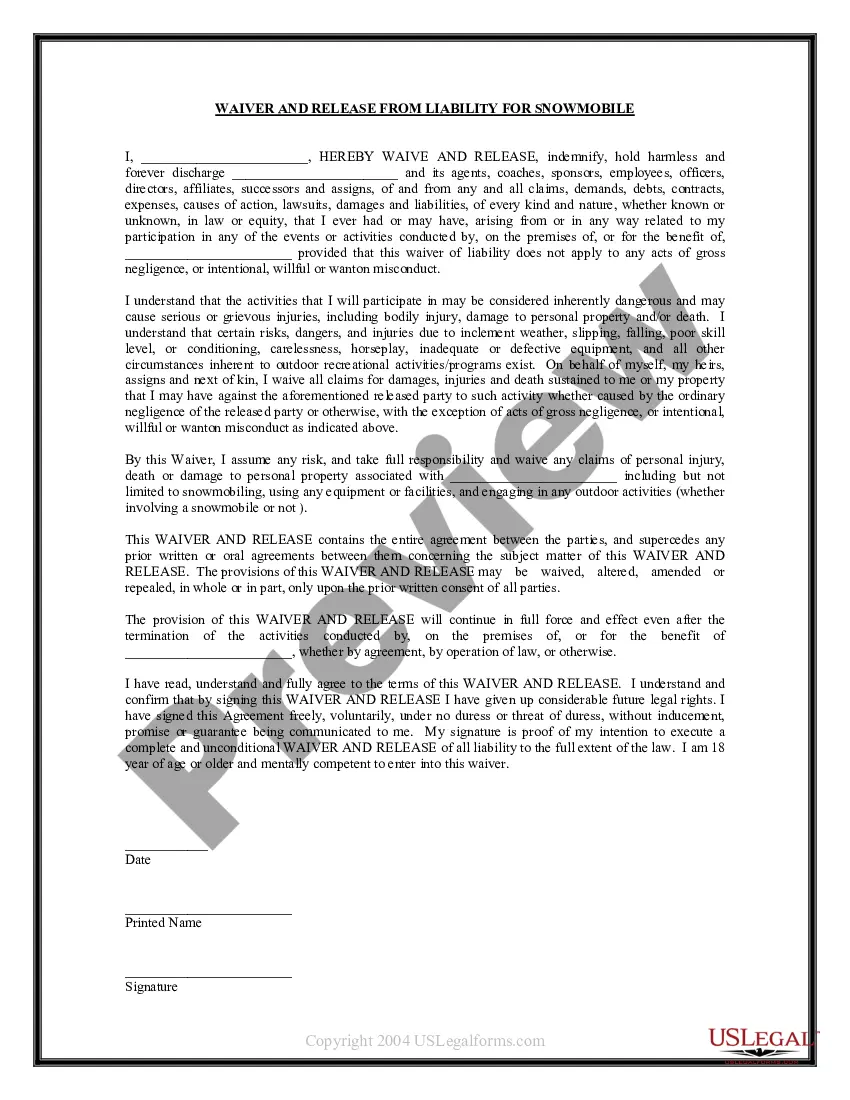
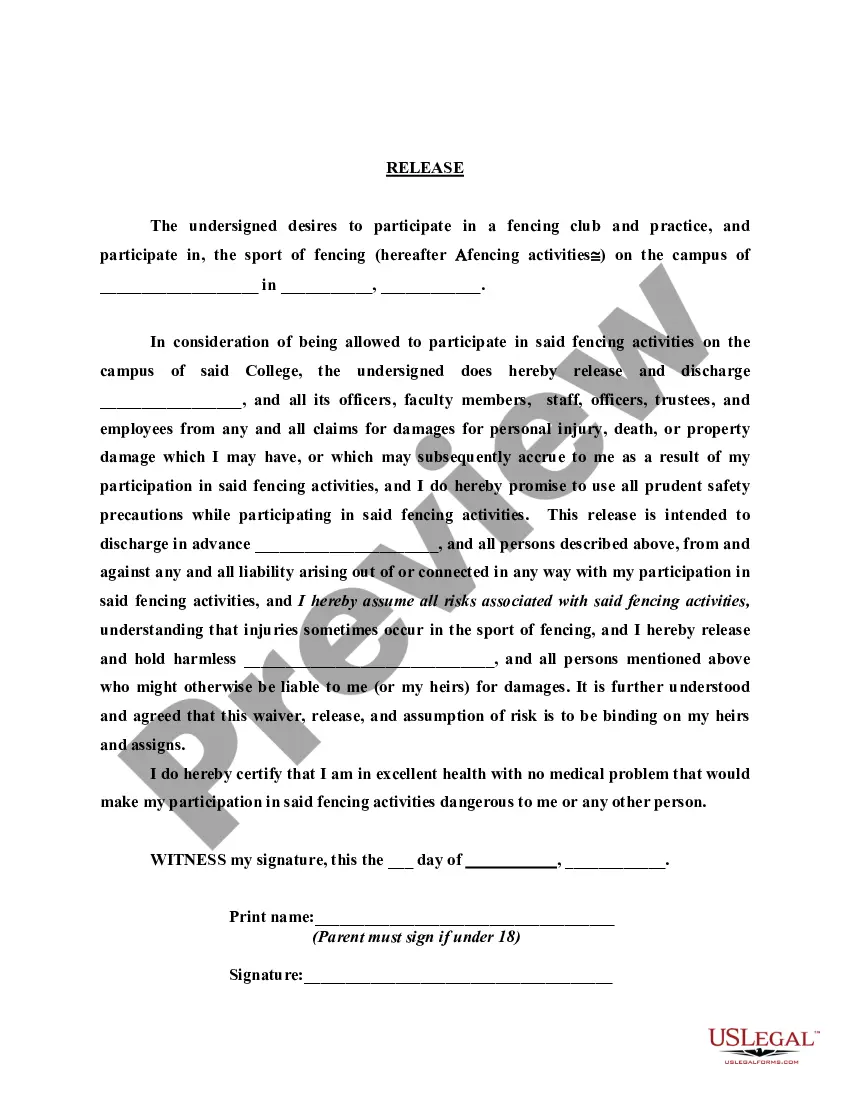
The Release of Liability of Employer for a Ski Trip is a legal document that protects employers from claims related to personal injuries or property damages that may occur during an employee's participation in a skiing event sponsored by the employer. This form clarifies the responsibilities of both the employer and the employee, ensuring that the employer is released from liability while allowing employees to clearly understand the risks involved in the trip.
Key parts of this document
- Employee identification section: Collects the name, date of birth, and contact information of the employee.
- Consent acknowledgment: The employee agrees to participate in the ski trip and assumes the associated risks.
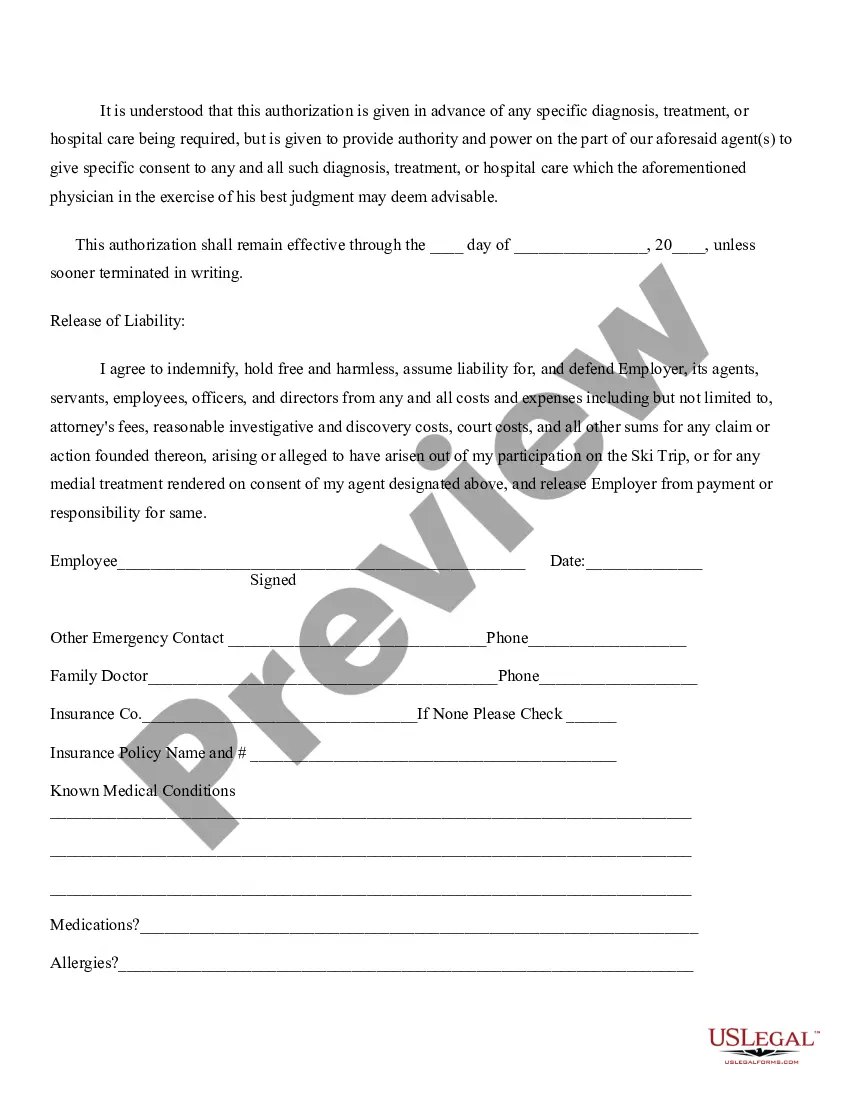
- Medical treatment authorization: Designates an agent to consent to medical care if the employee is incapacitated.
- Release of liability clause: An agreement that holds the employer harmless for claims arising from participation in the ski trip.
- Emergency contact and medical information: Includes necessary details for emergency situations.

When this form is needed
This form should be used when an employer organizes a ski trip for employees, and it is essential to clarify risks and liabilities associated with the event. It is especially relevant in corporate environments where outdoor activities are part of employee engagement initiatives.
Who this form is for
- Employers planning a ski trip for employees.
- Employees participating in a ski trip organized by their employer.
- Human resources professionals handling corporate event logistics.
How to complete this form
- Identify and fill in the employee's full name, date of birth, and contact details.
- Review the consent language carefully before agreeing to participate in the ski trip.
- Designate a medical treatment agent who can provide consent on the employee's behalf if needed.
- Complete the release of liability section, including the date and signature of the employee.
- Provide emergency contact details and any relevant medical information.
Does this document require notarization?
In most cases, this form does not require notarization. However, some jurisdictions or signing circumstances might. US Legal Forms offers online notarization powered by Notarize, accessible 24/7 for a quick, remote process.
Get your form ready online
Our built-in tools help you complete, sign, share, and store your documents in one place.
Make edits, fill in missing information, and update formatting in US Legal Forms—just like you would in MS Word.
Download a copy, print it, send it by email, or mail it via USPS—whatever works best for your next step.
Sign and collect signatures with our SignNow integration. Send to multiple recipients, set reminders, and more. Go Premium to unlock E-Sign.
If this form requires notarization, complete it online through a secure video call—no need to meet a notary in person or wait for an appointment.
We protect your documents and personal data by following strict security and privacy standards.

Make edits, fill in missing information, and update formatting in US Legal Forms—just like you would in MS Word.

Download a copy, print it, send it by email, or mail it via USPS—whatever works best for your next step.

Sign and collect signatures with our SignNow integration. Send to multiple recipients, set reminders, and more. Go Premium to unlock E-Sign.

If this form requires notarization, complete it online through a secure video call—no need to meet a notary in person or wait for an appointment.

We protect your documents and personal data by following strict security and privacy standards.
Avoid these common issues
- Failing to read and understand the form before signing.
- Leaving important fields blank, such as emergency contact information.
- Not designating an agent for medical consent.
Why use this form online
- Convenient access to a legally vetted template, ensuring compliance with legal standards.
- Editability allows users to customize the form according to specific needs.
- Immediate download ensures you can get the necessary documentation quickly, avoiding delays.
Legal use & context
- This form is enforceable in court if completed correctly and signed by all parties.
- It may not protect the employer from gross negligence or willful misconduct.
- Employees should keep a copy for their records after signing.
What to keep in mind
- Employees assume risks associated with skiing while on an employer-sponsored trip.
- This form releases the employer from liability for injuries incurred during the event.
- Properly completing the form is crucial for it to be legally binding.
Looking for another form?

Form popularity
FAQ
Employees owe a duty to their employers to carry out their work with reasonable care so as to avoid accident and injury. Employers are vicariously liable for the negligence of their employees but are entitled to claim a contribution or indemnity from their negligent employee in appropriate circumstances.
Employee Benefits Liability insurance provides coverage to an employer for errors or omissions in the employer's administration of its employee benefit program.The Employee Benefits Liability coverage would pay for the benefits that would have been payable under the health insurance plan but for the employer's error.
Employers are vicariously liable under the doctrine of "respondeat superior" for the negligent acts or omissions by their employees in the course of employment. The key phrase is "in the course of employment".
According to Article L 121-9 of the Labour Code: employers are liable for risks generated by their company's activity; and. employees are liable for damage caused by their wilful acts or gross negligence.
Employees Can Be Personally Liable for Wage Violations Under California Labor Code § 558.1. According to California's Labor Code A§ 558.1, a company's owners, directors, officers, and even managing agents can be held personally liable for wage and hour violations.
What does employers' liability cover? Employers' liability insurance can pay the compensation amount and legal costs if an employee, or an ex-employee, claims compensation for a work-related illness or injury.
Employers' liability insurance is an insurance policy that handles claims from workers who have suffered a job-related injury or illness not covered by workers' compensation.
You are only required by law to have employers' liability insurance for people who you employ under a contract of service or apprenticeship. Whether or not you need employers' liability insurance for someone who works for you depends on the terms of your contract with them.