Texas Directive to Physicians on Behalf of a Minor
What this document covers
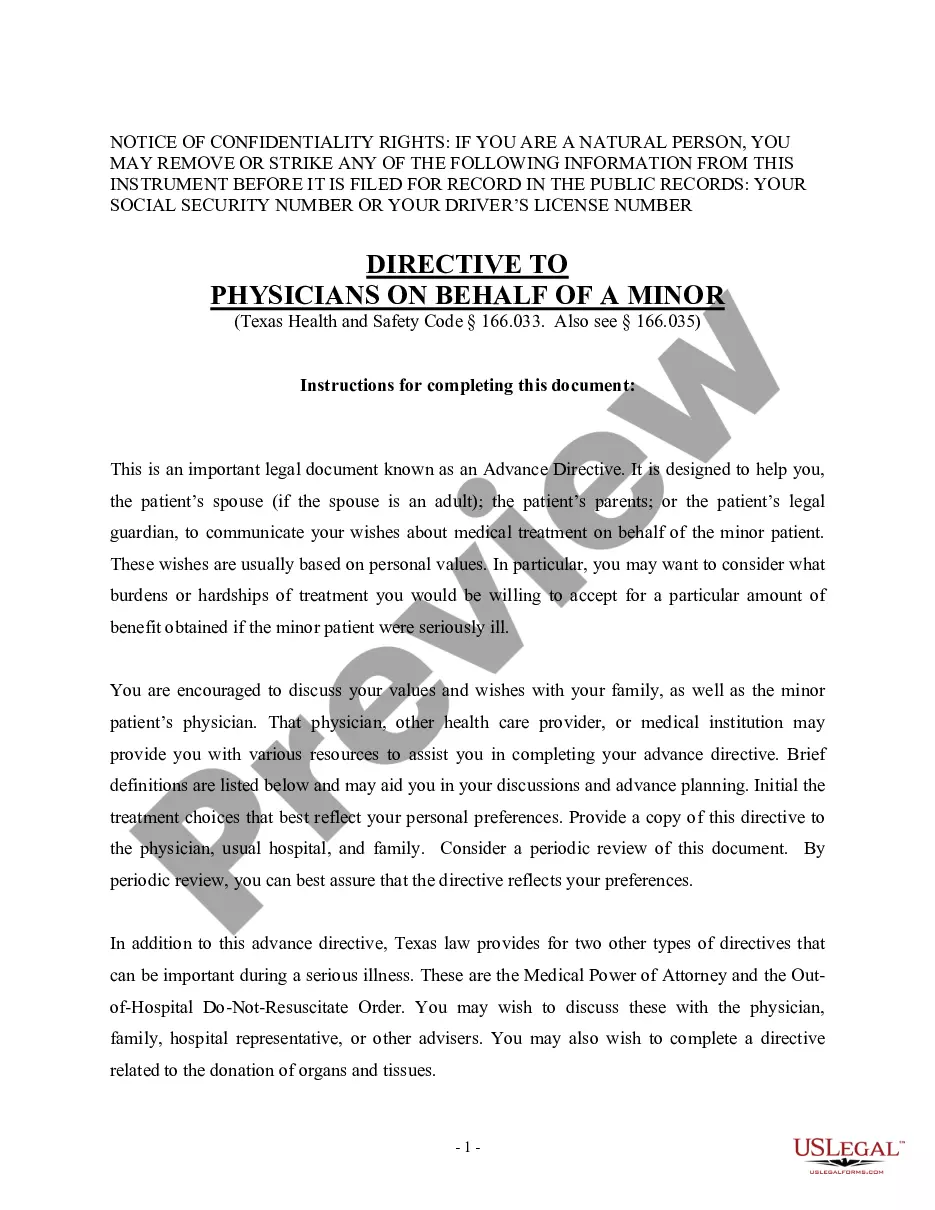
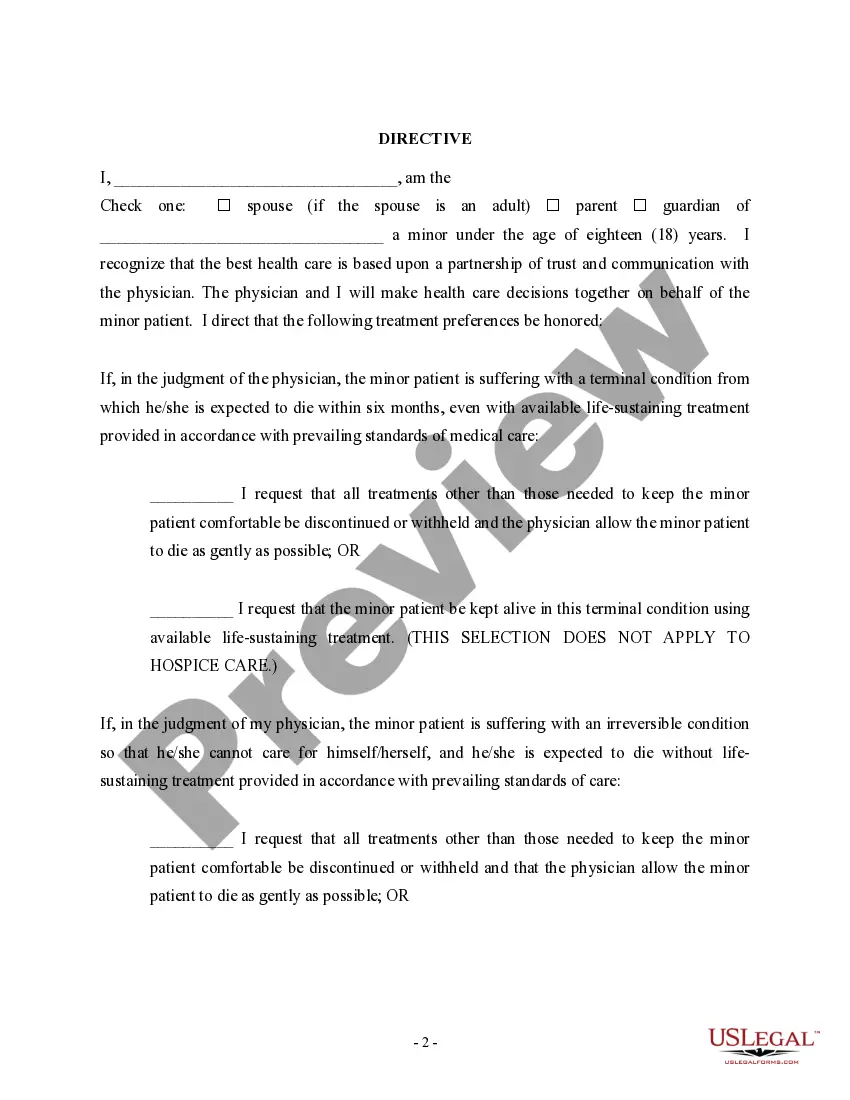
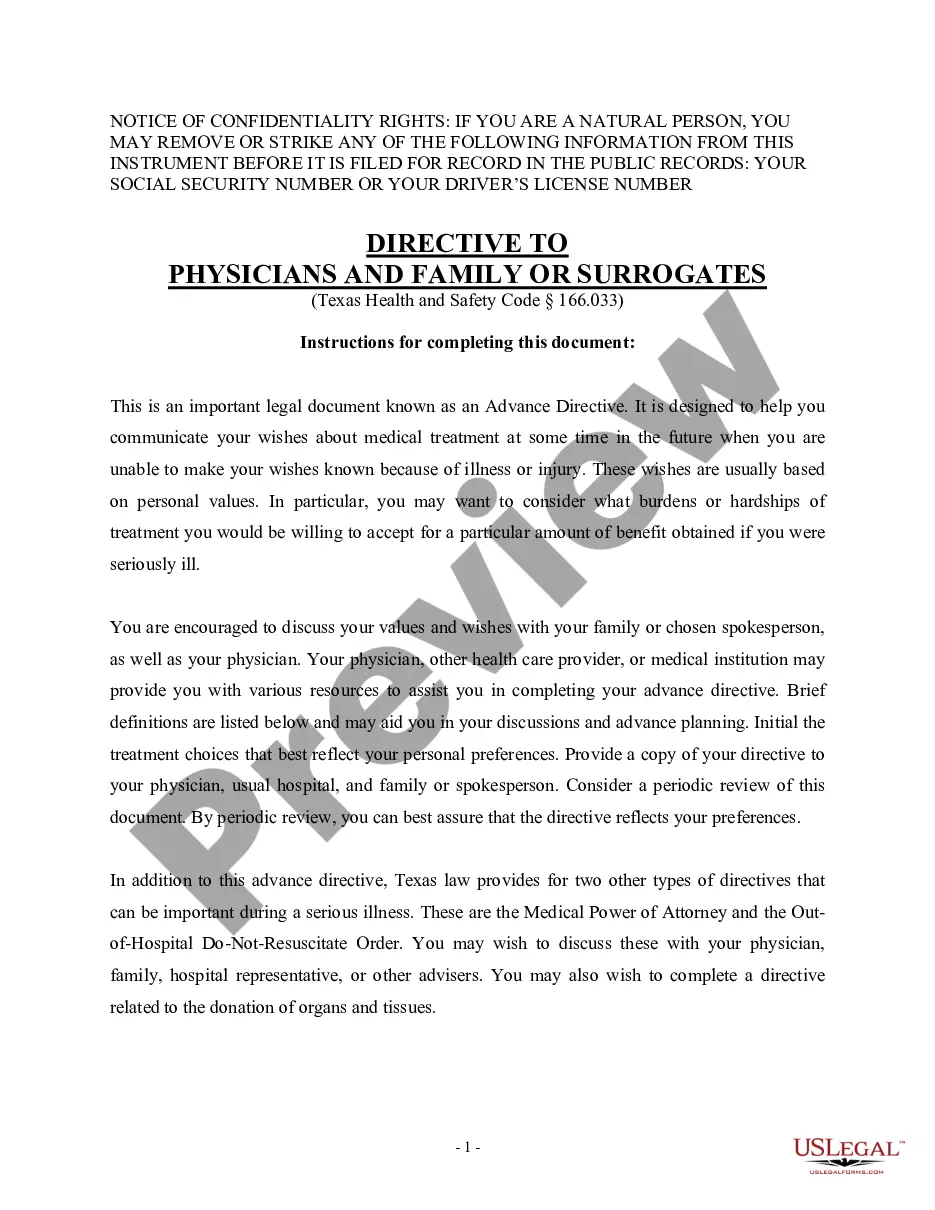
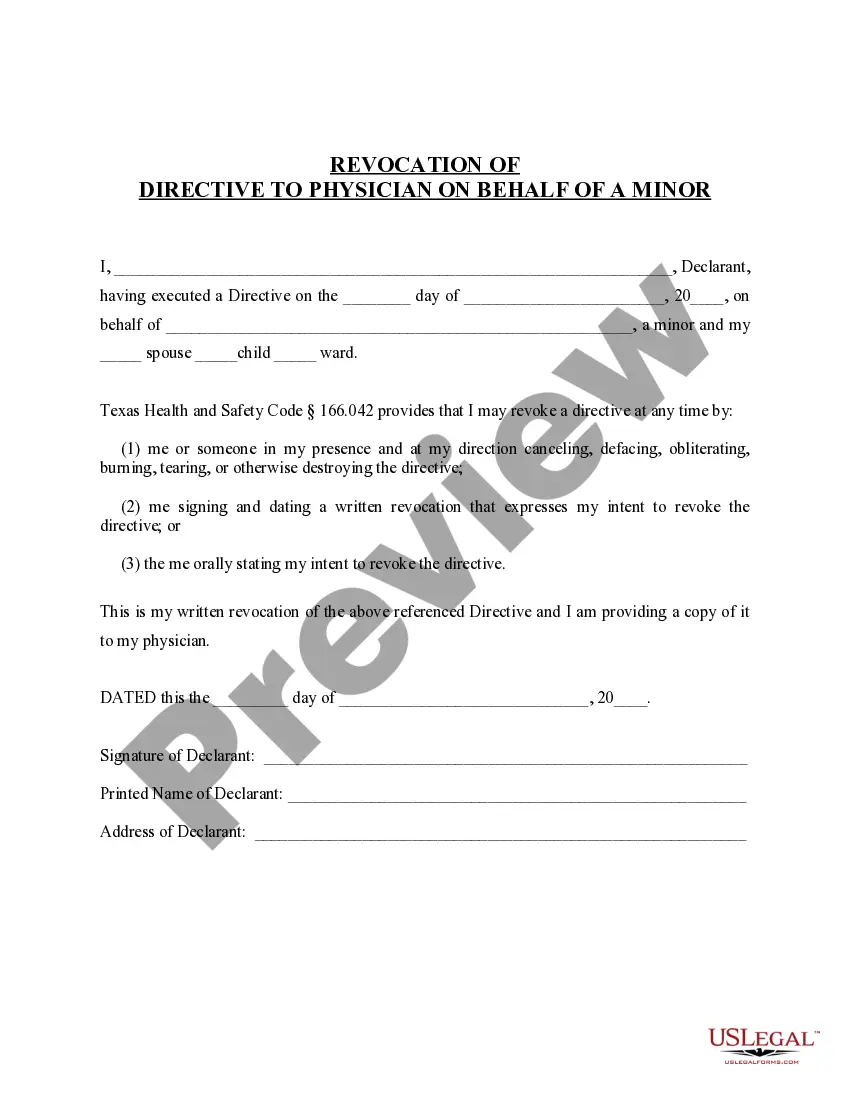
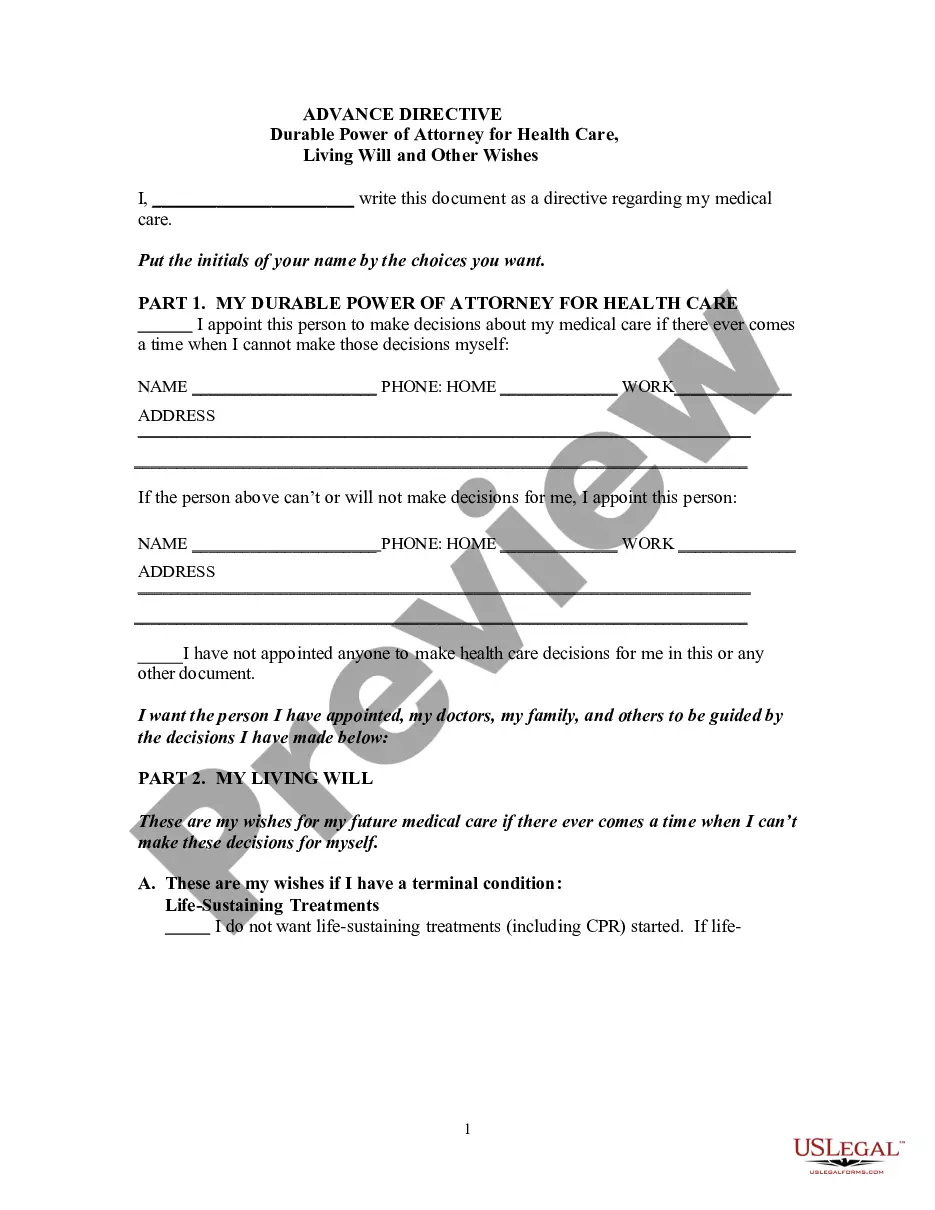
The Directive to Physicians on Behalf of a Minor is a legal document that enables a parent, guardian, or spouse to express wishes regarding medical treatment for a minor child in the event of a terminal condition. This advance directive allows the designated person to communicate specific treatment preferences to medical professionals when the minor is unable to voice their own desires due to their medical condition. This form differs from other directives, such as Medical Power of Attorney, by focusing specifically on directives for children under 18 years of age.
Key components of this form
- Identification of the minor patient and the individual making the directive
- Clear treatment preferences for terminal and irreversible conditions
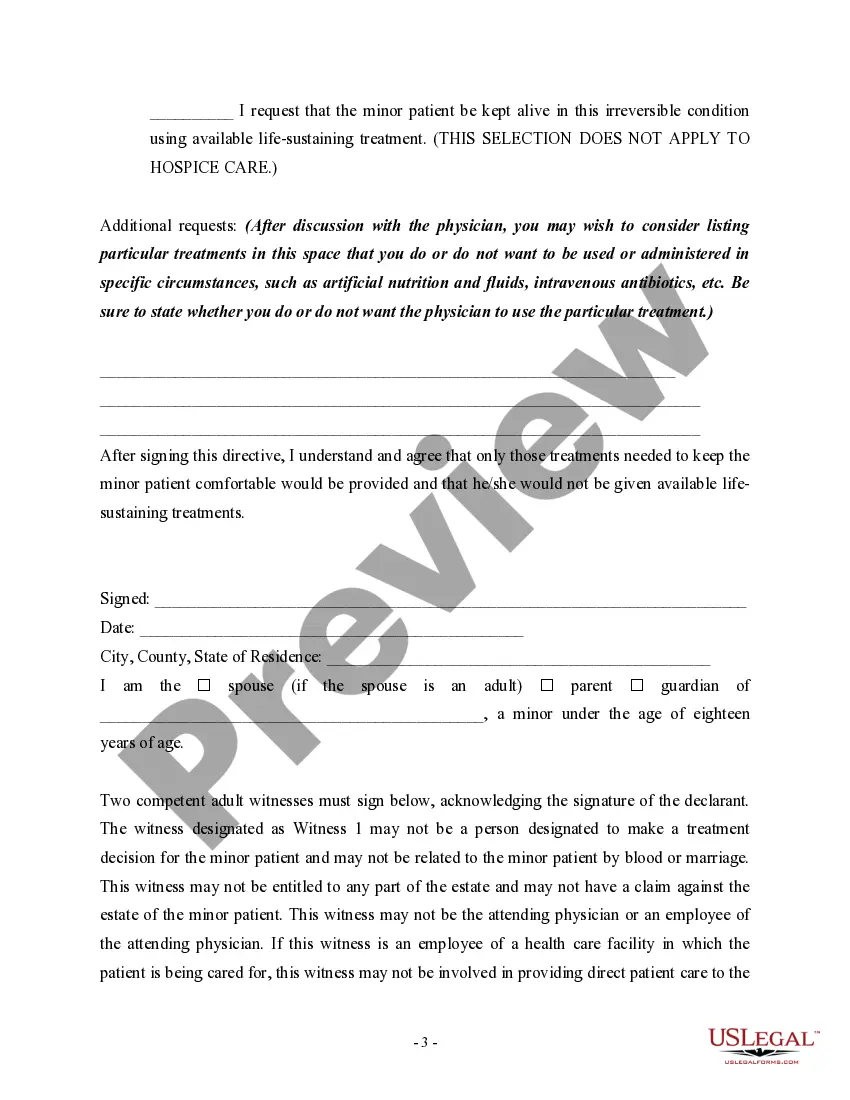
- Space for additional requests regarding specific treatments
- Signature of the declarant along with date and place
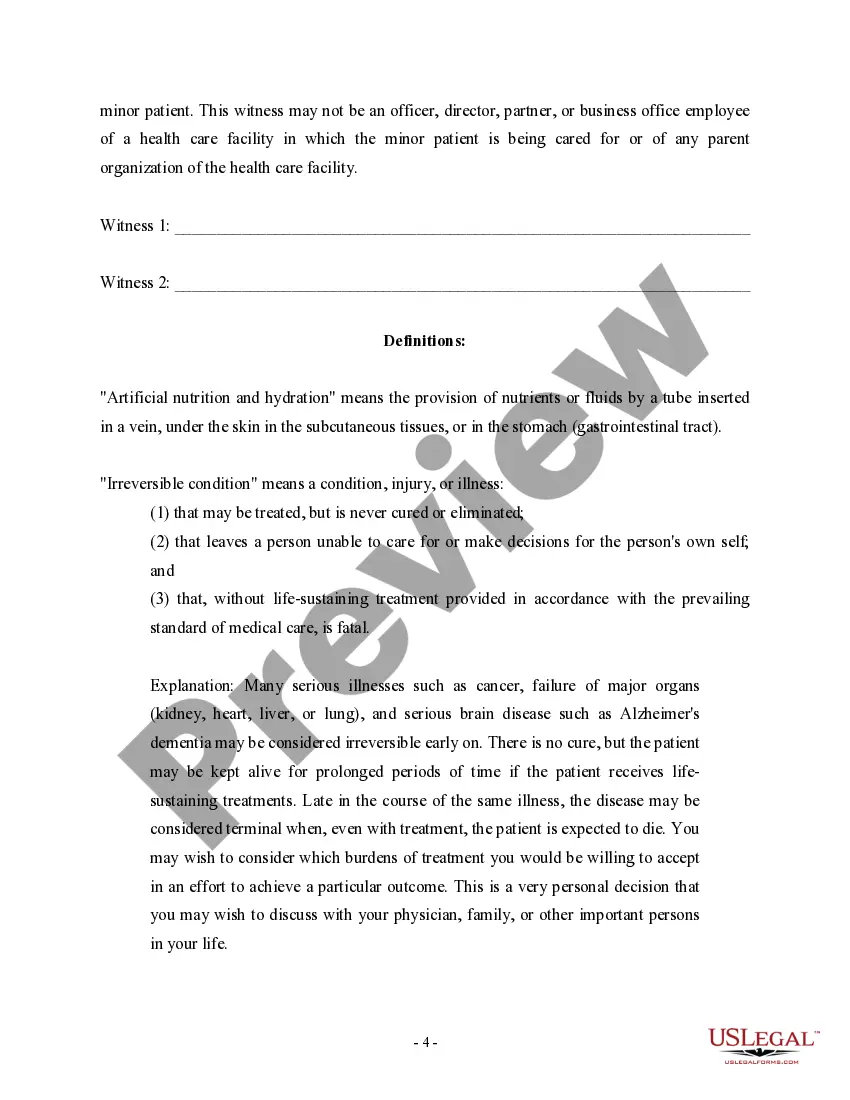
- Signature of two competent witnesses to validate the directive
When this form is needed
This form should be used when a minor child is diagnosed with a terminal condition or an irreversible illness, and their parent or guardian wants to ensure that their medical treatment preferences are known and respected. It is particularly useful in emergency situations where the minor cannot communicate their wishes due to their medical status.
Who should use this form
- Parents or legal guardians of minors under the age of 18
- Spouses of adult patients who have authority over decision-making for the minor
- Individuals responsible for the care of a minor with severe medical conditions
Instructions for completing this form
- Identify yourself as the parent, guardian, or spouse of the minor patient.
- Clearly indicate the minor's name and age.
- Initial your treatment preferences for scenarios involving terminal and irreversible conditions.
- Provide additional treatment requests if you have specific preferences.
- Sign and date the form in the designated area.
- Have two competent adult witnesses sign the document, ensuring they meet the legal requirements.
Does this form need to be notarized?
This form does not typically require notarization unless specified by local law. However, it is essential to have it signed by two competent adult witnesses to ensure its validity.
Get your form ready online
Our built-in tools help you complete, sign, share, and store your documents in one place.
Make edits, fill in missing information, and update formatting in US Legal Forms—just like you would in MS Word.
Download a copy, print it, send it by email, or mail it via USPS—whatever works best for your next step.
Sign and collect signatures with our SignNow integration. Send to multiple recipients, set reminders, and more. Go Premium to unlock E-Sign.
If this form requires notarization, complete it online through a secure video call—no need to meet a notary in person or wait for an appointment.
We protect your documents and personal data by following strict security and privacy standards.

Make edits, fill in missing information, and update formatting in US Legal Forms—just like you would in MS Word.

Download a copy, print it, send it by email, or mail it via USPS—whatever works best for your next step.

Sign and collect signatures with our SignNow integration. Send to multiple recipients, set reminders, and more. Go Premium to unlock E-Sign.

If this form requires notarization, complete it online through a secure video call—no need to meet a notary in person or wait for an appointment.

We protect your documents and personal data by following strict security and privacy standards.
Typical mistakes to avoid
- Failing to include the minor's full name and accurate details.
- Not having the required two witness signatures.
- Confusing treatment preferences between terminal and irreversible conditions.
- Not keeping an updated copy of the directive with healthcare providers.
Advantages of online completion
- Convenience of downloading and printing the form from home.
- Editability to ensure all personalized information is accurately completed.
- A reliable resource drafted by licensed attorneys, ensuring legal compliance.
Legal use & context
- This directive is legally binding and must be followed by healthcare providers.
- It protects the minor's right to have their treatment preferences respected.
- Consulting legal professionals can enhance the clarity and impact of the document.
Summary of main points
- The Directive to Physicians on Behalf of a Minor is crucial for communicating healthcare decisions.
- Parents and guardians should ensure it reflects their values and treatment preferences.
- Regular review of the directive is essential to keep it up-to-date.
- Witness signatures are a mandatory requirement for its validity.
Glossary of terms used in this form
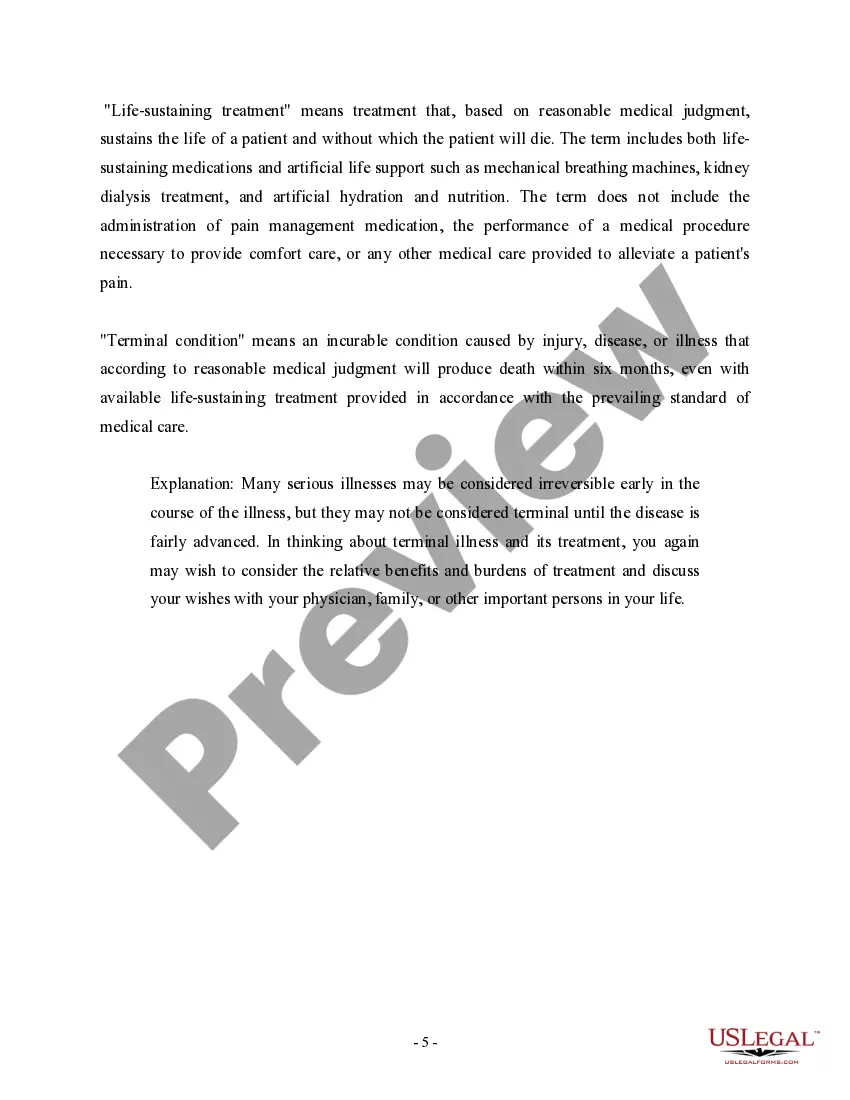
- Advance Directive: A legal document outlining a person's preferences for medical treatment.
- Terminal Condition: An illness or injury that is expected to result in death within six months.
- Irreversible Condition: A ailment that leaves a person unable to care for themselves, regardless of treatment.
- Life-Sustaining Treatment: Medical interventions that keep a patient alive and would otherwise lead to death.
Looking for another form?
Form popularity
FAQ
Advance directives do not expire. An advance directive remains in effect until you change it. If you complete a new advance directive, it invalidates the previous one.
Get the living will and medical power of attorney forms for your state, or use a universal form that has been approved by many states. Choose a health care agent. Fill out the forms, and have them witnessed as your state requires.
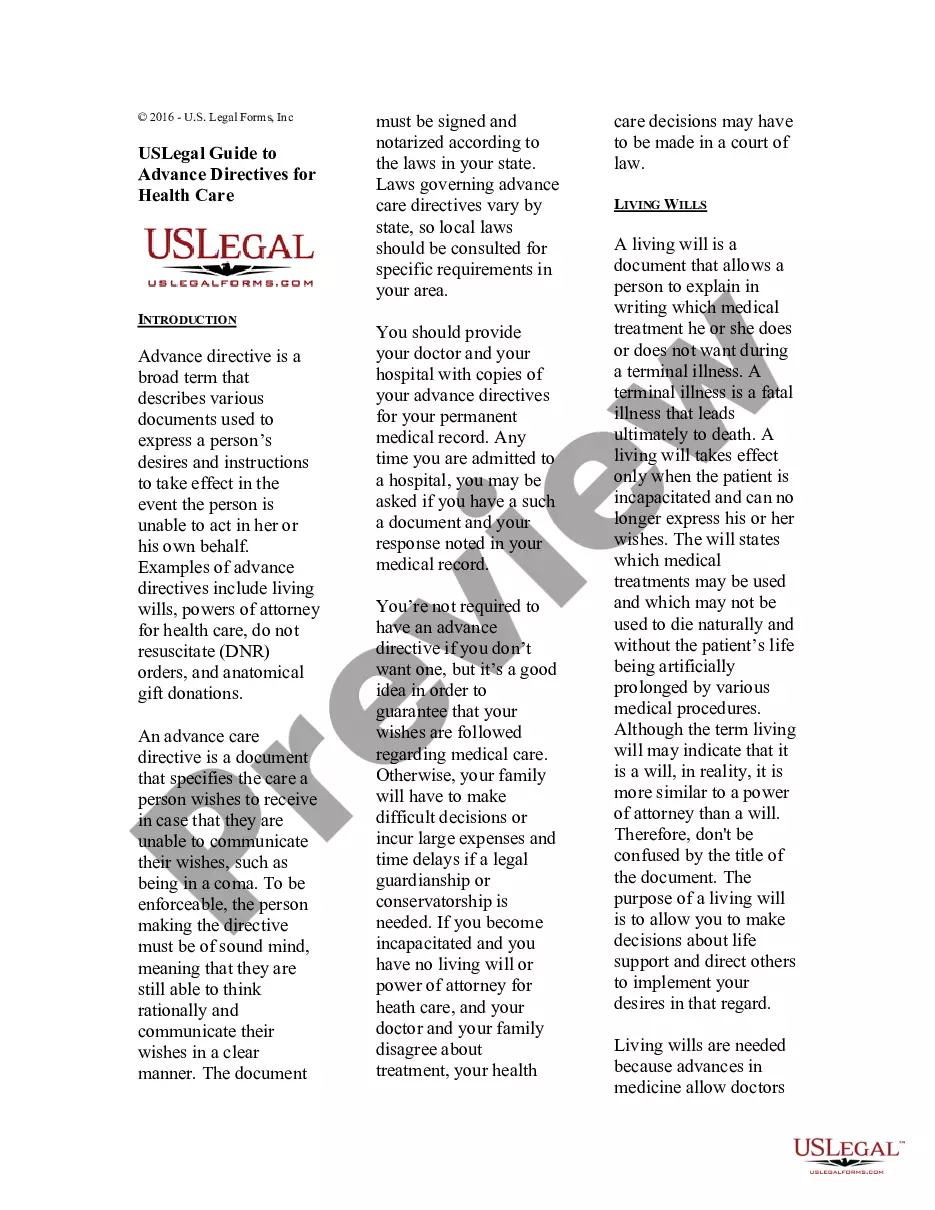
Advance directives are legal documents about health care choices for anyone 18 years of age or older, with or without a medical condition. In them, you can write your plans and make your wishes known if you are not able to speak for yourself.
The law requires that you sign your advance directive, or direct another to sign it, in the presence of two adult witnesses, who must also sign the document.
The living will. Durable power of attorney for health care/Medical power of attorney. POLST (Physician Orders for Life-Sustaining Treatment) Do not resuscitate (DNR) orders. Organ and tissue donation.
The law requires that you sign your advance directive, or direct another to sign it, in the presence of two adult witnesses, who must also sign the document.
The name and contact information of your healthcare agent/proxy. Answers to specific questions about your preferences for care if you become unable to speak for yourself. Names and signatures of individuals who witness your signing your advance directive, if required.
Note: Texas law now allows an option for a person's signature to be acknowledged by a notary instead of witness signatures and for digital or electronic signatures on the Directive to Physicians, Out-of-Hospital Do Not Resuscitate Order, and the Medical Power of Attorney, if certain requirements are met.