Texas Bill of Sale with Warranty for Corporate Seller
What is this form?
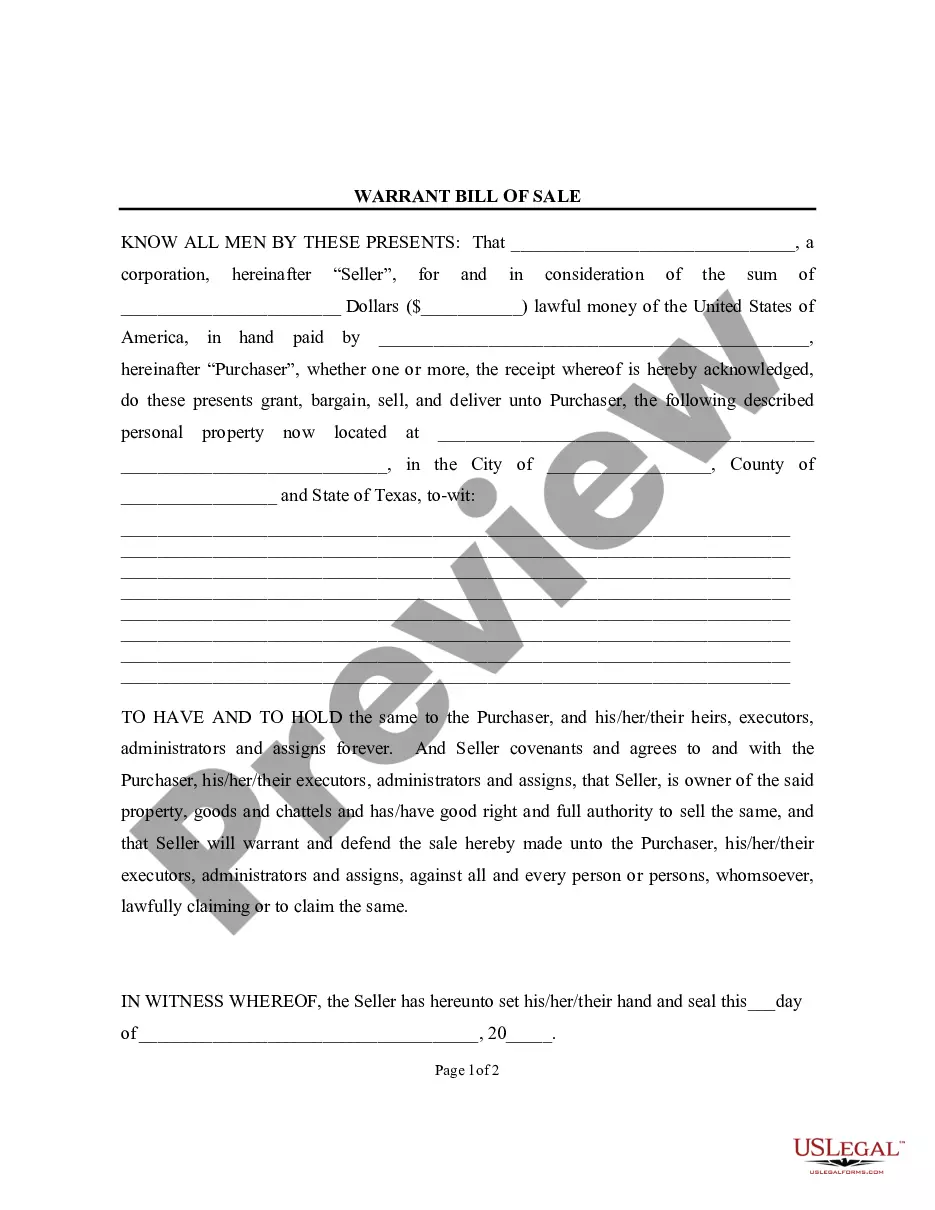
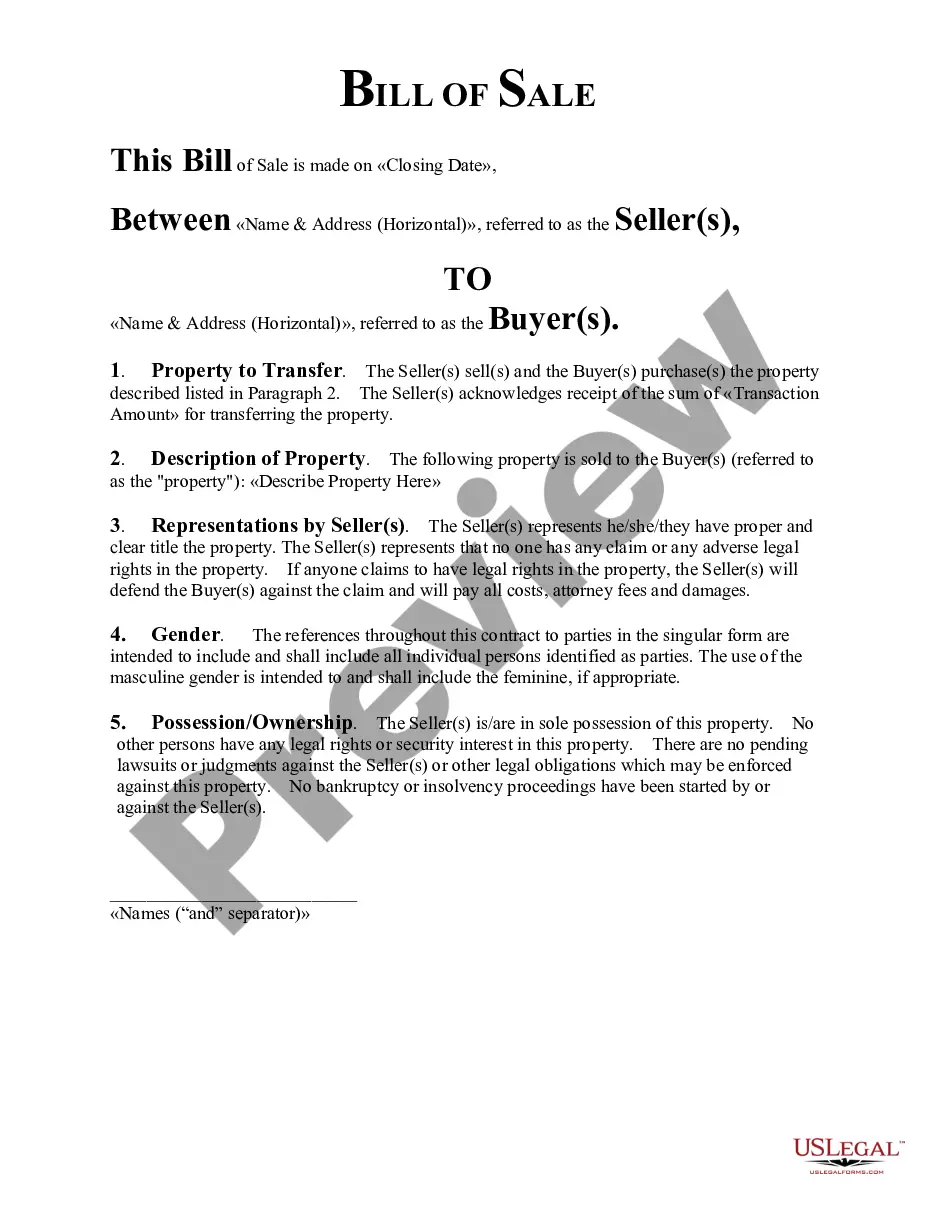
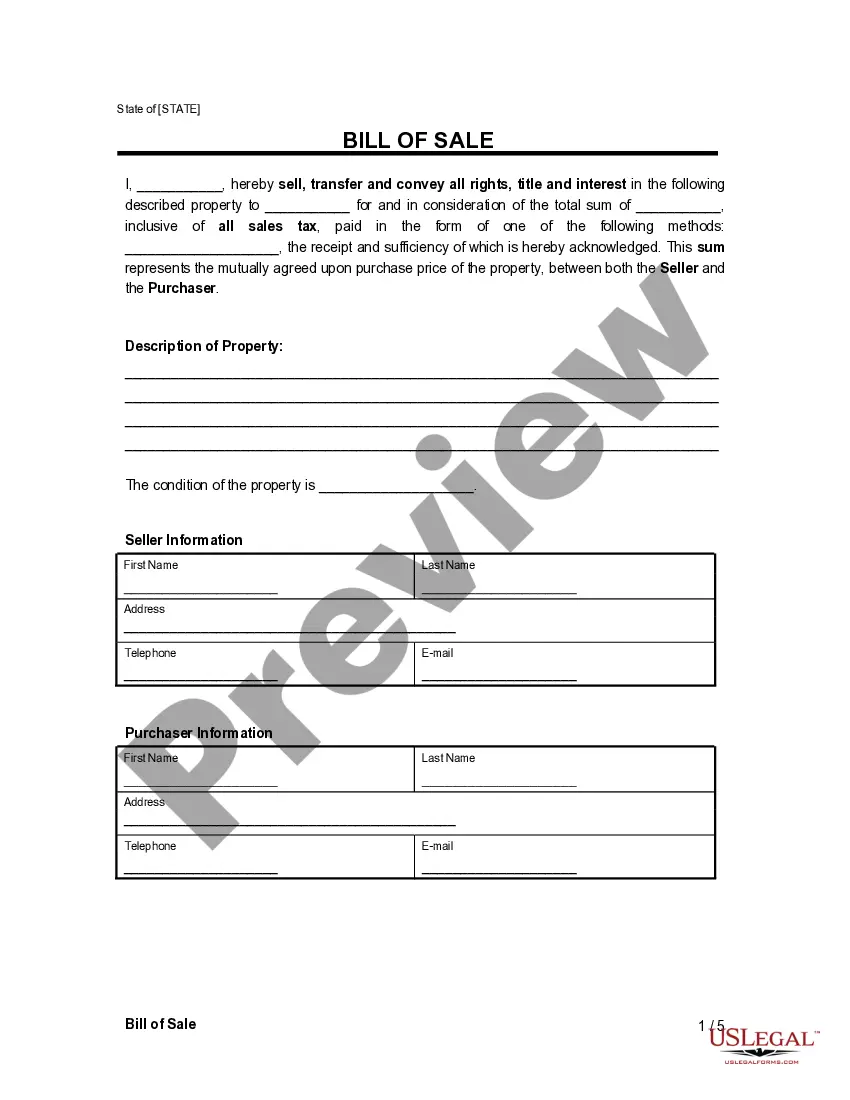
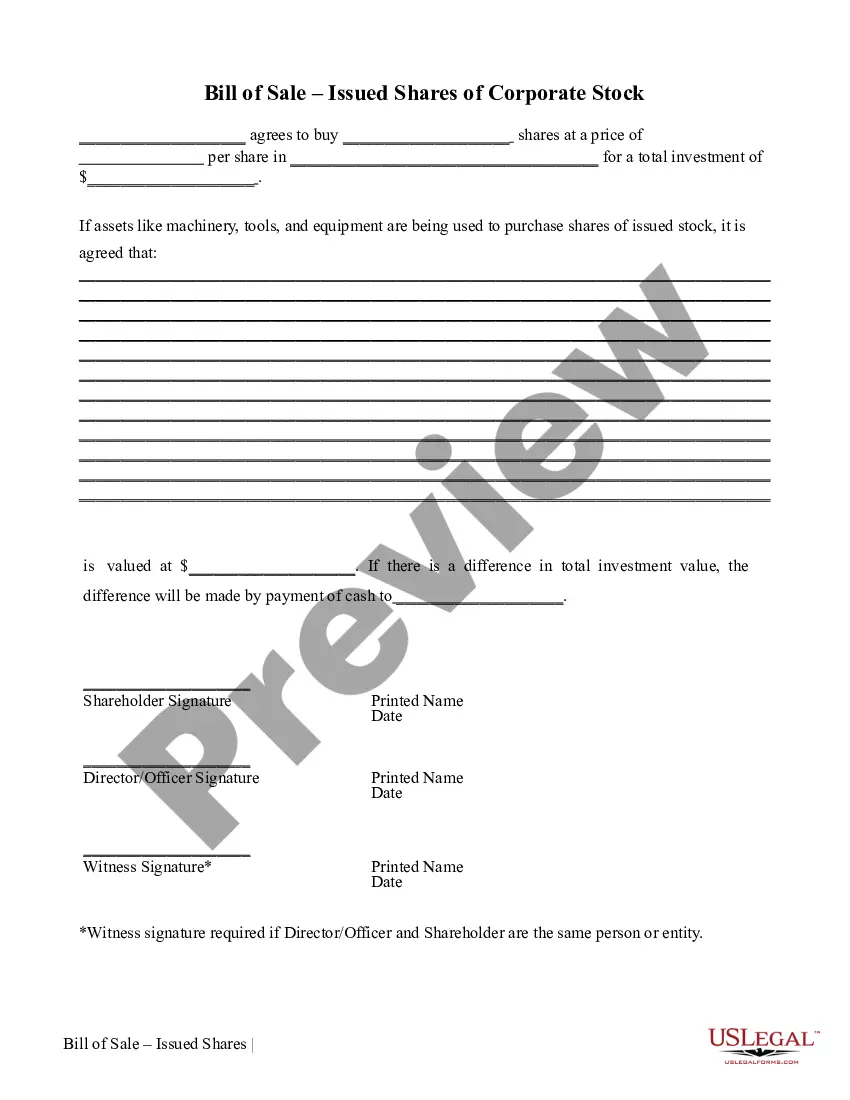
The Bill of Sale with Warranty for Corporate Seller is a legal document that facilitates the transfer of ownership of personal property from a corporate seller to a purchaser. Unlike a quitclaim conveyance, this form includes a warranty, meaning the seller guarantees they have the right to sell the property and will defend the purchaser against any claims. This form complies with all relevant state laws, ensuring its validity and enforceability.
Key components of this form
- Identification of the Seller and Purchaser, including corporate details.
- Detailed description of the personal property being sold.
- Purchase price stated in both numeral and written form.
- Warranties made by the Seller regarding ownership and authority to sell.
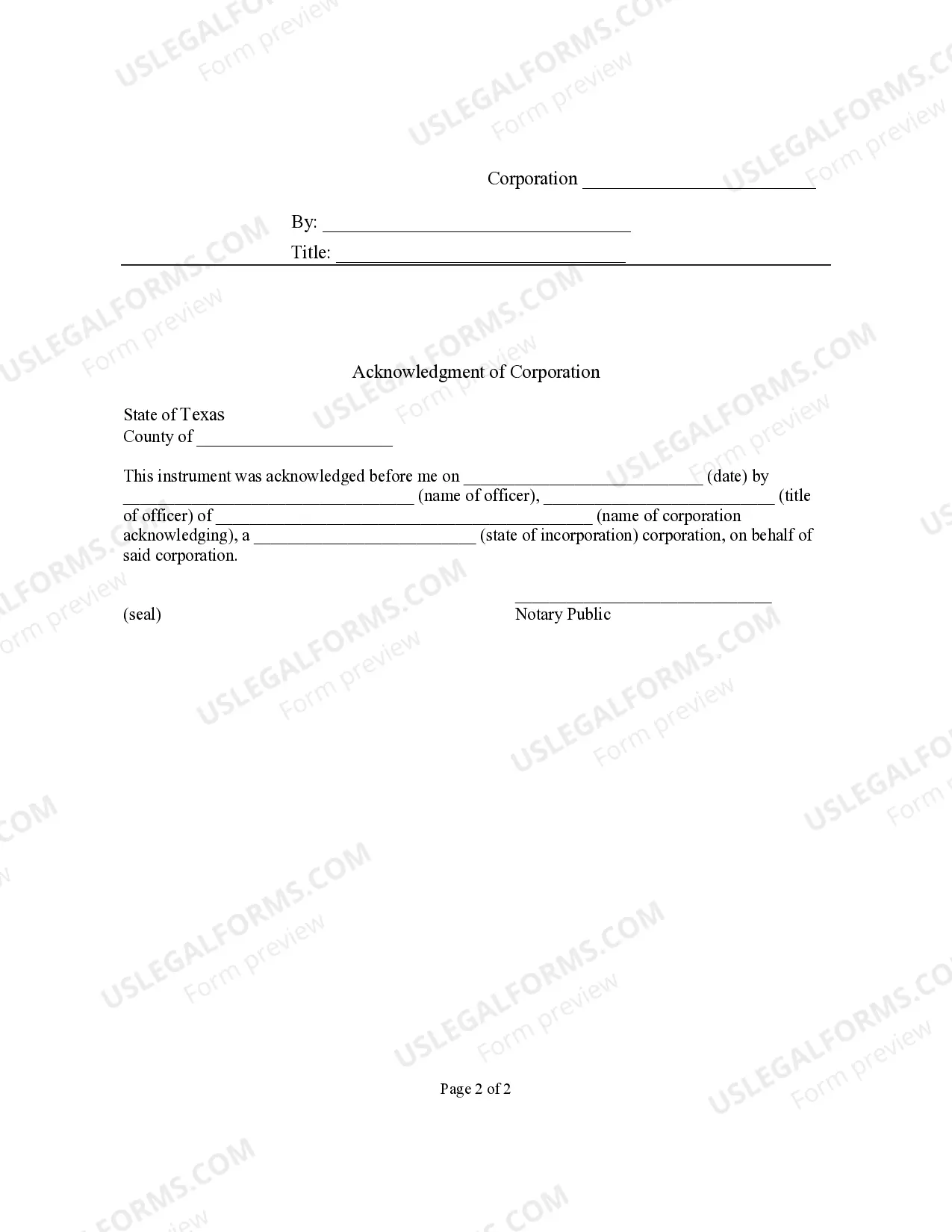
- Acknowledgment section for notary public verification.
When to use this document
This form should be used when a corporation is selling personal property and wishes to ensure that the purchaser receives a warranty of ownership. It is appropriate for a wide range of transactions, such as selling equipment, vehicles, or other valuable assets. It provides legal protection for both the seller and the buyer, making it essential in corporate transactions.
Who can use this document
- Corporations selling personal property.
- Businesses negotiating sales with other companies or individuals.
- Purchasers seeking a warranty on the assets they are acquiring from a corporation.
- Legal professionals drafting agreements for corporate transactions.
How to prepare this document
- Identify the Seller and Purchaser by entering their names and corporate details.
- Clearly describe the property being sold, including any relevant specifications.
- Specify the purchase price, both in numeral and written form for clarity.
- Include the date of the agreement and the signatures of the authorized corporate representatives.
- Have the document acknowledged by a notary public to ensure legal recognition.
Notarization requirements for this form
This form needs to be notarized to ensure legal validity. US Legal Forms provides secure online notarization powered by Notarize, allowing you to complete the process through a verified video call, available anytime.
Get your form ready online
Our built-in tools help you complete, sign, share, and store your documents in one place.
Make edits, fill in missing information, and update formatting in US Legal Forms—just like you would in MS Word.
Download a copy, print it, send it by email, or mail it via USPS—whatever works best for your next step.
Sign and collect signatures with our SignNow integration. Send to multiple recipients, set reminders, and more. Go Premium to unlock E-Sign.
If this form requires notarization, complete it online through a secure video call—no need to meet a notary in person or wait for an appointment.
We protect your documents and personal data by following strict security and privacy standards.

Make edits, fill in missing information, and update formatting in US Legal Forms—just like you would in MS Word.

Download a copy, print it, send it by email, or mail it via USPS—whatever works best for your next step.

Sign and collect signatures with our SignNow integration. Send to multiple recipients, set reminders, and more. Go Premium to unlock E-Sign.

If this form requires notarization, complete it online through a secure video call—no need to meet a notary in person or wait for an appointment.

We protect your documents and personal data by following strict security and privacy standards.
Mistakes to watch out for
- Failing to accurately describe the property being sold.
- Omitting signatures from authorized corporate representatives.
- Not having the document notarized when required.
- Incorrectly stating the purchase price or failing to double-check numerals against the written amount.
Advantages of online completion
- Convenience of downloading and completing the form anytime.
- Editability allows for easy customization to fit specific transaction needs.
- Reliability of templates drafted by licensed attorneys ensures legal compliance.
Quick recap
- The Bill of Sale with Warranty for Corporate Seller ensures a legal transfer of ownership with guarantees.
- Essential for corporate transactions involving the sale of personal property.
- Notarization is required for the document to be valid.
Looking for another form?
Form popularity
FAQ
Though standard form bill of sales are available online and from your local county tax collector's office, it's also perfectly acceptable to write your own.
The state does not require the document be notarized, but it does suggest that both parties jointly visit the county tax office when the seller is signing over title to the vehicle.
When land, houses, apartments, and other forms of real estate are sold or leased, the real estate usually comes with at least one warranty. In a sale of realty, the seller usually includes a warranty regarding the title to the property.This means that some party other than the seller has a claim to the property.
A bill of sale is good for a buyer because it documents the condition of the car at the time you bought it; this way if you later find that there are damages that the seller never told you about, you have proof. Having a bill of sale also protects you in the event that the seller denies having sold the car to you.
A bill of sale does not serve as proof of ownership. Only a title has that legal authority. Bills of sale serve as proof of title transfer, which buyers and sellers need for personal financial and tax records.
In simple terms, a bill of sale agreement is nothing more than a contract for the purchase of a vehicle between a buyer and a seller.In most cases, the contract is legally binding between buyer and seller as long as the bill of sale follows guidelines required in the state where the sale or transfer takes place.
A warranty bill of sale offers protections for the buyer that a simple receipt does not. This kind of bill of sale clearly details what is being sold and gives a guarantee to the buyer about the seller's ownership rights. The bill of sale promises that the buyer holds full and clear title to the item sold.
Similar to a receipt, a bill of sale is a written instrument that attests to a buyer's purchase of property from a seller.In other words, receipts are not bills of sale but a bill of sale may serve as a receipt.
A deed is not a bill of sale. Rather, it conveys what is legally included in the sale. This includes legal details and property specifications. It also usually includes information such as property lines, square footage, landmarks, and additional buildings.