Tennessee Landlord Notices for Eviction / Unlawful Detainer Forms Package
Overview of this form package
The Tennessee Landlord Notices for Eviction / Unlawful Detainer Forms Package includes essential legal notices that landlords must provide tenants before initiating eviction proceedings. This package offers various forms tailored to different situations affecting non-residential and residential leases. Unlike generic eviction notices, these are state-specific, ensuring compliance with Tennessee law. The package helps landlords communicate effectively with tenants regarding lease terminations while following the legal requirements.
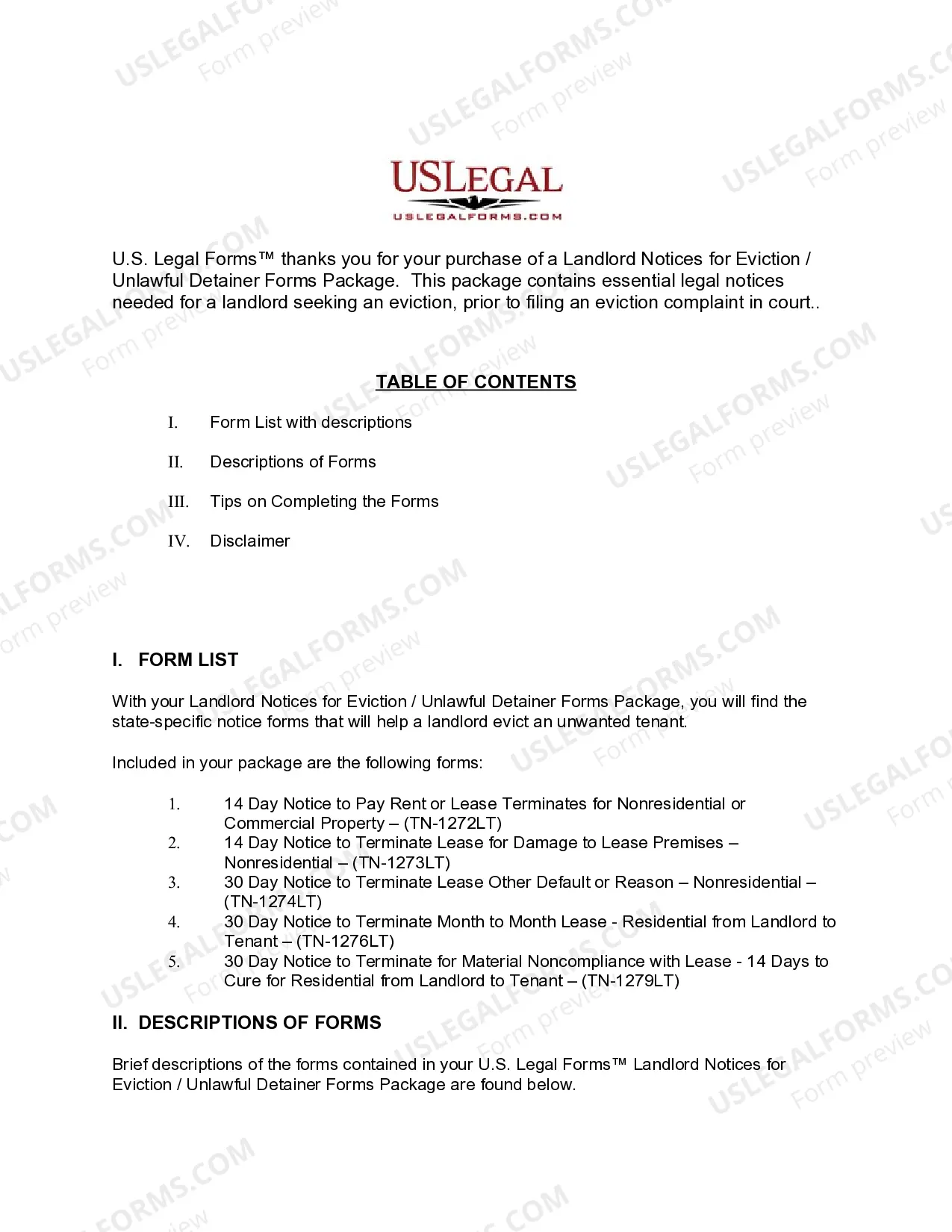
Forms included in this package
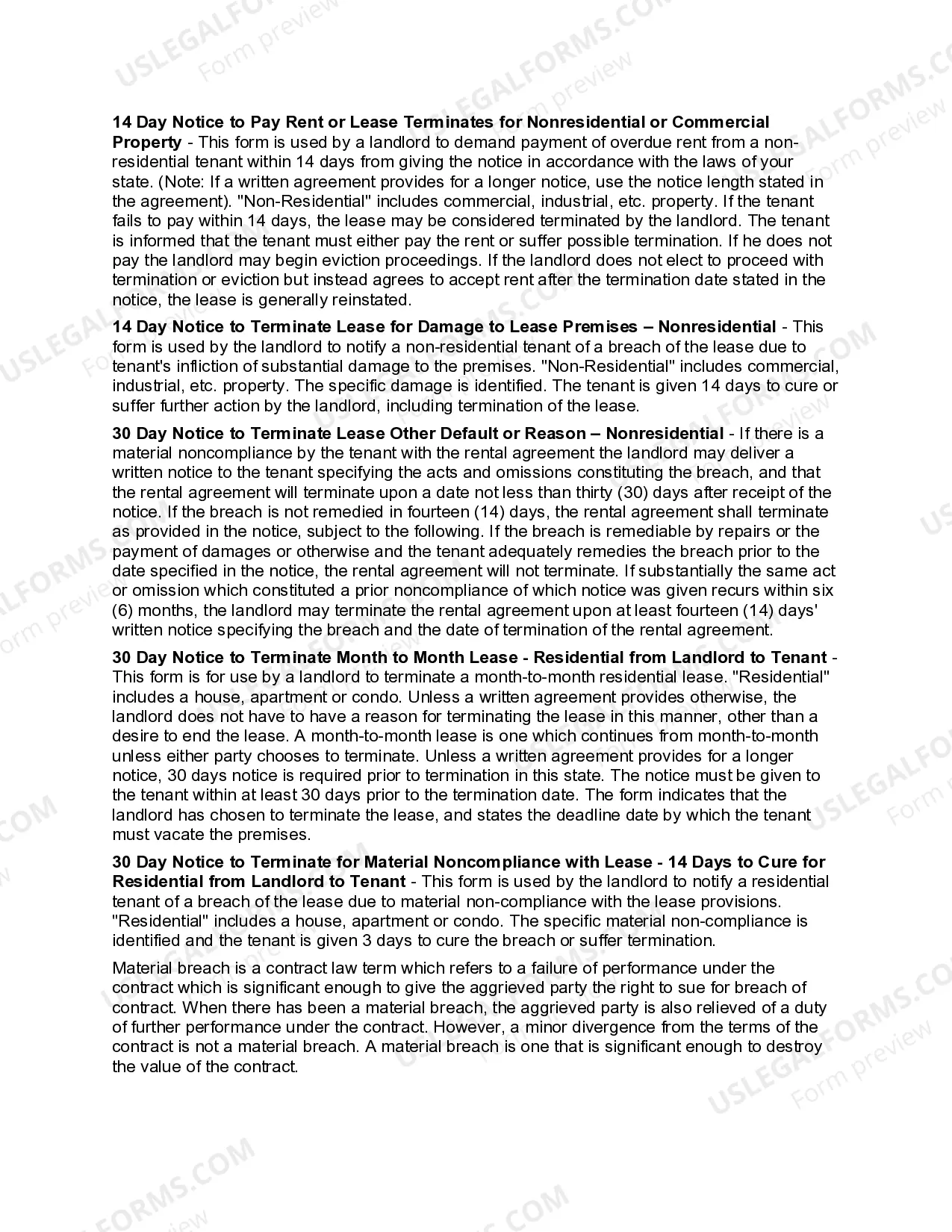
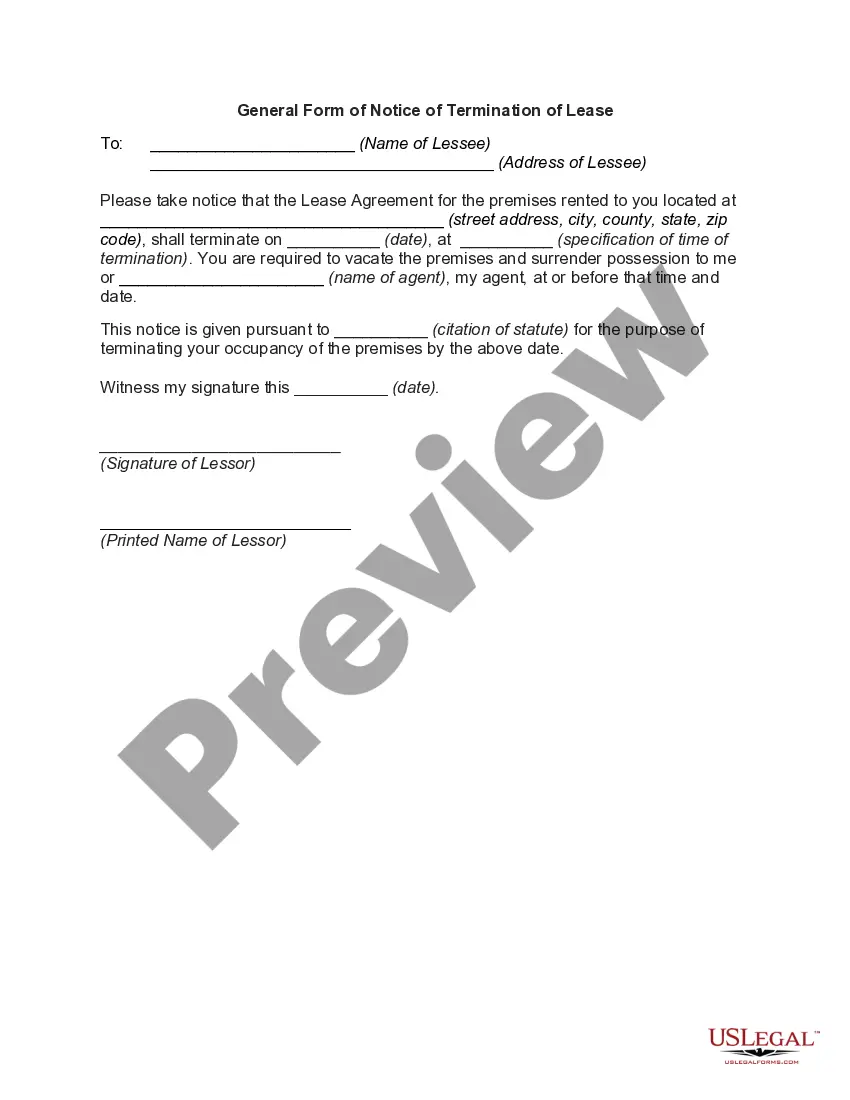
- 14 Day Notice to Pay Rent or Lease Terminates for Nonresidential or Commercial Property
- 14 Day Notice to Terminate Lease for Damage to Lease Premises - Nonresidential
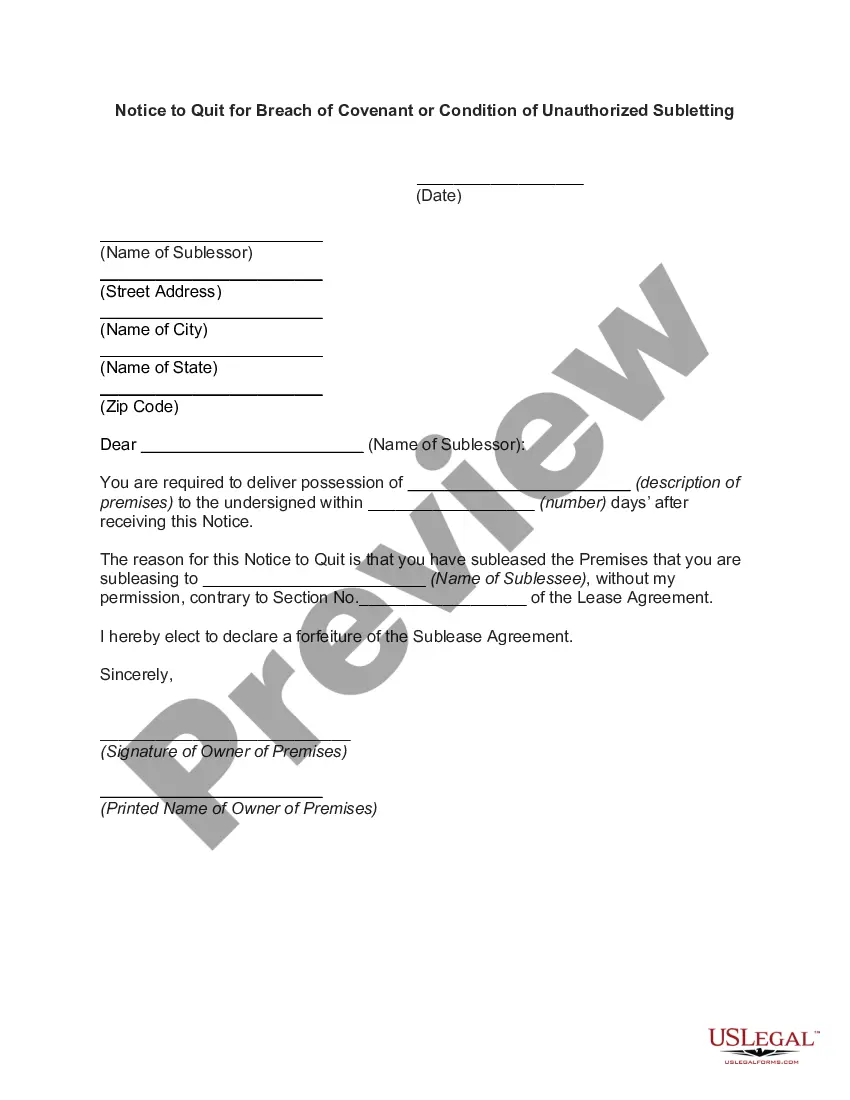
- 30 Day Notice to Terminate Lease Other Default or Reason - Nonresidential
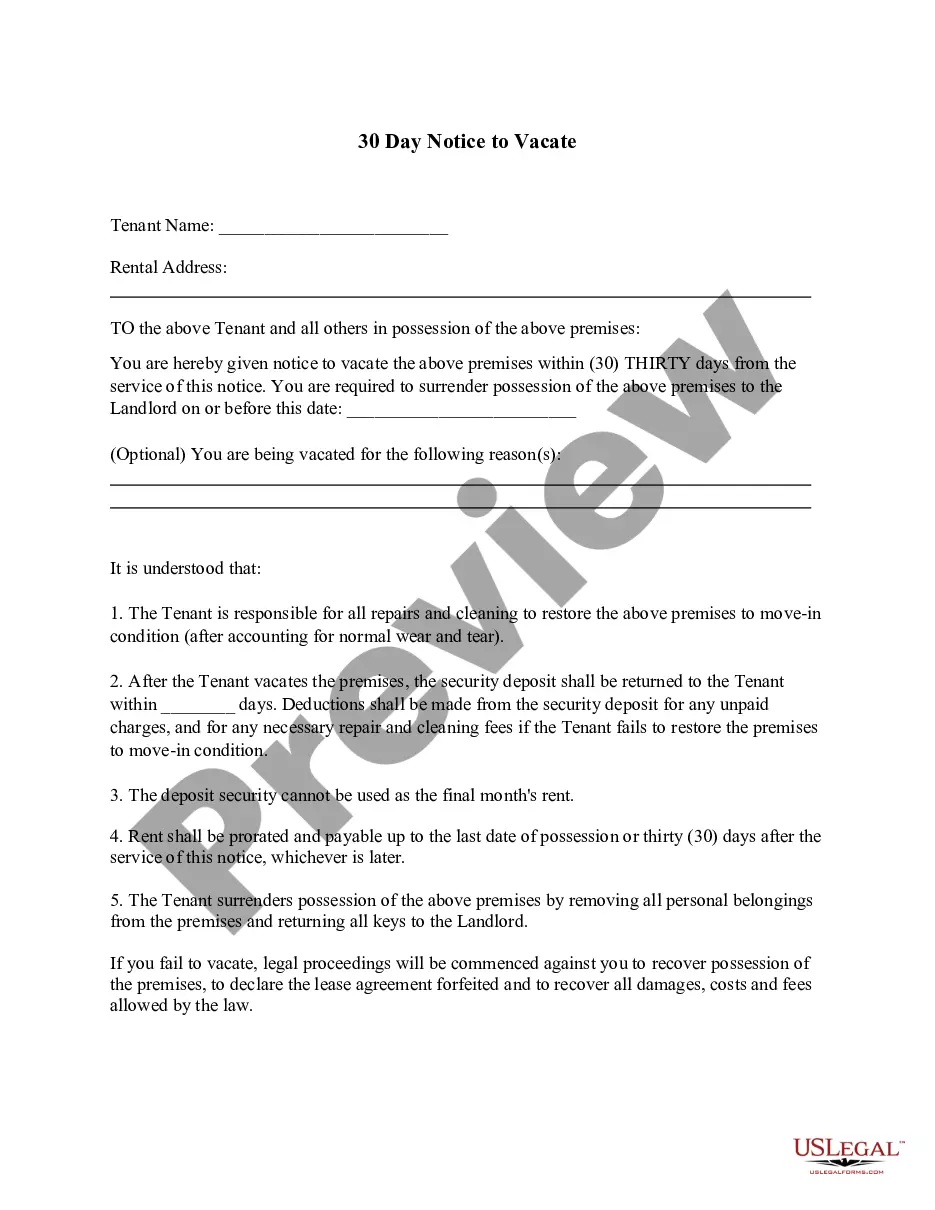
- 30 Day Notice to Terminate Month to Month Lease - Residential from Landlord to Tenant
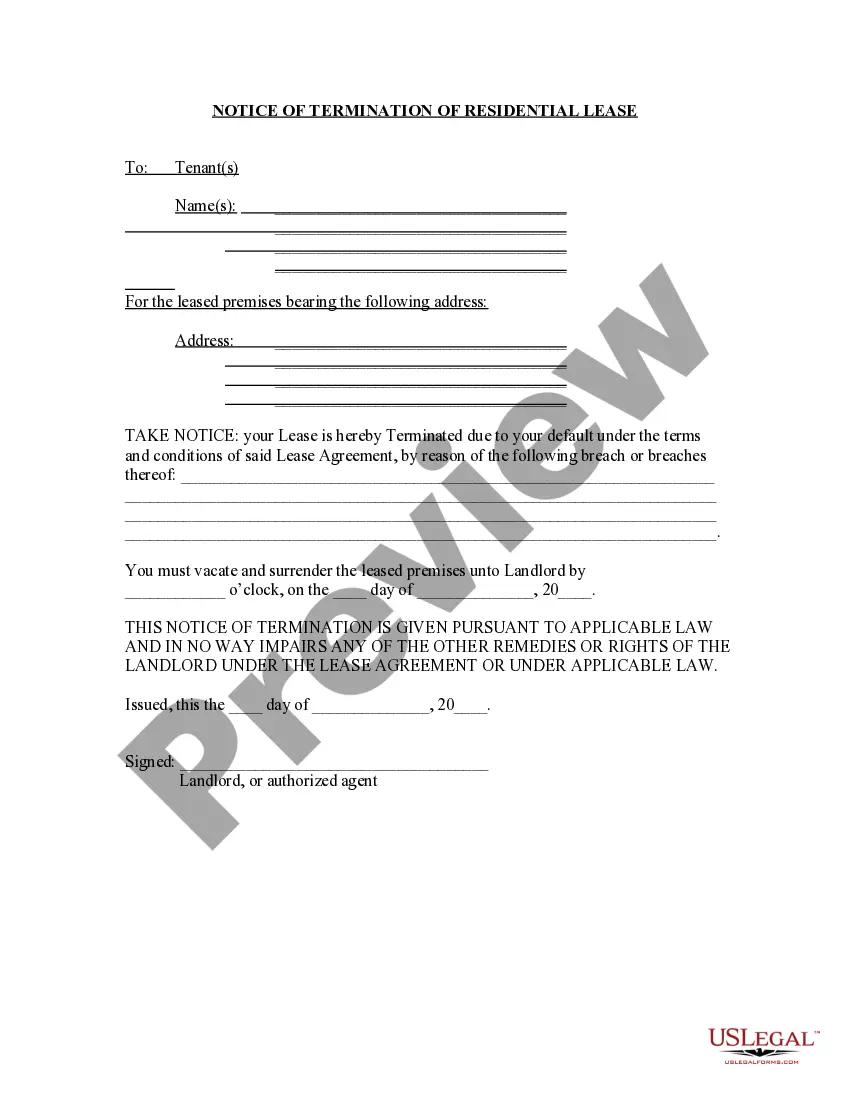
- 30 day Notice to Terminate for Material Noncompliance with Lease - 14 Days to Cure for Residential from Landlord to Tenant

When to use this document
This form package is necessary in several scenarios, including:
- When a tenant has failed to pay rent on time.
- If there is substantial damage to the rental property caused by the tenant.
- When a material breach of the rental agreement occurs.
- When terminating a month-to-month residential lease.
Intended users of this form package
- Residential landlords managing properties in Tennessee.
- Commercial landlords with non-residential tenants in Tennessee.
- Property managers seeking a structured approach to handle lease violations.
Instructions for completing these forms
- Review all forms included in the package to determine which specific notice applies to your situation.
- Identify the parties involved, including full names and addresses.
- Enter dates clearly, ensuring compliance with the notice periods required by law.
- Specify the nature of the breach or the reason for termination in the designated areas.
- Provide copies of the completed notices to the tenant as required.
- Consider consulting an attorney for complex situations to ensure compliance with all legal requirements.
Do documents in this package require notarization?
Most forms in this package do not require notarization. However, local laws or specific situations may demand it. Our online notarization service, powered by Notarize, lets you complete the process through a verified video call, available anytime.
Get your form ready online
Our built-in tools help you complete, sign, share, and store your documents in one place.
Make edits, fill in missing information, and update formatting in US Legal Forms—just like you would in MS Word.
Download a copy, print it, send it by email, or mail it via USPS—whatever works best for your next step.
Sign and collect signatures with our SignNow integration. Send to multiple recipients, set reminders, and more. Go Premium to unlock E-Sign.
If this form requires notarization, complete it online through a secure video call—no need to meet a notary in person or wait for an appointment.
We protect your documents and personal data by following strict security and privacy standards.

Make edits, fill in missing information, and update formatting in US Legal Forms—just like you would in MS Word.

Download a copy, print it, send it by email, or mail it via USPS—whatever works best for your next step.

Sign and collect signatures with our SignNow integration. Send to multiple recipients, set reminders, and more. Go Premium to unlock E-Sign.

If this form requires notarization, complete it online through a secure video call—no need to meet a notary in person or wait for an appointment.

We protect your documents and personal data by following strict security and privacy standards.
Mistakes to watch out for
- Failing to provide proper notice periods as required by law.
- Using incorrect forms for the type of lease (residential vs. non-residential).
- Not specifying the nature of the breach clearly.
- Neglecting to keep a copy of the notice for your records.
Benefits of using this package online
- Convenience of accessing legal forms anytime and anywhere.
- Editability allows for customization to fit your specific situation.
- Reliability, as forms are drafted and reviewed by licensed attorneys to meet state standards.
- Saves time and reduces the risk of errors in legal documentation.
Looking for another form?

Form popularity
FAQ
Know Your Rights. It goes without saying, but take some time to know your rights as a tenant. Keep Good Records. Make Sure Notice is Proper. Service of the Unlawful Detainer. Talking to an Attorney. Managing Partner Lipton Legal Group, A PC Beverly Hills, CA.
Address the Tenant(s) Named in the Residential Lease. List the Lease Information. Notify the Tenant of the Eviction. Give a Reason for the Eviction. Serve the Eviction Notice to the Tenant(s)
Address the Tenant(s) Named in the Residential Lease. List the Lease Information. Notify the Tenant of the Eviction. Give a Reason for the Eviction. Serve the Eviction Notice to the Tenant(s)
Step 1: Written Notice. The first thing a landlord must do is provide the tenant with a written notice that an eviction will occur in 30 days if the tenant does not comply with the terms of the lease within 14 days. Step 2: Eviction Papers. Step 3: The Eviction Hearing. Step 4: Period for Appeal. Step 5: Writ of Possession.
If you file an eviction (unlawful detainer) case and you decide you do not want to move forward, you can ask the court to dismiss the case.You included more than one tenant in your eviction case but have decided you only want to evict one or some of them, so you dismiss the case as to the others.
Courts commonly refer to eviction actions as "forcible entry and detainer" or "unlawful detainer" actions. The legal theory is that the landlord alleges the tenant unlawfully continues to have use and possession of the rental property, and the landlord seeks the assistance of the court to have the tenant removed.
Know Your Rights. It goes without saying, but take some time to know your rights as a tenant. Keep Good Records. Make Sure Notice is Proper. Service of the Unlawful Detainer. Talking to an Attorney. Managing Partner Lipton Legal Group, A PC Beverly Hills, CA.
A landlord cannot legally evict you without a court order, whether or not you have a lease.) How long does it take for a landlord to evict a tenant? A landlord can evict a tenant only by going through a formal eviction proceeding, which can take a few weeks from start to finish.