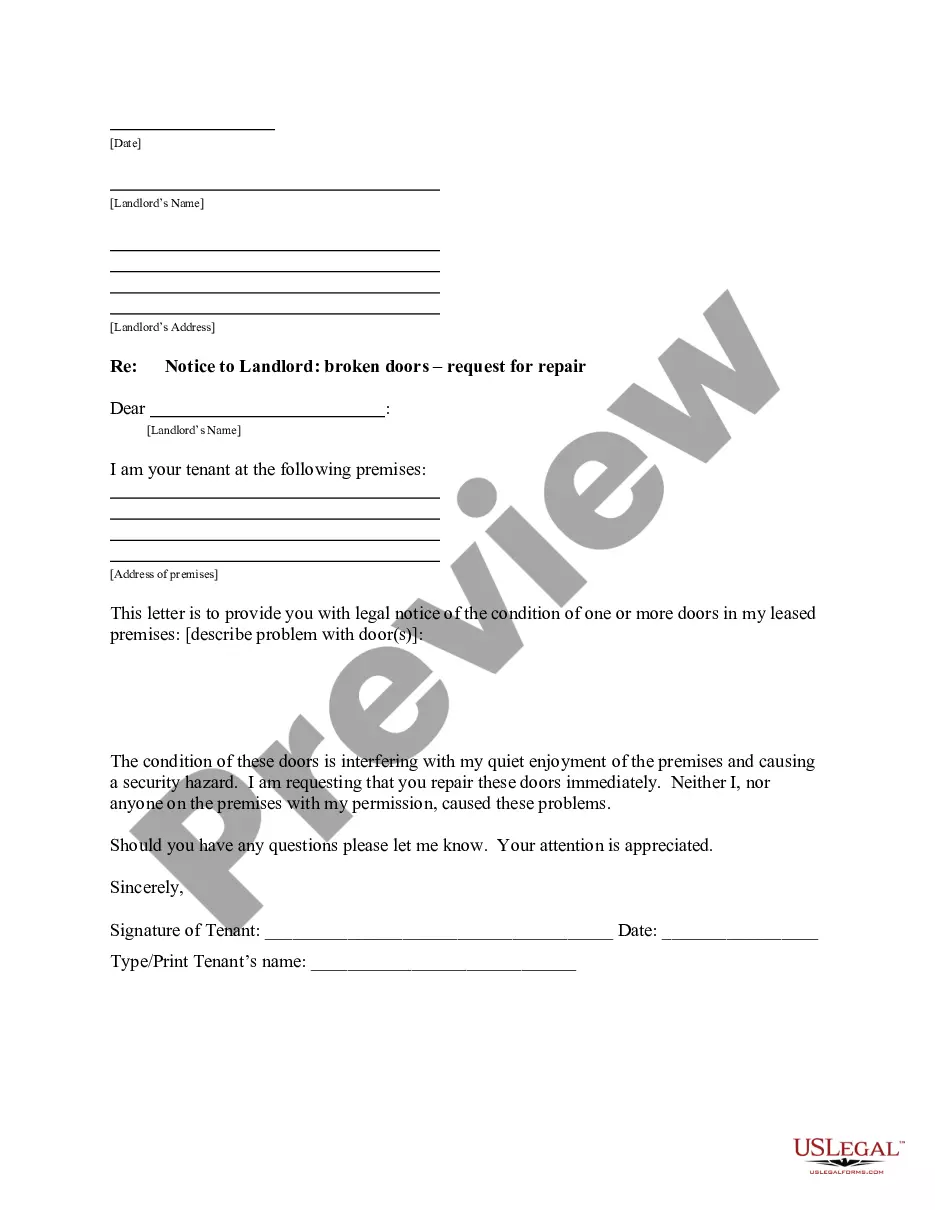
South Carolina Bill of Sale with Warranty for Corporate Seller
Overview of this form
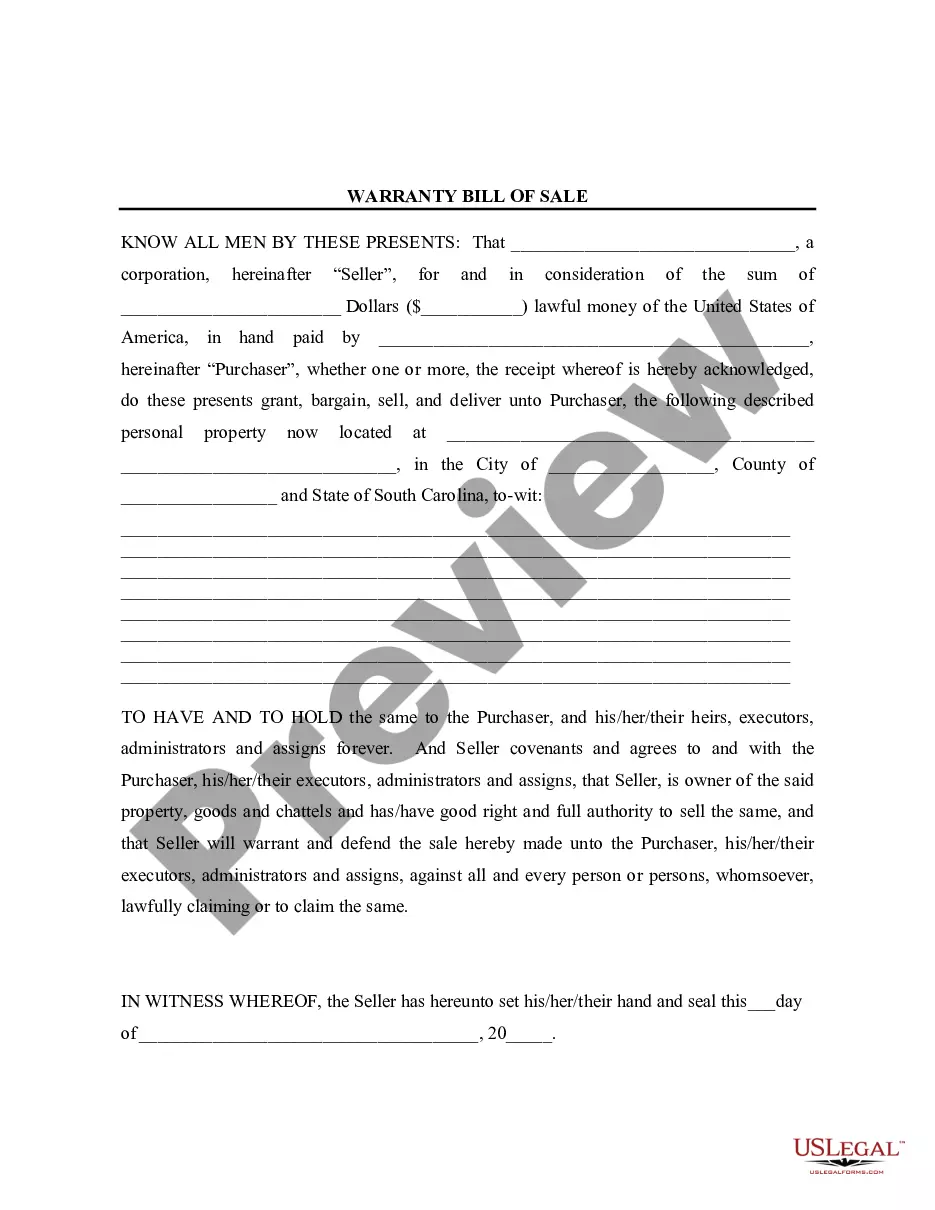
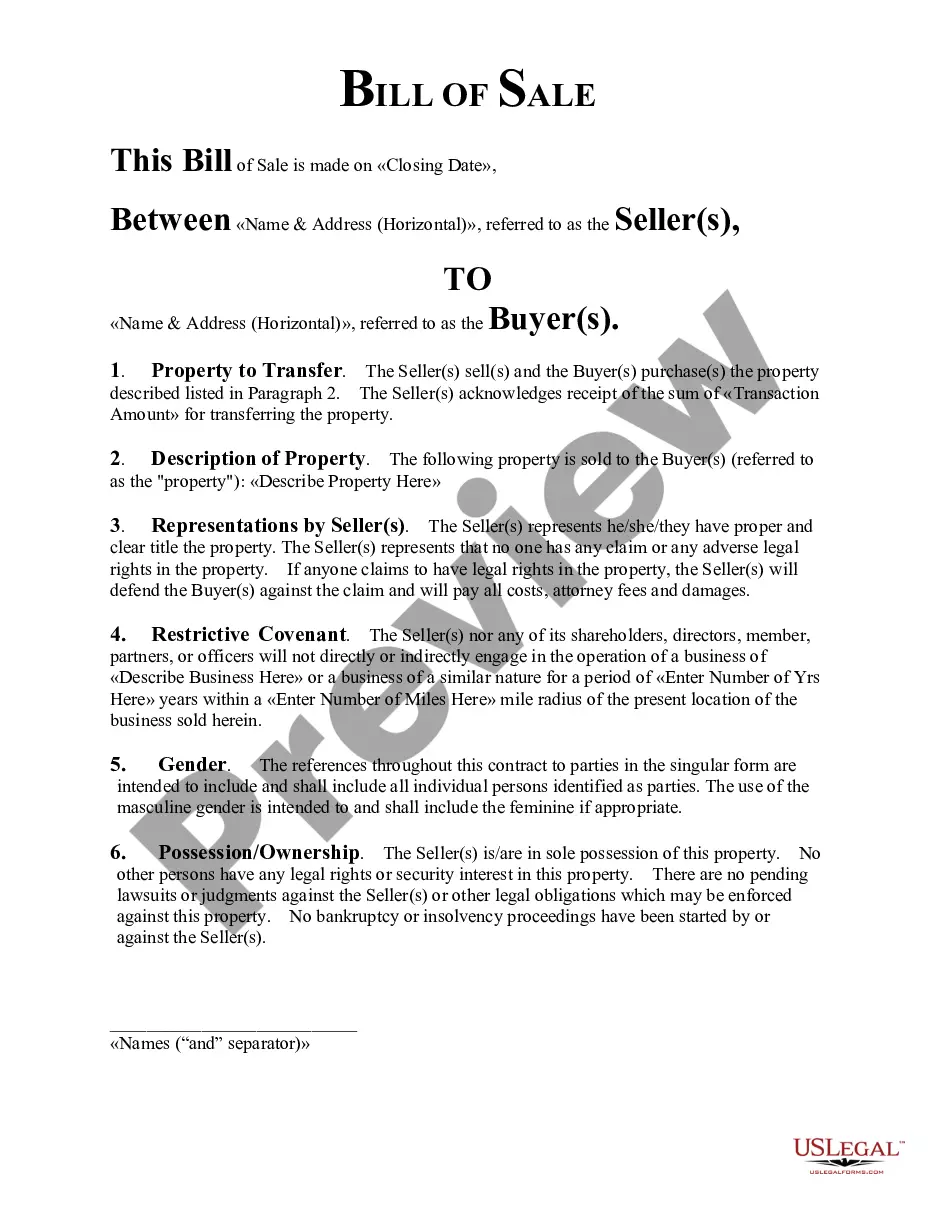
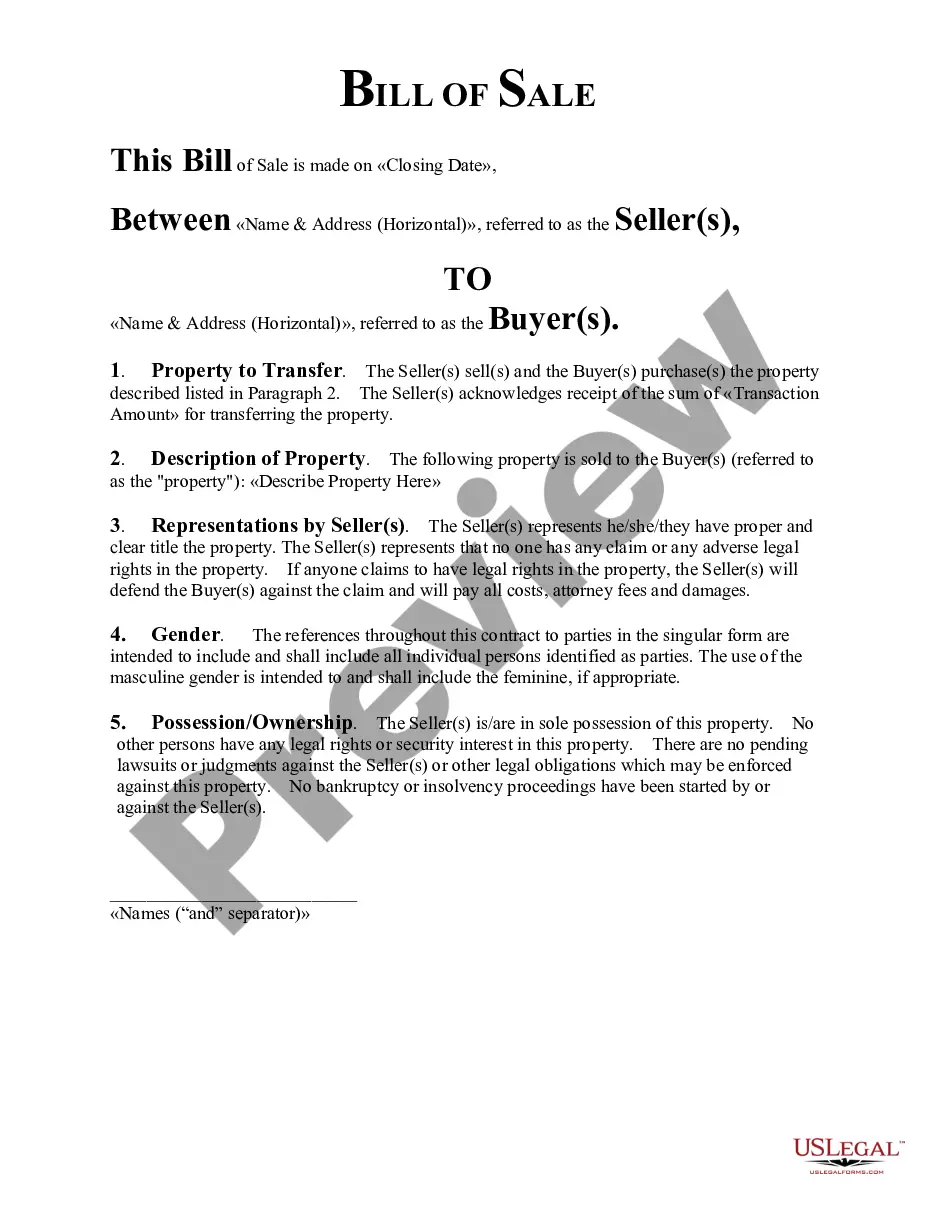
The Bill of Sale with Warranty for Corporate Seller is a legal document used for transferring ownership of personal property from a corporate seller to a purchaser. This form includes a warranty provision, providing assurance that the seller holds clear title to the property and has the authority to sell it, unlike a quitclaim conveyance. This ensures that the purchaser receives protections against future claims to the property, making it a more secure option for transactions involving corporate entities.
Key parts of this document
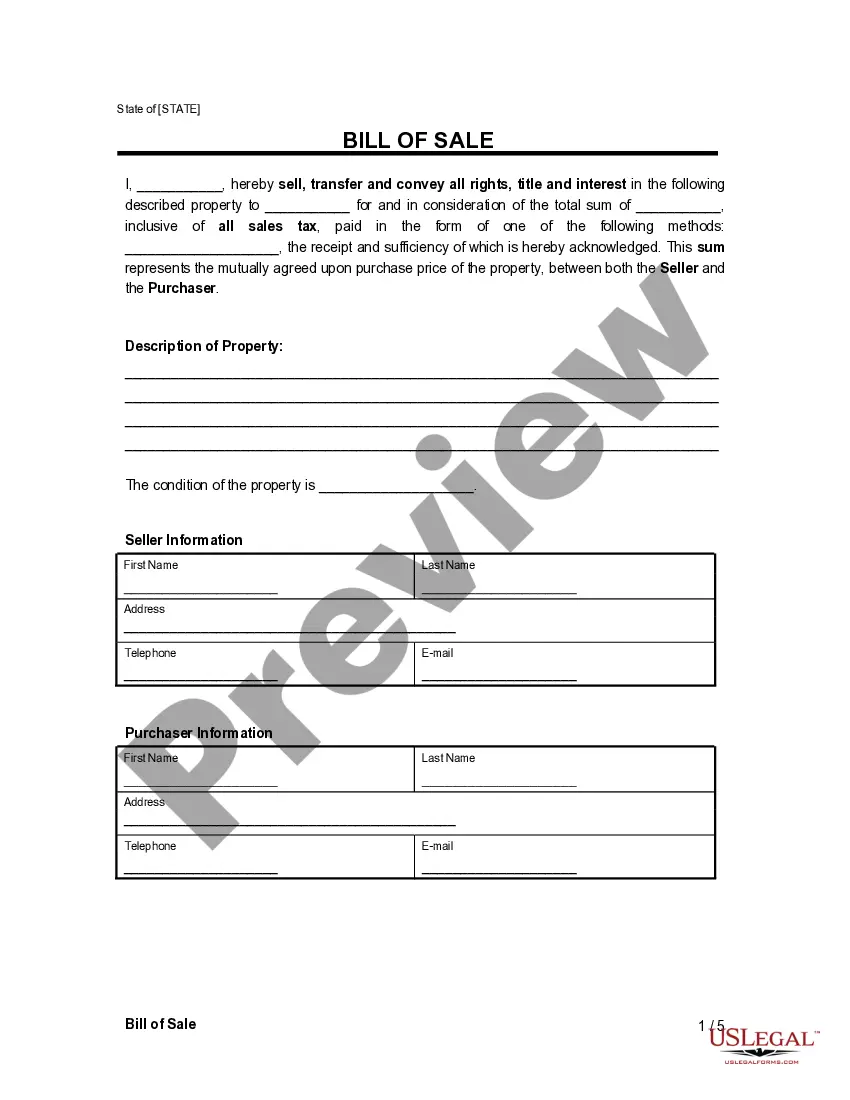
- Seller and Purchaser Information: Identifies the corporation selling the property and the buyer.
- Description of Property: Provides a detailed description of the property being sold.
- Purchase Price: Includes the total consideration for the sale.
- Warranty Clause: Guarantees that the seller has the right to sell and will defend the title against claims.
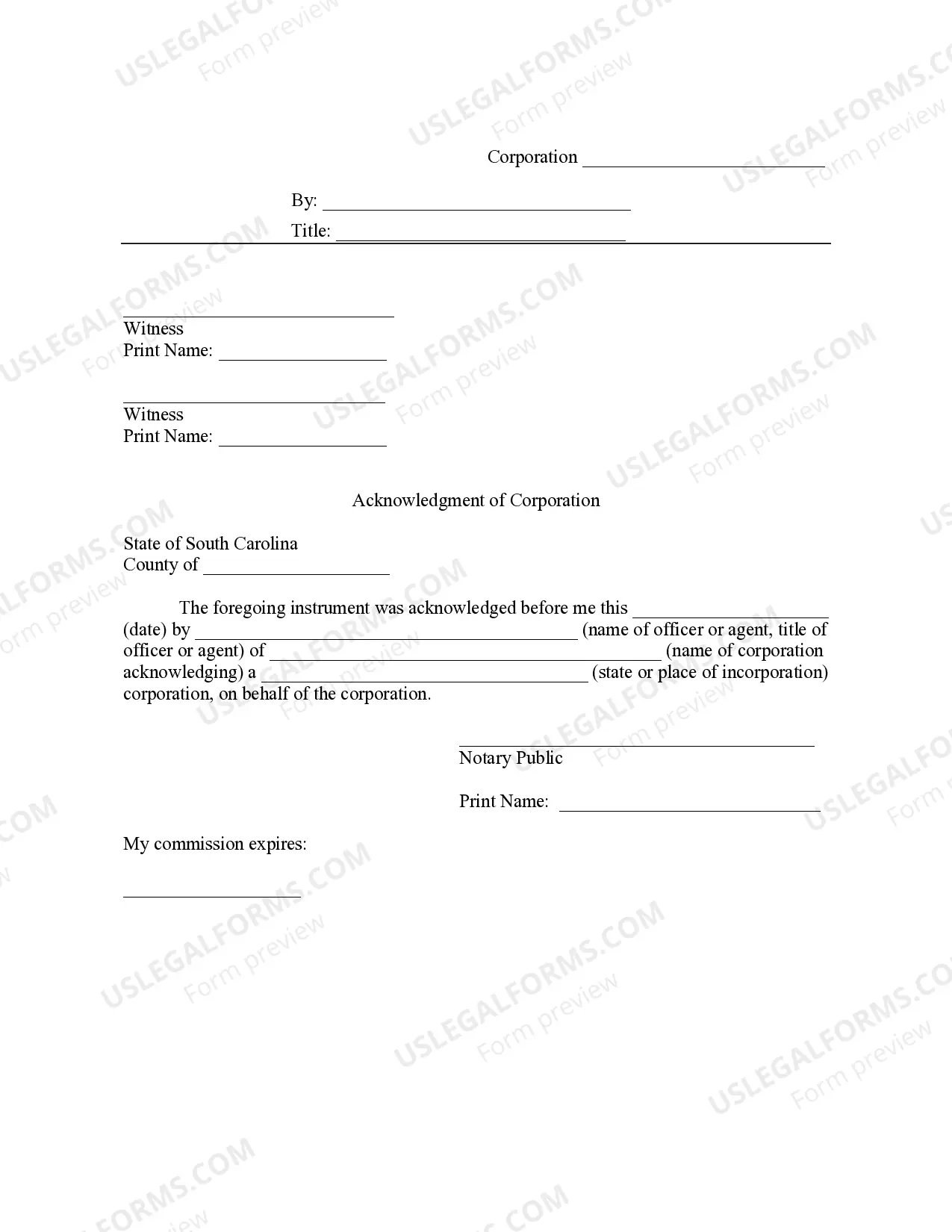
- Signatures: Requires the signature of an authorized corporate representative and witnesses.
- Notarization Acknowledgment: Includes an area for notarization to validate the transaction.
Situations where this form applies
This form should be used when a corporation is selling personal property, including equipment, machinery, or inventory, and wishes to provide a warranty to the buyer. It is ideal for securing the sale of high-value items or when the buyer seeks assurance that they are receiving clear title. Use this document for transactions where legal protection against future claims is desired.
Who this form is for
- Corporations selling personal property who want to convey ownership securely.
- Purchasers (individuals or entities) wanting a warranty on the ownership of the property.
- Legal professionals seeking to facilitate transactions involving corporate sellers.
- Accountants or business advisors advising clients on formal sales of corporate assets.
How to complete this form
- Identify the parties involved: Clearly enter the Seller (corporation) and Purchaser information.
- Specify the property: Provide a detailed description of the personal property being sold.
- Enter the purchase price: Fill in the total amount paid for the property.
- Gather signatures: Ensure the authorized corporate representative signs the document and that it is witnessed as required.
- Notarize if necessary: Fill out the acknowledgment section for notarization, confirming the seller's authority.
Notarization requirements for this form
Yes, this form must be notarized to be legally valid. Notarization adds a layer of authenticity and ensures all parties have signed willingly. US Legal Forms offers integrated online notarization services, allowing you to complete this step through secure video calls without the need for travel.
Get your form ready online
Our built-in tools help you complete, sign, share, and store your documents in one place.
Make edits, fill in missing information, and update formatting in US Legal Forms—just like you would in MS Word.
Download a copy, print it, send it by email, or mail it via USPS—whatever works best for your next step.
Sign and collect signatures with our SignNow integration. Send to multiple recipients, set reminders, and more. Go Premium to unlock E-Sign.
If this form requires notarization, complete it online through a secure video call—no need to meet a notary in person or wait for an appointment.
We protect your documents and personal data by following strict security and privacy standards.

Make edits, fill in missing information, and update formatting in US Legal Forms—just like you would in MS Word.

Download a copy, print it, send it by email, or mail it via USPS—whatever works best for your next step.

Sign and collect signatures with our SignNow integration. Send to multiple recipients, set reminders, and more. Go Premium to unlock E-Sign.

If this form requires notarization, complete it online through a secure video call—no need to meet a notary in person or wait for an appointment.

We protect your documents and personal data by following strict security and privacy standards.
Common mistakes
- Failing to accurately describe the property, which can lead to disputes later.
- Not including all signatures required, particularly from witnesses or authorized representatives.
- Leaving the purchase price field blank or miscalculating the amount.
- Overlooking the need for notarization, which could invalidate the document.
- Using outdated or incorrect forms that do not comply with current local laws.
Advantages of online completion
- Convenience: Download and complete the form at your own pace, anytime and anywhere.
- Editability: Easily make changes to the form as needed before finalizing the sale.
- Security: Designed by licensed attorneys to ensure compliance and legal validity.
- Accessibility: Available in various formats to suit your printing and filing needs.
Quick recap
- The Bill of Sale with Warranty provides a secure transfer of ownership with warranties from corporate sellers.
- Proper completion and notarization ensure the document's legal validity.
- This form is especially useful in business transactions involving significant personal property.
Looking for another form?
Form popularity
FAQ
Most states do not require a notary to witness the signing of a bill of sale. However, by law, a notary public must witness both parties signing the document in Louisiana, Nebraska, Maryland, New Hampshire, West Virginia, and Montana. Notaries are optional in other states.
A warranty bill of sale offers protections for the buyer that a simple receipt does not. This kind of bill of sale clearly details what is being sold and gives a guarantee to the buyer about the seller's ownership rights. The bill of sale promises that the buyer holds full and clear title to the item sold.
When is a bill of sale required in South Carolina? A DMV bill of sale is required when titling and registering your vehicle. Usually, a vehicle bill of sale can verify odometer readings and sale prices if sellers forgot to list them on the back of the vehicle title.
Alabama. Arkansas. Colorado. Connecticut. Hawaii. Idaho. Maine. Nebraska.
While operating a vehicle with a temporary plate, the bill of sale, title, rental contract or a copy of either document must be kept in the vehicle at all times to verify the dates of purchase to a law enforcement officer.
A bill of sale is required and a notary must witness the signatures on it. This must take place, when the title does not include the price and date of the transaction. It is also important to note that the bill of sale must be an original. The South Carolina DMV can give the bill of sale to all responsible parties.
A bill of sale has been defined as a legal document made by the seller to a purchaser, reporting that on a specific date at a specific locality and for a particular sum of money or other value received, the seller sold to the purchaser a specific item of personal property, or parcel of real property of which he had
When land, houses, apartments, and other forms of real estate are sold or leased, the real estate usually comes with at least one warranty. In a sale of realty, the seller usually includes a warranty regarding the title to the property.This means that some party other than the seller has a claim to the property.