Rhode Island Letter from Tenant to Landlord containing Notice to landlord to withdraw retaliatory rent increase
What this document covers
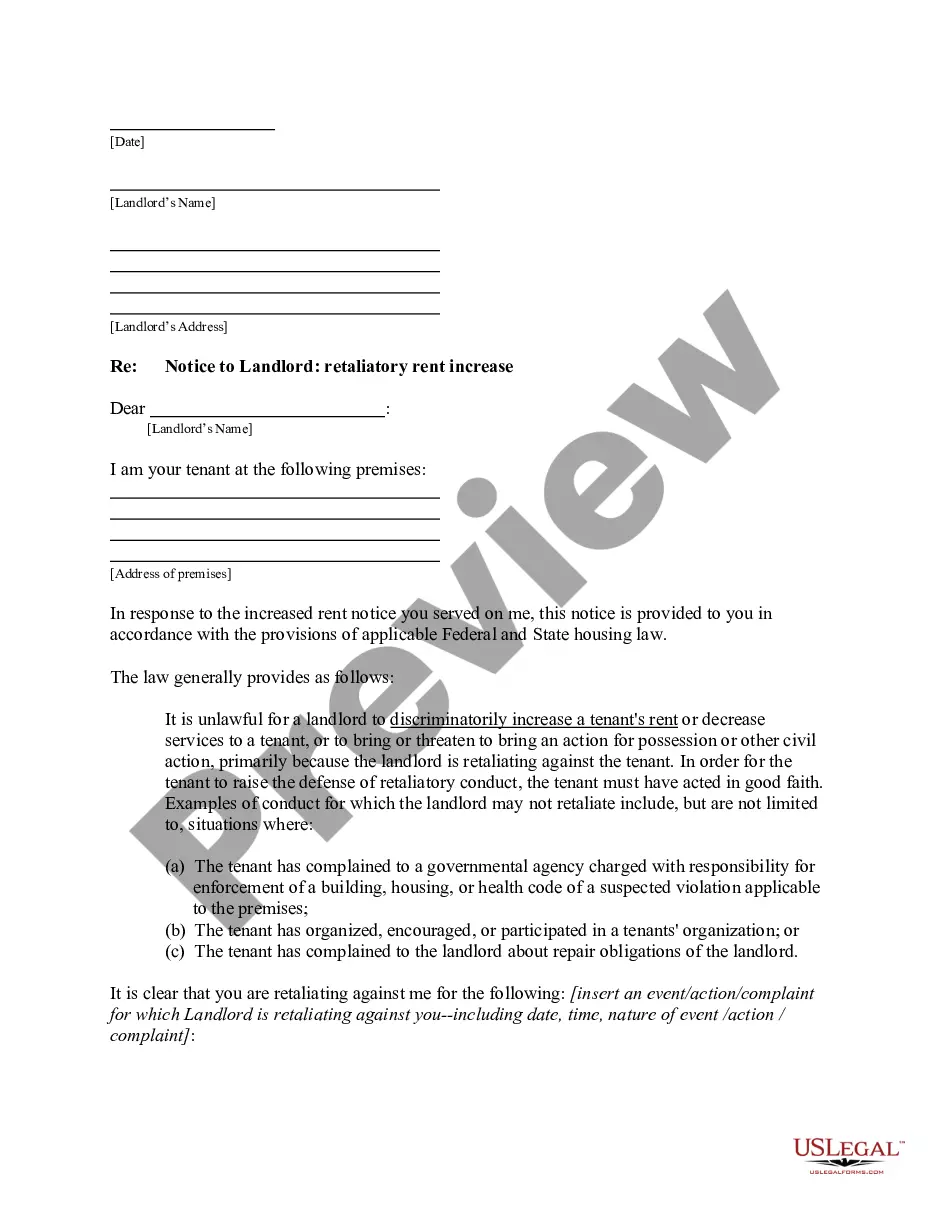
This Letter from Tenant to Landlord containing Notice to Landlord to Withdraw Retaliatory Rent Increase is a legal notice that informs landlords about unlawful retaliatory actions they might take against tenants. It highlights that increasing rent or decreasing services as retaliation is against state housing laws. This form serves as an essential communication tool to assert tenant rights and ensure landlords understand their obligations under the law.
Key components of this form
- Statement of unlawful retaliatory actions by landlords.
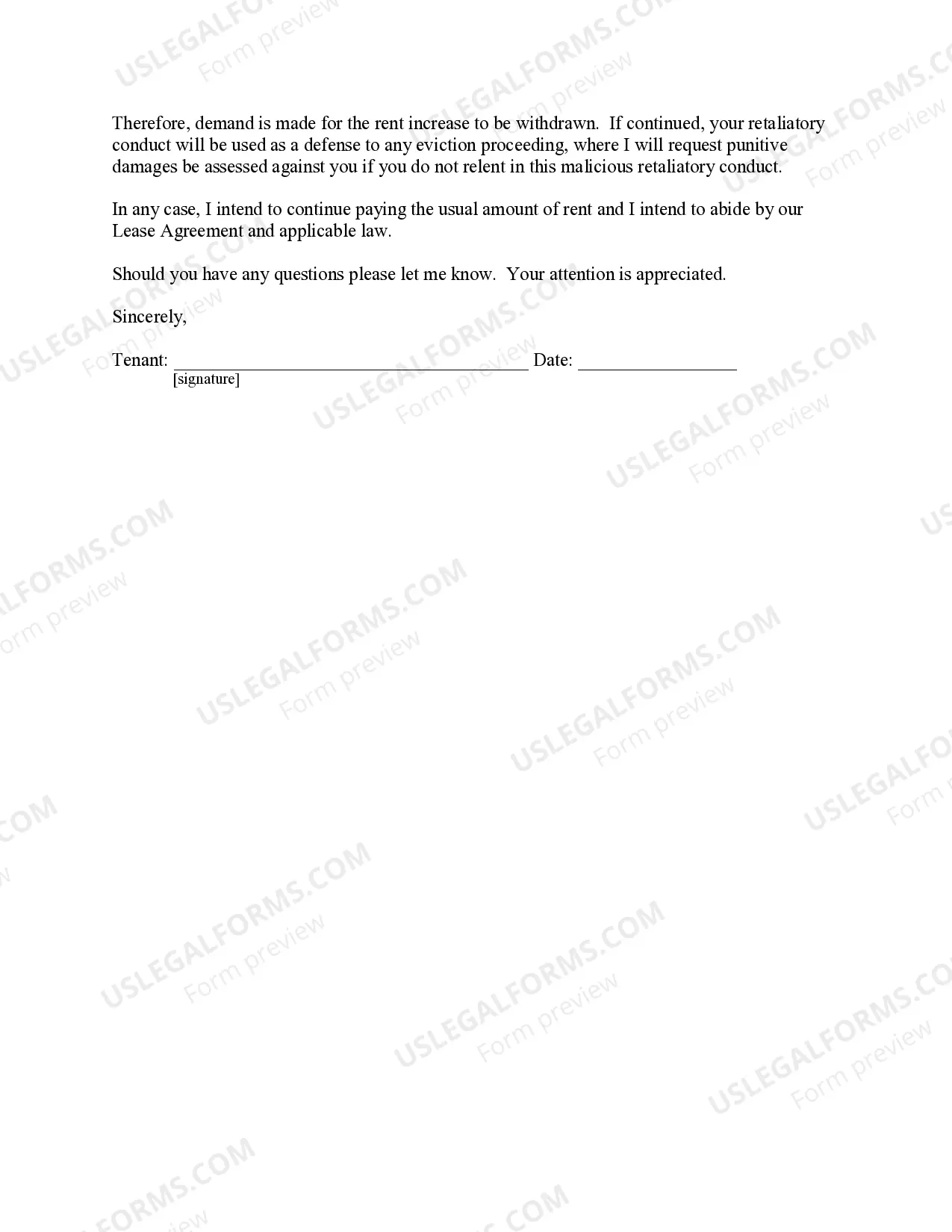
- Notification of the tenant's intent to pay rent and comply with lease terms.
- Explanation of actions that tenants are protected from retaliation for, such as reporting code violations.
- Space for the tenant's signature and date.
- Space for the landlord's acknowledgment if required.
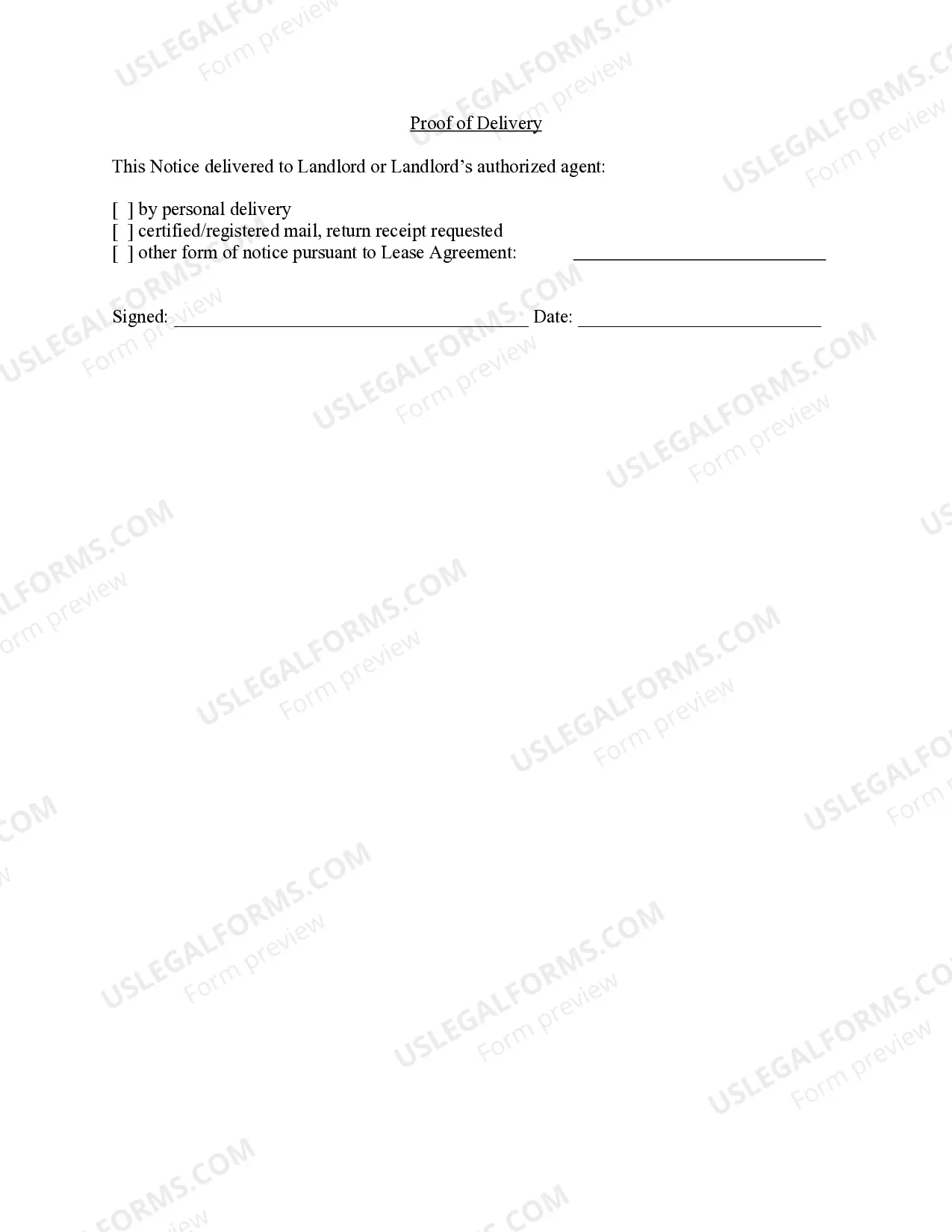
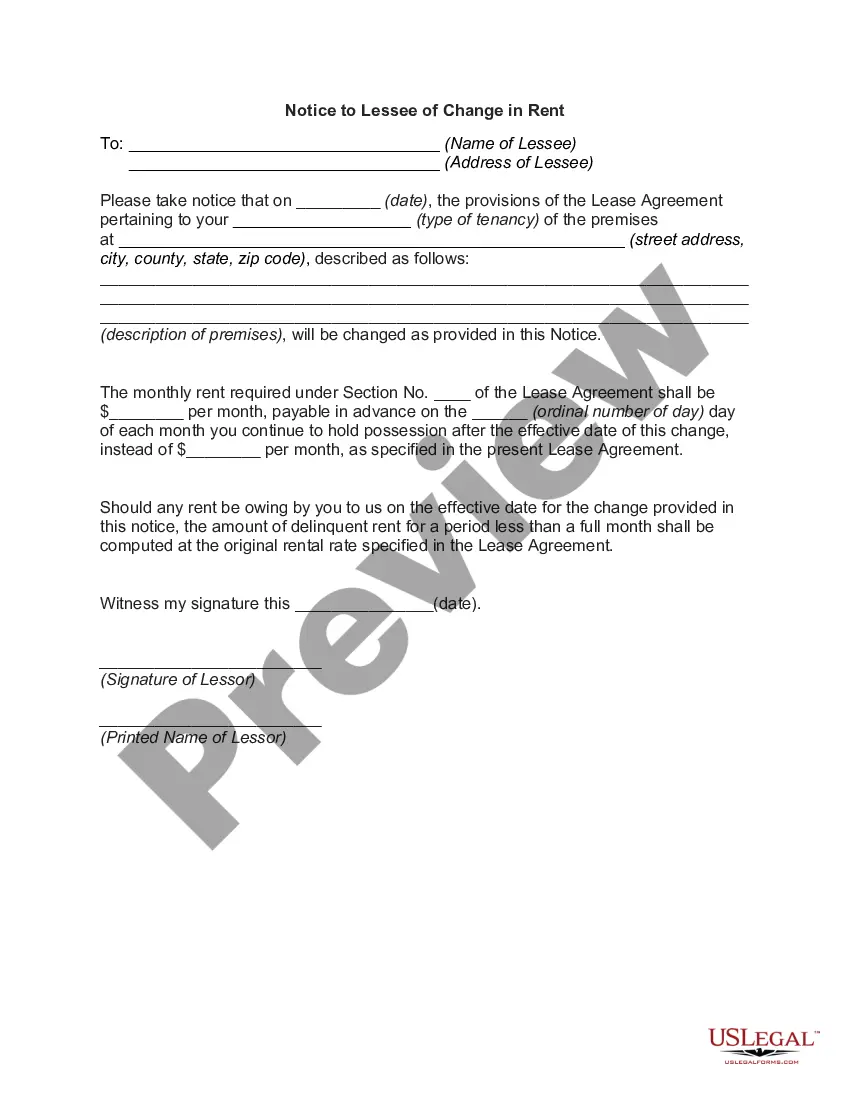

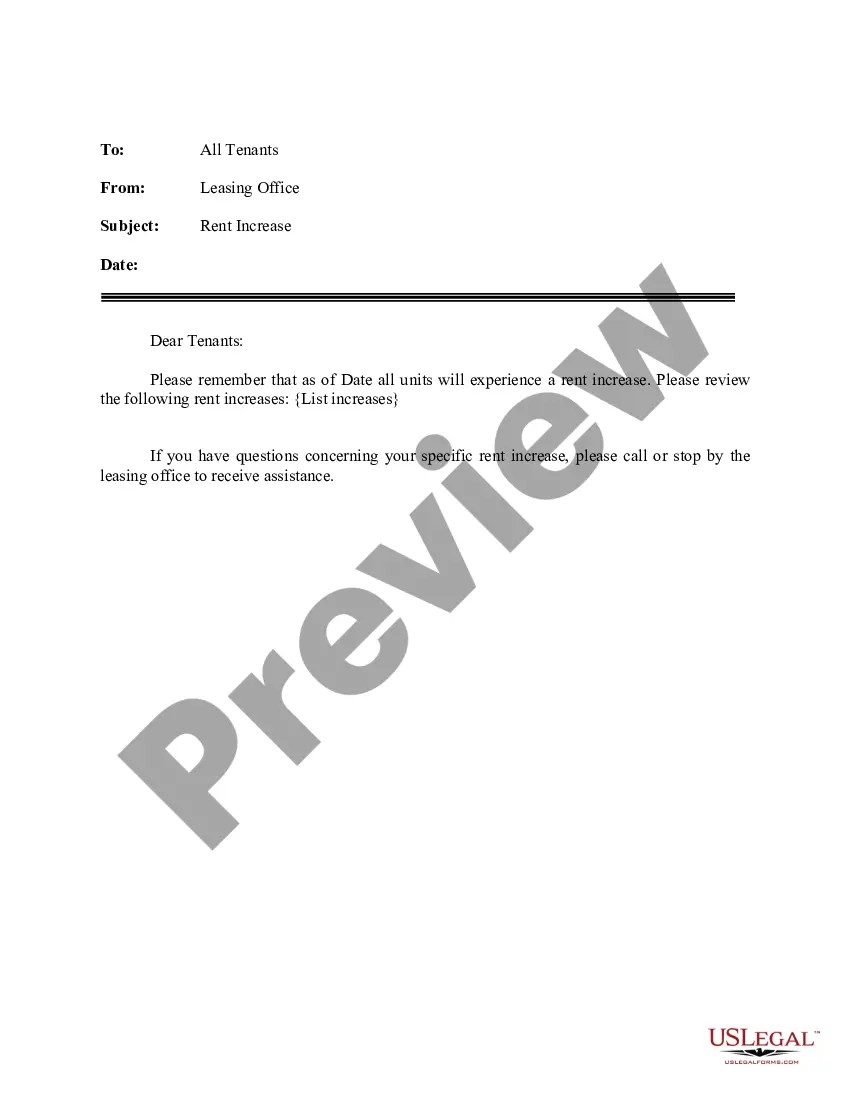


When this form is needed
This form should be used when a tenant believes that their landlord has unfairly increased their rent or reduced services due to the tenant exercising their legal rights, such as requesting repairs or reporting issues to authorities. It is crucial for protecting tenant rights and ensuring that any communication regarding rent increases is documented properly.
Intended users of this form
- Tenants who have received a rent increase they suspect is retaliatory.
- Individuals who have reported code violations or issues to the landlord.
- Members of tenant organizations or collective groups that have raised concerns with their landlord.
Steps to complete this form
- Identify yourself as the tenant, providing your name and contact information.
- Clearly state the reason for the notice, mentioning the rent increase and retaliation details.
- Express your intention to continue paying the agreed-upon rent amount.
- Sign and date the form to validate your notice.
- Consider sending the notice via a method that provides proof of delivery to the landlord.
Is notarization required?
In most cases, this form does not require notarization. However, some jurisdictions or signing circumstances might. US Legal Forms offers online notarization powered by Notarize, accessible 24/7 for a quick, remote process.
Get your form ready online
Our built-in tools help you complete, sign, share, and store your documents in one place.
Make edits, fill in missing information, and update formatting in US Legal Forms—just like you would in MS Word.
Download a copy, print it, send it by email, or mail it via USPS—whatever works best for your next step.
Sign and collect signatures with our SignNow integration. Send to multiple recipients, set reminders, and more. Go Premium to unlock E-Sign.
If this form requires notarization, complete it online through a secure video call—no need to meet a notary in person or wait for an appointment.
We protect your documents and personal data by following strict security and privacy standards.

Make edits, fill in missing information, and update formatting in US Legal Forms—just like you would in MS Word.

Download a copy, print it, send it by email, or mail it via USPS—whatever works best for your next step.

Sign and collect signatures with our SignNow integration. Send to multiple recipients, set reminders, and more. Go Premium to unlock E-Sign.

If this form requires notarization, complete it online through a secure video call—no need to meet a notary in person or wait for an appointment.

We protect your documents and personal data by following strict security and privacy standards.
Avoid these common issues
- Failing to provide specific details about the retaliatory rent increase.
- Not signing or dating the notice, which can invalidate it.
- Sending the form without retaining a copy for personal records.
Advantages of online completion
- Immediate access to a legally vetted template, ensuring compliance with current laws.
- Convenience of downloading and filling out the form at your leisure.
- Editability allows for customization to fit specific tenant situations.
Looking for another form?






Form popularity
FAQ
In most states, a landlord must give tenants notice at least 30 days before they'll enforce a rent increase. However, in other states like California, the notice can increase to 60 days' notice if the increase is more than 10% of the current rent rate.
Under Rhode Island law, the rental agreement between a tenant and a landlord is a contract. A landlord is permitted to attempt to increase a tenant's rent by any amount for any reason, as long as the increase was not done for an illegal reason, and as long as the increase was done by proper procedures.
The landlord verification form is a document used by a landlord when verifying the previous rental information of an applicant for tenancy. The requesting landlord must send the form to the applicant's current or past landlord in order to obtain all details related to the tenancy of the individual.
Remember you're a business. Do your research. Raise the rent all at once or incrementally. Don't negotiate or ask tenants what they think a fair rent increase would be. Be courteous and firm. Find a template you like. Send a formal letter by certified mail. Give the tenant notice.
There is no rent control in Rhode Island, so a landlord is free to set the rent at whatever s/he decides. You and the landlord can agree on the date that rent will be paid. If your rent is more than 15 days late, you can be evicted for non-payment and the landlord can use a quick court proceeding.
Ask the landlord to reconsider their letter to you. Explain the history of your tenancy to date, which should show that you're a good tenant who has paid rent on time. Include comparisons to rent in the area, if it shows that a rent increase would make your rent too high when compared to similar apartments.
Essentially, this means your landlord can only raise rents if they're in line with the current market. The AST often has a section suggesting how much rents could increase by. The percentage is typically between 0.5 and 5%, with market rents expected to be somewhere in that bracket after a 12-month AST comes to an end.
The landlord had a duty to reasonably maintain the property; The landlord knew or should have known of the dangerous condition; The landlord breached their duty by failing to repair/fix the dangerous condition;
A typical rent increase is around 3-5% annually.