Rhode Probate
Probate involves managing a deceased person's estate. Attorney-drafted templates make the process quick and straightforward.

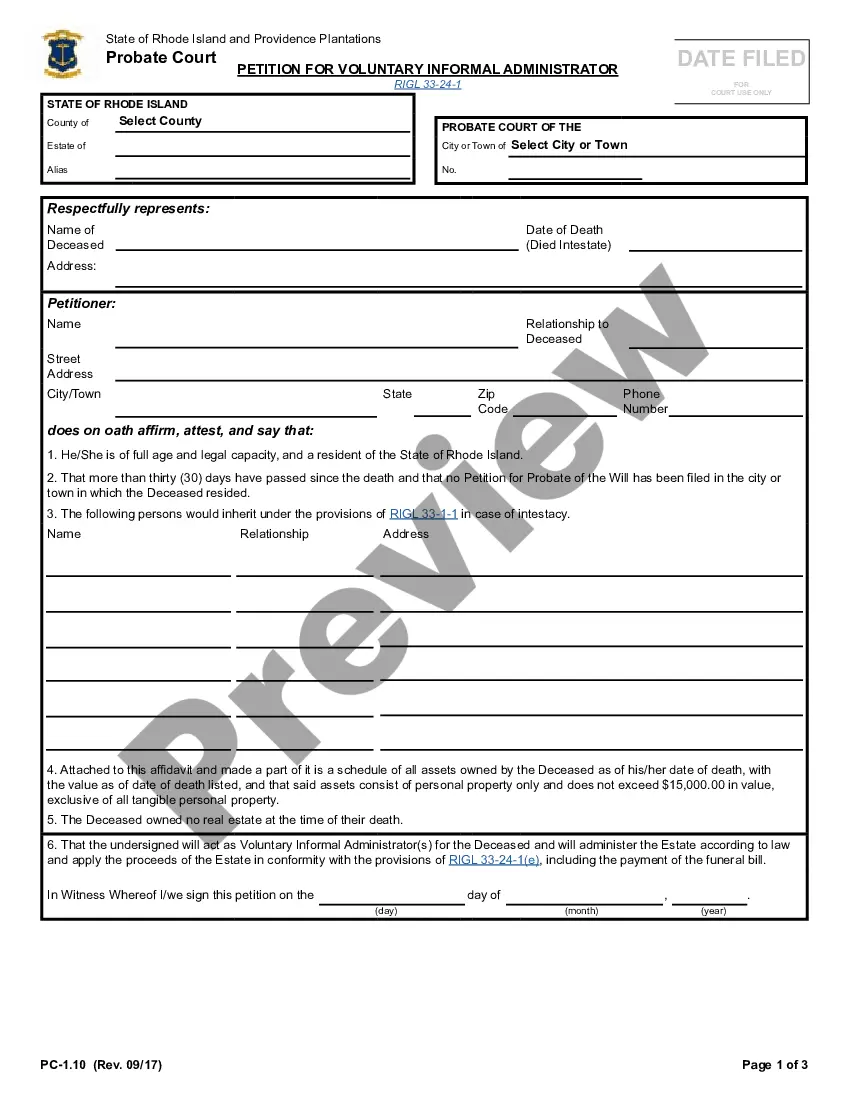
Small Estates Summary Administration Package
PopularA state-specific probate package for small estates qualifying for simplified court administration — petition, inventory, accounting, and distribution forms.
Similar documents: key differences
- Executor vs. Administrator — An executor manages a testate estate, while an administrator handles an intestate estate.
- Will vs. Trust — A will outlines asset distribution after death; a trust manages assets during life and after.
- Probate vs. Non-Probate — Probate involves court oversight; non-probate transfers occur outside court.
- Testate vs. Intestate — Testate means a valid will exists; intestate means no will is present.
Search for more forms
Types of Probate forms
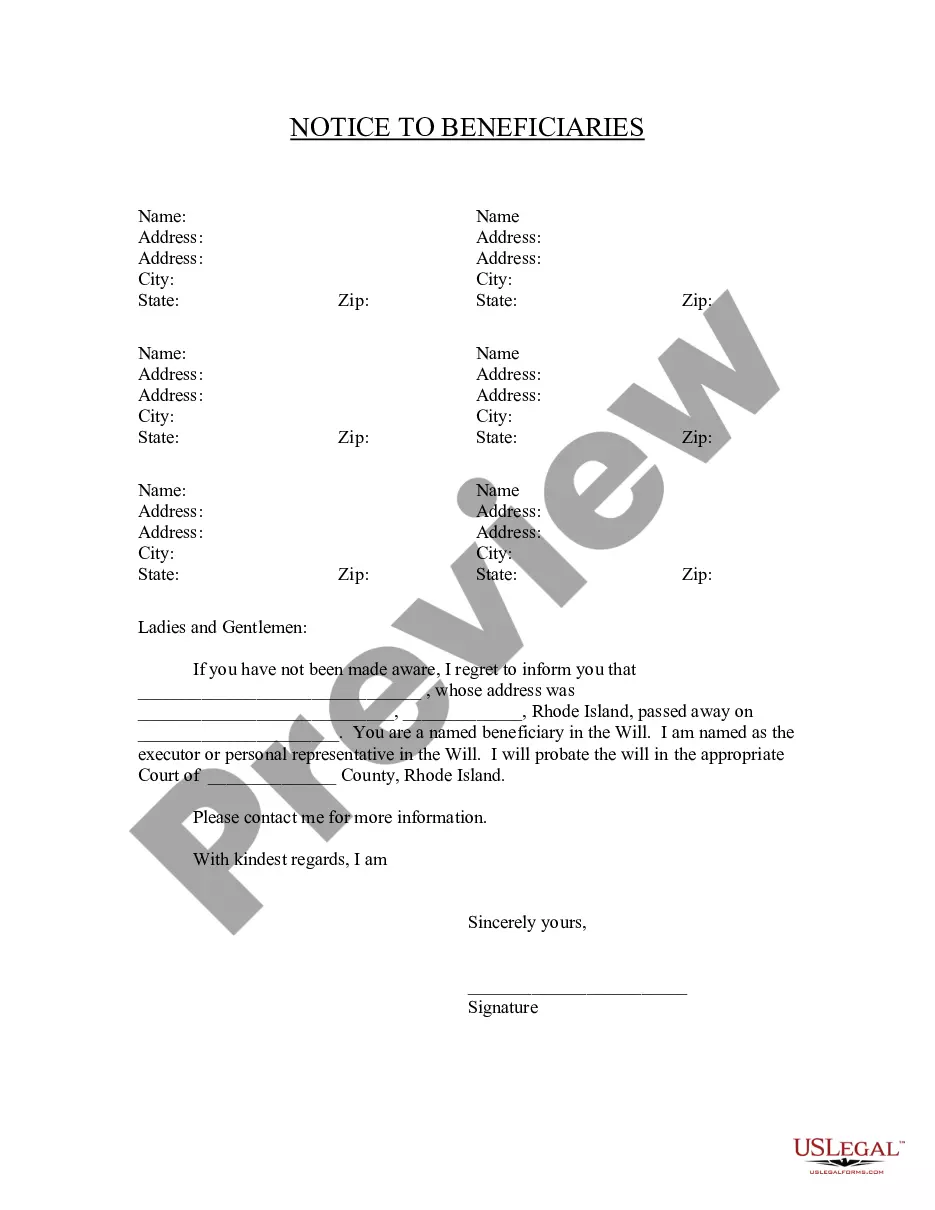
Notice to Beneficiaries of Being Named in Will
Notify beneficiaries named in a will about their status and provide essential details for next steps.
Demand to Produce Copy of Will from Heir
Request a copy of a deceased person's will, essential for estate management and understanding inheritance rights.
Small Estate Affidavit
Claim estate assets without formal probate, ideal for small estates under a specified value.
Inheritance Waiver: Spouses in Favor of Prior-Marriage Children
Protect your children's inheritance rights by waiving claims to each other's property in favor of children from prior marriages.
Affidavit: Attorney-In-Fact Acting as Executor
Use this document to affirm your role as an executor and validate a will after the deceased's passing.
Petition: Creditor Claim for Remaining Estate Assets
Use this petition to request the distribution of remaining estate assets among creditors after a decedent's passing.
Affidavit of Domicile
Verify your primary residence with this document, which can be crucial for legal and financial matters after a person's passing.
Common Rhode Probate documents
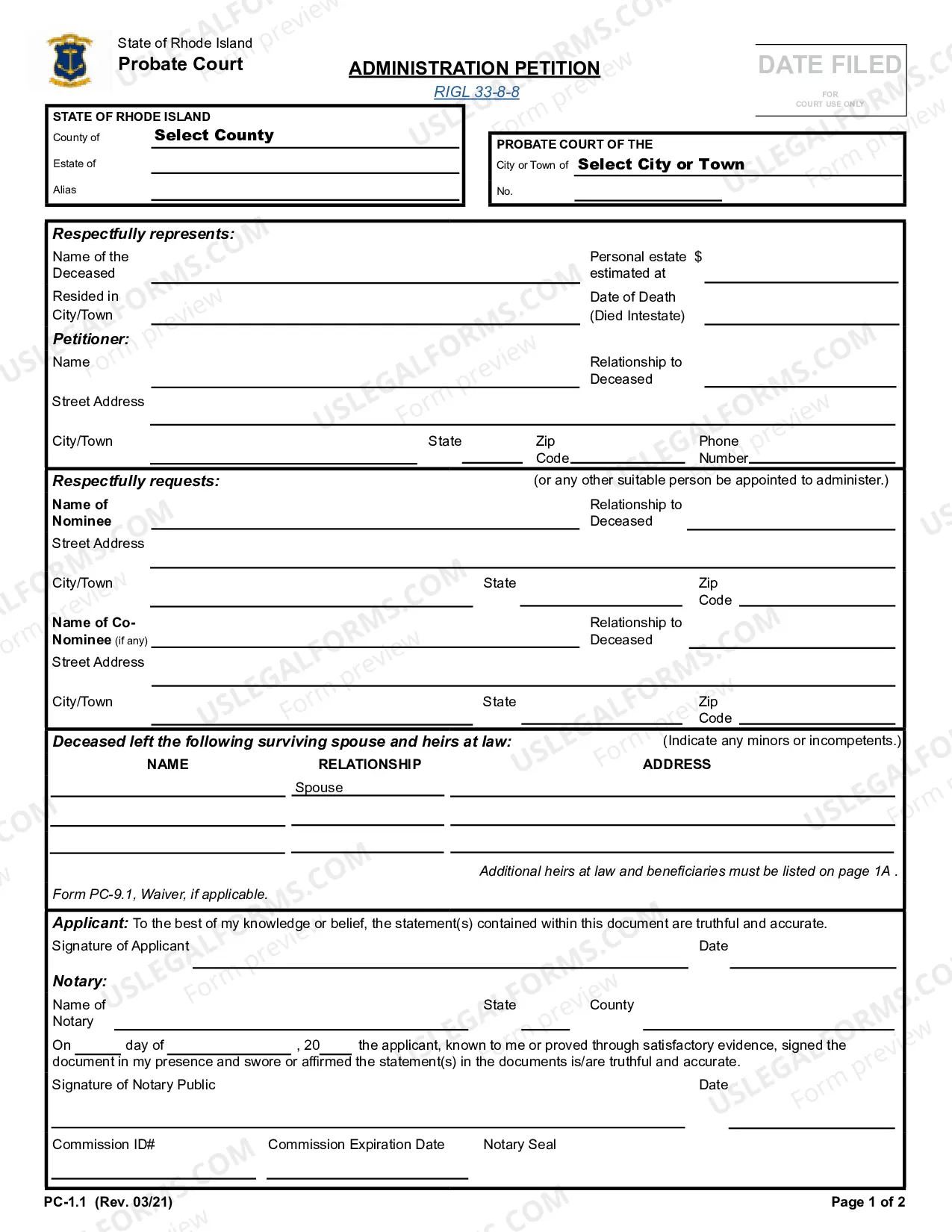
- Petition for Probate — initiates the probate process by requesting court approval of a will.
- Letters Testamentary — authorizes an executor to act on behalf of the estate.
- Letters of Administration — grants authority to an administrator for intestate estates.
- Notice of Probate — informs interested parties about the probate proceedings.
- Inventory and Appraisement Forms — lists and values the deceased's assets for the estate.
FAQs
A trust can provide benefits like avoiding probate, but a will is still essential.
If no will exists, state laws determine asset distribution, which may not reflect your wishes.
It's wise to review your estate plan every few years or after major life events.
Beneficiary designations override wills for designated assets, so ensure they align.
Yes, you can appoint separate agents for financial and medical matters.
Key legal points
- Probate is necessary to validate a will in most cases.
- Not all assets go through probate; some can transfer directly.
- Probate can take several months or longer, depending on complexity.
- All debts and taxes must be settled before estate distribution.
- Probate records are typically public documents.
How to get started
Begin quickly with these simple steps.
- Find a template or package that suits your needs.
- Review the description, preview, and any signing requirements.
- Access full features with a subscription.
- Complete the document in the online editor.
- Export or send it: download, email, mail, notarize online, or send for e-signature.
Practical tip
Consider starting with a will, as it outlines your wishes clearly.