Indiana Probate
Probate involves managing an estate after someone passes away. Our attorney-drafted templates are quick and user-friendly.

Similar documents: key differences
- Executor vs. Administrator — Executors manage estates with a will; Administrators handle those without.
- Letters Testamentary vs. Letters of Administration — The former is for wills, the latter for intestate estates.
- Petition for Probate vs. Petition for Letters of Administration — The former is for executing a will, the latter for appointing an administrator.
- Probate vs. Estate Settlement — Probate is the legal process; Estate Settlement is the final distribution of assets.
Search for more forms
Types of Probate forms
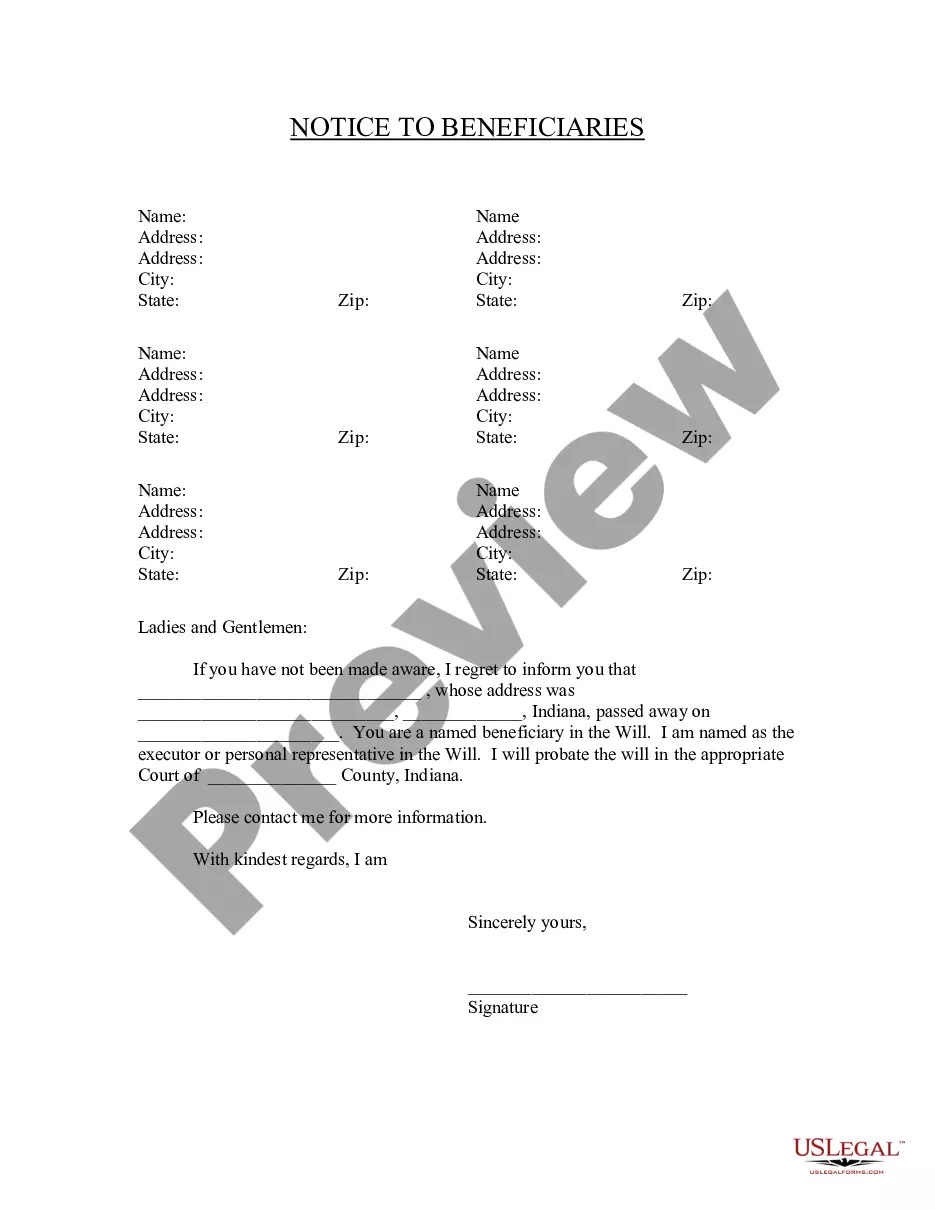
Notice to Beneficiaries of Being Named in Will
Inform beneficiaries about their status in a deceased person's will and how to proceed with the probate process.
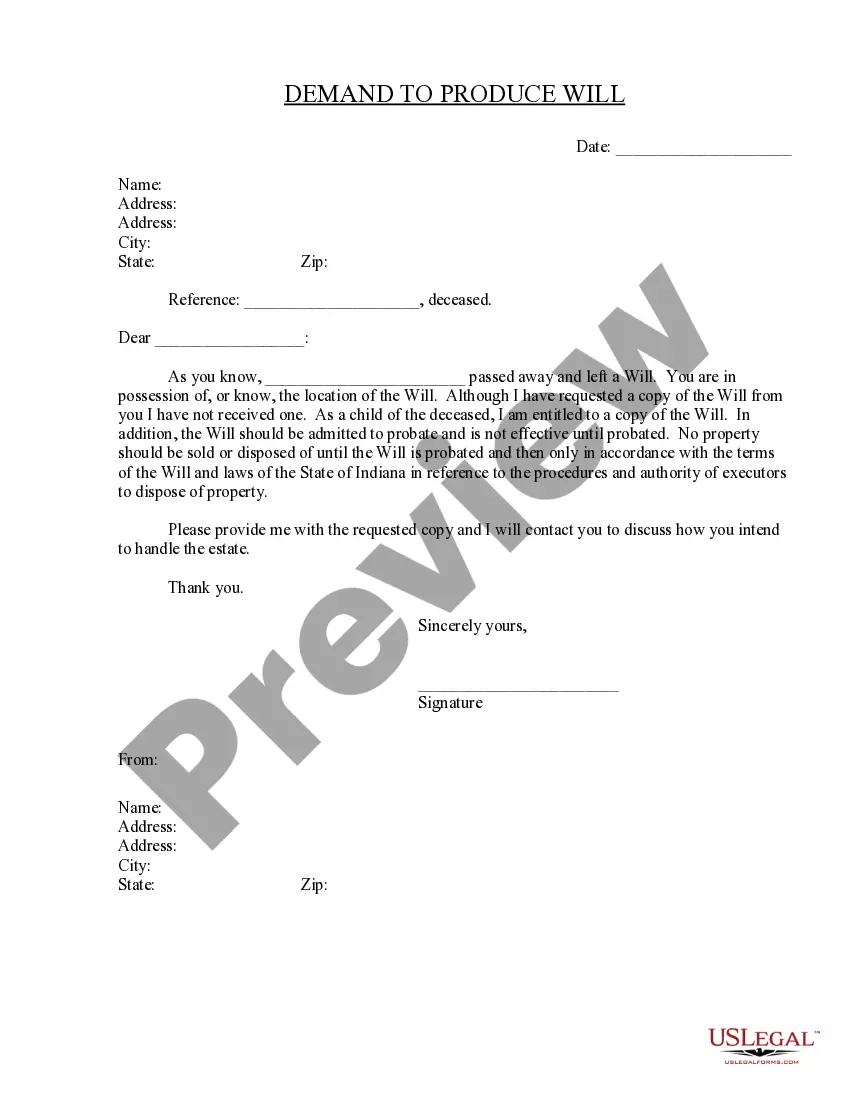
Demand to Produce Copy of Will from Heir
Requesting a copy of a deceased person's Will is essential to understanding their wishes and managing the estate properly.
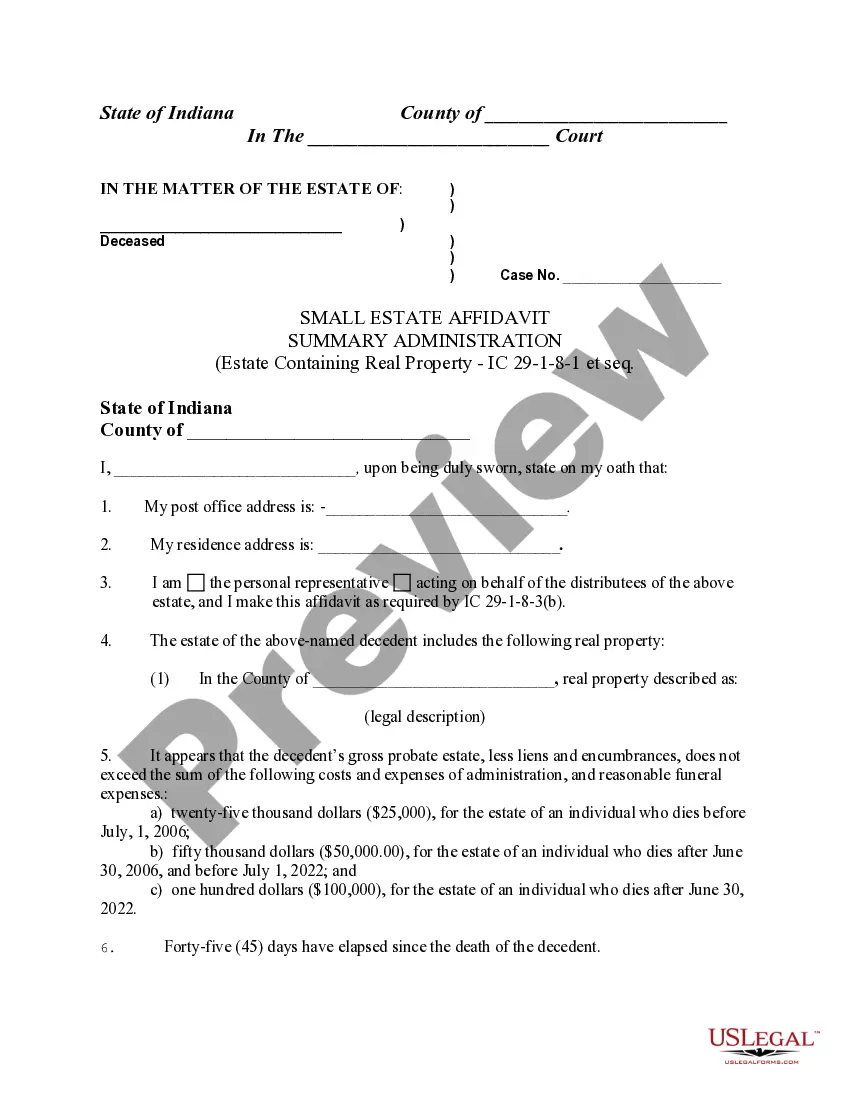
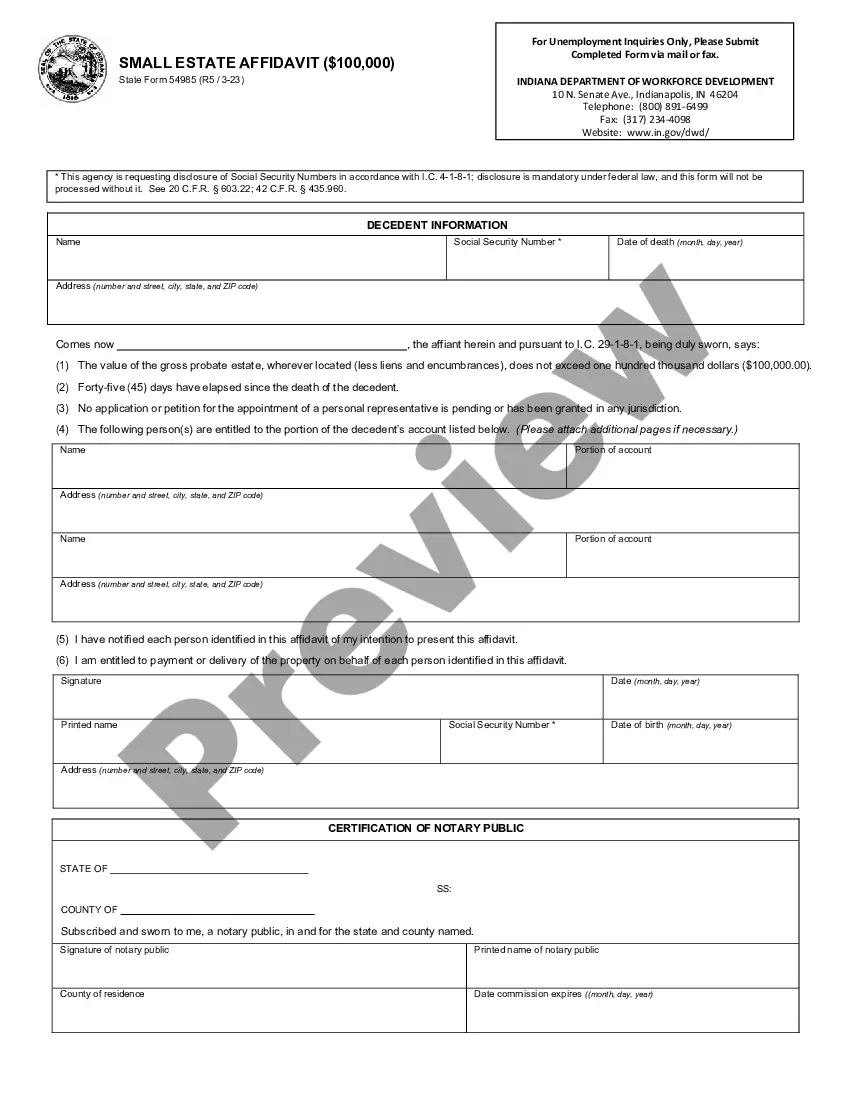
Small Estate Affidavit
Claim estate assets without formal probate, ideal for small estates under a specified value.
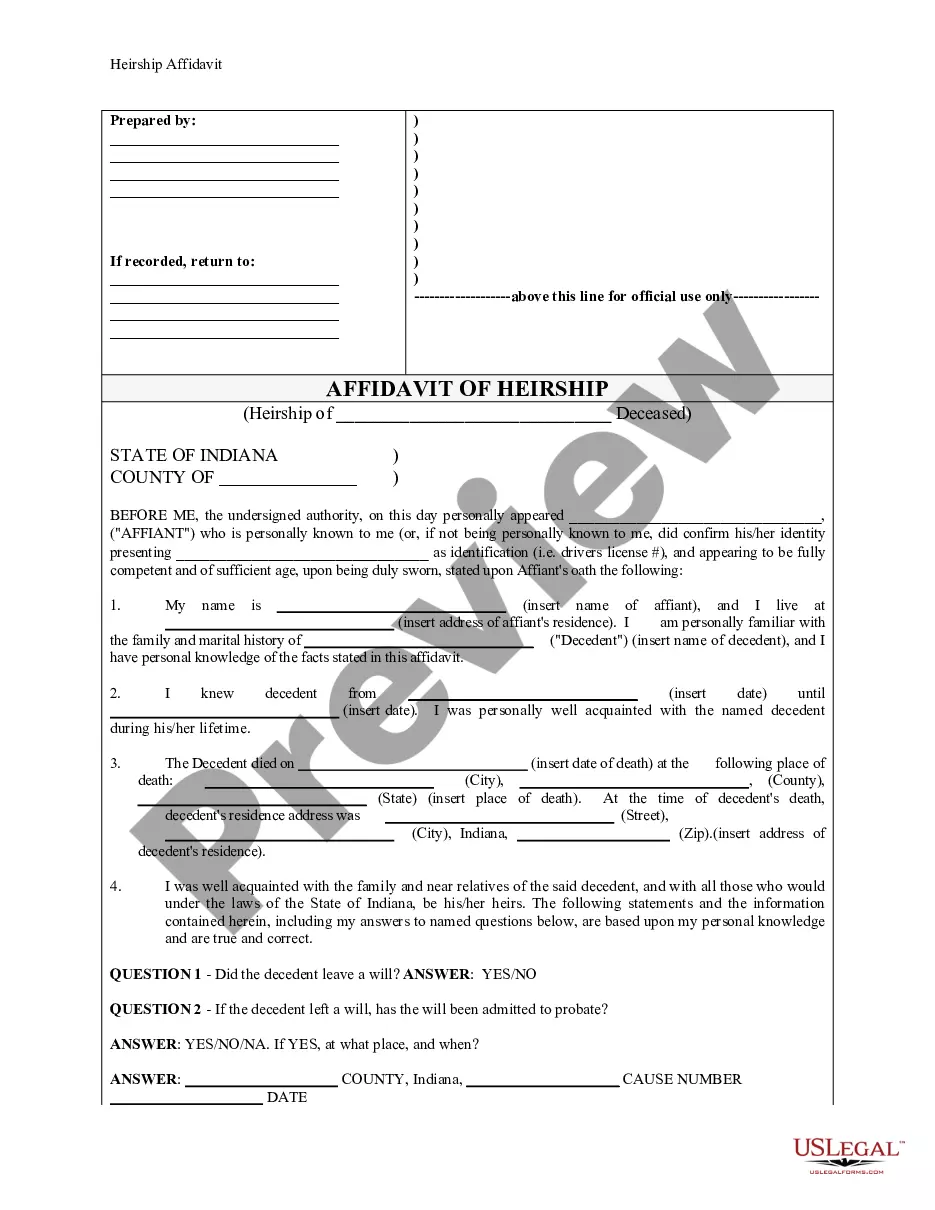
Heirship Affidavit - Descent
Use this affidavit to declare heirs of a deceased person when settling an estate without a will.
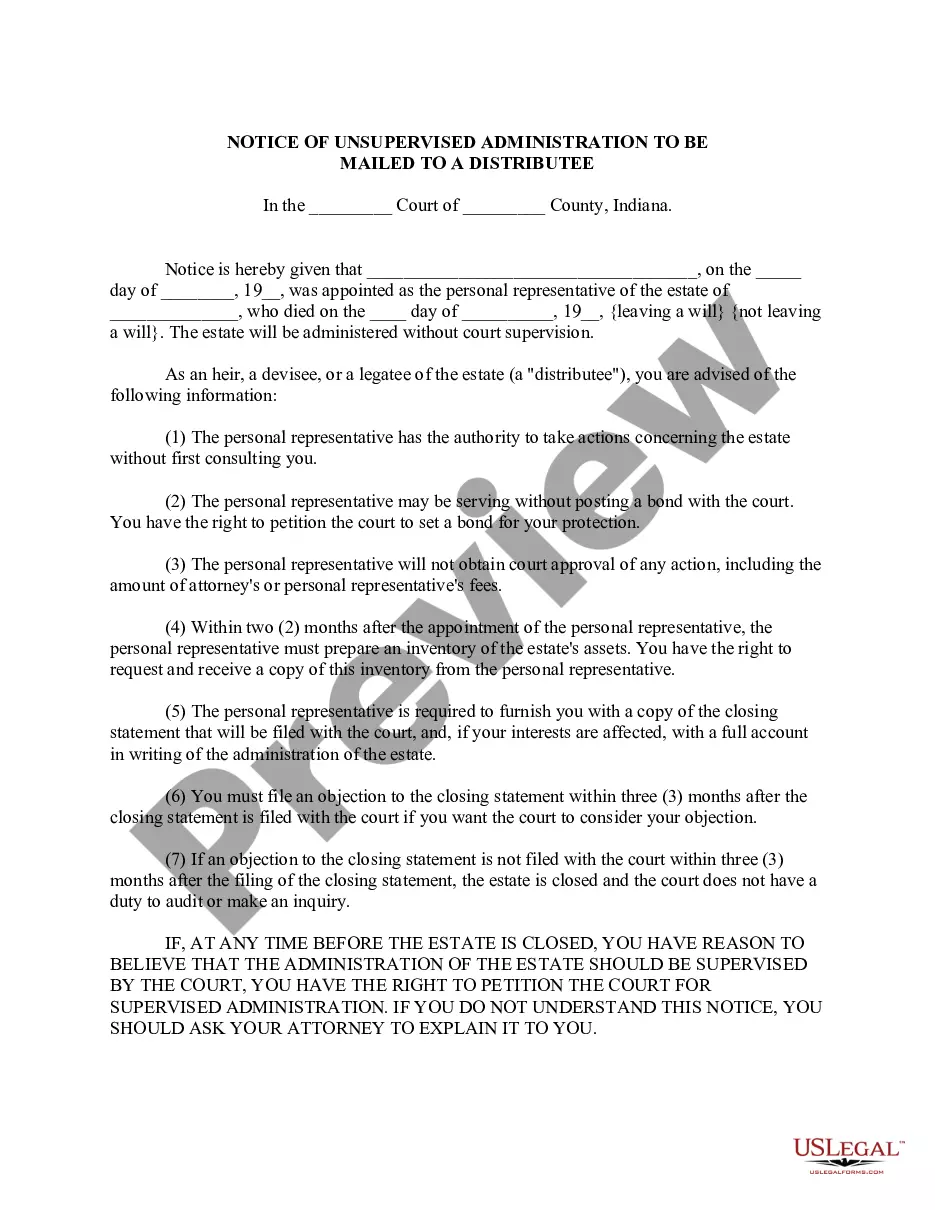
Notice: Unsupervised Administration to Be Mailed
Inform distributees of an estate's unsupervised administration, highlighting their rights and responsibilities without court oversight.
Petition: Creditor Claim for Remaining Estate Assets
Use this petition to request the distribution of remaining estate assets among creditors after a decedent's passing.
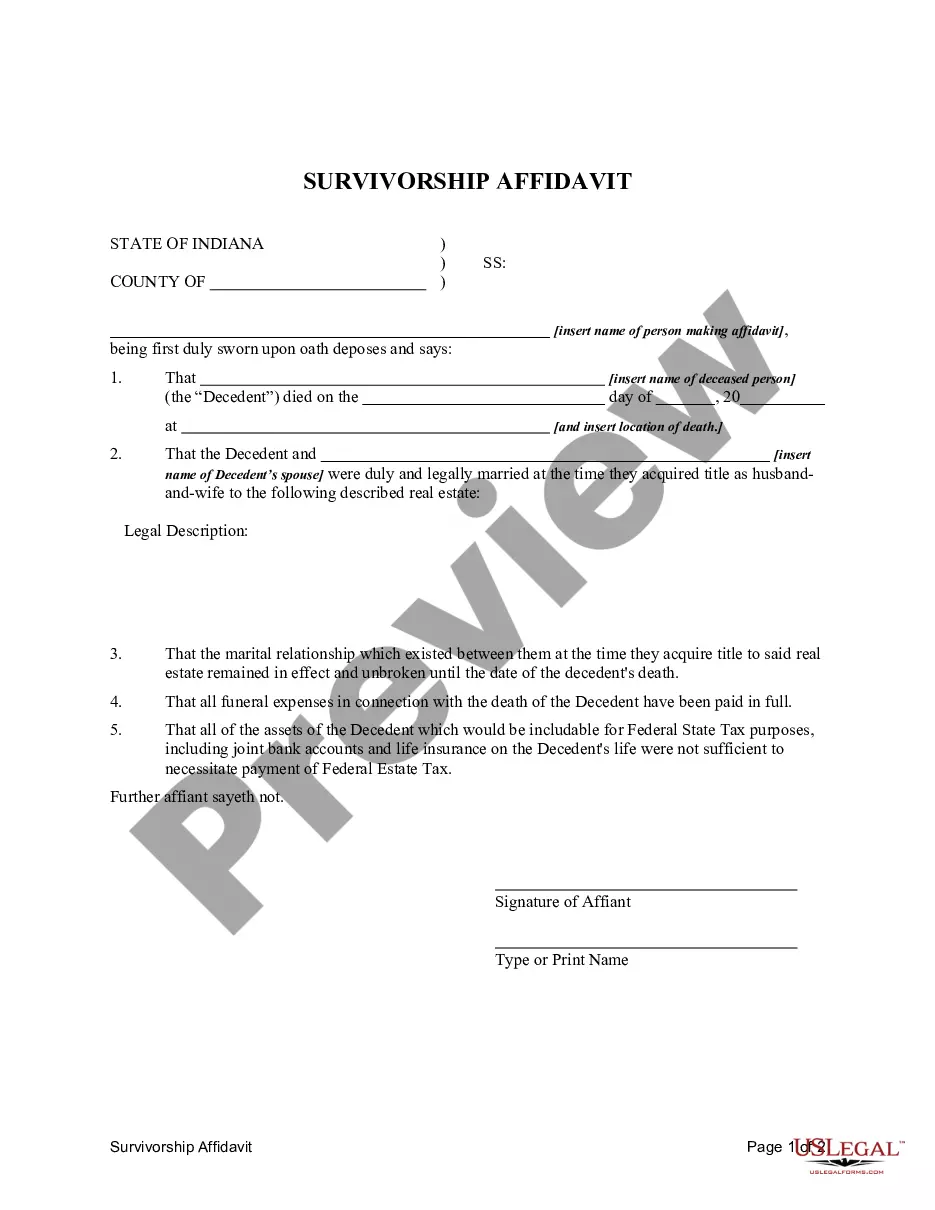
Survivorship Affidavit
Use this affidavit to confirm payment of all funeral expenses and assert that the deceased's assets do not require estate tax.
Common Indiana Probate documents
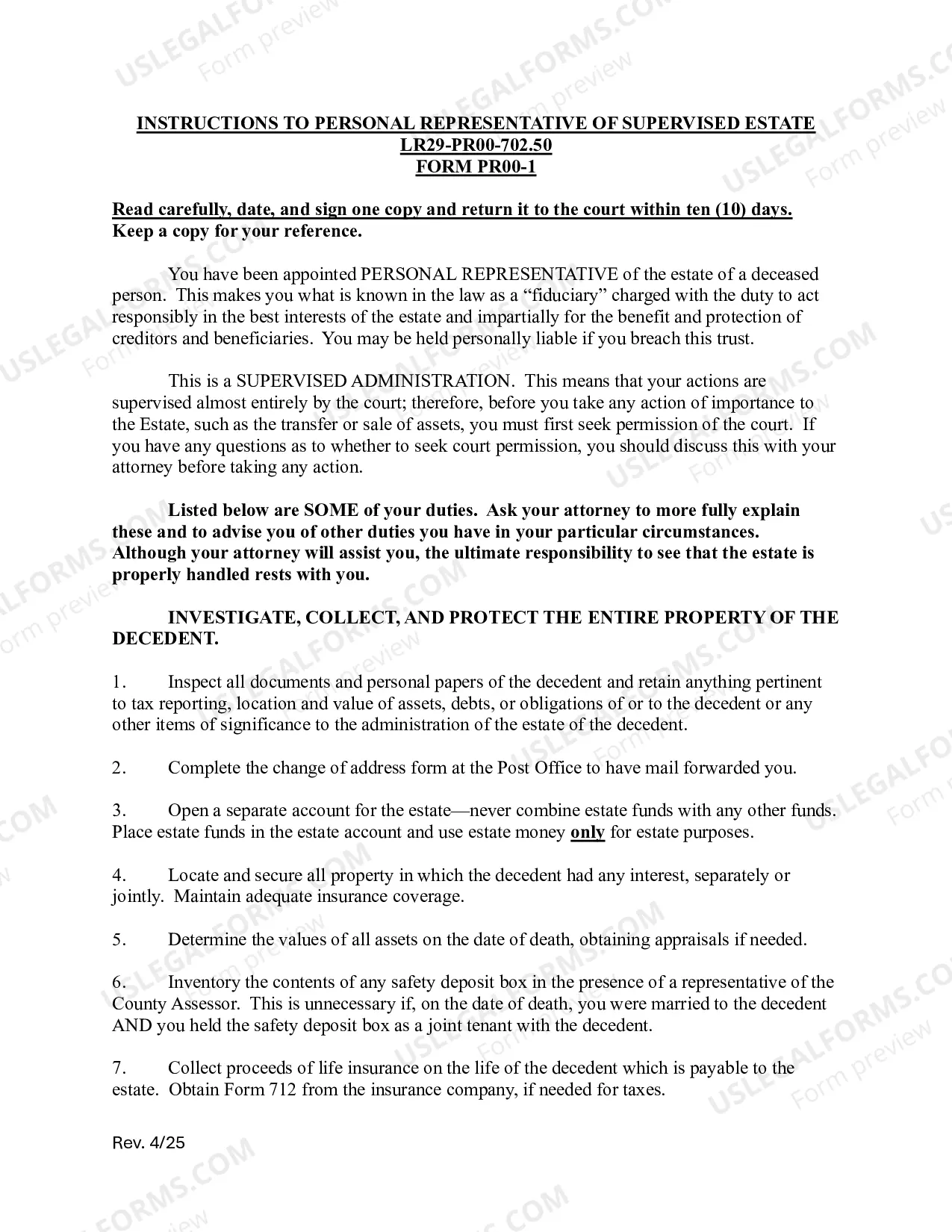
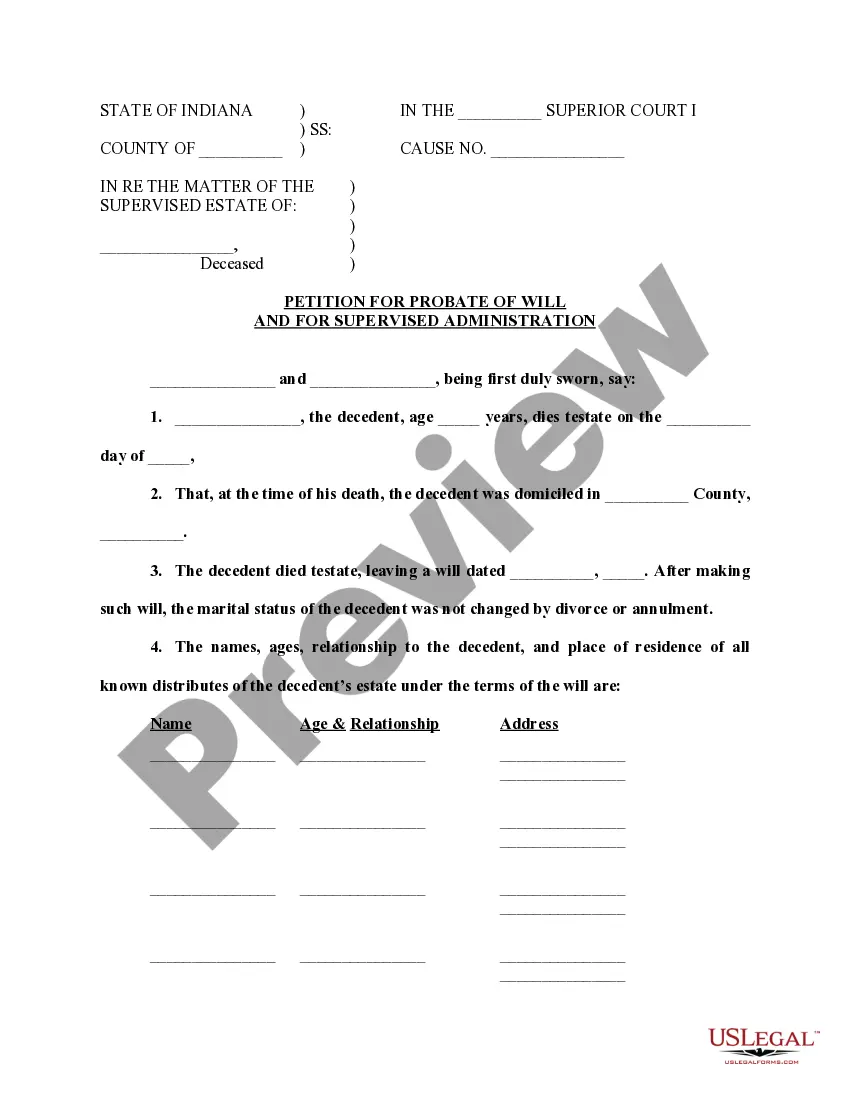
- Petition for Probate — initiates the probate process for a deceased person's estate.
- Letters Testamentary — official authorization for the executor to manage the estate.
- Letters of Administration — grants authority to an administrator when there is no will.
- Notice of Probate — informs interested parties of the probate proceedings.
- Inventory and Appraisement Forms — lists the assets and their values in the estate.
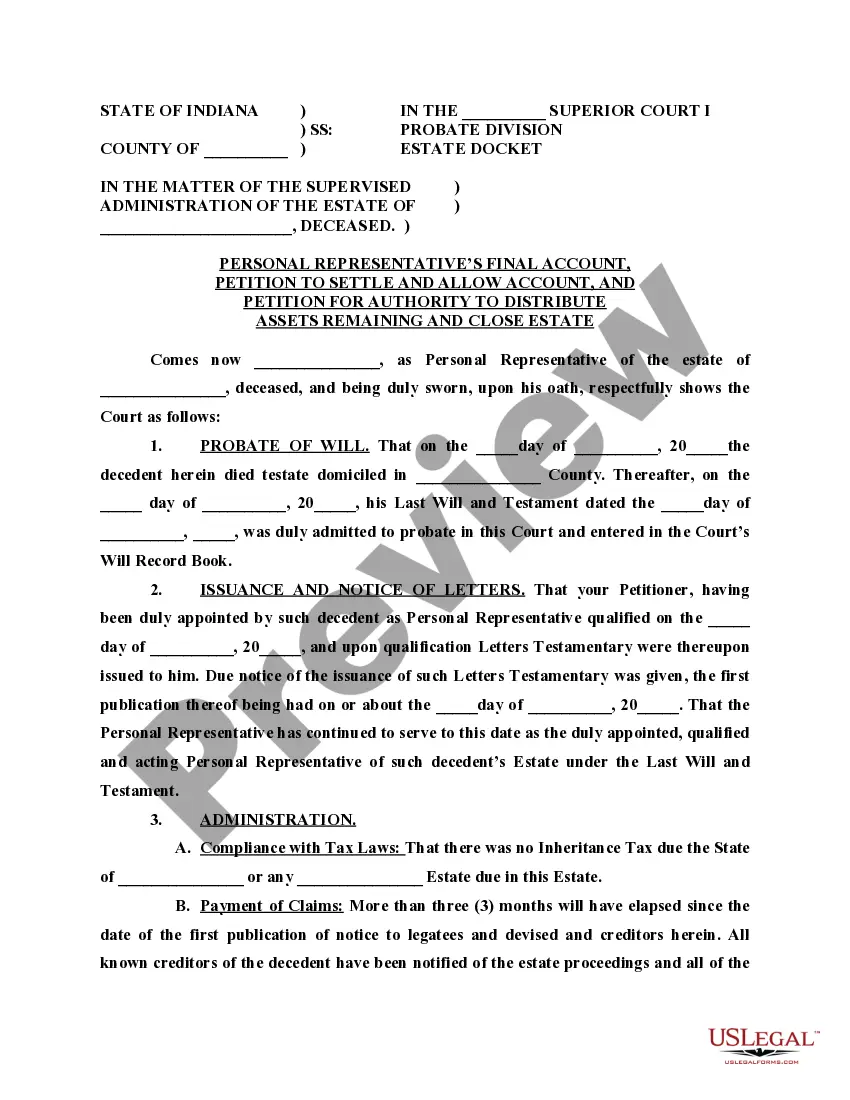
- Final Accounting Forms — summarizes the financial activities of the estate.
- Estate Distribution Forms — details how the estate's assets will be distributed.
FAQs
A trust can provide additional benefits, such as avoiding probate, but it is not always necessary.
If no action is taken, the state may determine how your estate is distributed.
It's wise to review your estate plan every few years or after major life changes.
Beneficiary designations typically take precedence over will instructions for certain assets.
Yes, you can designate separate individuals for financial and healthcare decisions.
Key legal points
- Probate is necessary for distributing a deceased person's assets.
- Every estate goes through probate unless it is exempt.
- Probate can involve various forms depending on the estate's complexity.
- Debts of the deceased must be settled during the probate process.
- Probate can take several months to years, depending on the estate's size.
How to get started
Begin your probate journey in just a few simple steps.
- Find a template that suits your probate needs.
- Review the template details and requirements.
- Subscribe for full access to the necessary forms.
- Complete your template using our online editor.
- Export or send your completed forms via email, mail, or e-signature.
Practical tip
Deciding between a will and a trust? A will is simpler for straightforward estates.