Pennsylvania Western District Bankruptcy Guide and Forms Package for Chapters 7 or 13
Understanding this form
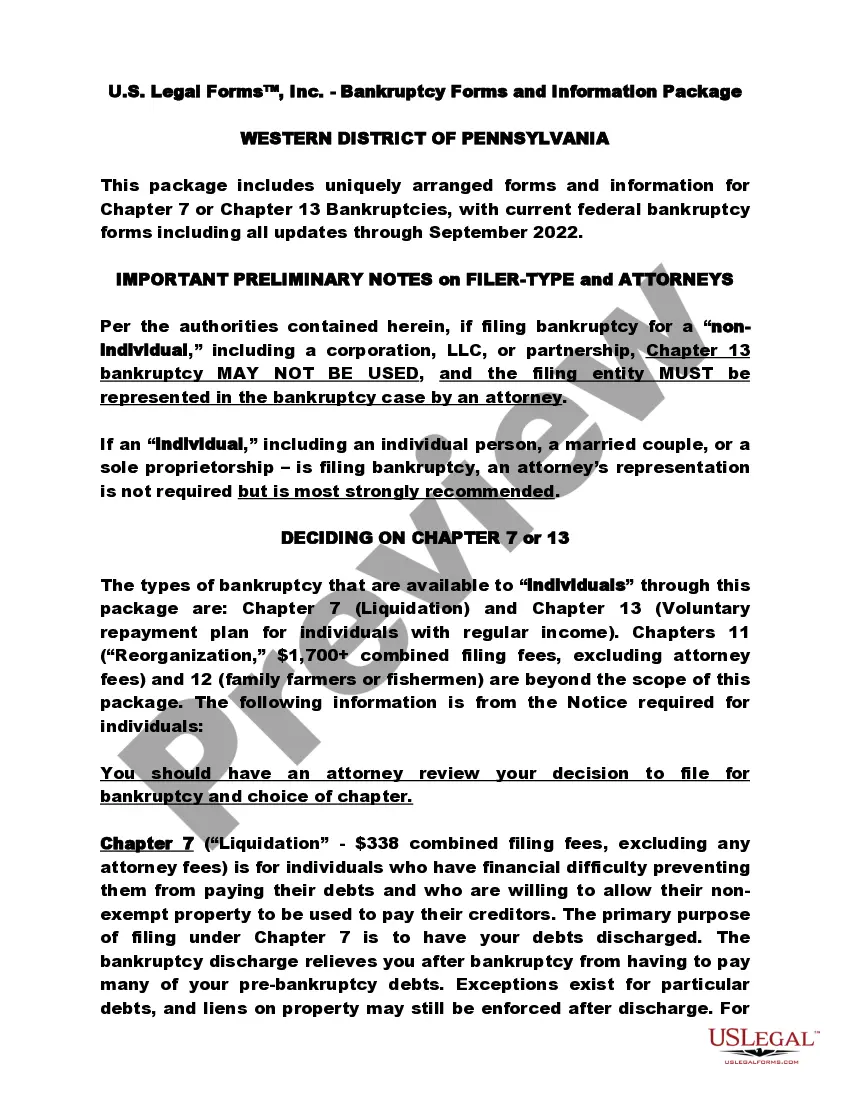
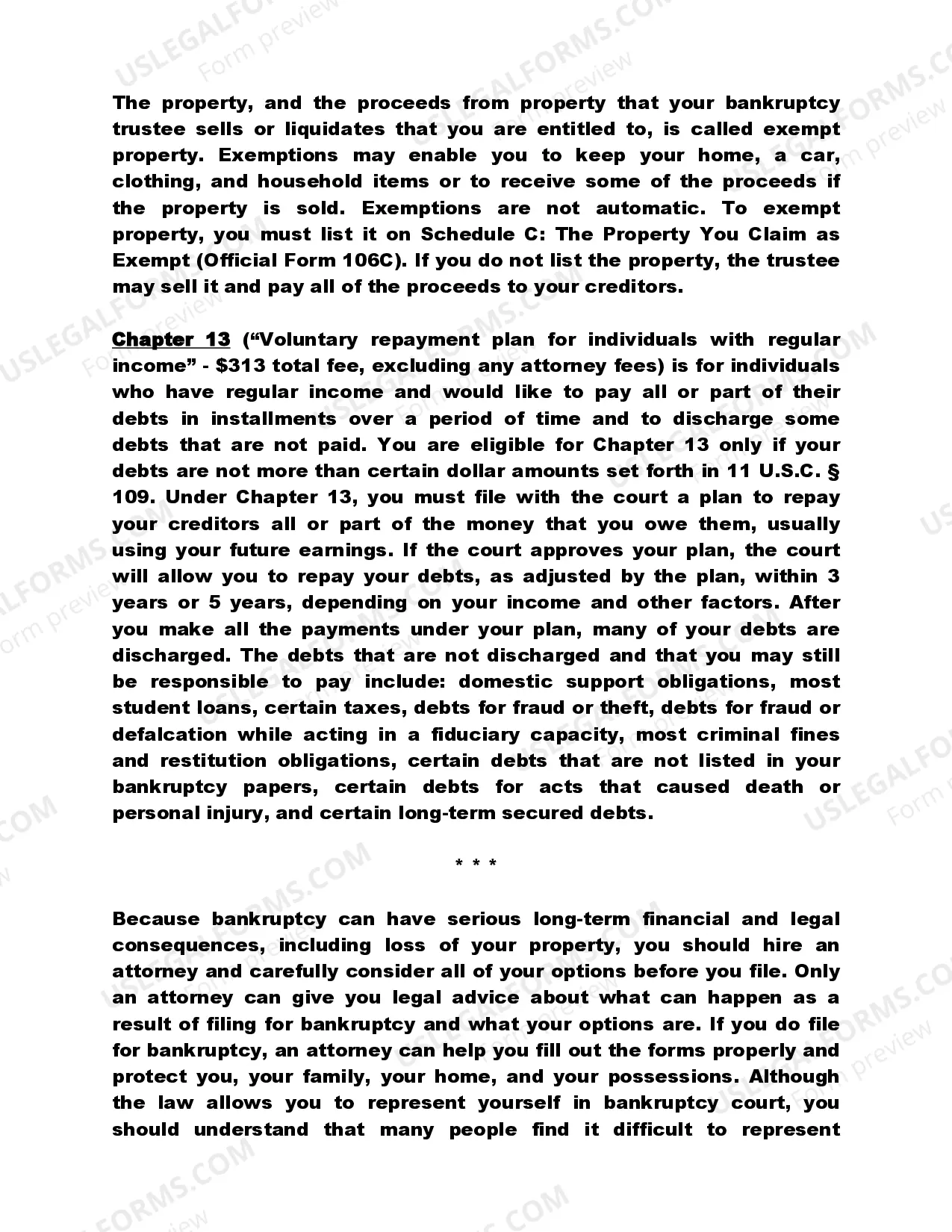
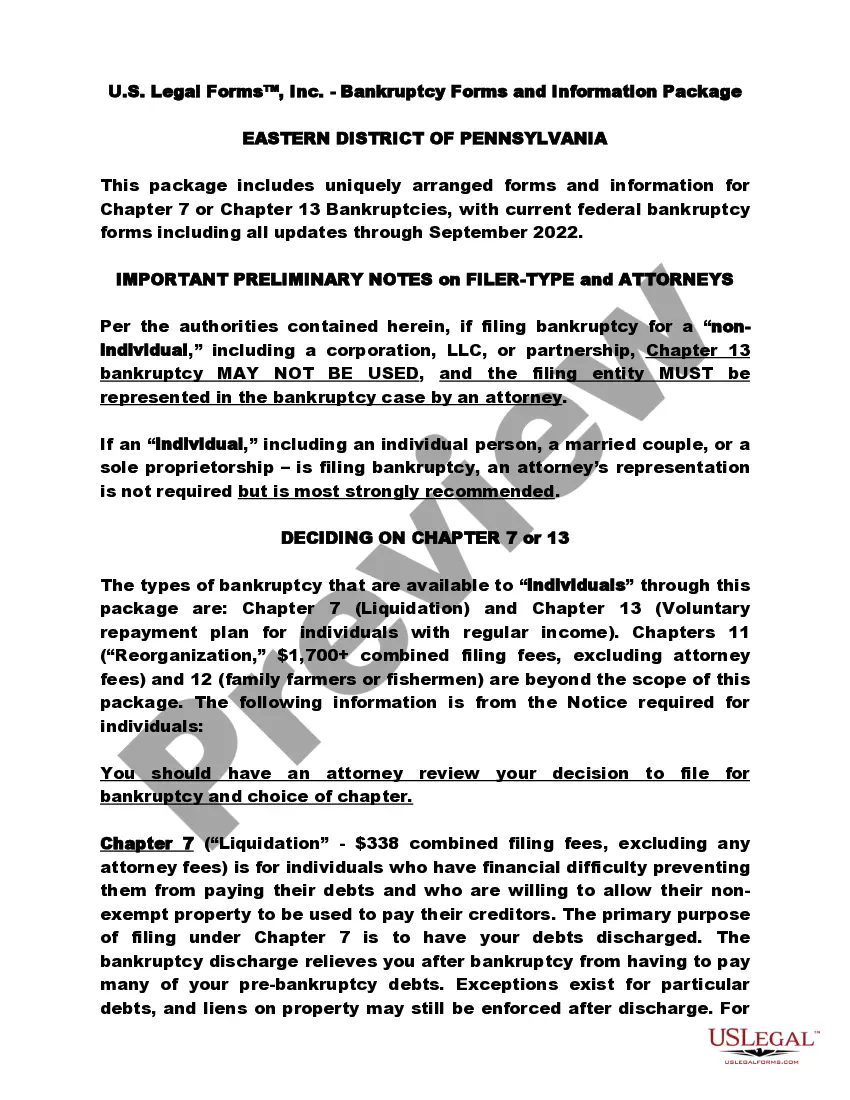
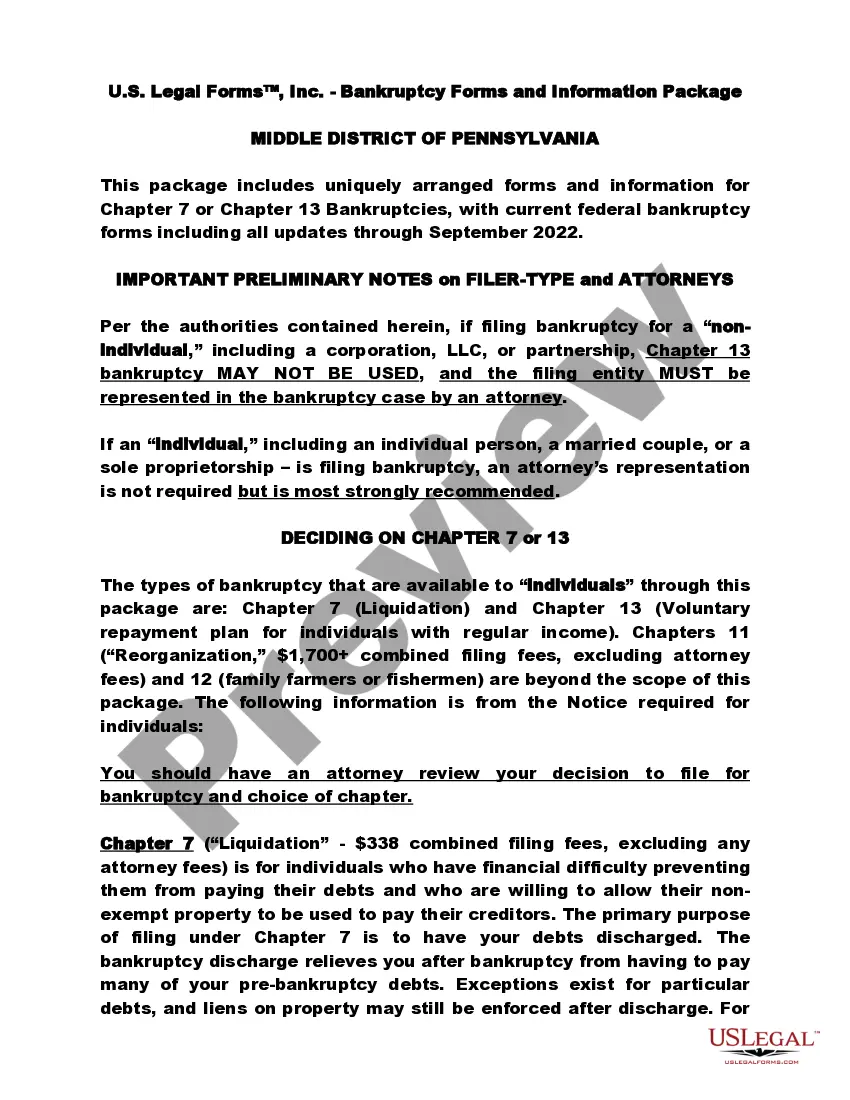
The Pennsylvania Western District Bankruptcy Guide and Forms Package for Chapters 7 or 13 includes essential forms and detailed instructions necessary for filing for bankruptcy under these specific chapters. This package is designed to streamline the bankruptcy process for individuals, offering guidance on how to navigate Chapter 7 liquidation or Chapter 13 repayment plans effectively. Understanding the distinctions between these chapters is crucial, as Chapter 7 focuses on debt discharge while Chapter 13 allows for structured repayment plans.
Main sections of this form
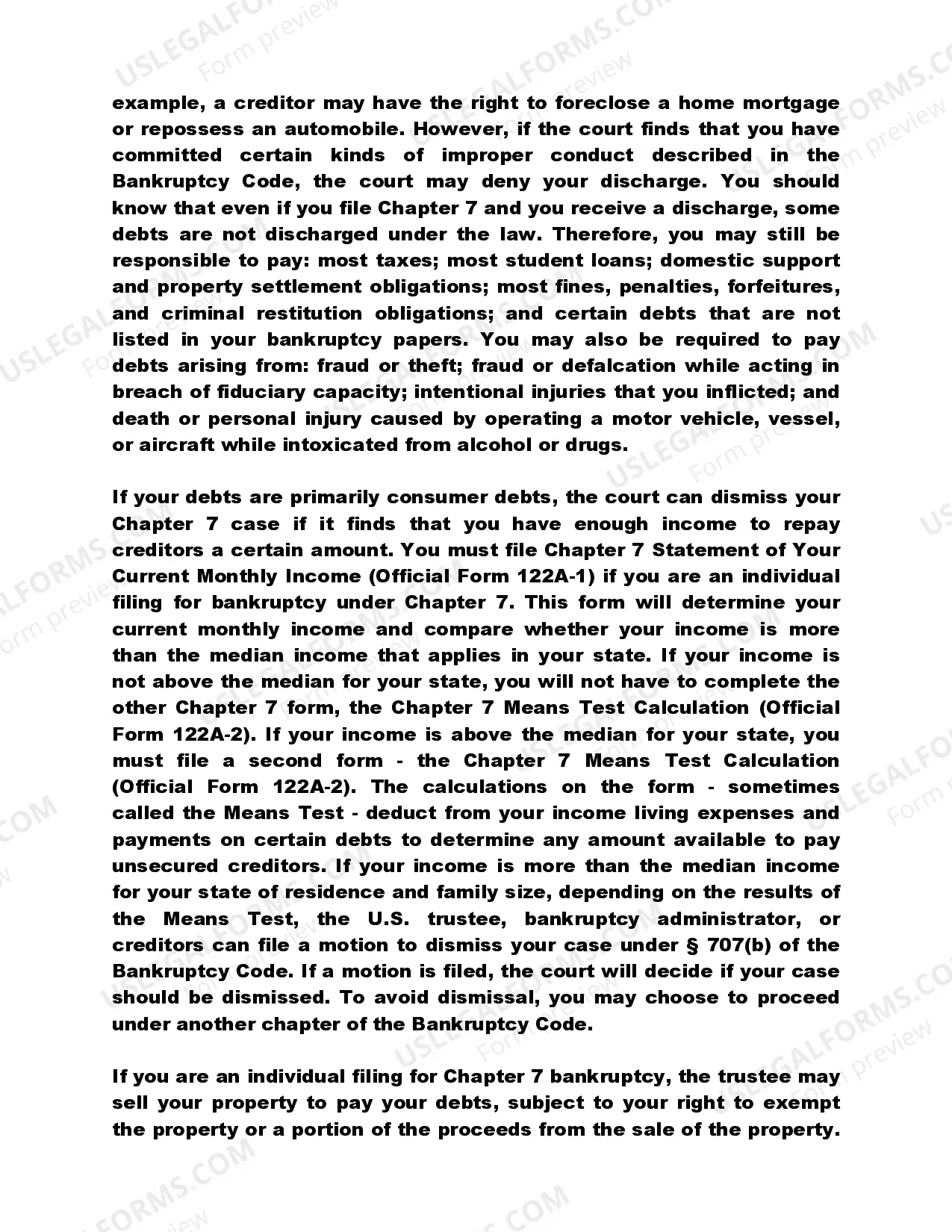
- Chapter 7 Statement of Your Current Monthly Income (Official Form 122A-1)
- Chapter 7 Means Test Calculation (Official Form 122A-2)
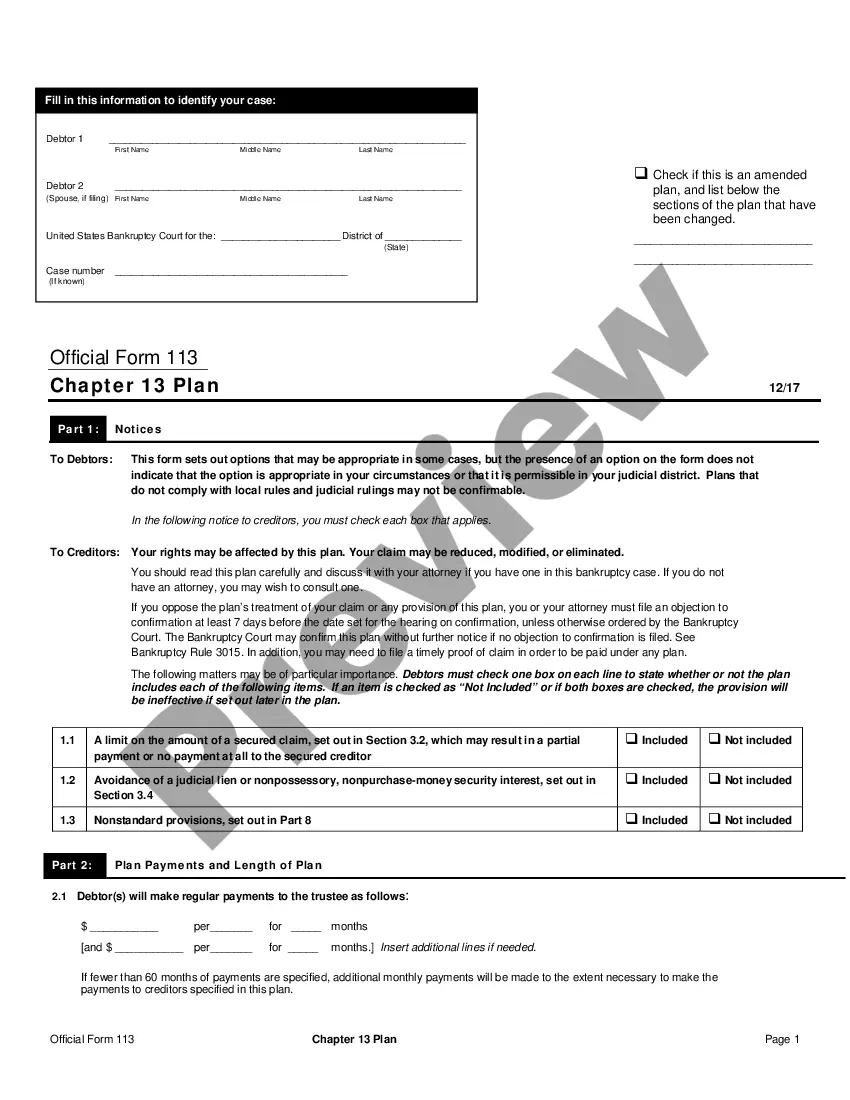
- Chapter 13 repayment plan proposal
- Schedules to identify assets, liabilities, and income
- Detailed instructions for completing each form
When to use this form
This forms package is appropriate if you are considering bankruptcy due to financial difficulties. Use it if you are an individual needing to eliminate your debts through Chapter 7 or if you wish to manage debt repayment under Chapter 13. Scenarios include overwhelming credit card debts, medical expenses, or loss of income where debts have surpassed your means to pay.
Who needs this form
- Individuals experiencing significant financial distress
- Married couples filing jointly
- Individuals with regular income who wish to pursue debt repayment under Chapter 13
- Those who need to understand the bankruptcy filing process with or without attorney representation
Completing this form step by step
- Identify whether you are filing under Chapter 7 or Chapter 13 and gather necessary documentation.
- Complete the Chapter 7 Statement of Your Current Monthly Income to determine eligibility.
- If filing under Chapter 7, complete the Means Test Calculation if your income exceeds the state median.
- Prepare a repayment plan if filing under Chapter 13, outlining how debts will be paid.
- Review all completed forms for accuracy before submission to the court.
Is notarization required?
This form does not typically require notarization unless specified by local law. Itâs advisable to consult with an attorney or the local court for specific requirements related to your case.
Get your form ready online
Our built-in tools help you complete, sign, share, and store your documents in one place.
Make edits, fill in missing information, and update formatting in US Legal Forms—just like you would in MS Word.
Download a copy, print it, send it by email, or mail it via USPS—whatever works best for your next step.
Sign and collect signatures with our SignNow integration. Send to multiple recipients, set reminders, and more. Go Premium to unlock E-Sign.
If this form requires notarization, complete it online through a secure video call—no need to meet a notary in person or wait for an appointment.
We protect your documents and personal data by following strict security and privacy standards.

Make edits, fill in missing information, and update formatting in US Legal Forms—just like you would in MS Word.

Download a copy, print it, send it by email, or mail it via USPS—whatever works best for your next step.

Sign and collect signatures with our SignNow integration. Send to multiple recipients, set reminders, and more. Go Premium to unlock E-Sign.

If this form requires notarization, complete it online through a secure video call—no need to meet a notary in person or wait for an appointment.

We protect your documents and personal data by following strict security and privacy standards.
Common mistakes
- Failing to list all debts or income, which can lead to dismissal of the case.
- Not including necessary schedules or calculations required for the Means Test.
- Missing deadlines for filing forms, which can affect the bankruptcy proceedings.
- Underestimating the importance of exemptions, leading to potential loss of property.
Benefits of using this form online
- Immediate access to all required forms and instructions from the comfort of your home.
- Forms are regularly updated to reflect the latest legal changes.
- Easily downloadable and printable for your convenience.
- Step-by-step guidance ensures that you understand each part of the process.
Quick recap
- This package is designed for individuals filing for bankruptcy in the Pennsylvania Western District.
- It provides essential forms and guidance for Chapter 7 and Chapter 13 bankruptcies.
- Seeking legal advice is highly recommended for an effective bankruptcy filing process.
- Accurate completion of forms and following court procedures are crucial to achieving debt relief.
Looking for another form?
Form popularity
FAQ
File at the wrong time. use retirement funds unnecessarily. prepare bankruptcy paperwork carelessly or incorrectly. purchase luxury goods and services on credit or take cash advances. sell or transfer property for less than it's worth.
Bankruptcies: 7 years for completed Chapter 13 bankruptcies and 10 years for Chapter 7 bankruptcies. Foreclosures: 7 years. Collections: Generally, about 7 years, depending on the age of the debt being collected. Public Record: 7 years.
If you have a PACER account, you can search using the PACER Case Locator. You can visit the courthouse and use a public terminal. If you know the social security number, you can use the VCIS system. It's a toll free call to 1-866-222-8029. See VCIS instructions here.
The order officially discharges (wipes out) qualifying debt, such as credit card and utility bill balances, medical debt, and personal loans. If all goes smoothly, the court will order the discharge. In a Chapter 7 bankruptcy, it's issued 60 days after the first 341 meeting of creditors date.
You take and complete a credit counseling course. You'll prepare the bankruptcy petition and the proposed Chapter 13 plan. You file your bankruptcy petition, proposed plan, and other required documents. The court appoints a bankruptcy trustee to administer your case. The automatic stay takes effect.
Case Information Online Public Access to Court Electronic Records (PACER) is a web-based system that allows users with an internet connection and a PACER account to view or print case documents online. A fee is charged for each page viewed. To sign up for a PACER account, register at http://www.pacer.gov .
Unless sealed, all documents filed in a bankruptcy case are available for public viewing. Information contained in bankruptcy case documents is a matter of public record. Documents may be accessed in the Clerk's Office during regular business hours, or 24 hours a day via internet access to PACER.
The truth: Bankruptcies are considered public records, which is how they're reported on your credit. The public record associated with a Chapter 7 bankruptcy will remain on your credit report for as long as 10 years. That time period starts on the date you file the bankruptcy petition.
Because a chapter 7 discharge is subject to many exceptions, debtors should consult competent legal counsel before filing to discuss the scope of the discharge. Generally, excluding cases that are dismissed or converted, individual debtors receive a discharge in more than 99 percent of chapter 7 cases.