Oregon Co-Petitioners' (with minor children) Notice of Statutory Restraining Order Preventing the Dissipation of Assets in Domestic Relations Action
What is this form?
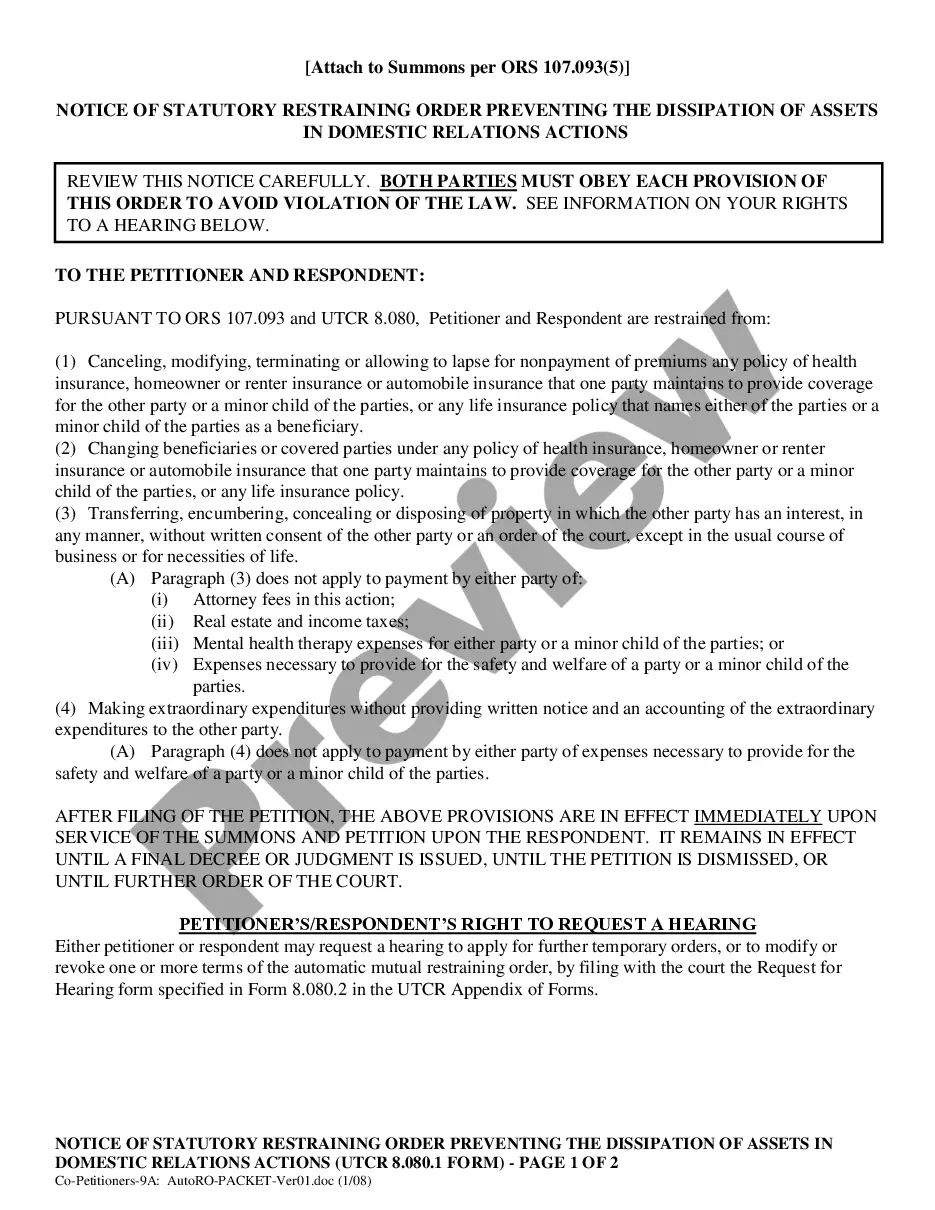
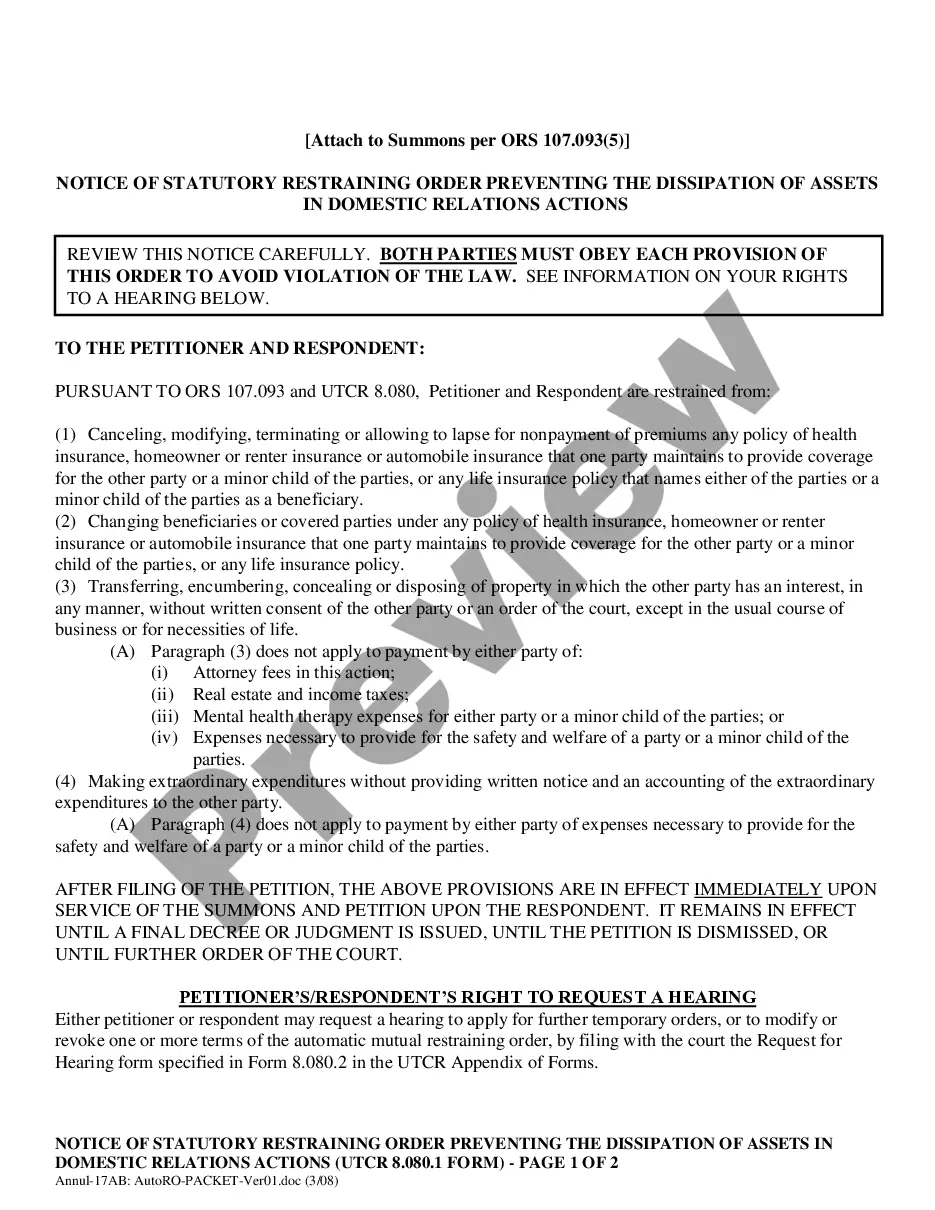
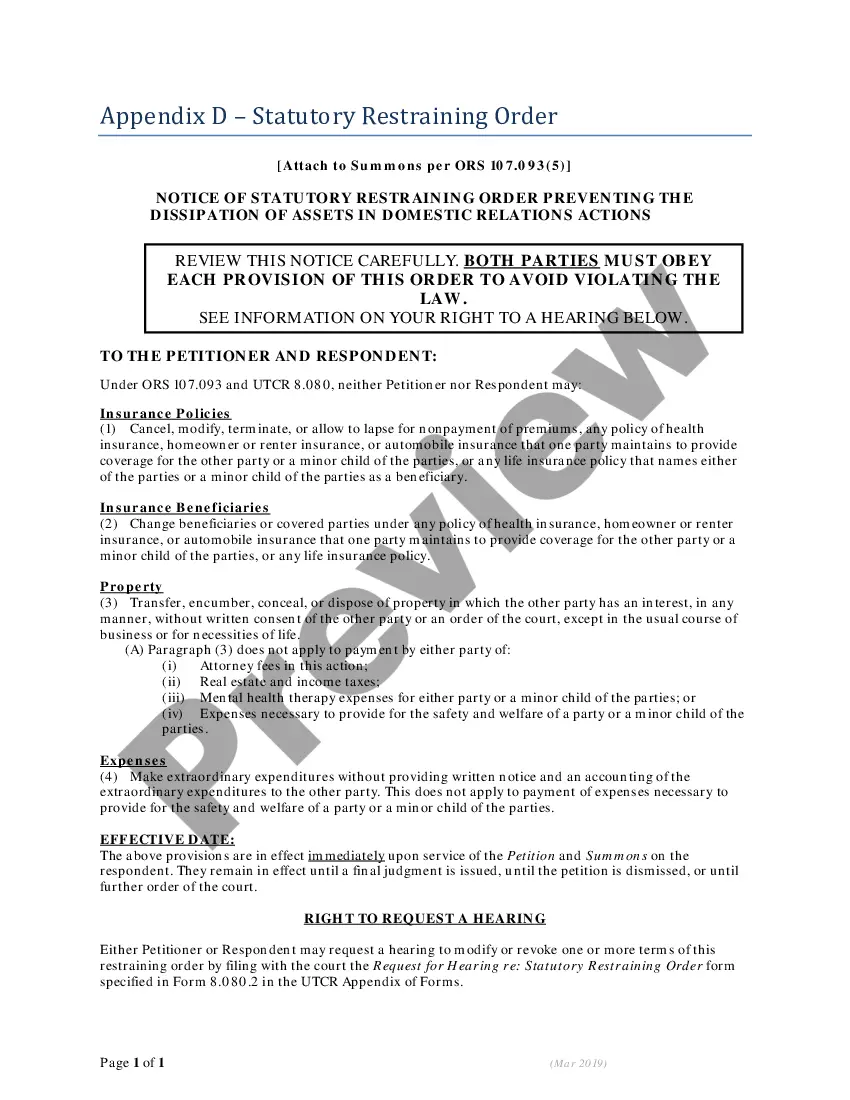
The Co-Petitioners' Notice of Statutory Restraining Order Preventing the Dissipation of Assets in Domestic Relations Action is a legal document required under Oregon law. This form establishes a restraining order that prevents co-petitioners involved in a domestic relations action from taking certain actions that could dissipate or waste marital assets. Unlike standard property agreements, this form specifically addresses the preservation of assets during legal proceedings concerning minor children and ensures both parties comply with the law while the case is pending.
Form components explained
- Notice of the statutory restraining order and its implications for both parties.
- Restrictions on canceling or modifying insurance policies related to the parties or minor children.
- Prohibitions on transferring or disposing of property without written consent from the other party.
- Requirements for providing notice and accounting for extraordinary expenditures.
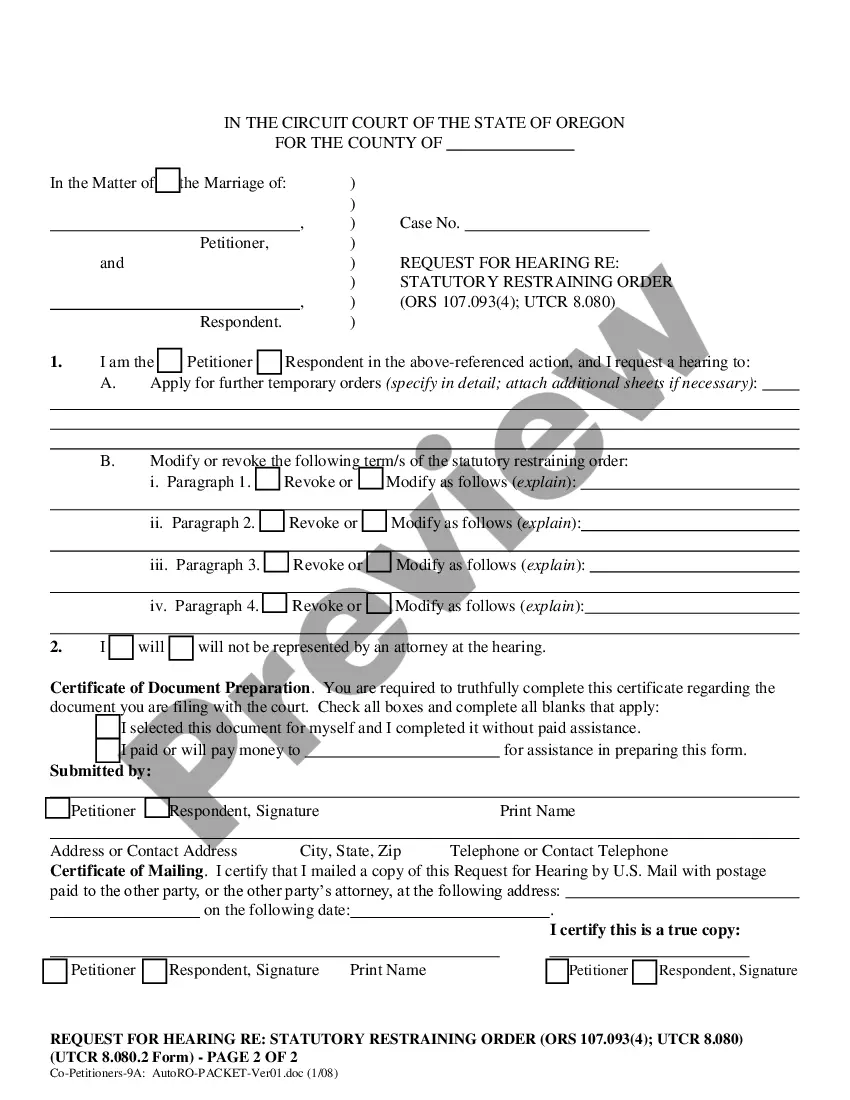
- Explanation of the parties' rights to request a hearing regarding the restraining order.
When to use this form
This form should be used during divorce or custody proceedings when there are minor children involved. It is essential when one or both parties wish to prevent the other from making financial decisions that could adversely affect the marital estate or the welfare of the children until a final court order is issued.
Who should use this form
- Co-petitioners involved in divorce or custody cases in Oregon.
- Parties seeking to ensure the protection of assets during domestic relations actions.
- Individuals who wish to maintain stability in insurance coverage and prevent unauthorized spending during the proceedings.
Steps to complete this form
- Enter the names of the Petitioner and Respondent along with the case number.
- Review and understand the restrictions imposed by the restraining order.
- Complete the sections outlining any requested adjustments to the restraining order.
- Certify the document preparation using the required certificate of document preparation.
- Mail a copy of the completed form to the other party or their attorney as specified.
Notarization guidance
This form does not typically require notarization unless specified by local law. However, it is essential to check any additional requirements that may apply based on local court rules or specific circumstances of the case.
Get your form ready online
Our built-in tools help you complete, sign, share, and store your documents in one place.
Make edits, fill in missing information, and update formatting in US Legal Forms—just like you would in MS Word.
Download a copy, print it, send it by email, or mail it via USPS—whatever works best for your next step.
Sign and collect signatures with our SignNow integration. Send to multiple recipients, set reminders, and more. Go Premium to unlock E-Sign.
If this form requires notarization, complete it online through a secure video call—no need to meet a notary in person or wait for an appointment.
We protect your documents and personal data by following strict security and privacy standards.

Make edits, fill in missing information, and update formatting in US Legal Forms—just like you would in MS Word.

Download a copy, print it, send it by email, or mail it via USPS—whatever works best for your next step.

Sign and collect signatures with our SignNow integration. Send to multiple recipients, set reminders, and more. Go Premium to unlock E-Sign.

If this form requires notarization, complete it online through a secure video call—no need to meet a notary in person or wait for an appointment.

We protect your documents and personal data by following strict security and privacy standards.
Common mistakes
- Failing to notify the other party of extraordinary expenditures as required.
- Ignoring the restrictions on asset management, leading to potential legal violations.
- Not completing the certificate of document preparation accurately.
- Omitting to file the form with the court promptly after service of the summons.
Advantages of online completion
- Immediate access to the latest legal form templates drafted by licensed attorneys.
- Easy downloading and editing of the form to suit individual needs.
- Ensured compliance with current legal standards and requirements in Oregon.
- Time-saving convenience by allowing users to complete the form at their own pace.
Looking for another form?






Form popularity
FAQ
The term "entry of judgment" refers to a court order being entered after the judge rules on a case. In a divorce case, the judge orders a dissolution of the marriage, property division, child custody and support, visitation schedules, spousal support, attorney's fees and any other pertinent issues.
By Default If you do not respond to the Petition in writing within 30 days of receiving it, the petitioner can get an Order of Default. This means that all of the requests in the Petition will be ordered as part of a Judgment without input from you.
After you have gone through all the steps in a divorce, you will get a "General Judgment of Dissolution of Marriage," which is a court order that ends your marriage. The divorce judgment will usually state: The date your marriage ends (this is the date the judge signs the judgment);
A Notice of Entry of Judgment is a document stating that an entry of judgment in a divorce in California is the final judgment signed by the judge. The divorce process in California can take months, or even years, and may involve complicated court proceedings.
After you have gone through all the steps in a divorce, you will get a "General Judgment of Dissolution of Marriage," which is a court order that ends your marriage. The divorce judgment will usually state: The date your marriage ends (this is the date the judge signs the judgment);
A Notice of Entry of Judgment & Decree of Divorce (Default) is a document that notifies the other party that the Judge has signed a Judgment & Decree of Divorce (Default). This document must be sent to the other party and the Affidavit of Service filed with the Clerk of Courts.