Ohio Agreement for Delayed or Partial Rent Payments
Understanding this form
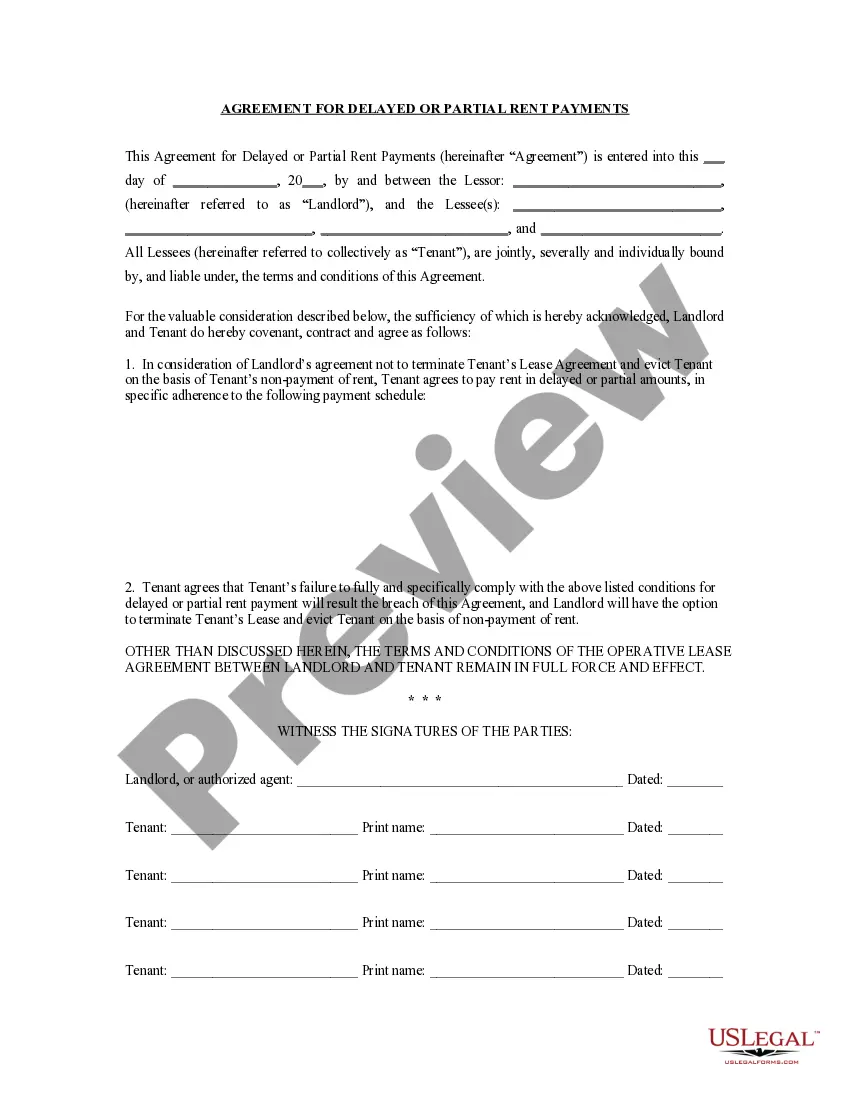
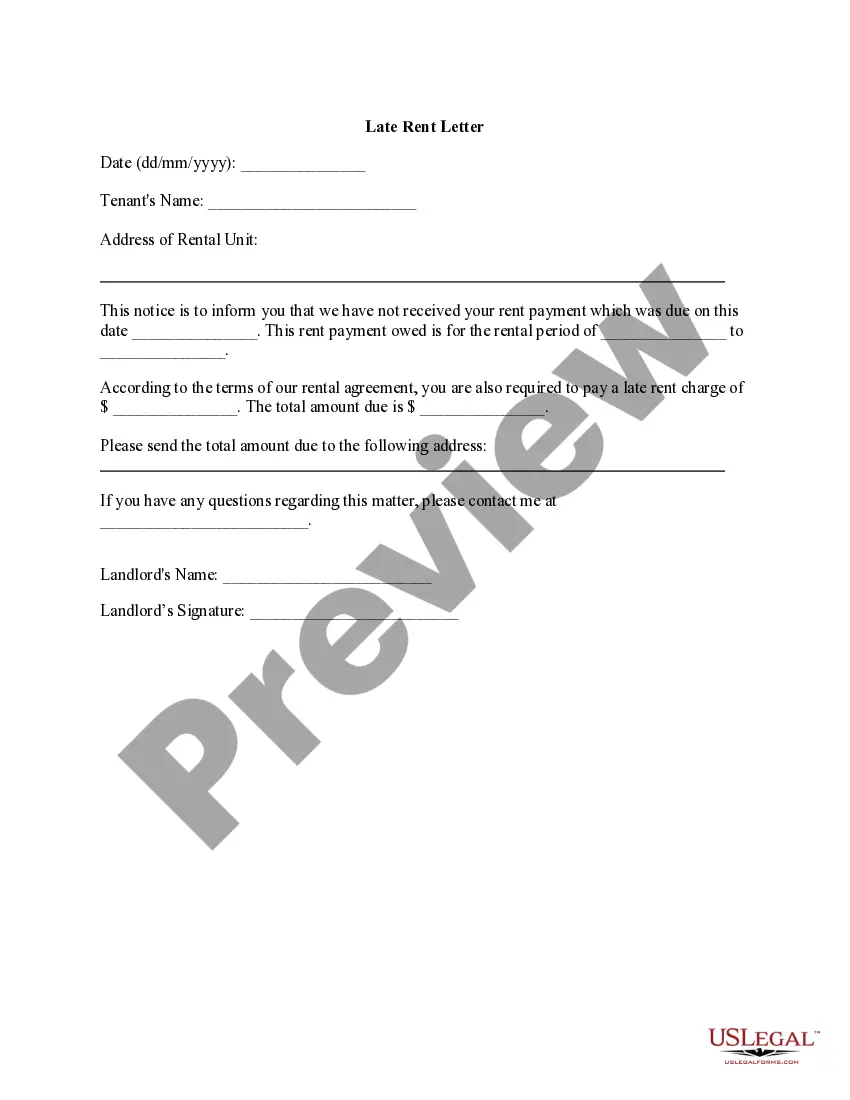
The Agreement for Delayed or Partial Rent Payments is a legally-binding document that outlines the specific terms under which a tenant can make delayed or partial rent payments. This form is designed to protect both the landlord and tenant by setting clear deadlines and conditions for rent payment adjustments, unlike standard rental agreements that typically require full payment on time. By agreeing to this form, landlords demonstrate their willingness to provide temporary relief to tenants experiencing financial difficulties, while ensuring that they continue to receive some rental income in a manageable way.
What’s included in this form
- Identification of parties: Names and contact information for both landlord and tenant(s).
- Payment terms: Specific amounts and deadlines for delayed or partial payments.
- Consideration clause: Confirmation that the landlord will not terminate the lease or evict the tenant due to payment delays.
- Signature requirement: Spaces for signatures and dates from all involved parties to validate the agreement.
- Reference to original lease: A clause stating that the original lease terms remain in effect except as modified in this agreement.

Common use cases
This form is useful in scenarios where a tenant faces temporary financial hardship and cannot pay the full rent amount by the due date. It helps establish an agreement when a landlord is willing to accommodate the tenant's situation without resorting to eviction. Situations such as unemployment, unexpected medical expenses, or other emergencies may necessitate this agreement. Additionally, landlords may use this form to formalize any arrangements made verbally regarding partial or delayed payments.
Who needs this form
- Landlords who want to accommodate tenants struggling to pay rent for a limited time.
- Tenants who need a formal agreement for any delayed or partial rent payment arrangements.
- Property managers facilitating lease agreements where rent relief is necessary.
How to prepare this document
- Identify the parties: Enter the full names and contact details of the landlord and tenant(s).
- Specify payment terms: Clearly state the amounts and due dates for the delayed or partial rent payments.
- Include consideration clause: Confirm that the landlord agrees not to terminate the lease for non-payment during the time allotted.
- Gather signatures: Ensure that the landlord and all tenants sign and date the agreement to make it legally binding.
- Keep a copy: Both parties should retain a signed copy of the agreement for their records.
Is notarization required?
This form does not typically require notarization unless specified by local law. However, notarization may add an extra layer of security to the agreement and is recommended in some situations.
Get your form ready online
Our built-in tools help you complete, sign, share, and store your documents in one place.
Make edits, fill in missing information, and update formatting in US Legal Forms—just like you would in MS Word.
Download a copy, print it, send it by email, or mail it via USPS—whatever works best for your next step.
Sign and collect signatures with our SignNow integration. Send to multiple recipients, set reminders, and more. Go Premium to unlock E-Sign.
If this form requires notarization, complete it online through a secure video call—no need to meet a notary in person or wait for an appointment.
We protect your documents and personal data by following strict security and privacy standards.

Make edits, fill in missing information, and update formatting in US Legal Forms—just like you would in MS Word.

Download a copy, print it, send it by email, or mail it via USPS—whatever works best for your next step.

Sign and collect signatures with our SignNow integration. Send to multiple recipients, set reminders, and more. Go Premium to unlock E-Sign.

If this form requires notarization, complete it online through a secure video call—no need to meet a notary in person or wait for an appointment.

We protect your documents and personal data by following strict security and privacy standards.
Typical mistakes to avoid
- Failing to include specific payment amounts and due dates, leading to confusion.
- Not updating the original lease with the new agreement terms, which may cause legal issues.
- Omitting signatures or dates, which can invalidate the agreement.
Advantages of online completion
- Convenience of completing the form at any time, from anywhere.
- Editability ensures you can customize the form to meet your specific needs.
- Reliability through templates that are drafted by licensed attorneys to ensure compliance with legal standards.
Summary of main points
- The Agreement for Delayed or Partial Rent Payments formalizes arrangements for late or partial rent payments.
- It protects both landlords and tenants by providing clear terms and expectations.
- Completing the form correctly is crucial to ensure its legal validity and effectiveness.
Looking for another form?


Form popularity
FAQ
The Rent Ledger will organize and keep track of all the tenant's rent payments. This document includes the property information, so the landlord can keep track of which rental property this information is for as well as information on monthly rent, other charges, and fees.
Although landlords won't fine tenants during 'grace periods', the payment of the rent is still considered legally delinquent. Normally, rent should be paid on or before the established due date. This is a clause that is included in all lease agreements.
Partial rent payments are when your tenant pays you only a portion of the monthly rent price. For example, if your monthly rent price is $2,000 and your tenant only pays you $1,500, then he or she gave you a partial payment.
Your landlord can evict you if you fall behind with your rent - you could lose your home. Coronavirus (COVID-19) has not changed this, but there are new rules that mean your landlord must give you at least 6 months' notice if they plan to evict you, unless you owe at least 6 months' rent.
Grace periods are quite common, usually varying between three and five days. Grace periods provide tenants extra time to pay rent before the landlord can legally charge a late fee.
It should be noted that is it best practice to not accept partial payments from a tenant.If your tenant has not paid rent in compliance with the terms of the lease, you should start the eviction process by delivering a proper eviction notice as soon as possible.
Grace periods are quite common, usually varying between three and five days. Grace periods provide tenants extra time to pay rent before the landlord can legally charge a late fee.
If you're paying with roommates, you can split the rent however you'd like! You'll just need each roommate to set up their own payments in Apartments.com. 2.Only the payer's name and payment amount can be seen by roommates and the property ownerno banking or private info is ever shared in Apartments.com.