New York Durable General Power of Attorney Effective at a Future Time - a.k.a. Springing Power of Attorney
About this form
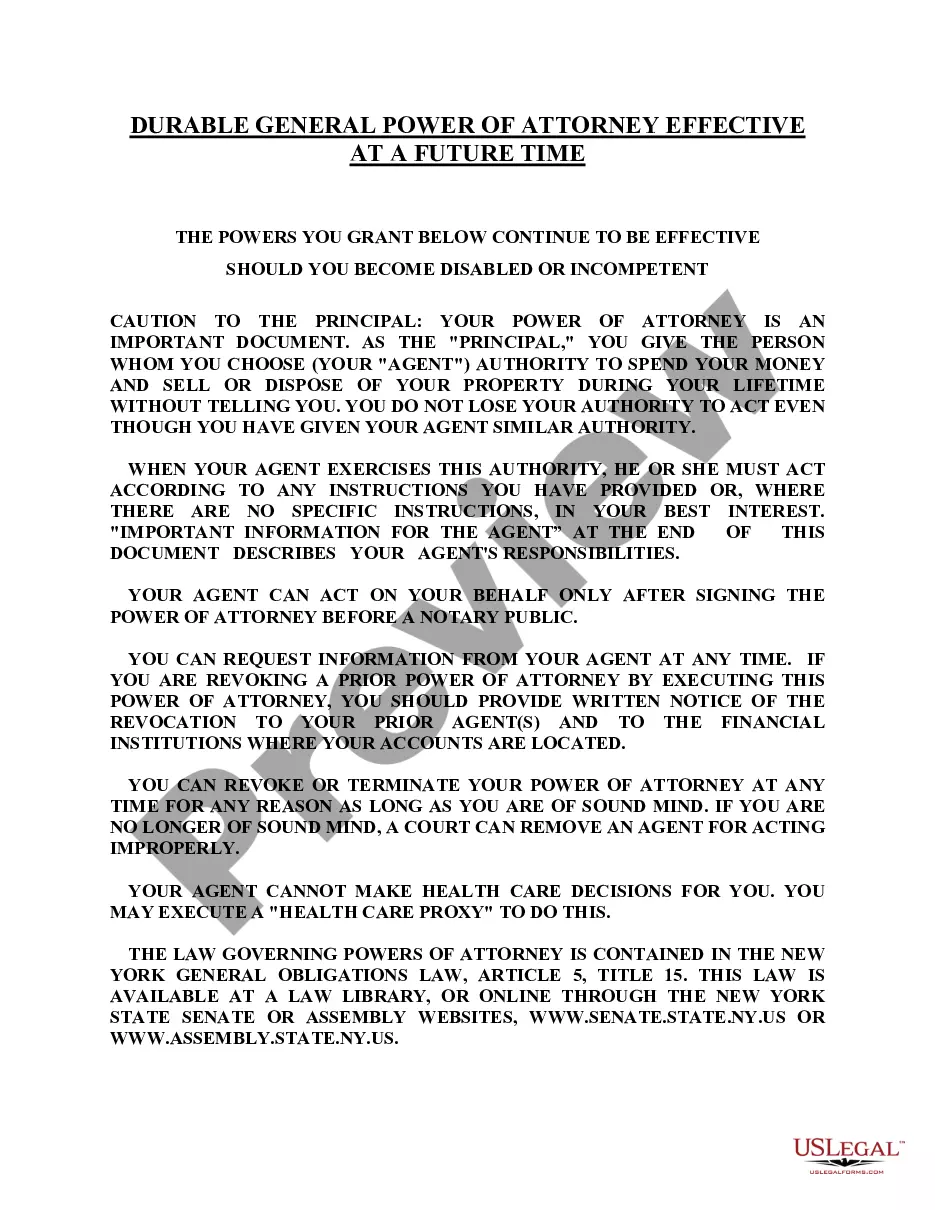
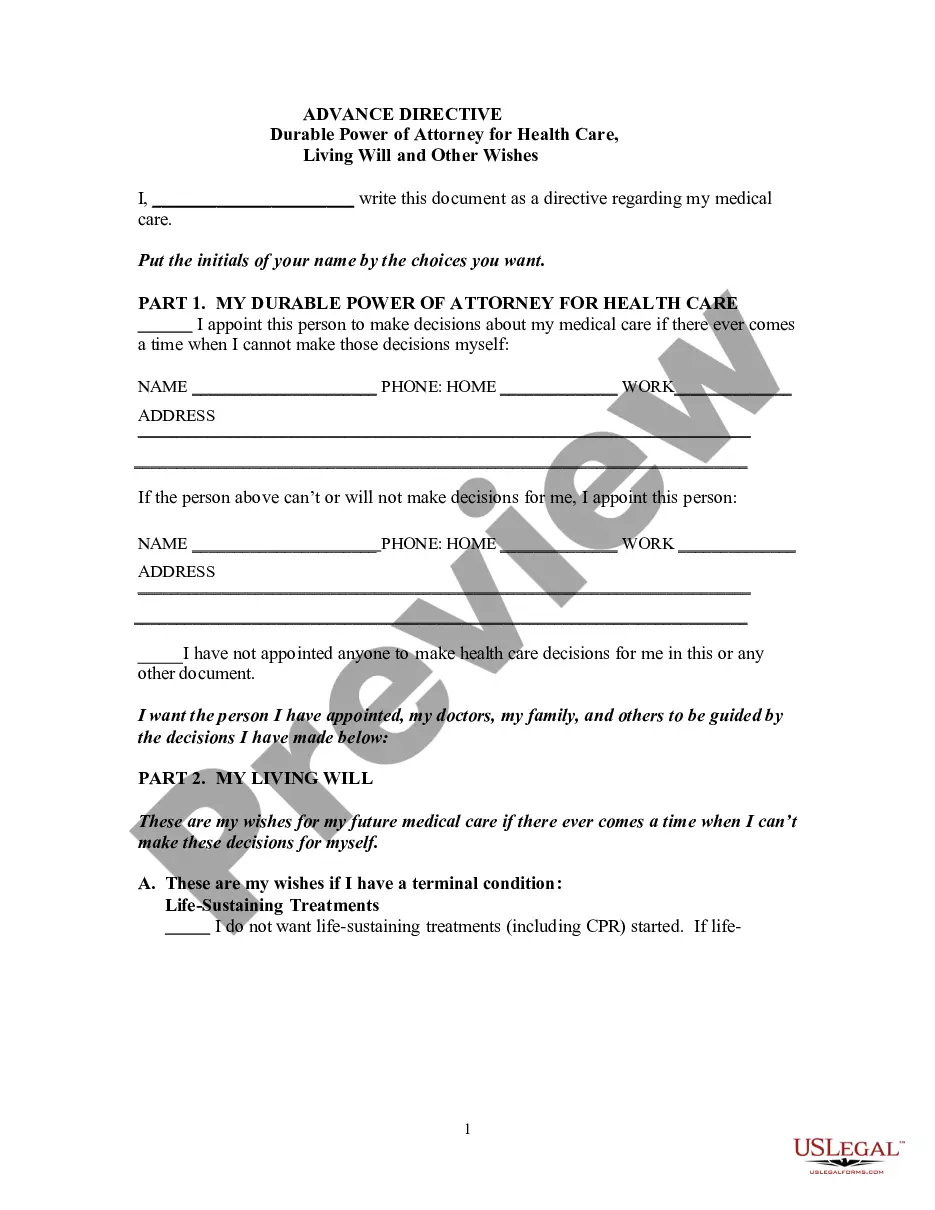
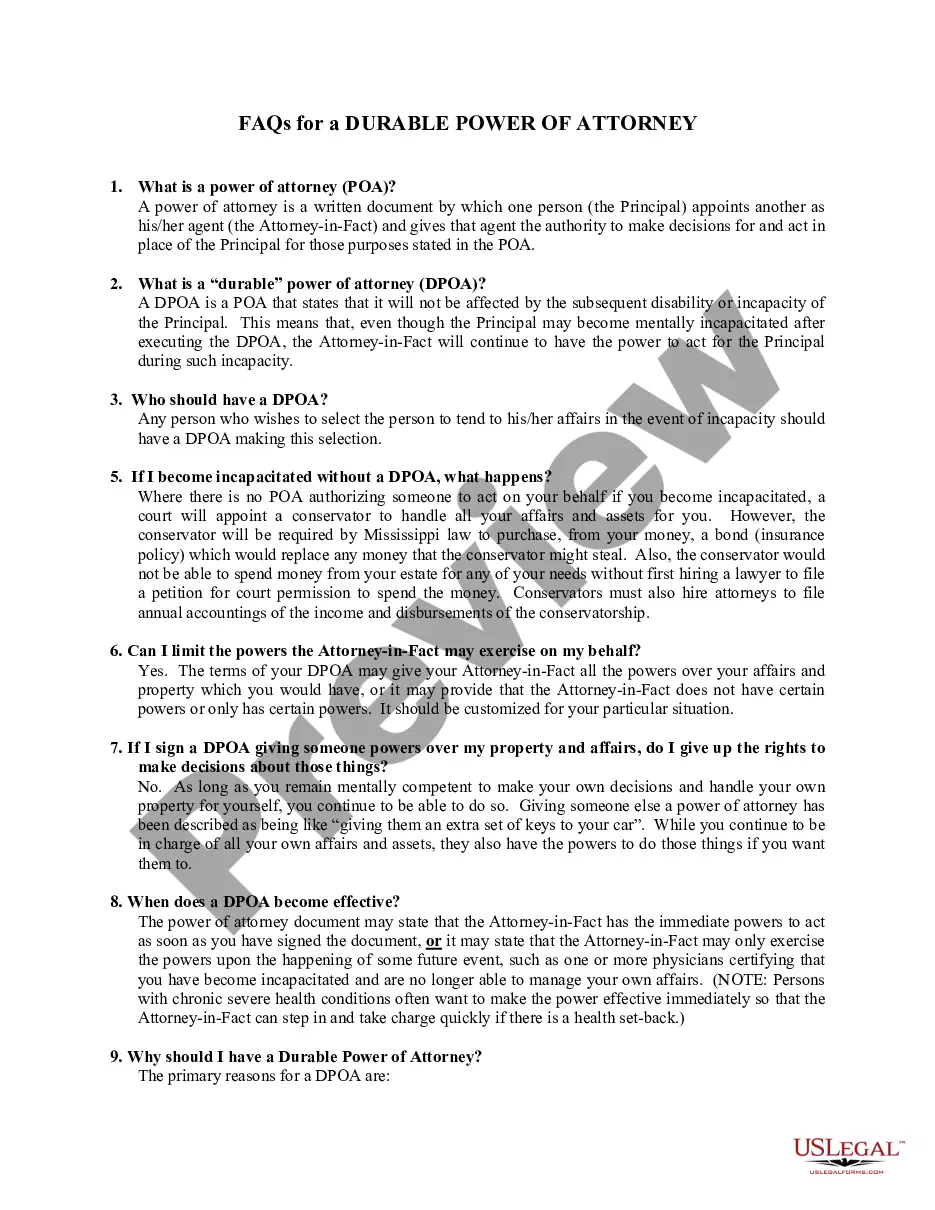
This Durable General Power of Attorney, also known as a Springing Power of Attorney, is a legal document that empowers an agent to manage your financial affairs, effective only at a future time or upon a specified condition occurring. Unlike a standard power of attorney, this form becomes active only when you are unable to act on your own behalf, ensuring that your affairs can be managed according to your wishes when you need it most.
Key parts of this document
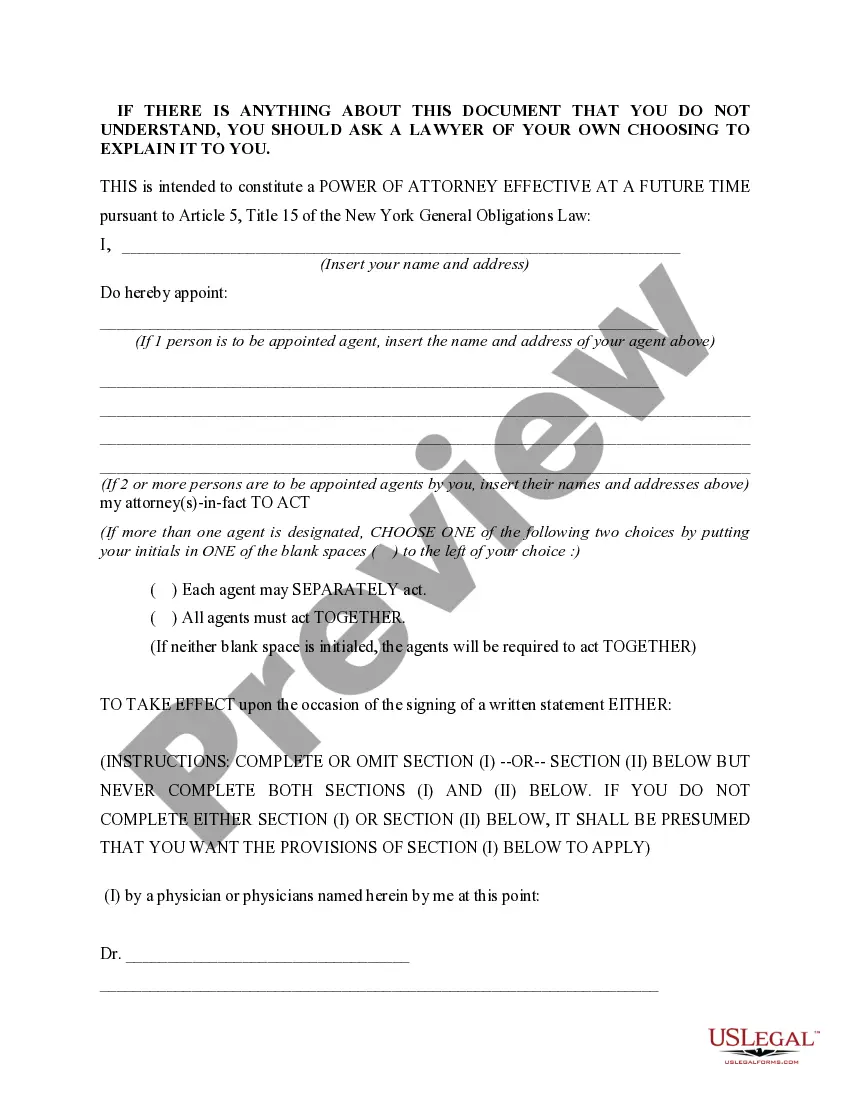
- Identification of the Principal and Agent(s): Names and addresses must be provided.
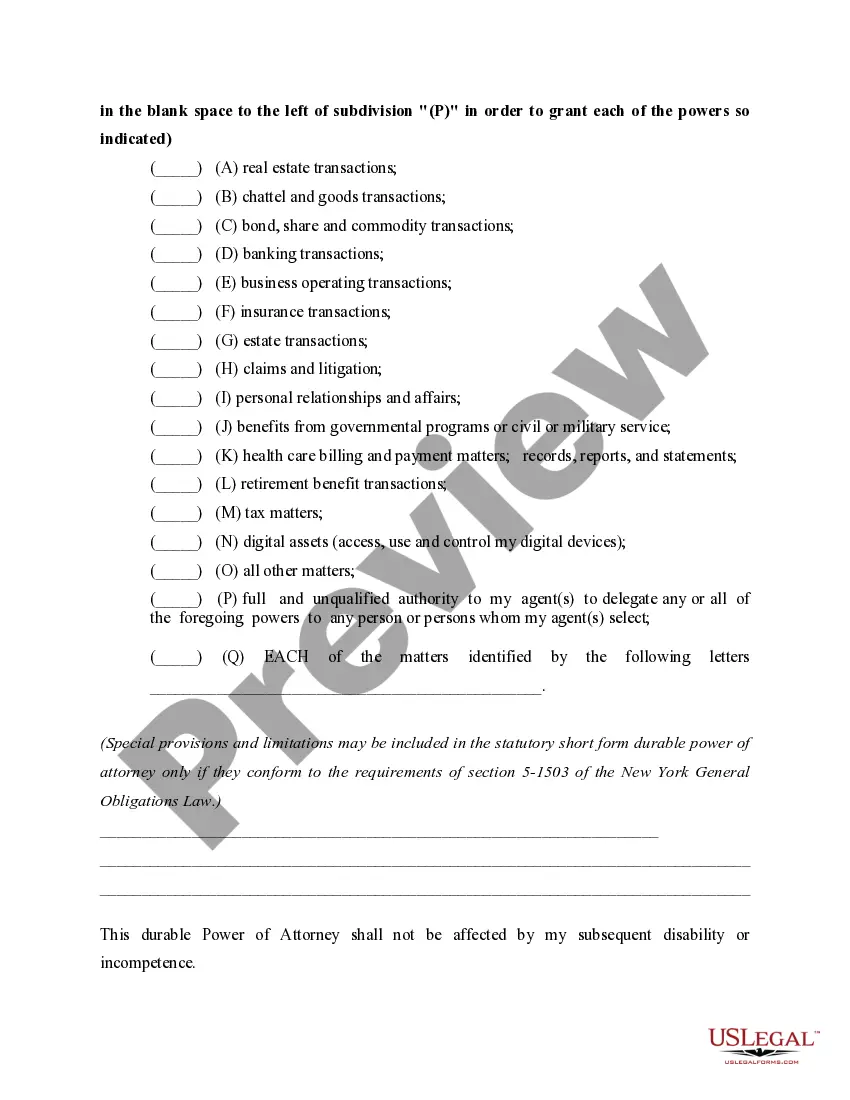
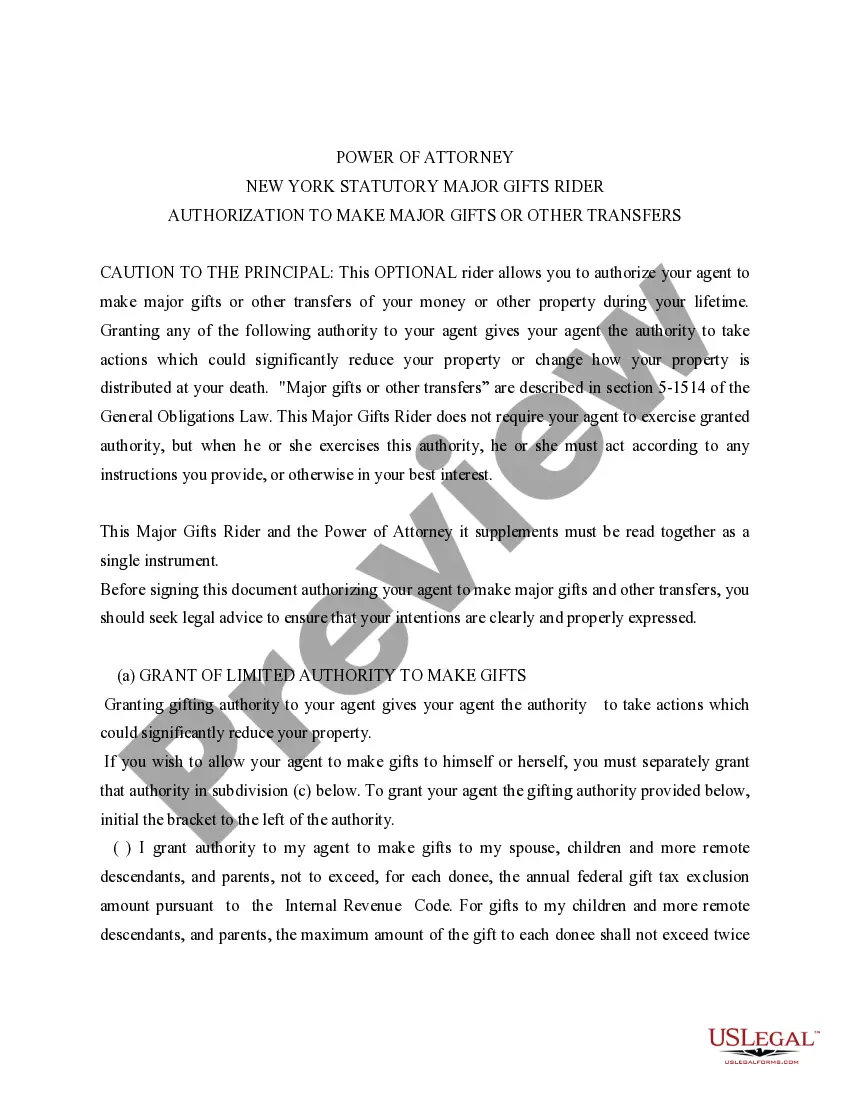
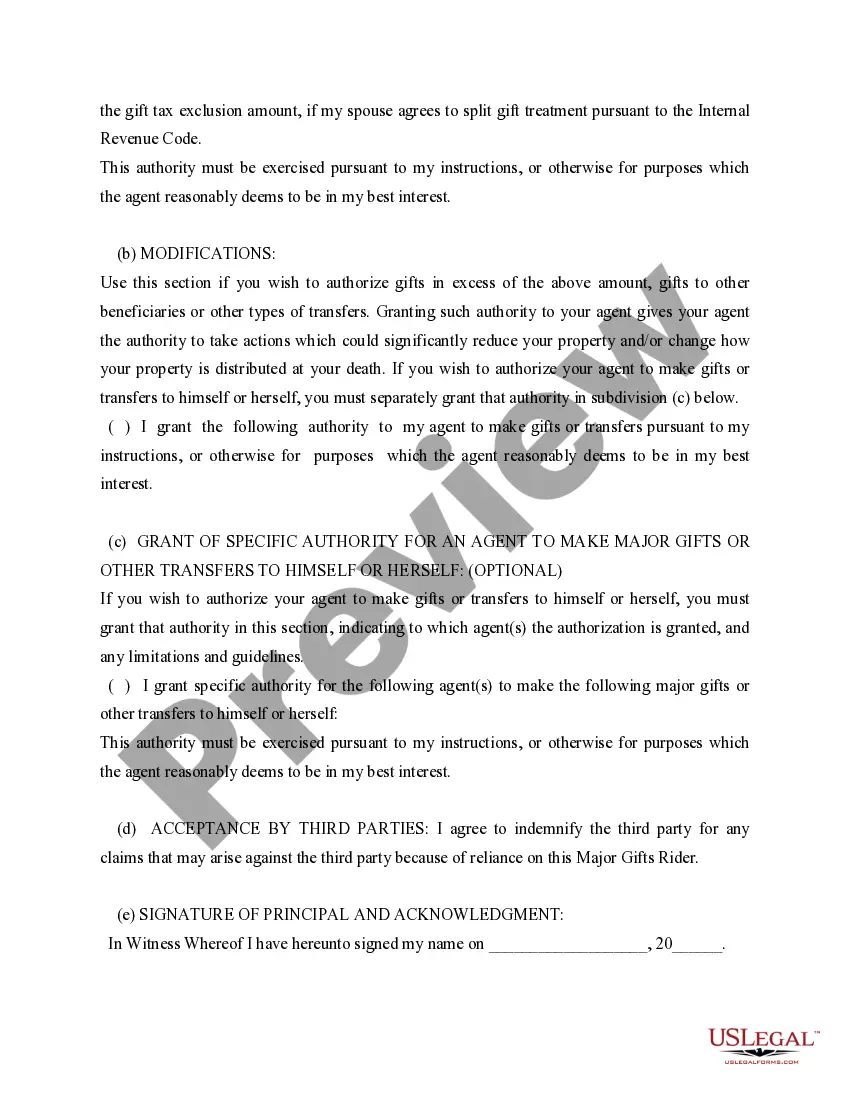
- Authority granted to the Agent: Specifies the powers the agent can exercise.
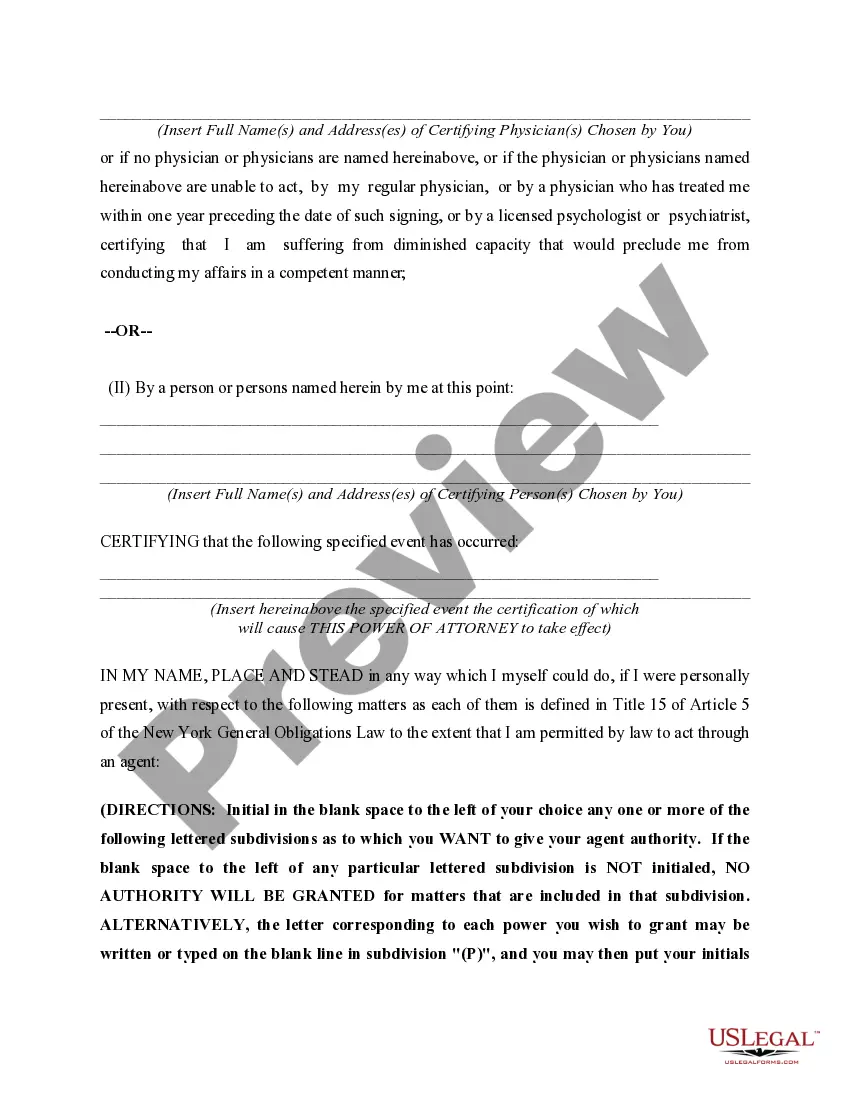
- Activation clause: Details the conditions under which the power becomes effective.
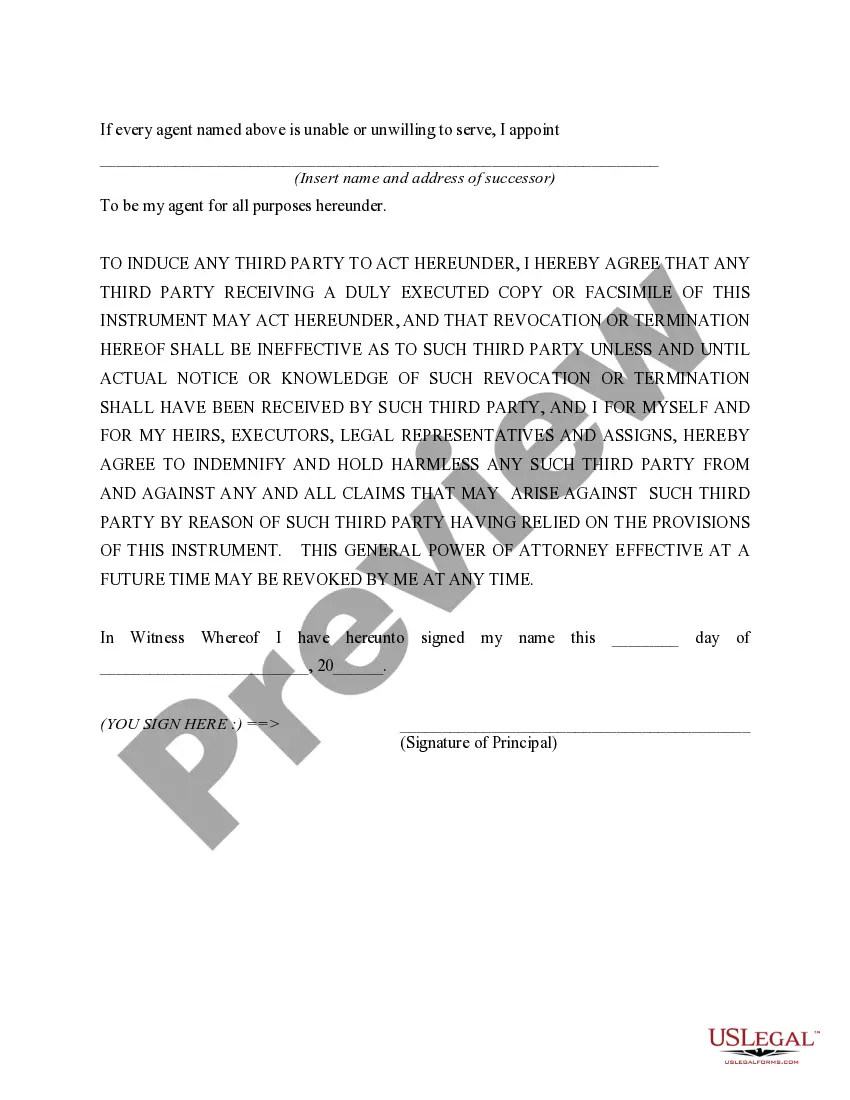
- Revocation terms: Explains how the principal can revoke the power at any time.
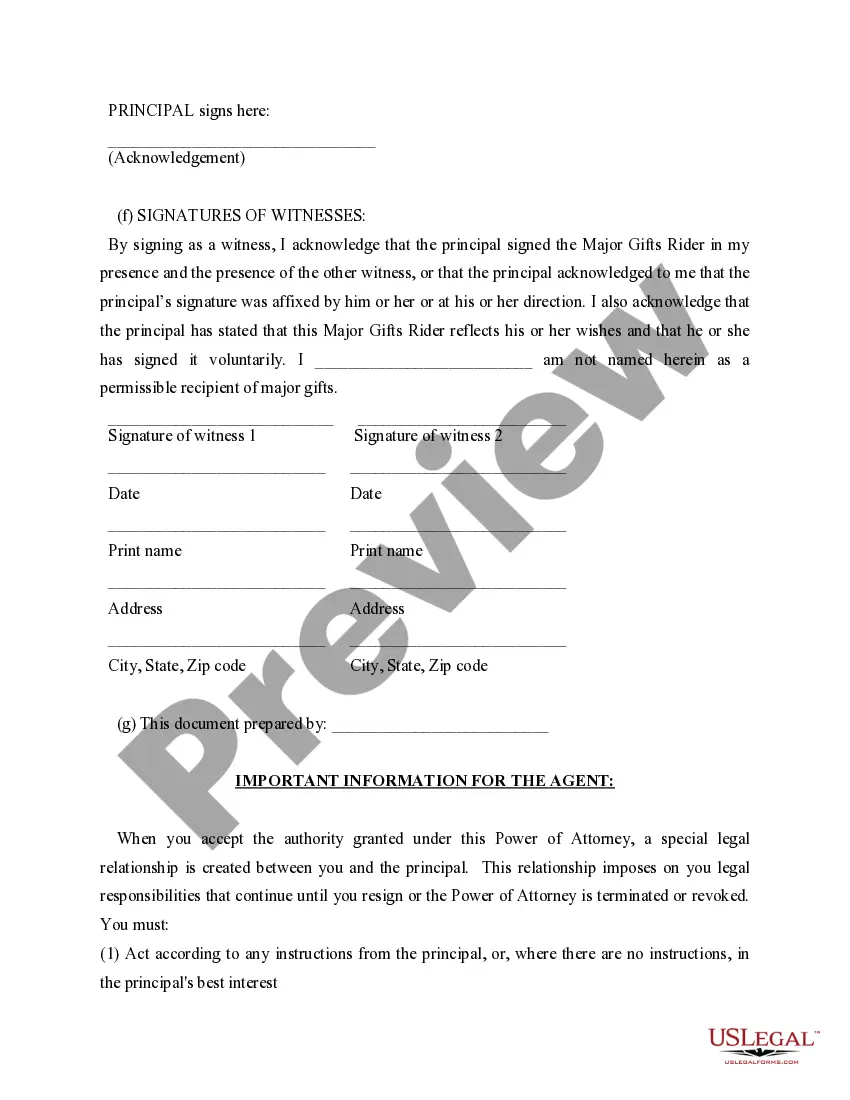
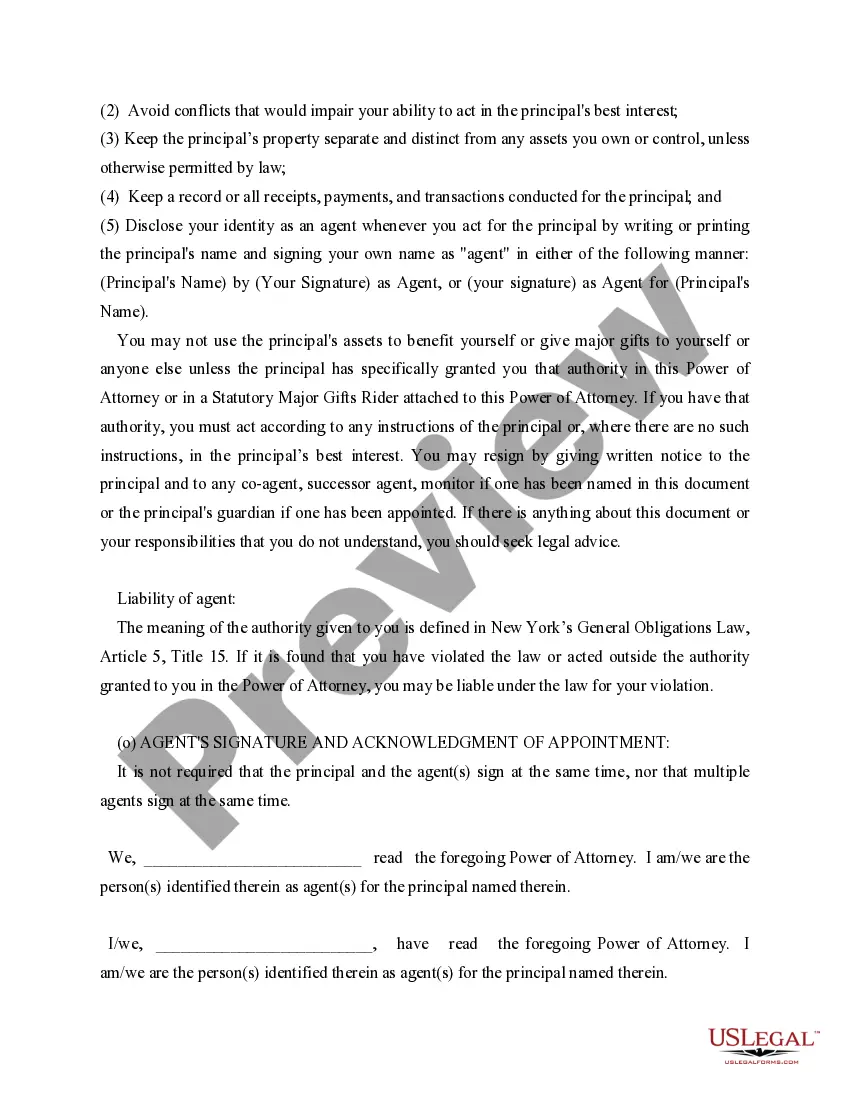
- Responsibilities of the Agent: Outlines the legal obligations imposed on the agent.

Common use cases
This form is particularly useful in situations where individuals want to ensure their financial affairs are managed by a trusted person only when they are incapacitated or unable to make decisions. Common scenarios include serious illness, disability, or other circumstances that hinder a person's ability to handle their finances.
Who this form is for
- Individuals planning for future incapacity.
- Those needing to appoint a reliable agent for financial matters.
- People seeking control over when their agent can act on their behalf.
- Residents of New York seeking compliance with local laws regarding powers of attorney.
How to prepare this document
- Identify and provide your full name and address as the principal.
- Designate your agent(s) by entering their names and addresses.
- Specify the conditions under which the power of attorney will become effective.
- Clearly define the powers you are granting to your agent(s) by initialing the appropriate sections.
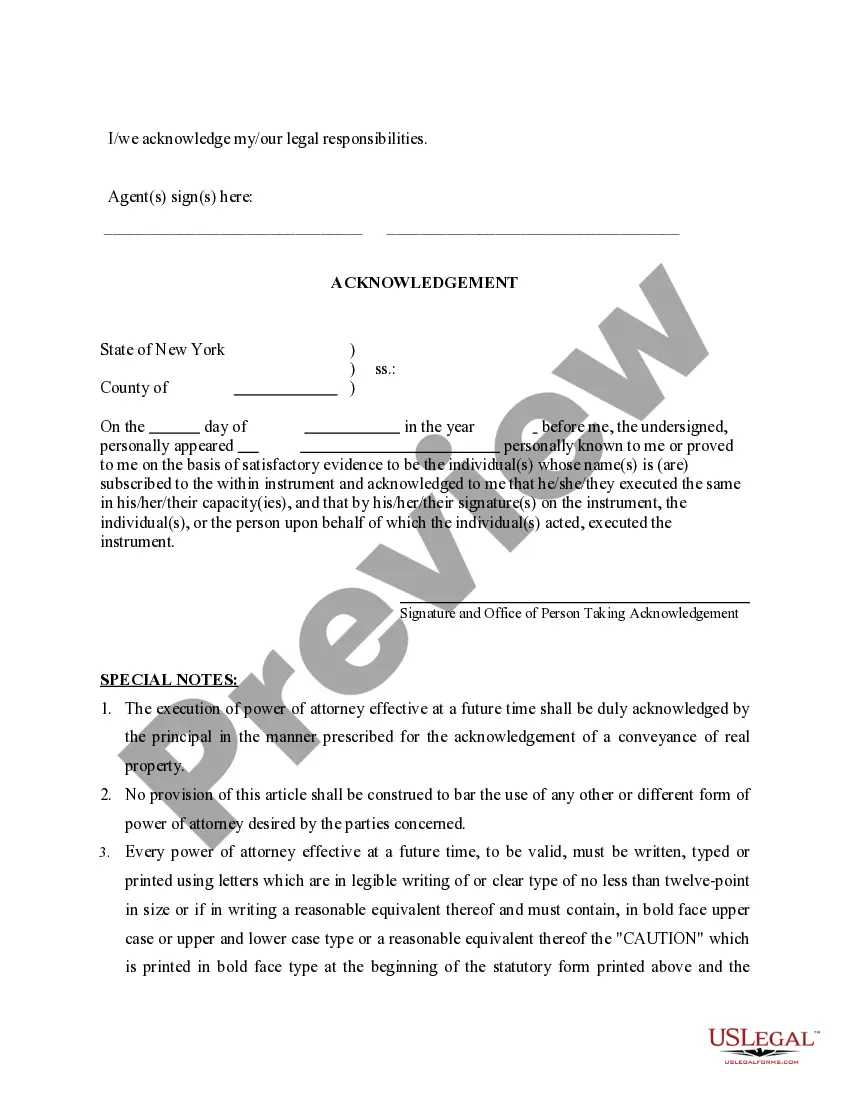
- Sign the document in the presence of a notary public to ensure it is legally binding.
Does this form need to be notarized?
Yes, this form must be notarized to be legally valid. US Legal Forms provides integrated online notarization services, allowing you to complete the notarization securely via video call, 24/7, without the need for travel.
Get your form ready online
Our built-in tools help you complete, sign, share, and store your documents in one place.
Make edits, fill in missing information, and update formatting in US Legal Forms—just like you would in MS Word.
Download a copy, print it, send it by email, or mail it via USPS—whatever works best for your next step.
Sign and collect signatures with our SignNow integration. Send to multiple recipients, set reminders, and more. Go Premium to unlock E-Sign.
If this form requires notarization, complete it online through a secure video call—no need to meet a notary in person or wait for an appointment.
We protect your documents and personal data by following strict security and privacy standards.

Make edits, fill in missing information, and update formatting in US Legal Forms—just like you would in MS Word.

Download a copy, print it, send it by email, or mail it via USPS—whatever works best for your next step.

Sign and collect signatures with our SignNow integration. Send to multiple recipients, set reminders, and more. Go Premium to unlock E-Sign.

If this form requires notarization, complete it online through a secure video call—no need to meet a notary in person or wait for an appointment.

We protect your documents and personal data by following strict security and privacy standards.
Avoid these common issues
- Failing to specify the conditions for when the power will take effect.
- Not initialing the powers granted to agents, which could lead to confusion about authority.
- Overlooking the need for a notary, which can render the document invalid.
Why complete this form online
- Immediate access to a professionally drafted legal template.
- Convenience of downloading and completing the form at your own pace.
- Editable format, allowing you to customize the document to meet your needs.
Looking for another form?
Form popularity
FAQ
Most states offer simple forms to help you create a power of attorney for finances. Generally, the document must be signed, witnessed and notarized by an adult. If your agent will have to deal with real estate assets, some states require you to put the document on file in the local land records office.
Draft a list of special powers. Decide what powers are springing. Pick an agent and a successor agent. Note the expiration date. Compile the information into one document. Execute the power of attorney letter.
To make a valid enduring power of attorney, the person making it must have mental capacity when they sign the document. At that time, the person must be capable of understanding the nature and effect of the enduring power of attorney.
A principal can revoke the power of attorney while he or she is still mentally competent. A principal can complete a formal written document requesting the revocation of a power of attorney at any time, for any reason, while he or she is still competent. The principal must sign and notarize the revocation request.
A springing power of attorney is called that because it springs into action if you become incapacitated.Durable power of attorney becomes effective as soon as you sign the document, and continues to be effective if you are incapacitated.
Your name, address, and signature as the principal. The name, address, and signature of your Agent. The activities and properties under the Agent's authority. The start and termination dates of the Agent's powers. Any compensation you will give to the Agent.
A revocable POA which has only been notarized can be cancelled or revoked by issuing a notice/letter of revocation to the Attorney. Once the deed is drafted and registered, copy of it should be sent to the Attorney intimating him of the revocation.
As principal, you can revoke a power of attorney at any time as long as you have capacity. It's best to revoke in writing, but most states also allow you to revoke by another action that expresses your intent to terminate the power of attorney -- for example, your intentional destruction of the document.
Revoke Your Current Power of Attorney. To change or cancel your current power of attorney, you should complete a formal, written revocation. Notify Your Power of Attorney. Once you complete your revocation, notify your agent of the cancellation in writing. Notify Relevant Third Parties. Execute a New Power of Attorney.