New Mexico Notice of Dishonored Check - Civil - Keywords: bad check, bounced check
Overview of this form
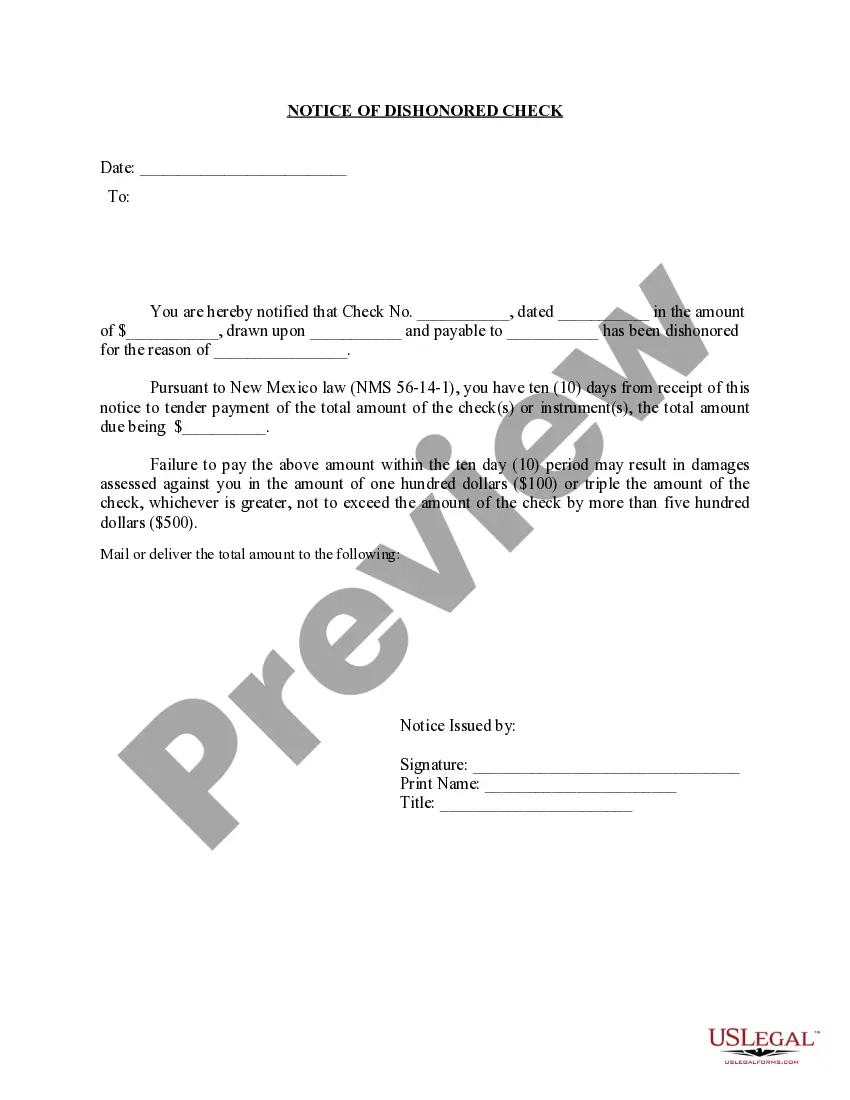
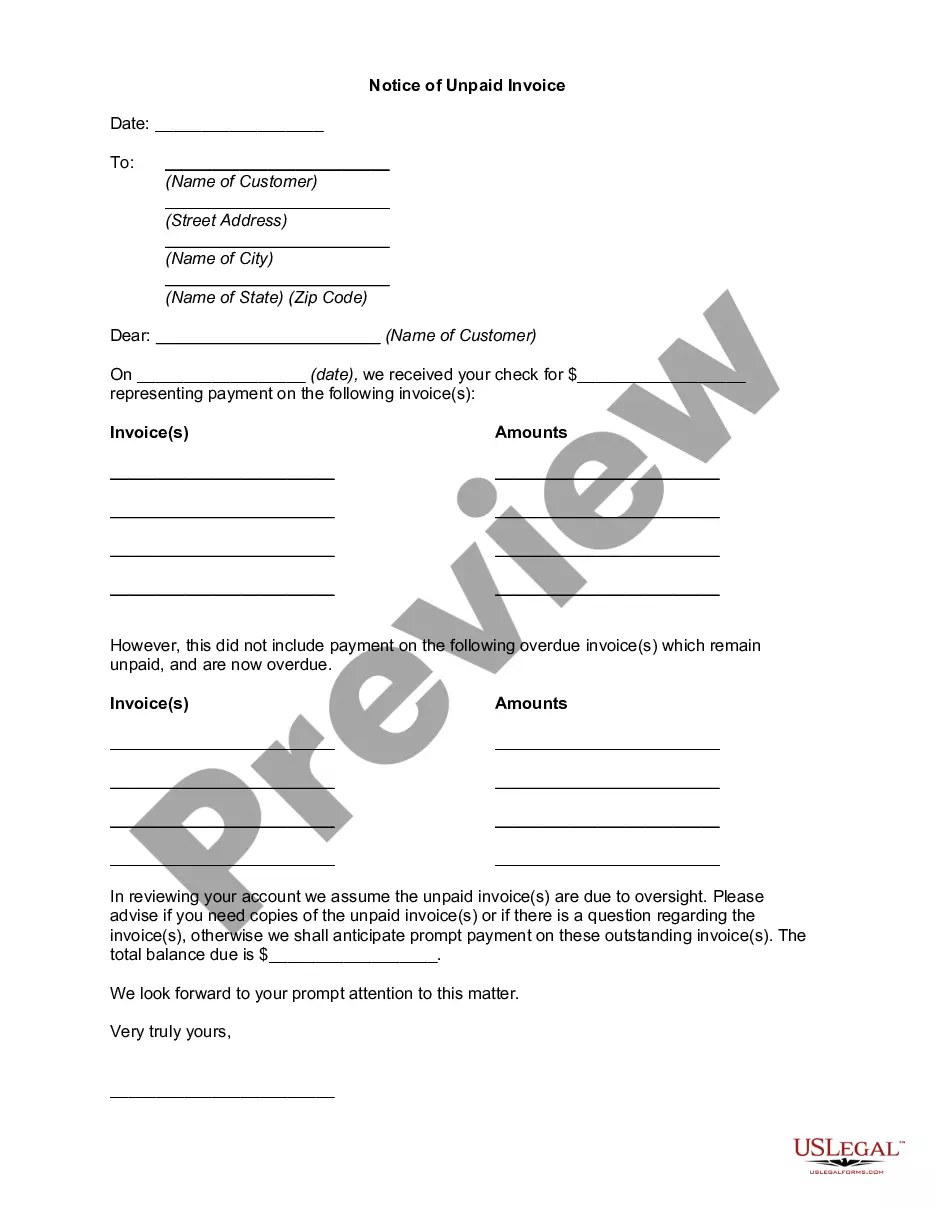
This Notice of Dishonored Check (Civil) is a formal notification sent to a debtor when a check has bounced or been dishonored by the bank. A "bad check," also known as a "bounced check," occurs when there are insufficient funds in the account or no account exists. This notice is important as it informs the debtor of their obligation to settle the amount within a specified time frame, helping the creditor pursue recovery effectively.
What’s included in this form
- Notification details: Specifies the amount of the bounced check and relevant dates.
- Legal requirements: Outlines the debtor's obligation under state law to pay the bounced check amount.
- Consequences: Describes potential penalties for non-payment, including monetary damages.

When to use this form
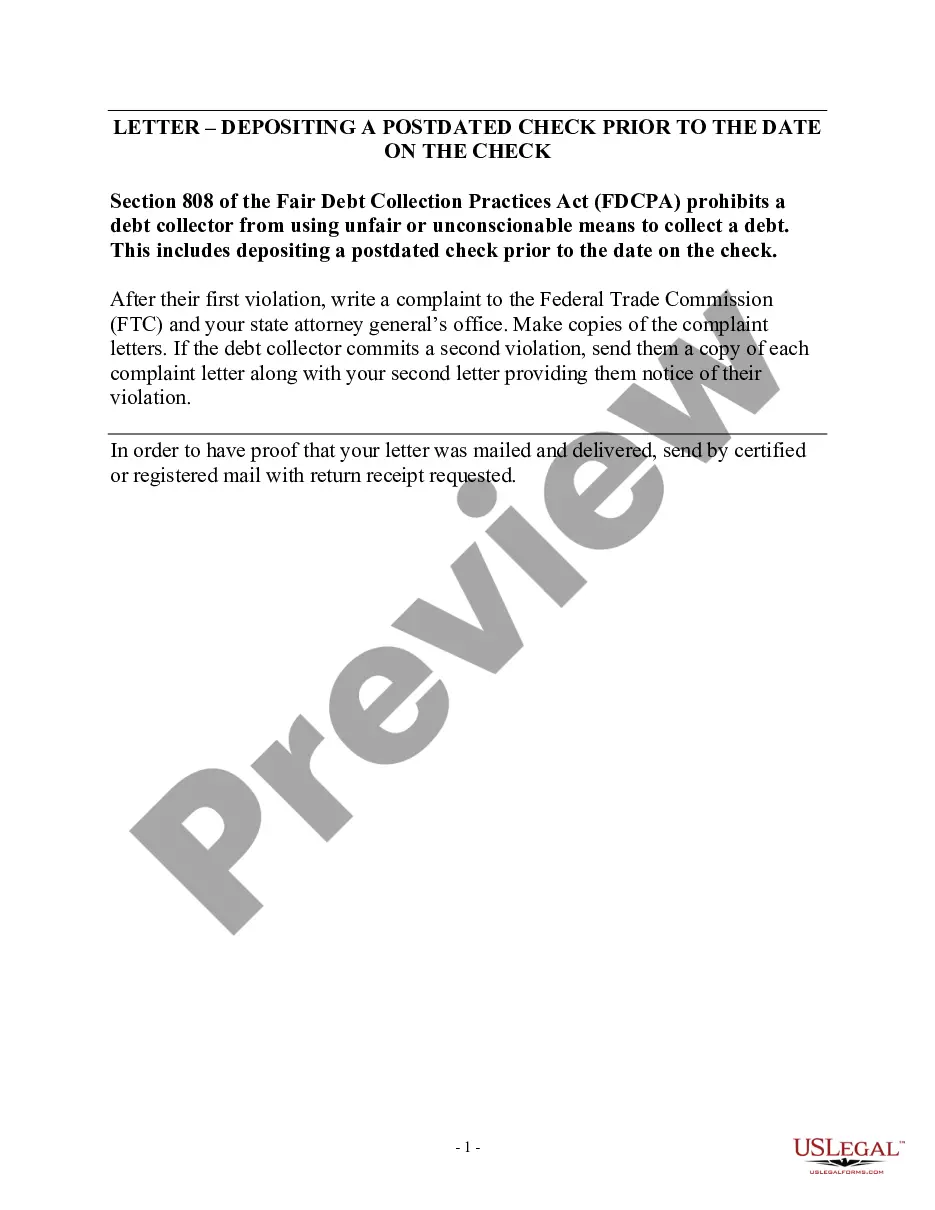
This form should be used when a business or individual receives a check that has bounced. It serves as a legally required notification to the debtor, giving them an opportunity to rectify the situation by making payment. It is particularly essential when attempts to collect the debt directly have failed, providing a formal basis for further action.
Who this form is for
This Notice of Dishonored Check should be used by:
- Business owners who have received a bad check from customers.
- Individuals who have been paid with a bounced check.
- Creditors seeking to formally notify debtors of the dishonored check.
How to prepare this document
- Identify the original check amount and any associated fees.
- Enter the date the notice is being sent.
- Specify the debtorâs name and address, ensuring it is accurate.
- Clearly state the amount due and any penalties for non-compliance.
- Sign and date the notice to validate it.
Does this document require notarization?
This form does not typically require notarization unless specified by local law. It is advisable to check any specific legal requirements that may apply in your jurisdiction.
Get your form ready online
Our built-in tools help you complete, sign, share, and store your documents in one place.
Make edits, fill in missing information, and update formatting in US Legal Forms—just like you would in MS Word.
Download a copy, print it, send it by email, or mail it via USPS—whatever works best for your next step.
Sign and collect signatures with our SignNow integration. Send to multiple recipients, set reminders, and more. Go Premium to unlock E-Sign.
If this form requires notarization, complete it online through a secure video call—no need to meet a notary in person or wait for an appointment.
We protect your documents and personal data by following strict security and privacy standards.

Make edits, fill in missing information, and update formatting in US Legal Forms—just like you would in MS Word.

Download a copy, print it, send it by email, or mail it via USPS—whatever works best for your next step.

Sign and collect signatures with our SignNow integration. Send to multiple recipients, set reminders, and more. Go Premium to unlock E-Sign.

If this form requires notarization, complete it online through a secure video call—no need to meet a notary in person or wait for an appointment.

We protect your documents and personal data by following strict security and privacy standards.
Typical mistakes to avoid
- Failing to provide accurate debtor information, which can hinder recovery efforts.
- Not allowing the full ten-day notice period before taking further action.
- Including incorrect payment amounts or penalties, leading to legal complications.
Why complete this form online
- Convenience: Easily download and complete the form from the comfort of your home or office.
- Editability: Customize the document to meet your specific needs and legal requirements.
- Reliability: Access forms created by licensed attorneys, ensuring that you are using an enforceable document.
Legal use & context
- The Notice of Dishonored Check is a legally recognized method of notifying debtors.
- Proper use of this form can protect the sender's rights and assist in potential recovery actions.
- Utilizing this form helps establish a clear record of communication with the debtor.
Key takeaways
- The Notice of Dishonored Check is essential for notifying a debtor about a bounced payment.
- Timely notification is crucial to comply with state laws and pursue recovery options.
- Completing the form accurately can simplify the process of resolving payment issues.
Looking for another form?

Form popularity
FAQ
If someone writes you a bad check and you deposit the check at the bank, or cash it at your bank you will be penalized. They will charge you a fee for the bounced check and it may take a couple days for it to reflect.If you are worried about bad checks, insist on getting paid in cash.
Writing bad checks can lead to several theft charges, but with the help of a skilled defense attorney, you can work to reduce or even dismiss charges.
When there are insufficient funds in an account, and a bank decides to bounce a check, it charges the account holder an NSF fee. If the bank accepts the check, but it makes the account negative, the bank charges an overdraft (OD) fee. If the account stays negative, the bank may charge an extended overdraft fee.
Penal Code 476a PC is the California statute that makes it a crime for a person to write or pass a bad check, knowing there are insufficient funds to cover payment of the check. The offense can be charged as a felony if the value of the bad checks is more than $950.00. Otherwise, the offense is only a misdemeanor.
People who write bad checks are normally charged fees by their banks and could be on the hook for any fees incurred by the payee. Knowingly writing a bad check may constitute a misdemeanor or felony, depending on the amount of the check and the state in which it was written.
Writing a bad check, also known as a hot check, is illegal. Banks normally charge a fee to anyone who writes a bad check unintentionally. The punishment for trying to pass a bad check intentionally ranges from a misdemeanor to a felony.
A bounced check occurs when the writer of the check has insufficient funds available to fulfill the payment amount on the check to the payee. When a check bounces, they are not honored by the depositor's bank, and may result in fees and banking restrictions.
If the tellers at the checks bank tell you there ARE sufficient funds you have three options: cash the check immediately (actually get cash - probably not recommended if it's several thousand dollars), take the check to YOUR bank and deposit the funds (this will take 2-3 days for the check to clear - not recommended),
Bouncing a check can happen to anyone. Write one and you'll owe your bank an NSF fee of between $27 and $35, and the recipient of the check is permitted to charge a returned-check fee of between $20 and $40 or a percentage of the check amount.