New Jersey Complaint Alleging Promissory Estoppel
What is this form?
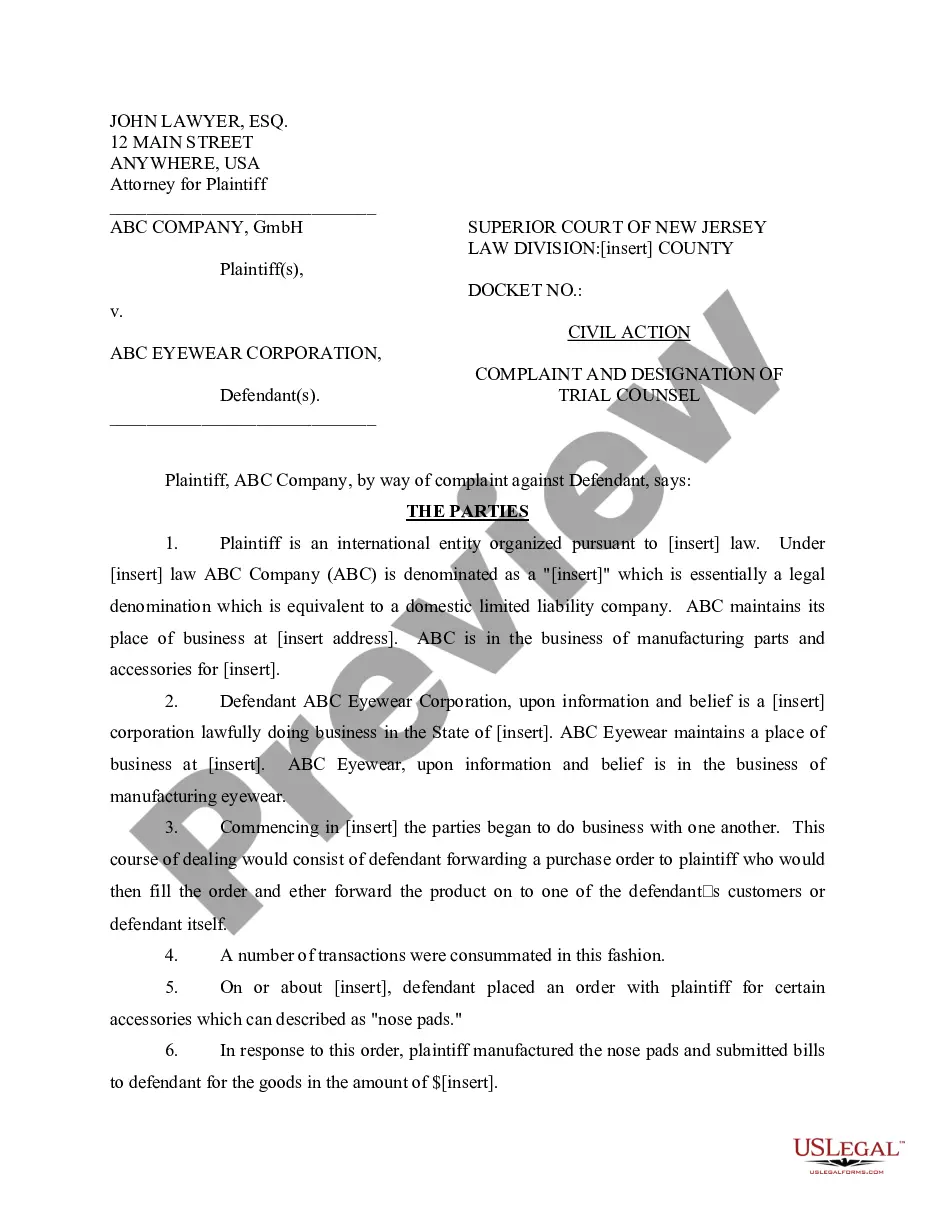
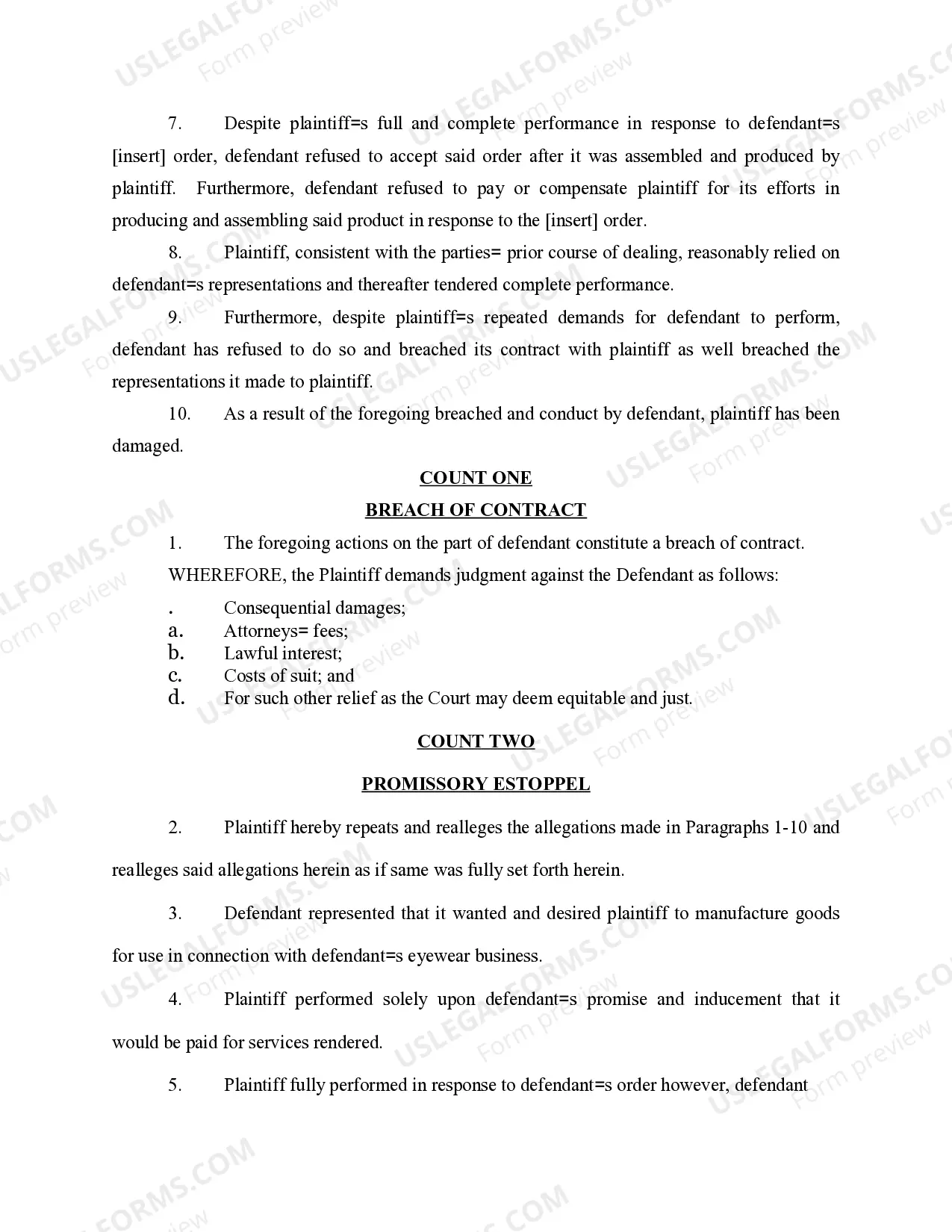
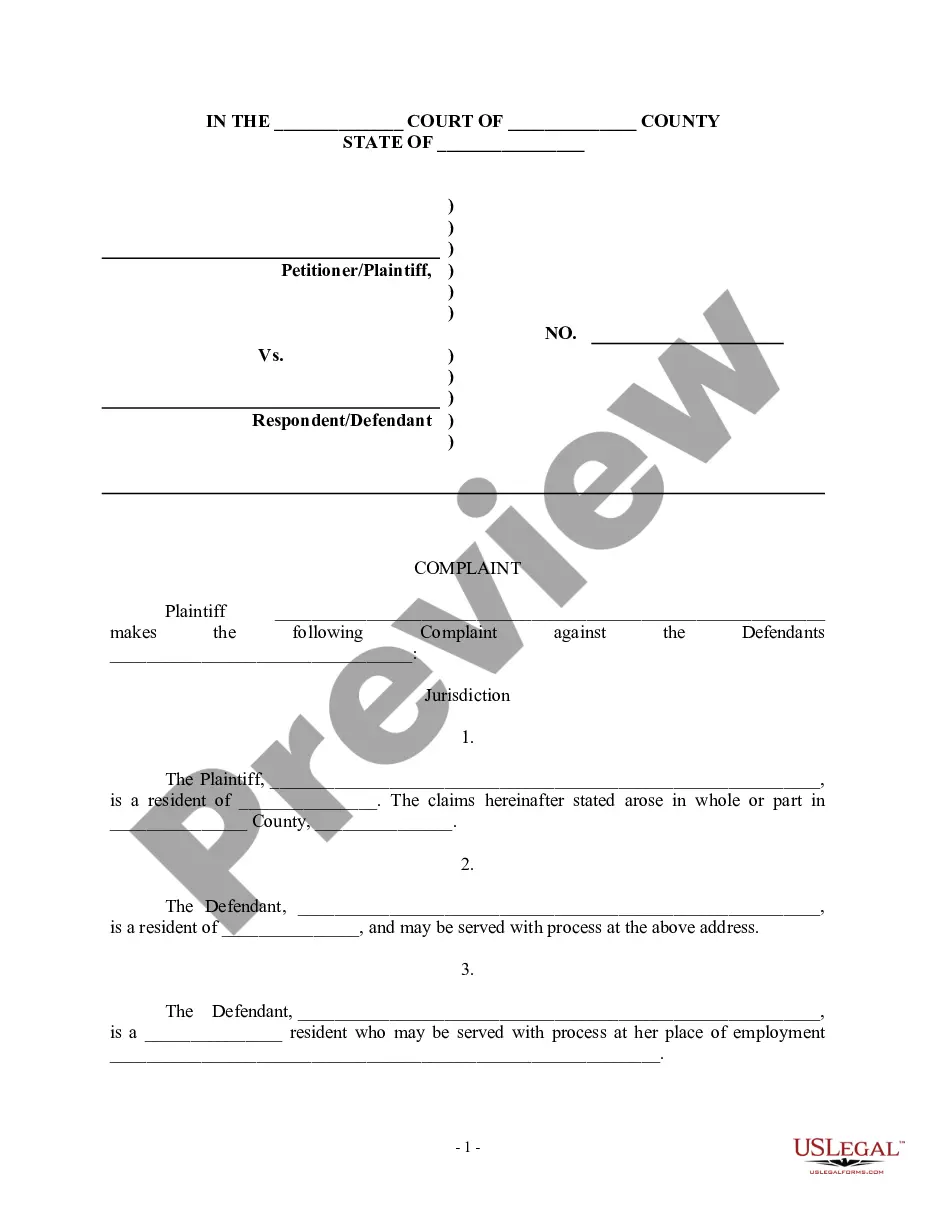
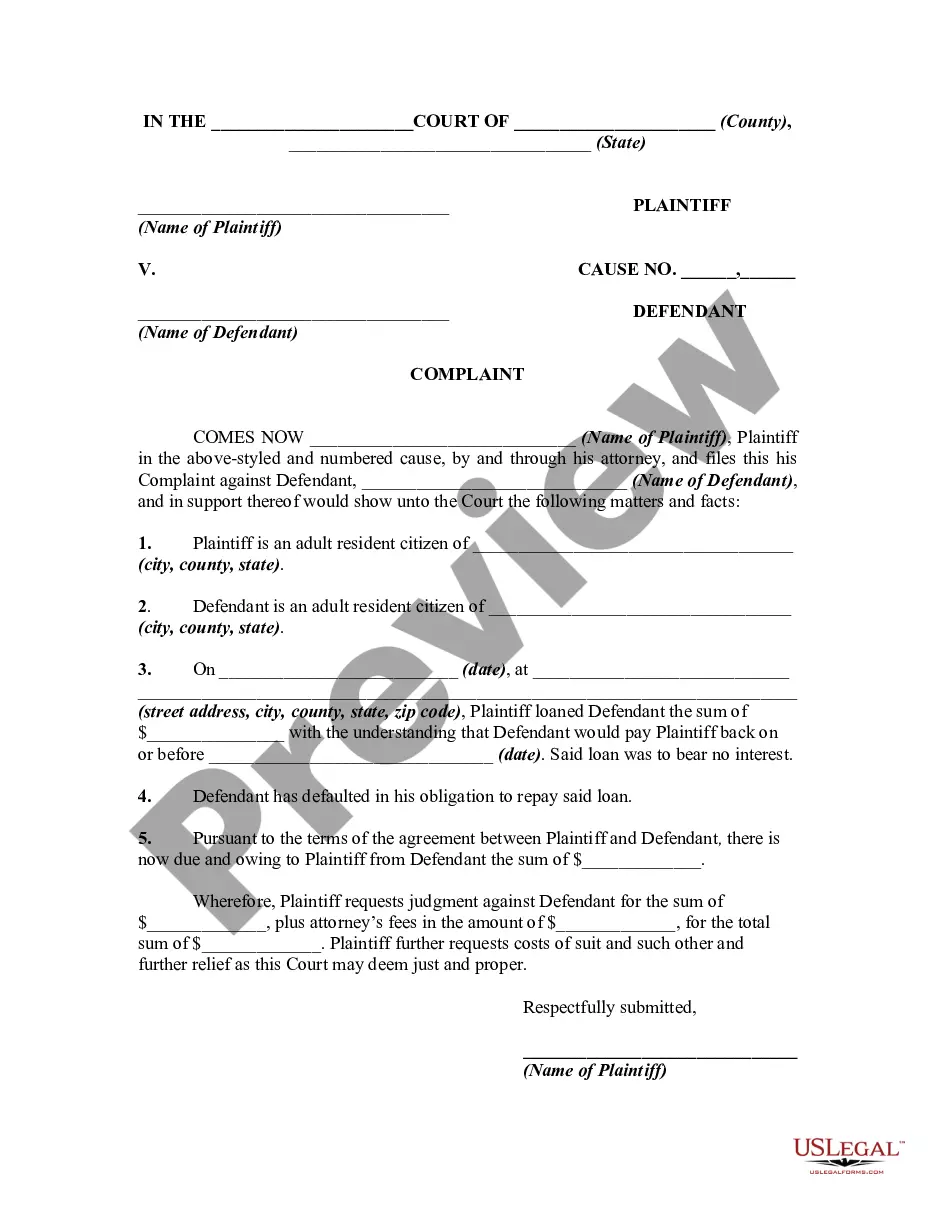
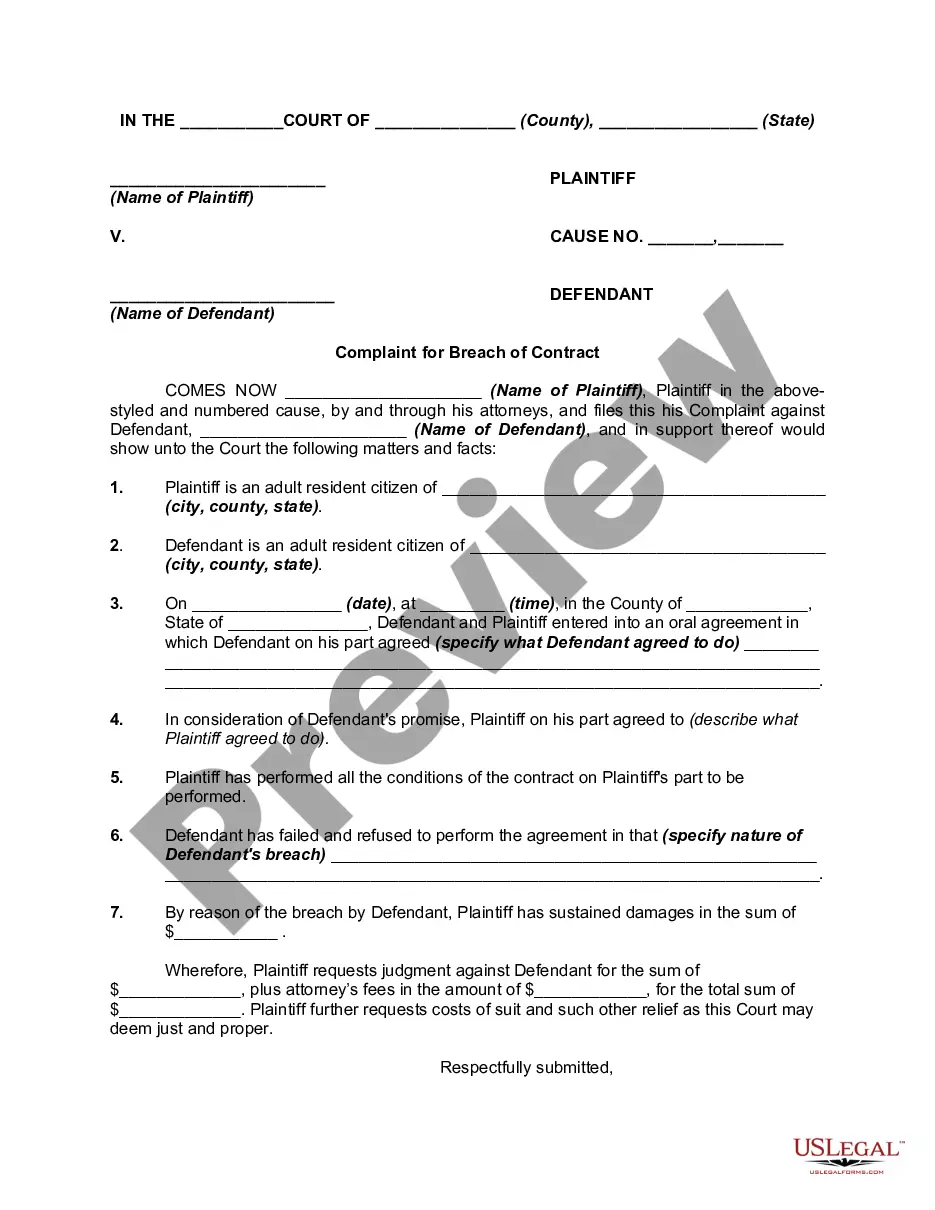
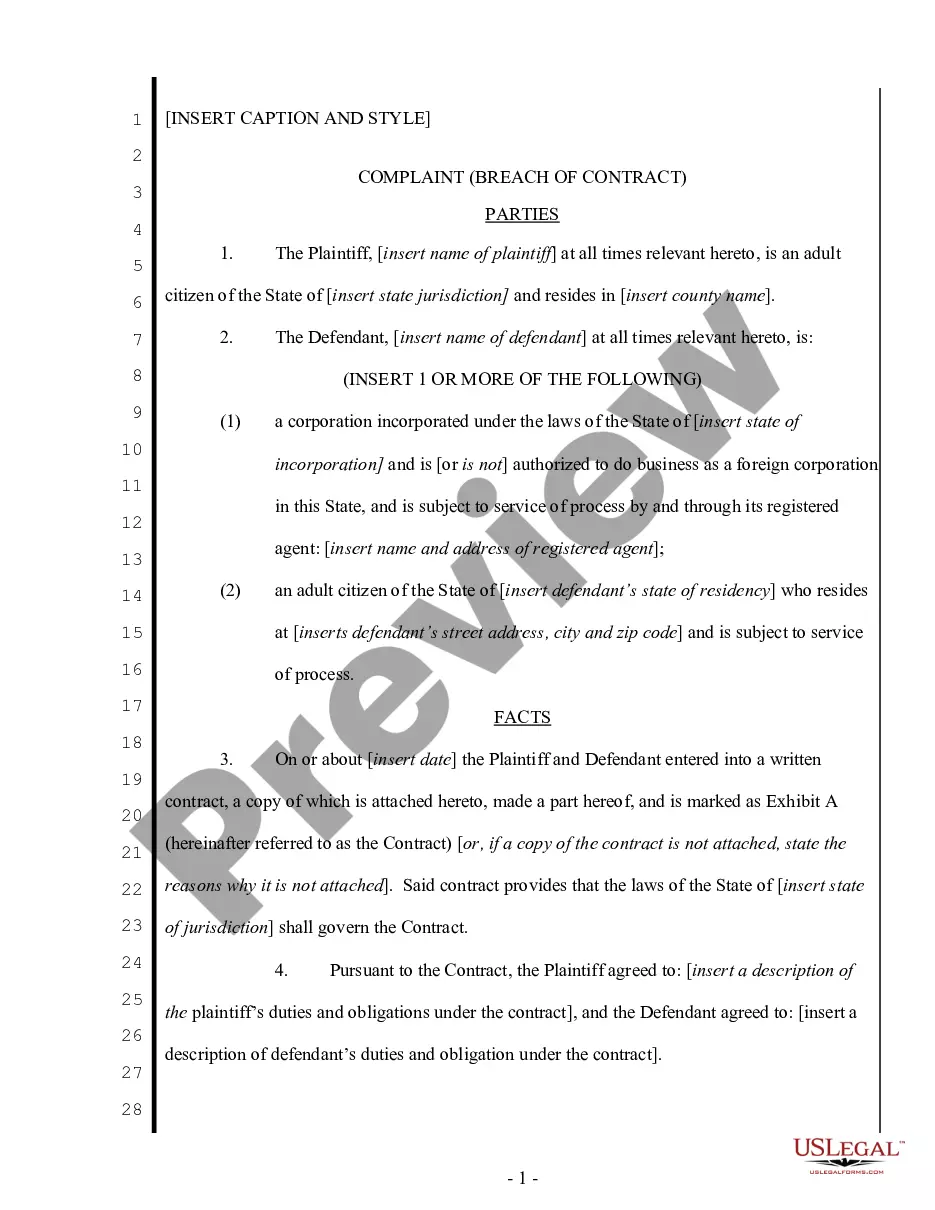
The Complaint Alleging Promissory Estoppel is a legal document used by a plaintiff to initiate a lawsuit against a defendant. This form specifically focuses on claims of breach of contract along with promissory estoppel. Unlike standard complaints, this form involves situations where one party has relied on the promises of another, leading to potential damages. It is designed to seek compensation, including consequential damages, attorney's fees, costs of suit, and any other relief deemed appropriate by the court.
Main sections of this form
- Identification of the parties involved in the dispute.
- Details about the business relationship and course of dealings.
- Specific allegations of breach of contract and promissory estoppel.
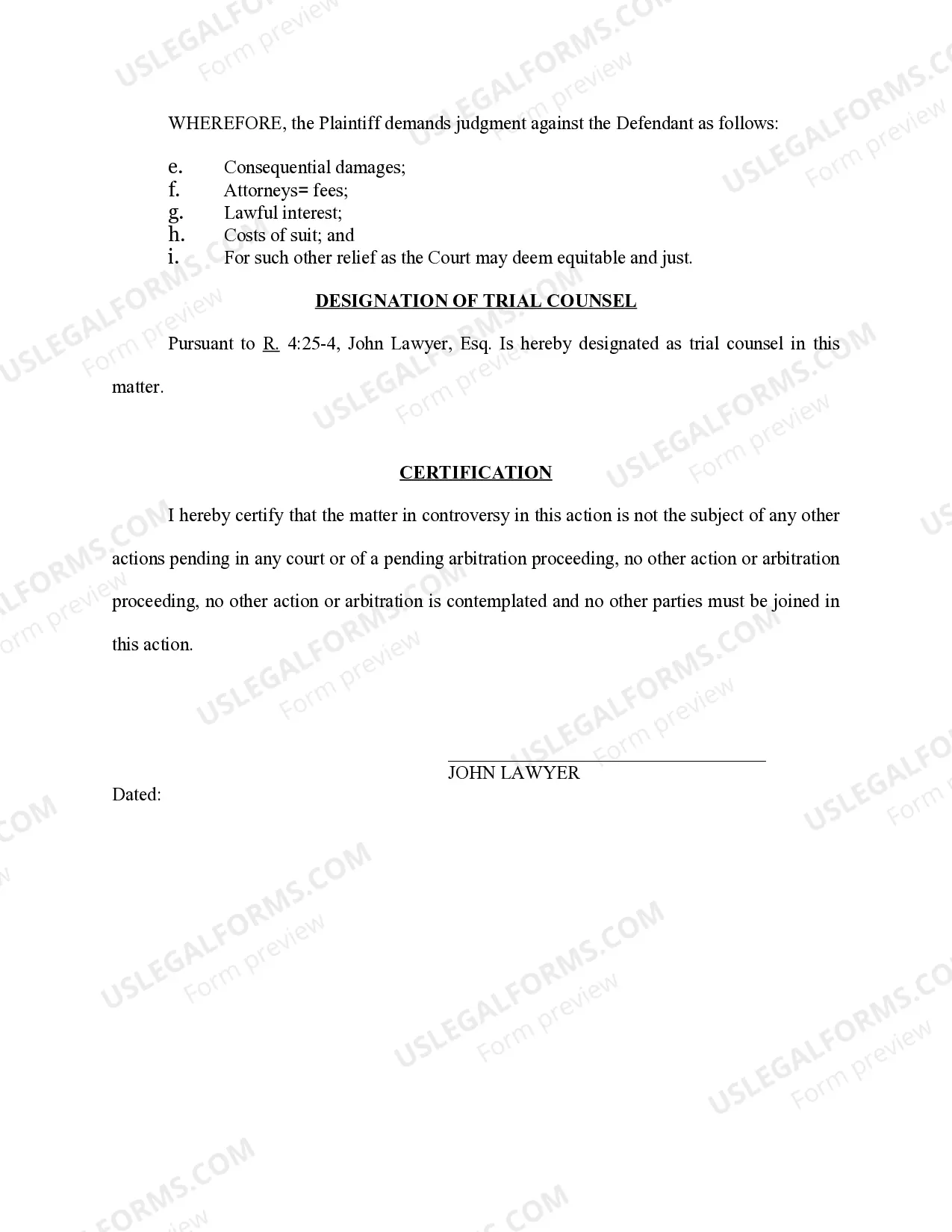
- Claims for damages, including monetary compensation and legal fees.
- Designation of trial counsel to represent the plaintiff.
- Certification confirming no other legal actions are pending regarding the same matter.
When to use this form
This form should be used when a party (the plaintiff) believes that another party (the defendant) has breached a contract or made a promise that they did not fulfill, resulting in damages. It is ideal for situations where reliance on the promise led to significant losses for the plaintiff, and they wish to seek legal recourse through the court system.
Who can use this document
This form is intended for:
- Businesses that have entered into an agreement with another business or individual.
- Parties seeking to enforce a promise that was relied upon to their detriment.
- Individuals or companies that have suffered losses due to the non-performance of contractual obligations by another party.
Completing this form step by step
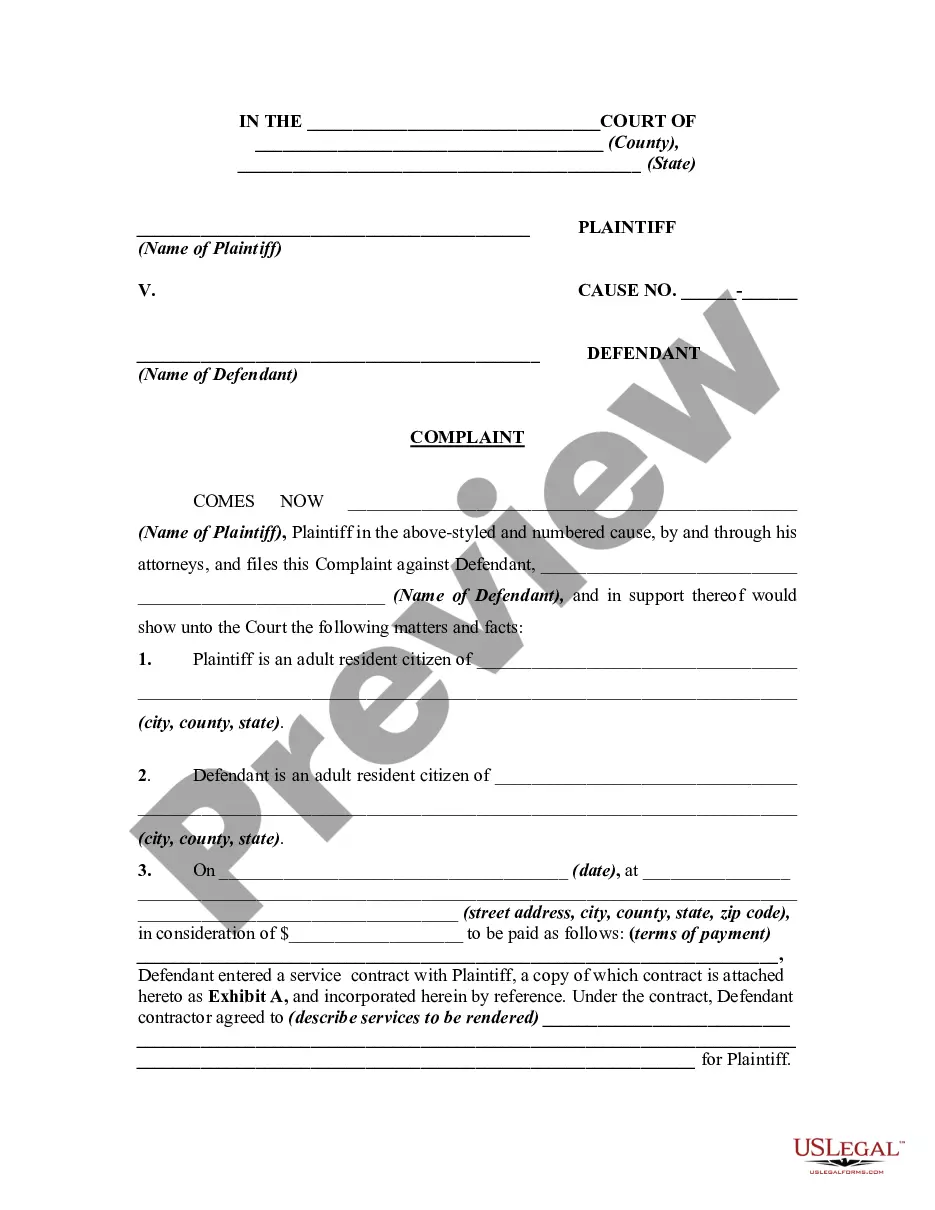
- Identify and include the names and addresses of both the plaintiff and defendant.
- Describe the nature of the business and the transactions between the parties.
- Specify the details of the breach, including dates and specifics of the alleged promise and reliance on it.
- Outline the damages suffered due to the defendant's actions.
- Designate your trial counsel and include their contact information.
- Sign and date the certification section at the bottom of the form.
Does this document require notarization?
This form does not typically require notarization to be legally valid. However, some jurisdictions or document types may still require it. US Legal Forms provides secure online notarization powered by Notarize, available 24/7 for added convenience.
Get your form ready online
Our built-in tools help you complete, sign, share, and store your documents in one place.
Make edits, fill in missing information, and update formatting in US Legal Forms—just like you would in MS Word.
Download a copy, print it, send it by email, or mail it via USPS—whatever works best for your next step.
Sign and collect signatures with our SignNow integration. Send to multiple recipients, set reminders, and more. Go Premium to unlock E-Sign.
If this form requires notarization, complete it online through a secure video call—no need to meet a notary in person or wait for an appointment.
We protect your documents and personal data by following strict security and privacy standards.

Make edits, fill in missing information, and update formatting in US Legal Forms—just like you would in MS Word.

Download a copy, print it, send it by email, or mail it via USPS—whatever works best for your next step.

Sign and collect signatures with our SignNow integration. Send to multiple recipients, set reminders, and more. Go Premium to unlock E-Sign.

If this form requires notarization, complete it online through a secure video call—no need to meet a notary in person or wait for an appointment.

We protect your documents and personal data by following strict security and privacy standards.
Avoid these common issues
- Failing to include complete addresses for both parties.
- Not providing enough detail regarding the past transactions.
- Omitting necessary signatures or certifying incorrectly that no other actions are pending.
Why complete this form online
- You can download the form immediately and fill it out at your convenience.
- The form can be easily edited to reflect specific details relevant to your situation.
- Access to reliable, attorney-drafted templates ensures legal compliance.
Looking for another form?
Form popularity
FAQ
Promissory estoppel and breach of contract are generally inconsistent remedies.It is an equitable remedy in which the court prevents a party from taking inconsistent positions/promises. Breach of contract, on the other hand, exists when there is a violation of the express terms of an agreed upon contract.
Some form of legal relationship either exists or is anticipated between the parties. A representation or promise by one party. Reliance by the other party on the promise or representation. Detriment. Unconscionability.
Recognizing that promissory estoppel is an equitable theory used to avoid injustice and enforce good faith, federal courts are circumventing the preemption provisions of acts like ERISA, LMRA, and others in divining a remedy sua sponte and fashioning a federal promissory estoppel claim patterned primarily on the
Promisor made a promise significant enough to cause the promisee to act on it. Promisee relied upon the promise. Promisee suffered a significant detriment. Relief can only come in the form of the promisor fulfilling the promise.
In a successful promissory estoppel case, you must prove reasonable reliance on a promise to your detriment.ex: A statement that does not commit a party to do anything is an illusory promise that is not considered a promise at all.
If a party breaches an obligation created by promissory estoppel, a court can choose to assign either reliance damages or expectation damages.
Within contract law, promissory estoppel refers to the doctrine that a party may recover on the basis of a promise made when the party's reliance on that promise was reasonable, and the party attempting to recover detrimentally relied on the promise.
The general rule is that broken promises, by themselves, are not actionable in court. However, there is a little-known exception: promissory estoppel. In the absence of a contract or agreement, which requires benefit to both sides (referred to as consideration), the law is generally unavailable to enforce a promise.
There are common legally-required elements for a person to make a claim for promissory estoppel: a promisor, a promisee, and a detriment that the promisee has suffered. An additional requirement is that the person making the claim the promisee must have reasonably relied on the promise.