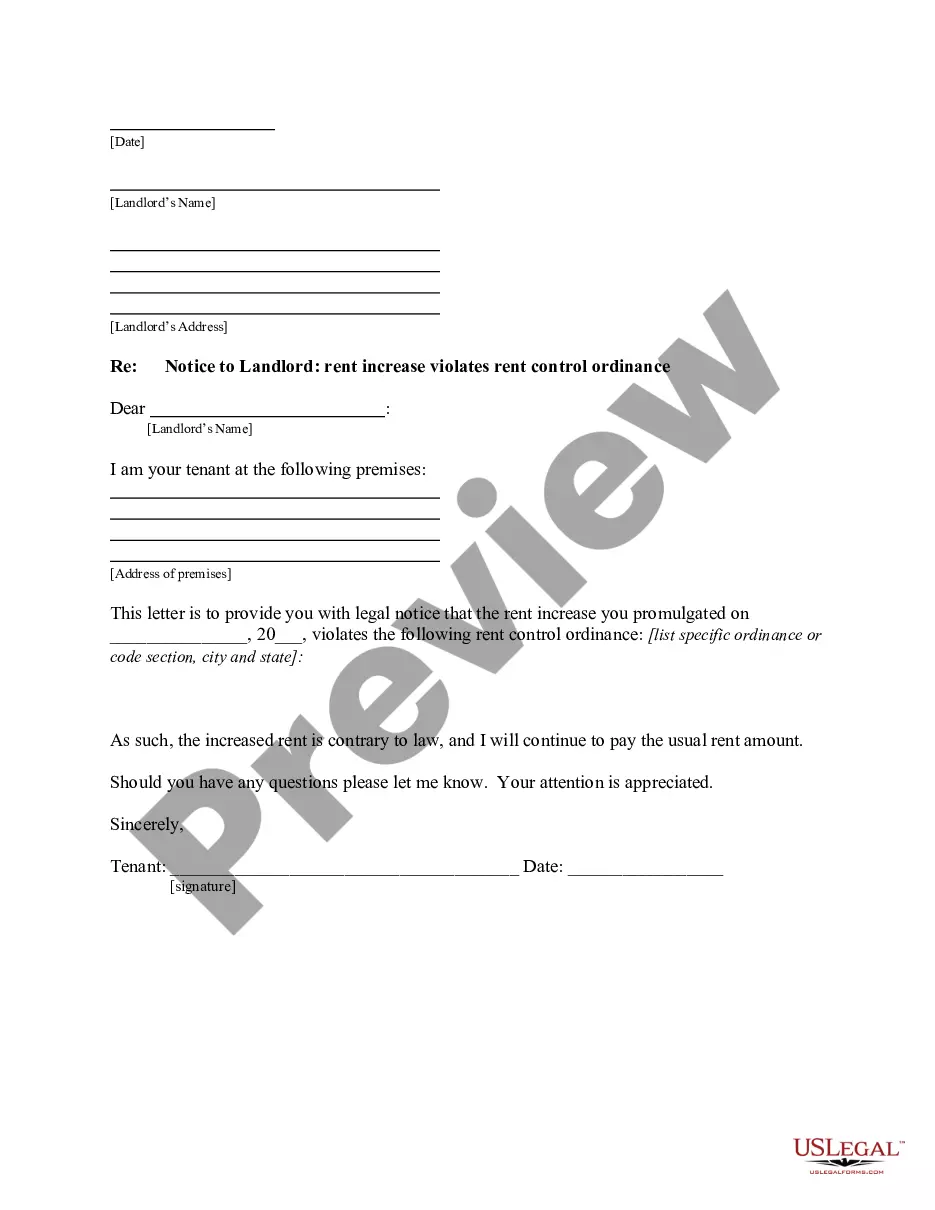
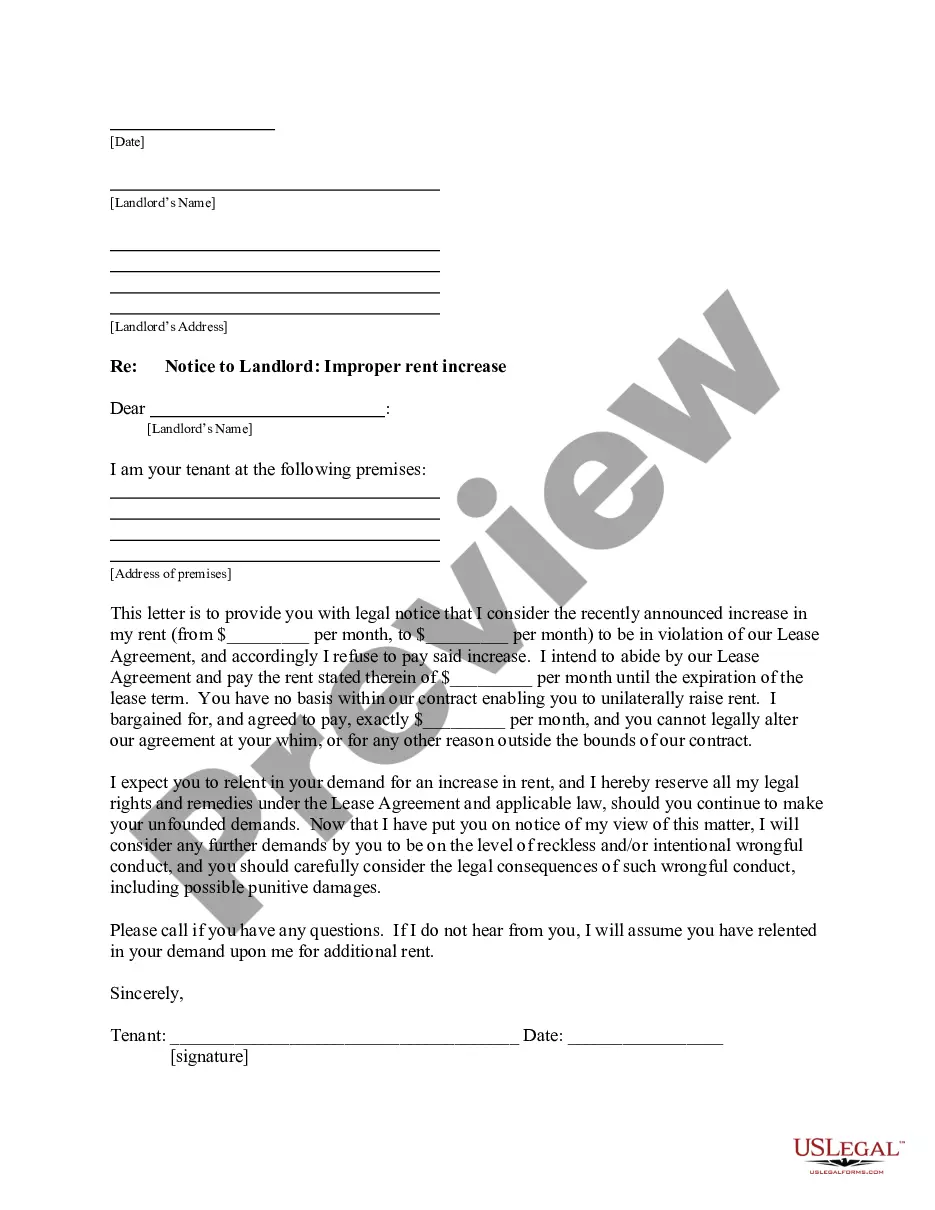
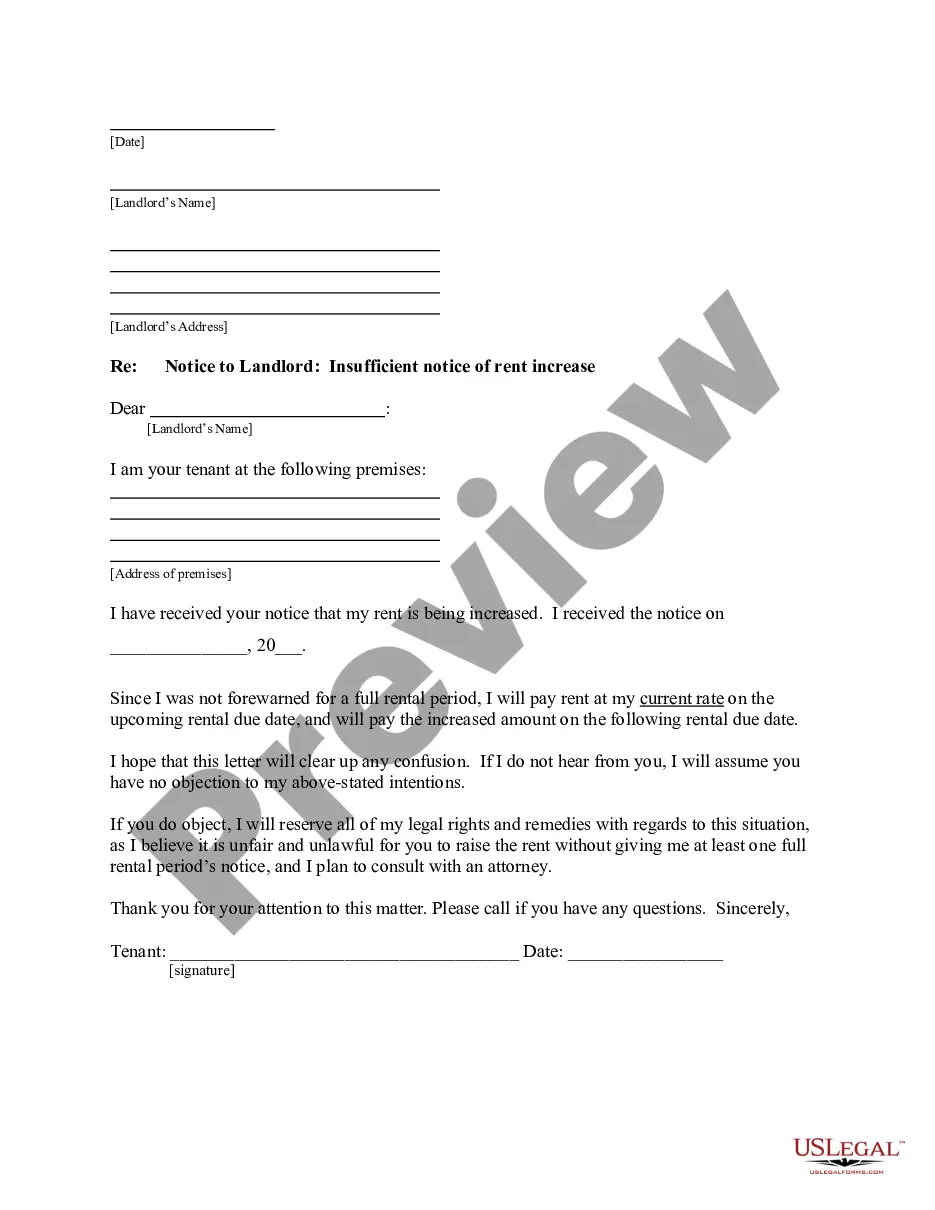
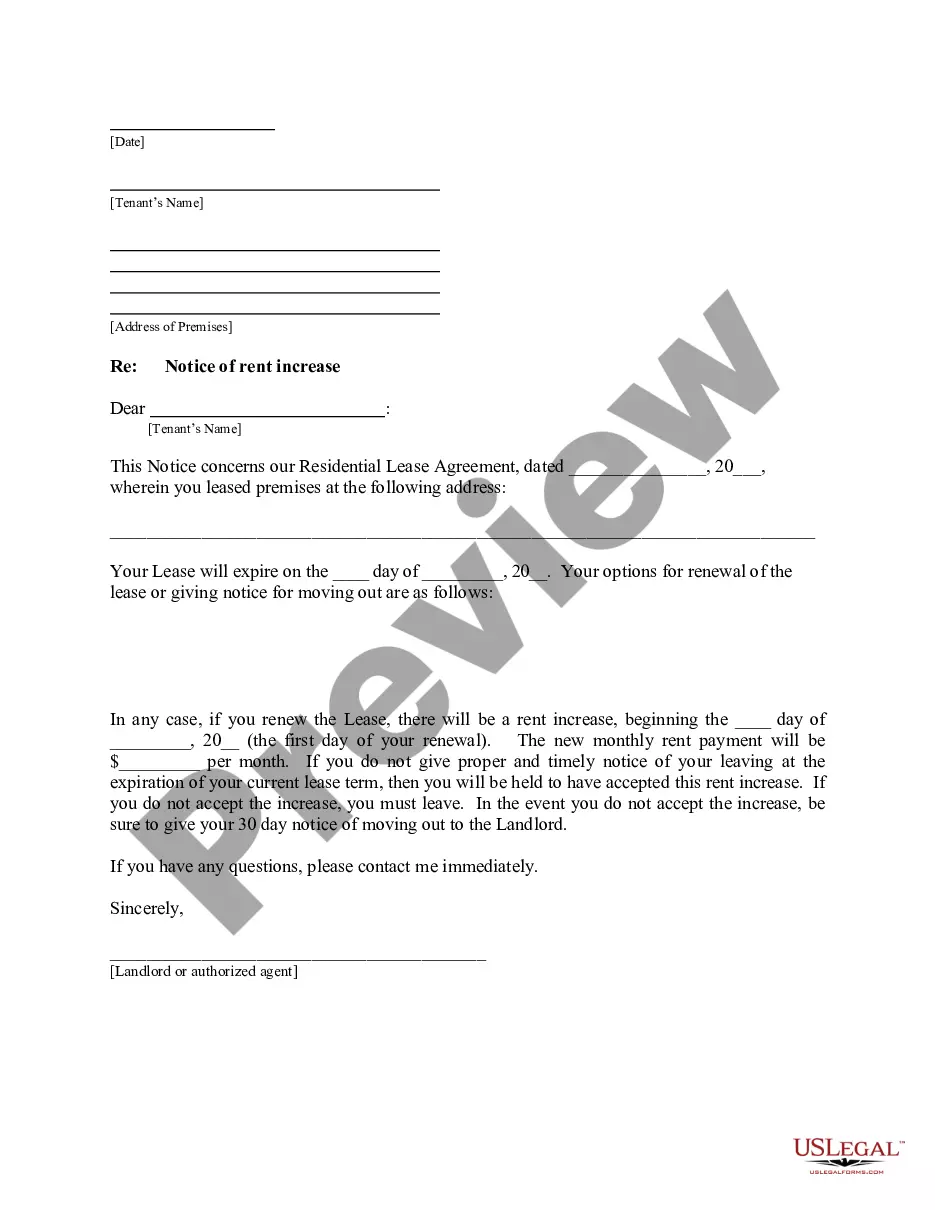
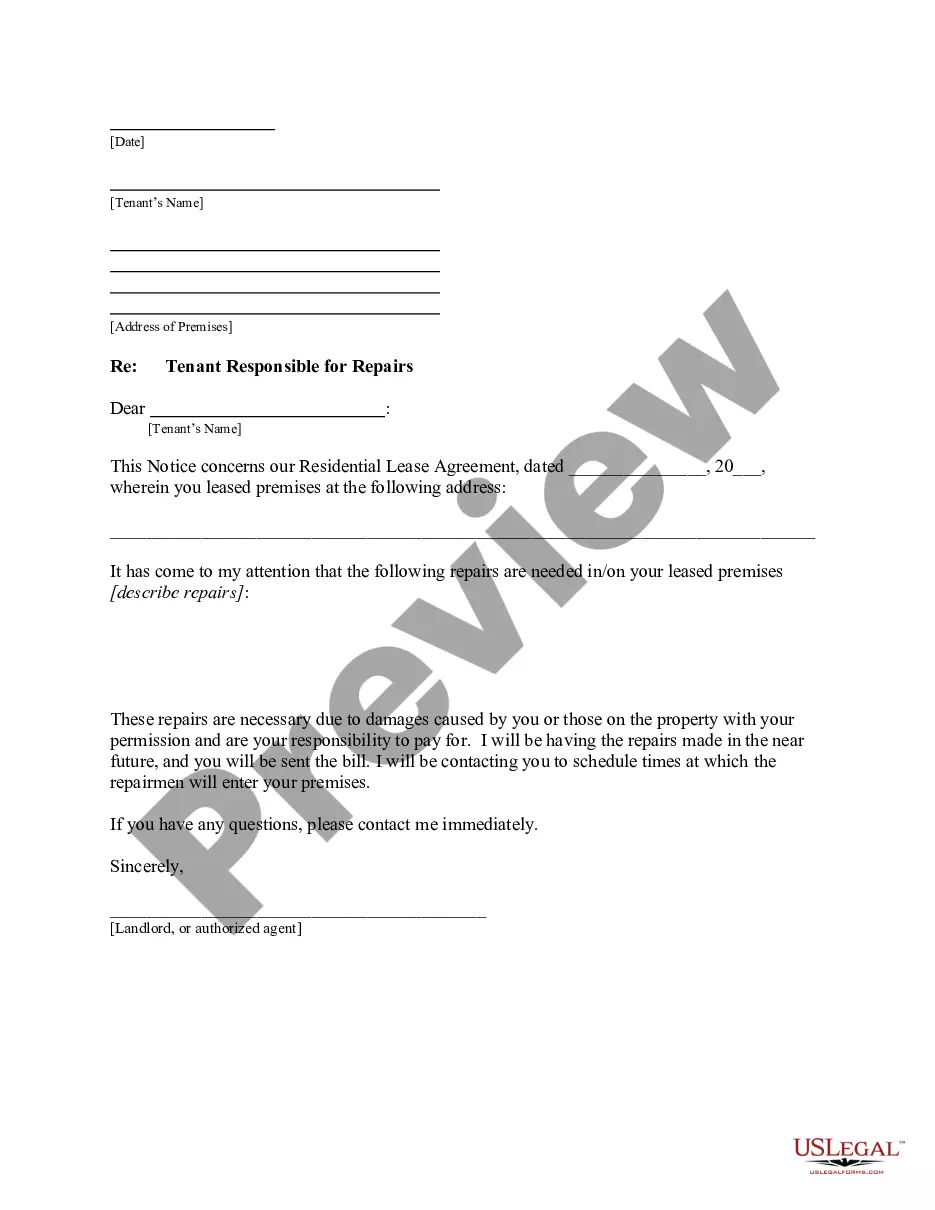
Mississippi Letter from Tenant to Landlord containing Notice to landlord to withdraw retaliatory rent increase
What is this form?
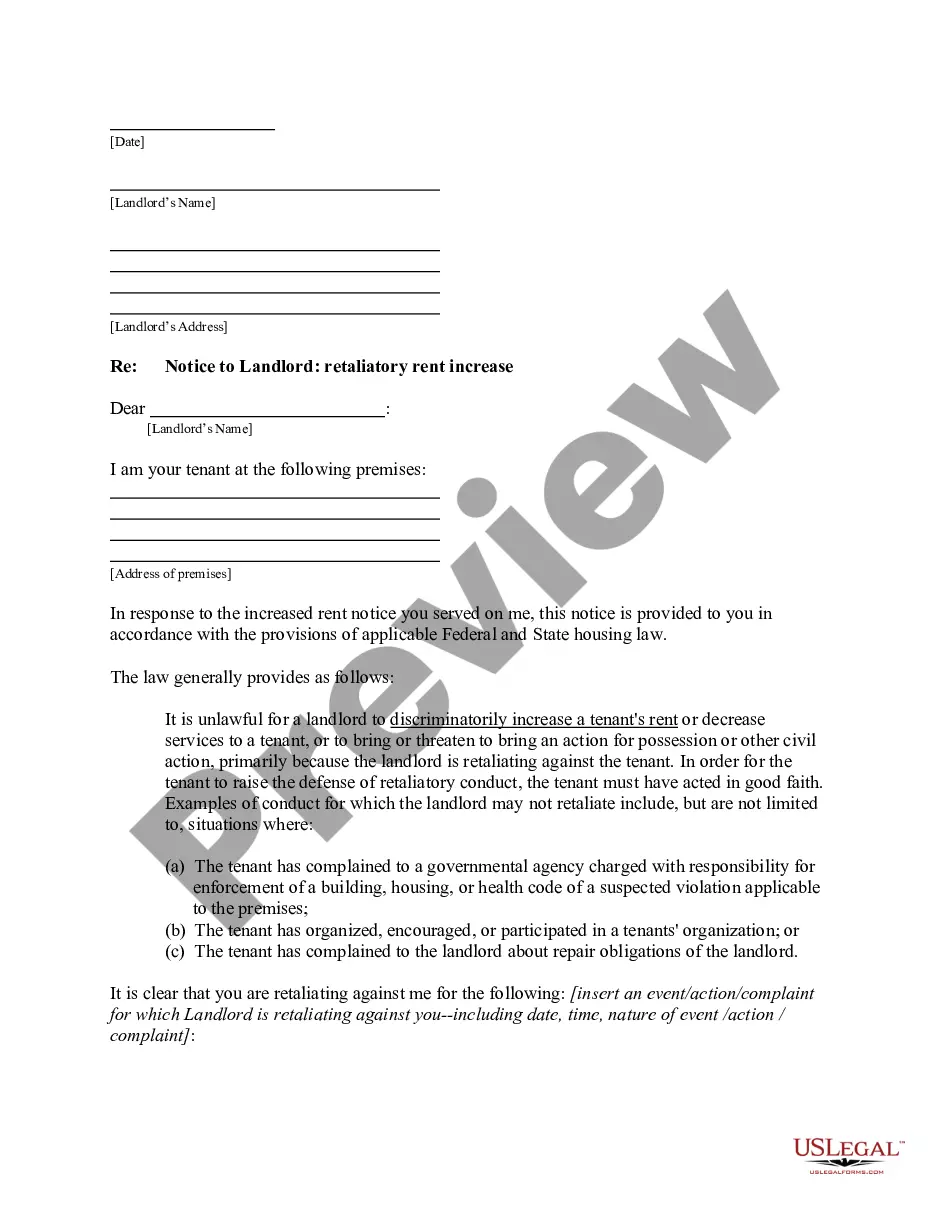
This Letter from Tenant to Landlord containing Notice to landlord to withdraw retaliatory rent increase is a crucial legal document designed to inform landlords that their actions to increase rent in response to a tenant's complaints may be retaliatory and therefore unlawful. This form underscores a tenant's rights and outlines the illegal nature of retaliatory actions by landlords, making it distinct from general tenant-landlord communication forms.
Key components of this form
- Statement of unlawful retaliatory rent increase by the landlord.
- Evidence of good faith conduct by the tenant (e.g., complaints regarding code violations).
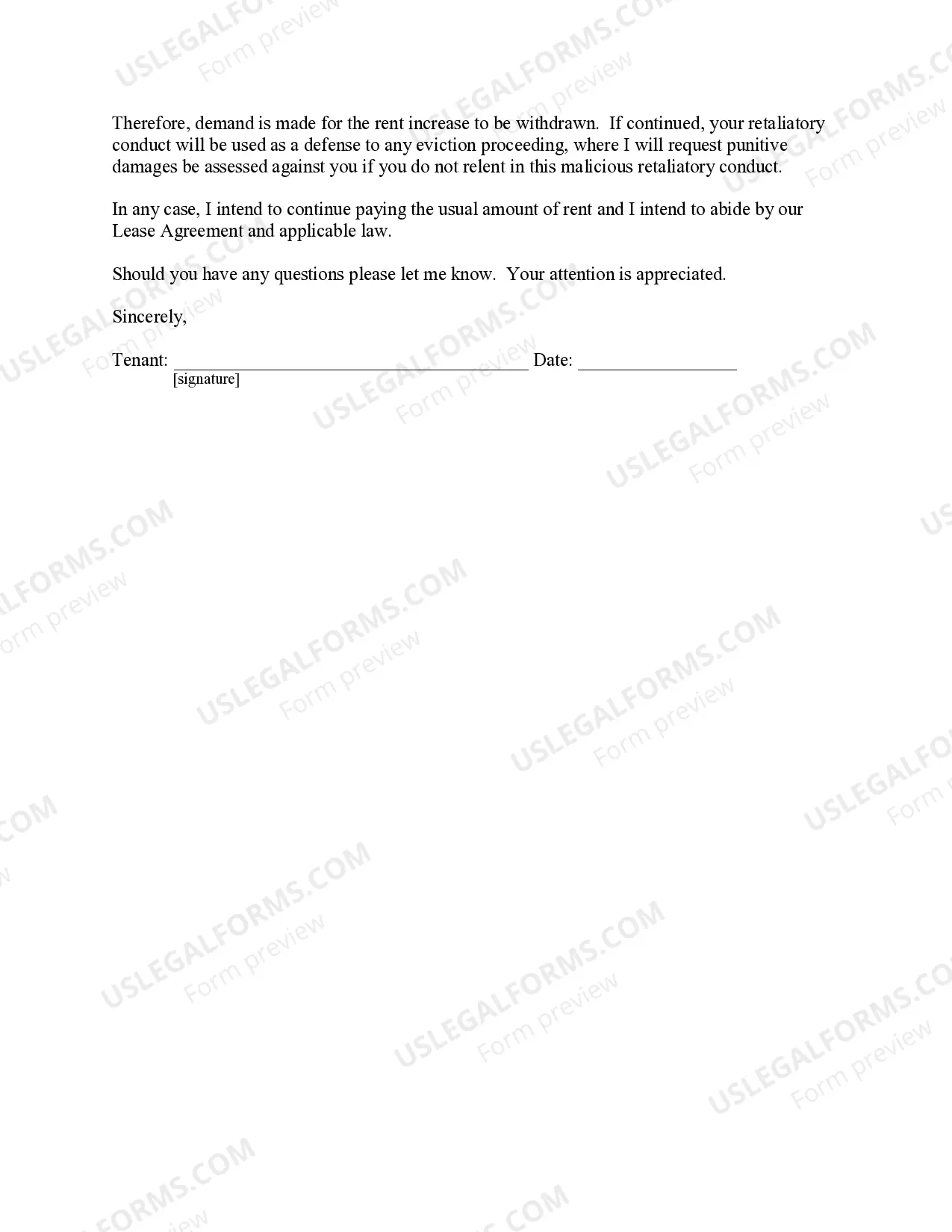
- Declaration of the tenantâs intention to continue paying rent.
- Space for tenant's signature and date.
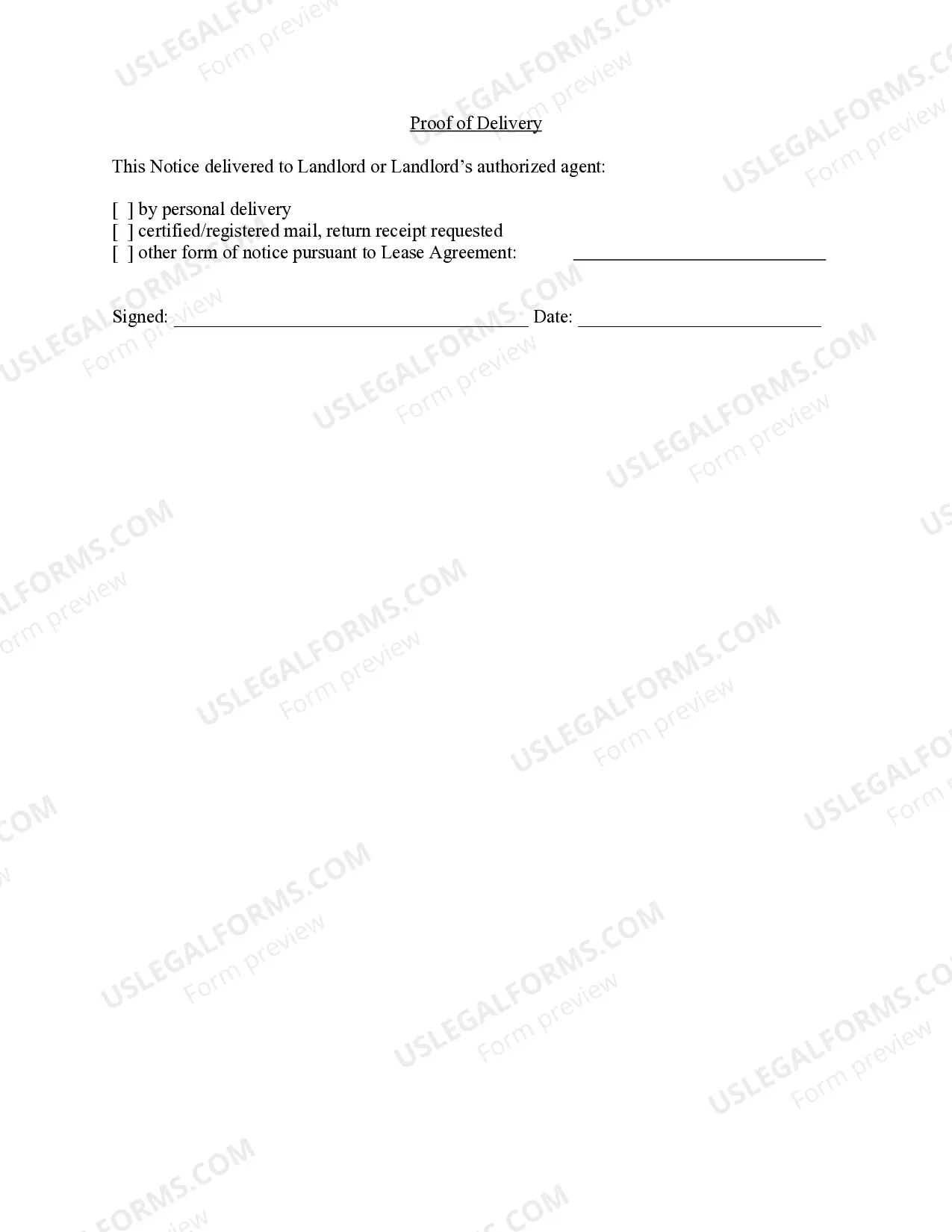
- Space for landlord's acknowledgment or response.
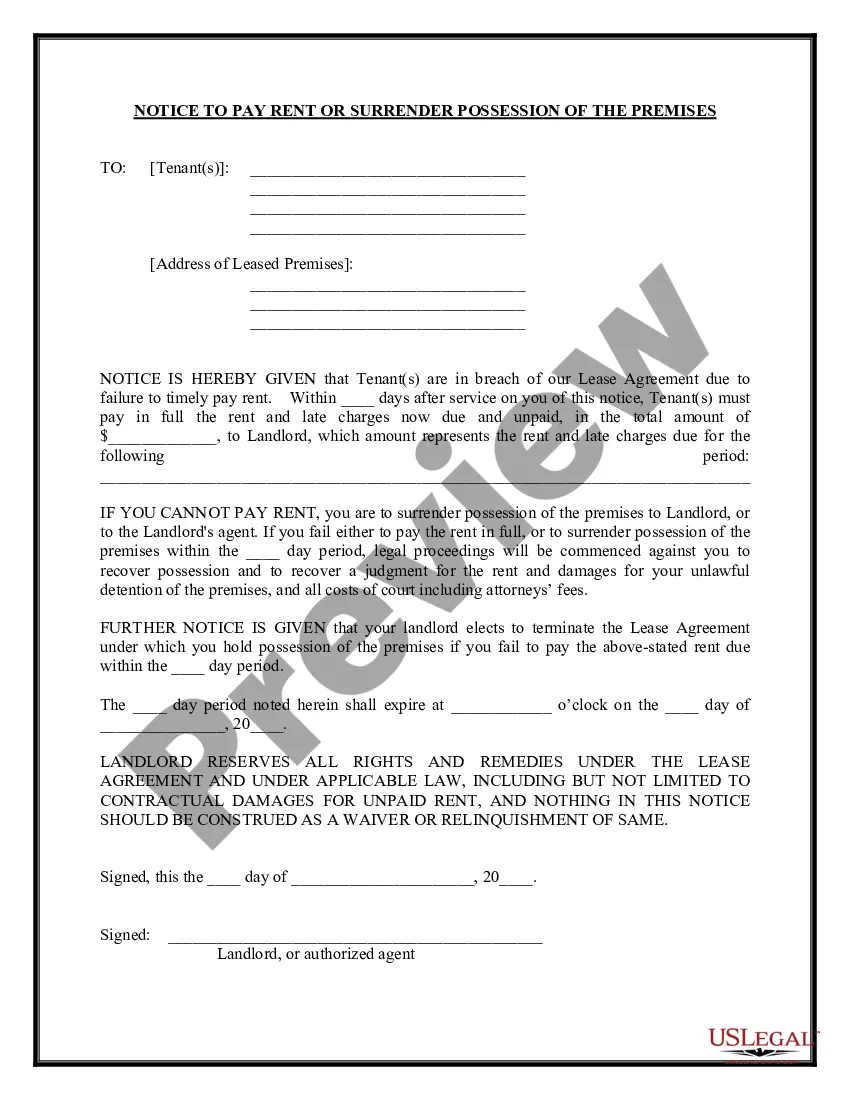
Situations where this form applies
This form should be used when a tenant has experienced a rent increase perceived to be retaliatory, particularly after making complaints about the rental property, participating in tenant organizations, or demanding necessary repairs. It serves to formally notify the landlord of the tenant's awareness of their rights and the illegality of retaliatory measures.
Who this form is for
- Tenants who have recently faced a rent increase within a reasonable time after lodging complaints.
- Tenants involved in activities to improve housing conditions.
- Individuals seeking to communicate legal protections against retaliation by landlords.
Completing this form step by step
- Identify the parties involved: tenant and landlord.
- State the reason for the notice and detail the retaliatory nature of the rent increase.
- Provide examples of good faith conduct that should protect against retaliation.
- Affirm your intention to maintain regular rent payments and comply with the lease.
- Sign and date the document before sending it to the landlord.
Notarization requirements for this form
This form does not typically require notarization unless specified by local law. However, it is always good to check if certain jurisdictions mandate notarization for documents of this nature.
Get your form ready online
Our built-in tools help you complete, sign, share, and store your documents in one place.
Make edits, fill in missing information, and update formatting in US Legal Forms—just like you would in MS Word.
Download a copy, print it, send it by email, or mail it via USPS—whatever works best for your next step.
Sign and collect signatures with our SignNow integration. Send to multiple recipients, set reminders, and more. Go Premium to unlock E-Sign.
If this form requires notarization, complete it online through a secure video call—no need to meet a notary in person or wait for an appointment.
We protect your documents and personal data by following strict security and privacy standards.

Make edits, fill in missing information, and update formatting in US Legal Forms—just like you would in MS Word.

Download a copy, print it, send it by email, or mail it via USPS—whatever works best for your next step.

Sign and collect signatures with our SignNow integration. Send to multiple recipients, set reminders, and more. Go Premium to unlock E-Sign.

If this form requires notarization, complete it online through a secure video call—no need to meet a notary in person or wait for an appointment.

We protect your documents and personal data by following strict security and privacy standards.
Mistakes to watch out for
- Failing to provide specific dates related to the retaliatory actions.
- Not including clear evidence or context for the complaints made.
- Overlooking the requirement for clear and obligating acknowledgments from the landlord.
Why use this form online
- Convenience of immediate downloading and accessing legal forms from anywhere.
- Editable templates allow you to personalize the letter based on your situation.
- Reliability and compliance with current legal standards set by licensed attorneys.
Legal use & context
The Letter from Tenant to Landlord regarding a retaliatory rent increase serves as a formal notice that communicates the tenantâs rights and helps protect against unlawful rent increases. It can support a tenant's legal position if disputes arise regarding the rent or conditions of the tenancy.
What to keep in mind
- Use this form to address unjust rent increases resulting from retaliation.
- Clearly document your complaints and actions that prompted the retaliation.
- Ensure to follow up with proper communication with your landlord.
- Be aware of state-specific laws that provide additional protections.
Looking for another form?
Form popularity
FAQ
Dear (Name of landlord or manager), This letter constitutes my written (number of days' notice that you need to give based on your lease agreement)-day notice that I will be moving out of my apartment on (date), the end of my current lease. I am leaving because (new job, rent increase, etc.)
Today's Date. Landlord's Name. Property Address and Unit Number. State Your Desire to Move Out of the Apartment. Include Desired Move-Out Date. That You Expect the Return of Your Security Deposit Under State Law. A Forwarding Address Where Your Security Deposit Can Be Sent.
When writing to your landlord, be specific in describing the problems you are having. Do not exaggerate or under-emphasize the extent of the problem. The landlord may show this letter to a judge if your problem is ever litigated.
You can send your letter by email if your tenancy agreement says you can. You should say something like: I am giving 1 month's notice to end my tenancy, as required by law. I will be leaving the property on (date xxxxx).
State who you are and why you need a rental. Mention where you found their ad and how you can afford the rental. Offer to provide references (work/volunteer/housing office) Include some highlighting feature from the original ad so that when you receive a response you can remember which rental you are talking about (ex.
Addresses. Date. Tenant names. Status and date of the lease. Why the eviction notice is served (clear and concise explanation) Date tenant must vacate the property. Proof of service or delivery of notice.
While tenants cannot unreasonably deny access to a landlord, landlords must also follow all of the state and local rules regarding access to tenants' apartments. Roughly half of states have rules governing landlord entry into tenants' apartments.
The date you're submitting your notice. The date you're moving. Information on your current home the address and the landlord's name. A statement declaring that you intend to leave the home. A straightforward statement that you're providing this letter, 30 days out, per your lease agreement.
Explain the Situation Tell your tenant in straightforward terms what the problem is, and explain that they cannot stay on the property any longer. Describe the Consequences Calmly explain that they will be evicted with necessary court orders if they remain on the property.