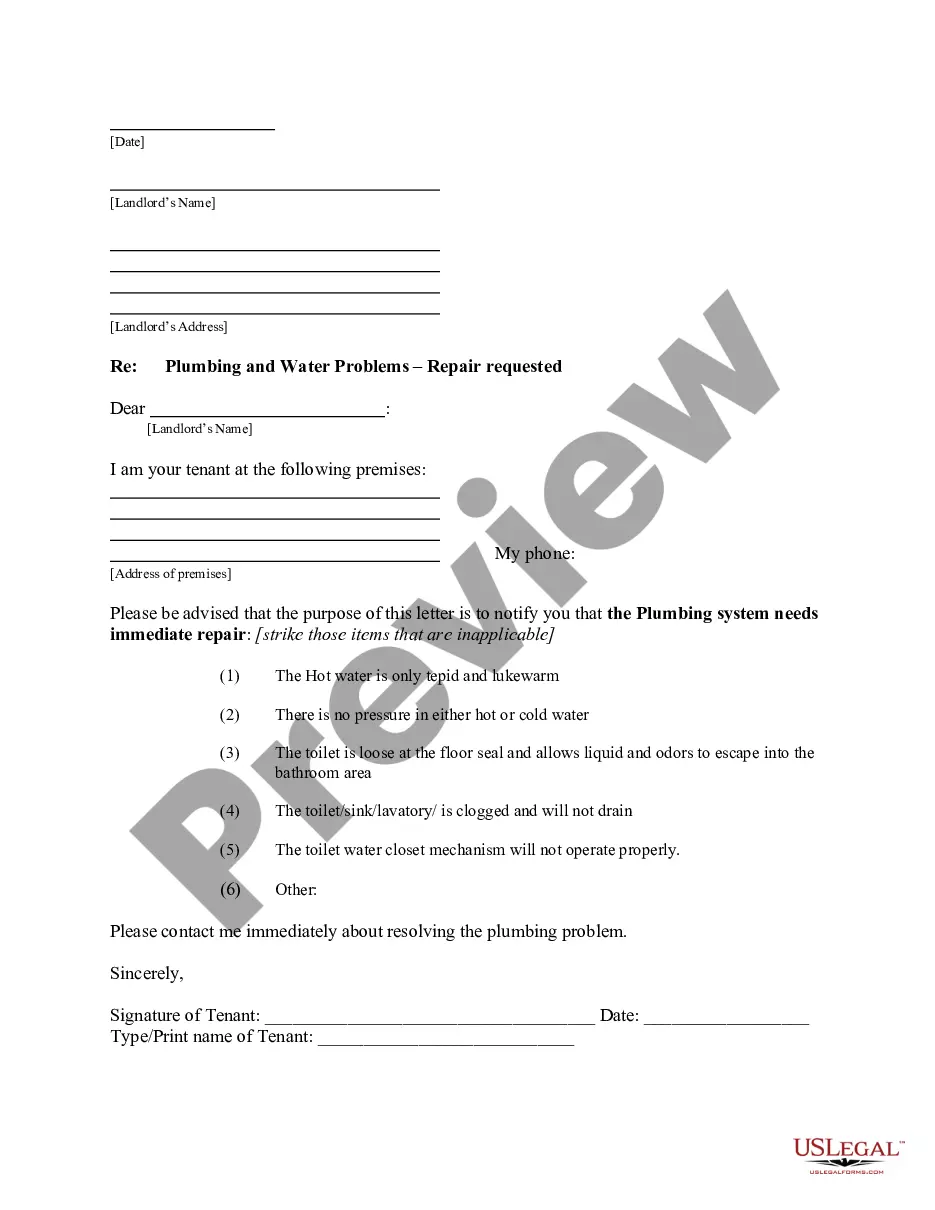
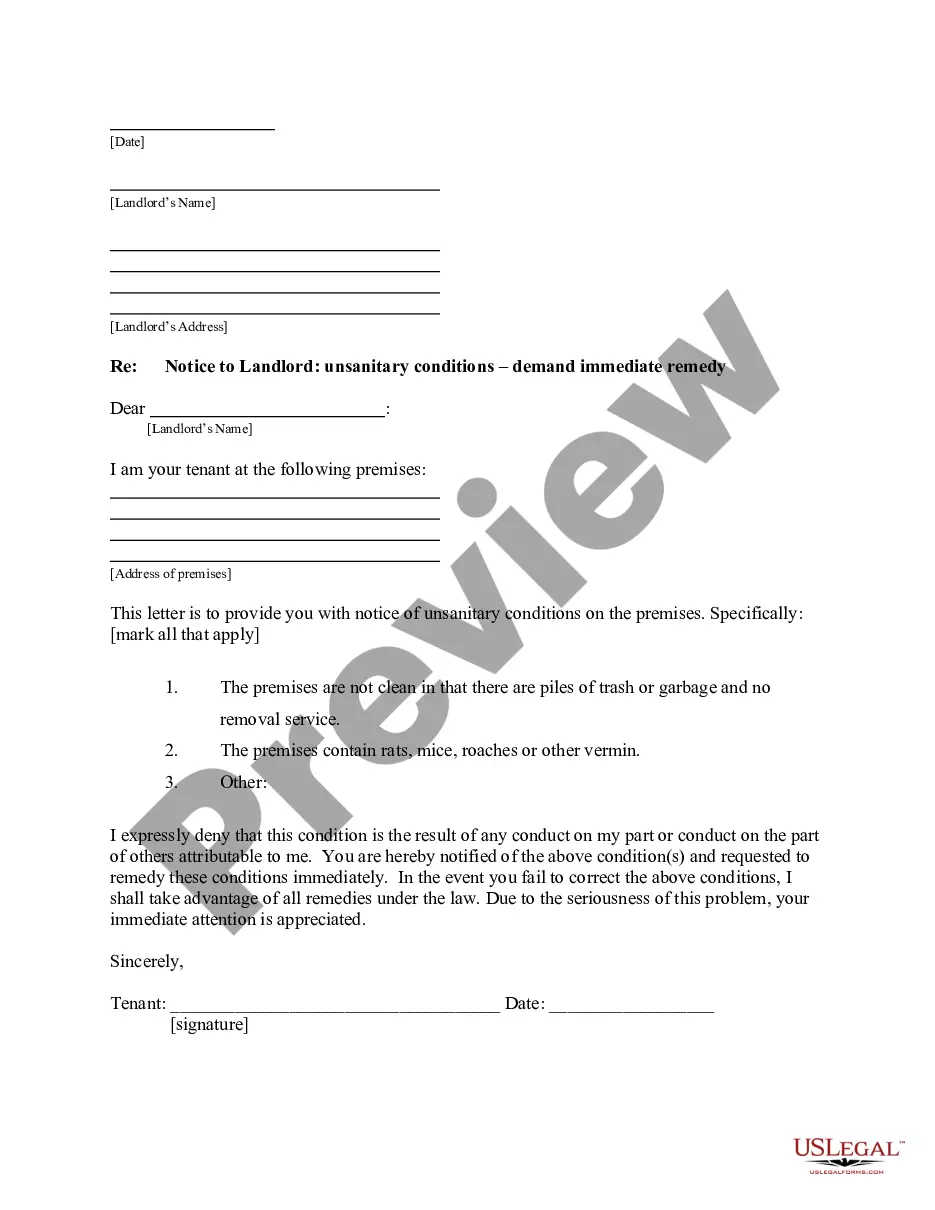
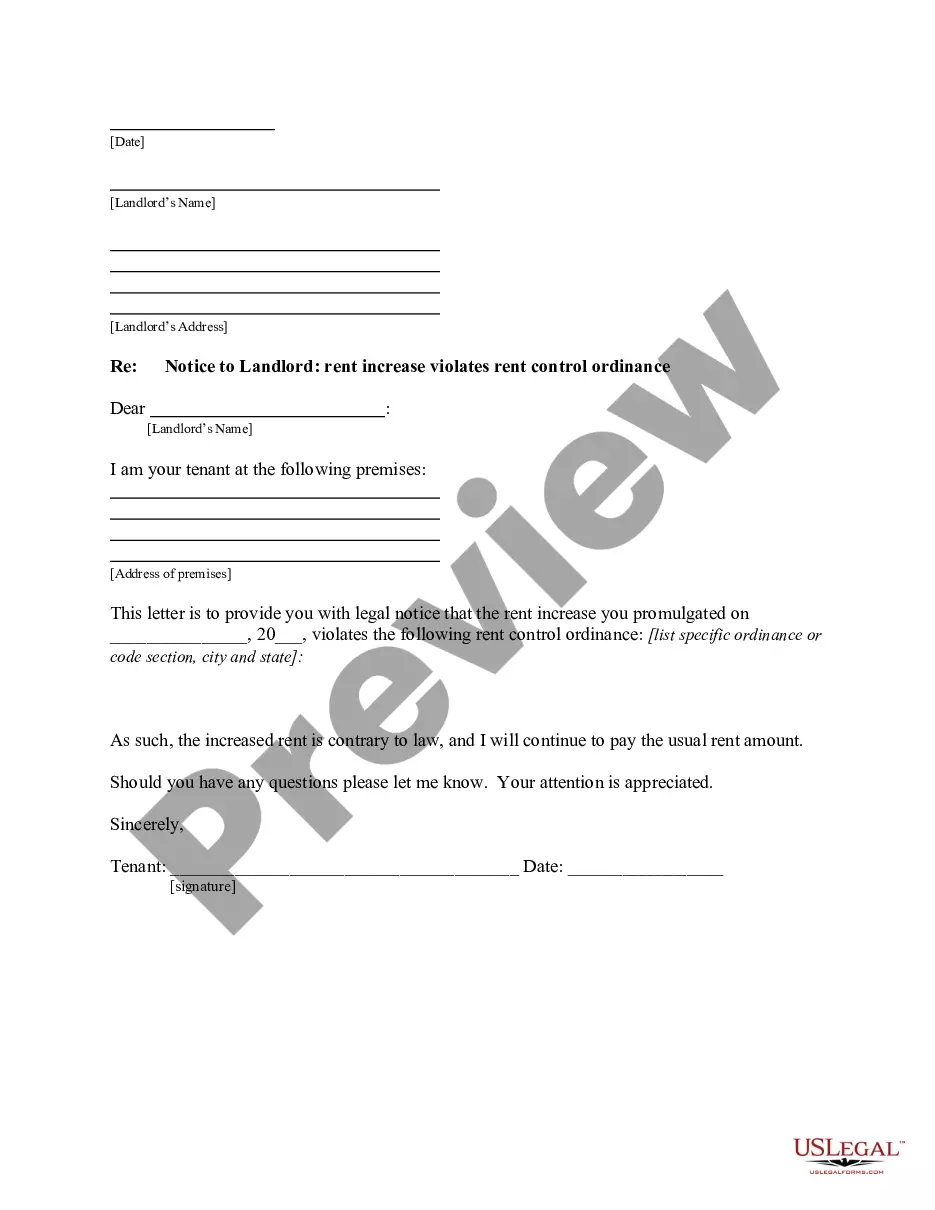
Mississippi Letter from Tenant to Landlord containing Notice to landlord to withdraw improper rent increase due to violation of rent control ordinance
What this document covers
This form is a notice from a tenant to a landlord requesting the withdrawal of an improper rent increase due to a violation of rent control ordinances. It is specifically designed to inform the landlord that the rent increase is potentially unlawful, making it clear to both parties the legal implications of the situation. This form ensures that tenants can assert their rights under local rent control laws.
What’s included in this form
- Tenant's name and contact information
- Landlord's name and address
- Date of the notice
- Statement regarding the improper rent increase
- Request for the landlord to withdraw the rent increase
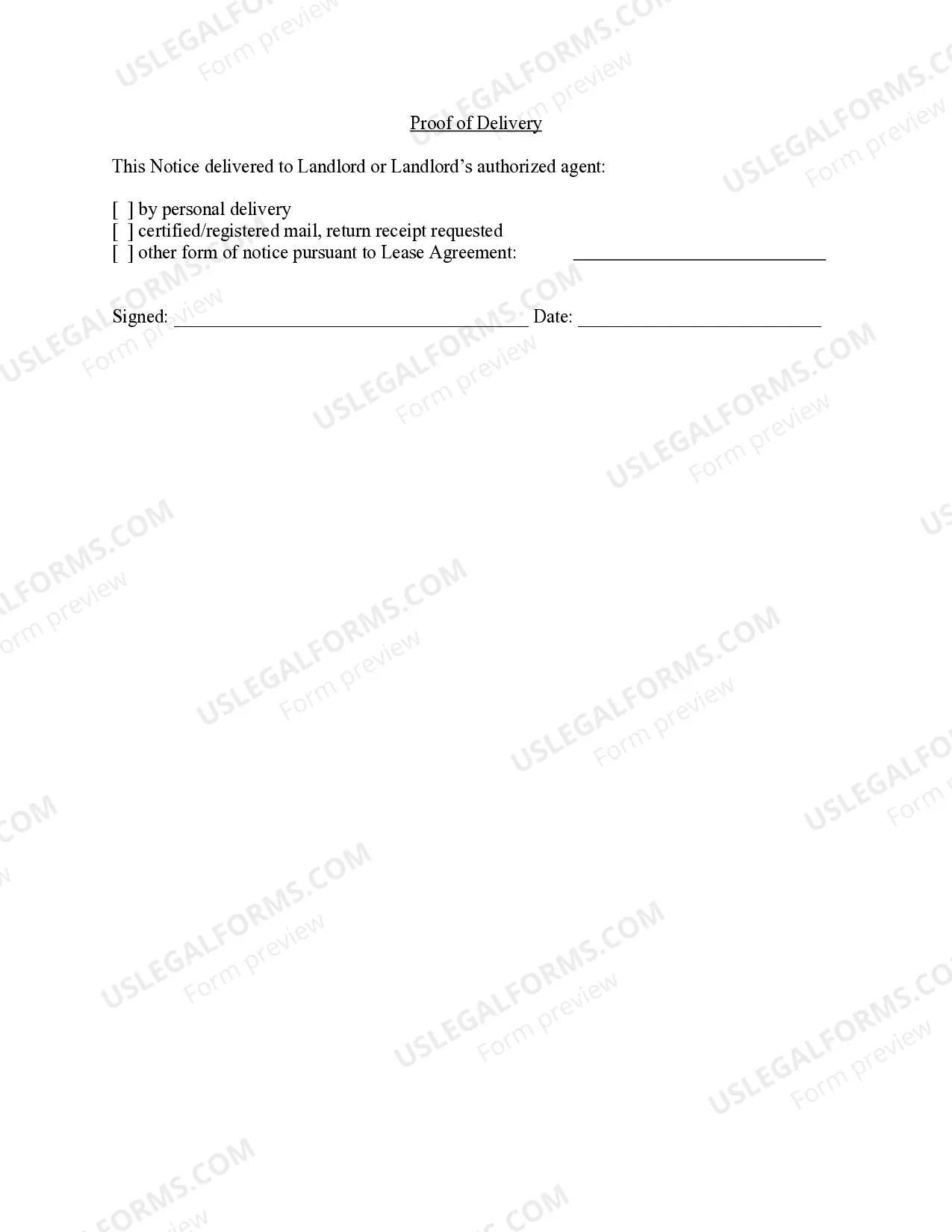
- Proof of delivery methods

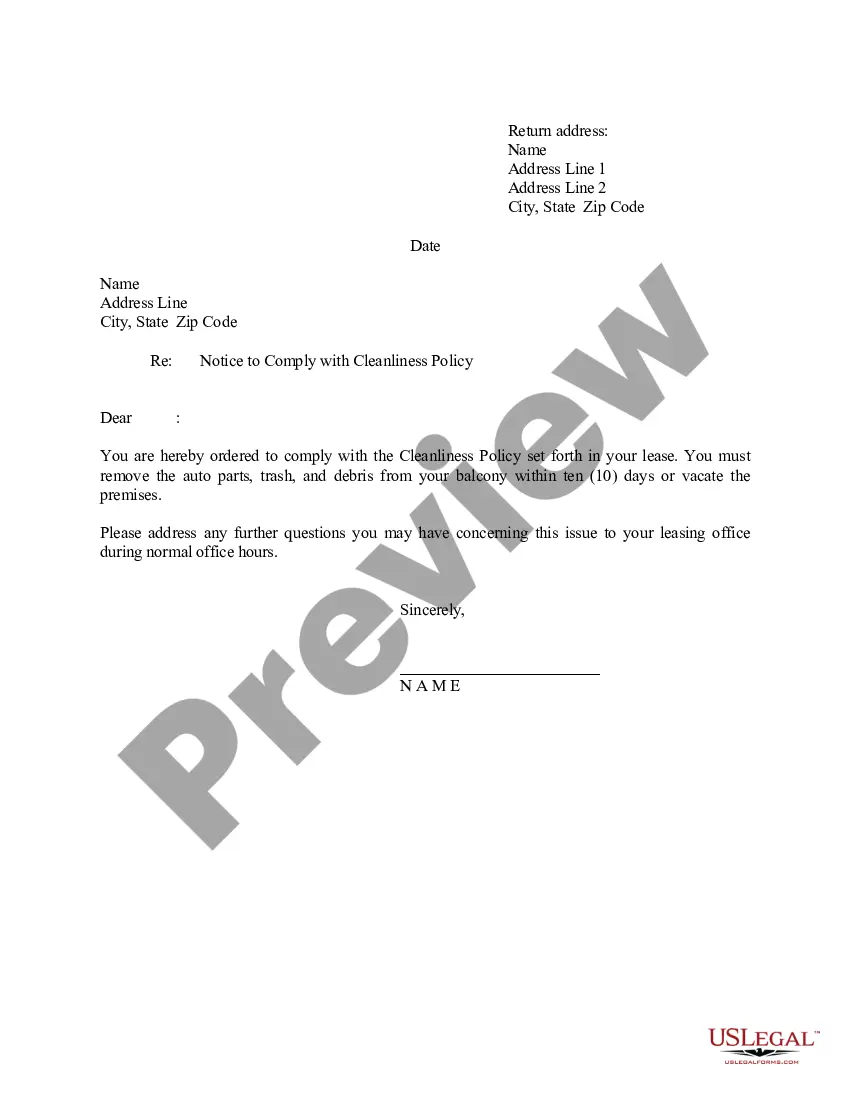
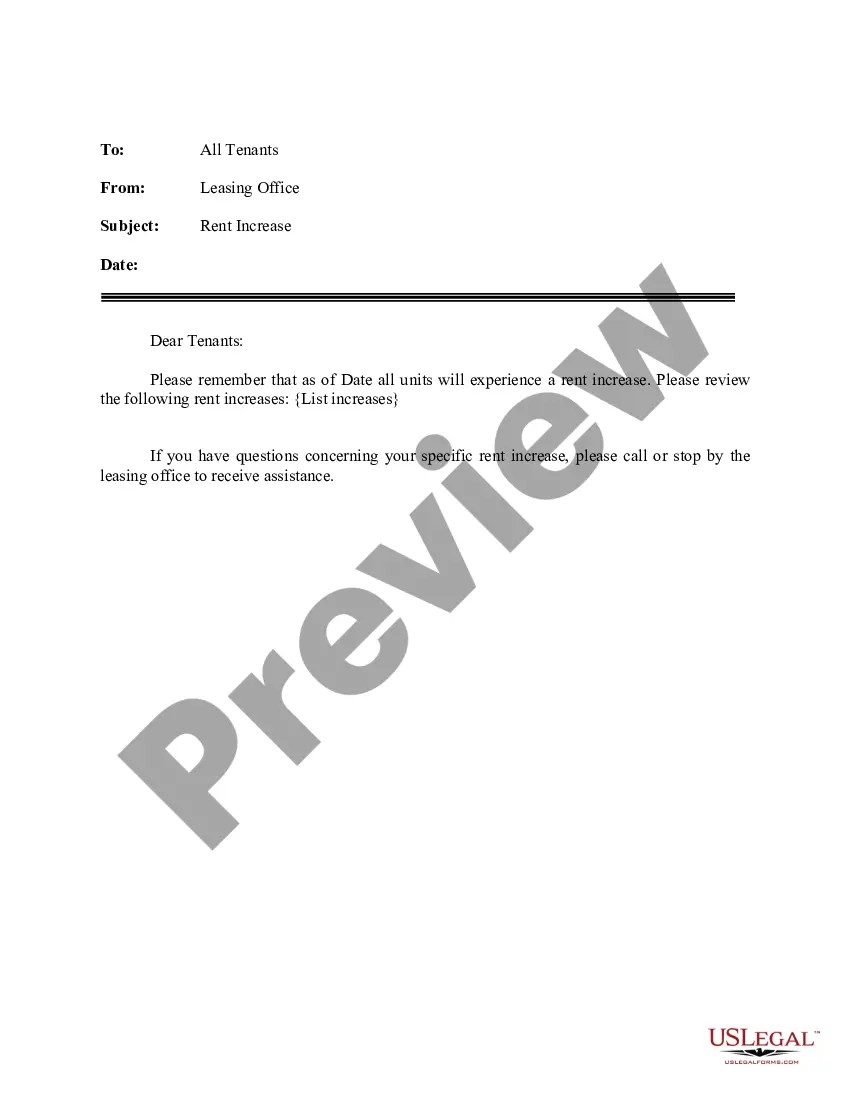
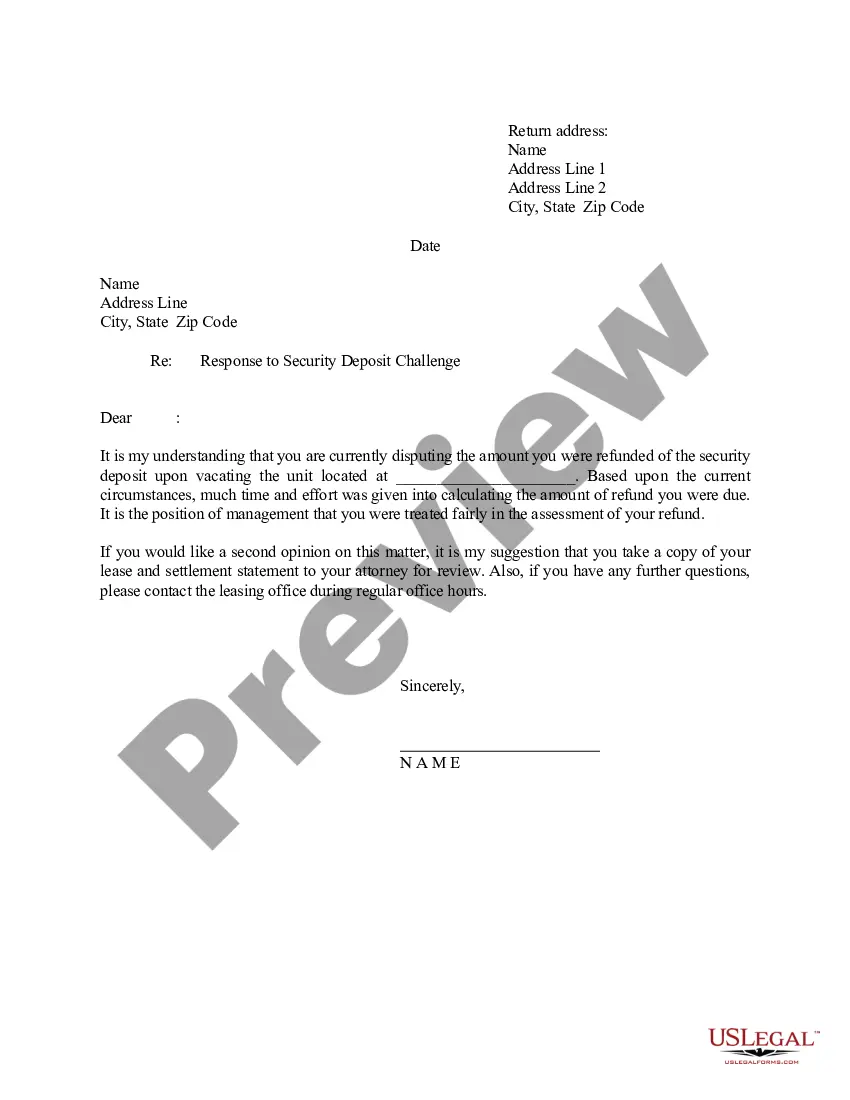
When to use this document
You should use this form when you, as a tenant, receive a notification from your landlord of a rent increase that you believe violates local rent control ordinances. By using this notice, you can formally communicate your concerns and request the landlord to retract the increase, protecting your rights as a tenant.
Who can use this document
- Tenants who have received a notice of rent increase
- Individuals living in areas with rent control ordinances
- Tenants seeking to assert their rights regarding unlawful rent increases
How to prepare this document
- Identify and enter your name and contact information at the top of the letter.
- Provide your landlord's name and address below your information.
- Include the date at which you are sending the notice.
- Clearly state the details of the improper rent increase and reference the violation of the rent control ordinance.
- Request the landlord to withdraw the rent increase.
- Sign the letter and choose your method of delivery, recording proof as needed.
Notarization requirements for this form
In most cases, this form does not require notarization. However, some jurisdictions or signing circumstances might. US Legal Forms offers online notarization powered by Notarize, accessible 24/7 for a quick, remote process.
Get your form ready online
Our built-in tools help you complete, sign, share, and store your documents in one place.
Make edits, fill in missing information, and update formatting in US Legal Forms—just like you would in MS Word.
Download a copy, print it, send it by email, or mail it via USPS—whatever works best for your next step.
Sign and collect signatures with our SignNow integration. Send to multiple recipients, set reminders, and more. Go Premium to unlock E-Sign.
If this form requires notarization, complete it online through a secure video call—no need to meet a notary in person or wait for an appointment.
We protect your documents and personal data by following strict security and privacy standards.

Make edits, fill in missing information, and update formatting in US Legal Forms—just like you would in MS Word.

Download a copy, print it, send it by email, or mail it via USPS—whatever works best for your next step.

Sign and collect signatures with our SignNow integration. Send to multiple recipients, set reminders, and more. Go Premium to unlock E-Sign.

If this form requires notarization, complete it online through a secure video call—no need to meet a notary in person or wait for an appointment.

We protect your documents and personal data by following strict security and privacy standards.
Mistakes to watch out for
- Failing to provide accurate contact information for both parties.
- Not specifying the violation of the rent control ordinance clearly.
- Omitting proof of delivery, which is vital to confirm that the notice was sent.
Why complete this form online
- Easy access to a legally compliant template drafted by licensed attorneys.
- The ability to download and fill out the form at your convenience.
- Editable and printable format allows for personal customization.
Legal use & context
The effectiveness of this letter may depend on the specific regulations of your jurisdiction regarding rent control and tenant rights. As a formal notice, it can serve as an important document in any further disputes. Ensure that you keep a copy for your records.
Quick recap
- This form is essential for tenants facing unlawful rent increases.
- Clear communication can help resolve disputes over rent increases effectively.
- Ensuring compliance with local ordinances protects your rights as a tenant.
Looking for another form?

Form popularity
FAQ
Showing the premises to prospective tenants 'reasonable' notice / number of times. The law does not say what 'reasonable' means.If you refuse access, the landlord/agent can apply to the Tribunal for an order that authorises them or any other person to enter the premises.
While tenants cannot unreasonably deny access to a landlord, landlords must also follow all of the state and local rules regarding access to tenants' apartments. Roughly half of states have rules governing landlord entry into tenants' apartments.
The date that the tenant warning letter was written. The name and the basic personal information of the tenant. The name of the landlord or the owner of the property. The reason why a tenant warning letter has been written.
If the tenant refuses, you are permitted to send them a notice to agree or quit the property. The tenant refusing you access constitutes a breach in the lease agreement, so they could be evicted if they continue to deny access.
The rental property address, including unit number (if applicable) The names of all tenants on the lease agreement. The date the lease violation notice was written. The specific reason for the notice. The time and date the violation occurred (if applicable)
A lease is automatically void when it is against the law, such as a lease for an illegal purpose. In other circumstances, like fraud or duress, a lease can be declared void at the request of one party but not the other.
Your name, and the landlord's name and address. The date you're writing the letter. Informing the landlord you're breaking your lease early. The reason why you're breaking your lease. The building and apartment you're vacating. The date by which you're vacating.
For example, in California, the law states that a landlord must provide written notice before entering your property. If they don't, they are in violation of your lease, oral or written.
Every tenant has a right to enjoy peaceful possession of the property without any disturbance or encumbrance from anyone including the owner. At no point of time under your tenancy can your landlord ask you to evict or leave the premises without assigning a valid reason.