Florida Marriage
Marriage documents in Florida facilitate the legal union of individuals. Attorney-drafted templates are available that are quick and easy to fill out.

Similar documents: key differences
- Marriage License vs. Marriage Certificate — License allows you to marry; certificate proves you are married.
- Civil Marriage vs. Religious Marriage — Civil marriages are state-sanctioned; religious marriages are conducted by a religious authority.
- Common-Law Marriage vs. Formal Marriage — Common-law is recognized by cohabitation; formal marriage requires a license and ceremony.
- Marriage Application vs. Marriage License — Application is the request for a license; the license is what you receive to marry.
Search for more forms
Types of Marriage forms
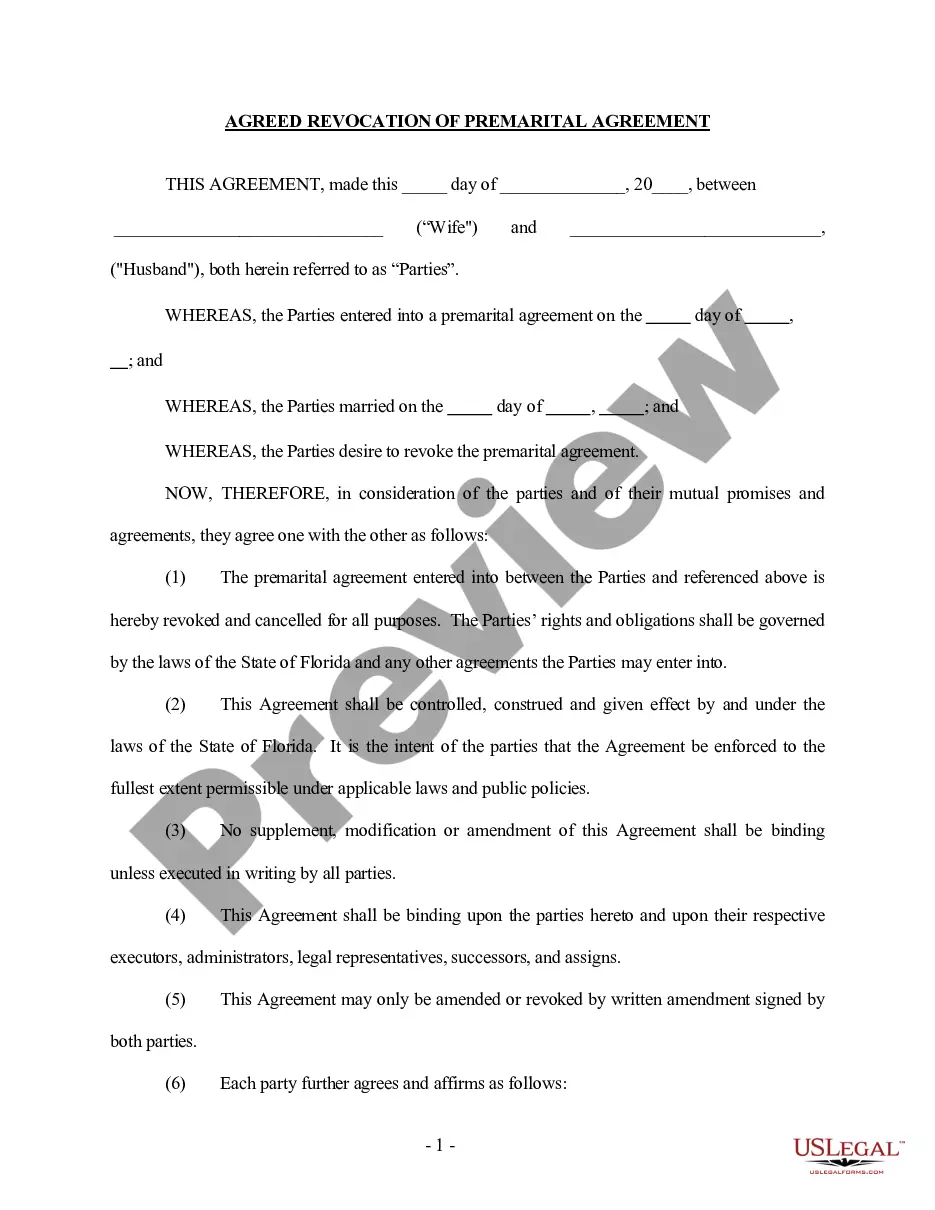
Prenuptial: Revocation
Revoking a premarital agreement ensures both parties can move forward with new terms or arrangements, reflecting their current intentions.
Prenuptial: Amendment
Amend existing prenuptial agreements to reflect new terms or conditions.
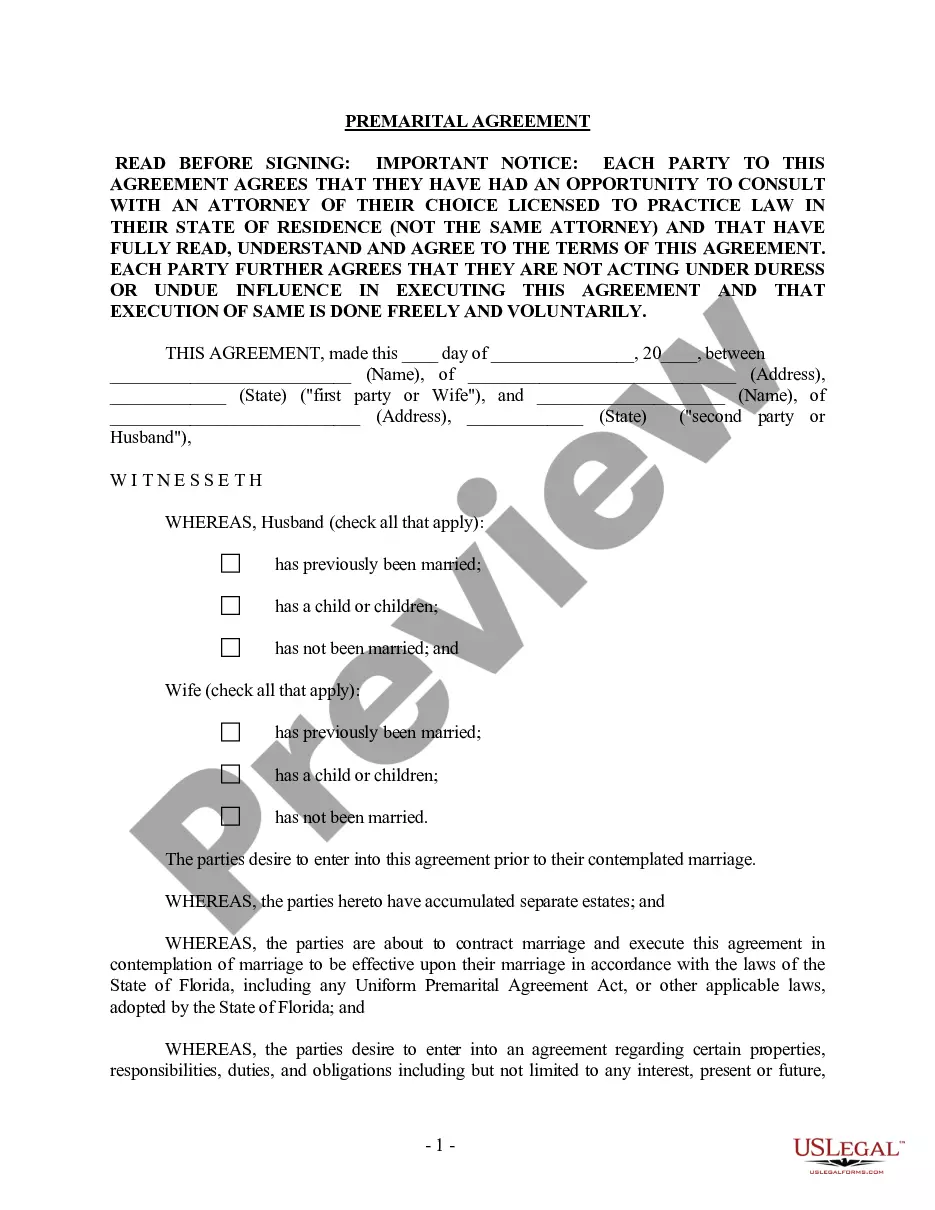
Prenuptial Agreement — with Financials
Secure your financial interests before marriage with a clear agreement outlining property rights and obligations.
Prenuptial: Financial Statements (Standalone)
Prepare a thorough financial disclosure for prenuptial agreements to ensure transparency about assets and liabilities before marriage.
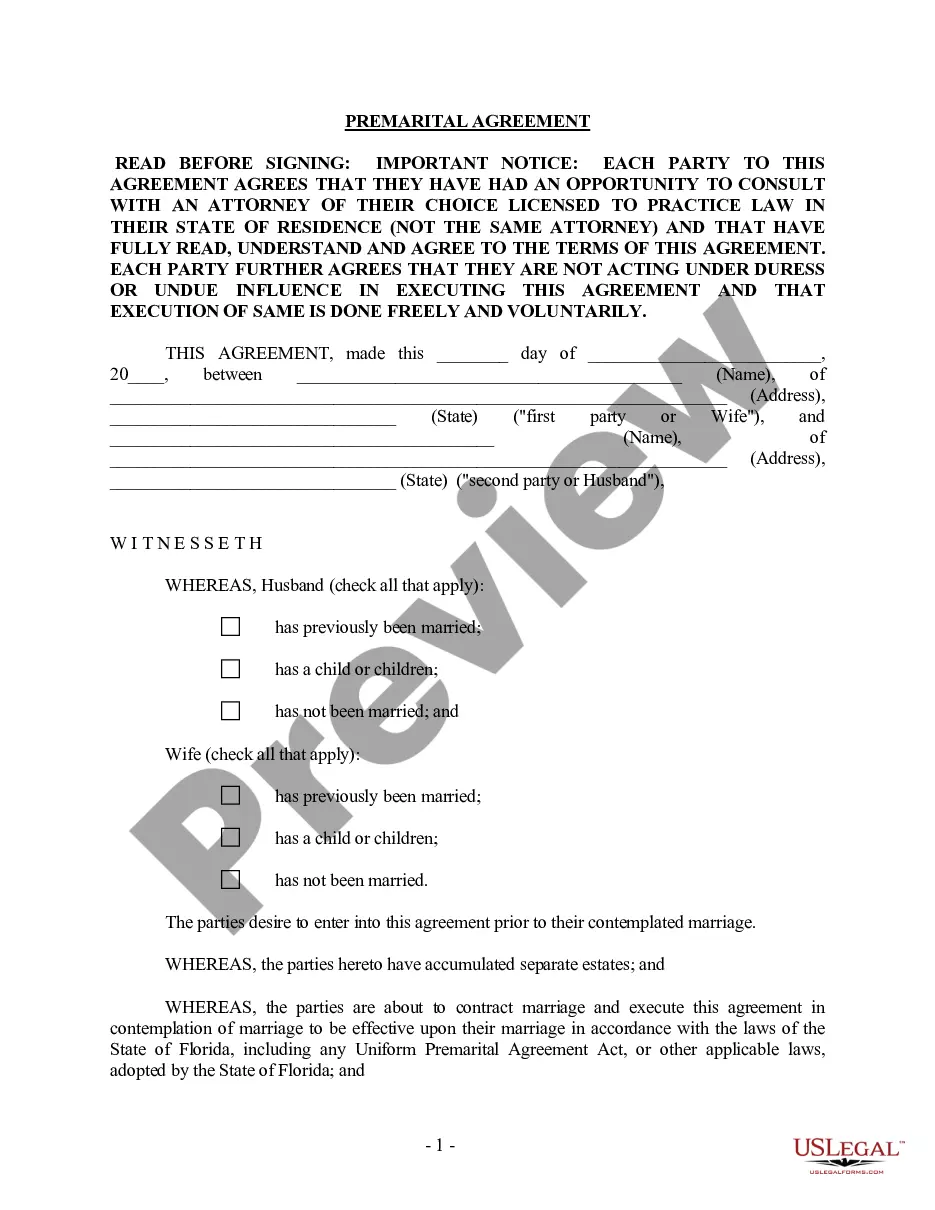
Prenuptial Agreement — Without Financials
Secure your separate assets before marriage with this legal agreement that protects each partner's individual property rights.
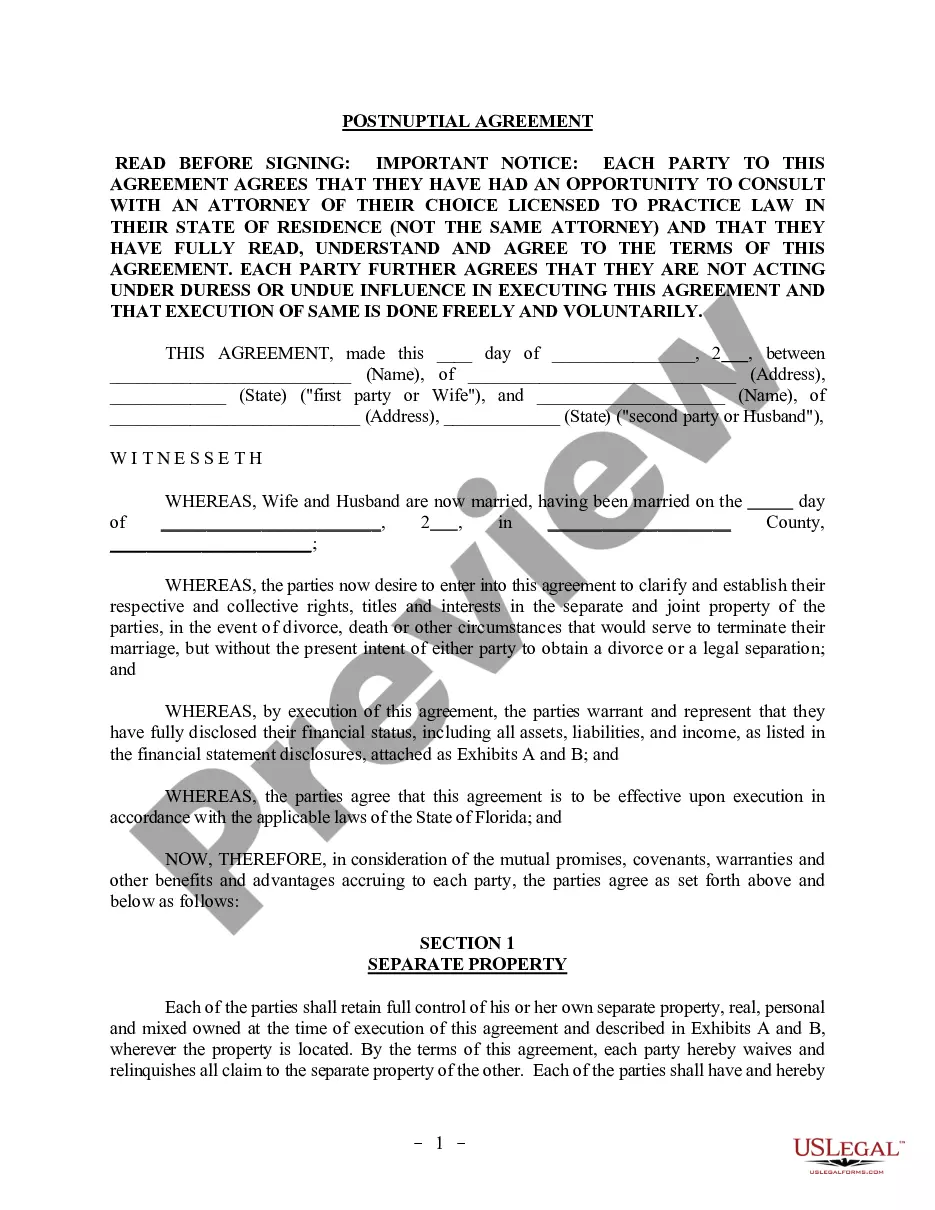
Postnuptial Property Agreement
Secure your financial interests by clearly defining property rights with this essential agreement after marriage.
Postnuptial: Amendment
Make necessary changes to your postnuptial property agreement to reflect current circumstances or agreements between parties.
Postnuptial: Revocation
Use this to cancel a postnuptial property agreement, allowing parties to opt for new arrangements or revert to previous agreements.
Non-Marital Cohabitation Agreement
Establish clear rights and responsibilities when living together without marriage to avoid future disputes.
Cohabitation Agreement (Seniors)
Create a cohabitation agreement to outline financial and property arrangements for seniors living as domestic partners.
Cohabitation: One Owns Residence
Secure your financial and property rights while living together without marriage.
Cohabitation: Termination Agreement
This agreement helps partners separate their finances and property when ending a cohabitation arrangement, ensuring clear terms and legal protection.
Prenuptial: Waive Elective Share
Ensure your property remains separate in marriage while waiving rights to the other’s estate, providing clarity on ownership and inheritance.
Mutual Disclaimer by Spouses of Interest in Property of Each
Protect individual property rights in marriage with a mutual disclaimer agreement.
Wedding Date Reservation Form
Reserve your wedding date and ensure preparation requirements are met with this essential form.
Common Law Marriage: Agreement to Establish
Establish a common law marriage by agreeing to live as spouses, ensuring legal recognition of your relationship.
Common Law Marriage: Guide
Understand the essentials of common law marriage and its legal implications in states that recognize it.
Affidavit of Marriage Relationship by Third Party
Establish your knowledge of a marriage for legal purposes with this affidavit by someone acquainted with the couple.
Notice of Non-Responsibility for Debts
Protect yourself from debts incurred by your partner with this important legal notice.
Notice of Non-Responsibility of Wife for Debts
Protect yourself by formally stating that your spouse is not responsible for your business debts or liabilities.
Waive Waiting Period — Remarriage
Waive the waiting period for remarriage after divorce with this petition, ensuring a faster transition to your new partnership.
USLegal Pamphlet on Locating Marriage Certificates
Need a marriage record? Learn how to locate marriage certificates essential for name changes, benefits, and more.
Common Florida Marriage documents
- Marriage License — Required to legally marry in Florida, obtained prior to the ceremony.
- Marriage Certificate — Official record of marriage, issued after the ceremony.
- Marriage Registration Form — Document used to register the marriage with the state.
- Marriage Application — Form completed to apply for a marriage license.
- Marriage Affidavit — Statement affirming facts regarding the marriage.
- Marriage Contract — Agreement outlining responsibilities and rights of each party.
Complete Florida Marriage packages
Bundle every form you need for a complete situation — not just one document.

 10 forms
Florida Wedding Planning or Consultant Package
Get everything needed for wedding planning in one place with this package of essential legal forms.
- Sample Letter for Cancellation of Wedding
- Sample Letter from Wedding Planner or Consultant to Caterer - Consultant
- Sample Letter from Wedding Planner or Consultant to Specialty Vendor
- Sample Letter from Wedding Planner or Consultant to Florist
- Sample Letter from Wedding Planner or Consultant to Limo Service
- Sample Letter from Wedding Planner or Consultant to Videographer
- Sample Letter from Wedding Planner or Consultant to Band
- Sample Letter from Wedding Planner or Consultant to Photographer
- Wedding Planner or Consultant Services Contract - Self-Employed
- Self-Employed Wedding Entertainment Services Contract
FAQs
Yes, a marriage license is essential to legally marry in Florida.
A marriage license allows you to marry; a marriage certificate is proof of that marriage.
Typically, a marriage license is valid for 60 days in Florida.
No, a marriage license is a legal requirement to perform a marriage in Florida.
Usually, you need valid identification and may need to provide additional information.
Key legal points
- A marriage license is required before a couple can legally marry.
- Both parties usually need to be present to apply for a marriage license.
- Many documents require notarization or witnesses to be valid.
- A marriage certificate serves as proof of the marriage.
- Marriage contracts can outline specific terms agreed upon by both parties.
- Common-law marriage is recognized in some states under specific conditions.
- Marriage documents may vary based on local county regulations.
How to get started
Begin quickly with these simple steps.
- Locate a template or package that suits your situation.
- Review the description, preview, and any signing requirements.
- Gain full access by subscribing to the service.
- Fill out the form in the online editor.
- Choose how to receive your document: download, email, mail, or e-signature.
Practical tip
If unsure about which form to start with, consider your immediate needs, such as obtaining a marriage license before the ceremony.