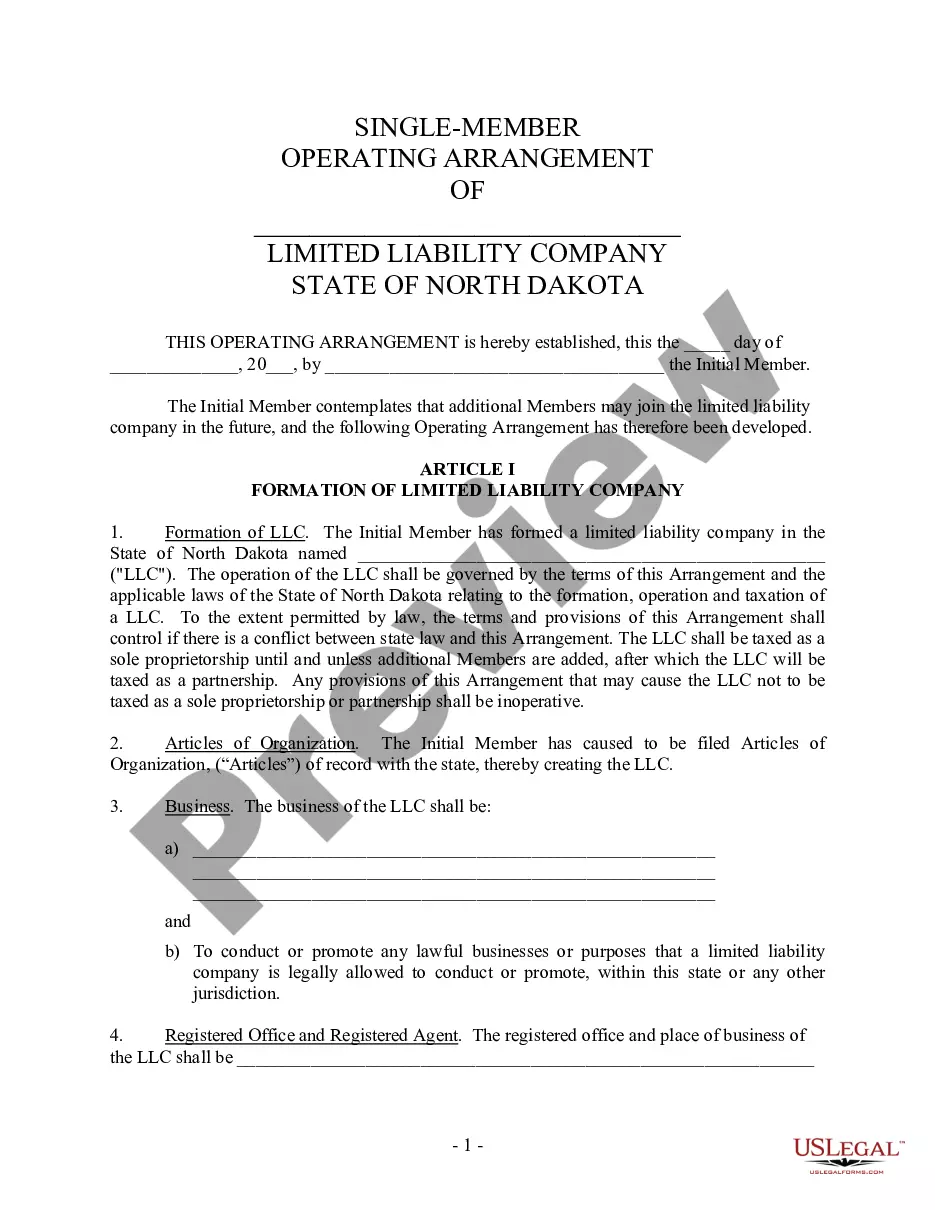
Massachusetts Agreement for Payment of Unpaid Rent
Overview of this form
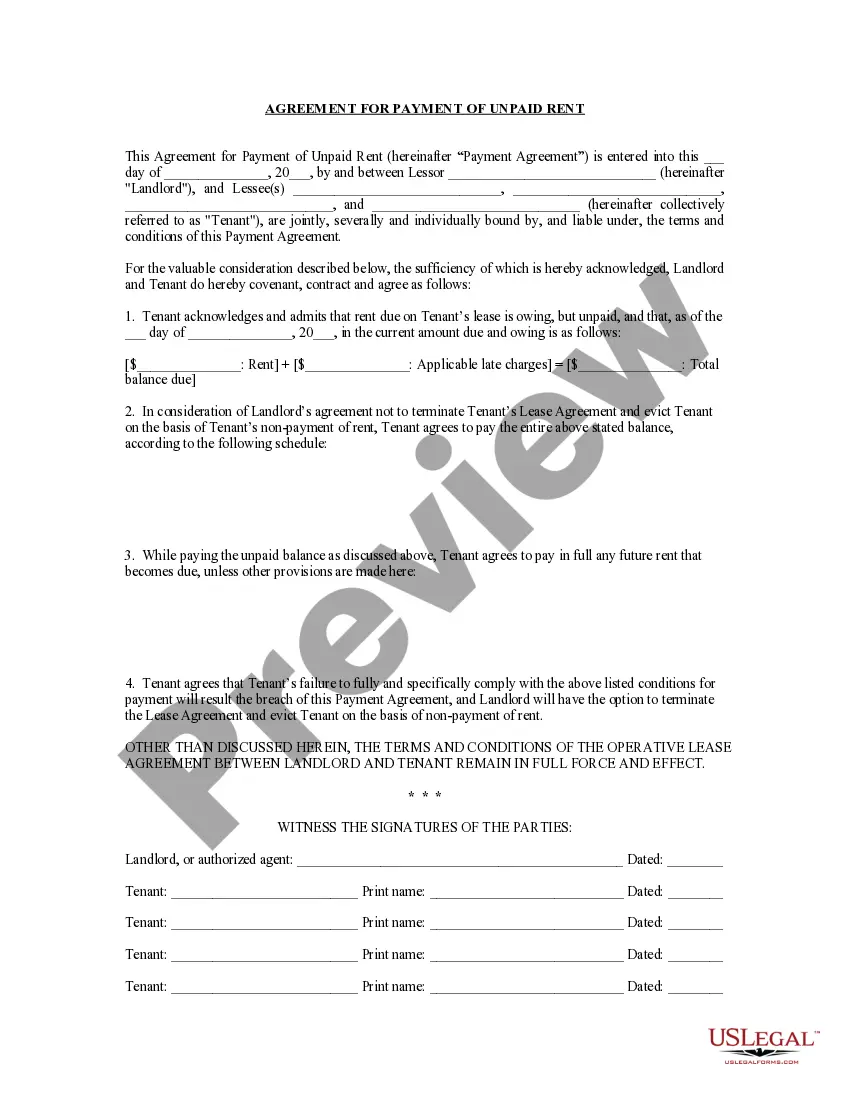
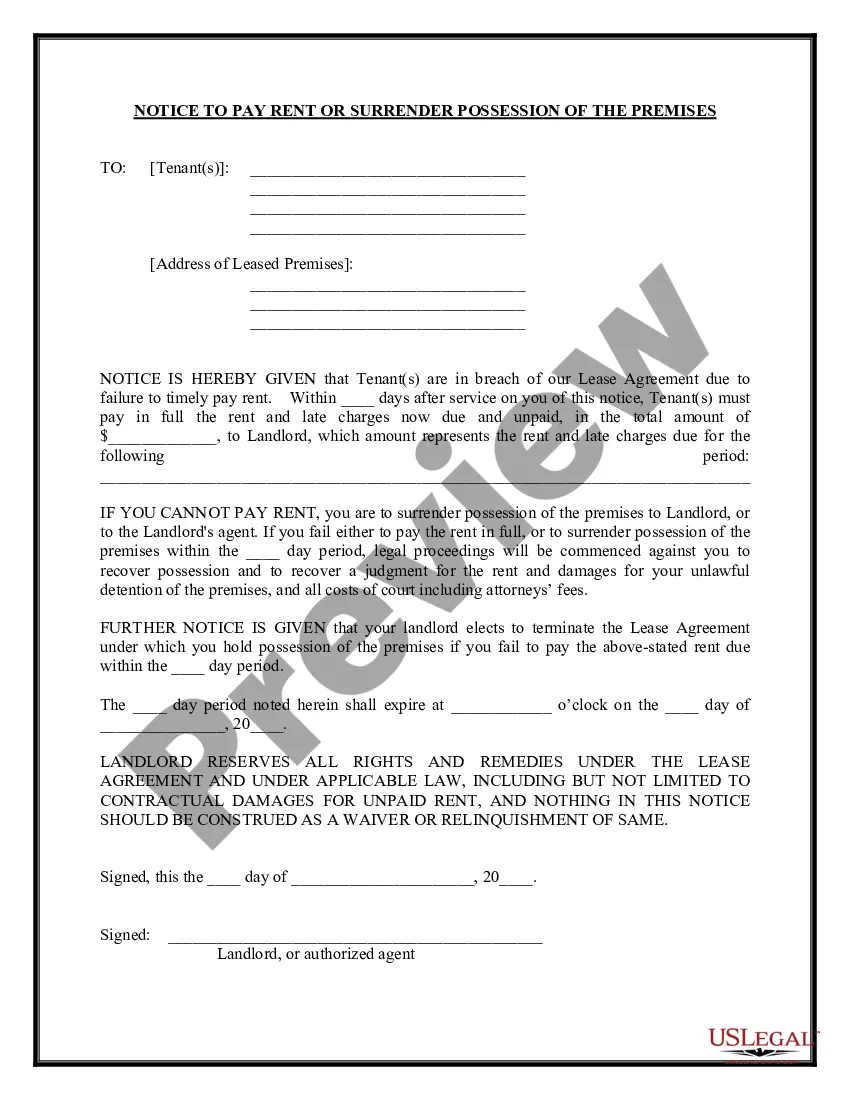
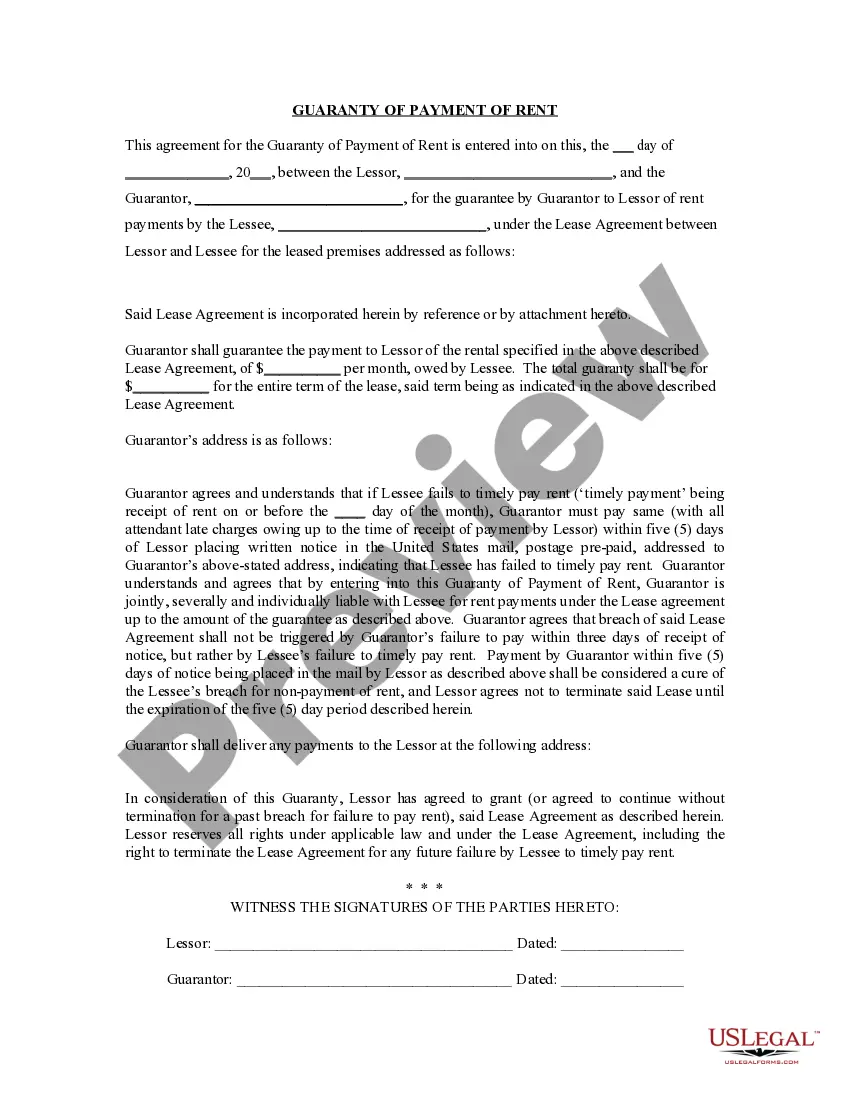
The Agreement for Payment of Unpaid Rent is a legal document used to formalize an agreement between a landlord and tenant regarding overdue rent payments. This agreement outlines repayment terms, including deadlines, under conditions that typically protect the tenant from eviction while they catch up on payments. It serves as a binding contract that ensures both parties understand their rights and responsibilities in the rental relationship.
What’s included in this form
- Identification of the landlord (Lessor) and tenant (Lessee).
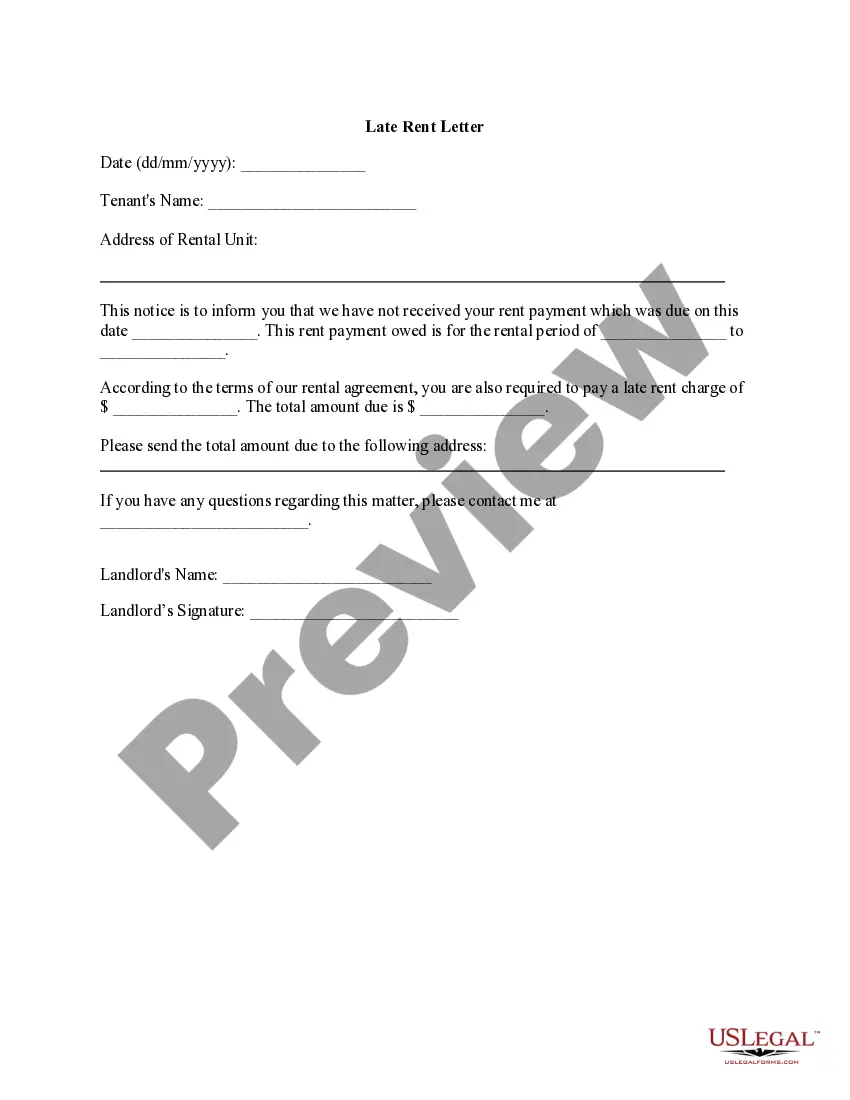
- Details of the unpaid rent amount and any applicable late charges.
- Terms outlining the repayment structure and deadlines.
- A clause stating that other terms from the original lease remain in effect.
- Signature lines for both landlord and tenants to acknowledge the agreement.
When to use this form
This form is necessary when a tenant is unable to pay their rent on time and wishes to negotiate a payment plan with the landlord. It may be used to prevent eviction while allowing the tenant an opportunity to settle their overdue balance in installments, ensuring both parties have a clear understanding of the new payment terms.
Who should use this form
This form is suitable for:
- Landlords looking to establish a payment arrangement with tenants who are behind on rent.
- Tenants who need a formal agreement to manage overdue rent payments without facing eviction.
- Individuals seeking a structured method to resolve rent payment issues amicably.
How to complete this form
- Identify the parties involved by filling in the names of the landlord and tenants.
- Specify the date of the agreement to formalize the start of the arrangement.
- Enter the total unpaid rent, including any applicable late charges.
- Outline the repayment plan, including deadlines and payment amounts.
- Ensure all parties sign and date the agreement to make it legally binding.
Does this form need to be notarized?
This form does not typically require notarization unless specified by local law. It is advisable to check your jurisdiction's requirements to ensure compliance.
Get your form ready online
Our built-in tools help you complete, sign, share, and store your documents in one place.
Make edits, fill in missing information, and update formatting in US Legal Forms—just like you would in MS Word.
Download a copy, print it, send it by email, or mail it via USPS—whatever works best for your next step.
Sign and collect signatures with our SignNow integration. Send to multiple recipients, set reminders, and more. Go Premium to unlock E-Sign.
If this form requires notarization, complete it online through a secure video call—no need to meet a notary in person or wait for an appointment.
We protect your documents and personal data by following strict security and privacy standards.

Make edits, fill in missing information, and update formatting in US Legal Forms—just like you would in MS Word.

Download a copy, print it, send it by email, or mail it via USPS—whatever works best for your next step.

Sign and collect signatures with our SignNow integration. Send to multiple recipients, set reminders, and more. Go Premium to unlock E-Sign.

If this form requires notarization, complete it online through a secure video call—no need to meet a notary in person or wait for an appointment.

We protect your documents and personal data by following strict security and privacy standards.
Common mistakes
- Failing to clearly specify repayment terms, leading to potential misunderstandings.
- Neglecting to include all tenant names if there are multiple tenants on the lease.
- Not signing and dating the agreement, which may affect enforceability.
- Overlooking local laws that may require additional clauses or disclosures.
Why complete this form online
- Convenience of downloading and printing the form from anywhere at any time.
- Editability that allows users to customize the agreement to fit specific situations.
- Access to forms drafted by licensed attorneys, ensuring quality and compliance with legal standards.
Legal use & context
- This form serves as a legally binding contract detailing payment obligations.
- It protects landlords from immediate eviction actions if the tenant adheres to the payment plan.
- Understanding your rights under this agreement is crucial for both parties to prevent future disputes.
Looking for another form?

Form popularity
FAQ
Your landlord is entitled to deduct any unpaid rent from your deposit. If you owe more than the value of your deposit your landlord may take court action to get the extra money back. You may decide to withhold the last month's rent in case the landlord refuses to return the deposit. This is not advisable.
If you are having problems paying the rent contact your local Housing NSW. They may be able to help you. You can also seek help from a financial counsellor to plan a budget to manage your financial situation.
By failing to pay their rent, your tenant has broken the terms of their tenancy agreement, meaning you can serve them a Section 8 notice at any point in the tenancy. Your tenant may dispute the eviction, so you need to be ready with evidence of unpaid rent and your efforts to resolve the issue.
Most residential leases and rental agreements in Massachusetts require a security deposit. This is a dollar amount, usually one month's rent, that's intended to cover damage to the premises beyond normal wear and tear, and to cushion the financial blow if a tenant skips out early on the lease without paying.
Under normal circumstances, when tenants don't pay rent, landlords have the option of terminating the tenancy (by serving the tenant with either a pay rent or quit notice or an unconditional quit notice, depending on the applicable laws).
Massachusetts law allows landlords or property managers to use the security deposit to cover: Unpaid rent. The cost of fixing damages to the property that were not present before move in. Unpaid tax increases, if part of the original lease agreement.
A security deposit is the property of the tenant unless a landlord is authorized to use it. Therefore, a landlord must keep a tenant's security deposit in a separate, interest-bearing bank account in Massachusetts.The name and location of the bank where the deposit is. The amount of the deposit.
Grace period: There is a rental grace period of 30 days (MGL c. 186 § 15B(1)(c)). Late fees: Charging a late fee is allowed, but not required (MGL c. 186 A§ 15B(1)(c)).
1) Stay calm and respectful. While dealing with these cases can be extremely stressful, it's important to approach the situation as calmly as possible. 2) Have an in-person meeting with your tenant. 3) Act quickly. 4) Keep proper documentation. 5) Do not accept partial payments if you plan to evict.