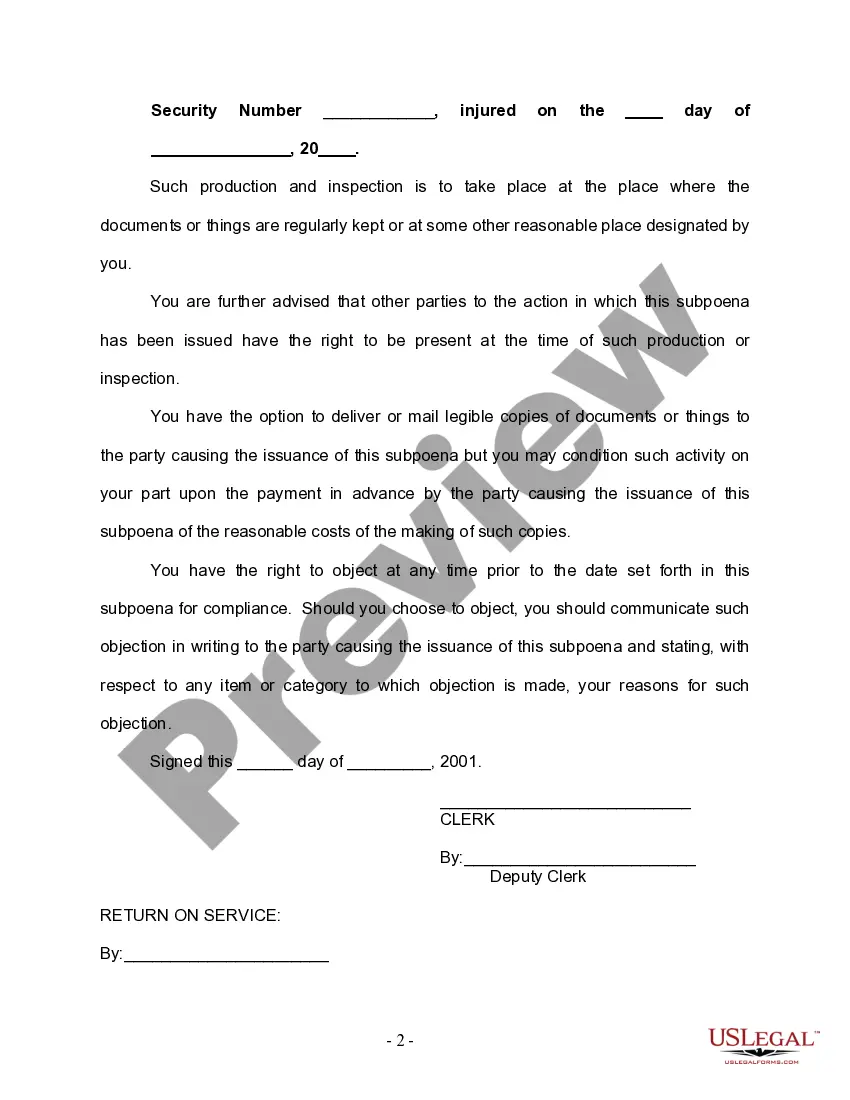
Yes, there’s usually a specific deadline mentioned in the subpoena itself. It’s crucial to stick to that timeline to avoid any legal hiccups.
If you're unable to provide the documents, you should communicate that to the court and the party who issued the subpoena. It’s better to explain your situation than to go silent.
Ignoring a subpoena is not a good idea. It can lead to legal trouble, and the court may enforce the subpoena, so it’s best to respond accordingly.
If you receive a subpoena, it's important to take it seriously. You should read it carefully, gather the requested documents, and consider talking with a lawyer to understand your rights and obligations.
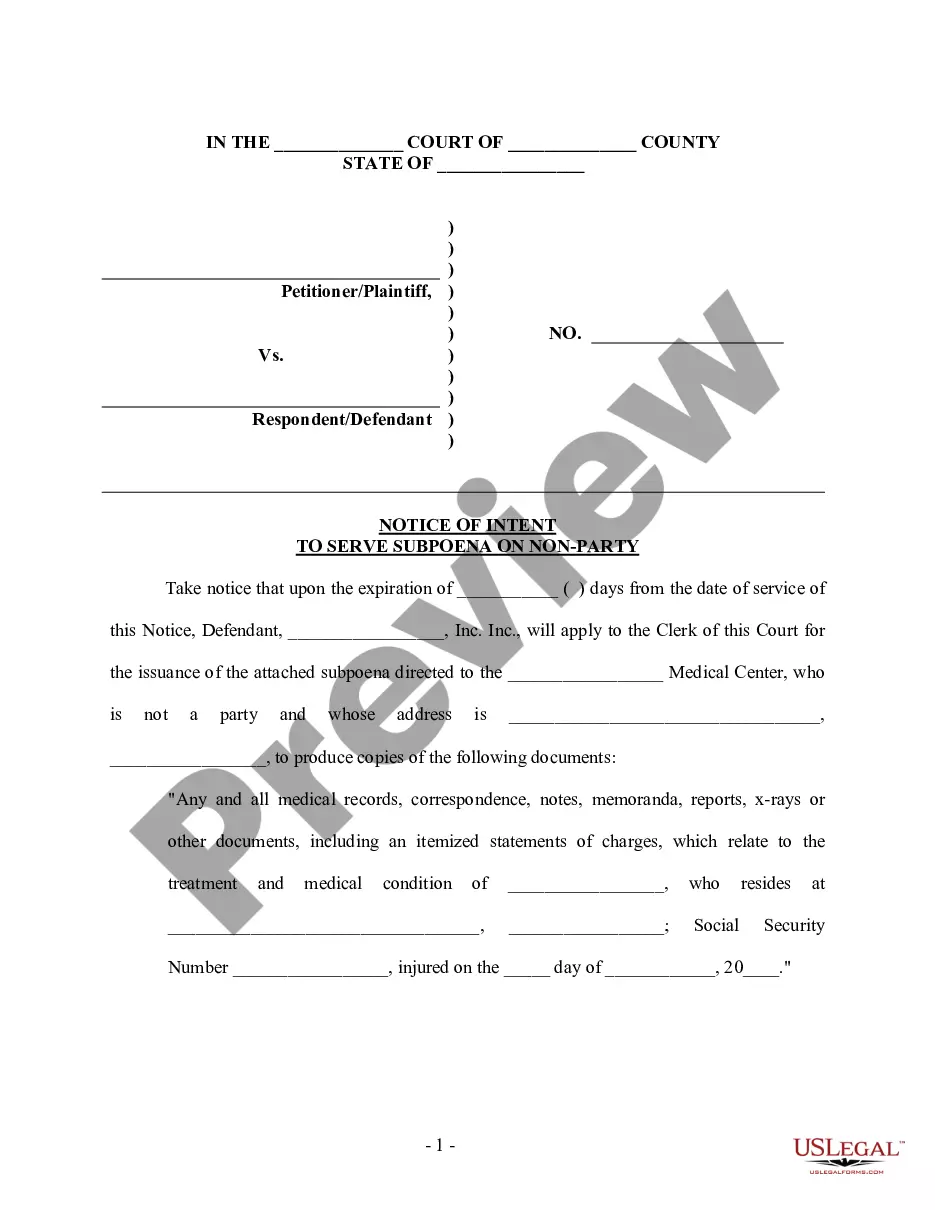
To get a subpoena, you usually work with an attorney who can help you fill out the proper paperwork and make sure it's filed correctly in court. It's the first step in getting the information you need.
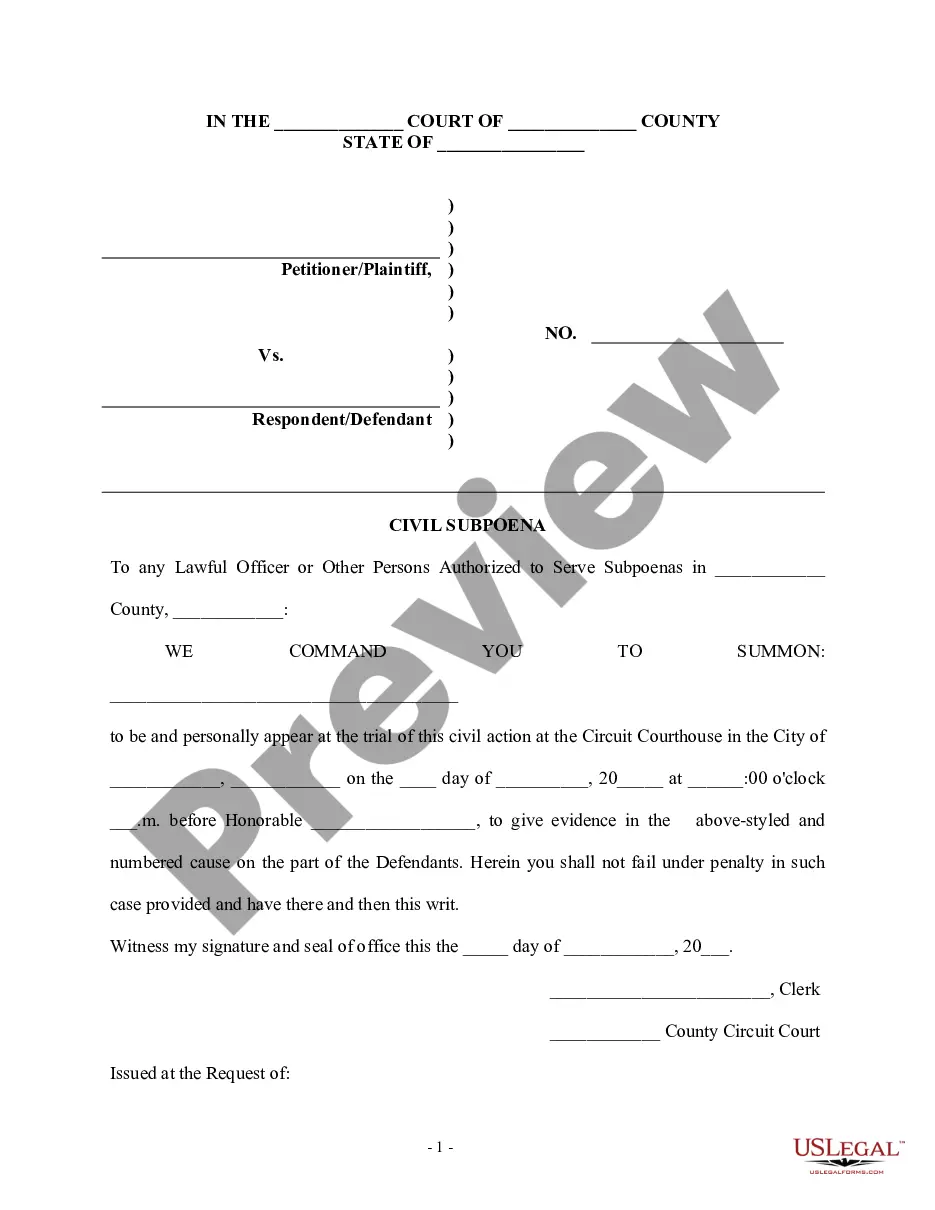
Anyone who has information or documents relevant to a case can be issued a subpoena. That could be an individual, a business, or any organization that may have the needed papers.
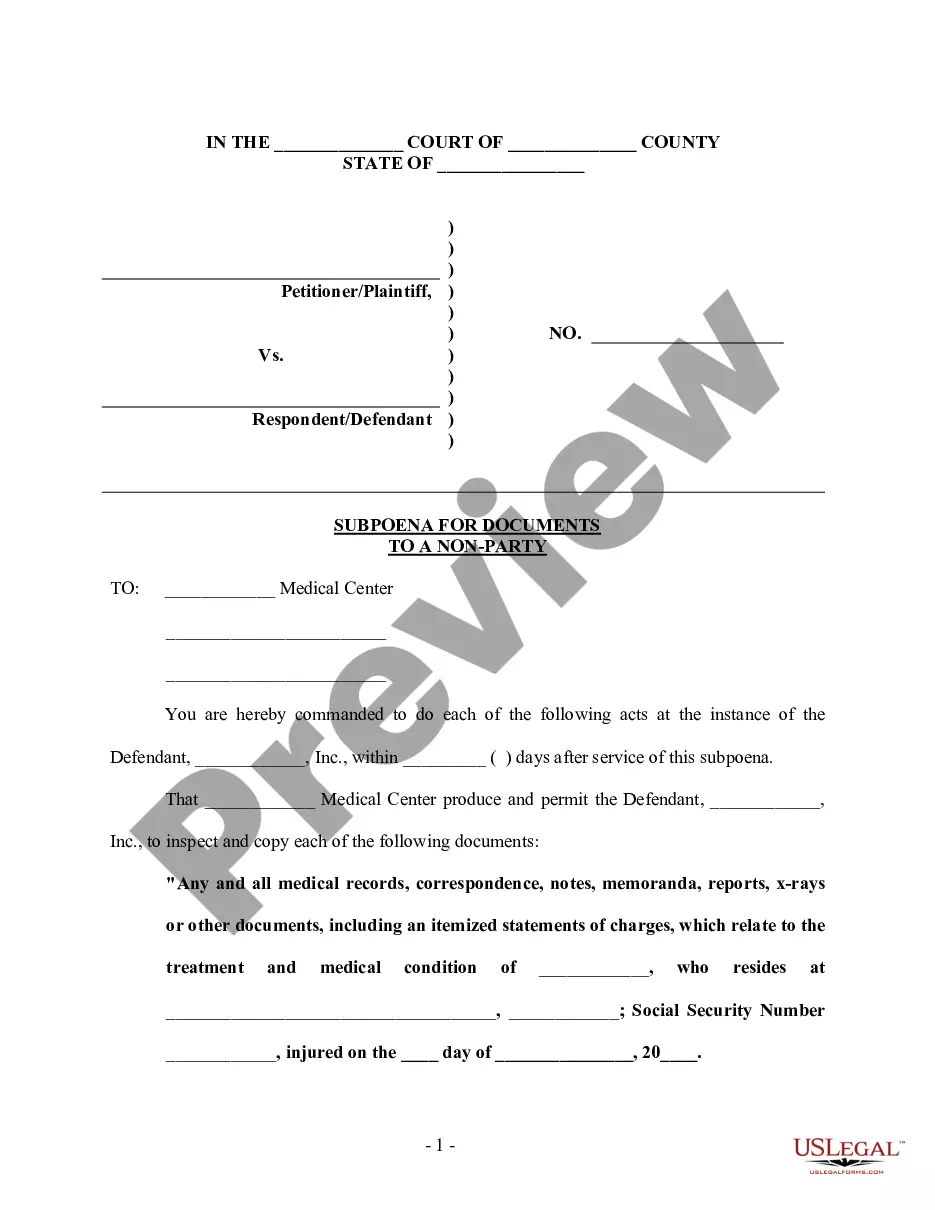
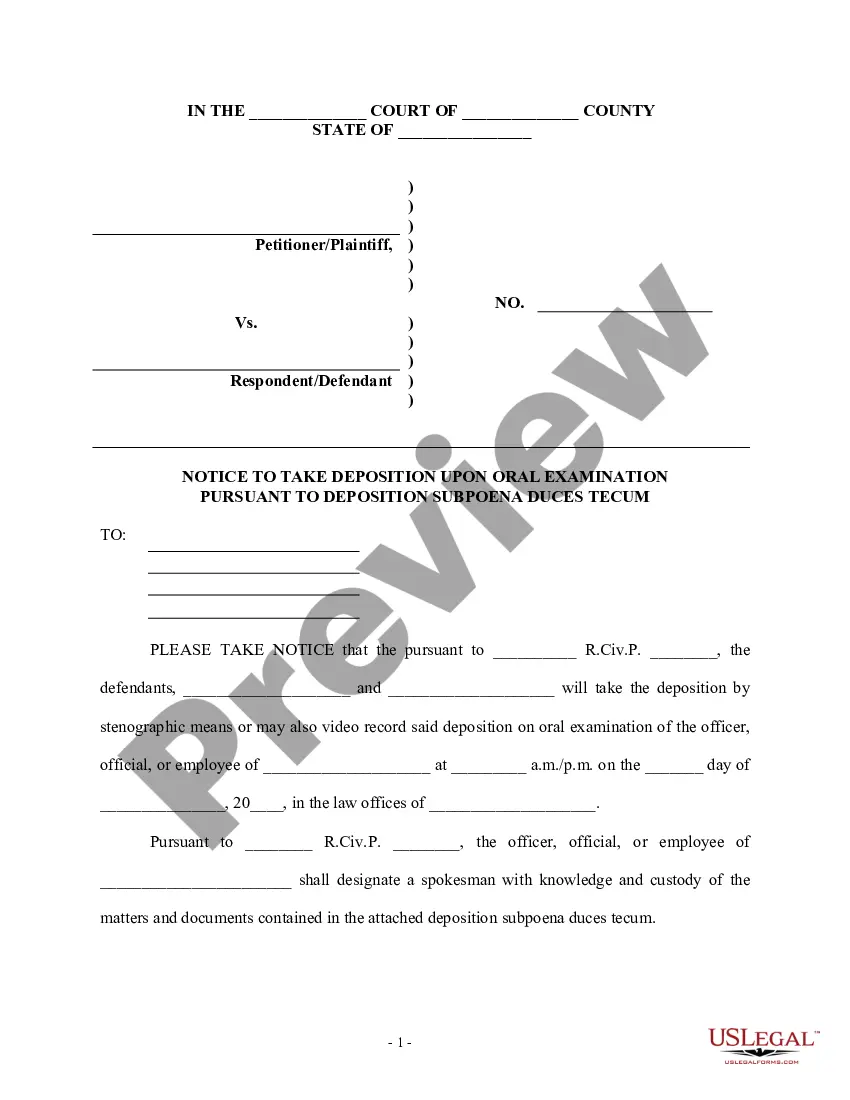
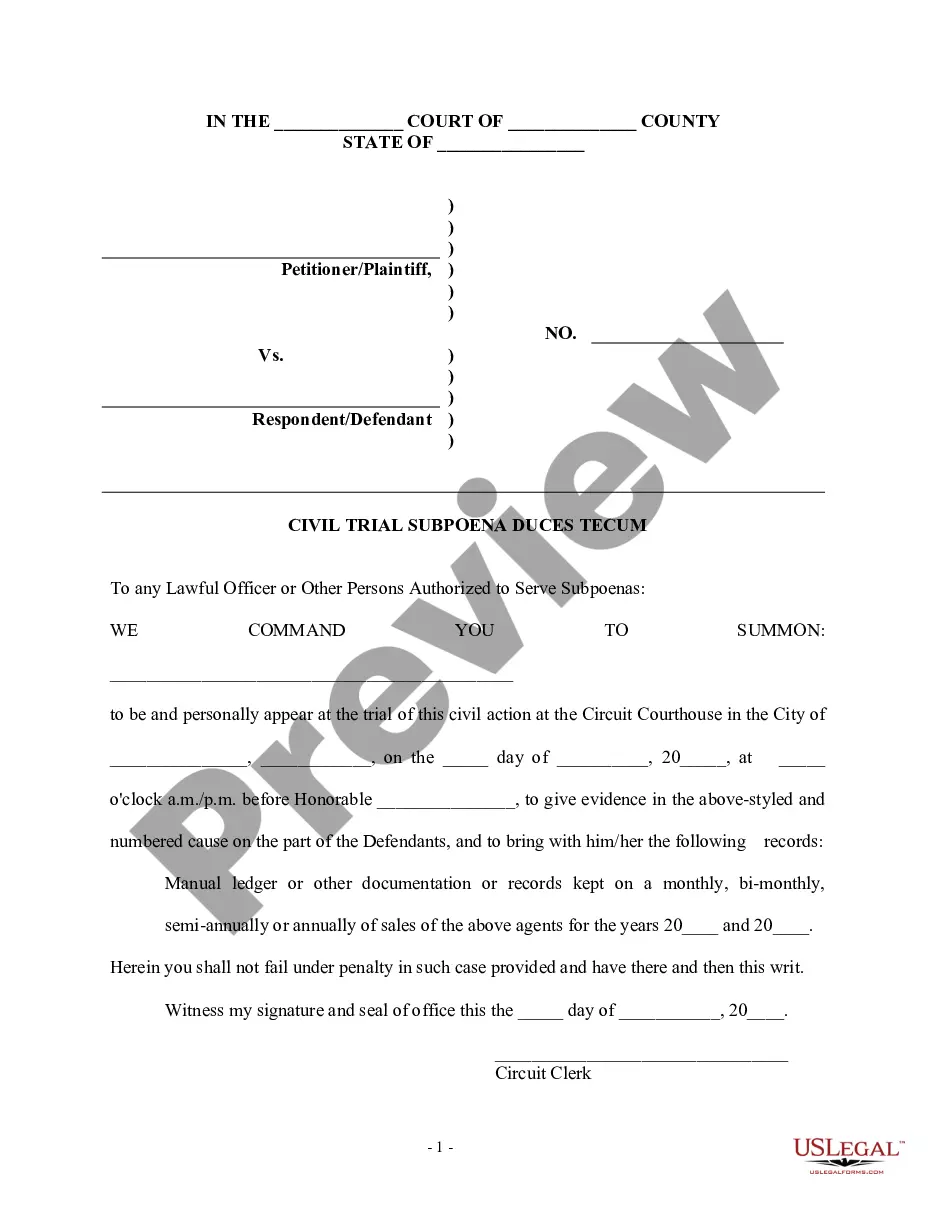
A subpoena for documents is basically a legal request asking someone to provide specific documents for a court case. In Anchorage, this is a formal way to gather evidence from a person who is not directly involved in the case.