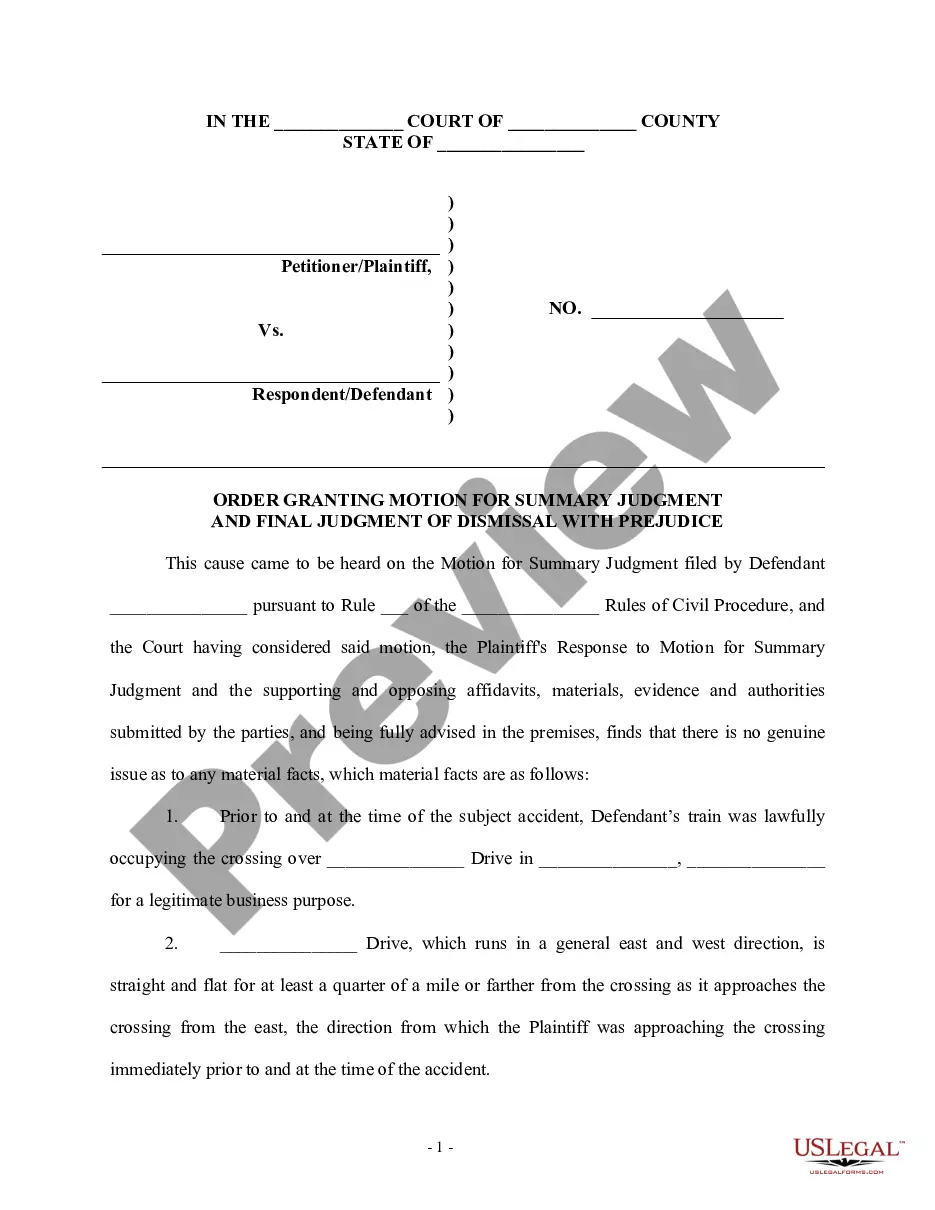
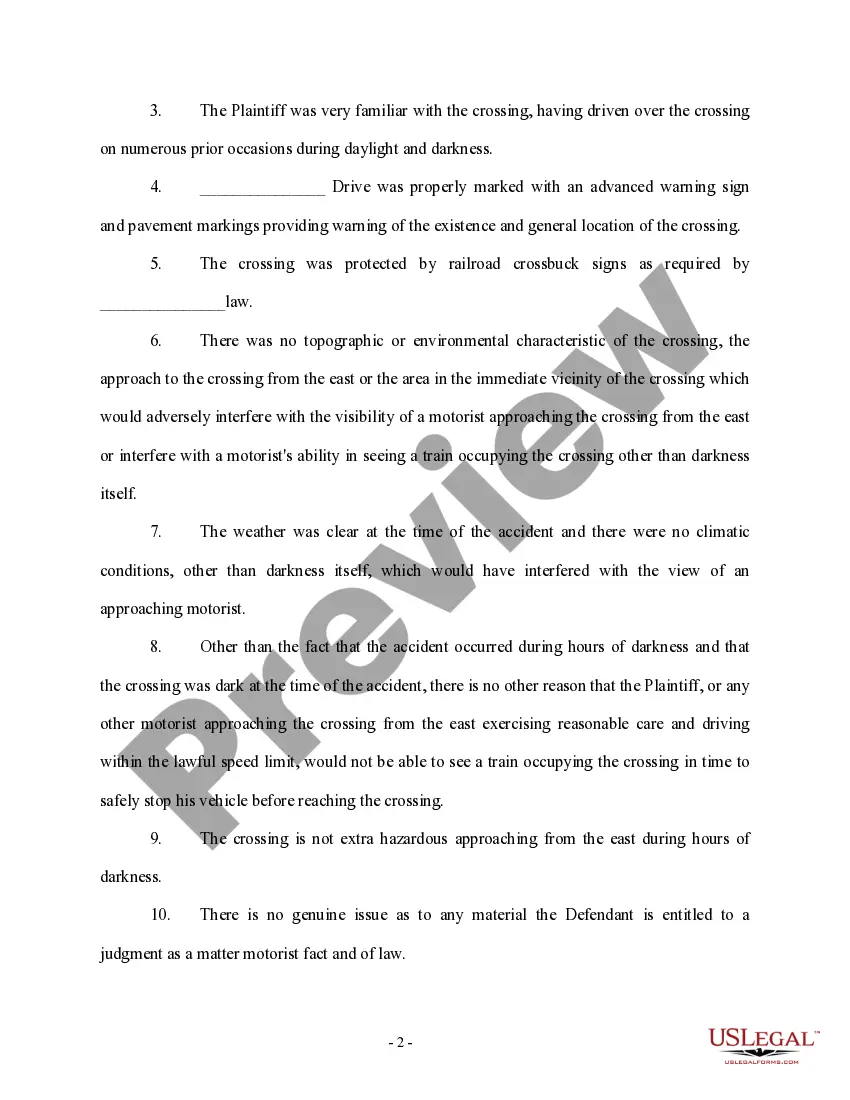
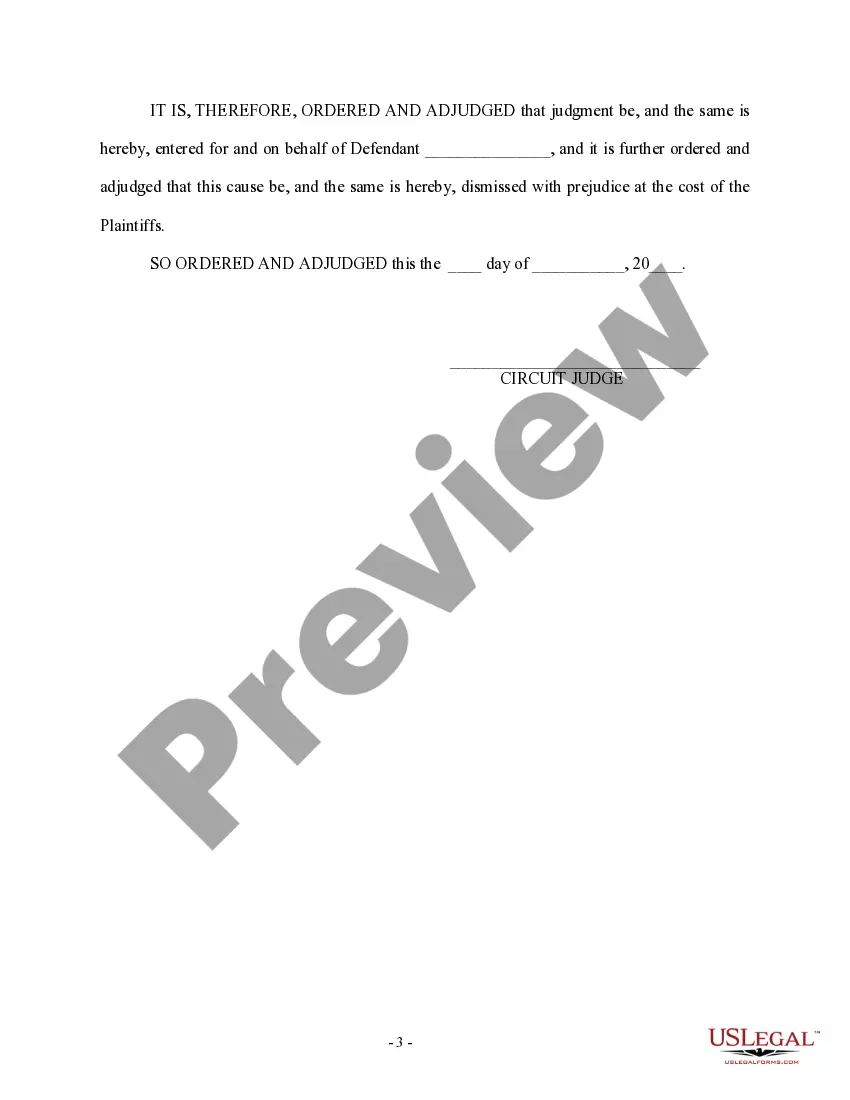
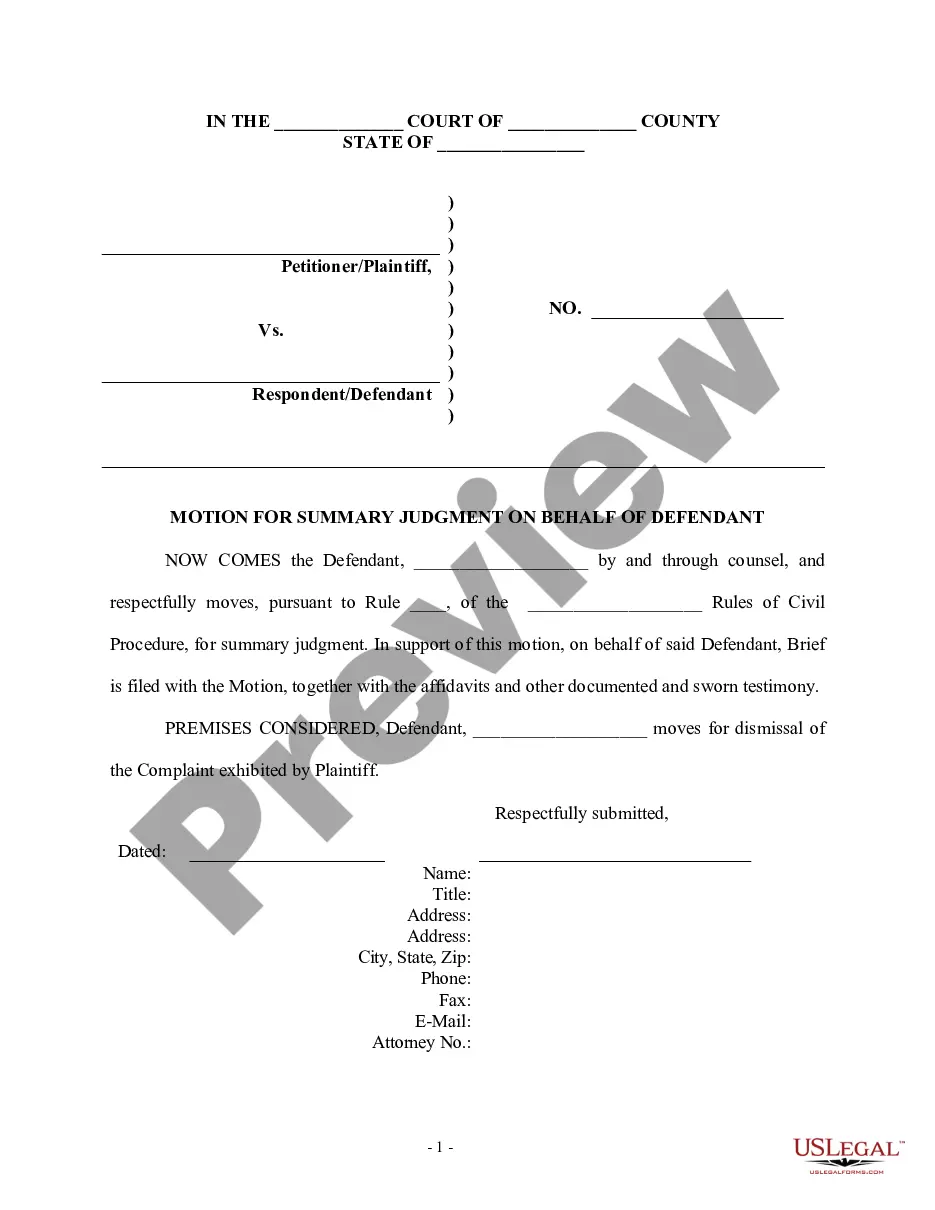
This form is a sample order granting the defendant's motion for summary judgment dismissing the plaintiff's cause of action with prejudice.
Santa Clara California Order Granting Motion for Summary Judgment and Final Judgment of Dismissal with Prejudice
State:
Multi-State
County:
Santa Clara
Control #:
US-PI-0272
Format:
Word;
Rich Text
273 downloads
Description
Free preview
Get your form ready online
Our built-in tools help you complete, sign, share, and store your documents in one place.
Built-in online Word editor
Make edits, fill in missing information, and update formatting in US Legal Forms—just like you would in MS Word.
Export easily
Download a copy, print it, send it by email, or mail it via USPS—whatever works best for your next step.
E-sign your document
Sign and collect signatures with our SignNow integration. Send to multiple recipients, set reminders, and more. Go Premium to unlock E-Sign.
Notarize online 24/7
If this form requires notarization, complete it online through a secure video call—no need to meet a notary in person or wait for an appointment.
Store your document securely
We protect your documents and personal data by following strict security and privacy standards.

Make edits, fill in missing information, and update formatting in US Legal Forms—just like you would in MS Word.

Download a copy, print it, send it by email, or mail it via USPS—whatever works best for your next step.

Sign and collect signatures with our SignNow integration. Send to multiple recipients, set reminders, and more. Go Premium to unlock E-Sign.

If this form requires notarization, complete it online through a secure video call—no need to meet a notary in person or wait for an appointment.

We protect your documents and personal data by following strict security and privacy standards.
Looking for another form?



How to fill out Order Granting Motion For Summary Judgment And Final Judgment Of Dismissal With Prejudice?
Establishing legal documents is essential in the modern era.
However, it is not always necessary to enlist expert assistance to create some of them from the ground up, such as the Santa Clara Order Granting Motion for Summary Judgment and Final Judgment of Dismissal with Prejudice, using a service like US Legal Forms.
US Legal Forms offers over 85,000 templates to choose from across various categories, ranging from living wills to real estate documentation to divorce agreements.
Select the preferred option, choose a payment method, and purchase the Santa Clara Order Granting Motion for Summary Judgment and Final Judgment of Dismissal with Prejudice.
Opt to save the form template in any supported file format.
- All documents are organized according to their applicable state, simplifying the search process.
- Additionally, the site provides informational resources and tutorials to facilitate any tasks associated with paperwork completion.
- Here's the process to acquire and download the Santa Clara Order Granting Motion for Summary Judgment and Final Judgment of Dismissal with Prejudice.
- Review the document's preview and description (if available) to gain a basic understanding of what you will receive post-purchase.
- Ensure that the document you select is tailored to your state/county/locality, as state regulations can influence the legitimacy of some forms.
- Browse through similar document templates or restart the search to locate the correct document.
- Click Buy now and create your account. If you possess an existing account, choose to Log In.
Form popularity
FAQ
The odds of winning a motion for summary judgment often depend on the specific details of the case and the strength of the evidence provided. Generally, courts grant summary judgment when the moving party clearly demonstrates that there are no material facts in dispute. If you are involved in a case in Santa Clara, California, understanding the chances of success related to an Order Granting Motion for Summary Judgment and Final Judgment of Dismissal with Prejudice can guide your legal strategy.
In California, you should file a motion for summary judgment after the discovery phase of your case has been completed. This motion is typically filed when you believe that there are no genuine issues of material fact and that you are entitled to judgment as a matter of law. Properly timing your motion can lead to a Santa Clara California Order Granting Motion for Summary Judgment and Final Judgment of Dismissal with Prejudice, saving you time and resources. To streamline the process, consider using USLegalForms for guidance and access to necessary documents.
You can file a motion for summary judgment in California after the close of discovery but usually at least 75 days before trial. This motion seeks to eliminate unnecessary trials by asking the court to decide based on undisputed facts. The decision on these motions often culminates in a Santa Clara California Order Granting Motion for Summary Judgment and Final Judgment of Dismissal with Prejudice.
All dismissals ordered by the court shall be in the form of a written order signed by the court and filed in the action and those orders when so filed shall constitute judgments and be effective for all purposes, and the clerk shall note those judgments in the register of actions in the case.
The precise basis for a demurrer can vary, with some examples being a failure to state a claim or an allegedly unconstitutional statute. In most jurisdictions, the demurrer is now called a motion to dismiss.
(1) TO SURVIVE SUMMARY JUDGMENT, A NON-MOVING PARTY MUST COME FORWARD WITH COMPETENT EVIDENCE TO ESTABLISH A GENUINE ISSUE OF MATERIAL FACT.
A dismissal of an action with prejudice is a final decision of the action and has the effect of terminating it and the rights of the parties are affected by it and in effect it is a final judgment in favor of defendants and defendants are entitled to recover their costs. (Code of Civ.
About a Motion for Summary Judgment If the Court grants the full motion, the moving party obtains an appealable final judgment. On the other hand, if the judge grants summary judgment on only some claims, the order is not an appealable final judgment because some remaining claims/defenses in the case must be resolved.
Thus, just as a summary judgment is not a dismissal meaning a summary judgment should not be sought through a motion to dismiss a dismissal is not a summary judgment, and should not be sought thereby.
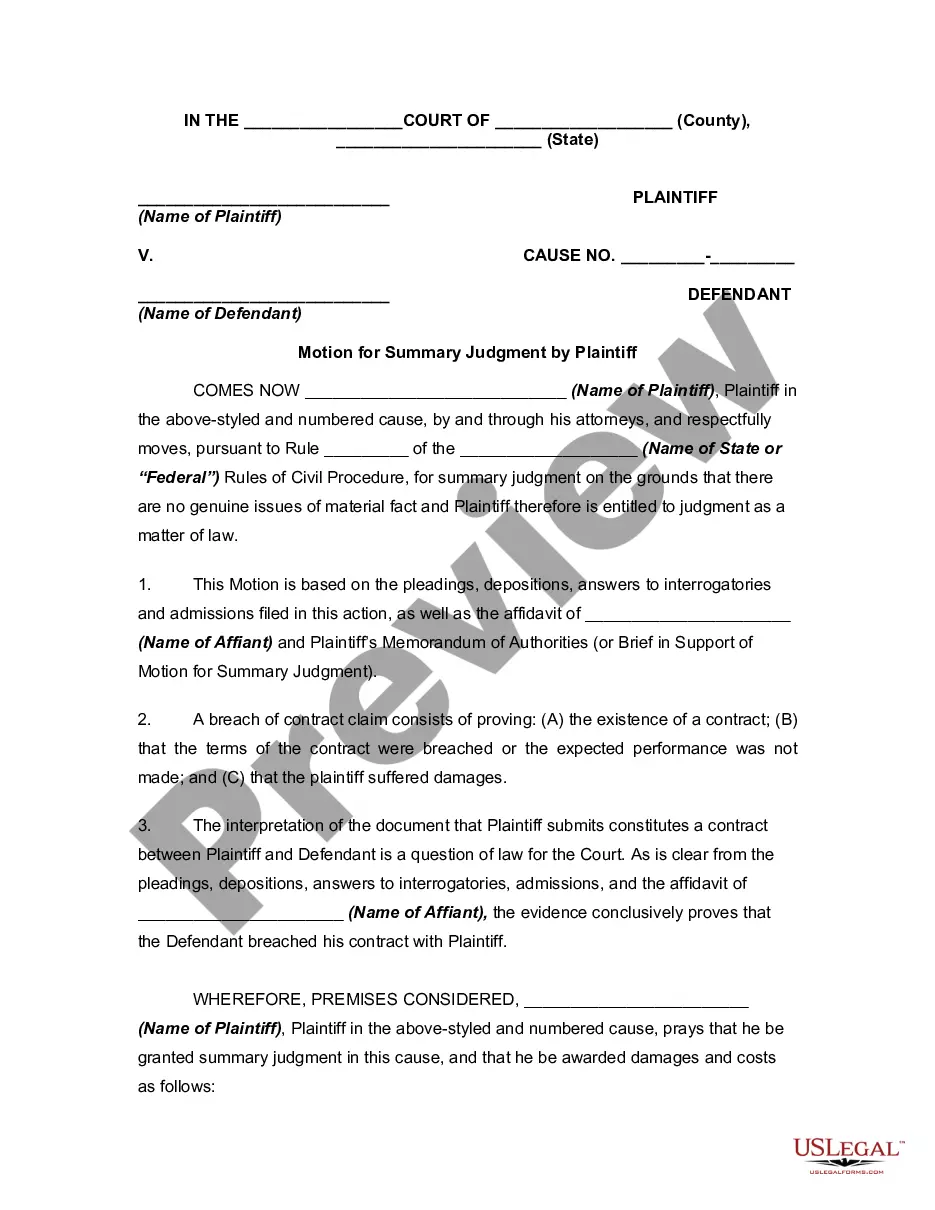
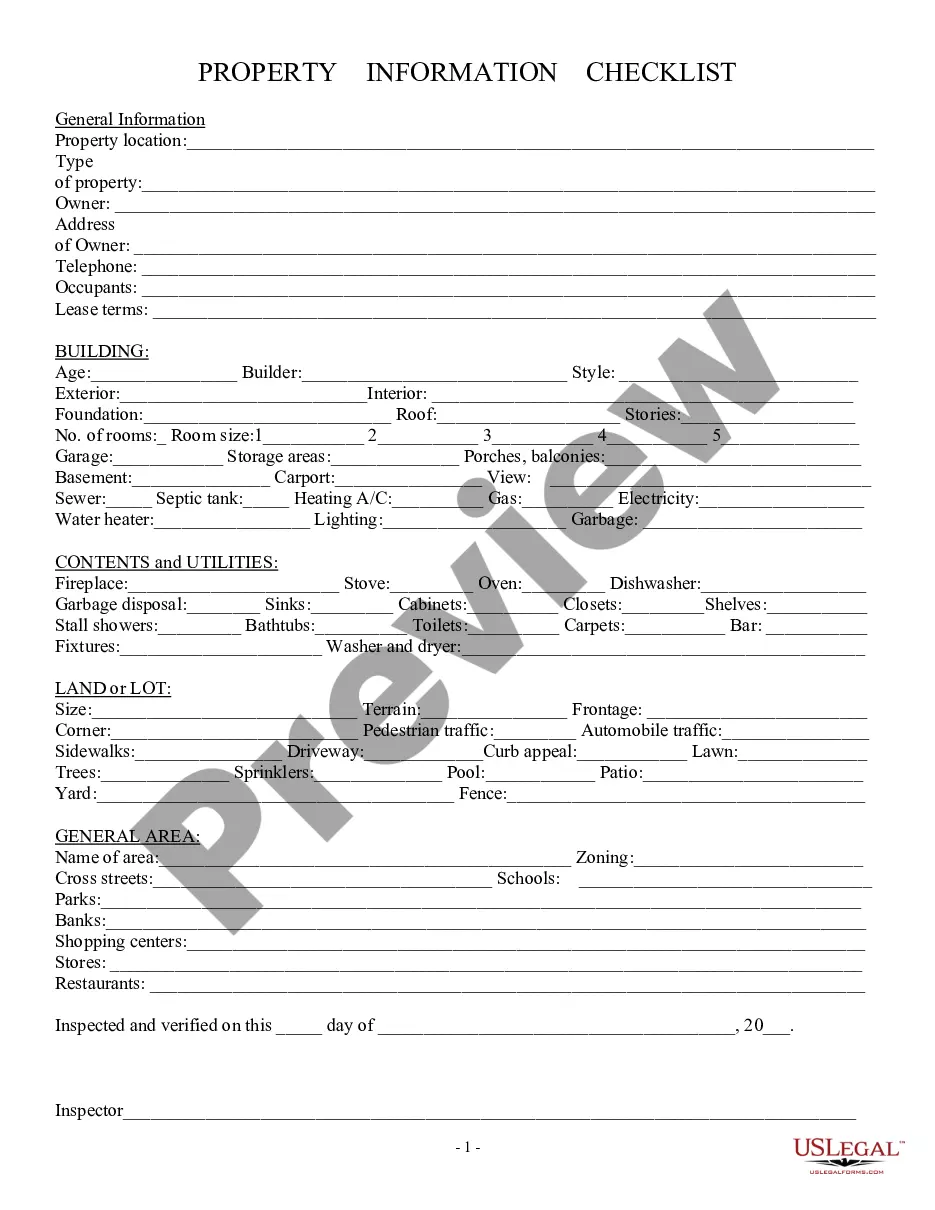
Motion for Summary Judgment (sometimes called motion for summary disposition). This motion asks the court for a judgment on the merits of the case before the trial. It is properly made where there is no dispute about the facts and only a question of law needs to be decided.