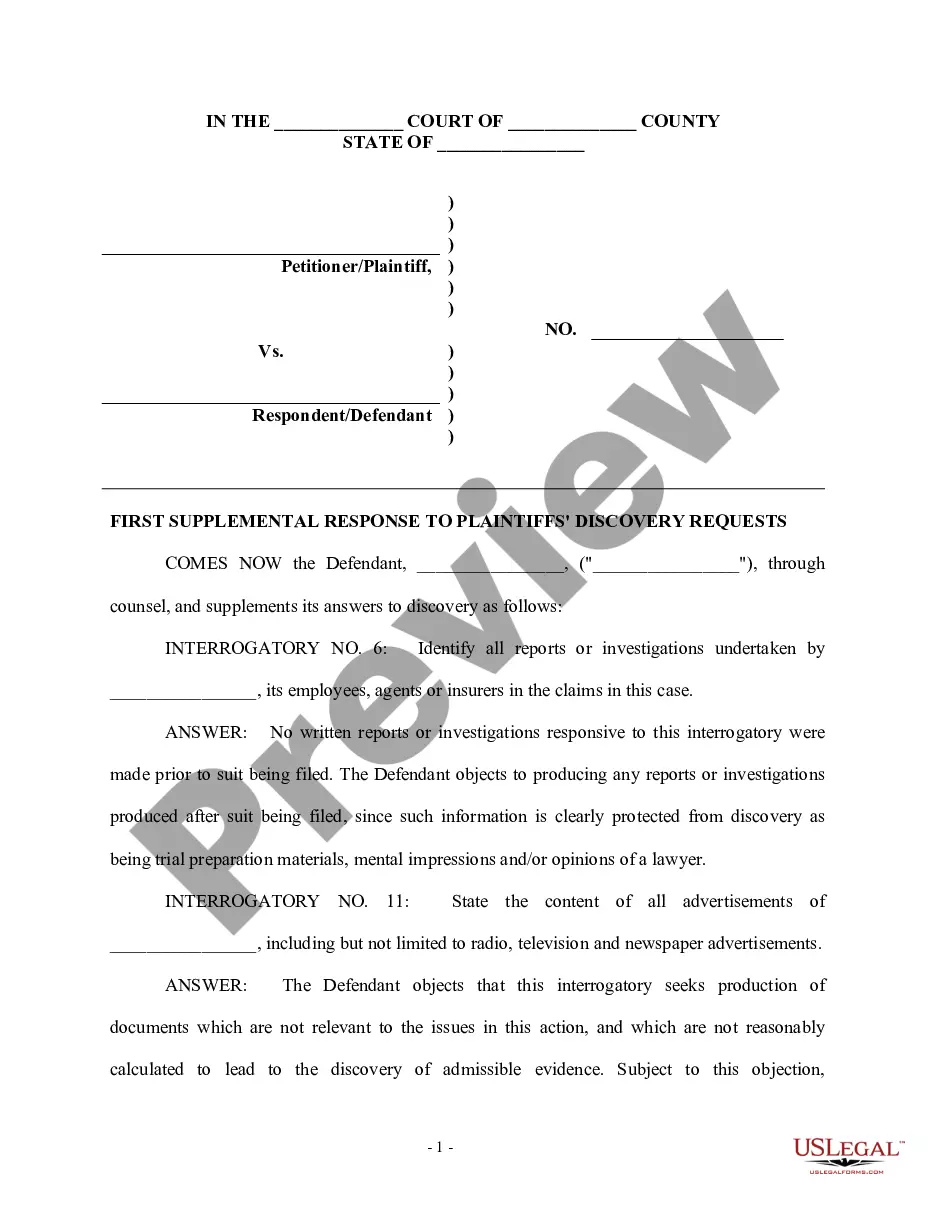
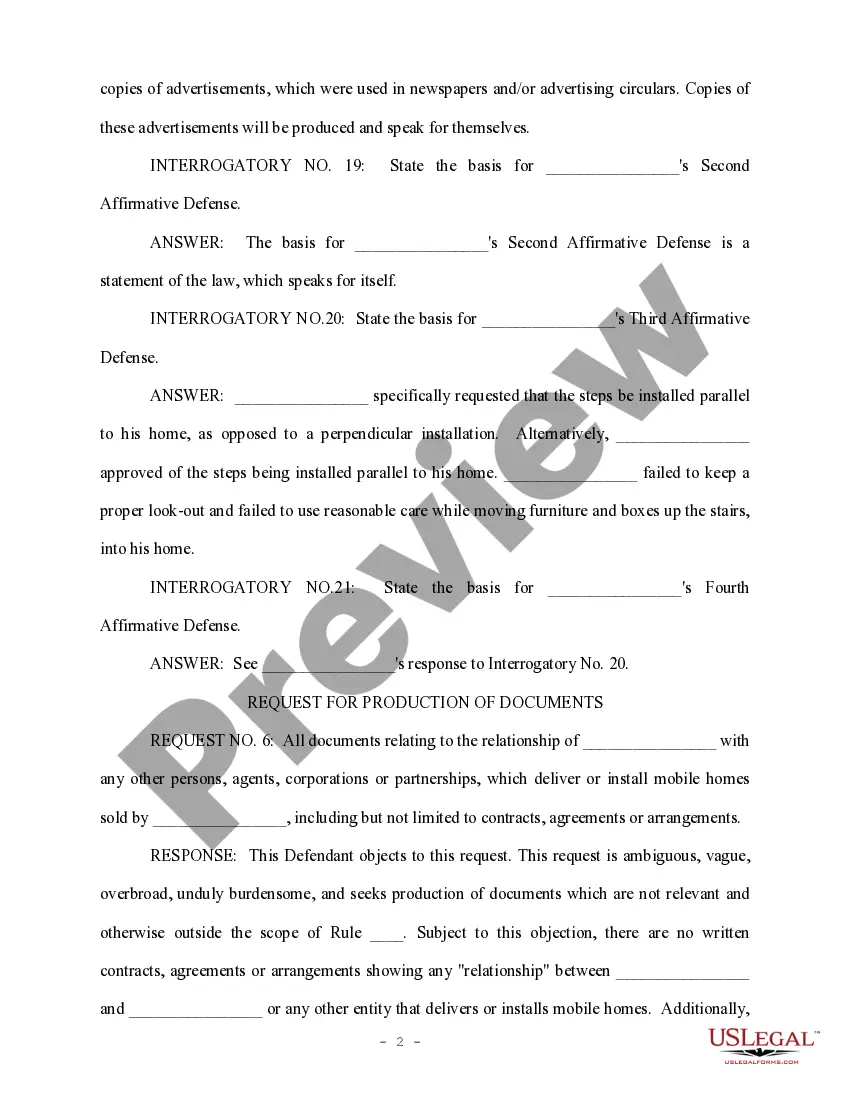
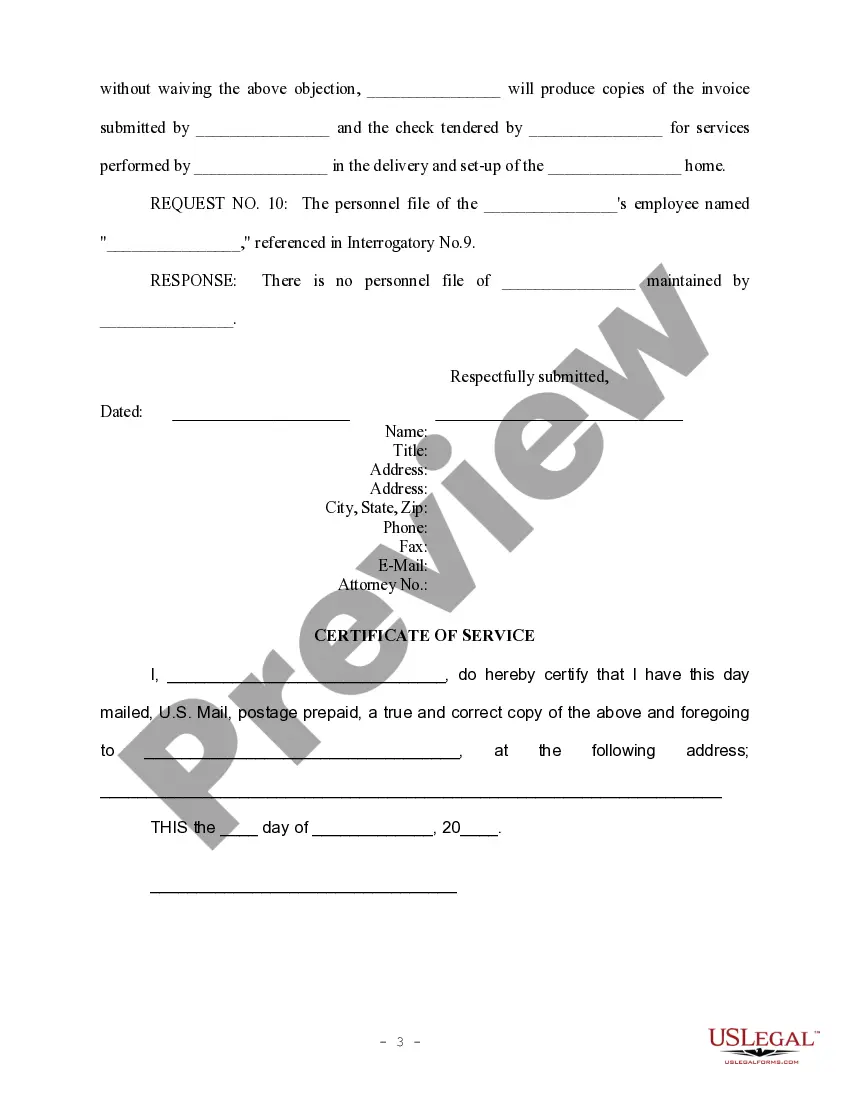
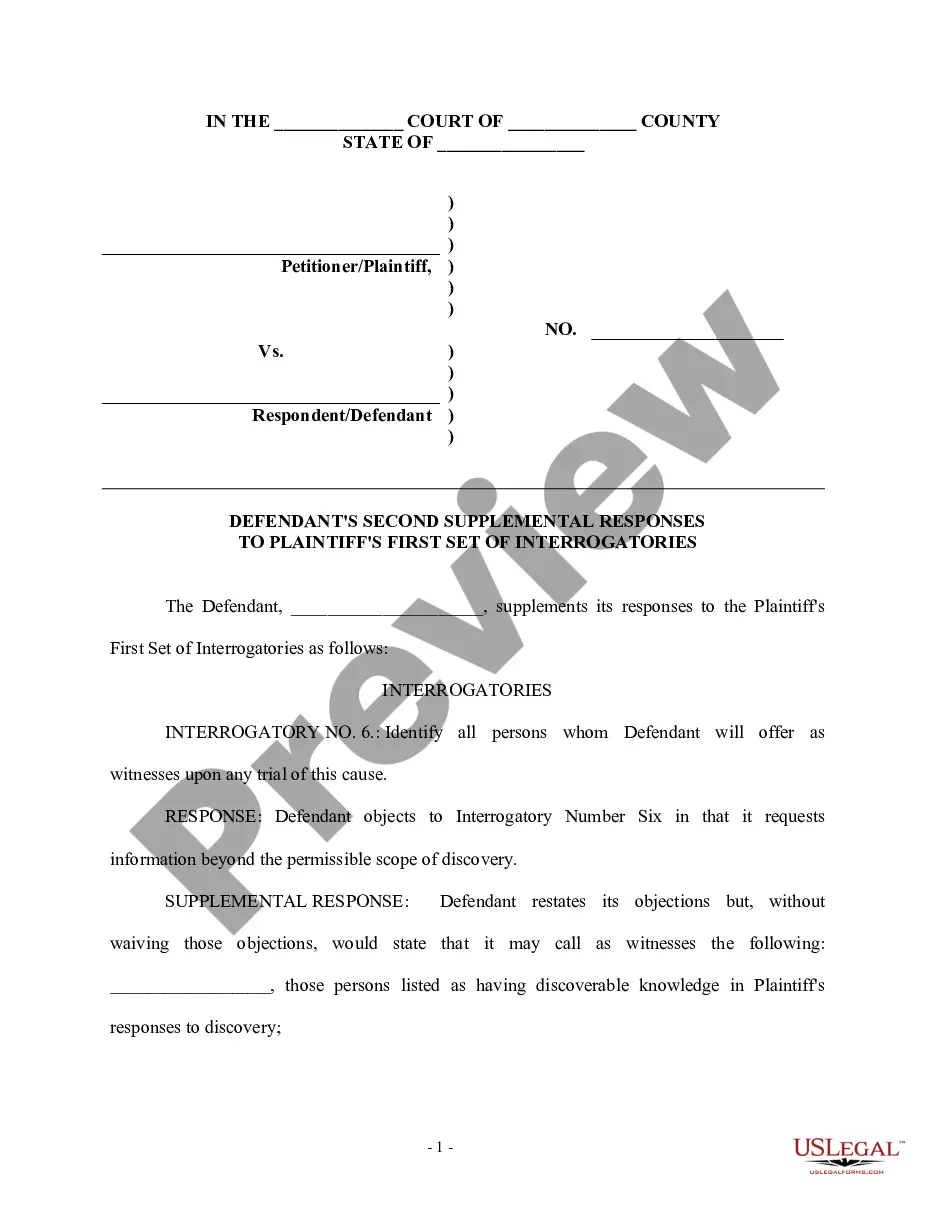
This form is a sample of the defendant's first supplemental response to the plaintiff's discovery request in a personal injury action.
Wayne Michigan Defendant's First Supplemental response to Plaintiff's Discovery Request
State:
Multi-State
County:
Wayne
Control #:
US-PI-0192
Format:
Word;
Rich Text
80 downloads
Description
Free preview
Get your form ready online
Our built-in tools help you complete, sign, share, and store your documents in one place.
Built-in online Word editor
Make edits, fill in missing information, and update formatting in US Legal Forms—just like you would in MS Word.
Export easily
Download a copy, print it, send it by email, or mail it via USPS—whatever works best for your next step.
E-sign your document
Sign and collect signatures with our SignNow integration. Send to multiple recipients, set reminders, and more. Go Premium to unlock E-Sign.
Notarize online 24/7
If this form requires notarization, complete it online through a secure video call—no need to meet a notary in person or wait for an appointment.
Store your document securely
We protect your documents and personal data by following strict security and privacy standards.

Make edits, fill in missing information, and update formatting in US Legal Forms—just like you would in MS Word.

Download a copy, print it, send it by email, or mail it via USPS—whatever works best for your next step.

Sign and collect signatures with our SignNow integration. Send to multiple recipients, set reminders, and more. Go Premium to unlock E-Sign.

If this form requires notarization, complete it online through a secure video call—no need to meet a notary in person or wait for an appointment.

We protect your documents and personal data by following strict security and privacy standards.
Looking for another form?


How to fill out Defendant's First Supplemental Response To Plaintiff's Discovery Request?
Are you trying to swiftly produce a legally-enforceable Wayne Defendant's First Supplemental reply to Plaintiff's Discovery Inquiry or perhaps any other paperwork to manage your personal or business matters.
You can choose one of the two alternatives: reach out to a specialist to draft a legitimate document for you or compose it entirely on your own.
Primarily, carefully confirm if the Wayne Defendant's First Supplemental reply to Plaintiff's Discovery Inquiry complies with your state's or county's laws.
If the document comes with a description, be sure to verify what it is intended for.
- Fortunately, there is another option - US Legal Forms.
- It will assist you in obtaining well-prepared legal documents without needing to spend exorbitant amounts for legal assistance.
- US Legal Forms features an extensive collection of over 85,000 state-specific document templates, including Wayne Defendant's First Supplemental reply to Plaintiff's Discovery Inquiry and form bundles.
- We supply documents for a variety of life situations: from divorce forms to real estate document templates.
- We have been in the industry for over 25 years and have established a strong reputation among our clients.
- Here's how you can join them and acquire the required document without additional complications.
Form popularity
FAQ
Step 1: Complete Your Written Responses. There is no Judicial Council form specifically for this procedure.Step 2: Make Copies.Step 3: Have Your Response Served.Step 4: Retain Your Response and Proof of Service.Step 5: Produce the Requested Documents and Things.
Step 1: Carefully Review All the Requests. Review each request to ensure you fully understand the question, and can answer it completely.Step 2: Complete Your Responses to the Interrogatories.Step 3: Make Photocopies.Step 4: Have Your Responses Served.Step 5: Retain Your Documents.
If you are unable to answer a specific question because you don't know or don't have access to the appropriate information, you must indicate the reasons. You may refer to a previous response when responding to an interrogatory providing the previous response sufficiently answers the later interrogatory.
Your answers to the interrogatories should usually be short, clear, and direct and should answer only the question that is being asked. This is not the time to set out your entire case or defense to the other side. Take the time to make sure your answers are correct and truthful.
Discovery enables the parties to know before the trial begins what evidence may be presented. It s designed to prevent "trial by ambush," where one side doesn t learn of the other side s evidence or witnesses until the trial, when there s no time to obtain answering evidence.
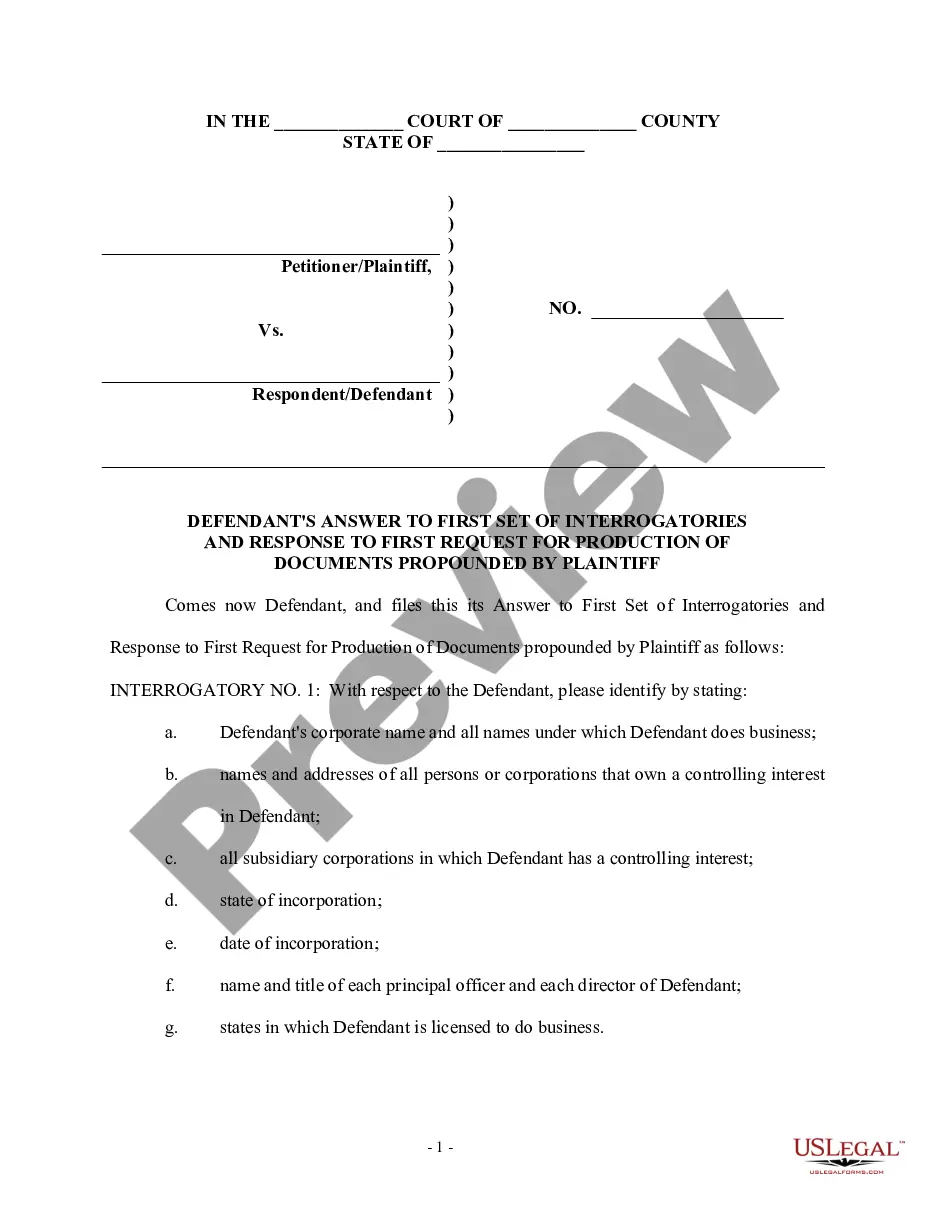
In a civil action, an interrogatory is a list of questions one party sends to another as part of the discovery process. The recipient must answer the questions under oath and according to the case's schedule.
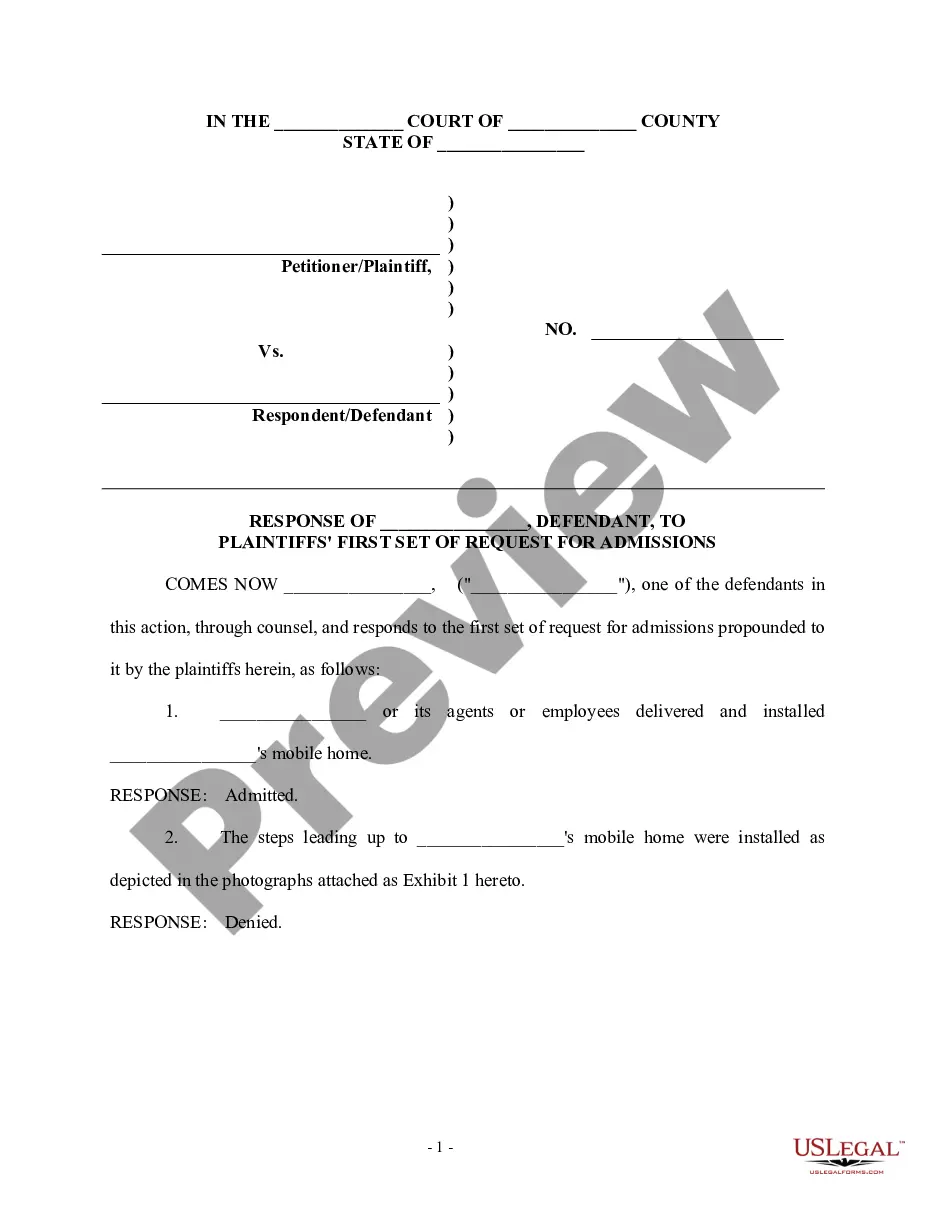
When responding to Requests for Admissions, remember to answer as follows: Admit: If any portion of the Request for Admission is true then you must admit to that portion of the request. You are also allowed to have a hybrid response admit the part of the request that is true while denying another part.
Supplemental discovery, seeks to find out what has changed since the initial disclosure to uncover any new information that is crucial to the case. After answering a discovery request, the answering party has a duty to provide further information if the answer later turns out to be inaccurate.
Tips for your Examination for Discovery Inform yourself of the relevant facts. It pays to be knowledgeable about your case and the relevant facts.Tell the truth.Your evidence will be used against you.Listen carefully.Do not guess.Think before you speak.Avoid absolutes like Always and NeverVerbal answers only.