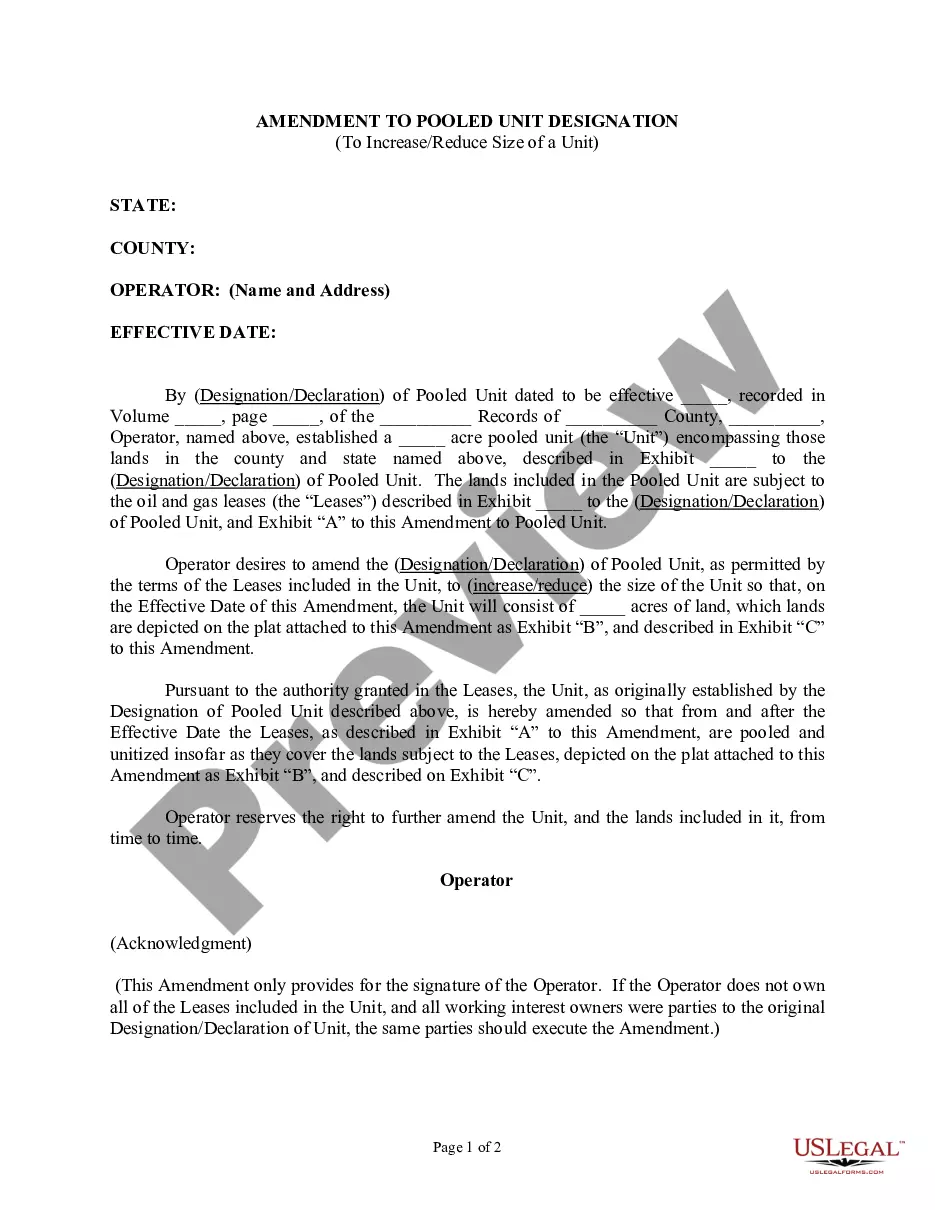
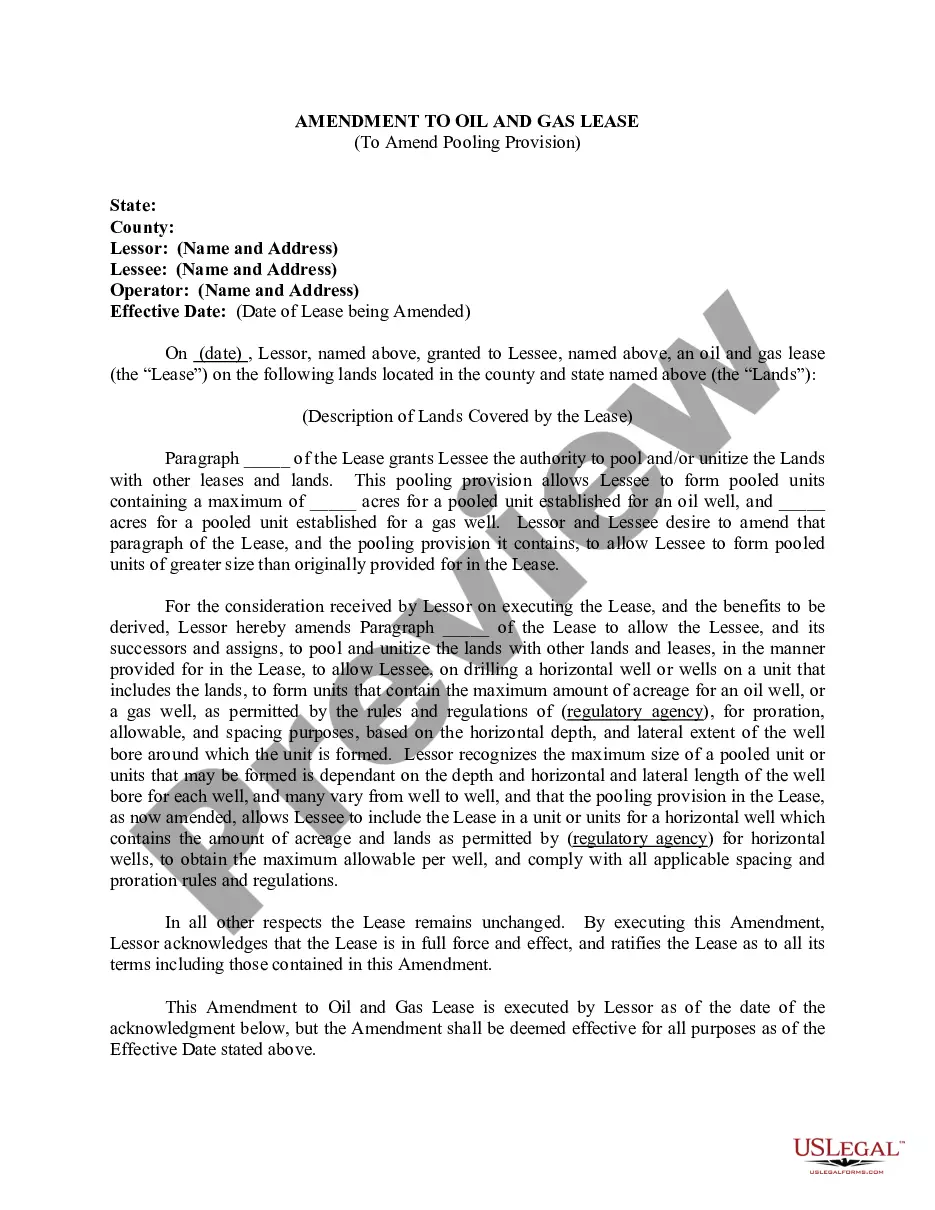
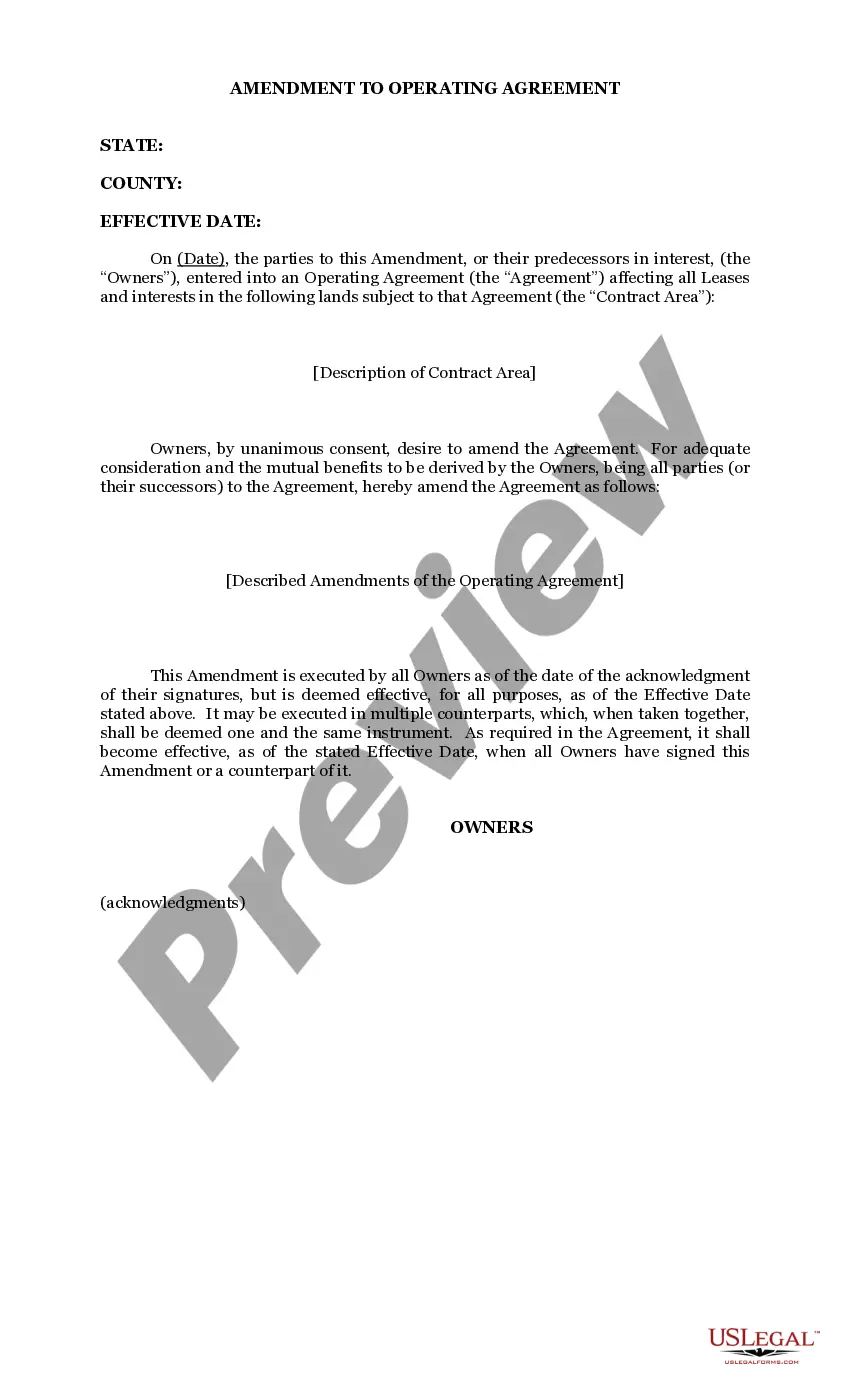
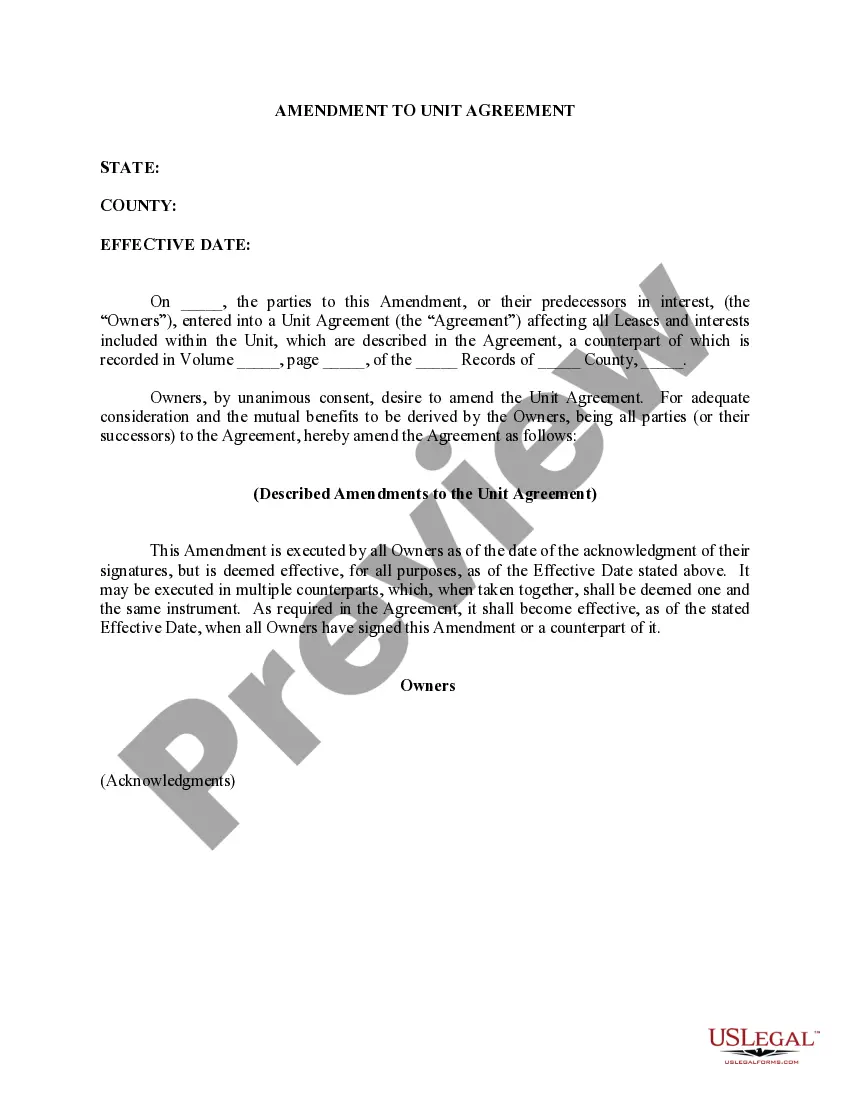
The form is used when the Owners, by unanimous consent, desire to amend a Unit Agreement. It may be executed in multiple counterparts, which, when taken together, shall be deemed one and the same instrument.
Generally, once an amendment is in place, it's often not as simple as flipping a switch to revert it. You’d likely need to create another amendment to undo the changes, so it’s wise to think things through before taking action.
If changes aren't made, it could lead to misunderstandings or disputes down the line. That's like ignoring a leaky faucet; eventually, it's going to create bigger problems.
While there's no hard and fast rule, it's best to make amendments as soon as changes are needed. It's like striking while the iron is hot to ensure that everything remains relevant and accurate.
Typically, all parties involved in the original Unit Agreement need to be in the loop. This means getting agreement from property owners, any partners, and sometimes even local authorities.
Amending a Unit Agreement requires drafting the amendment, gathering necessary approvals from stakeholders, and then filing it with the appropriate authorities. Think of it as rewriting a part of a story to make it fit better.
People often need to amend their Unit Agreement to reflect new developments, changes in ownership, or updates in regulations. It's a way to keep everything above board and in line with current needs.
The Amendment to Unit Agreement is a legal document that outlines changes or updates to existing agreements related to property or land use in Stockton. It's like giving the original agreement a little facelift.