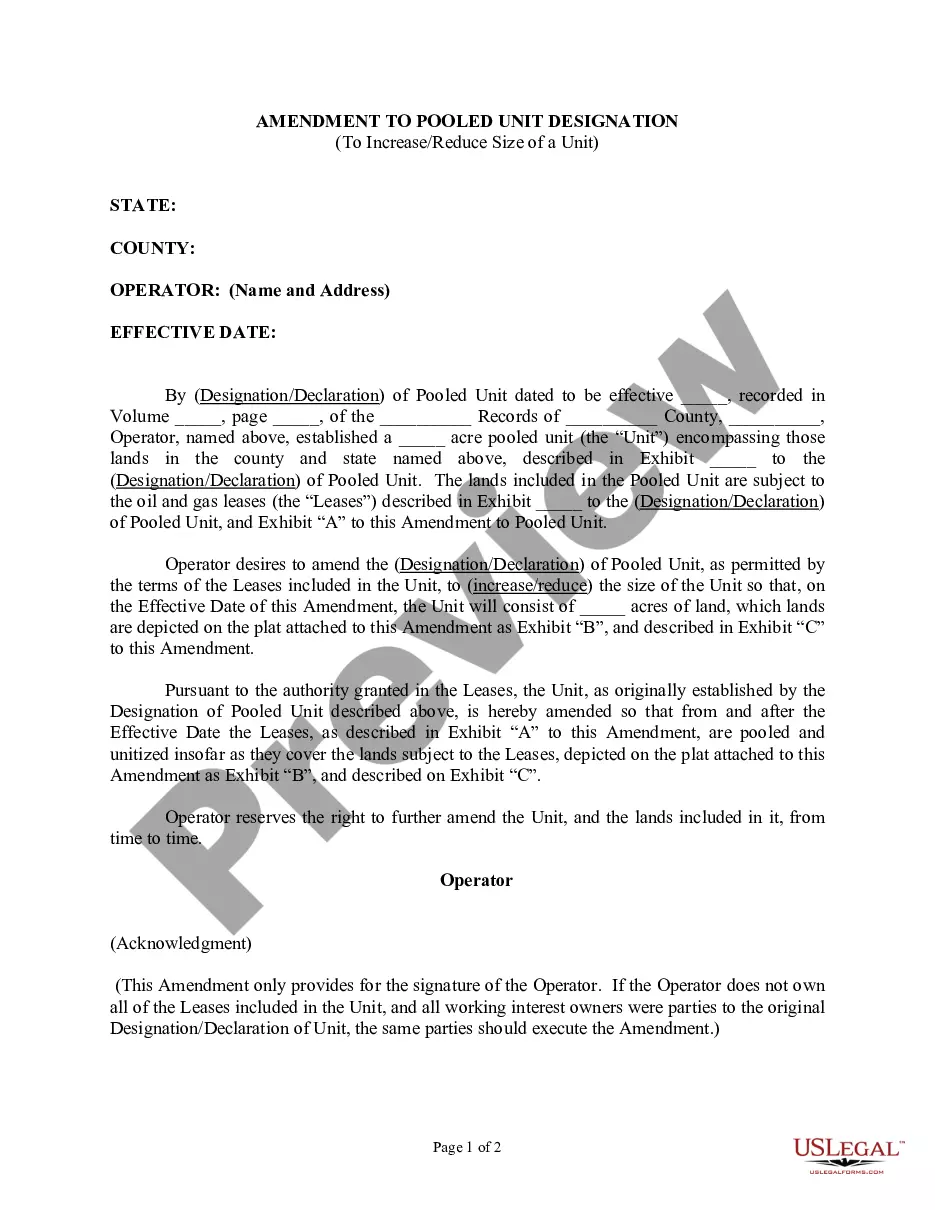
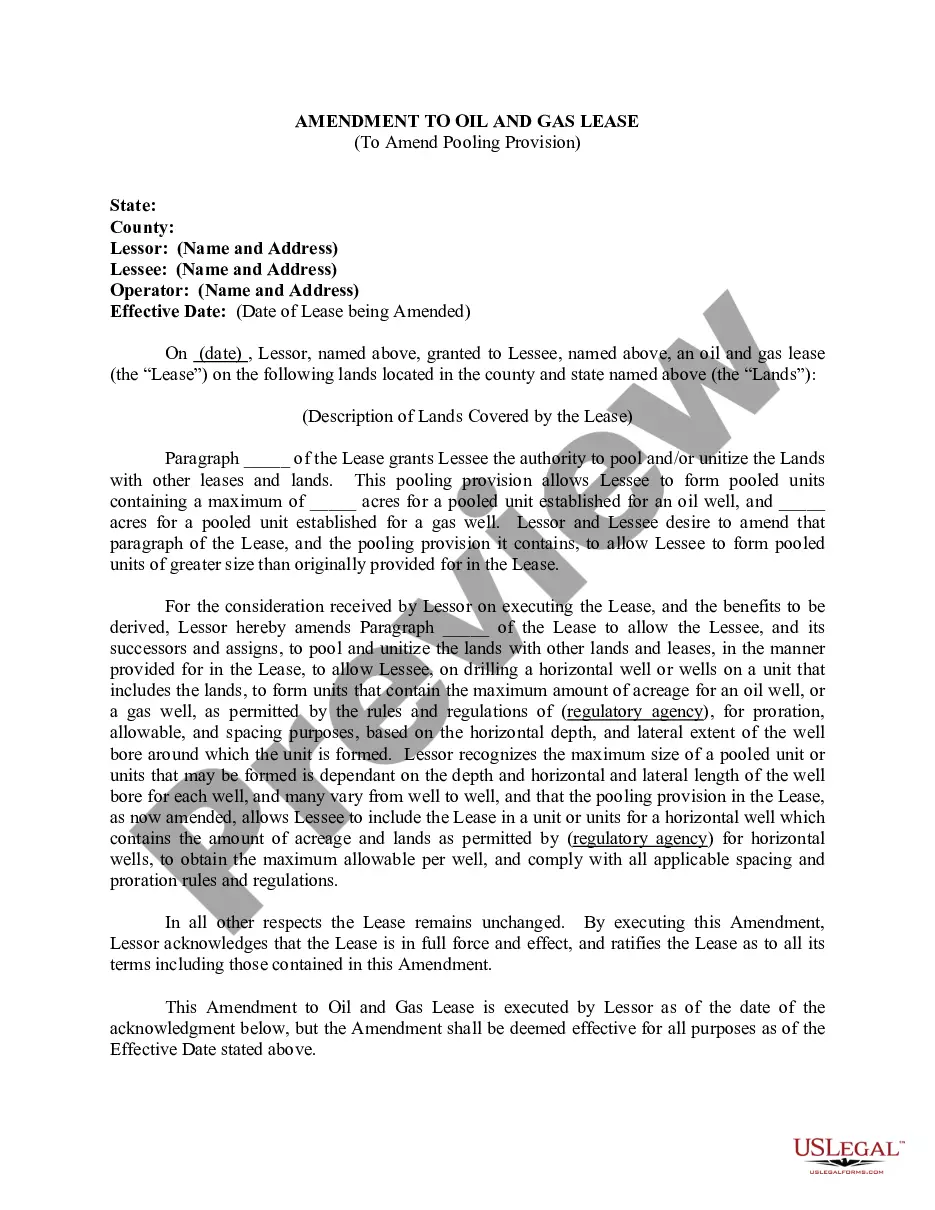
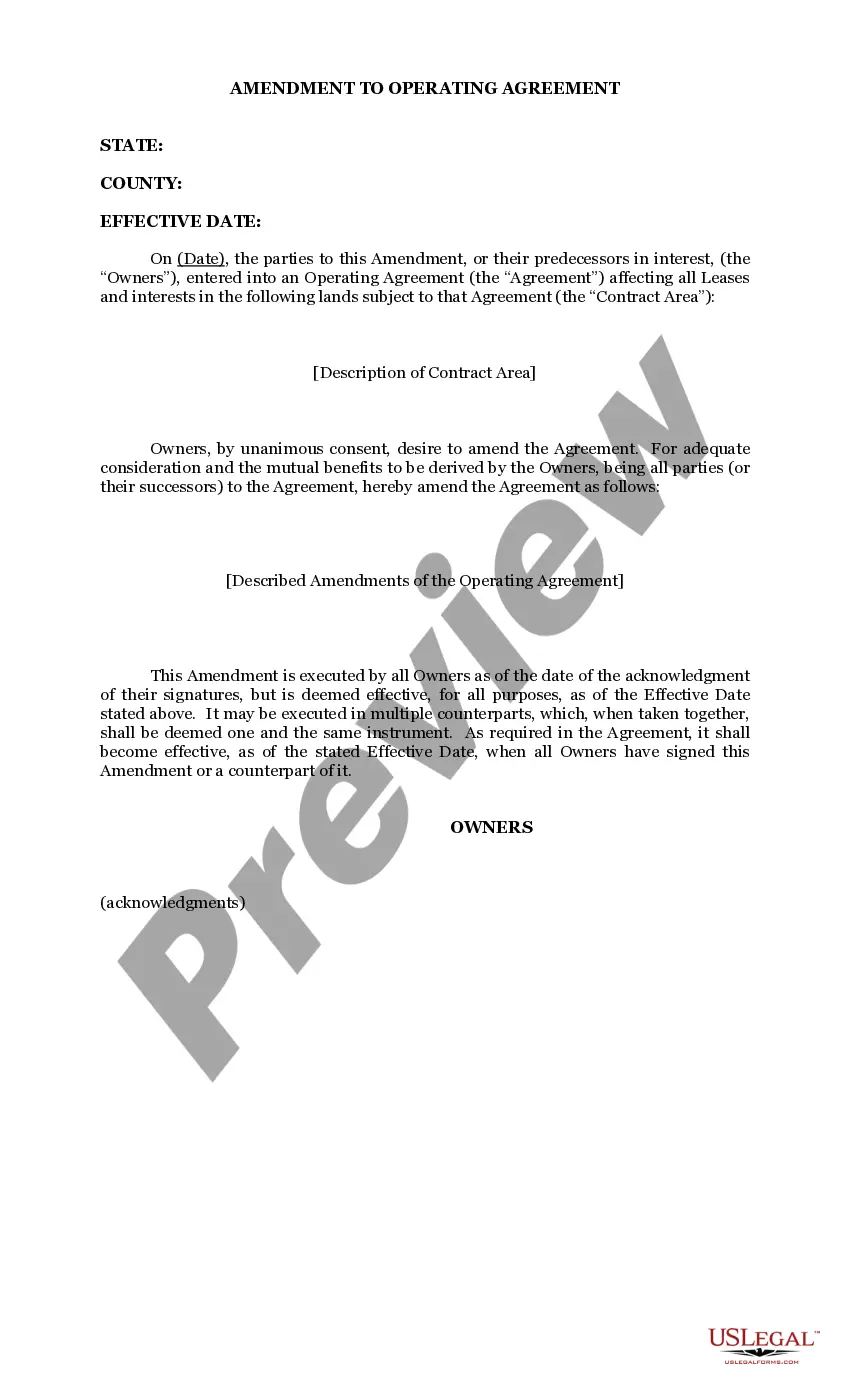
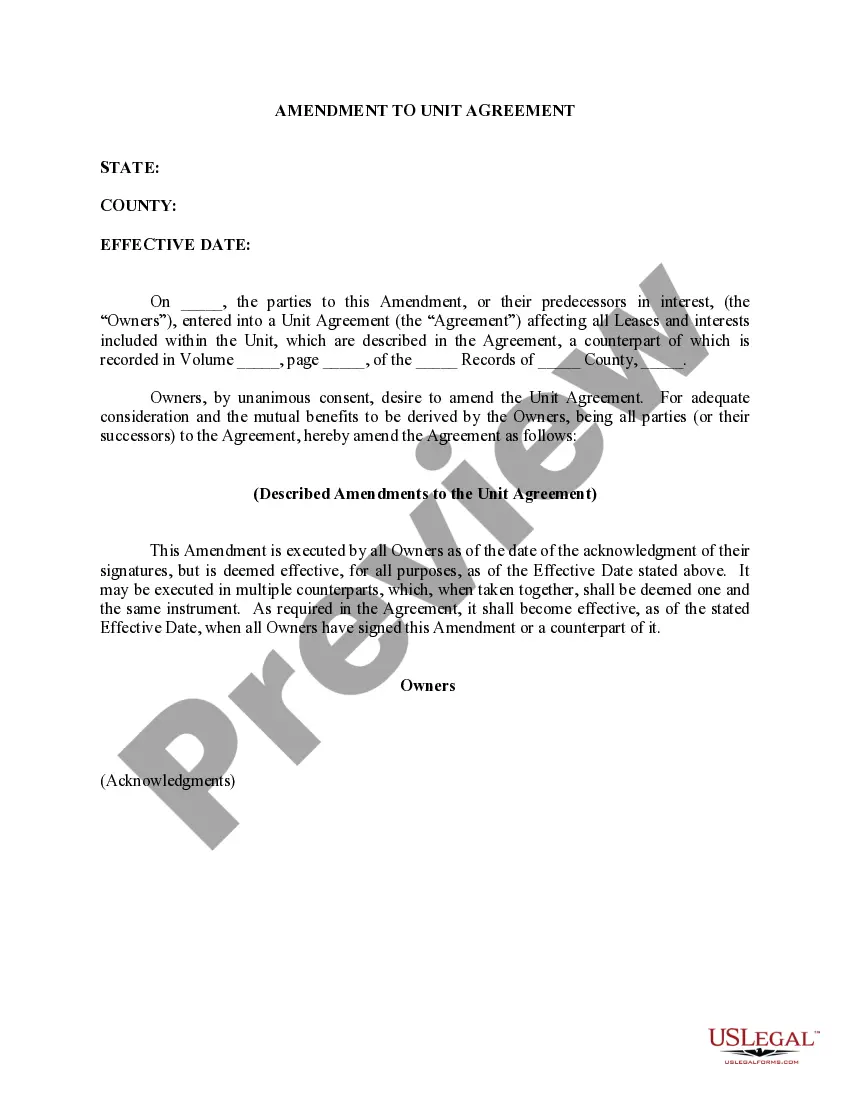
The form is used when the Owners, by unanimous consent, desire to amend a Unit Agreement. It may be executed in multiple counterparts, which, when taken together, shall be deemed one and the same instrument.
Yes, there can be risks, like misunderstanding the new terms or overlooking important details, so it’s best to have legal experts review everything before making any final decisions.
Once the Amendment is signed, it's usually a done deal, so trying to reverse it can be quite tricky unless all parties agree to another amendment.
If there's a disagreement, it can lead to a stalemate, and you might need to bring in a mediator or seek legal advice to resolve any issues that come up.
Making changes usually involves drafting a proposal, discussing it with all parties, and getting their consent before signing off on the amendment.
You might need to amend the Unit Agreement to make sure it reflects current operations, address new regulations, or resolve any disputes that have popped up along the way.
Typically, the parties involved in the original unit agreement, like operators or leaseholders, can propose changes when they see a need to adapt to new conditions or technologies.
The Amendment to Unit Agreement is a legal document that adjusts the terms of an existing unit agreement, allowing for changes in management or operations in the energy sector, especially in oil and gas.