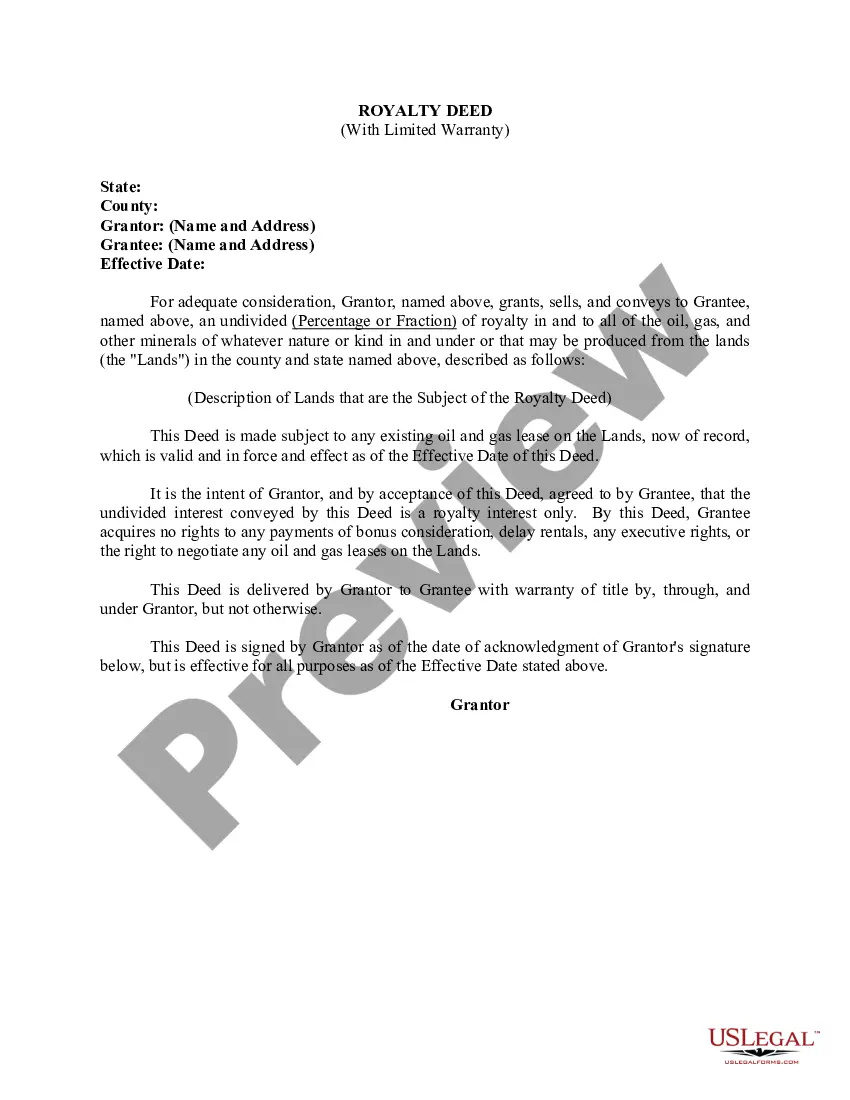
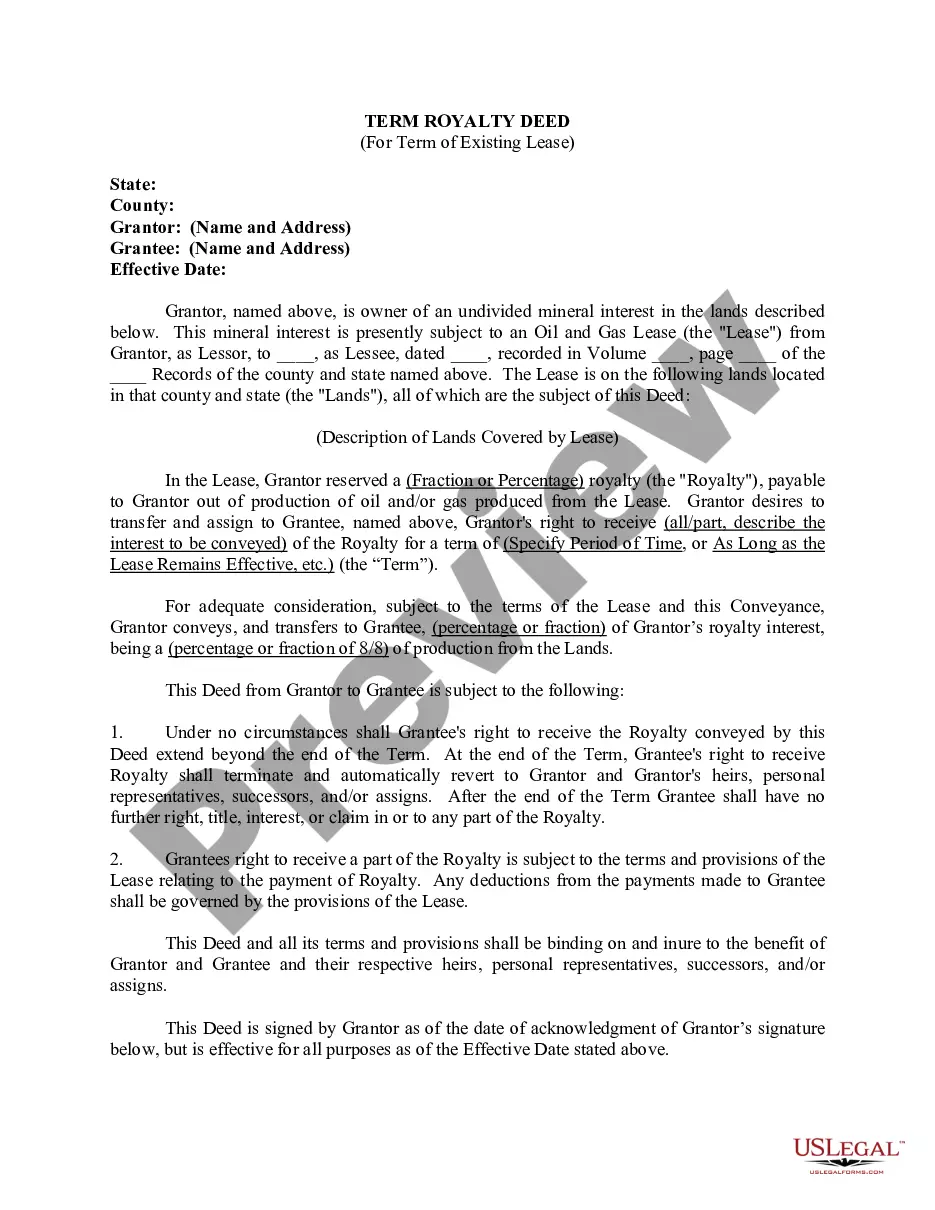
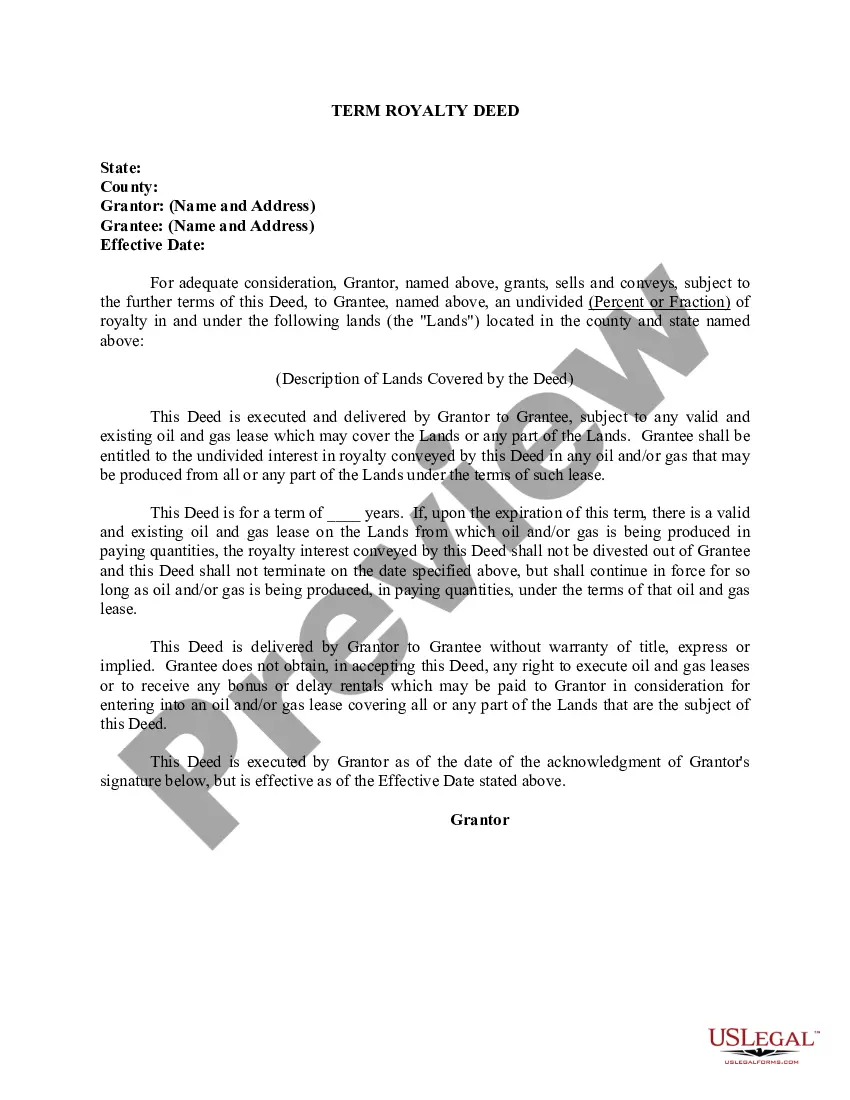
This form conveys a royalty interest for a specified term of years. If there is production at the end of that term, or the lands are subject to an oil and gas lease, the interest will continue to be owned by the grantee until production ceases.

Yes, just like any other rules in life, there are regulations and local laws governing Royalty Deeds that you’ll want to be aware of to keep everything above board.
You’ll need details about the property, the parties involved, and the specific rights being transferred. It’s like putting together a recipe—you want all the right ingredients!
While it's not a hard and fast rule, having a lawyer can help ensure everything is on the up and up, like having a trusty guide on a treasure hunt.
Absolutely! Just like selling a piece of art, you can sell or transfer your Royalty Deed to someone else if you ever feel like passing the torch.
People often use Royalty Deeds to maintain control over mineral rights, oil, gas, or other valuable resources beneath their property, like having your cake and eating it too!
While a regular deed transfers the full ownership of the property, a Royalty Deed only gives rights to certain resources. Think of it as having the keys to a treasure chest but only for some of the jewels inside.
A Royalty Deed is a legal document that transfers ownership of property, granting the buyer specific rights to natural resources on the land. It's like striking gold while digging in your backyard!