If the court agrees, they may order the other party to fulfill their obligations or possibly impose penalties. It's like having a referee stepping in to make sure the game is played fair and square.
Yes, typically, a hearing will be set where both parties can present their arguments. It's like a mini-trial where you'll get a chance to explain your side to the judge.
Include details about the settlement agreement, what the other party is not doing, any evidence or documents that support your claim, and what you want the court to do. Think of it as telling a story where you want to make your point clear.
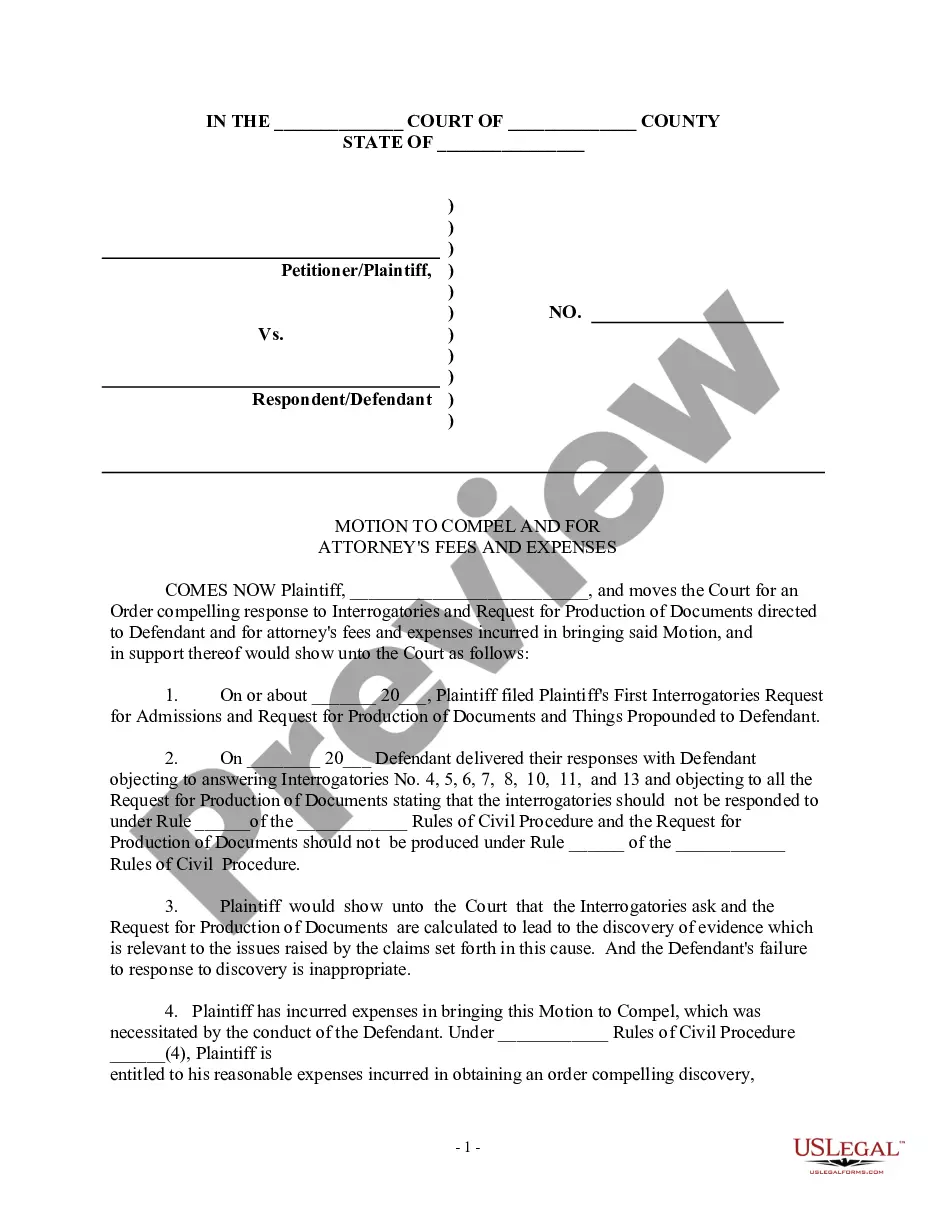
To file, you usually prepare a written motion that explains your case, gather any evidence you have, and then submit it to the court. It's like putting a puzzle together to show the court your side of the story.
Common reasons include non-payment, failure to deliver goods or services, or not adhering to deadlines. Basically, if the other party is dropping the ball, this is how you call them out on it.
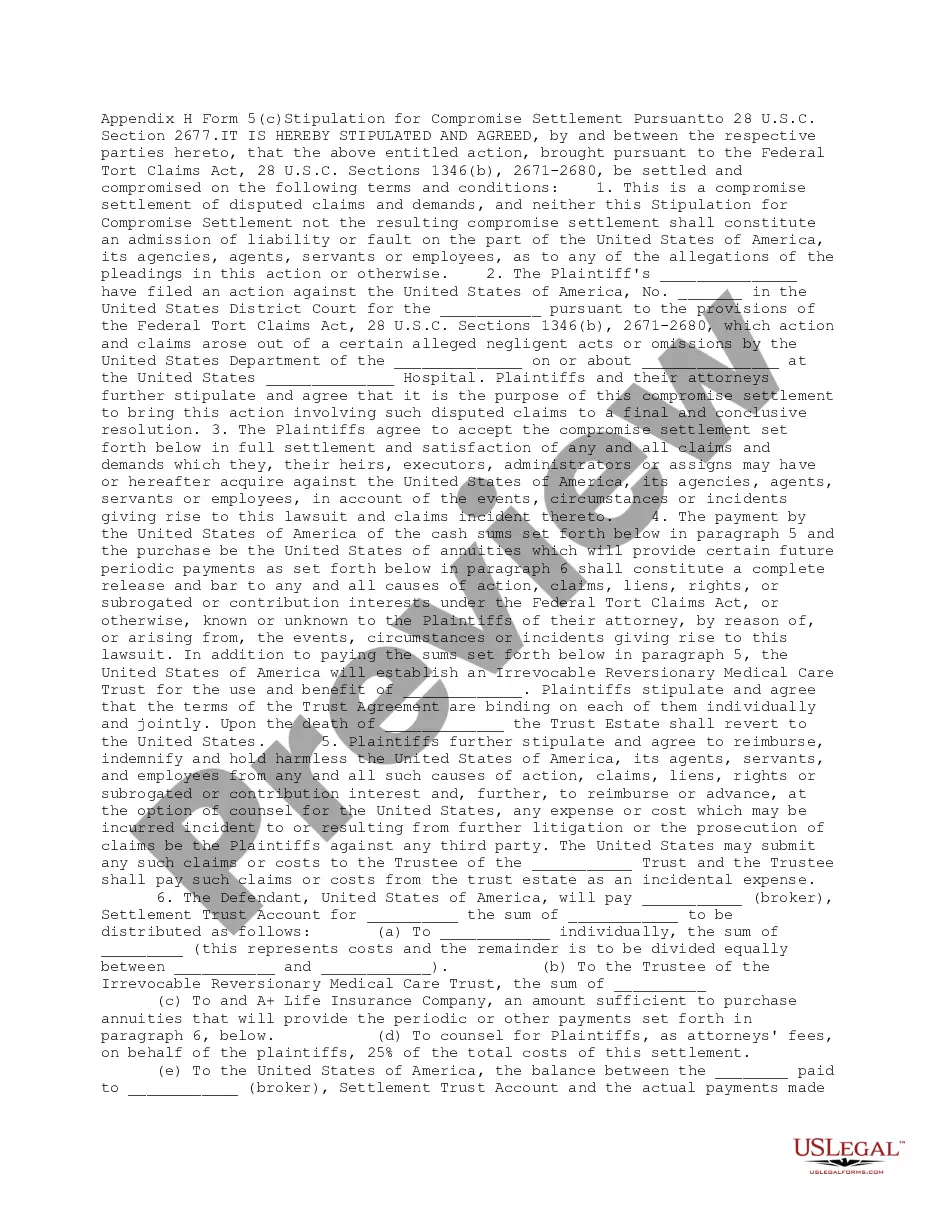
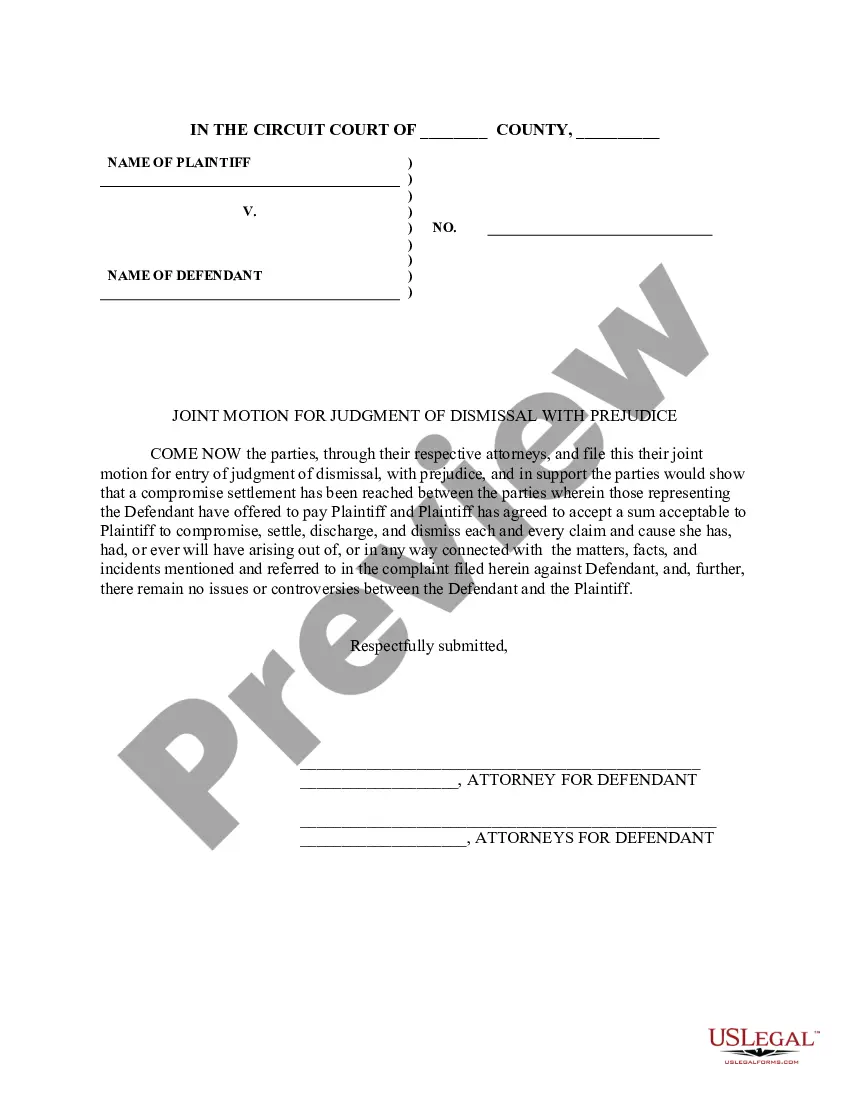
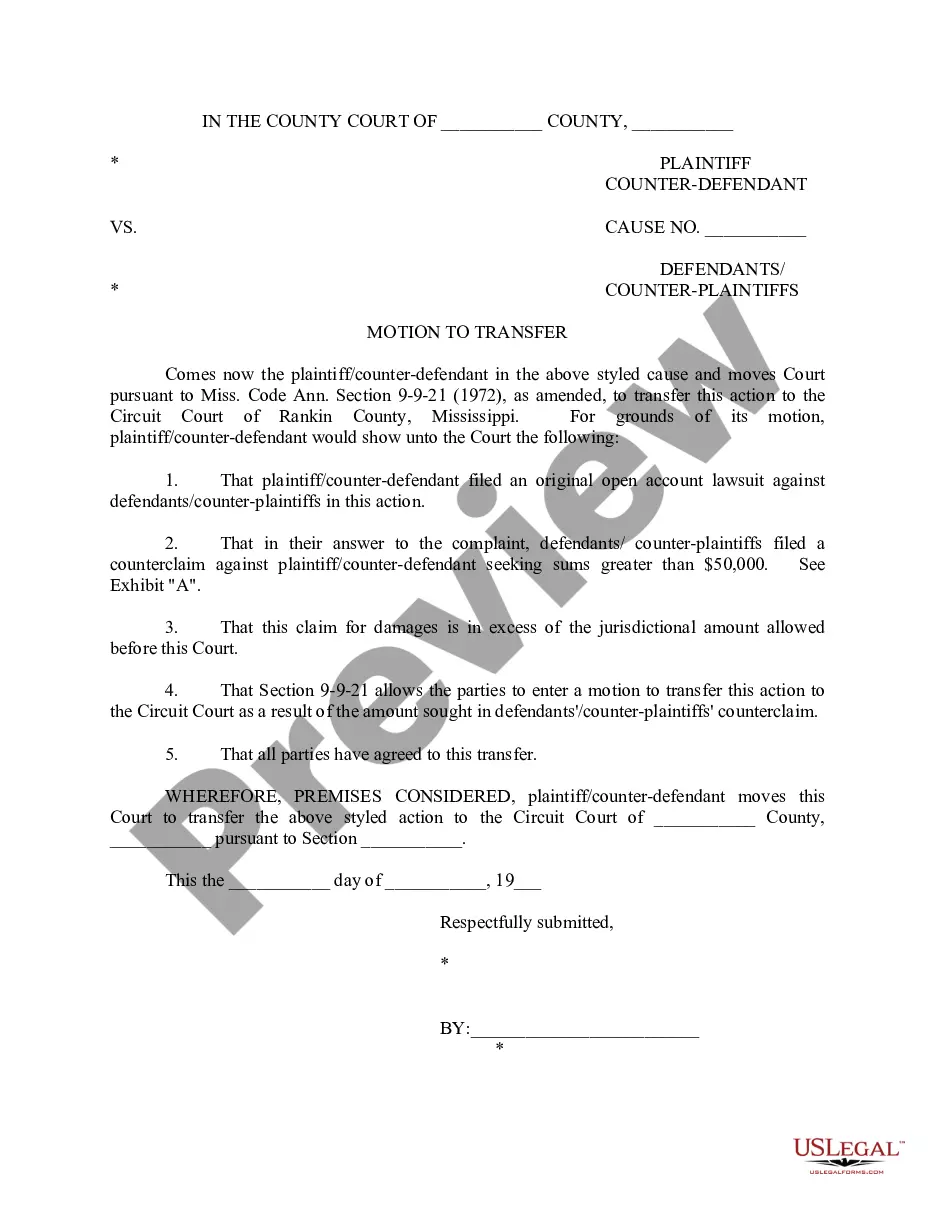
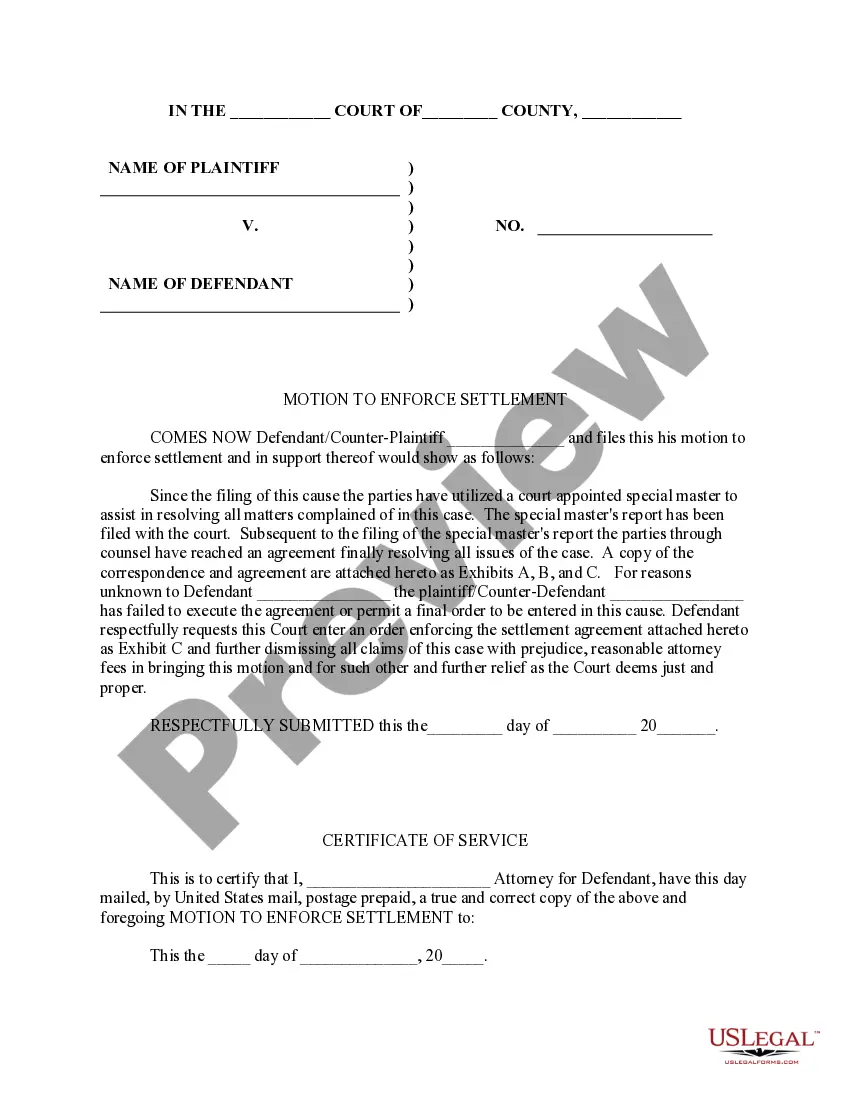
A Motion to Enforce Settlement is a request made to the court to ensure that the terms of a settlement agreement are carried out. It's like asking the judge to step in when someone isn't holding up their end of the bargain.