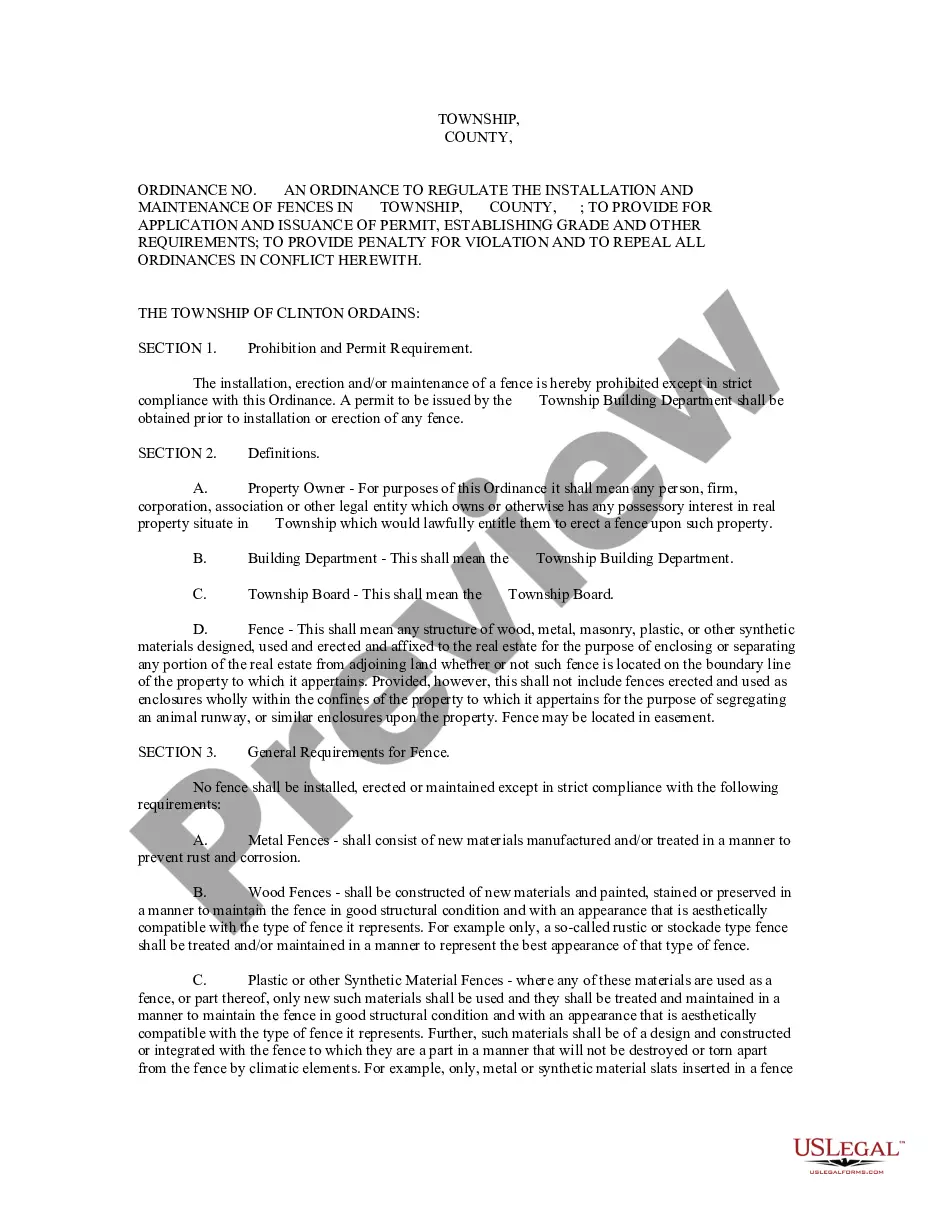
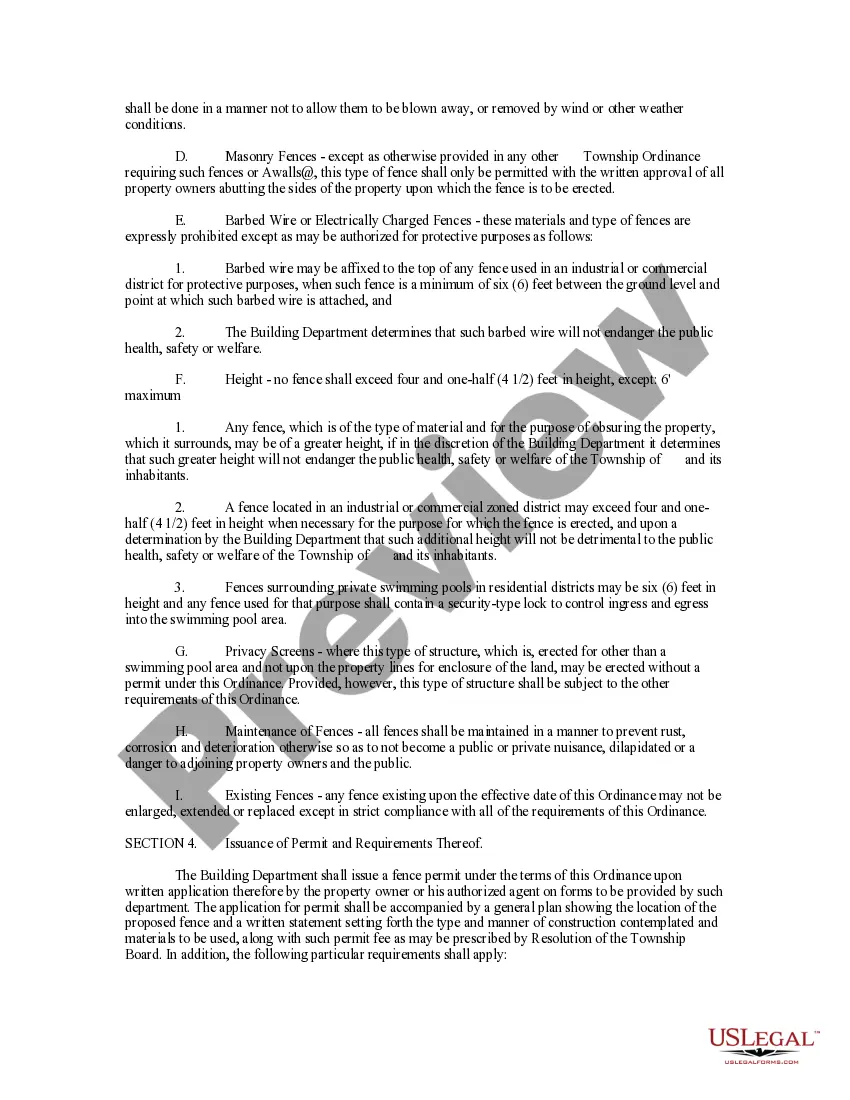
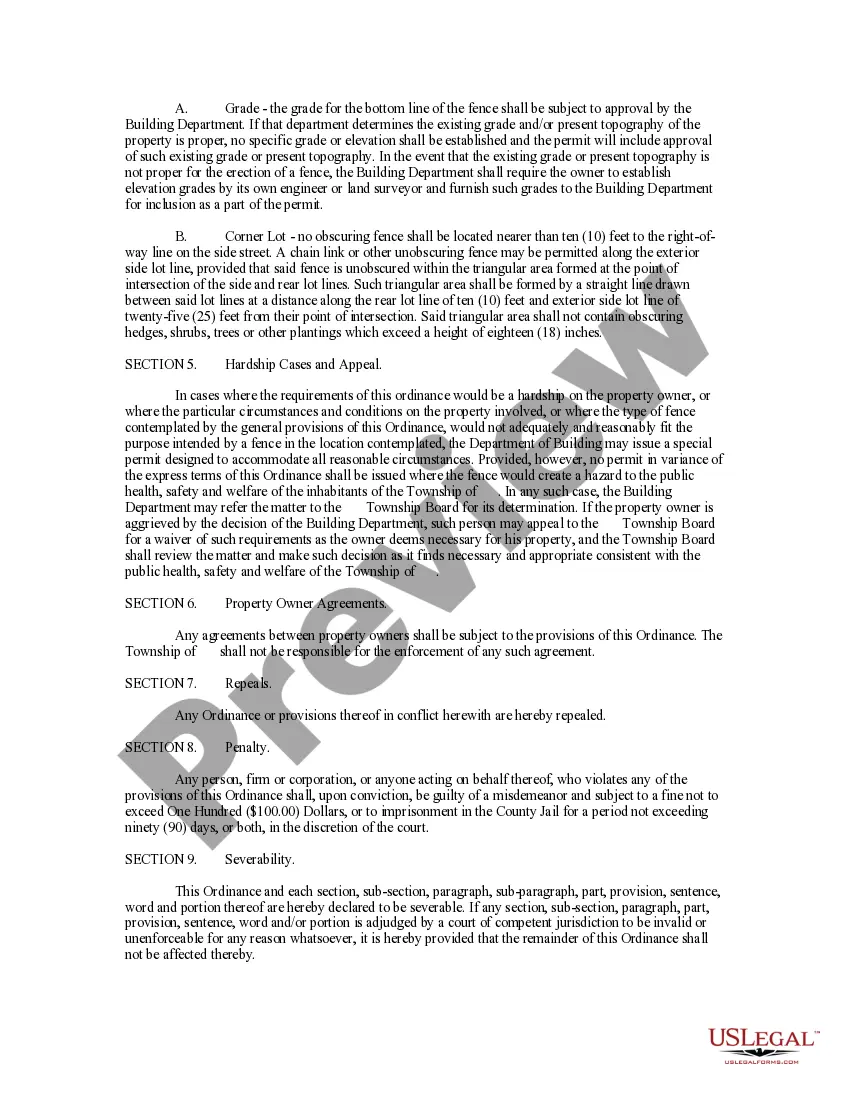
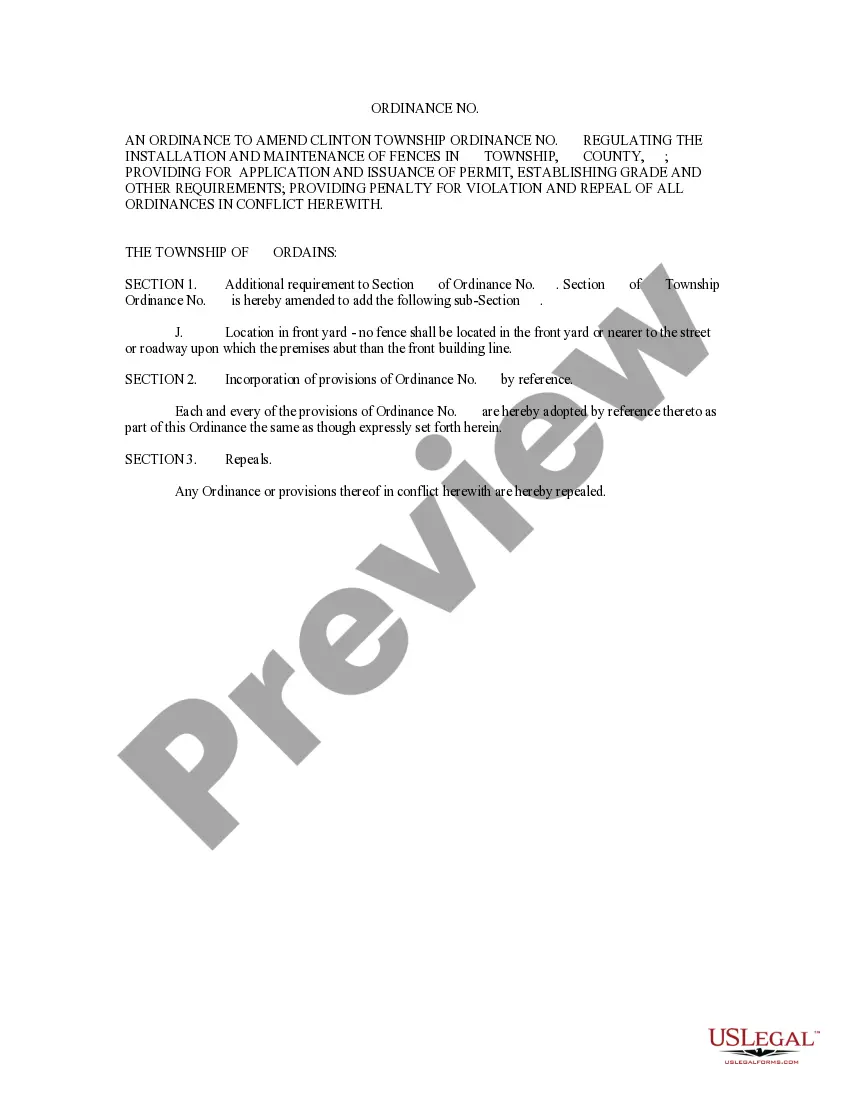
Oakland Michigan Fence Ordinance
Description
Get your form ready online
Our built-in tools help you complete, sign, share, and store your documents in one place.
Make edits, fill in missing information, and update formatting in US Legal Forms—just like you would in MS Word.
Download a copy, print it, send it by email, or mail it via USPS—whatever works best for your next step.
Sign and collect signatures with our SignNow integration. Send to multiple recipients, set reminders, and more. Go Premium to unlock E-Sign.
If this form requires notarization, complete it online through a secure video call—no need to meet a notary in person or wait for an appointment.
We protect your documents and personal data by following strict security and privacy standards.

Make edits, fill in missing information, and update formatting in US Legal Forms—just like you would in MS Word.

Download a copy, print it, send it by email, or mail it via USPS—whatever works best for your next step.

Sign and collect signatures with our SignNow integration. Send to multiple recipients, set reminders, and more. Go Premium to unlock E-Sign.

If this form requires notarization, complete it online through a secure video call—no need to meet a notary in person or wait for an appointment.

We protect your documents and personal data by following strict security and privacy standards.
Looking for another form?



How to fill out Fence Ordinance?
Drafting legal documents can be tedious.
Moreover, if you choose to hire a legal expert to draft a commercial agreement, documents for ownership transfer, pre-nuptial contract, divorce documents, or the Oakland Fence Regulations, it might be quite expensive.
Browse the page to verify that a sample exists for your area. Review the form description and utilize the Preview option, if available, to ensure it's the template you require. If the form does not meet your needs, don't hesitate to look for the correct one using the header. Click Buy Now once you've located the appropriate sample and select the most suitable subscription. Log In or register for an account to purchase your subscription. Make a payment with a credit card or via PayPal. Select the file format for your Oakland Fence Regulations and save it. After completing the process, you can print it out and fill it in on paper or upload the template to an online editor for a quicker and more convenient completion. US Legal Forms allows you to access all documents ever purchased multiple times - you can find your templates in the My documents tab in your profile. Give it a try now!
- What is the most economical method to conserve time and finances while producing valid forms that adhere to your state and local statutes.
- US Legal Forms is an excellent option, whether you need templates for personal or business purposes.
- US Legal Forms boasts the largest online collection of state-specific legal forms, offering users access to updated and professionally vetted templates for any scenario all in one location.
- If you're in need of the latest version of the Oakland Fence Regulations, you can quickly locate it on our site.
- Acquiring the documents takes minimal time.
- Users who already possess an account should ensure their subscription is active, Log In, and choose the form by clicking the Download button.
- If you are not yet a subscriber, here’s how you can obtain the Oakland Fence Regulations.
Form popularity
FAQ
You can build your own fence next to your neighbor's property, but you must comply with the local regulations outlined in the Oakland Michigan Fence Ordinance. This includes property line restrictions and height requirements. Always communicate with your neighbor to maintain a good relationship and avoid disputes.
Yes, you can usually place a fence directly on your property line in Michigan, provided you follow the Oakland Michigan Fence Ordinance and local regulations. It's recommended to discuss your plans with your neighbors beforehand to avoid disputes. This collaboration can lead to a mutually beneficial arrangement.
Even where you will be installing the fence within your own property makes a difference. A privacy fence in your backyard will often not require a permit unless it is to be over 6 feet tall, depending on where you live, while the cut-off for the same type of fence in your front yard may be just 3.5 feet.
Fence Laws In California: A Quick Overview Under California's Building Code, you must obtain a permit before building a fence that will be over 6 feet tall unless the top 2 feet of the fence will be barbed wire. For a front yard fence, the maximum height is 42 inches.
Up to one structure measuring less than 120 sq ft per property is generally permitted outright and does NOT count towards total lot coverage. If Mechanical, Electrical, or Plumbing (MEP) work is involved OR if the structure is greater than 120 sq. ft., accessory structures also require a Building Permit.
Building Permits are required to construct a new deck, expand an existing one, or repair or replace one in-kind. For new decks, Planning Review is required. For decks over 30" in height from the ground to the platform or 6' from the ground to the top of the railing, Zoning regulations must be adhered to.
Fence Laws In California: A Quick Overview For a front yard fence, the maximum height is 42 inches. For a backyard fence, the maximum height is 72 inches. If you're sharing a fence with a neighbor, your fence must be a minimum of 60 inches high and be free of gaps that a small child might pass through.
In most cases, if you add an outdoor structure such as a fence, you need a permit. However, it specifically depends on the codes, zoning and regulations of where you live. In some cases, you may not need a permit but you must adhere to the local regulations regarding height limits and specific fence materials.
When Are Permits Required? Fences measuring 3.5' to 6' in height in a front yard require a Zoning Permit and must be at least 60% transparent. Fences over 6' in residential front yards are NOT permitted. Wood and metal fences over 7' require a Building Permit.
In most cases, you can build a fence on an easement that runs through your property. However, the dominant estate (for example, the utility company) may need to take down the portion of the fence that runs over the easement for a certain activity, such as repairing the sewer main.