Nassau New York Fence Ordinance
Description
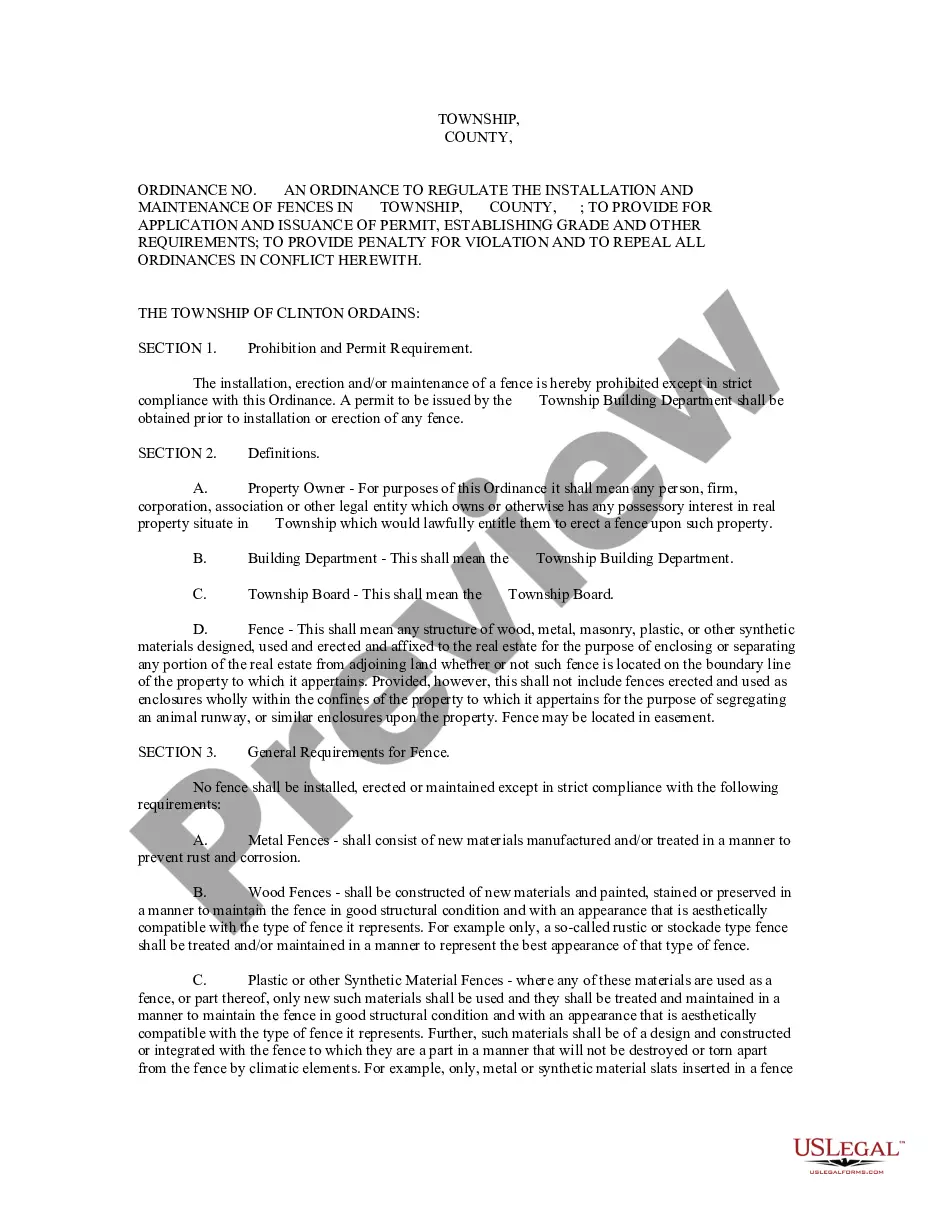
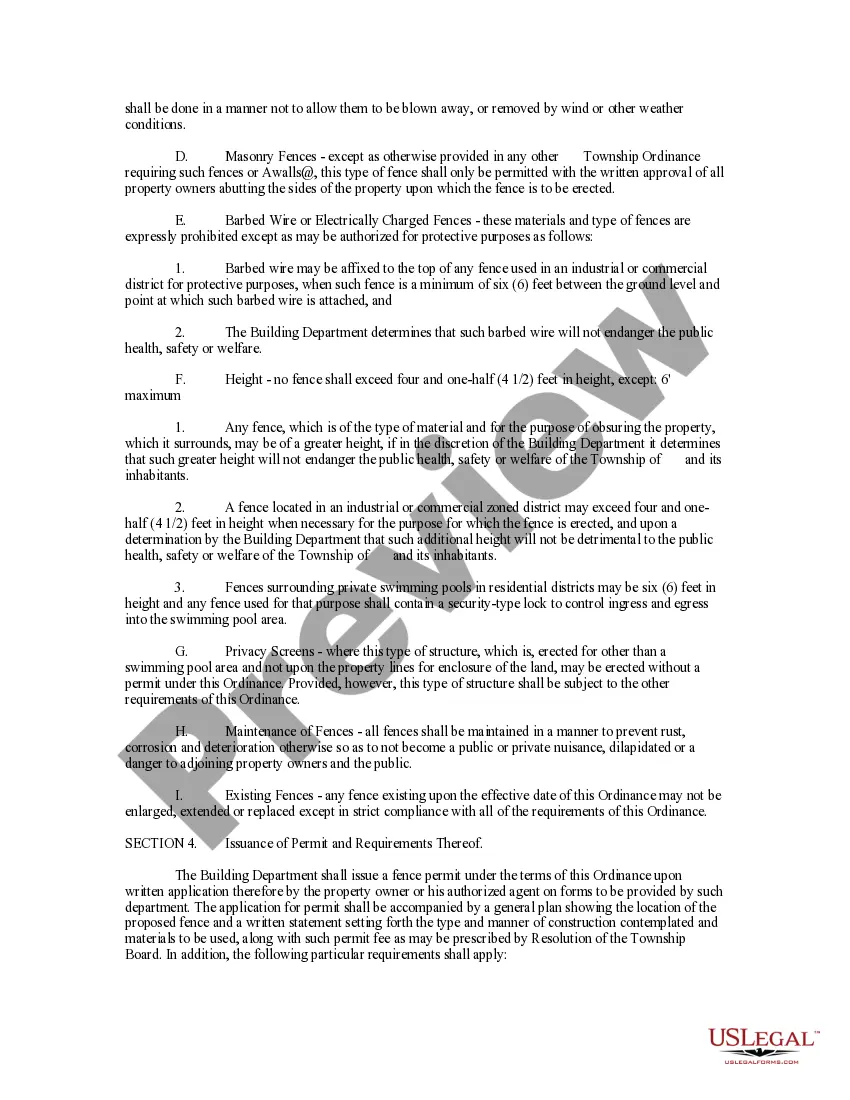
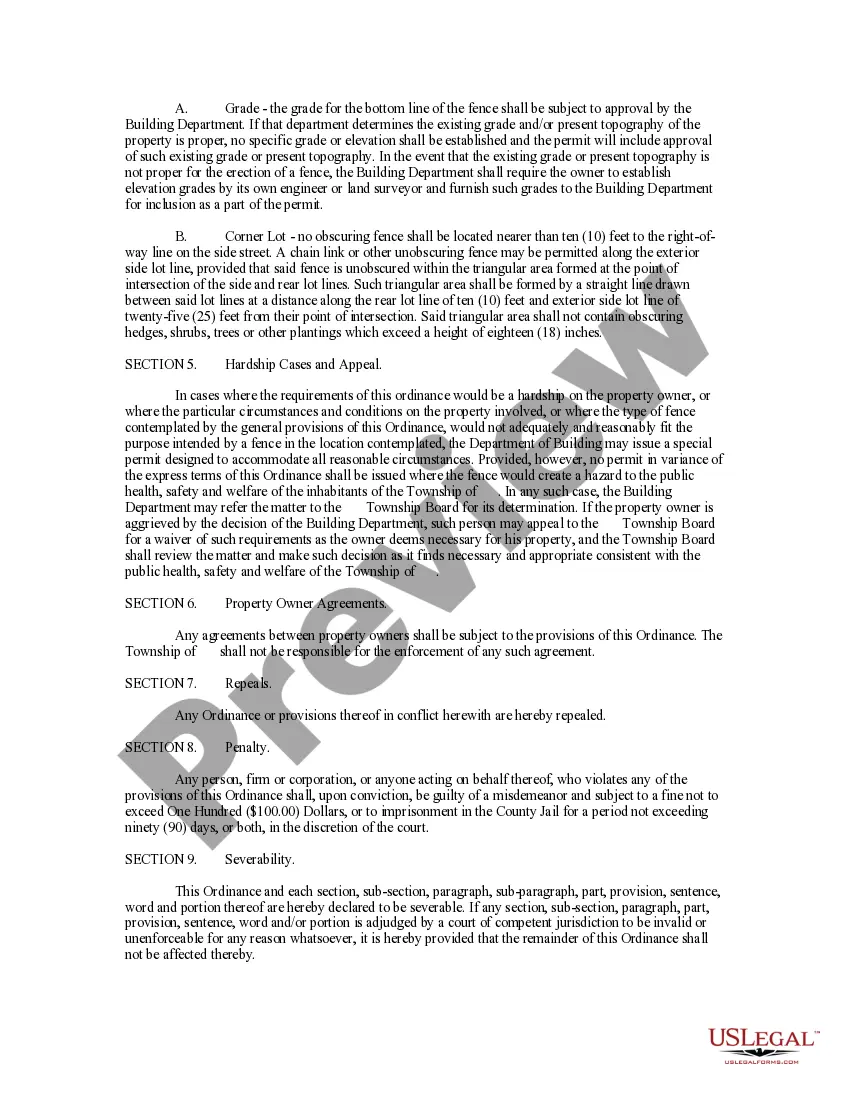
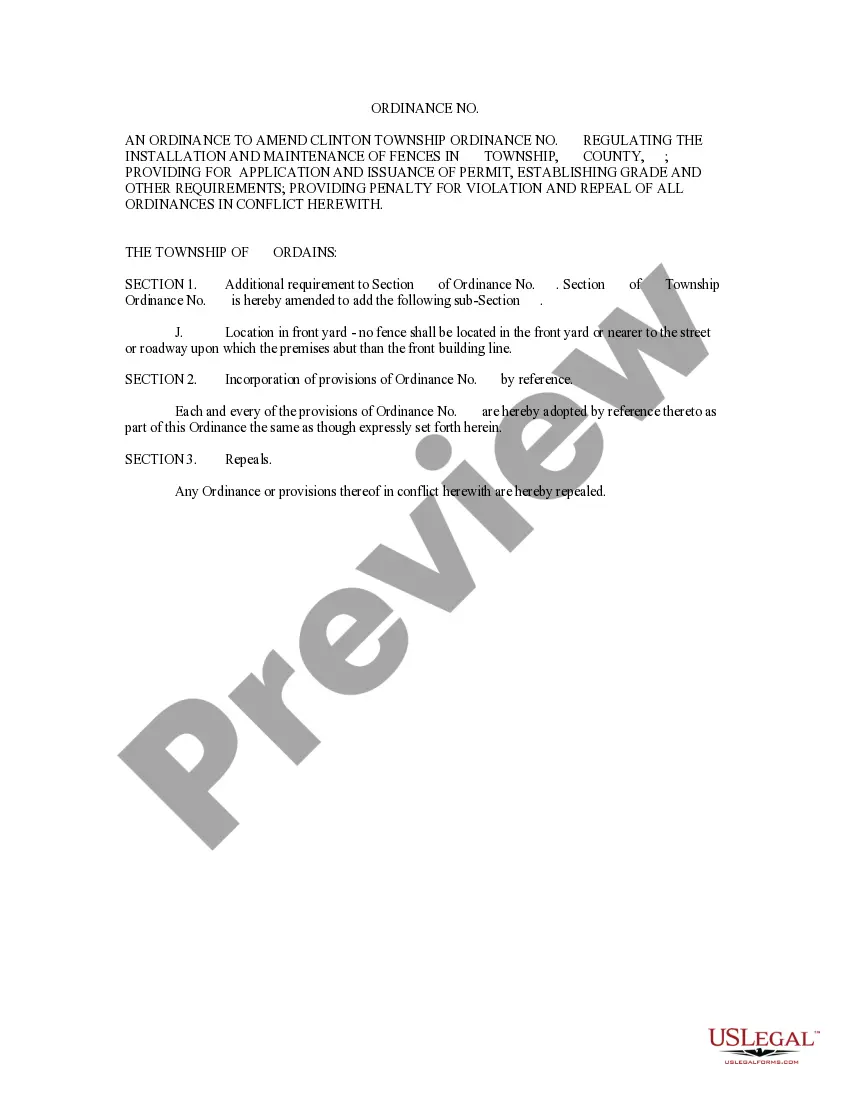
Get your form ready online
Our built-in tools help you complete, sign, share, and store your documents in one place.
Make edits, fill in missing information, and update formatting in US Legal Forms—just like you would in MS Word.
Download a copy, print it, send it by email, or mail it via USPS—whatever works best for your next step.
Sign and collect signatures with our SignNow integration. Send to multiple recipients, set reminders, and more. Go Premium to unlock E-Sign.
If this form requires notarization, complete it online through a secure video call—no need to meet a notary in person or wait for an appointment.
We protect your documents and personal data by following strict security and privacy standards.

Make edits, fill in missing information, and update formatting in US Legal Forms—just like you would in MS Word.

Download a copy, print it, send it by email, or mail it via USPS—whatever works best for your next step.

Sign and collect signatures with our SignNow integration. Send to multiple recipients, set reminders, and more. Go Premium to unlock E-Sign.

If this form requires notarization, complete it online through a secure video call—no need to meet a notary in person or wait for an appointment.

We protect your documents and personal data by following strict security and privacy standards.
Looking for another form?








How to fill out Fence Ordinance?
Whether you intend to launch your enterprise, enter a contract, seek an update for your identification, or address legal matters related to family, you must gather specific documentation that complies with your regional laws and regulations.
Locating the appropriate documents may require considerable time and effort unless you utilize the US Legal Forms repository.
The platform offers users over 85,000 professionally created and validated legal templates for any personal or business event. All documents are organized by state and purpose, making it quick and easy to select a template like Nassau Fence Ordinance.
Documents available in our library are reusable. With an active subscription, you can access all your previously obtained documents at any time from the My documents tab in your profile. Stop wasting time in a continuous search for current official documents. Register for the US Legal Forms platform and maintain your paperwork organized with the most comprehensive online form library!
- Ensure the example meets your specific requirements and state legal standards.
- Browse through the form description and review the Preview if accessible on the page.
- Use the search feature specifying your state above to discover another template.
- Click Buy Now to procure the document once you find the suitable one.
- Choose the subscription plan that best fits your needs to proceed.
- Log in to your account and process the payment using a credit card or PayPal.
- Download the Nassau Fence Ordinance in the file format you prefer.
- Print the document or complete it and sign it electronically via an online editor to save time.
Form popularity
FAQ
Building a fence without a permit can lead to various consequences under the Nassau New York Fence Ordinance. You may face fines, and the local government can require you to remove the fence, which can incur additional costs. It's essential to check the requirements before starting construction to avoid any legal complications. Consulting with experts or platforms like USLegalForms can provide guidance on the permitting process.
A: Yes, you need a permit for a fence.
Six feet without a permit. Anything higher requires a variance from the Zoning Board of Appeals and a building permit. Up to 6 feet in side or rear yards. Fences in the front yard are limited to 4 feet unless set back from the property line by 15 feet.
Permits are required for the following actions unless stated otherwise. Addition / Alteration Any structure other than the main building (i.e. barns, garages, carports, gazebos, pergolas, cabanas, etc.) Structure) Addition Enlarging a structure by adding to the size in any direction.
In Long Island, permits are typically required for the following types of work: Decks and patios. Dormers. Central A/C and generators.
In most cases, you can build a fence on an easement that runs through your property. However, the dominant estate (for example, the utility company) may need to take down the portion of the fence that runs over the easement for a certain activity, such as repairing the sewer main.
A fence permit is required for the installation, replacement, or removal of any and all fencing on properties within the unincorporated areas of the Town of North Hempstead. The homeowner assumes all risks related to the erection of fencing on their property.
In most cases, if you add an outdoor structure such as a fence, you need a permit. However, it specifically depends on the codes, zoning and regulations of where you live. In some cases, you may not need a permit but you must adhere to the local regulations regarding height limits and specific fence materials.
Typically, fences are installed anywhere from 2 to 8 inches from a property line in most areas. Some areas might allow to go right up to a property line, especially if you live in an urban row house where every inch makes a difference!
Even where you will be installing the fence within your own property makes a difference. A privacy fence in your backyard will often not require a permit unless it is to be over 6 feet tall, depending on where you live, while the cut-off for the same type of fence in your front yard may be just 3.5 feet.