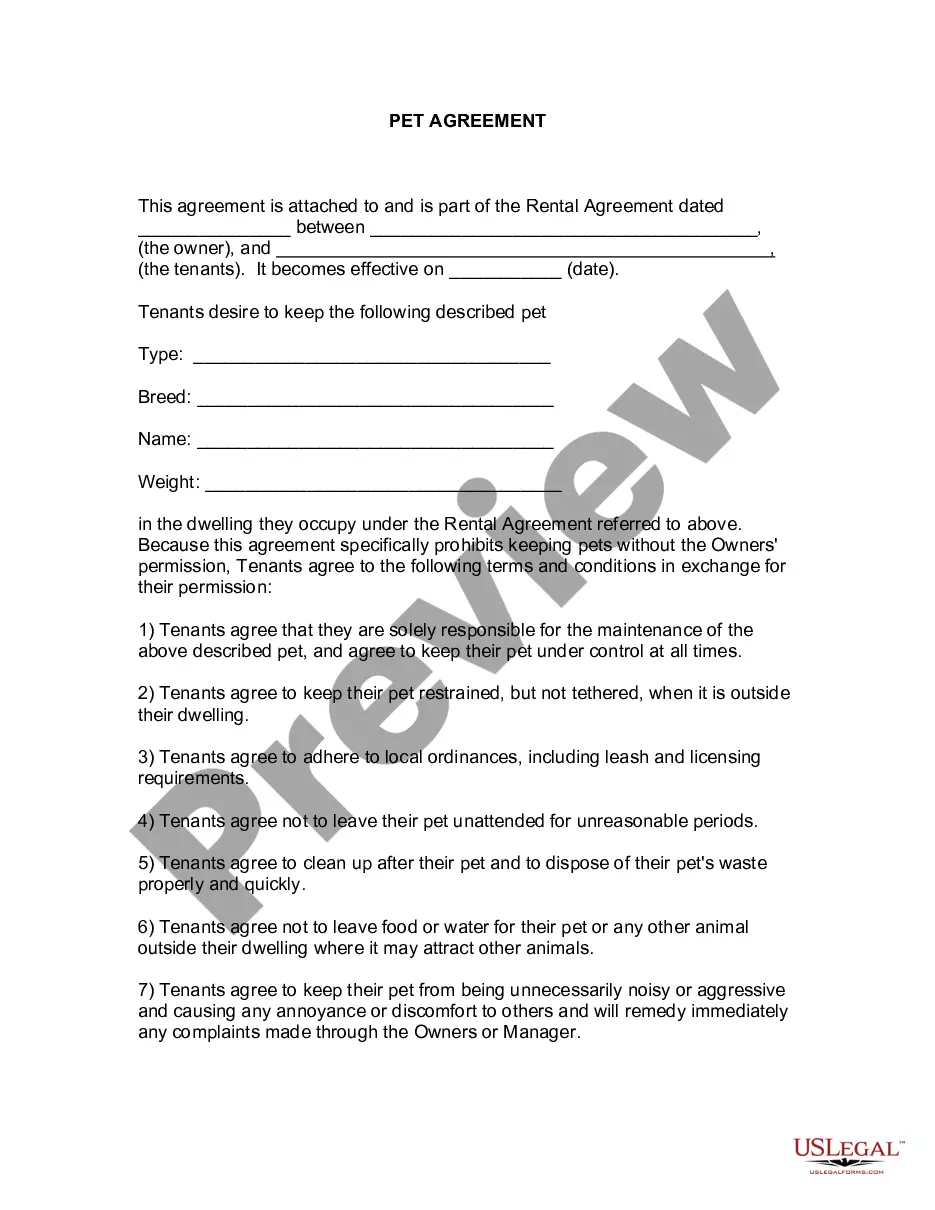
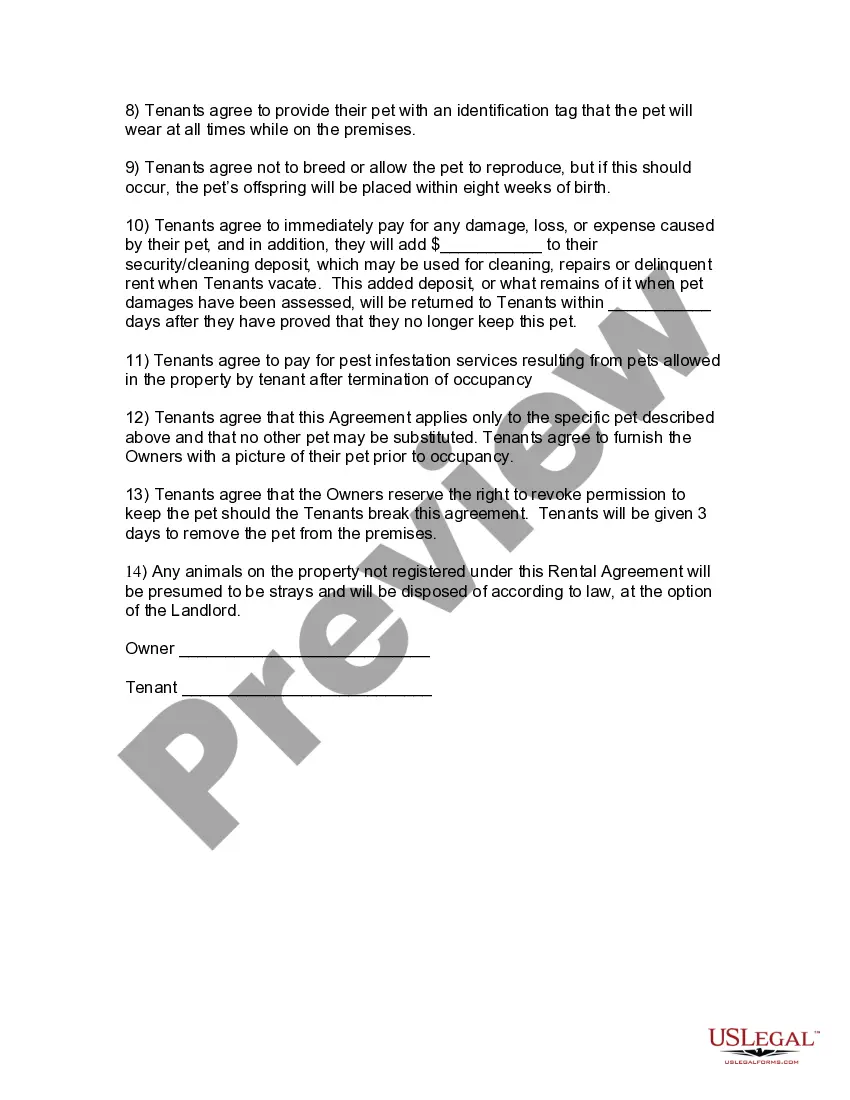
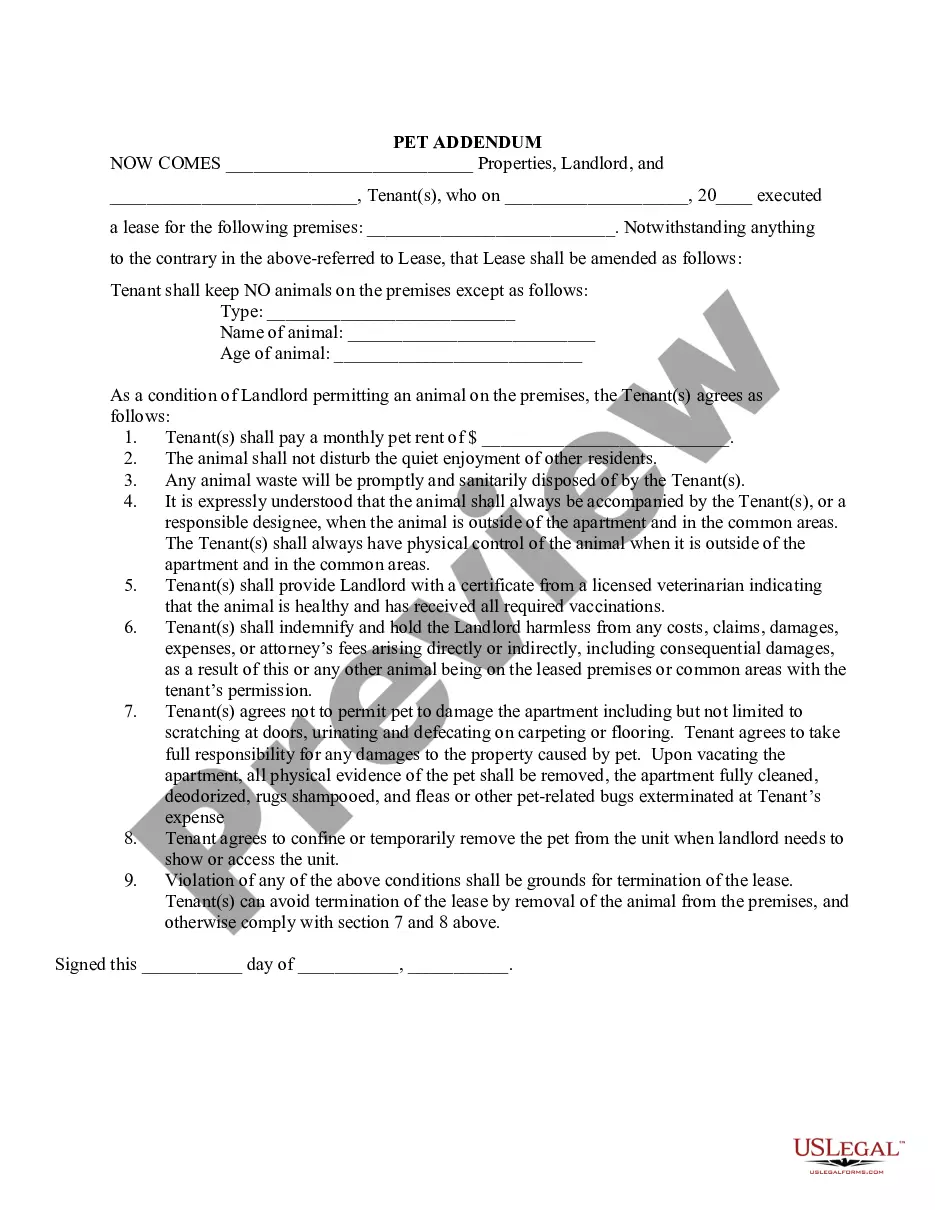
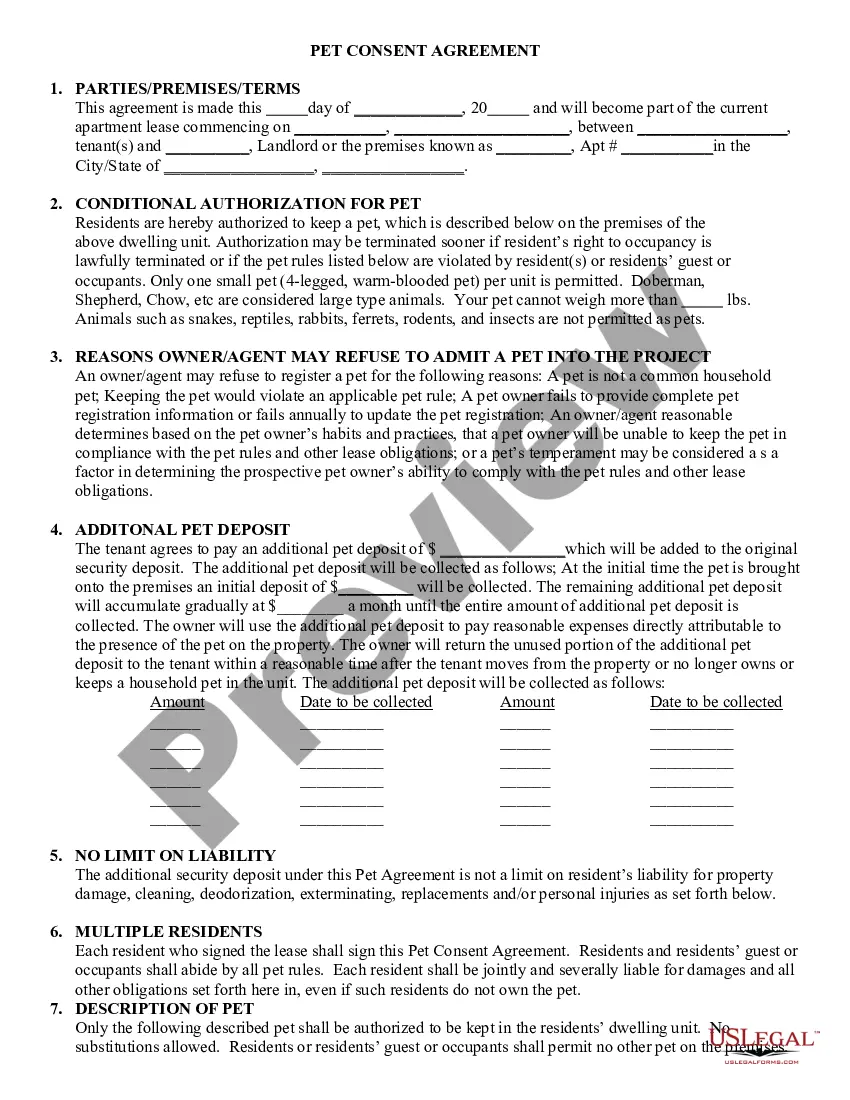
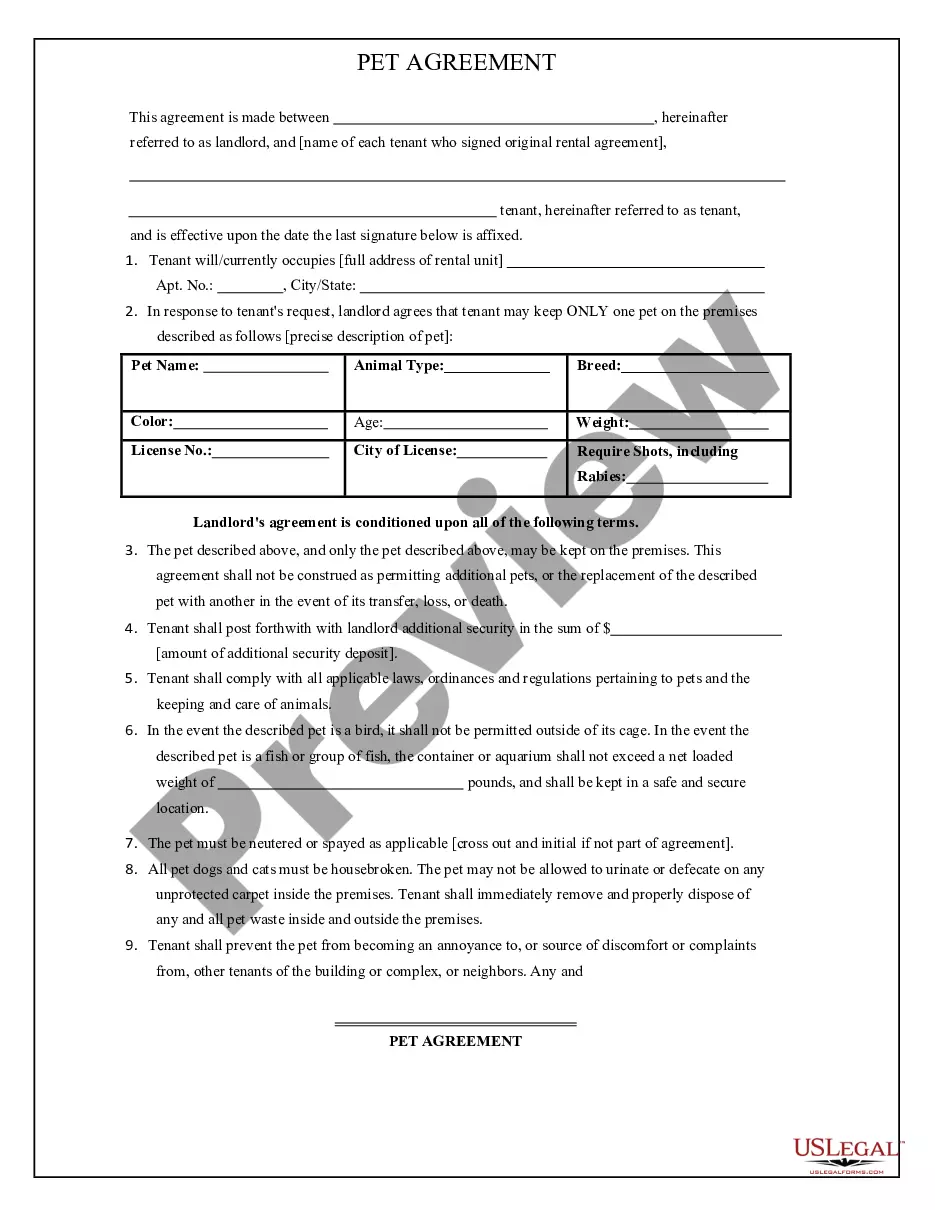
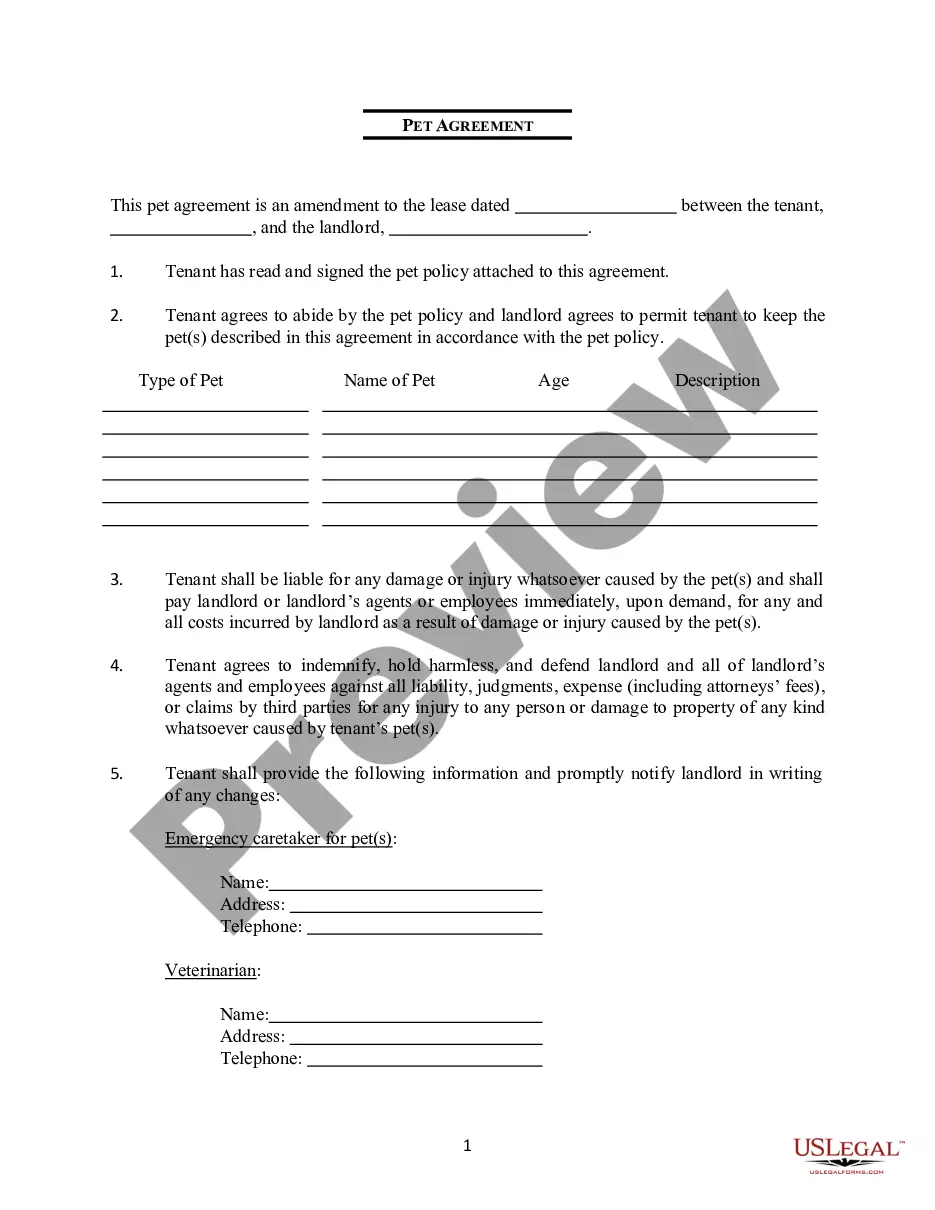
A pet agreement is used between a landlord and tenant and allows the tenant to keep specific pets in the rented space as described in the agreement. The agreement may be customized to suit your needs.
Common rules may include keeping pets leashed in common areas, cleaning up after them, and ensuring they don't disturb the neighbors. It’s all about keeping the peace!
Absolutely, your landlord has the right to deny a pet request based on their criteria. Make sure you're clear on what pets are welcome before signing the lease.
If your pet causes damage, you might be responsible for covering those repairs, usually through the pet deposit. It's best to keep a watchful eye on your furry friends!
Yes, many agreements may have breed restrictions for dogs. It's wise to read the fine print, so you don't end up with an unwelcome surprise.
Not quite! Most agreements specify which types of pets are allowed, often focusing on common ones like dogs and cats. Check your specific agreement to avoid stepping on any toes.
A pet agreement is a document that lays down the rules for having pets in your rental. It helps protect both you and your landlord by making sure everyone is on the same page about pet responsibilities.
Often, landlords may ask for a pet deposit to cover any potential damage caused by your furry friend. This is a common practice to protect the property.
Trusted and secure by over 3 million people of the world’s leading companies