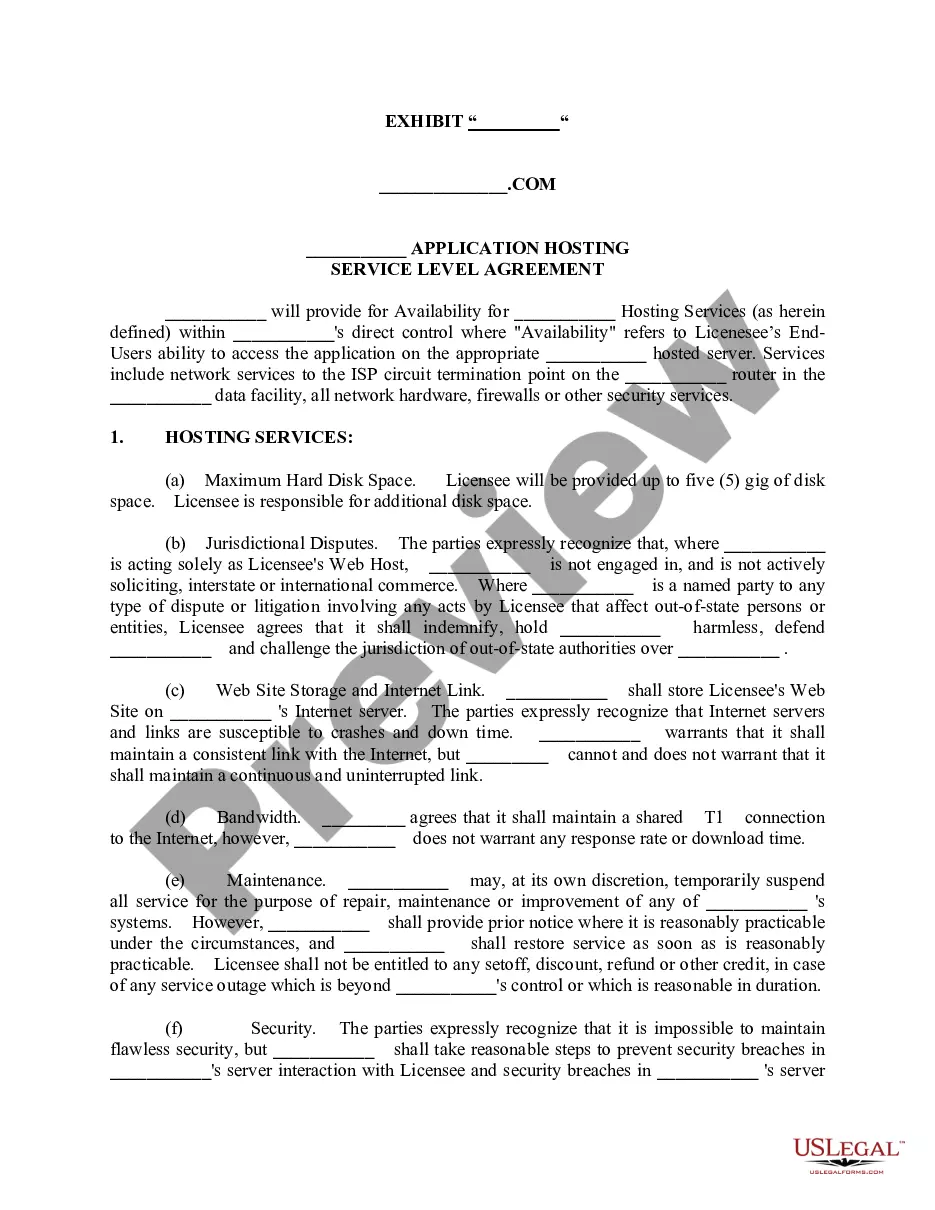
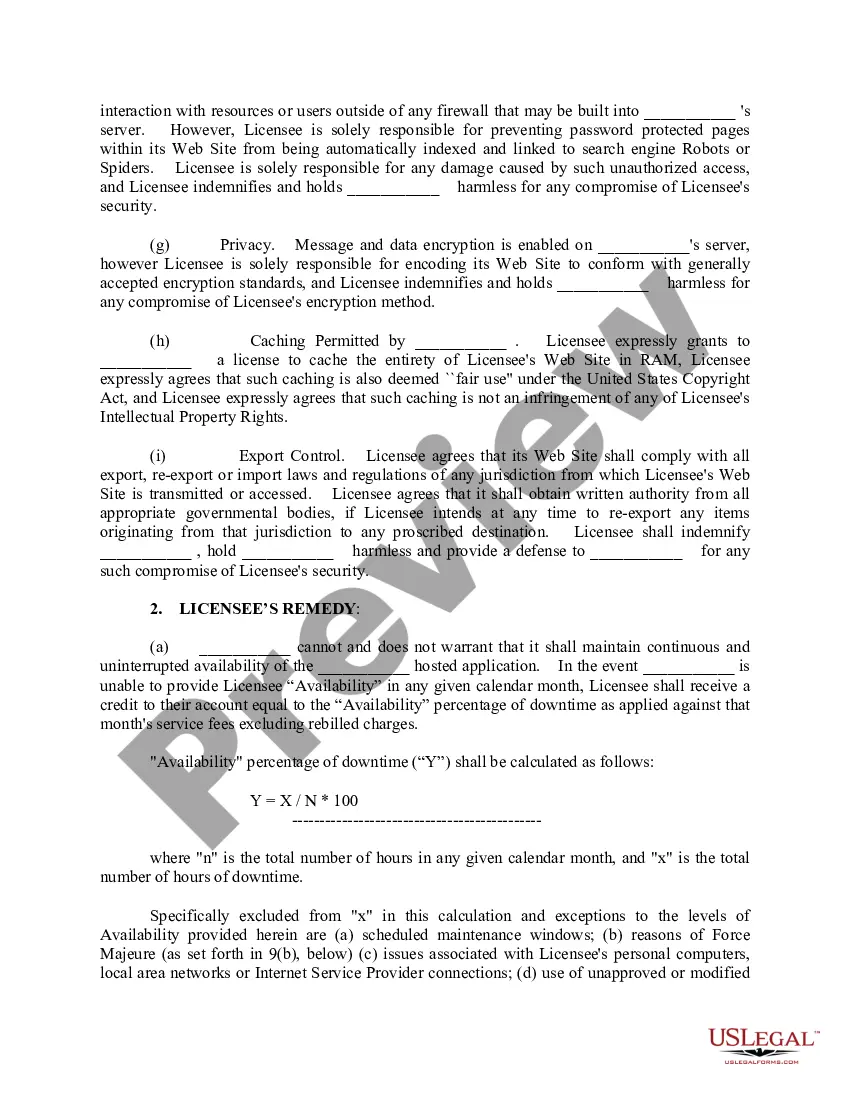
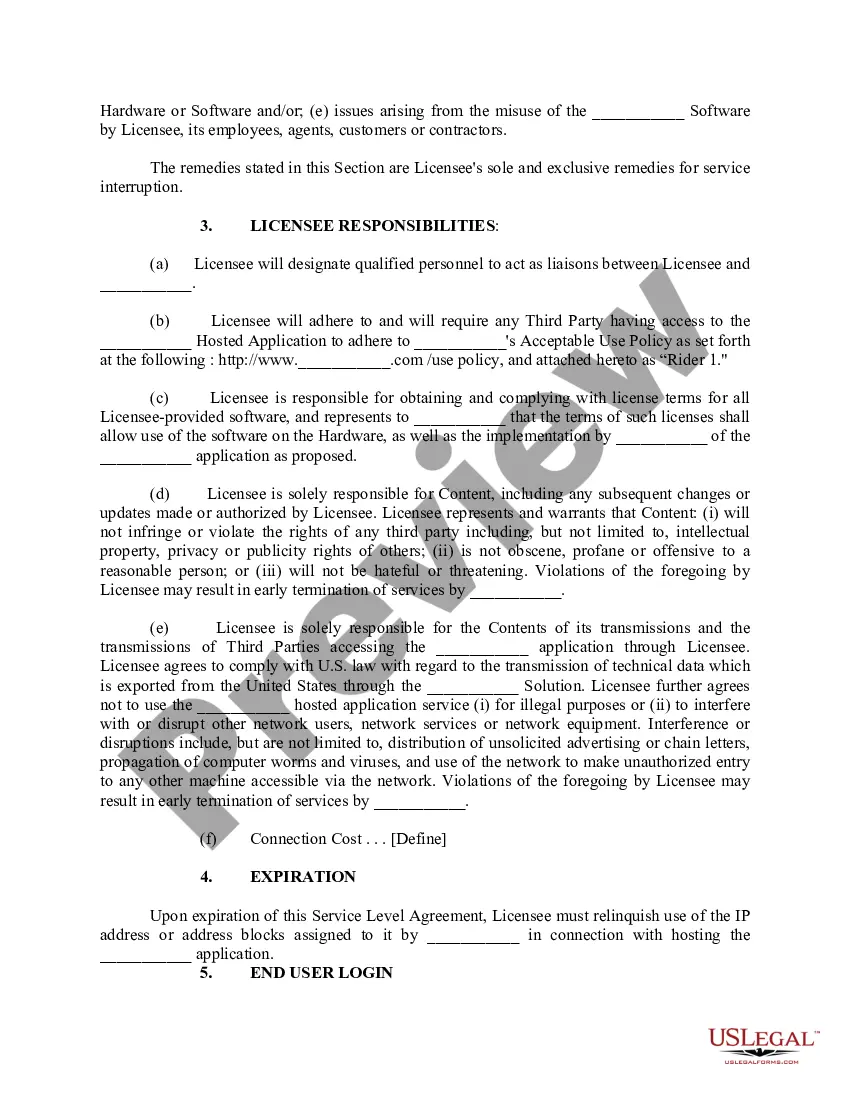
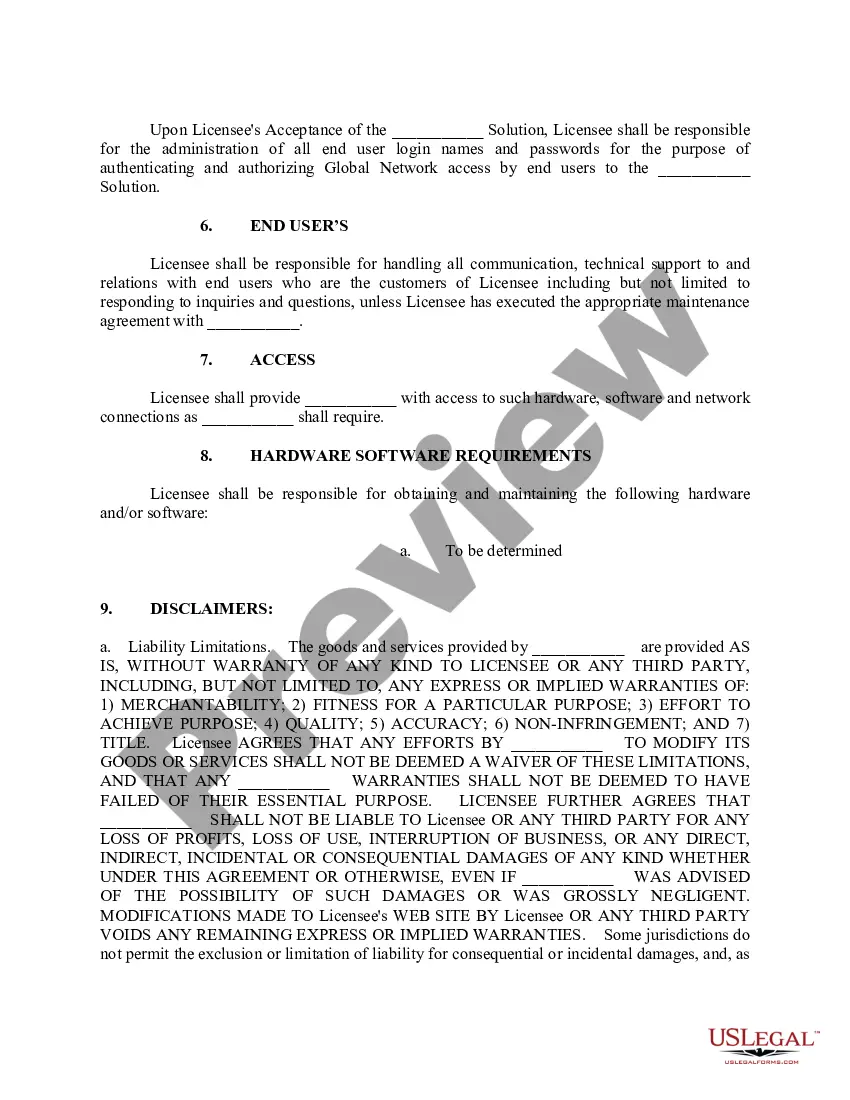
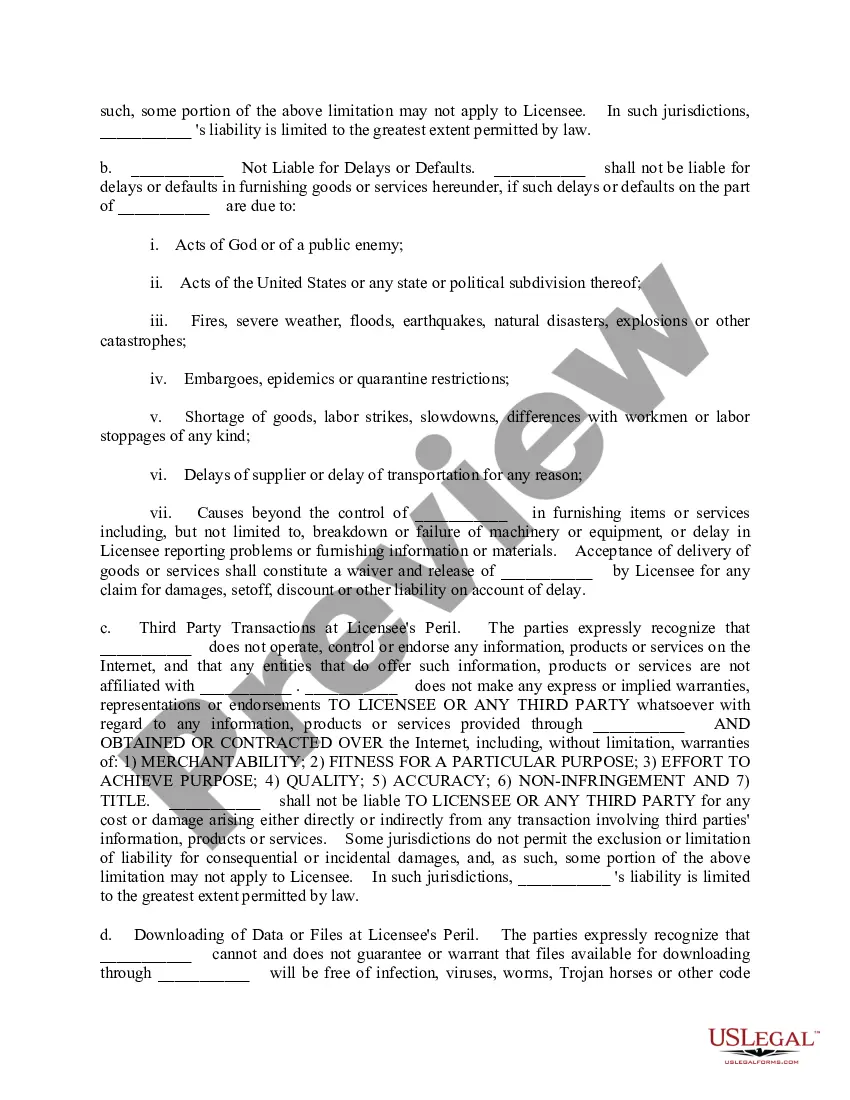
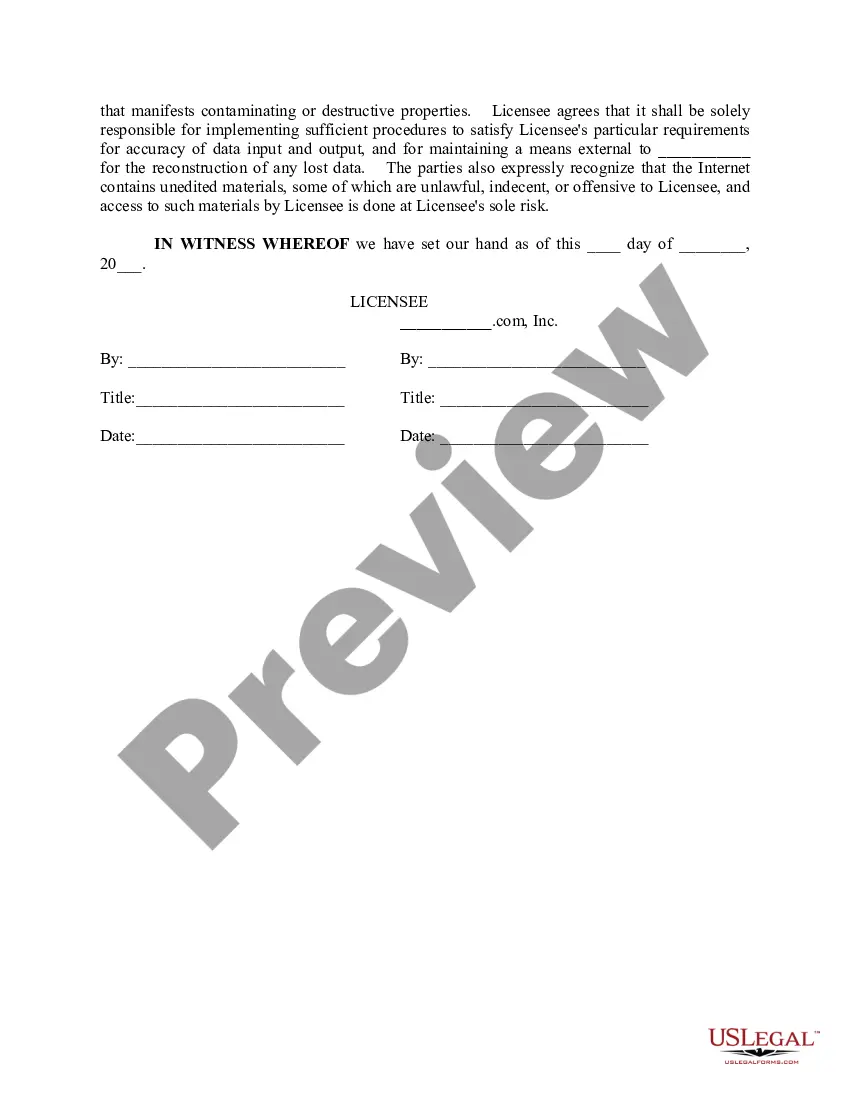
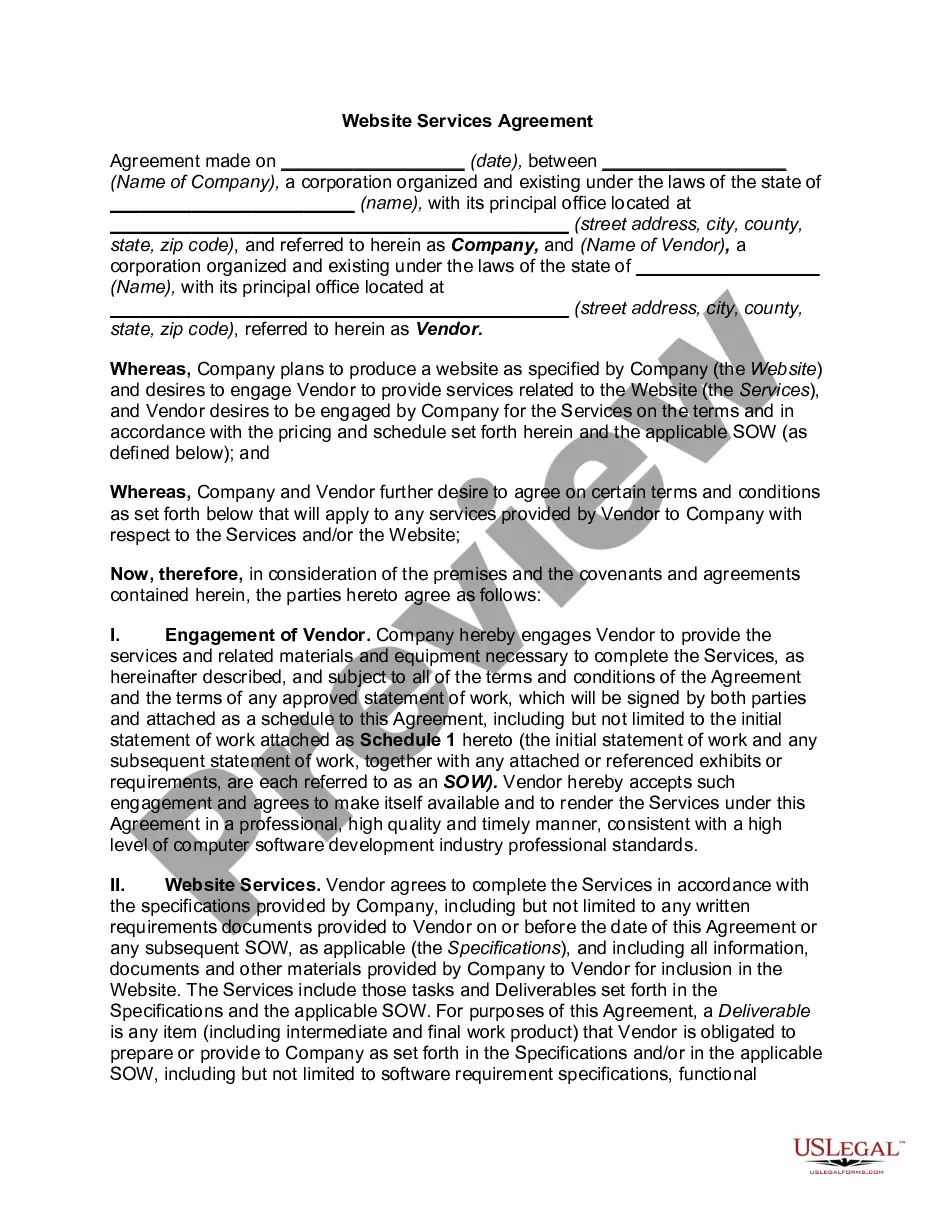
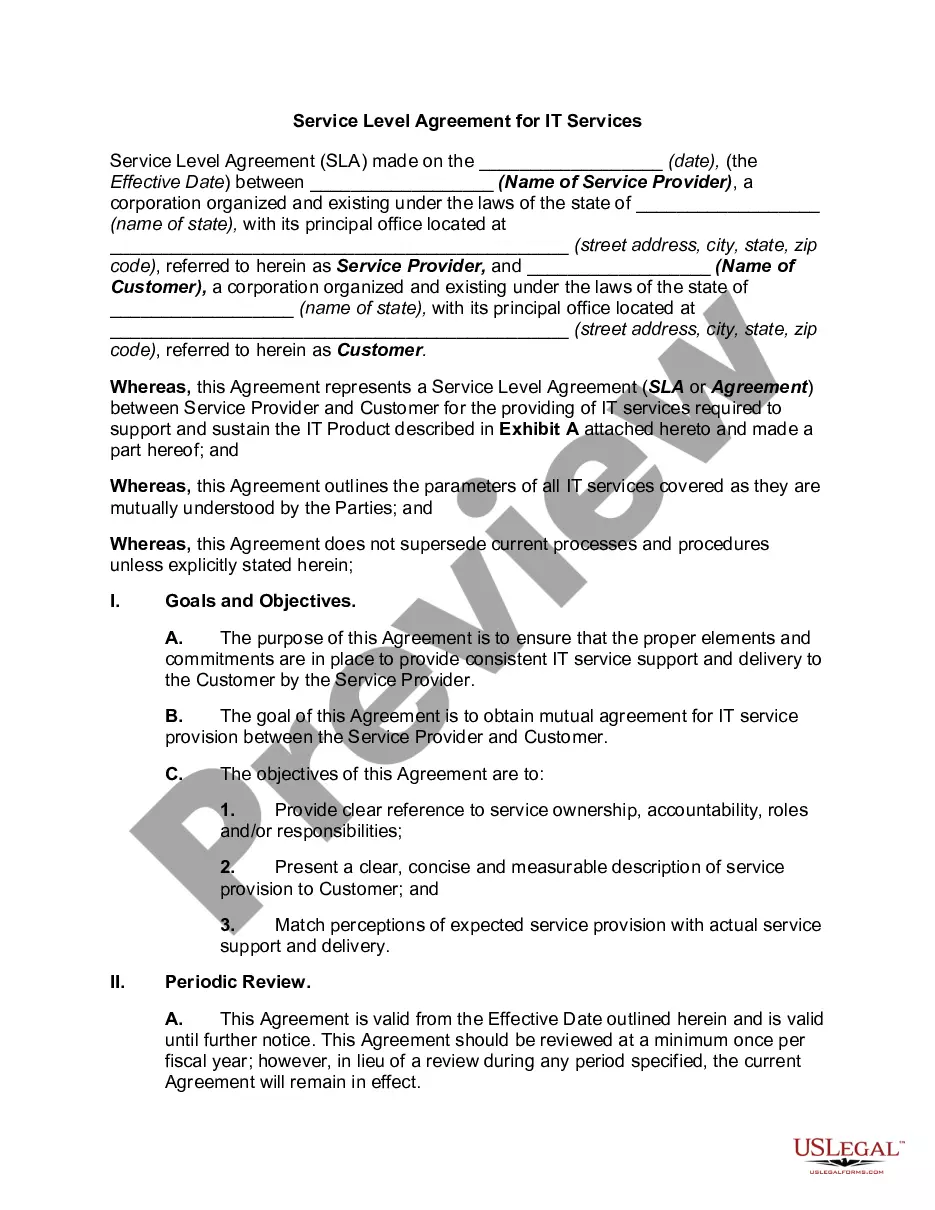
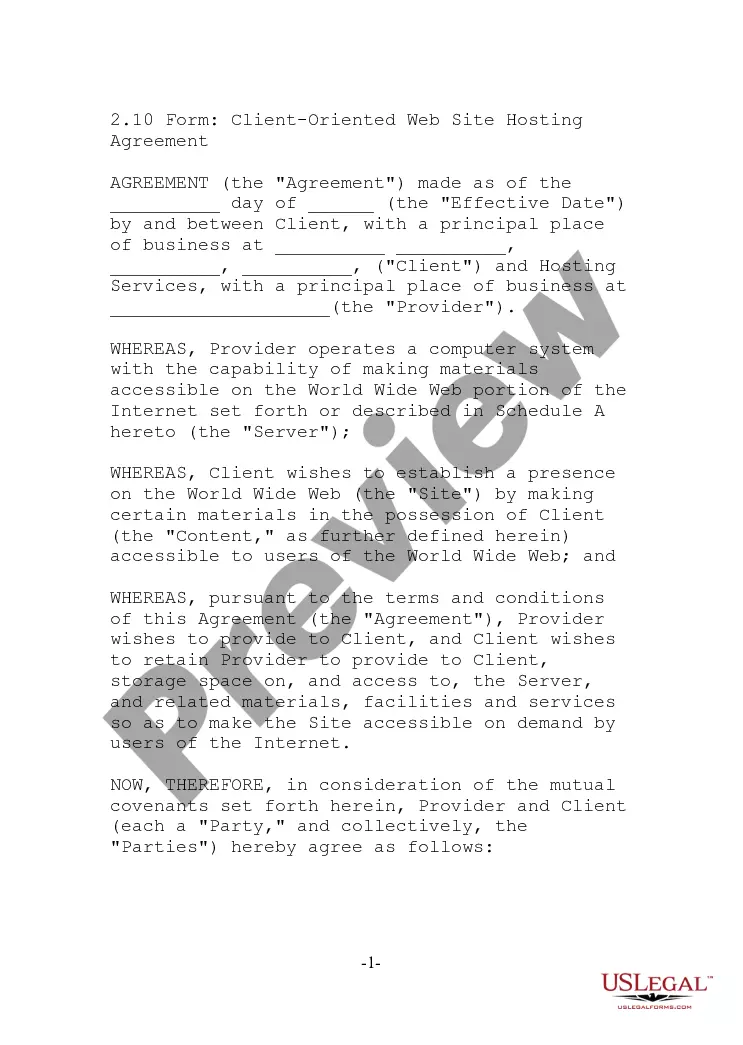
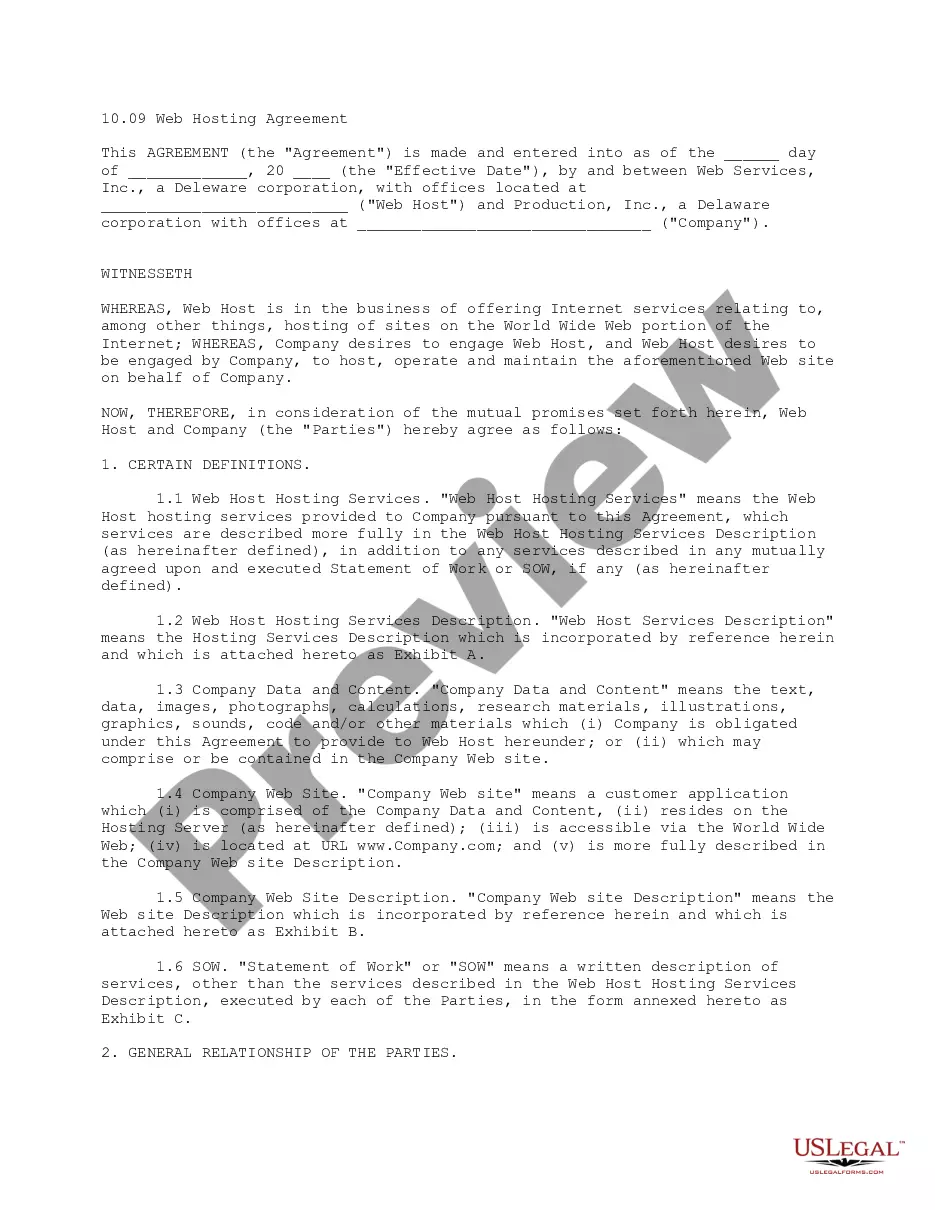
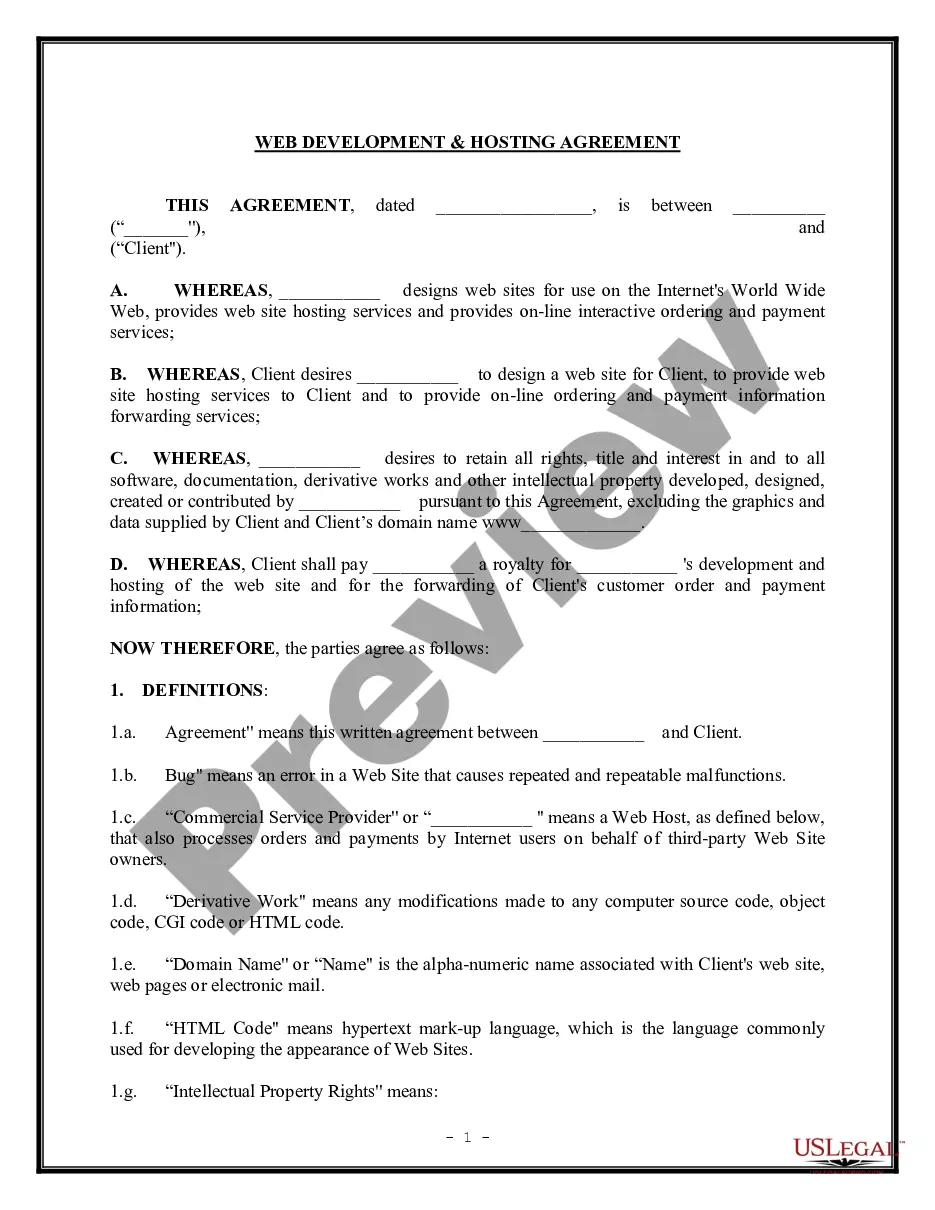
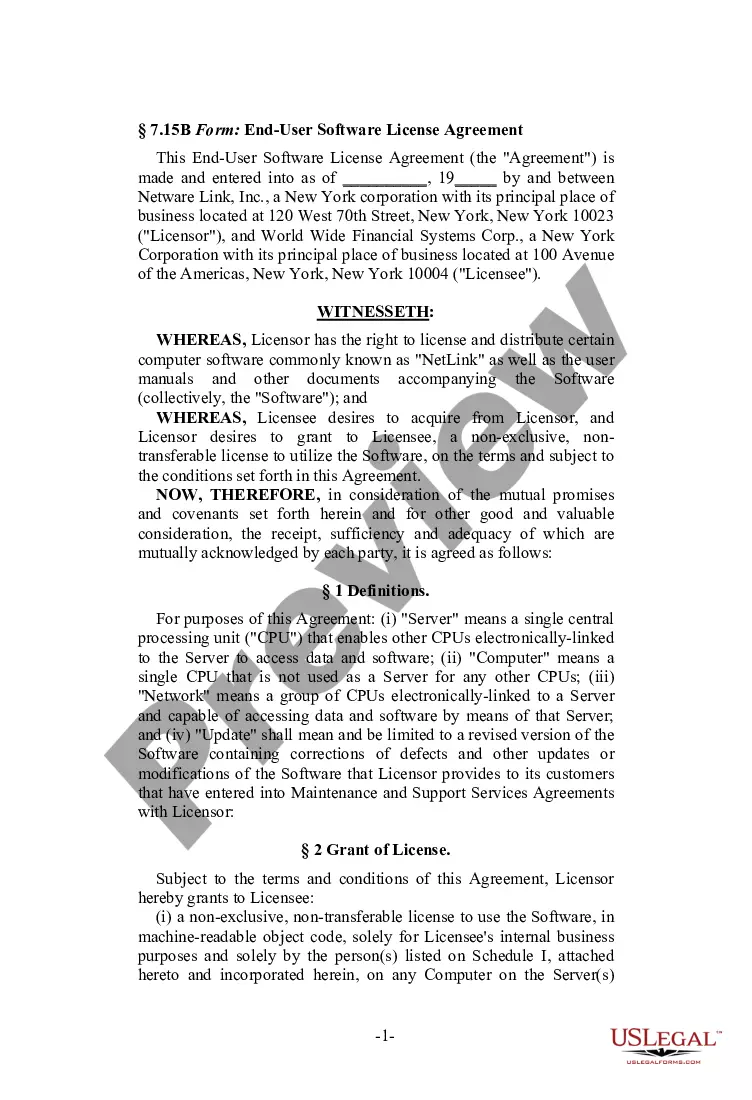
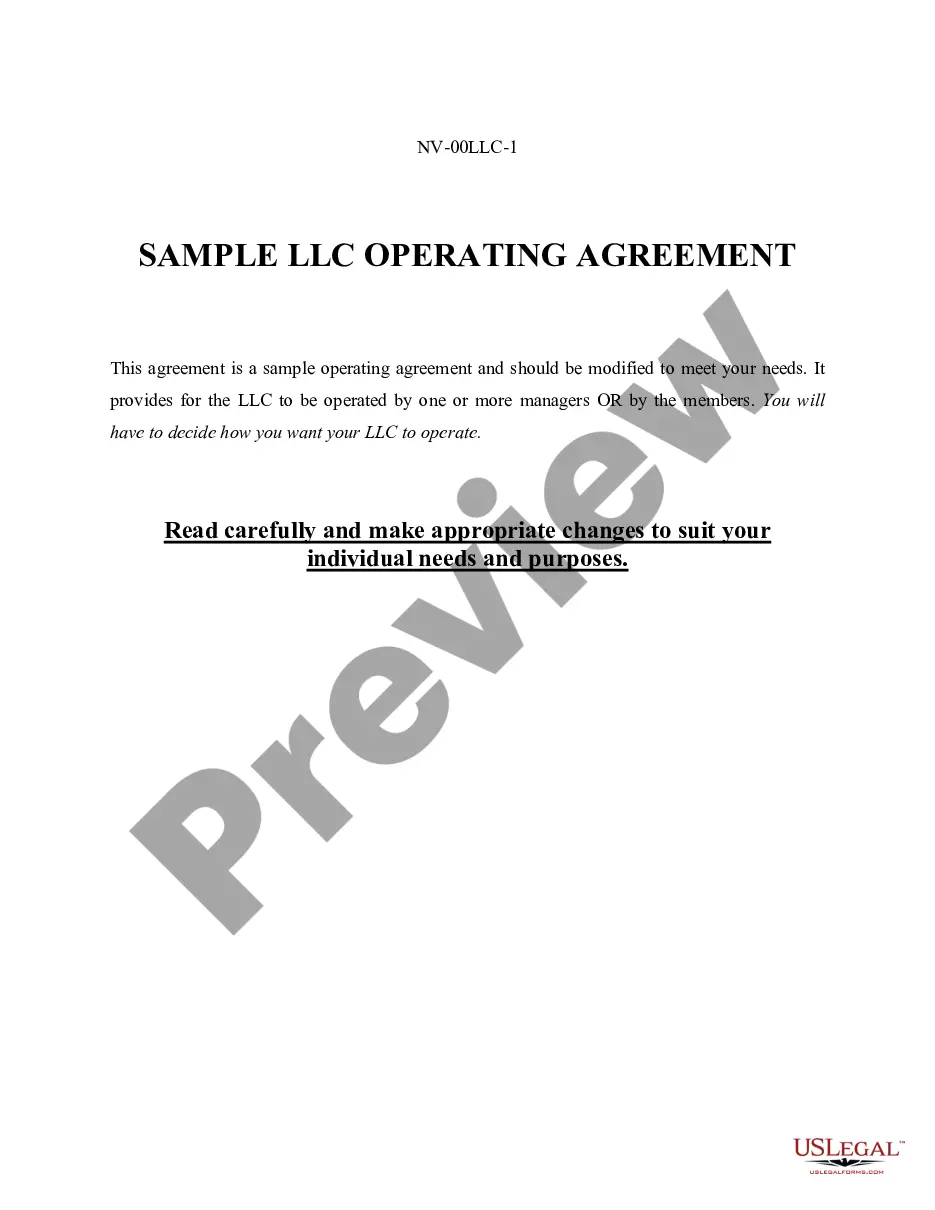
This form is an Application for Hosting a Service Level Agreement. The licensee agrees to provide the end-user with access to such hardware, software, and network connections that may be required. The document also provides that the licensee is given up to five gig of disk space and the licensee will be responsible for additional disk space. The parties expressly recognize that the Internet contains unedited materials, some of which are unlawful, indecent, or offensive to the licensee, and access to such materials by the licensee is done at the licensee's sole risk.
Most service providers will have an escalation process outlined in the SLA. This usually means you can reach out to higher levels of support if you're not satisfied with the initial response.
Support usually covers a range of services like troubleshooting issues, system monitoring, and helping you with questions about your hosting environment.
Typically, changes to the SLA can happen, but they usually need to be agreed upon by both you and the provider. It's always wise to stay in the loop on any updates.
That often depends on the SLA. Some providers offer round-the-clock support, while others may only be available during business hours, so check the fine print!
If the service goes AWOL, the SLA usually spells out how the provider will handle it, including how quickly they'll fix it and any compensation you might receive.
Most providers keep a close eye on uptime and will share that info in real-time. Just ask for their performance metrics, and they should be happy to provide it!
An SLA is a kind of promise between the service provider and the customer. It lays out what the provider will deliver, like uptime guarantees and support response times, so everyone knows what to expect.