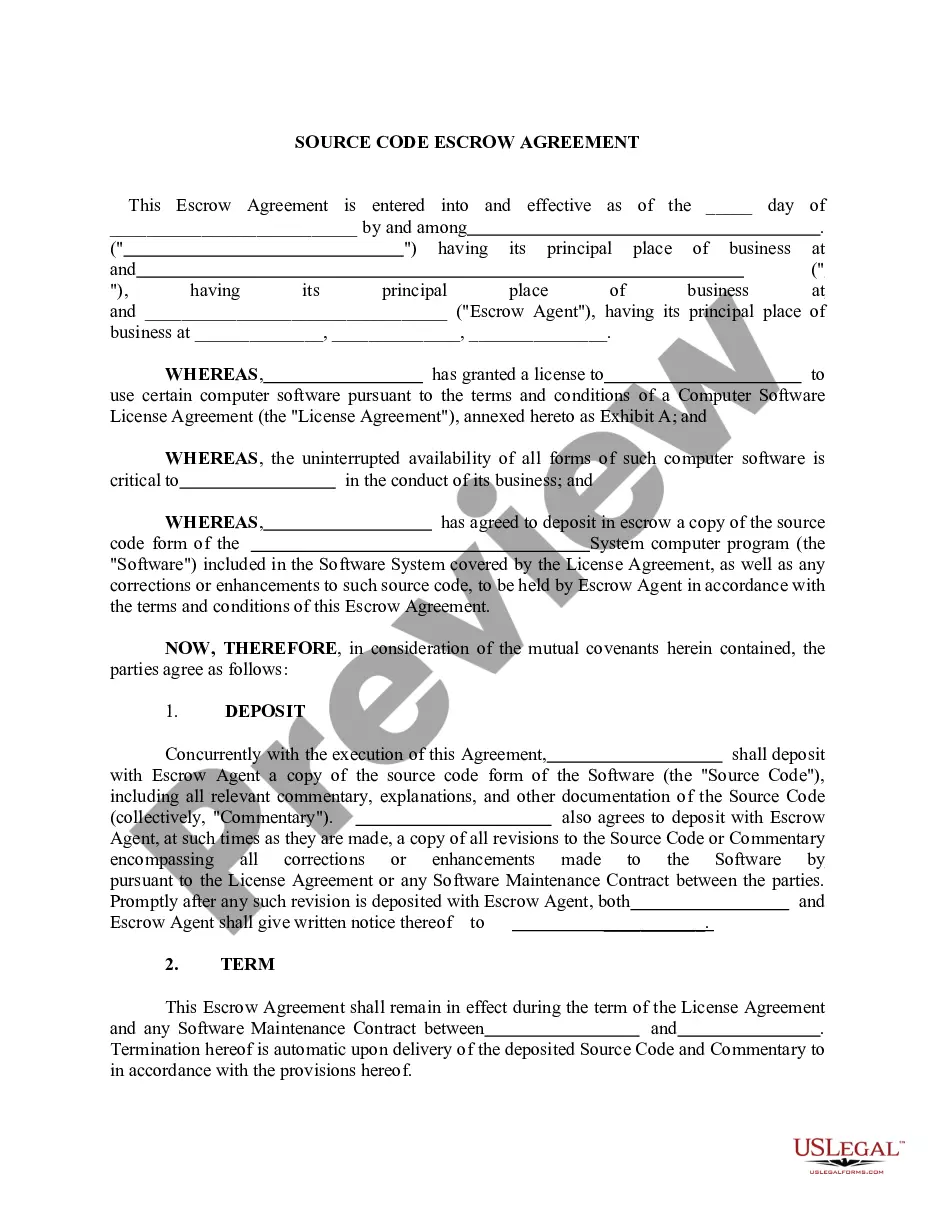
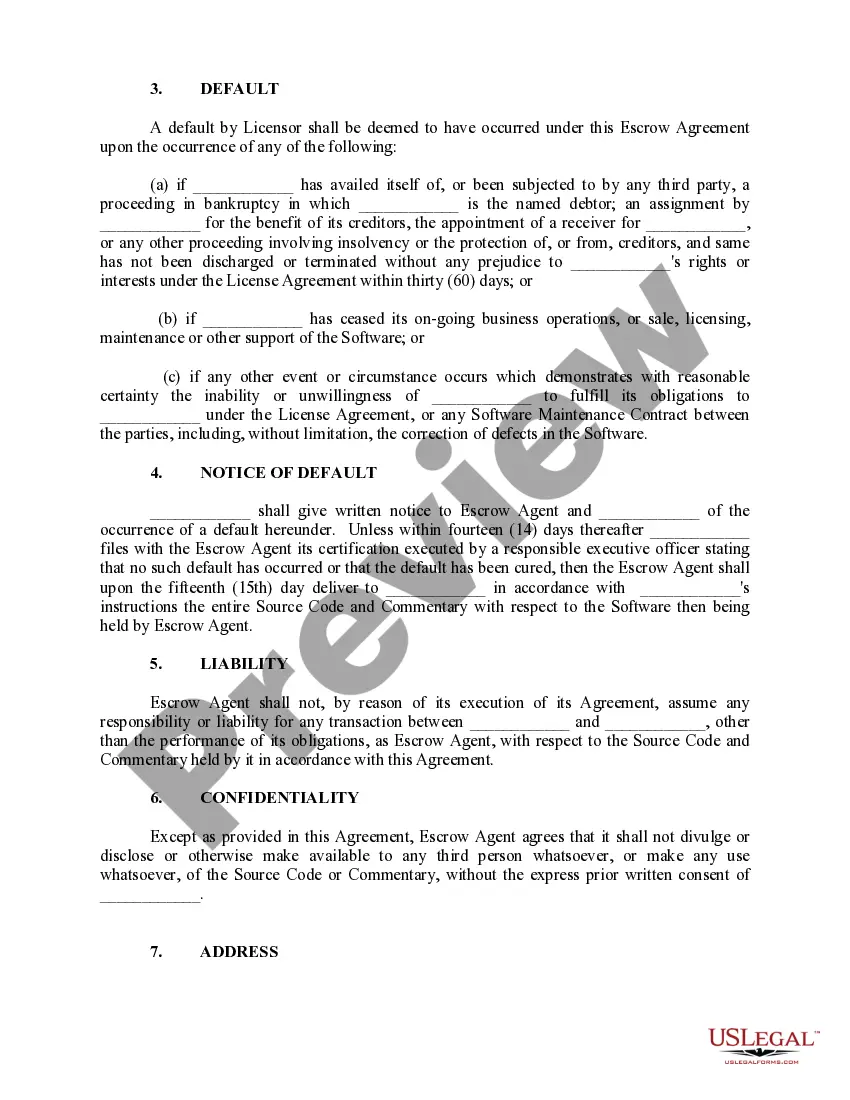
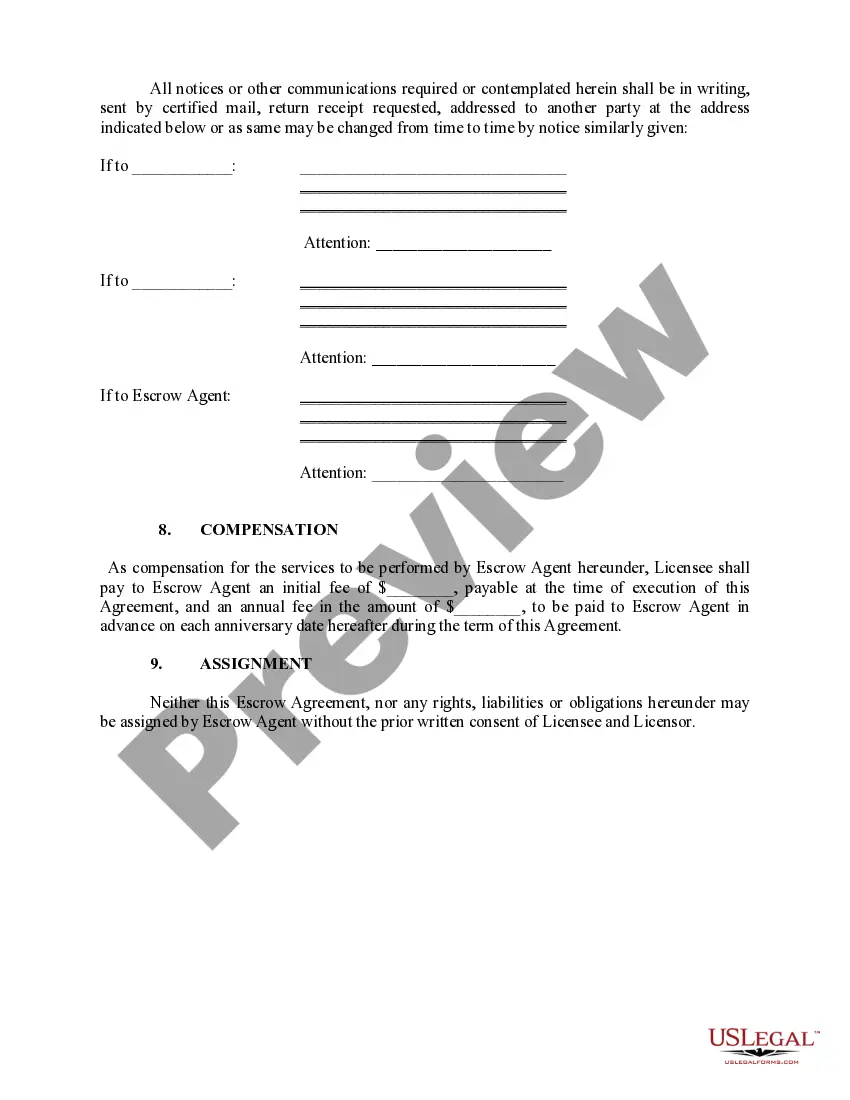
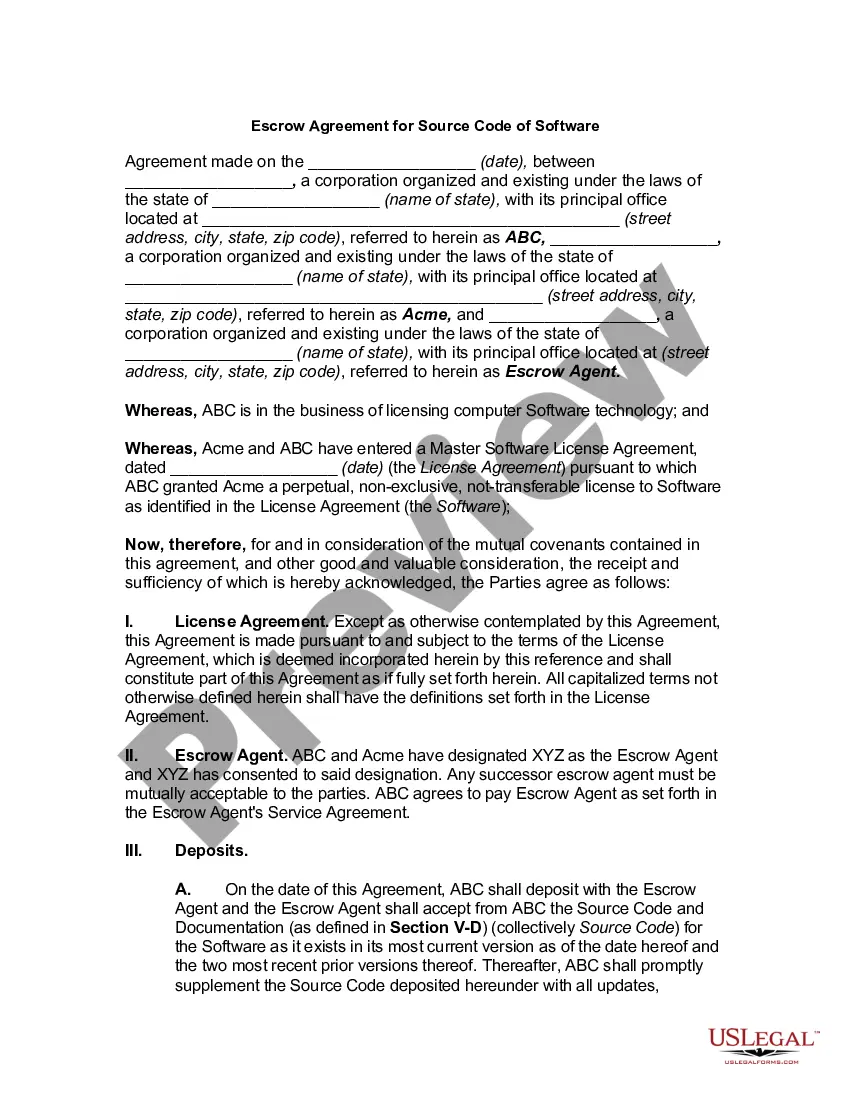
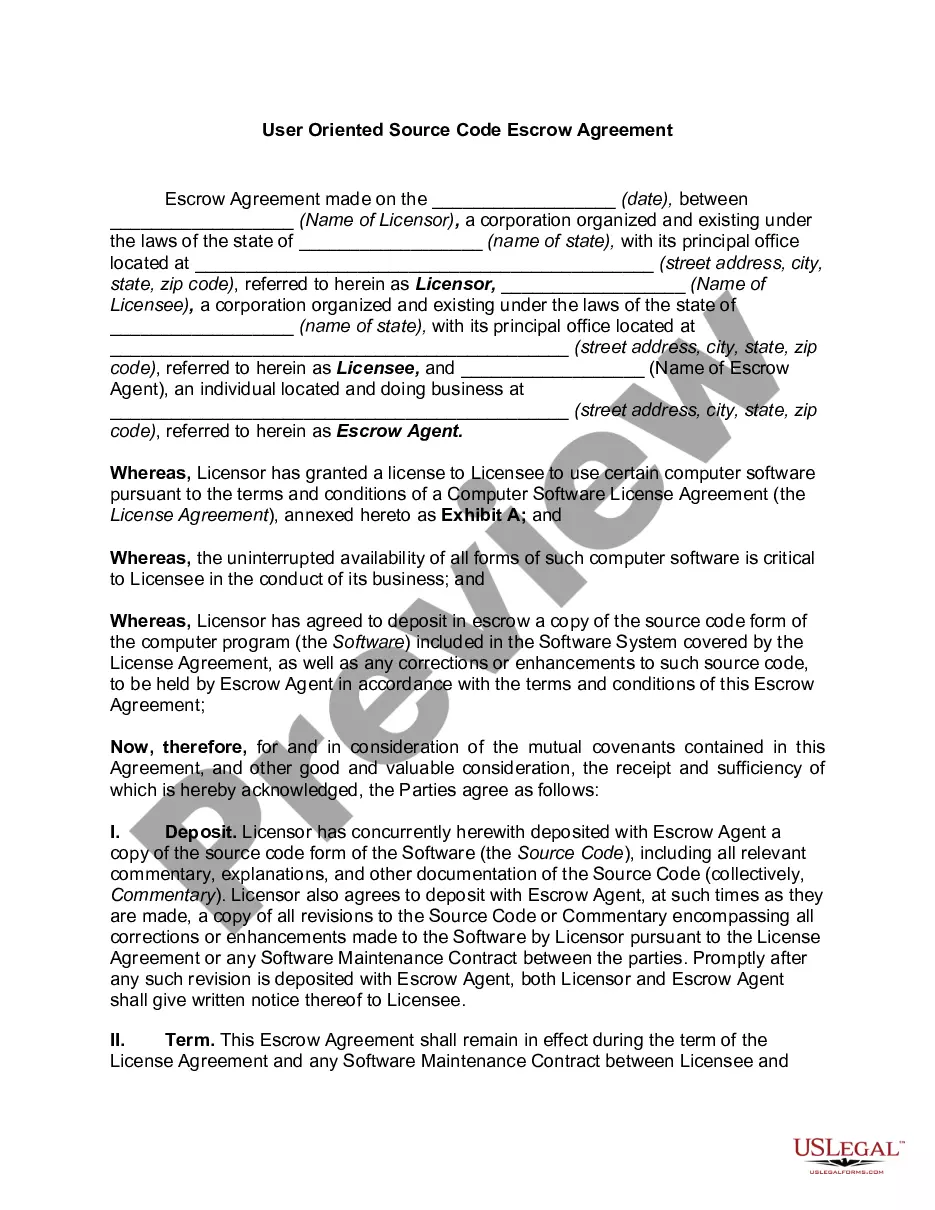
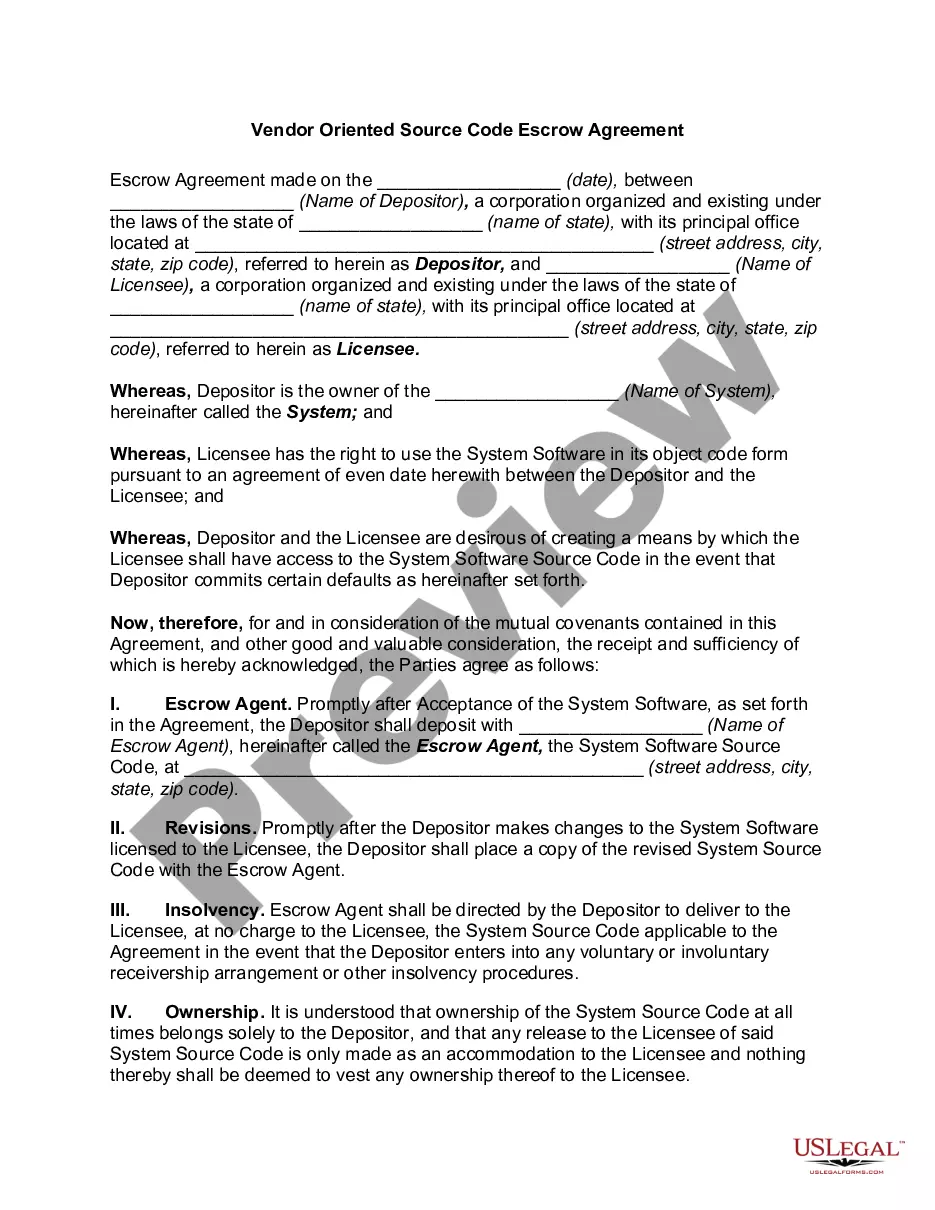
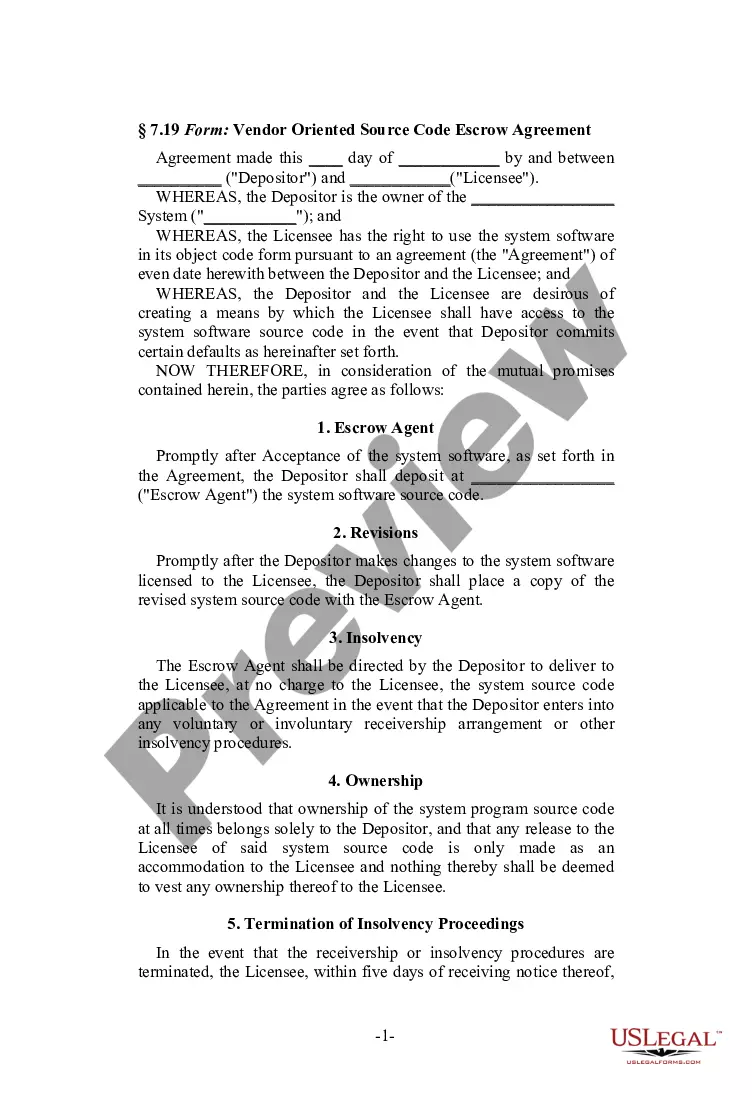
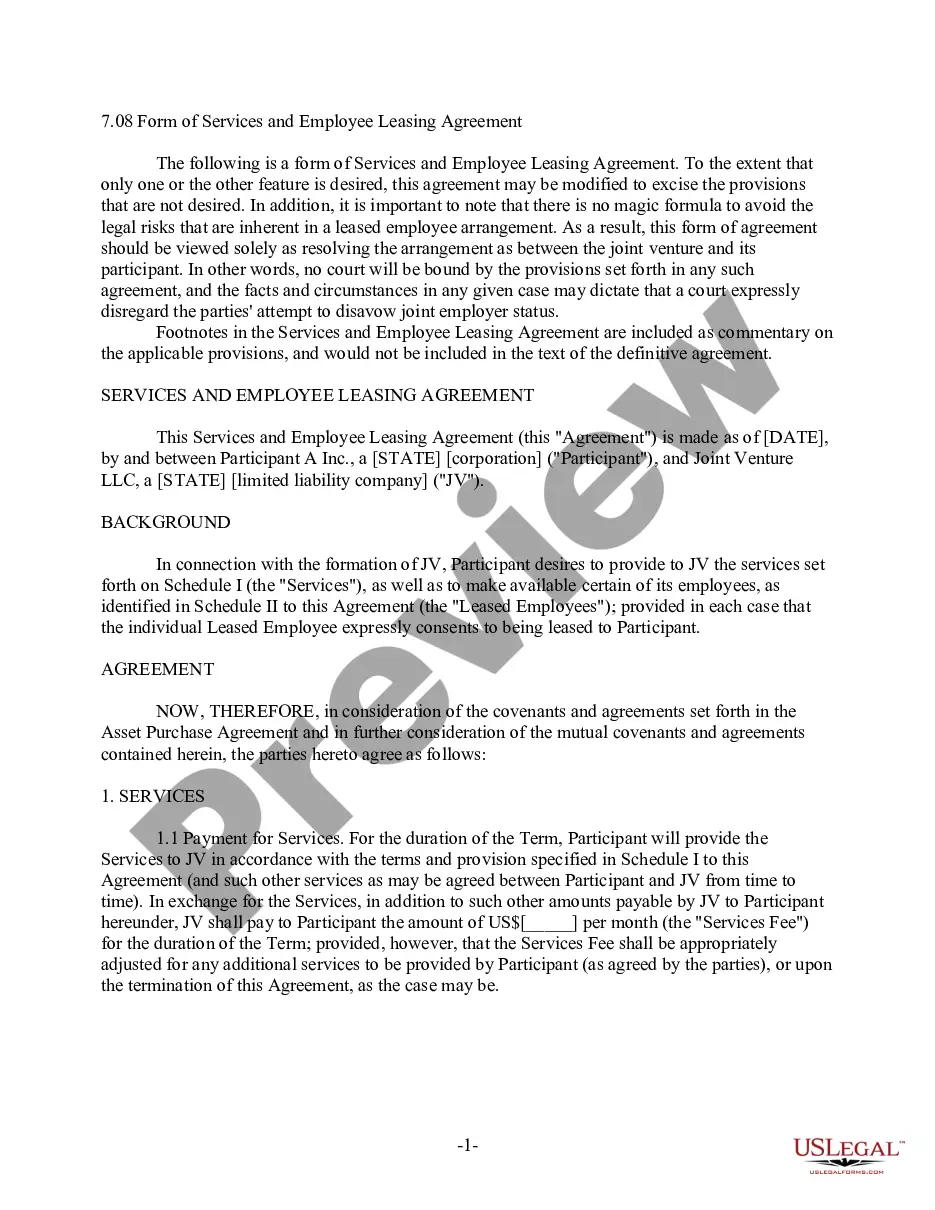
This form is a Source Code Escrow Agreement. The form provides that as compensation for the services to be performed by the escrow agent, the licensee will pay the escrow agent a certain fee which is due at the time of execution of the agreement. The document also provides that neither the escrow agreement, nor any rights, liabilities or obligations may be assigned by the escrow agent without the prior written consent of the licensee and the licensor.
Yes, you can usually renegotiate the terms of the escrow agreement if all parties are on board. It’s best to have clear communication to avoid misunderstandings.
The duration of an escrow agreement can vary. It typically lasts until the project is completed, but you can set it for a specific time or until certain conditions are met.
Choosing a reliable escrow agent is crucial. It’s like picking a safe keeper for your valuables; make sure they have a good reputation and are experienced.
The rules for accessing the source code are laid out in the agreement you make. Usually, you can get in if the developer goes belly up or fails to support the software.
Setting up an escrow is pretty straightforward. You agree with your developer on the conditions, choose a trusted escrow agent, and they keep the source code safe until it's needed.
If your software relies heavily on a developer, it’s wise to have a plan B. An escrow agreement ensures you won't be left high and dry if your developer runs into trouble.
A Source Code Escrow Agreement is like a safety net. It holds onto the source code of software, so if something goes wrong with the developer, you can still get access to the code you need.