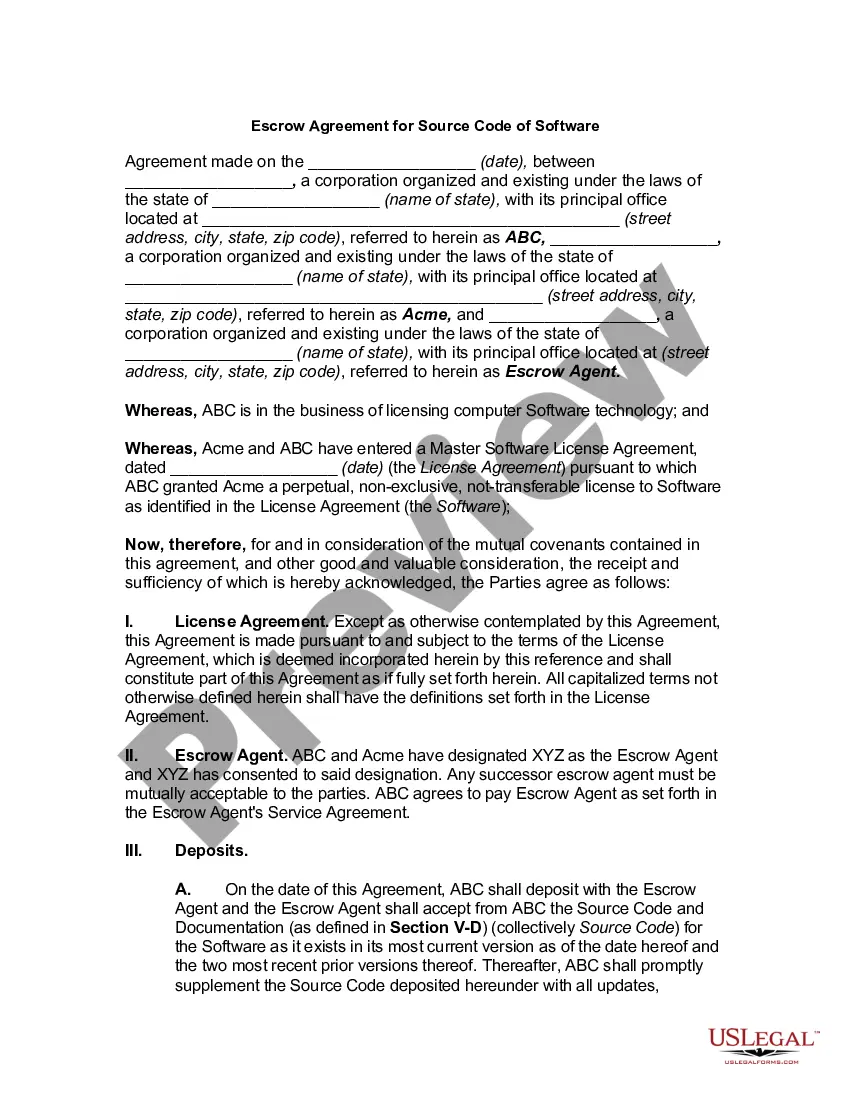
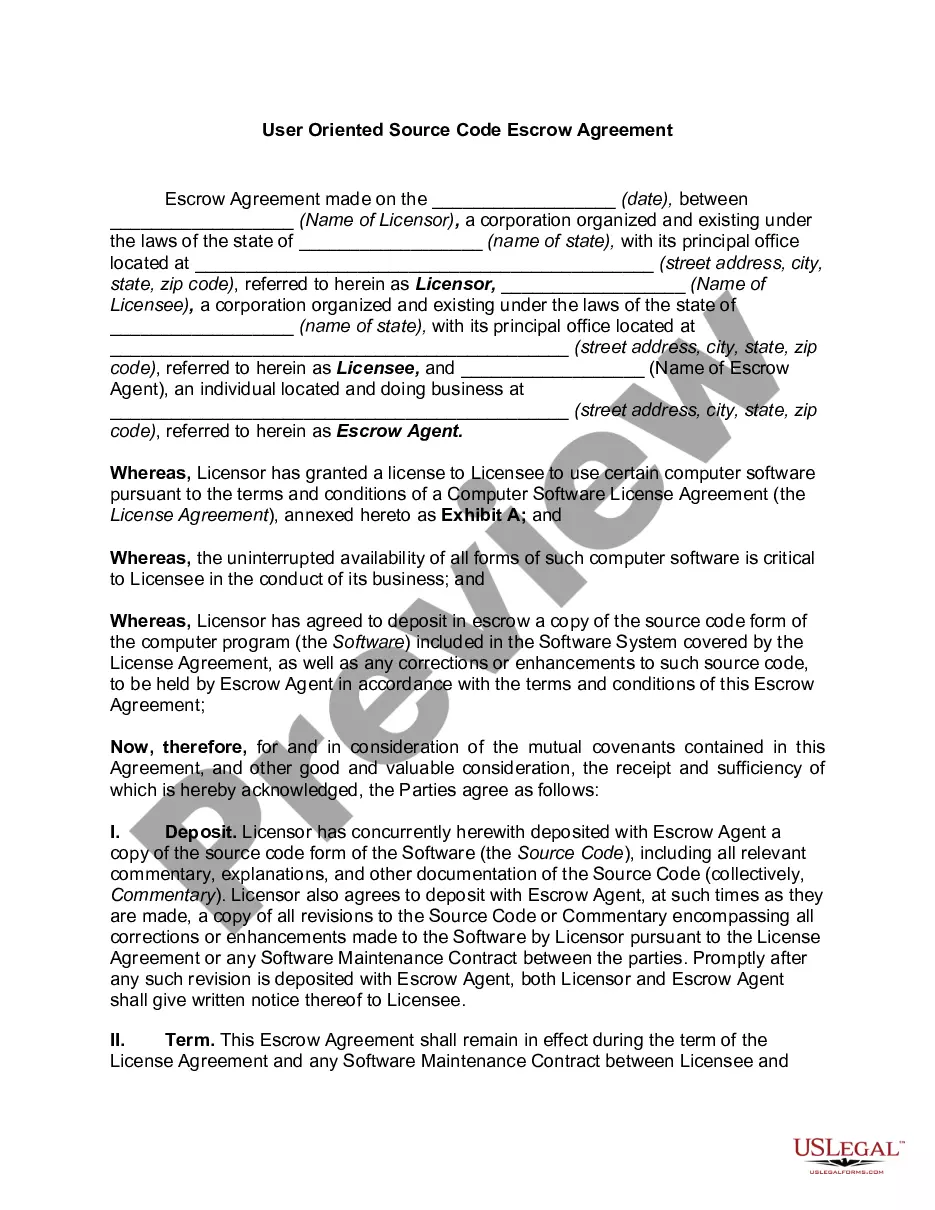
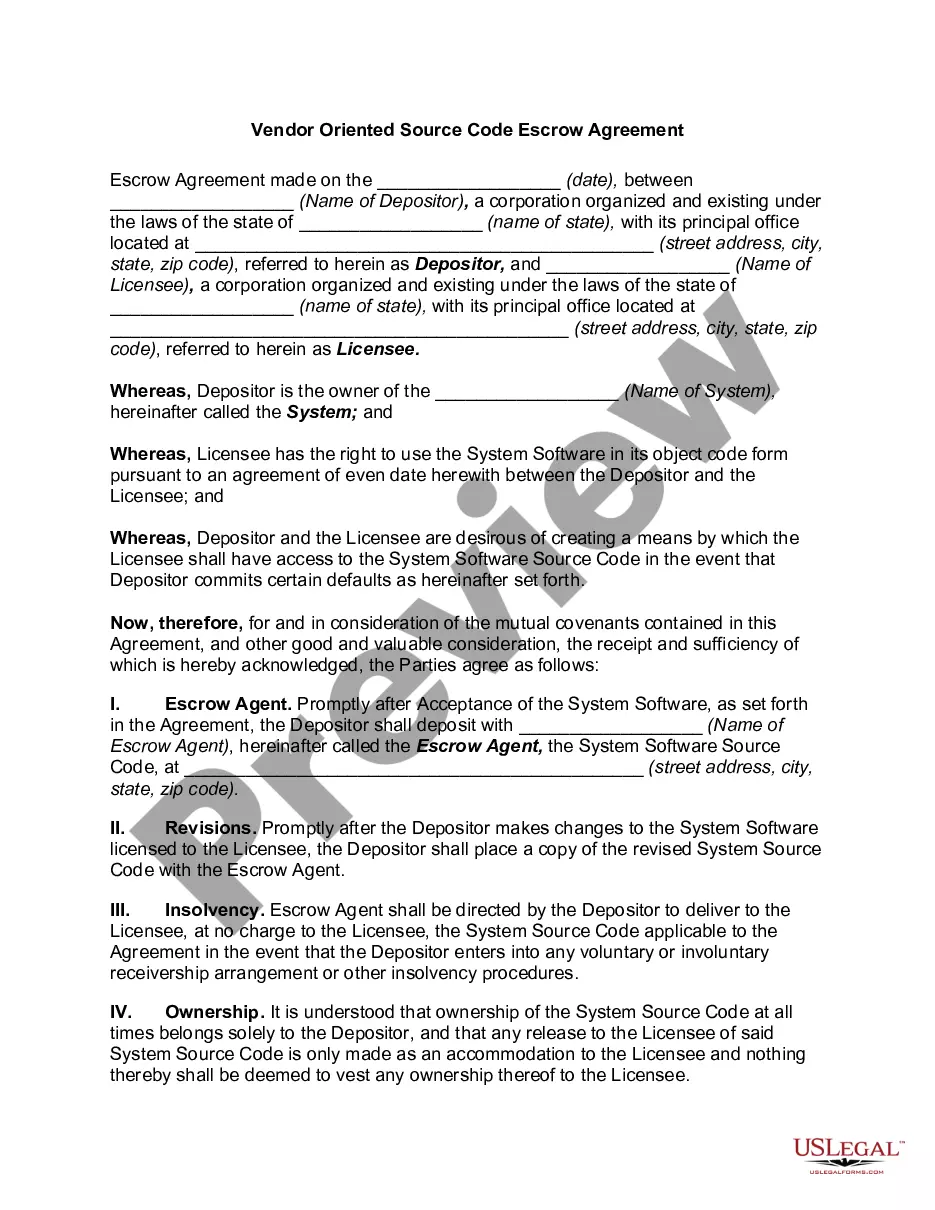
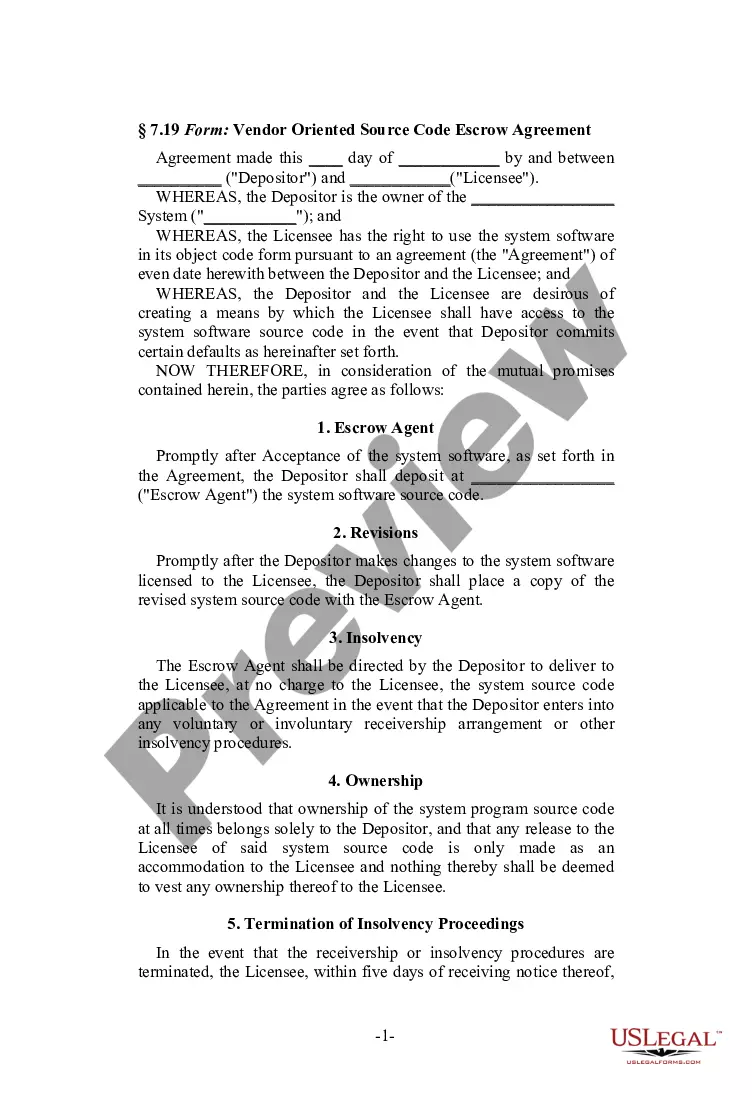
This form is a Source Code Escrow Agreement. The form provides that as compensation for the services to be performed by the escrow agent, the licensee will pay the escrow agent a certain fee which is due at the time of execution of the agreement. The document also provides that neither the escrow agreement, nor any rights, liabilities or obligations may be assigned by the escrow agent without the prior written consent of the licensee and the licensor.
It’s wise to update the source code regularly, especially after significant changes or new releases. Keeping things current helps avoid any headaches down the road.
Absolutely! Whether you’re a small startup or a large corporation, if you rely on software, it makes sense to consider an escrow agreement.
Yes, it’s a legally binding contract. Once both parties sign it, they’re on the hook to follow the terms laid out in the agreement.
Common triggers include the software provider going out of business, failing to support the software, or breaching the contract. It’s a safety net for companies.
Usually, a trusted third party, called an escrow agent, manages the process. They hold onto the source code and release it when agreed terms are met.
Businesses often use it to protect their investment in software. If the software provider goes belly-up or doesn't fulfill their obligations, the business can retrieve the code and keep things running smoothly.
A Source Code Escrow Agreement is like a safety deposit box for software code. It ensures that the code is safely stored and can be accessed if certain conditions are met.