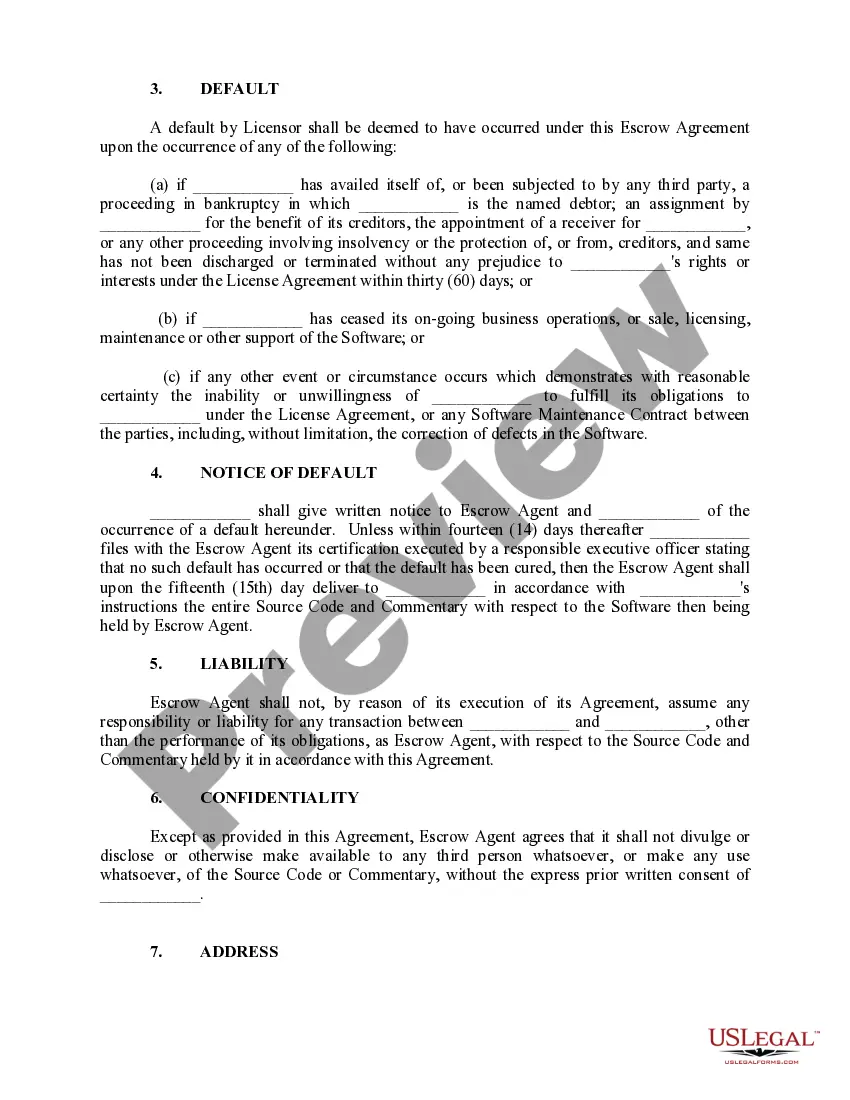
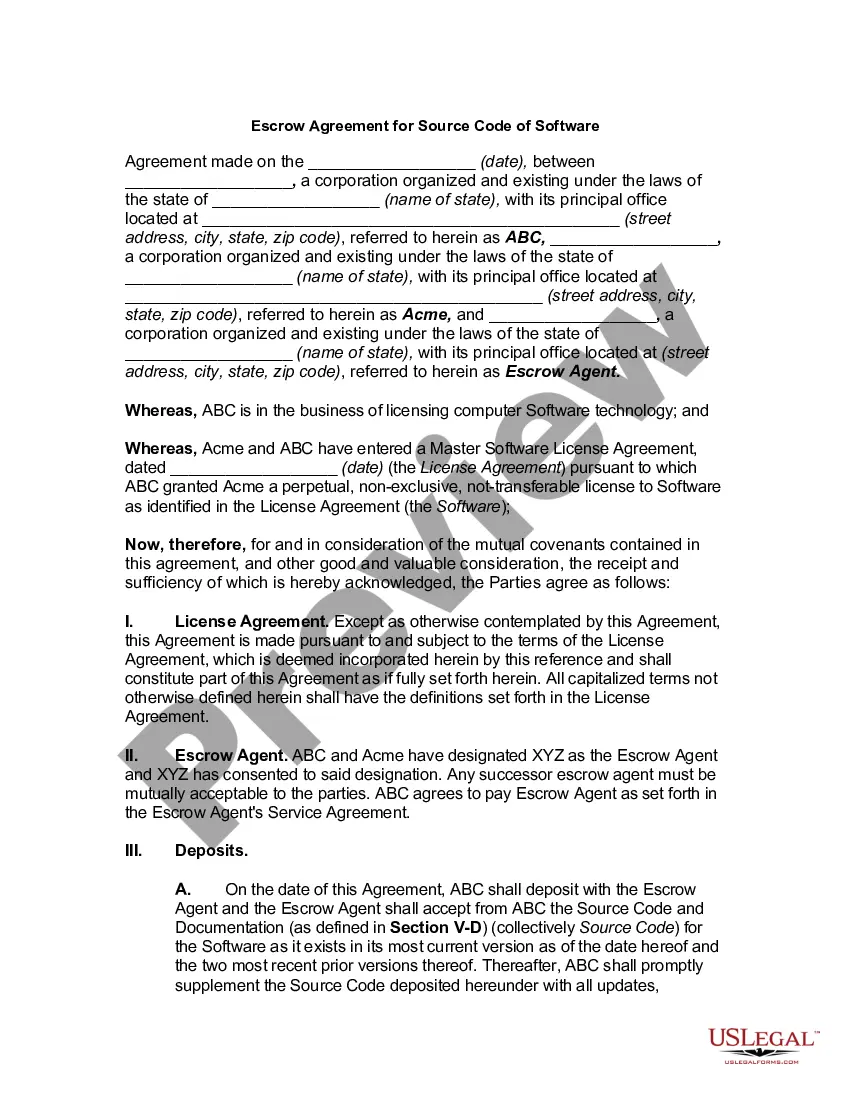
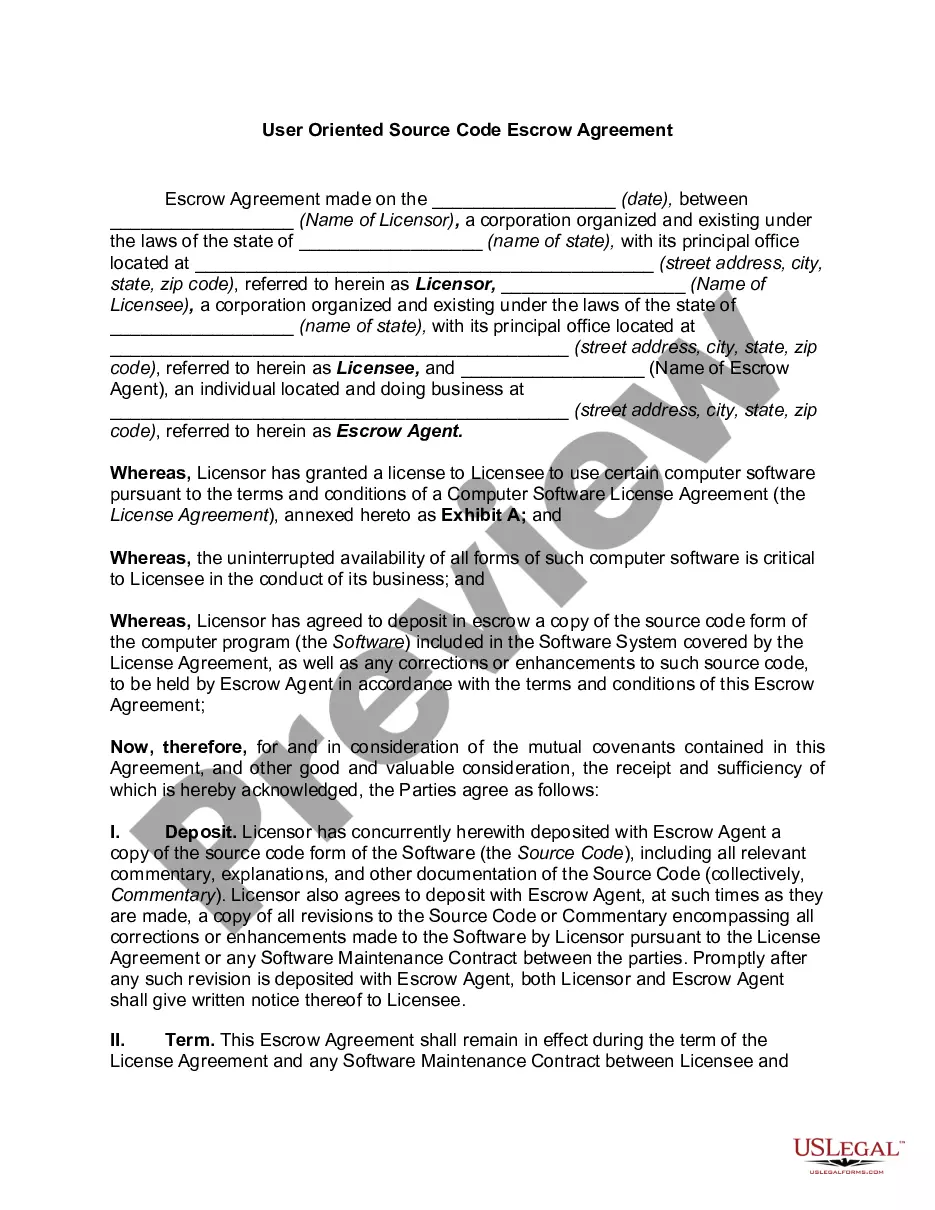
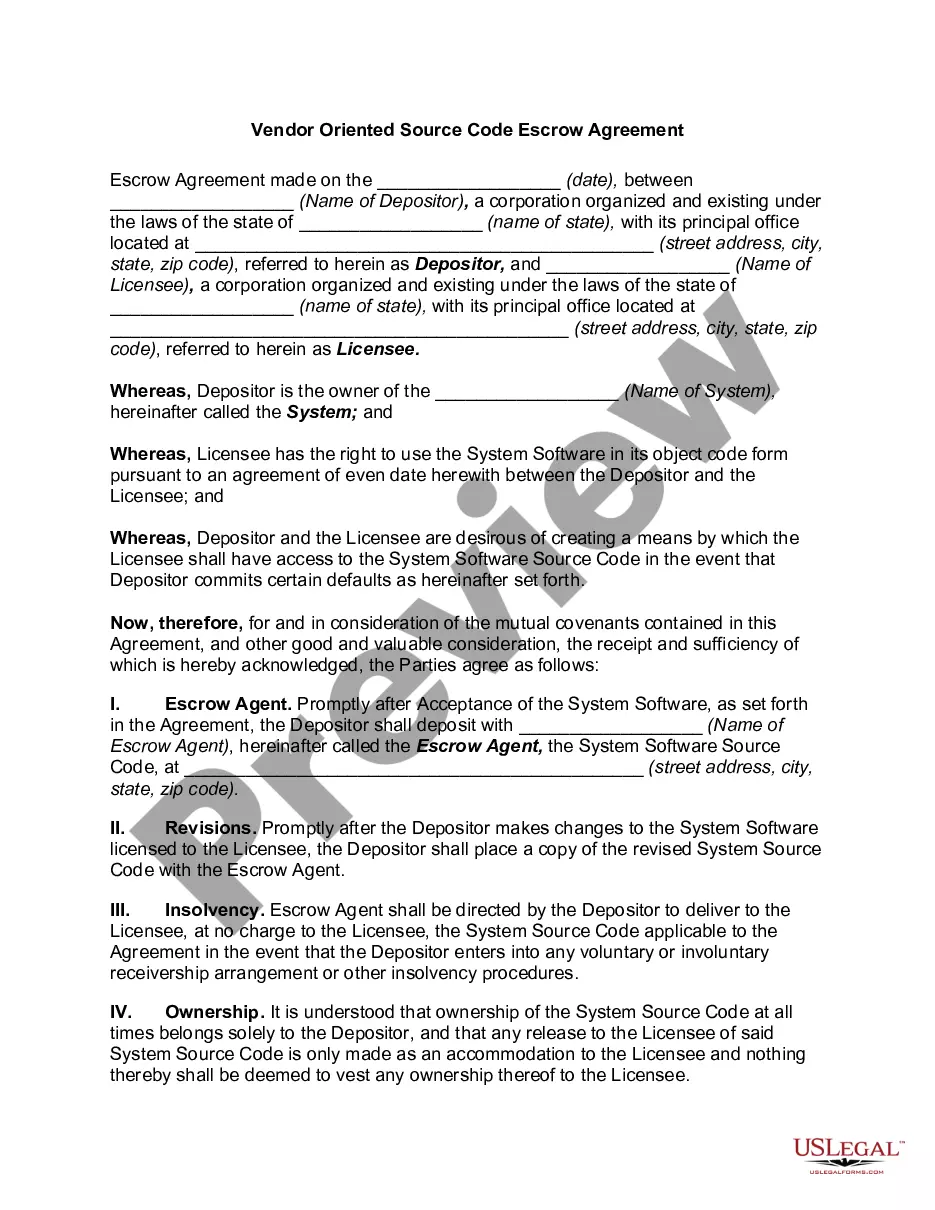
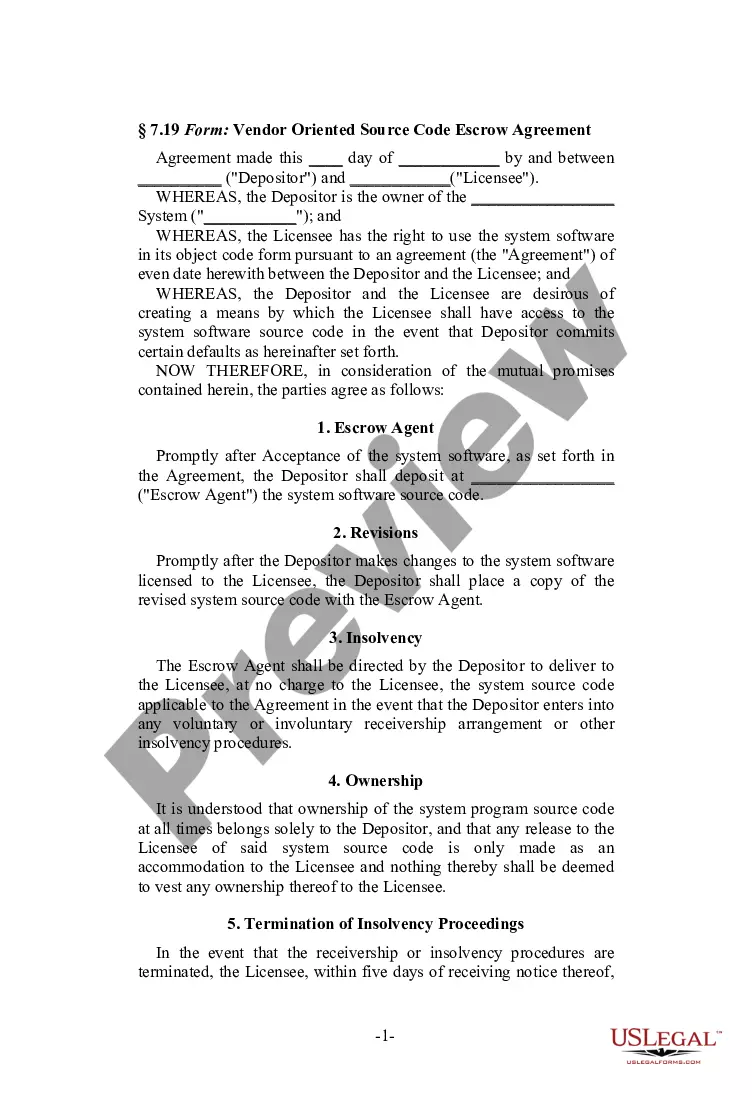
This form is a Source Code Escrow Agreement. The form provides that as compensation for the services to be performed by the escrow agent, the licensee will pay the escrow agent a certain fee which is due at the time of execution of the agreement. The document also provides that neither the escrow agreement, nor any rights, liabilities or obligations may be assigned by the escrow agent without the prior written consent of the licensee and the licensor.
Good question! Typically, the vendor is required to provide updated versions of the code to the escrow agent, so the business always has the latest and greatest at their fingertips.
Absolutely! Small businesses can safeguard their software just as much as big companies. It helps level the playing field and provides peace of mind.
Just like any arrangement, there are risks. If the terms aren’t clear or if the escrow agent isn’t reliable, a business might end up with fewer protections than they bargained for.
The main parts include the parties involved, the escrow agent's responsibilities, what situations allow for the release of the code, and any terms around updates or maintenance.
Think of it as a trust system! The source code is deposited with a third party. This party only releases the code to the business if certain agreed-upon conditions are met, like the vendor going bankrupt.
Businesses in Austin might use one to protect their investments. It's a way to ensure that if a software vendor goes out of business or fails to support the software, the business can still access the code and keep things running smoothly.
A Source Code Escrow Agreement is a legal arrangement that keeps a software's source code in a secure place. It's like a safety deposit box, ensuring that if something goes wrong, the code is available to the right people.