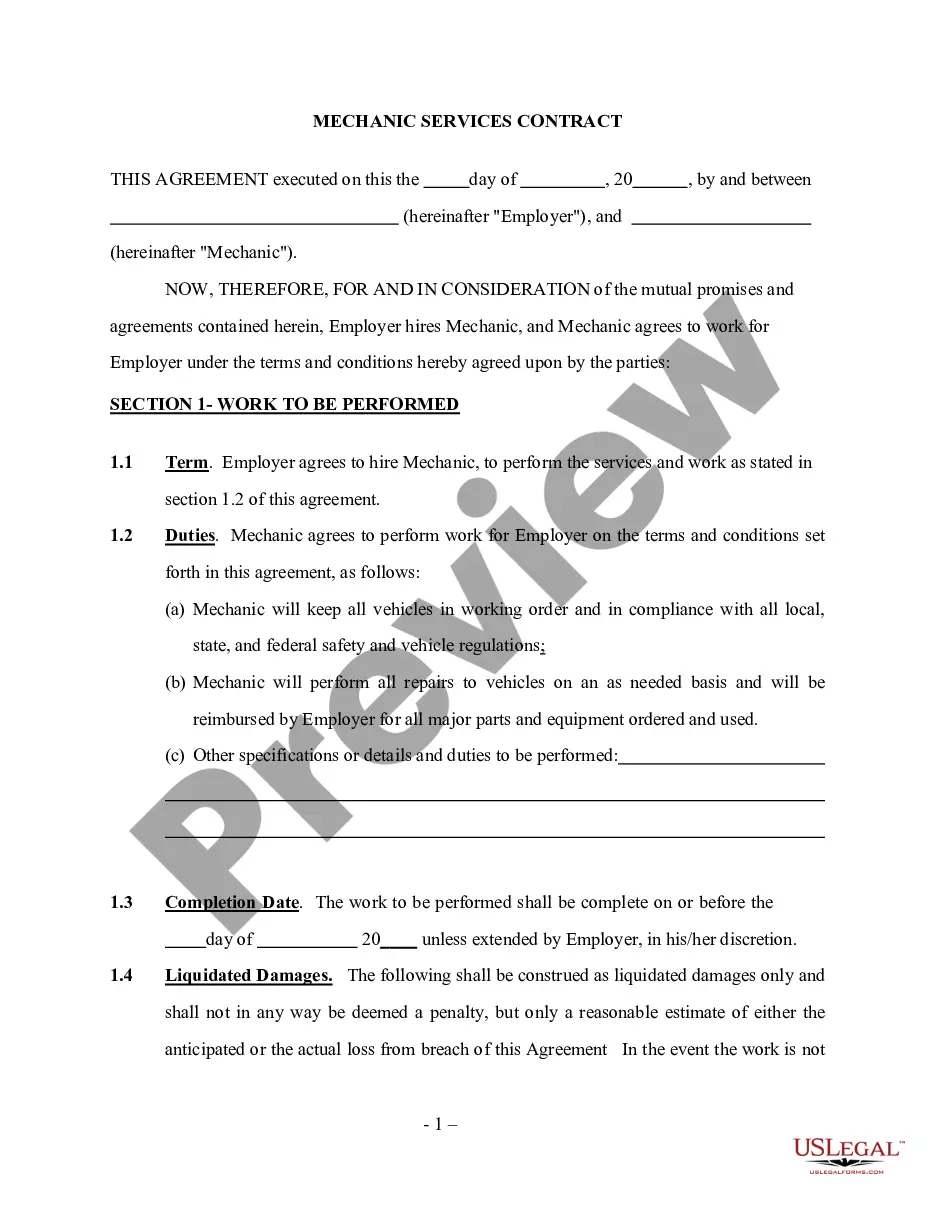
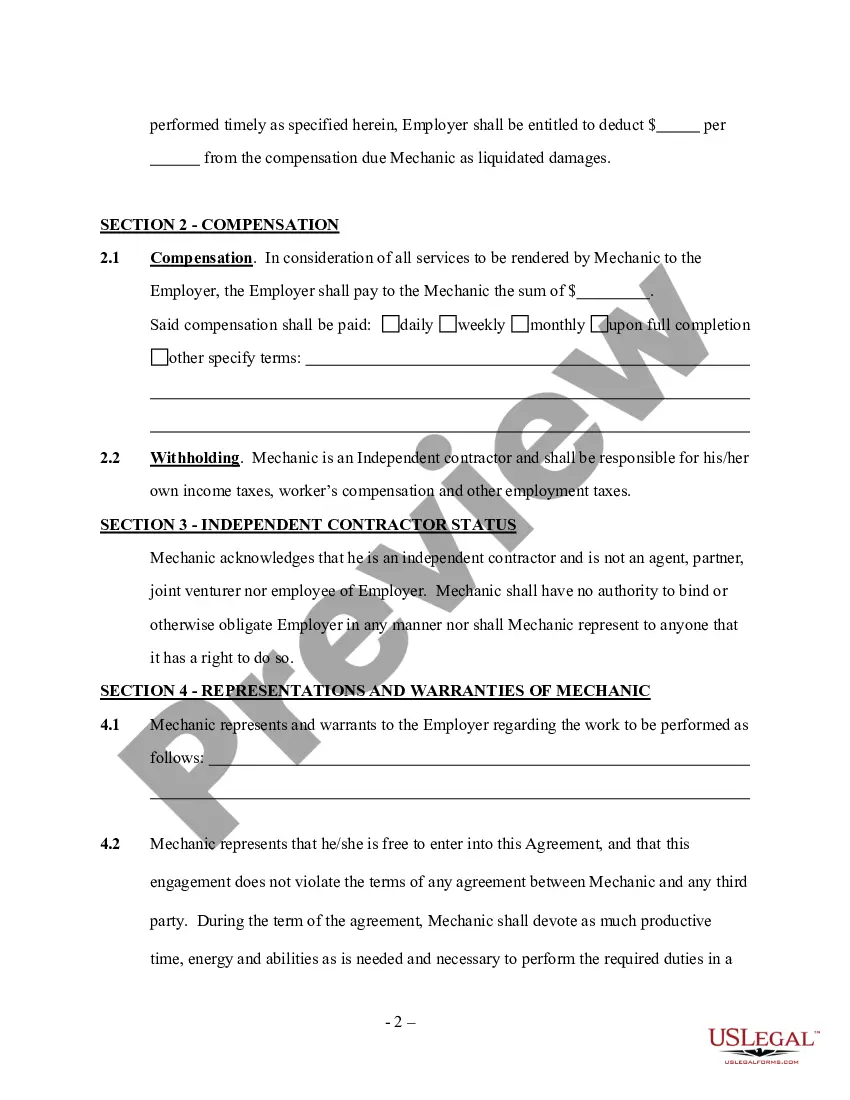
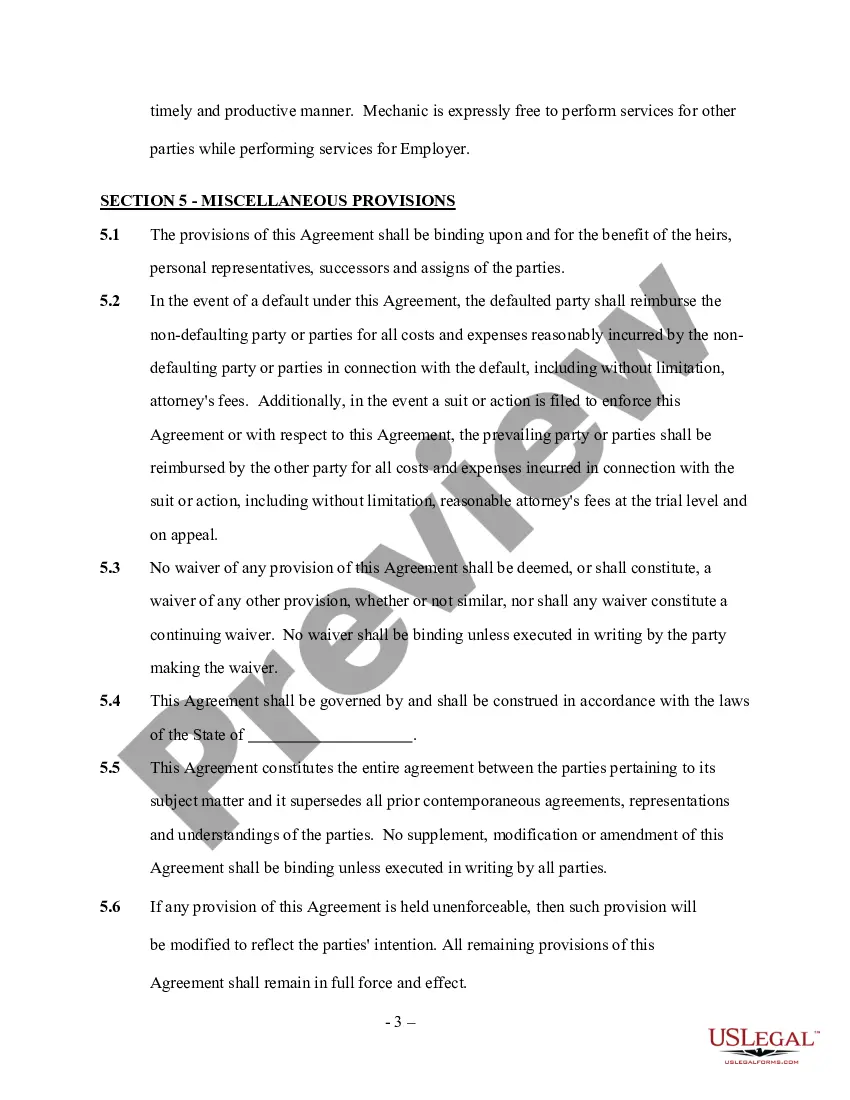
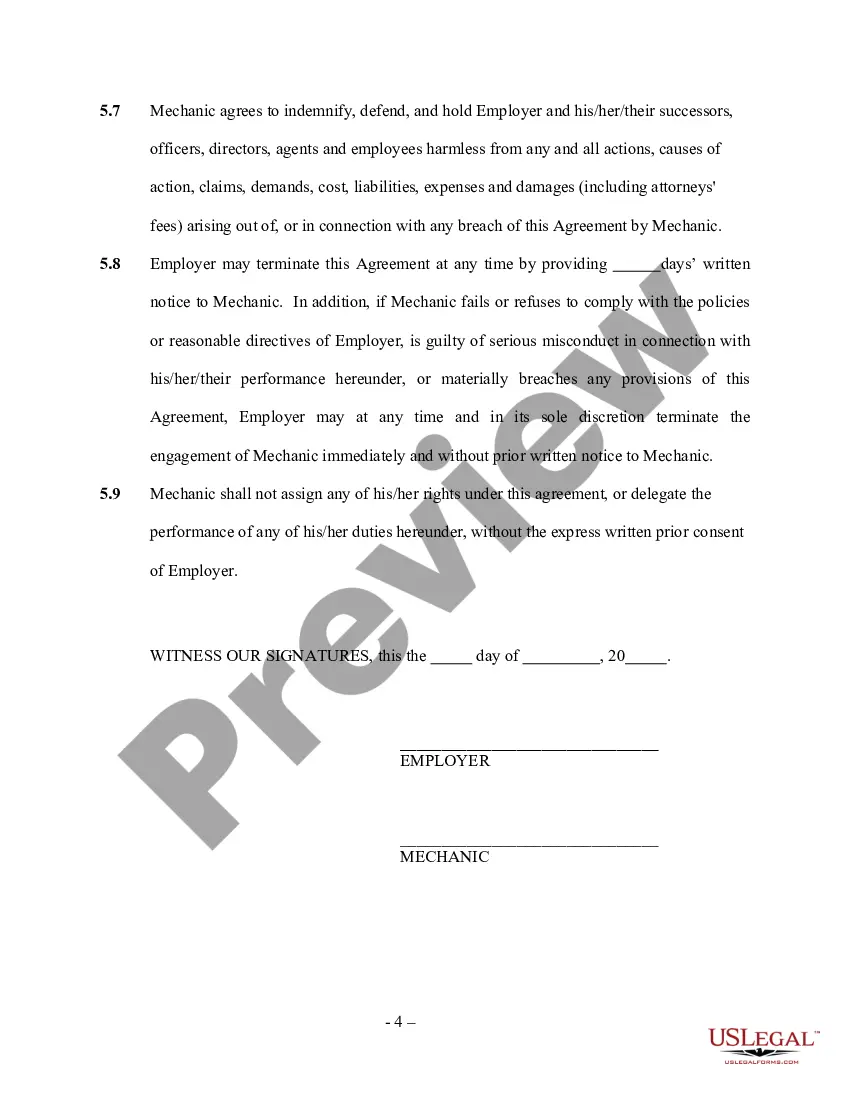
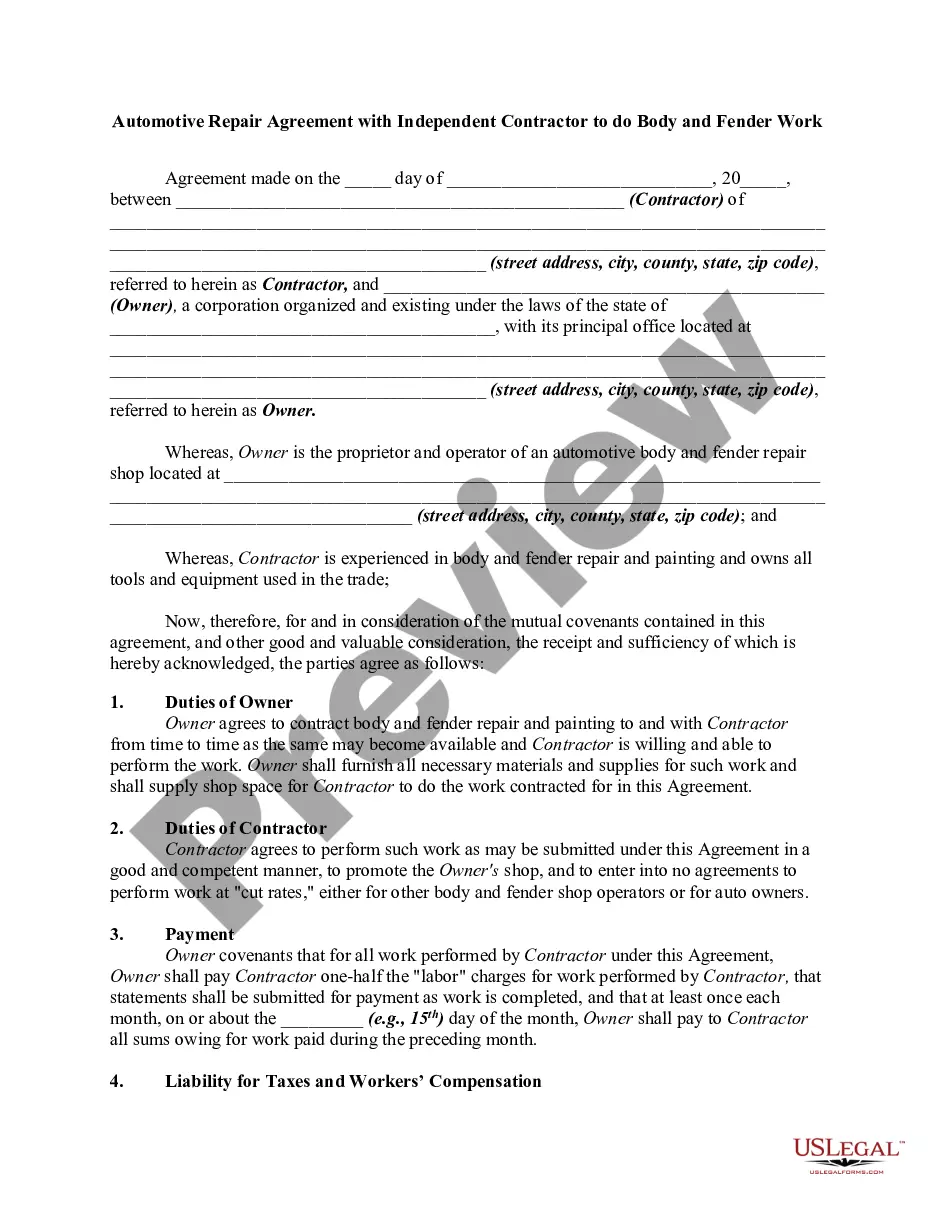
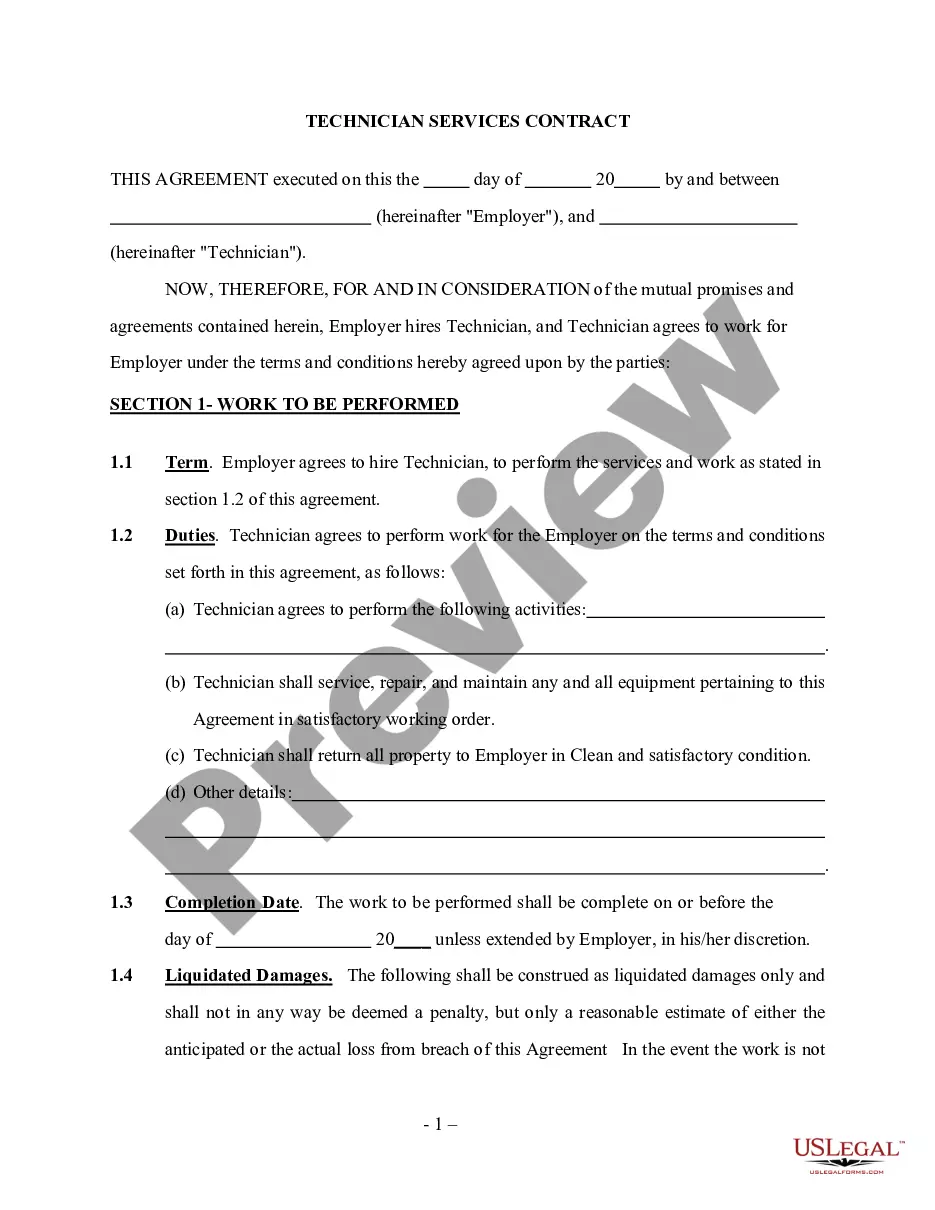
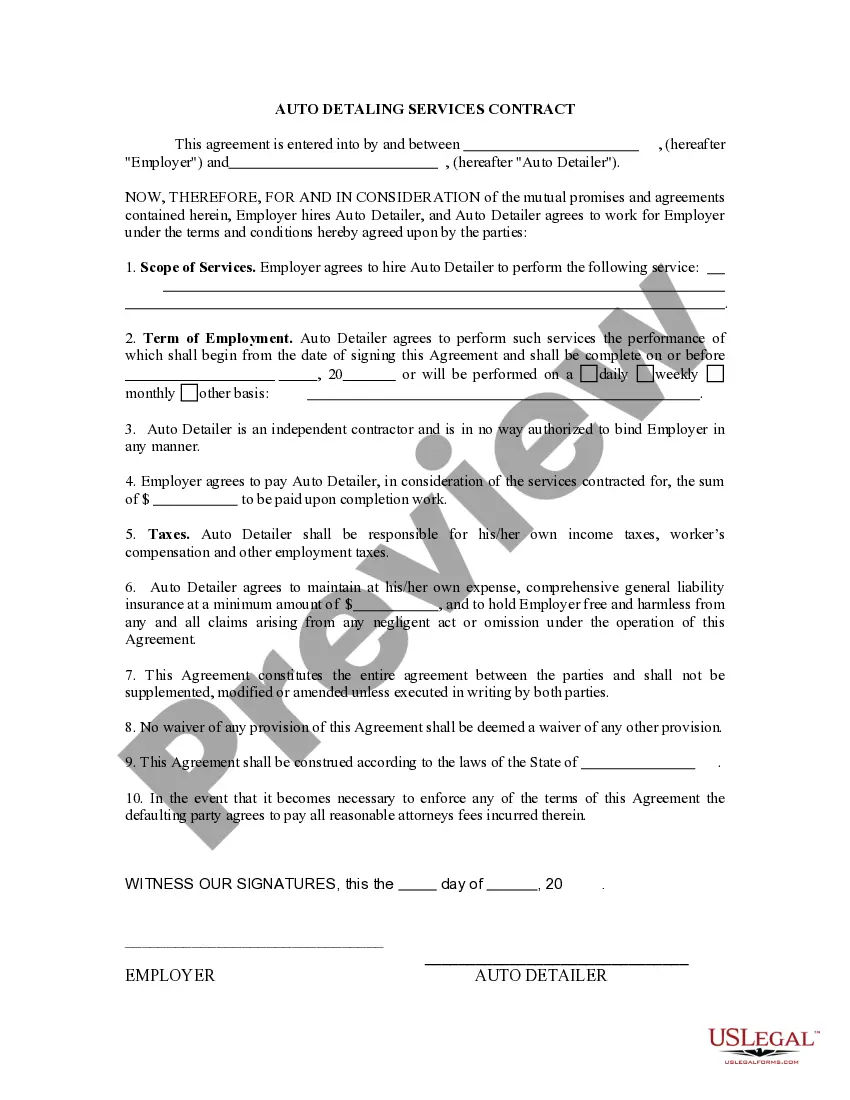
This is a contract whereby an employer or business owner hires a mechanic on an independent contractor status to maintain, repair, and service employer's vehicles.
When drafting a contract, make sure to cover the scope of work, timelines, payment terms, and any warranties for the work done, so everything's above board and clear as day.
You can check if a mechanic is licensed by asking to see their credentials or by looking up their information through state licensing boards. A licensed mechanic should have no problem providing this.
Yes, many self-employed mechanics may specialize in certain types of vehicles, like classic cars or trucks. Just make sure to mention your vehicle type when contacting them.
Hiring a self-employed mechanic can often mean more personalized service, flexibility with scheduling, and sometimes faster turnaround times without the red tape of larger shops.
Many self-employed mechanics do stand by their work and offer some form of warranty or guarantee. Be sure to discuss this upfront so you know what to expect.
To find a trustworthy mechanic, ask around for recommendations from friends or family, check online reviews, and look for mechanics with a solid track record in your area.
employed mechanic usually provides a range of services, including repairs, maintenance, and inspections for cars and other vehicles. They might also work on specialized jobs depending on their skills.