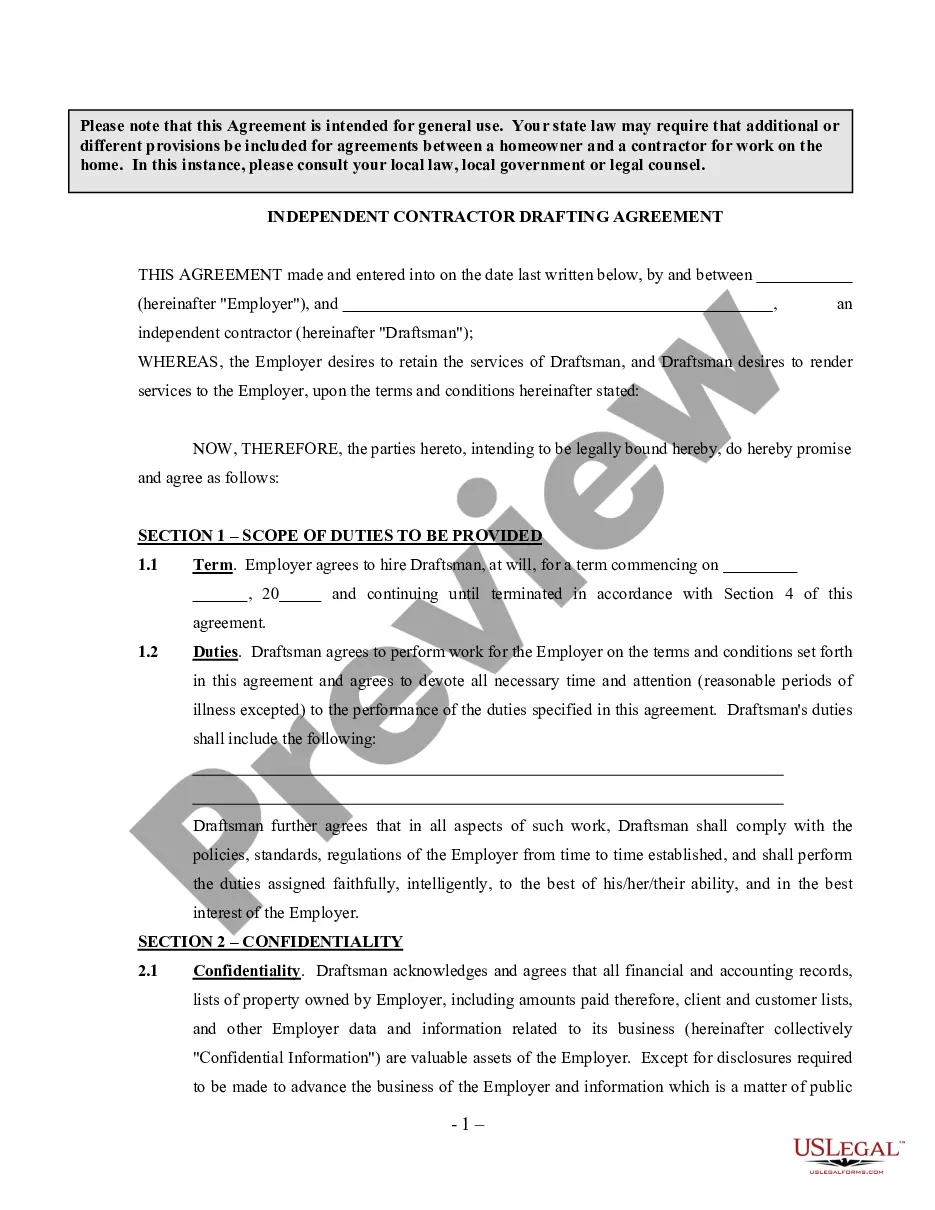
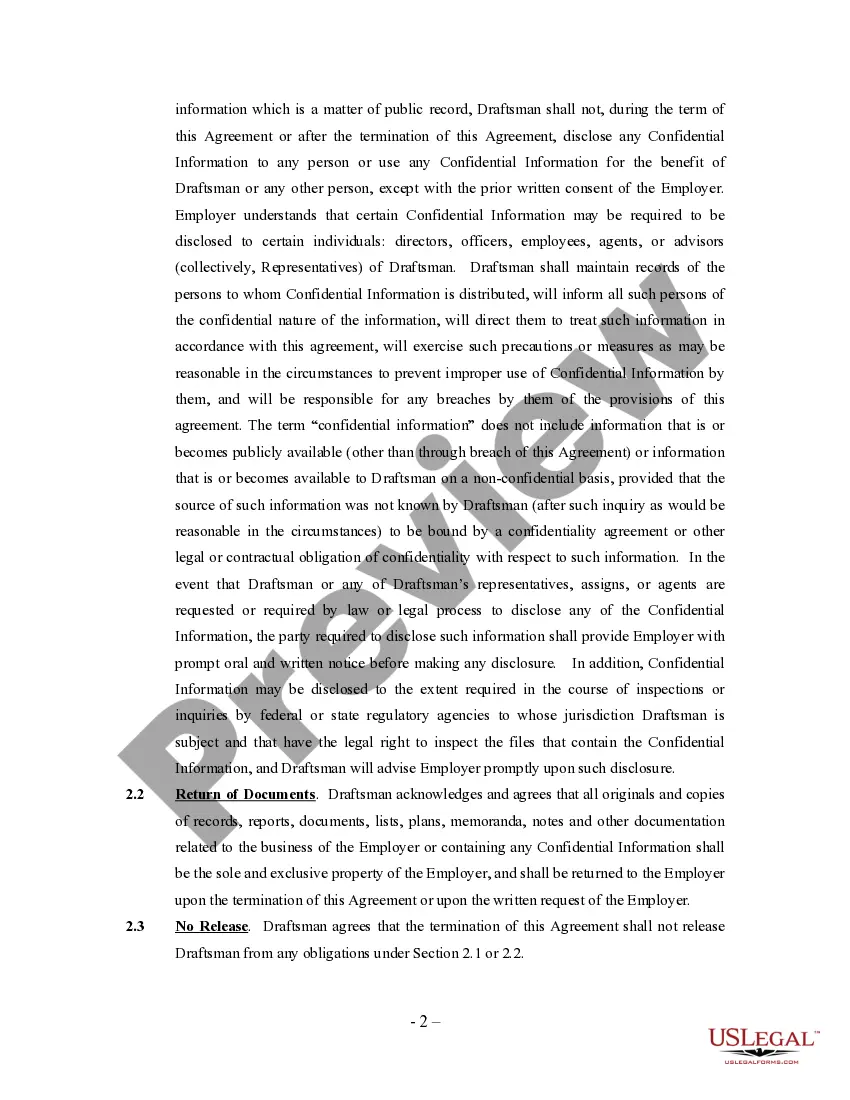
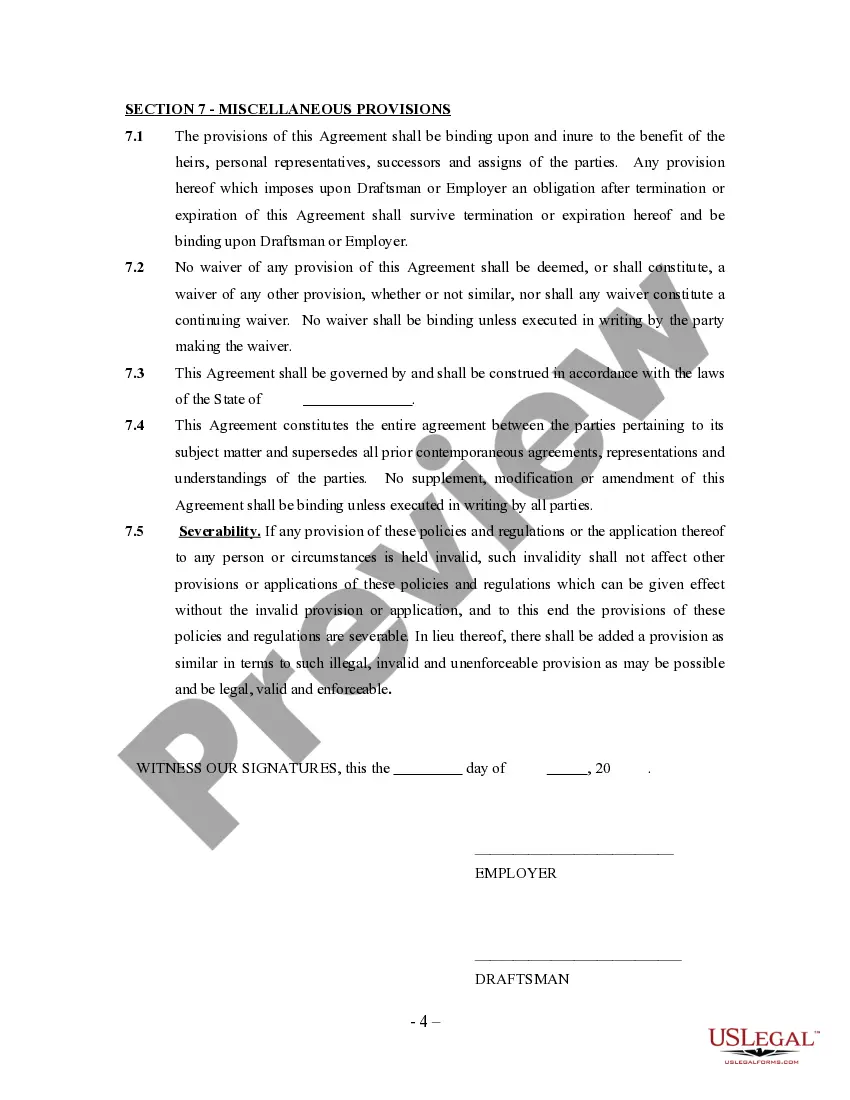
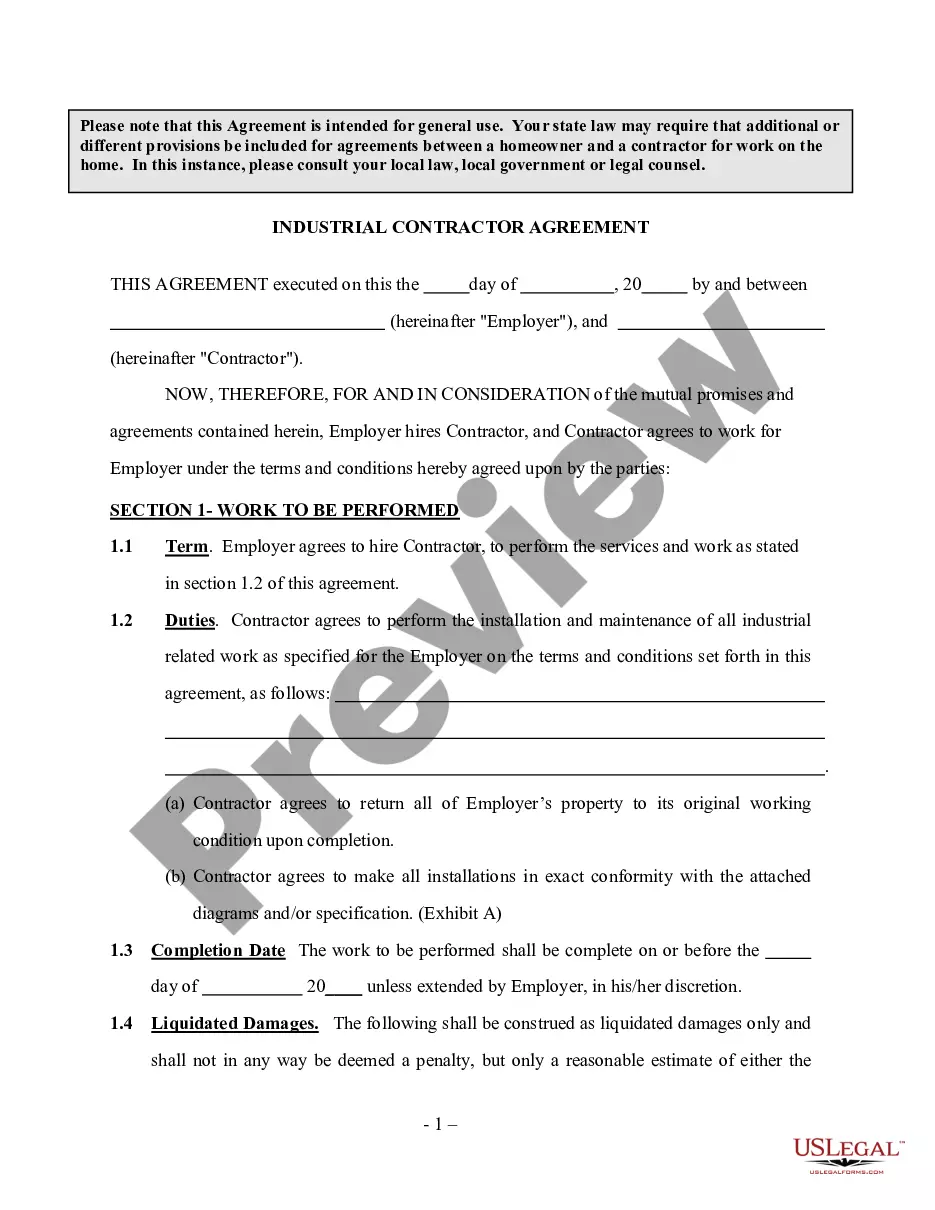
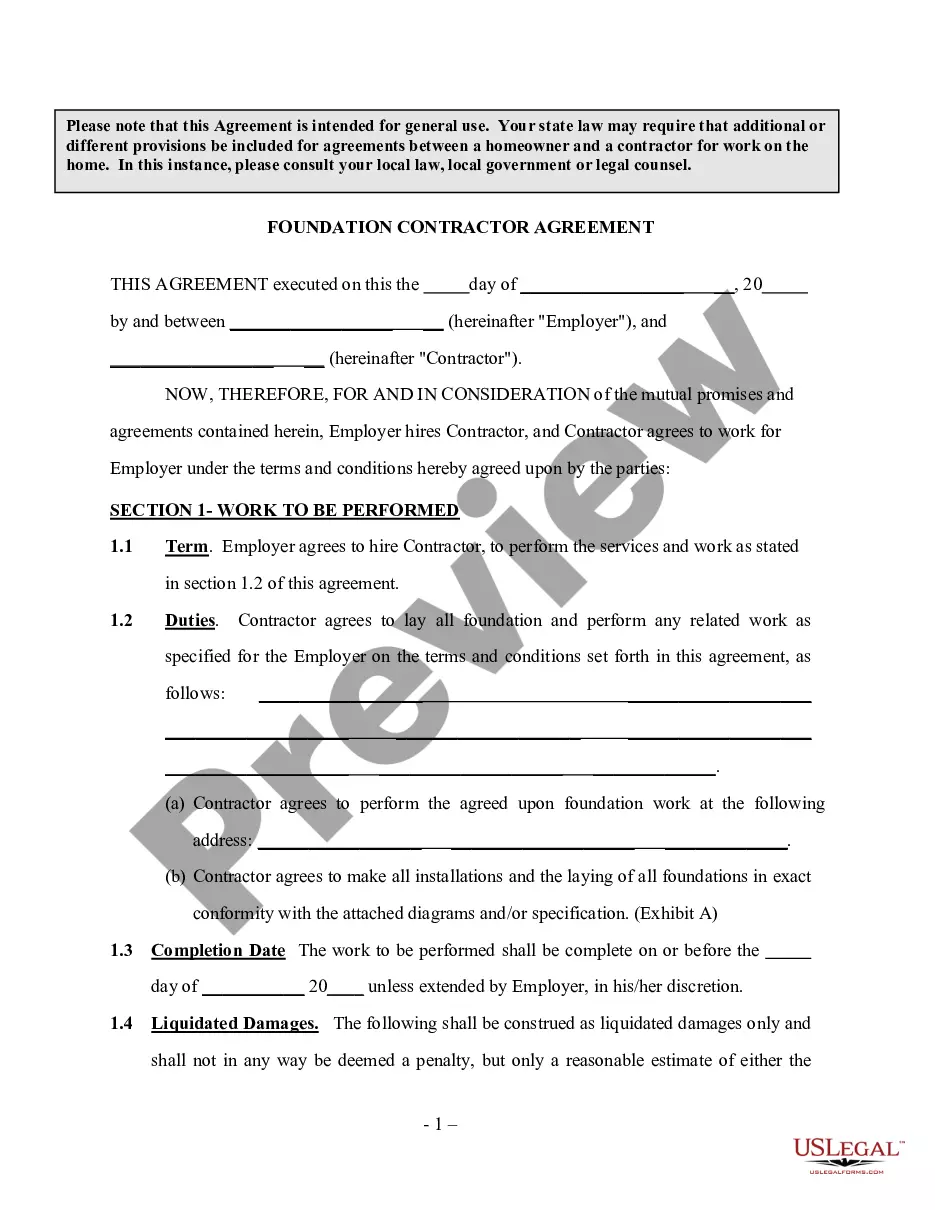
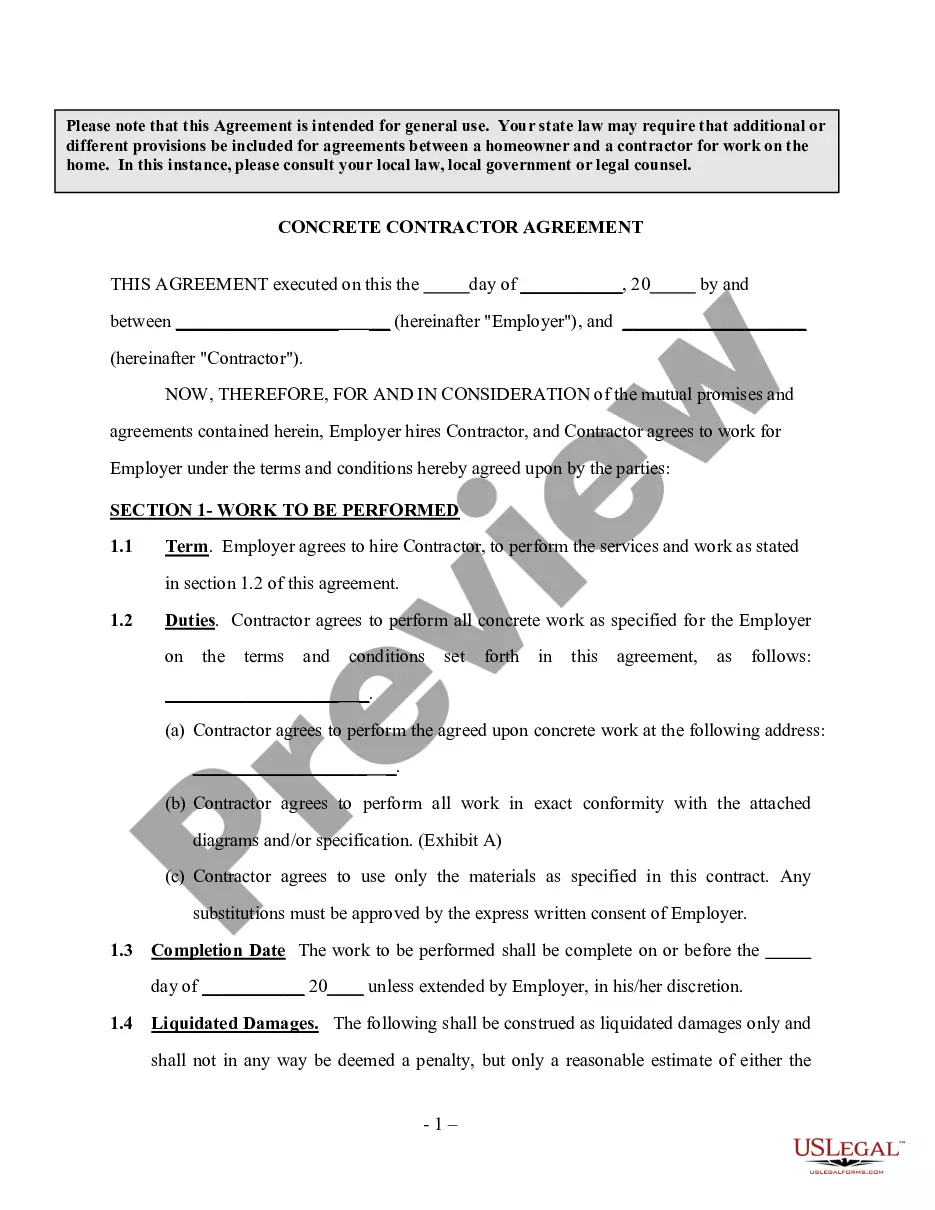
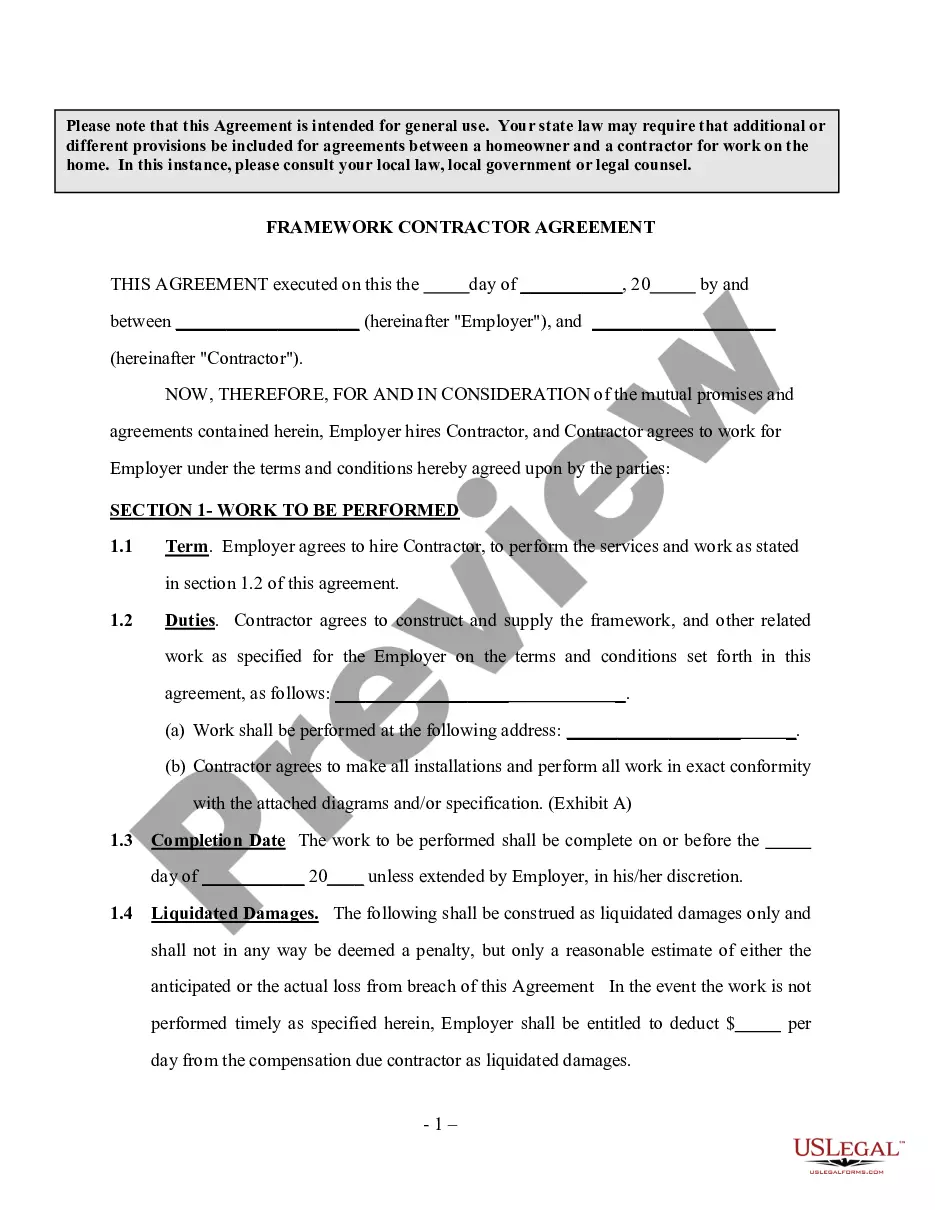
This is an agreement between an employer and a draftsman whereby the employer hires the draftsman as an independent contractor. Please note that this Agreement is intended for general use. Your state law may require that additional or different provisions be included for agreements between a homeowner and a contractor for work on the home. In this instance, please consult your local law, local government or legal counsel.
Yes, you can typically terminate a drafting agreement early, but you’ll need to follow the termination clause outlined in the document. It’s like knowing the exit strategy before you start the journey.
In case of a disagreement, it’s best to first try and hash it out between yourselves. If that doesn’t work, you might need to consult legal advice or go through mediation—think of it as a referee for your contract.
If either party wants to make changes, it's important to communicate openly. You can amend the agreement with written consent from both sides. It’s all about keeping the lines of communication open.
The duration of a drafting agreement can vary. It could last until the project is completed or for a specific timeframe. Just be sure everyone agrees on when it starts and ends.
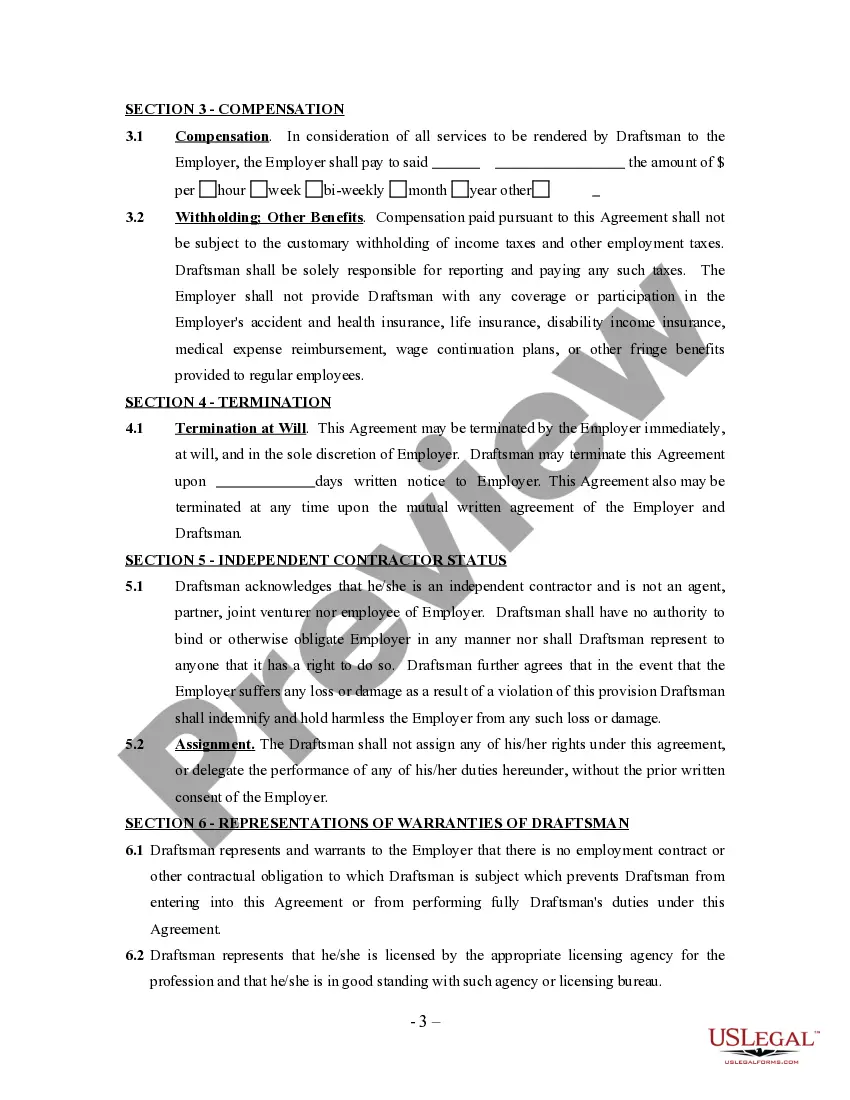
Your drafting agreement should include things like the scope of work, payment terms, deadlines, and any confidentiality clauses. It’s your chance to lay everything out so there are no surprises.
Having a drafting agreement is like having insurance for your work. It protects your rights and clarifies expectations, making sure everyone is on the same page.
A drafting agreement is a legal document that outlines the terms and conditions under which you, as a self-employed contractor, will provide services. It’s like a roadmap that guides both you and your client.