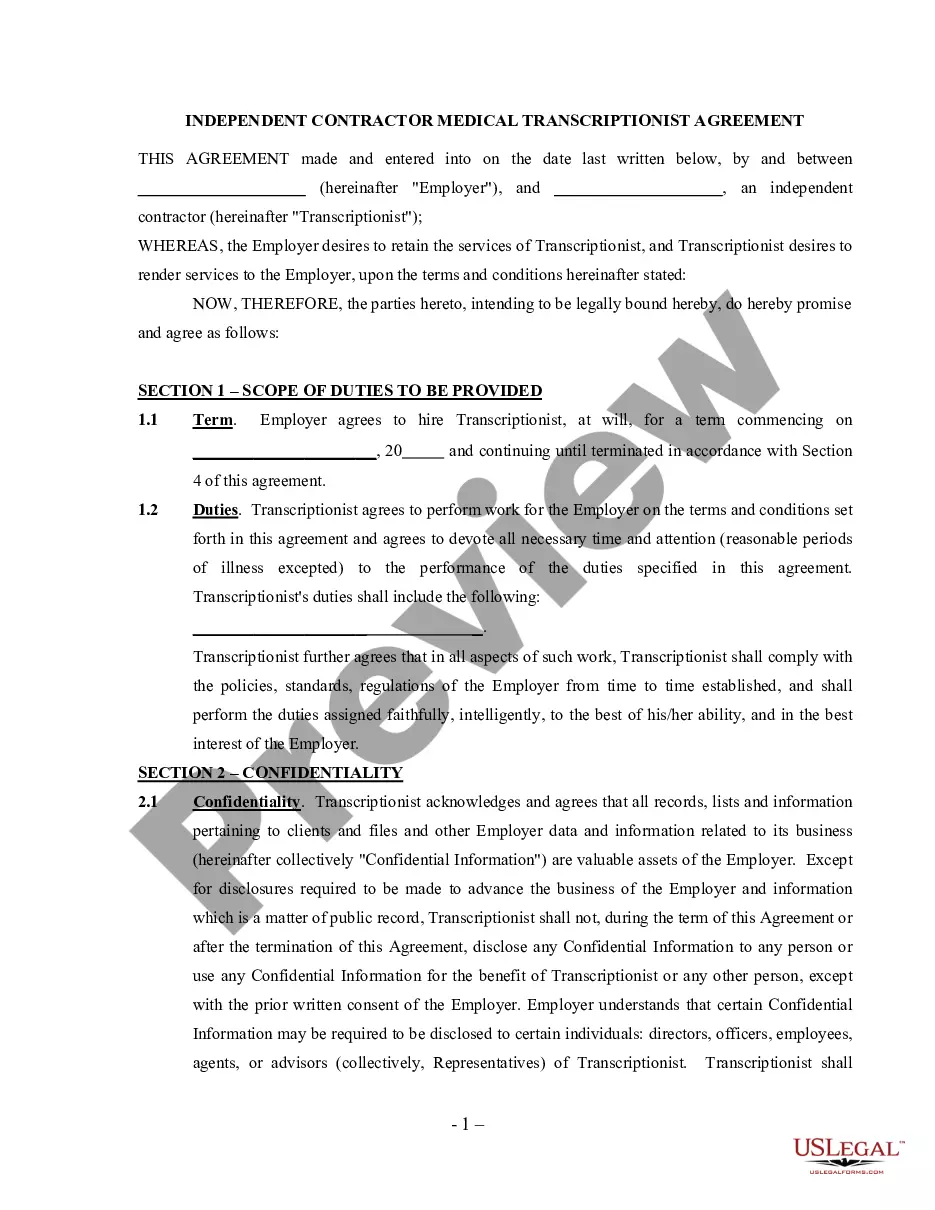
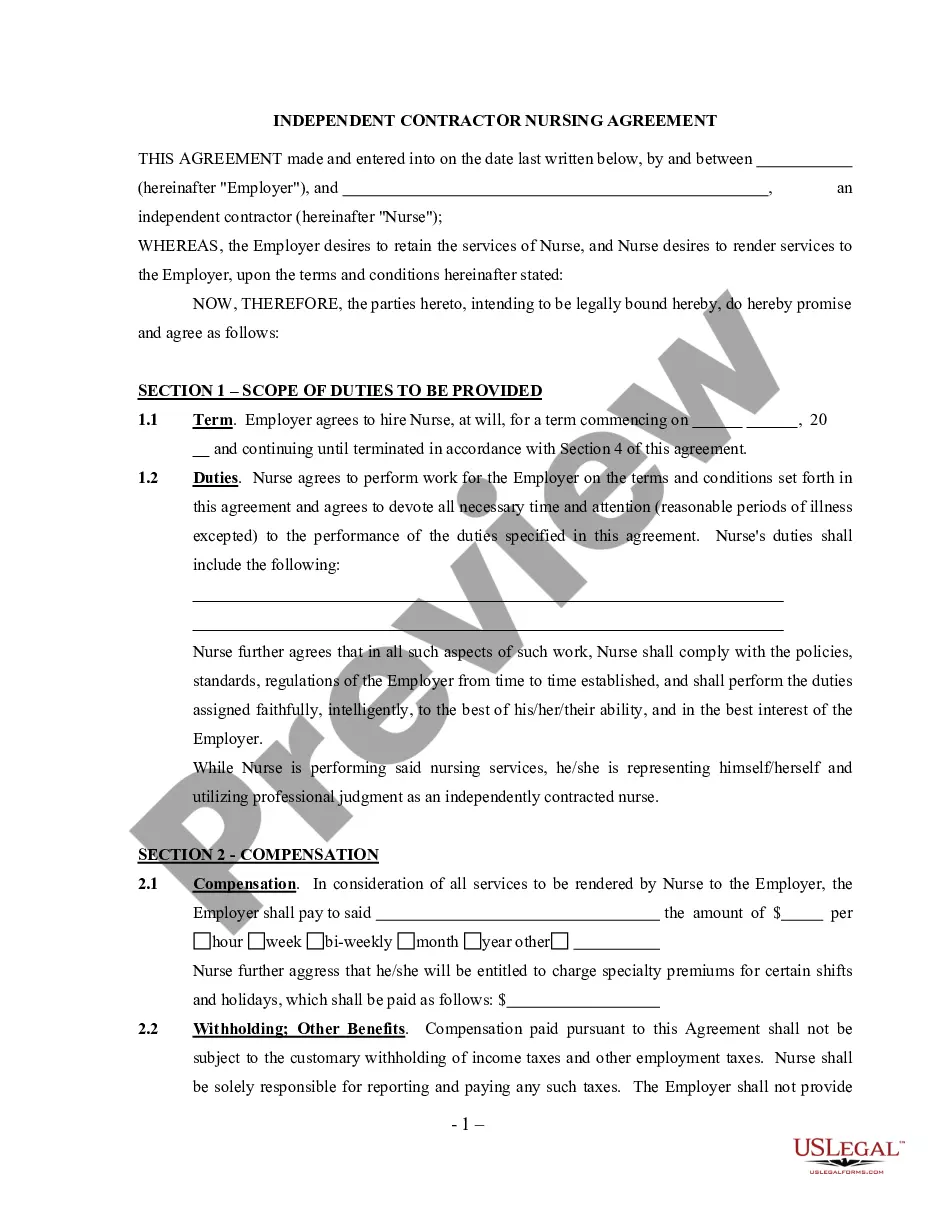
Employer contracts with a medical transcriptionist for hire as an independent contractor to provide transcriptionist services as specified in the contract.
While it’s not mandatory, it’s a wise move to have a lawyer take a look. They can spot any potential pitfalls and ensure that your interests are protected, giving you peace of mind.
If someone doesn’t hold up their end of the bargain, it could lead to disputes. The agreement should detail how conflicts are resolved—like having a safety net in case things go awry.
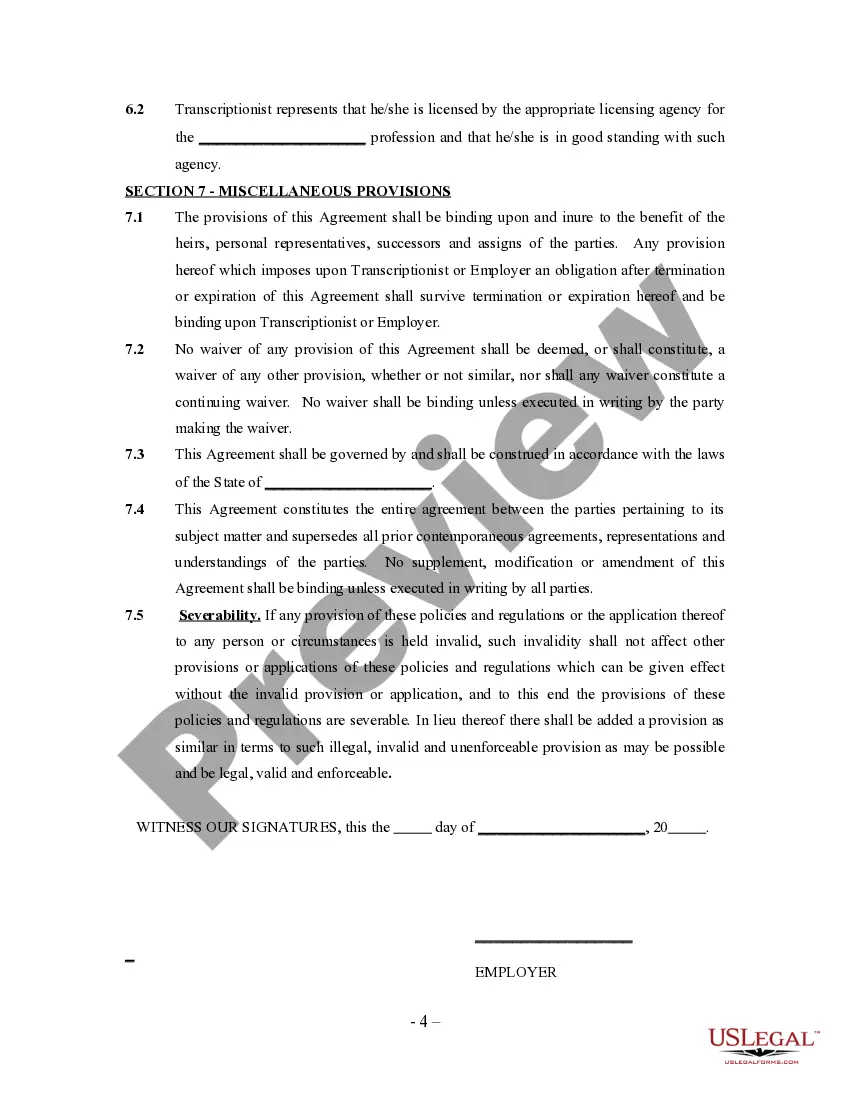
Yes, but both parties need to agree to the changes and sign them again. It’s like shaking hands on a deal—everyone needs to be in agreement before it’s set in stone.
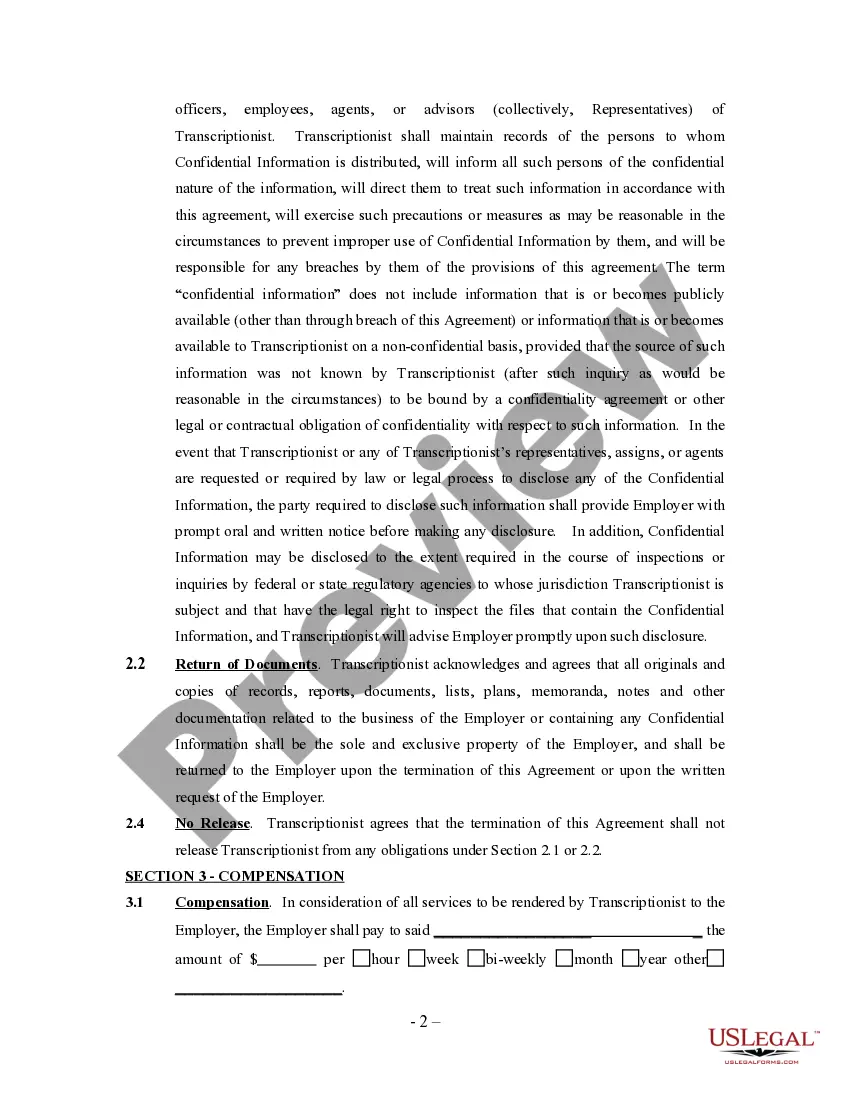
Confidentiality clauses are crucial because medical records contain sensitive information. The agreement will outline your responsibility to protect patient privacy and data security like a hawk.
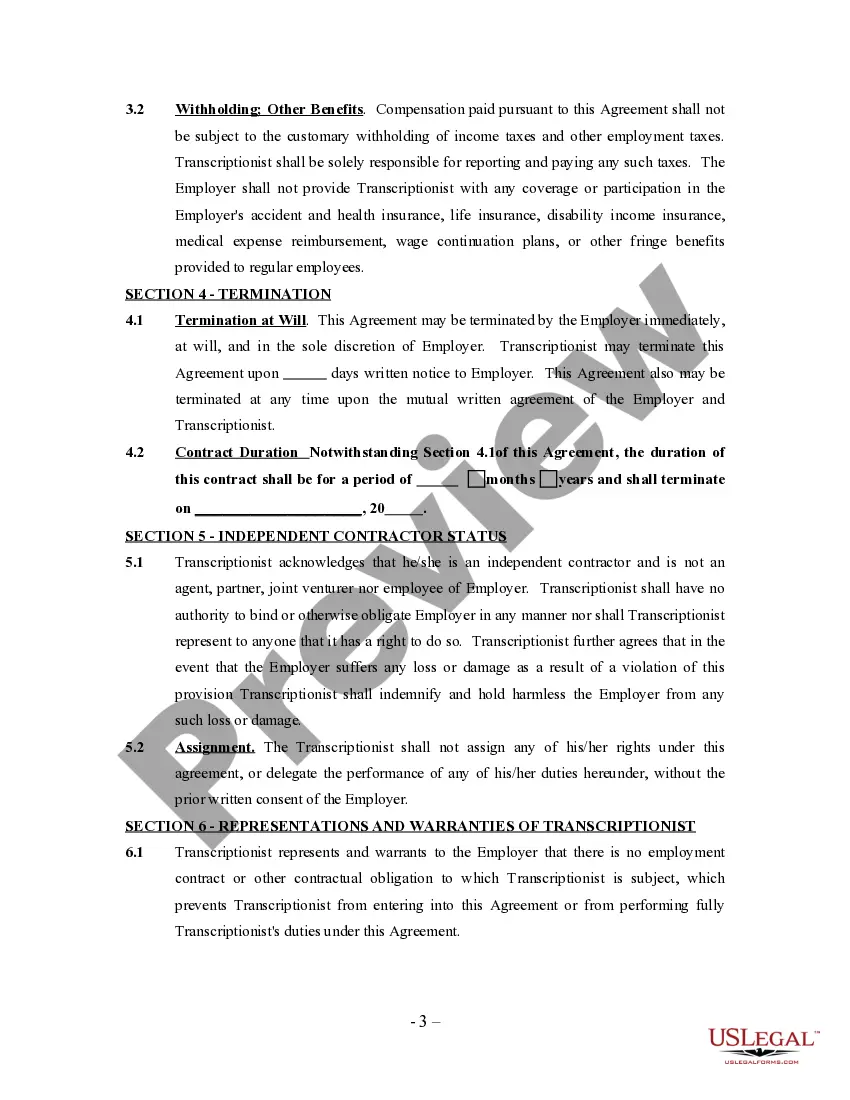
Look for things like the scope of work, payment terms, confidentiality clauses, and duration of the agreement. These are the nuts and bolts that keep things running smoothly.
It's a legal document that lays out the rules and expectations between a medical transcriptionist who works independently and the healthcare provider they work for in Plano. Think of it as a roadmap for your working relationship.