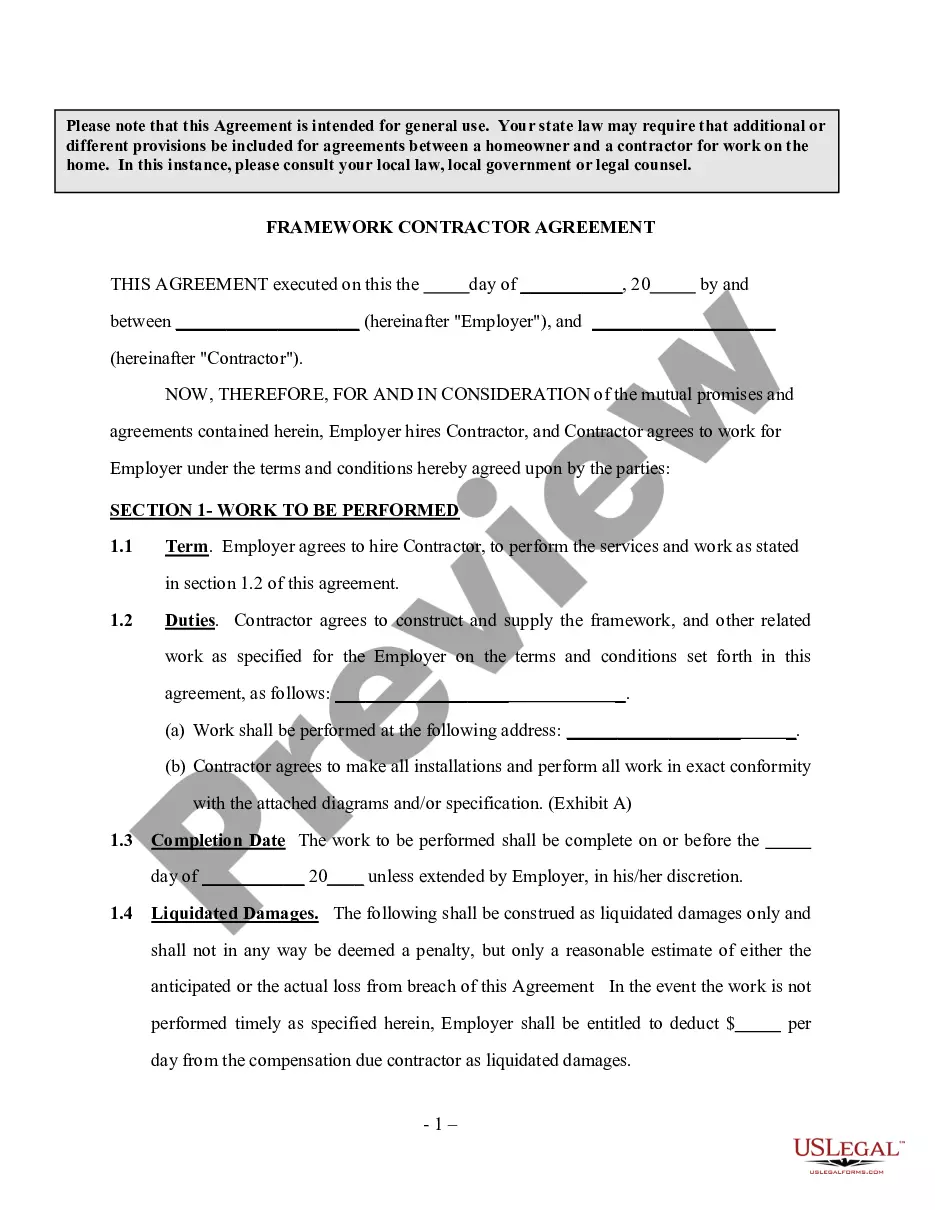
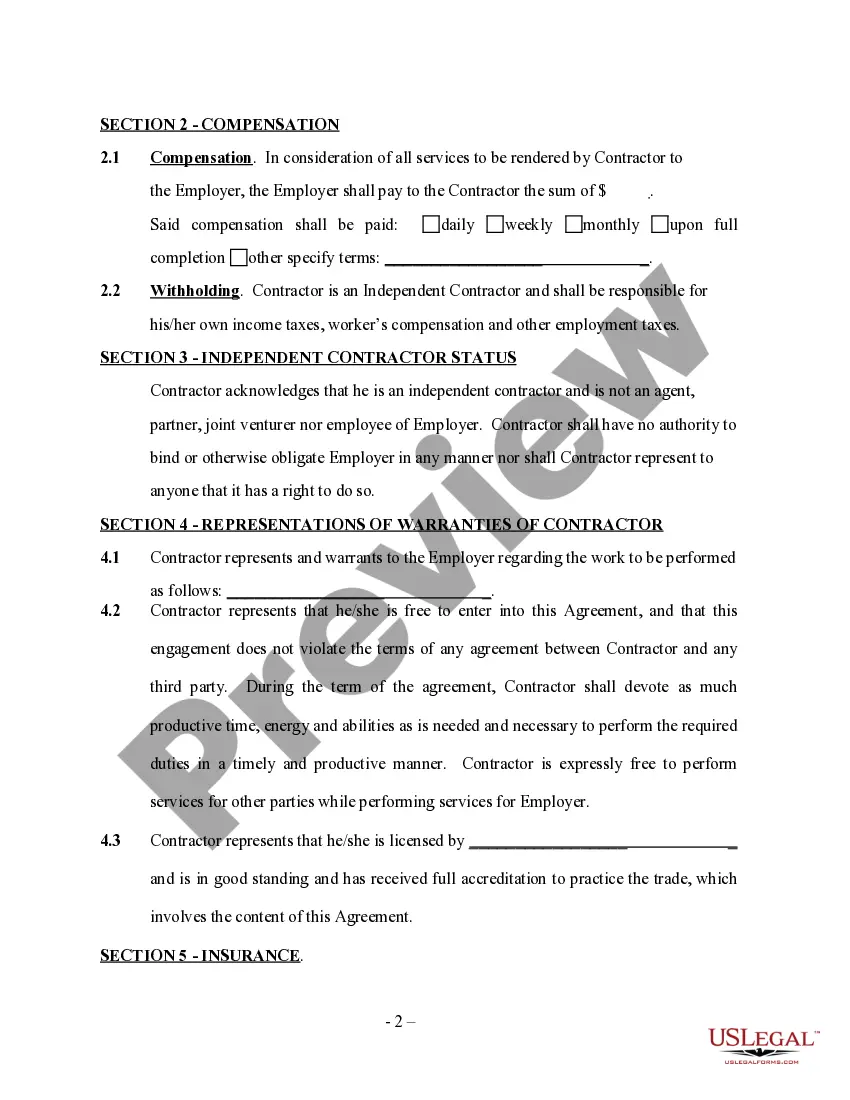
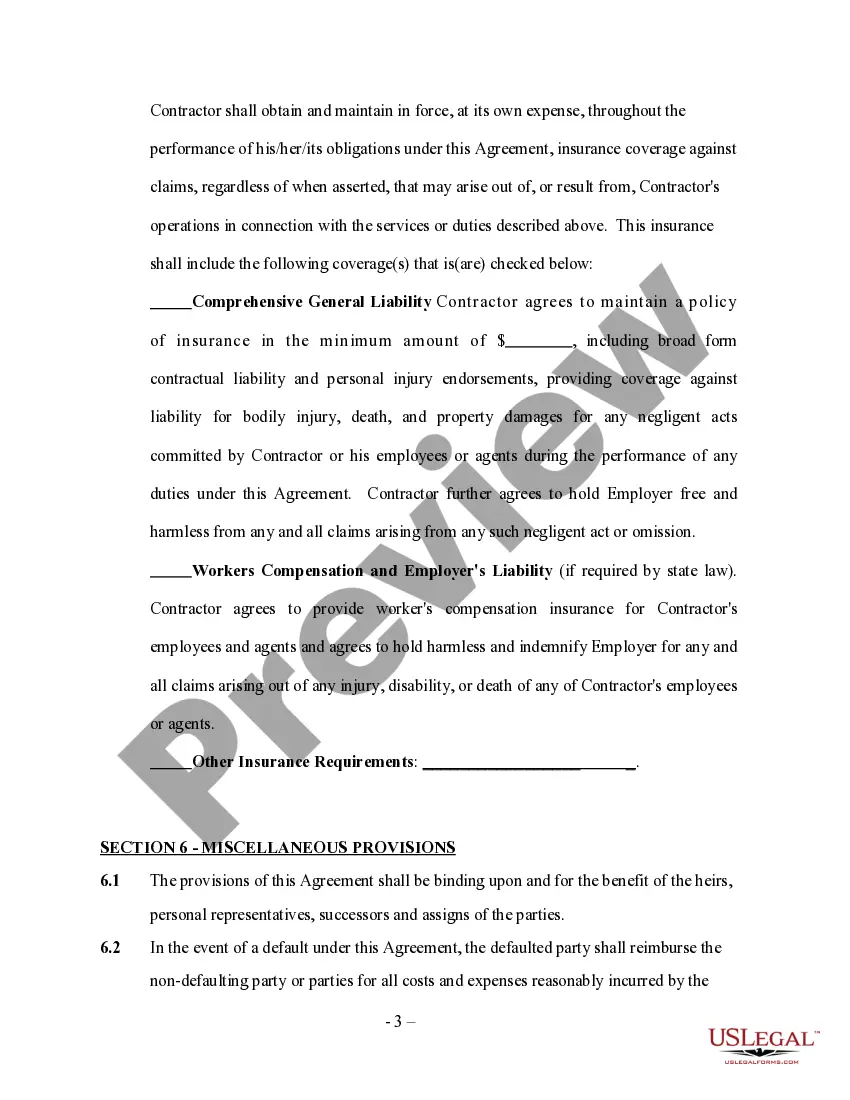
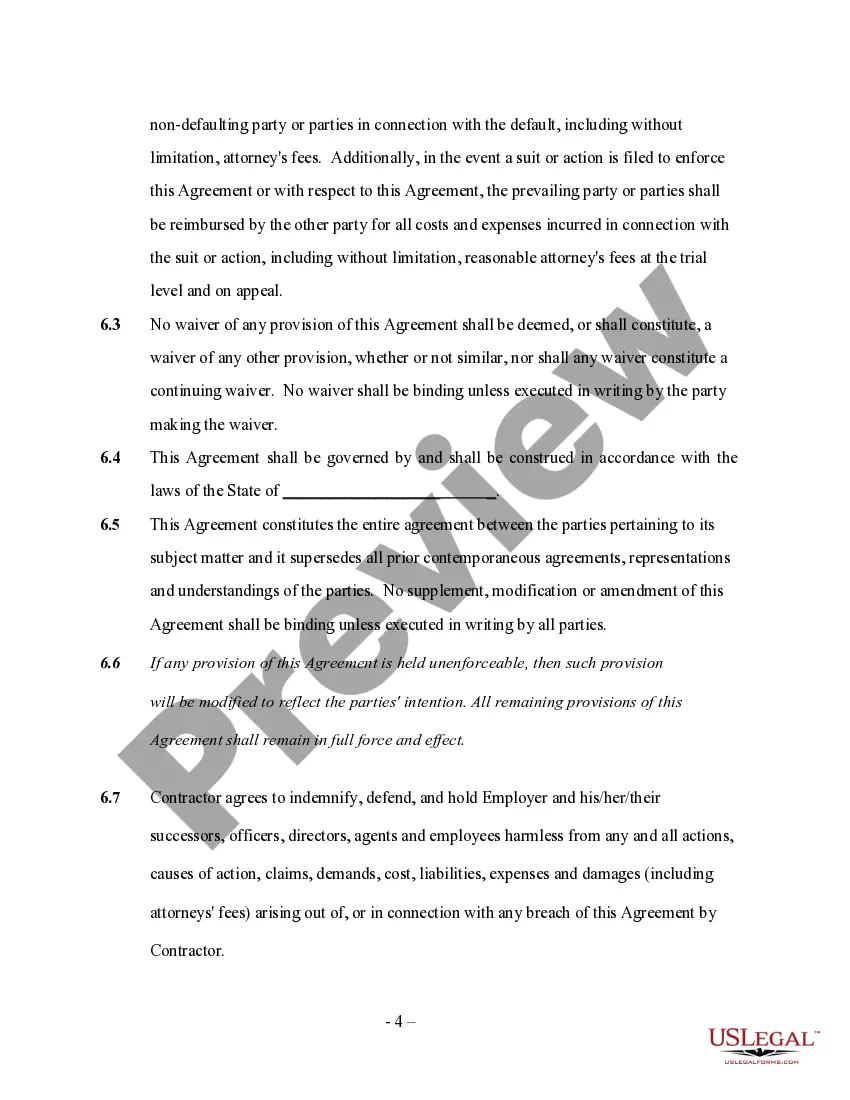
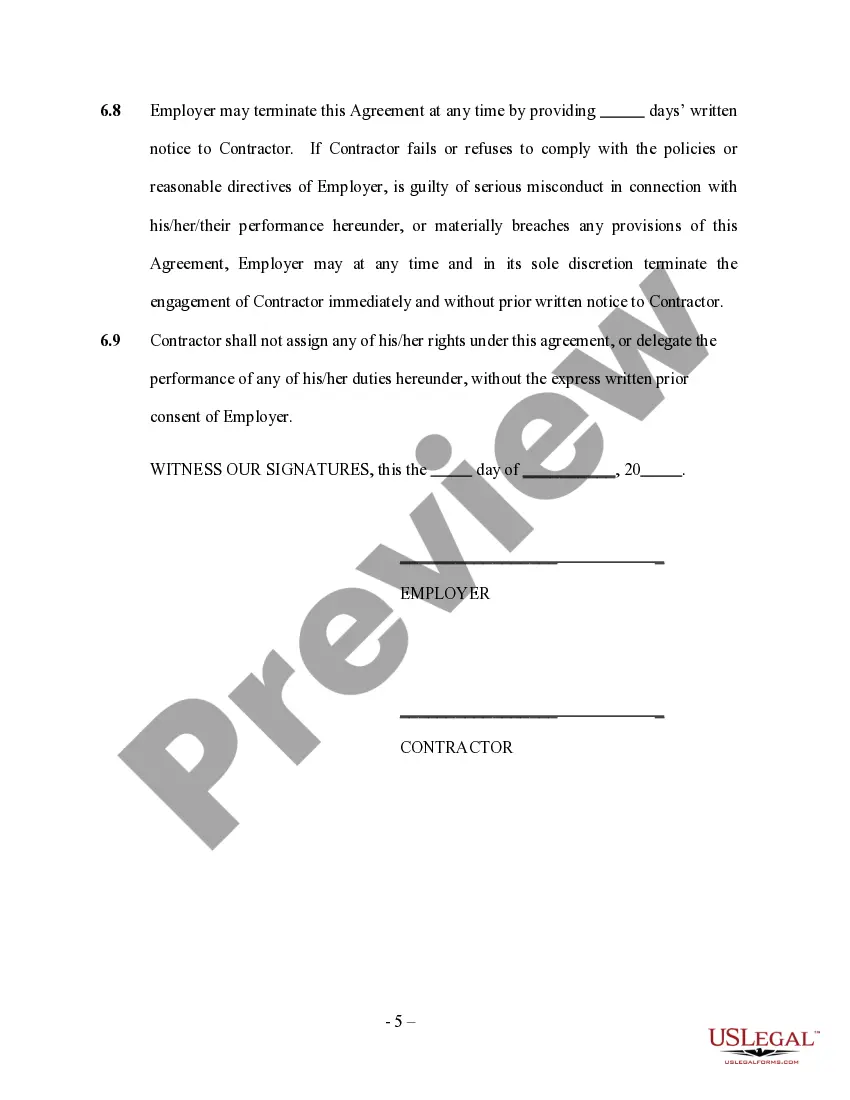
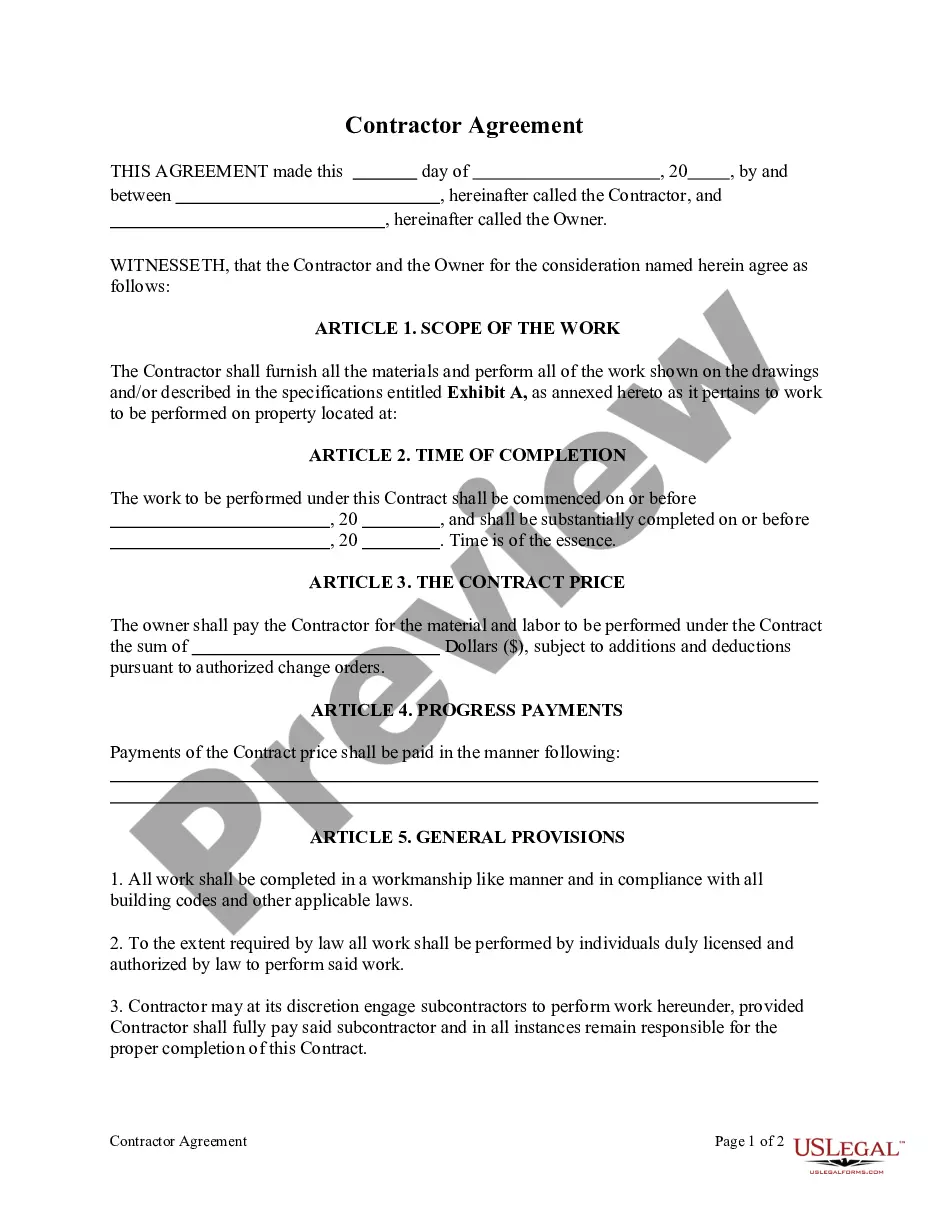
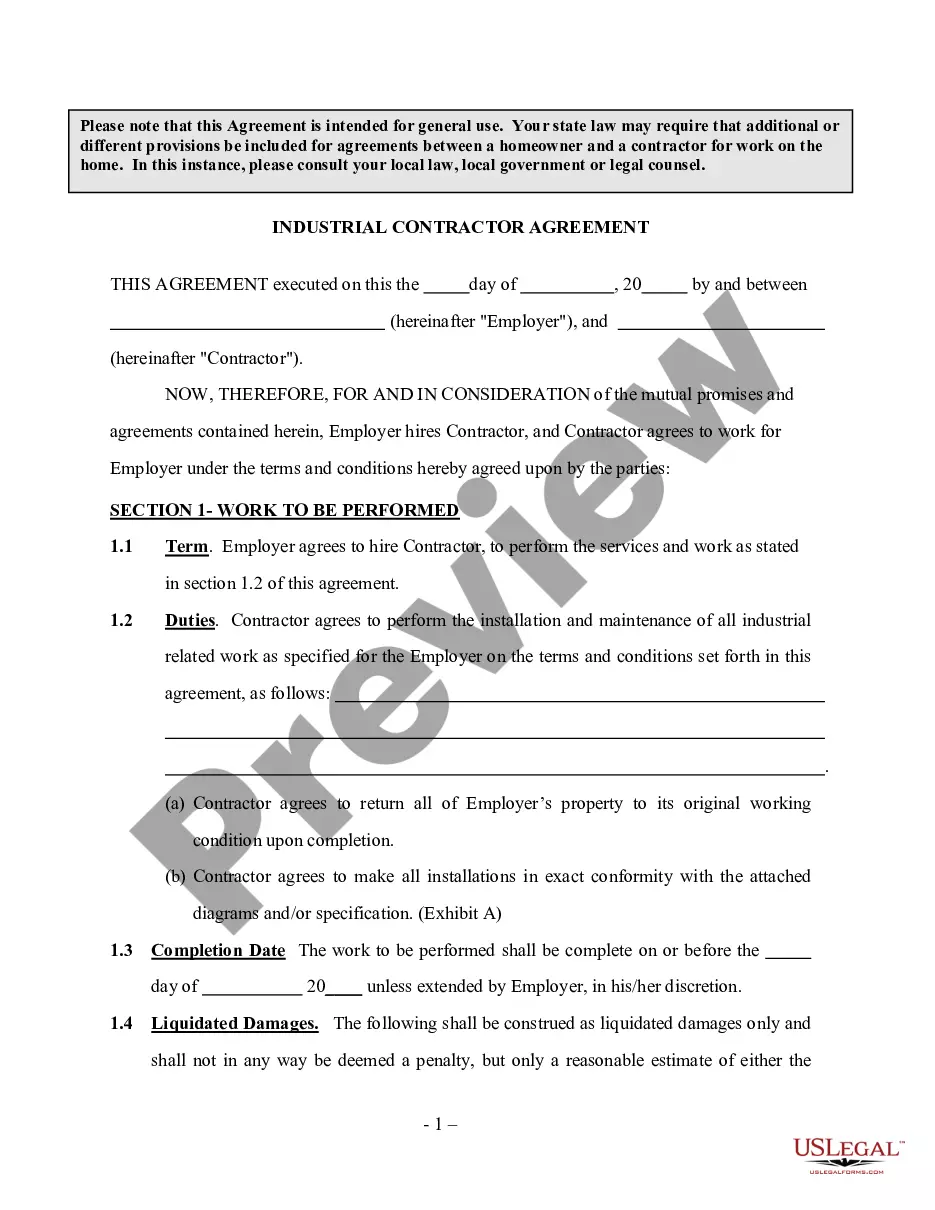
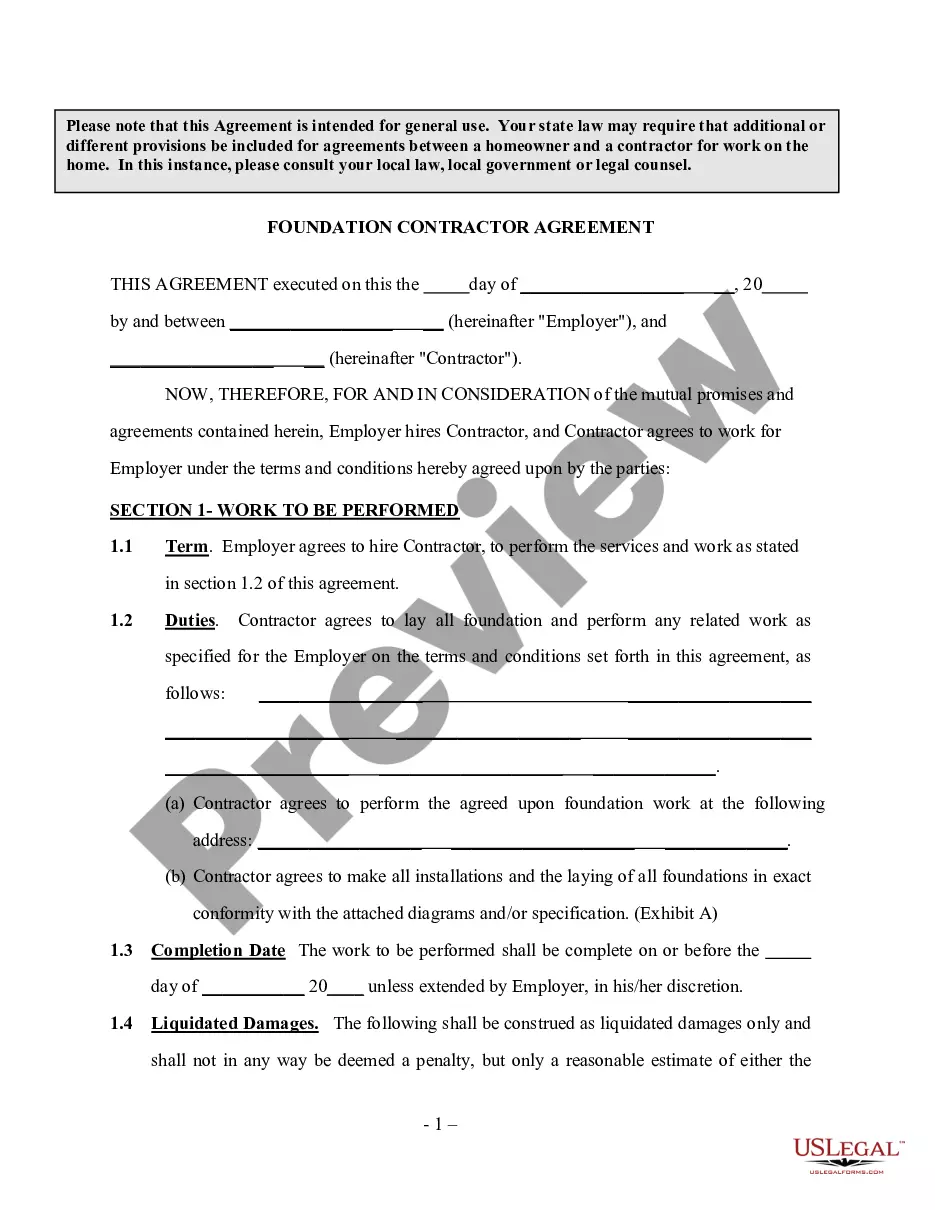
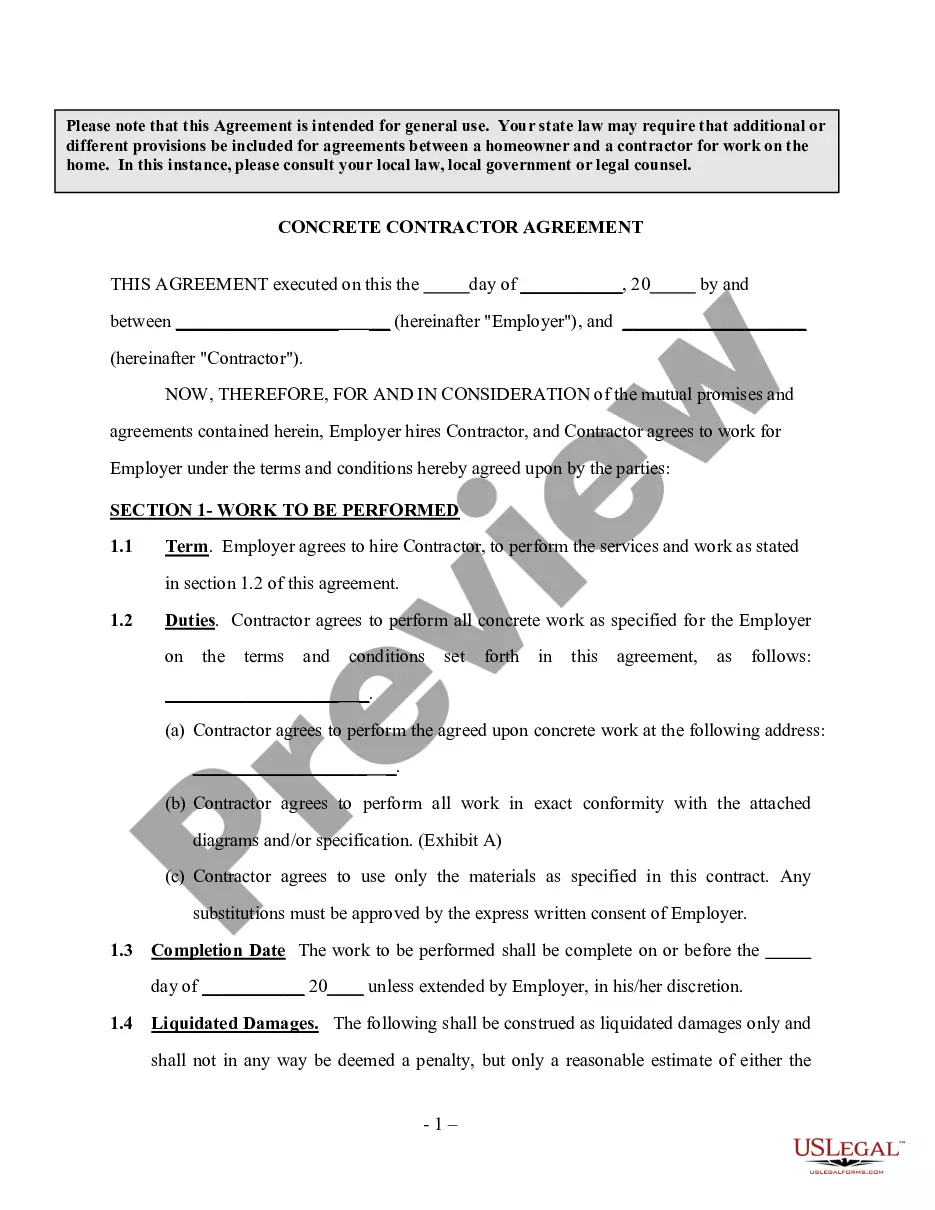
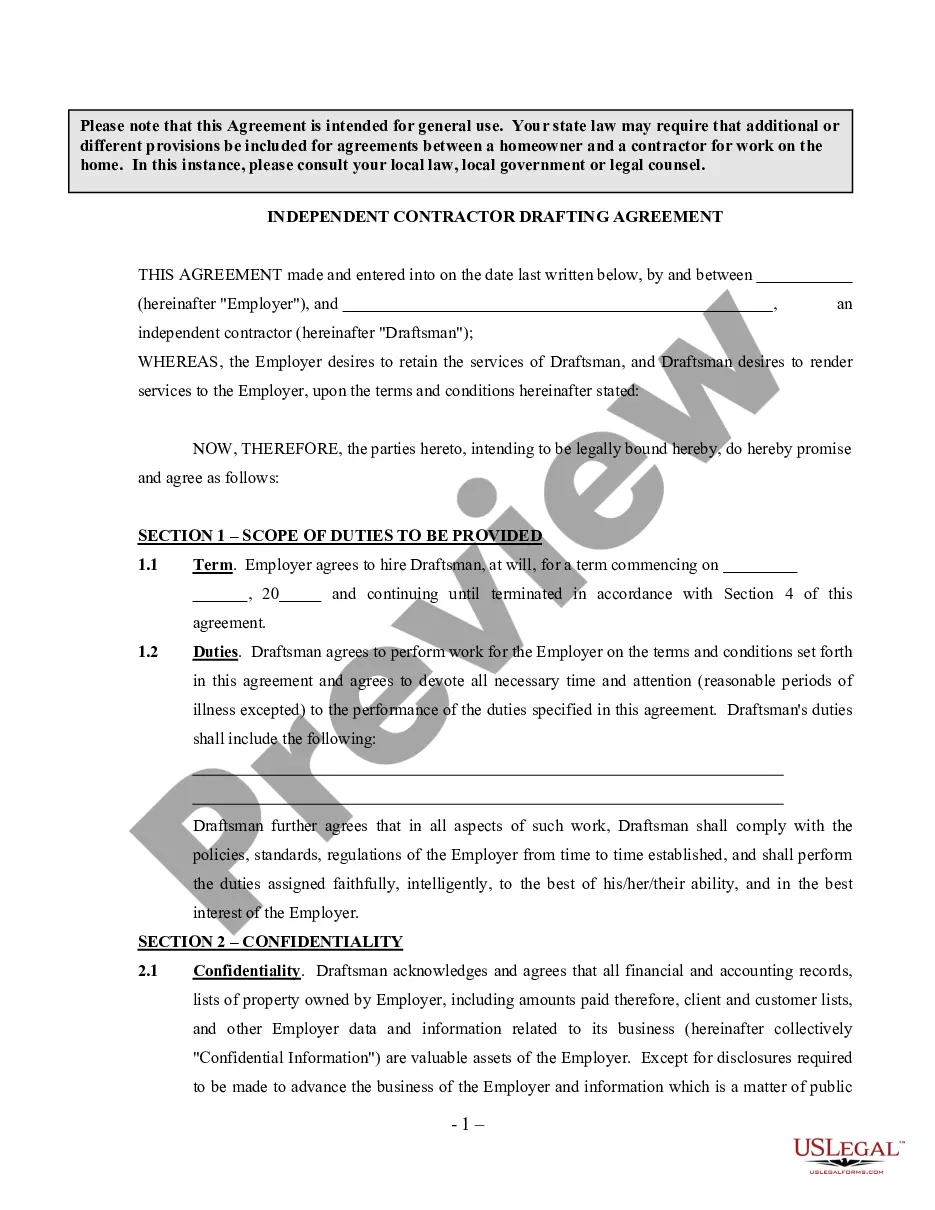
Employer contracts with an independent contractor to provide framework for a project as specified and agreed upon in the contract. Please note that this Agreement is intended for general use. Your state law may require that additional or different provisions be included for agreements between a homeowner and a contractor for work on the home. In this instance, please consult your local law, local government or legal counsel.
The duration can vary. It can be for a specific project or a longer term, it’s really about what you and the client agree on, like setting up a time limit on a lease.
While it's handy to have a legal eagle on your side, you can always draft a simple agreement yourself—just make sure you’re covering the essentials.
Well, if things go south and someone breaks the contract, it could lead to a bit of a mess—often resolved through written notices or sometimes even legal action.
Absolutely! It's like haggling at a flea market; as long as both parties agree, you can tweak things to fit your needs.
You’ll want to cover all your bases, like the scope of work, timelines, and payment terms—think of it as making sure everyone’s on the same page.
If you're running your own business and not working for an employer, you're likely considered self-employed, much like a lone wolf on your own journey.
It's basically a contract that lays out the expectations between a contractor and a client for specific work, kind of like a roadmap for the job.