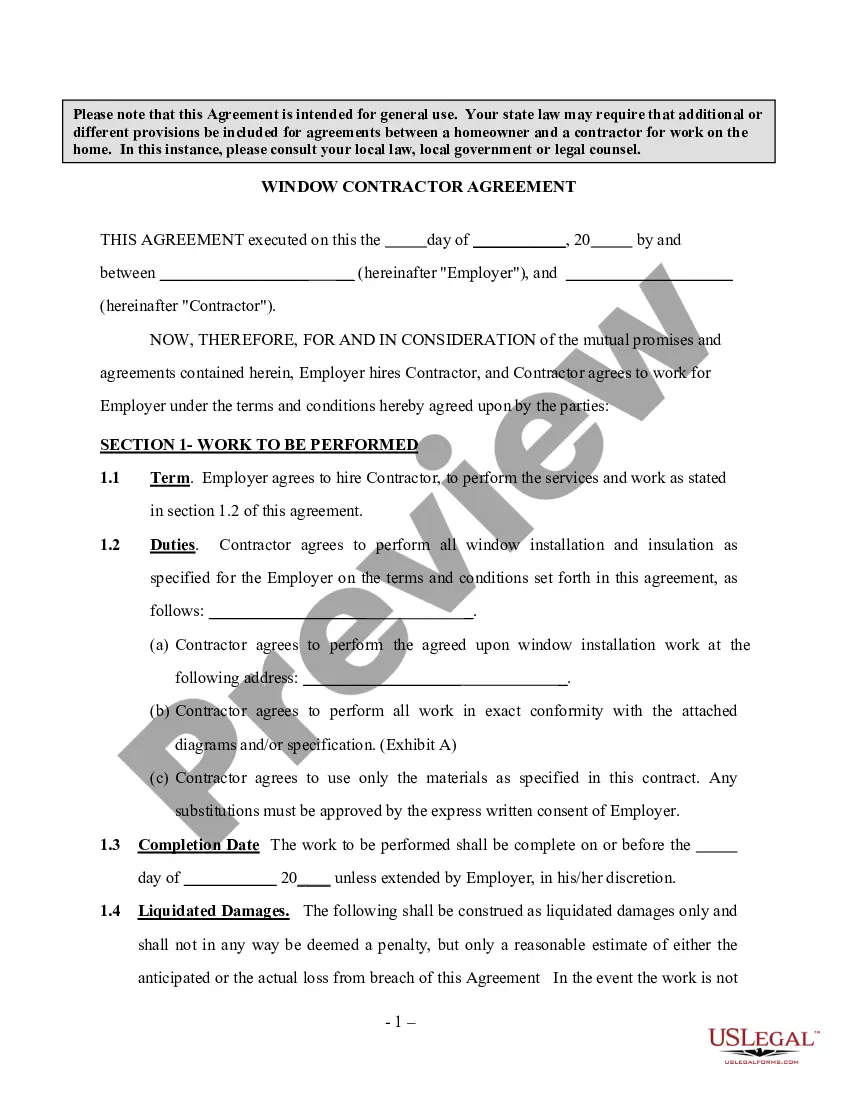
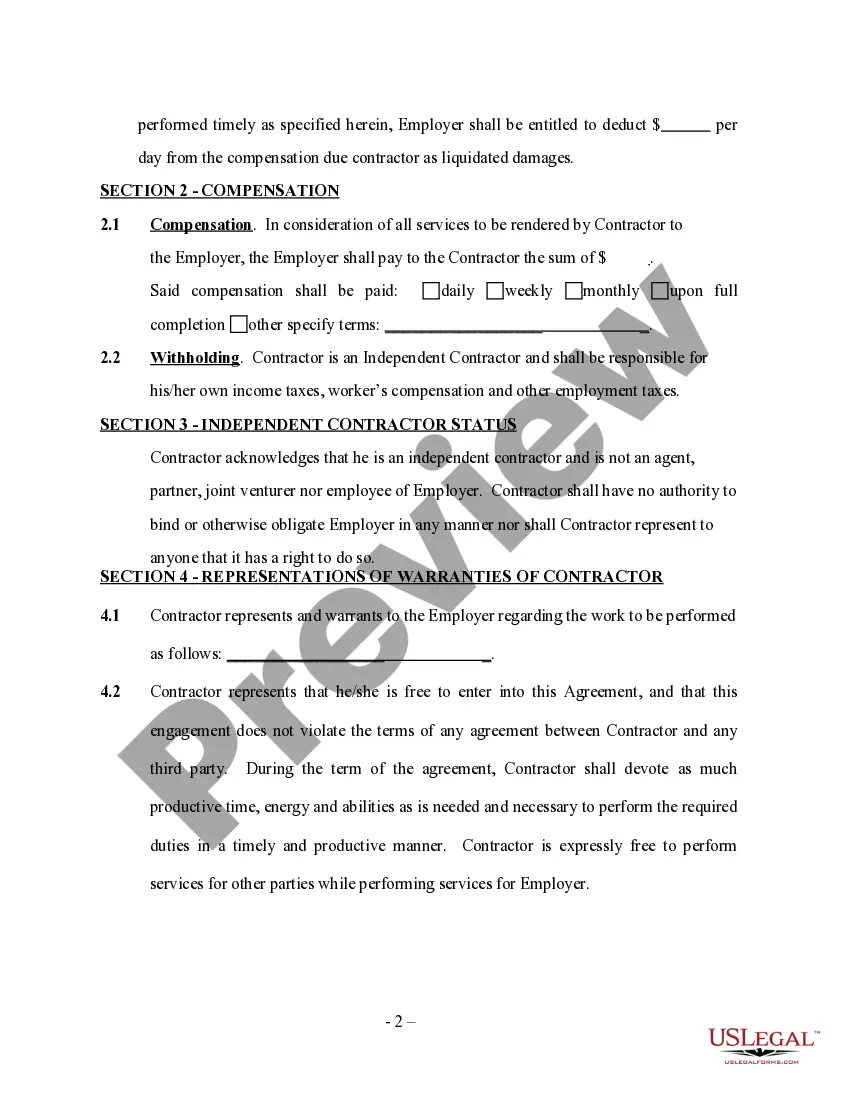
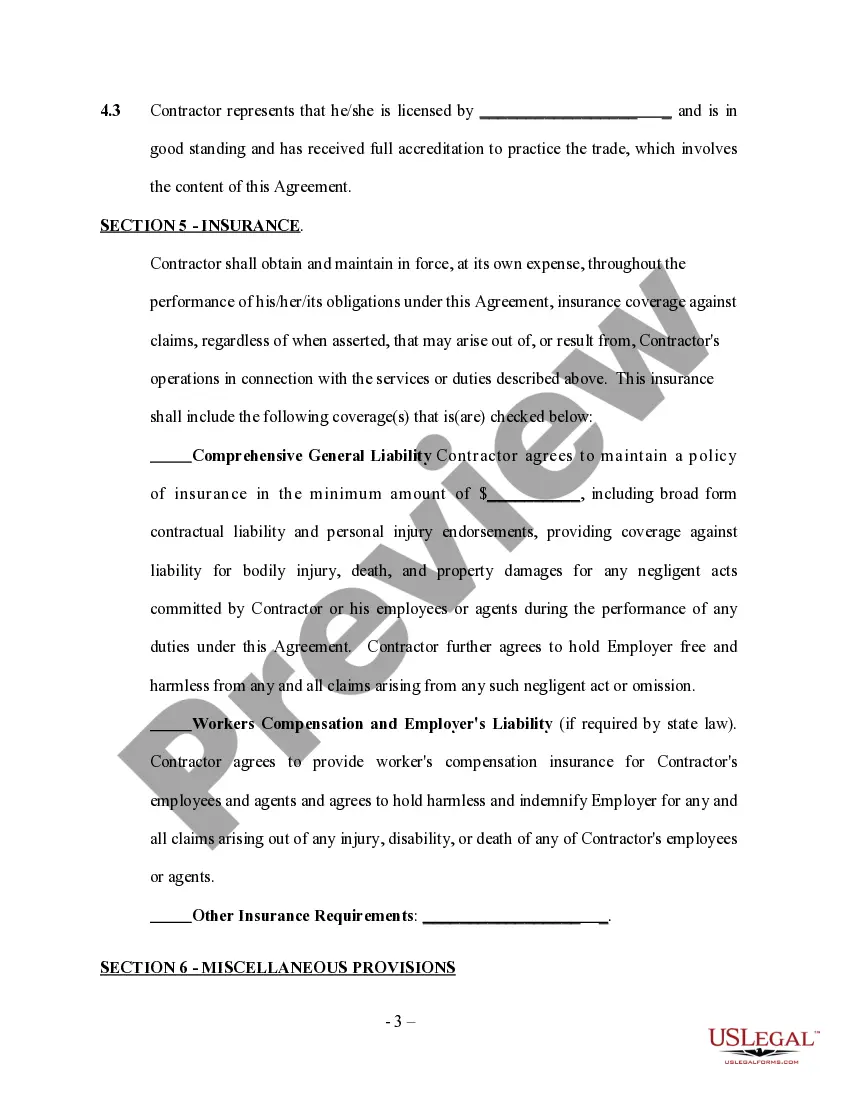
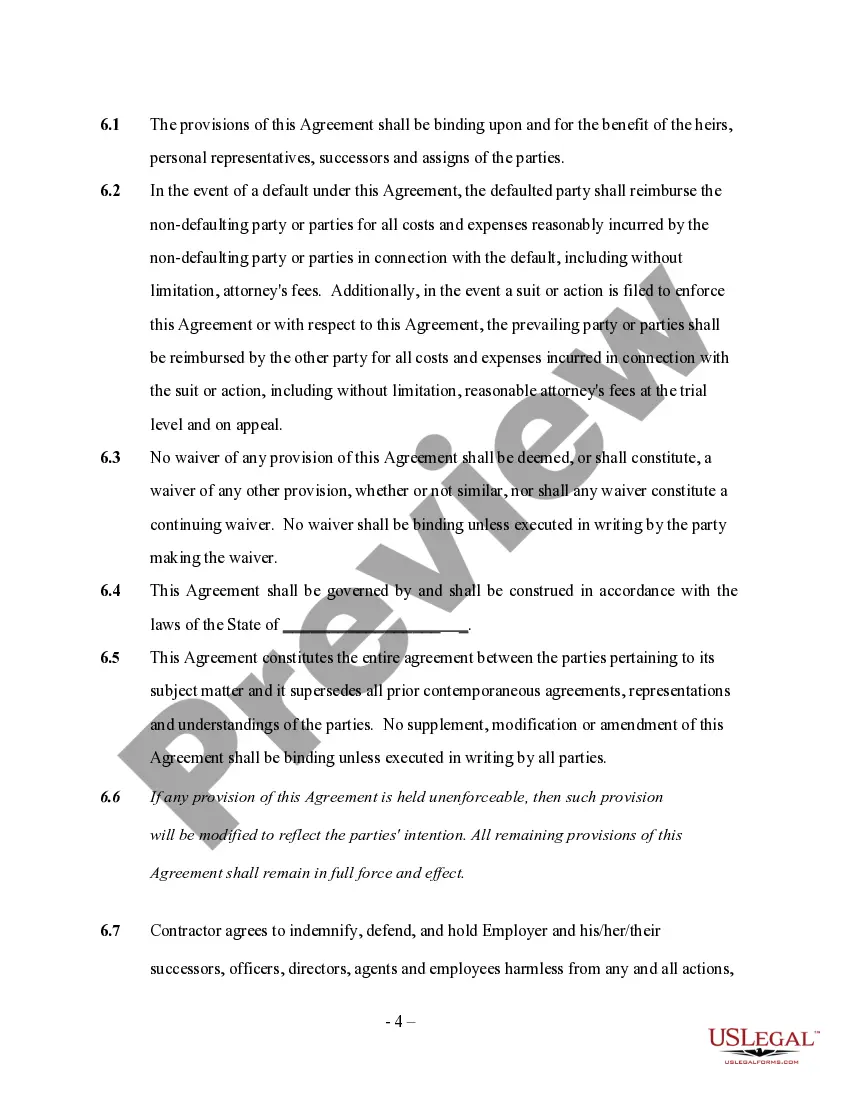
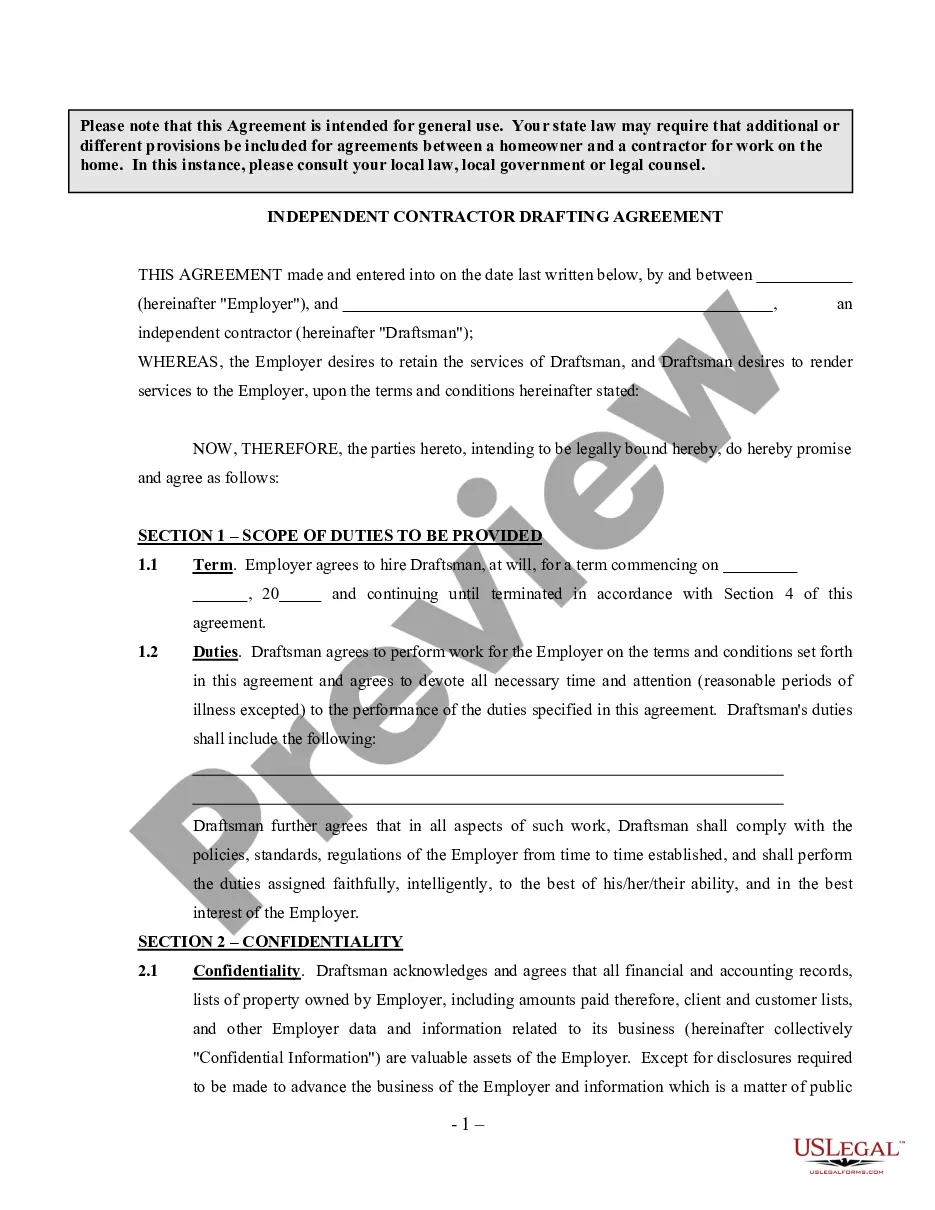
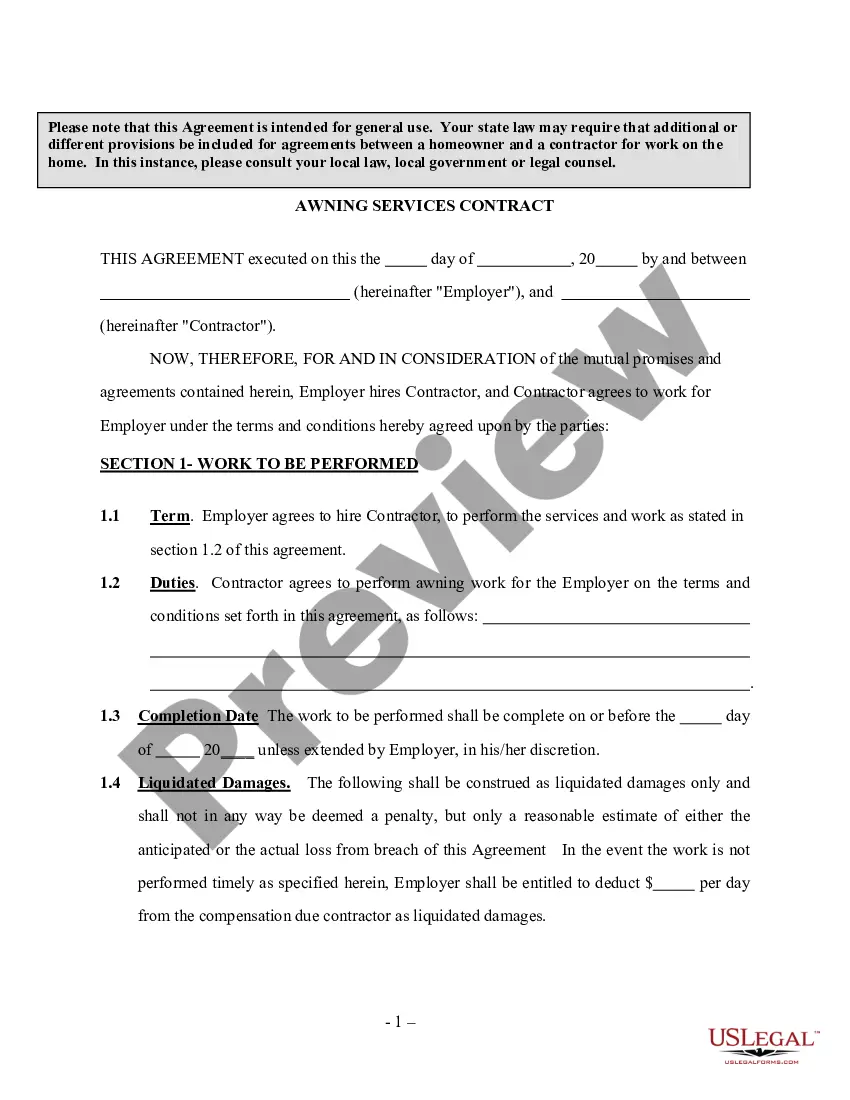
Employer contracts with an independent contractor to install windows and insulation as specified and agreed upon in the contract. Please note that this Agreement is intended for general use. Your state law may require that additional or different provisions be included for agreements between a homeowner and a contractor for work on the home. In this instance, please consult your local law, local government or legal counsel.
Research their reputation, ask for references, and check online reviews. A little due diligence can go a long way, like choosing the right people for your team.
Absolutely! Having a lawyer go over the agreement can give you peace of mind and help you catch anything that might not be in your best interest. It’s like having a safety net in a tightrope walk.
If a contractor doesn't hold up their end of the bargain, you could have grounds to address the issue, possibly through mediation or even legal action if required. It's important to keep documentation as proof.
Yes, you can make changes, but it’s best to do it in writing and get both parties to sign off. It's like saying, 'Let’s shake on it again.' This ensures everyone’s still on board.
Look for details on scope of work, payment terms, deadlines, and warranty information. It's important to have everything spelled out so there are no surprises down the road.
While it's not always legally required, having a written agreement is a smart move. It protects both you and the contractor and helps clear up any misunderstandings that might pop up later.
A Window Contractor Agreement is a formal document outlining the work a window contractor will do, including responsibilities, timelines, and expectations. It's like a game plan to make sure everyone is on the same page.