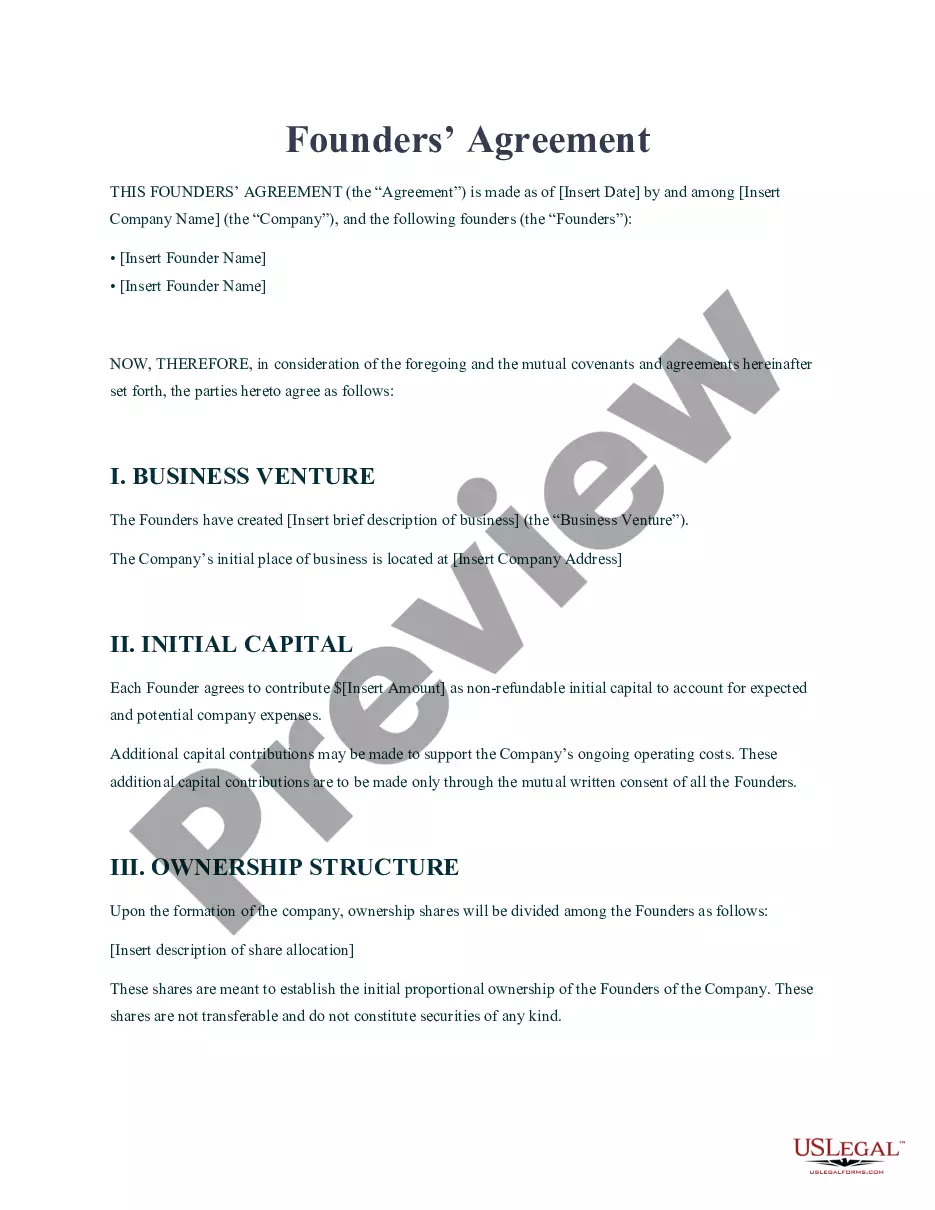
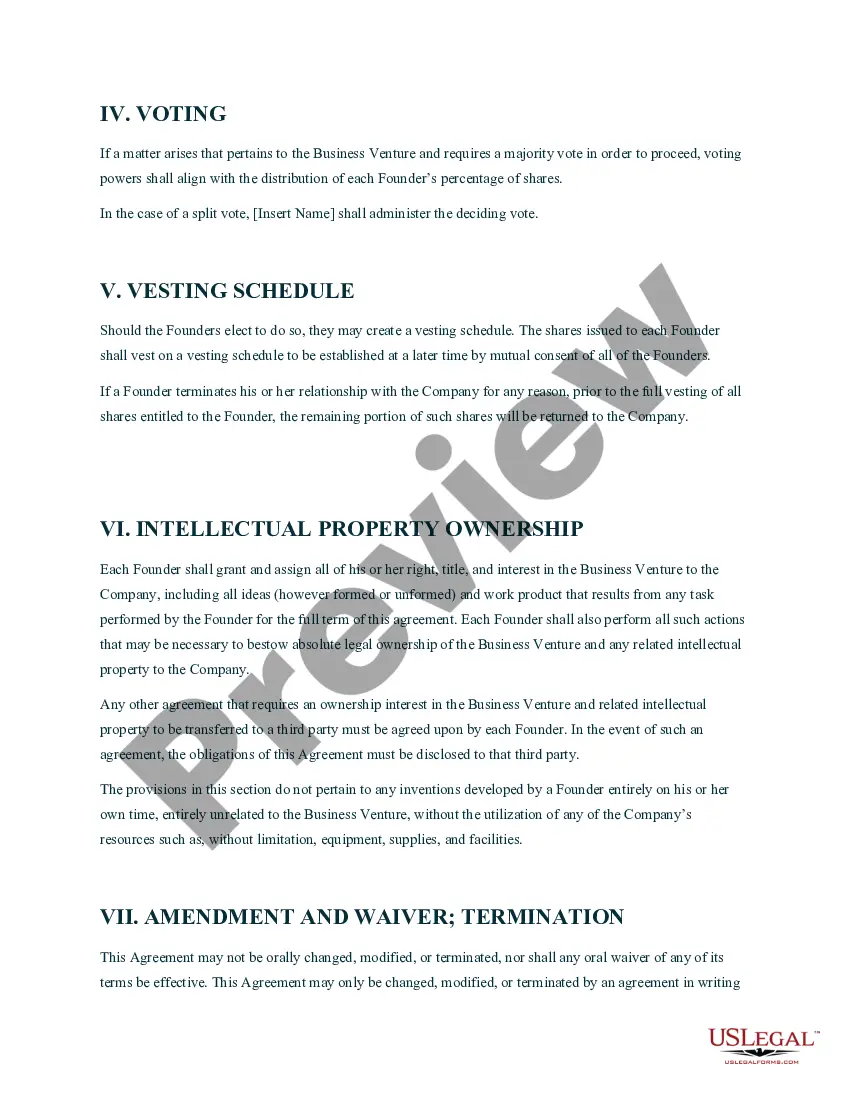
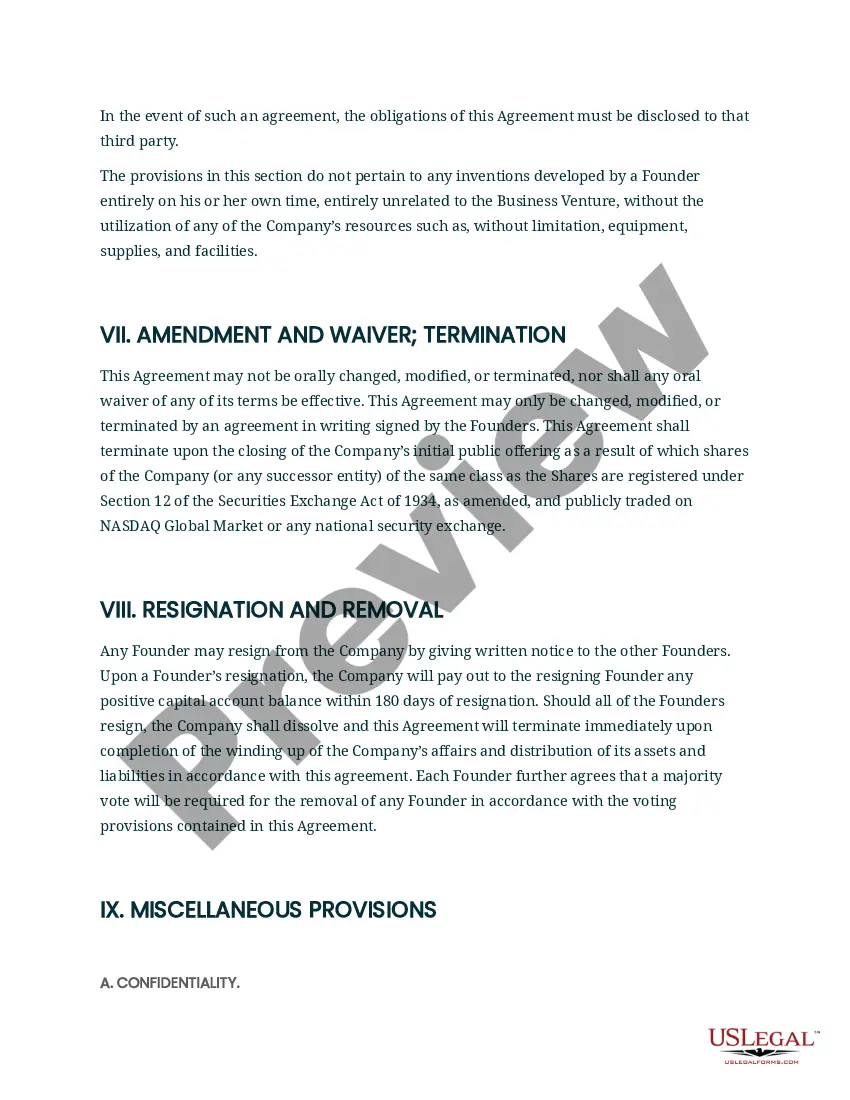
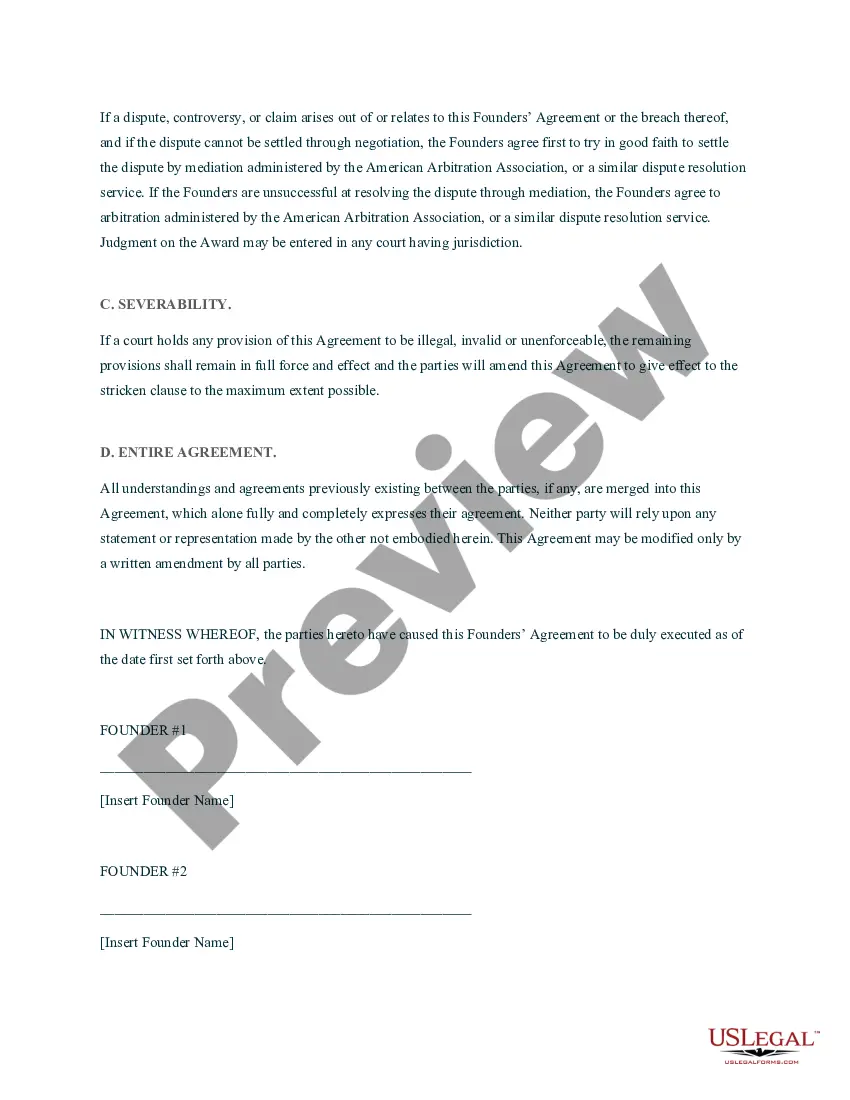
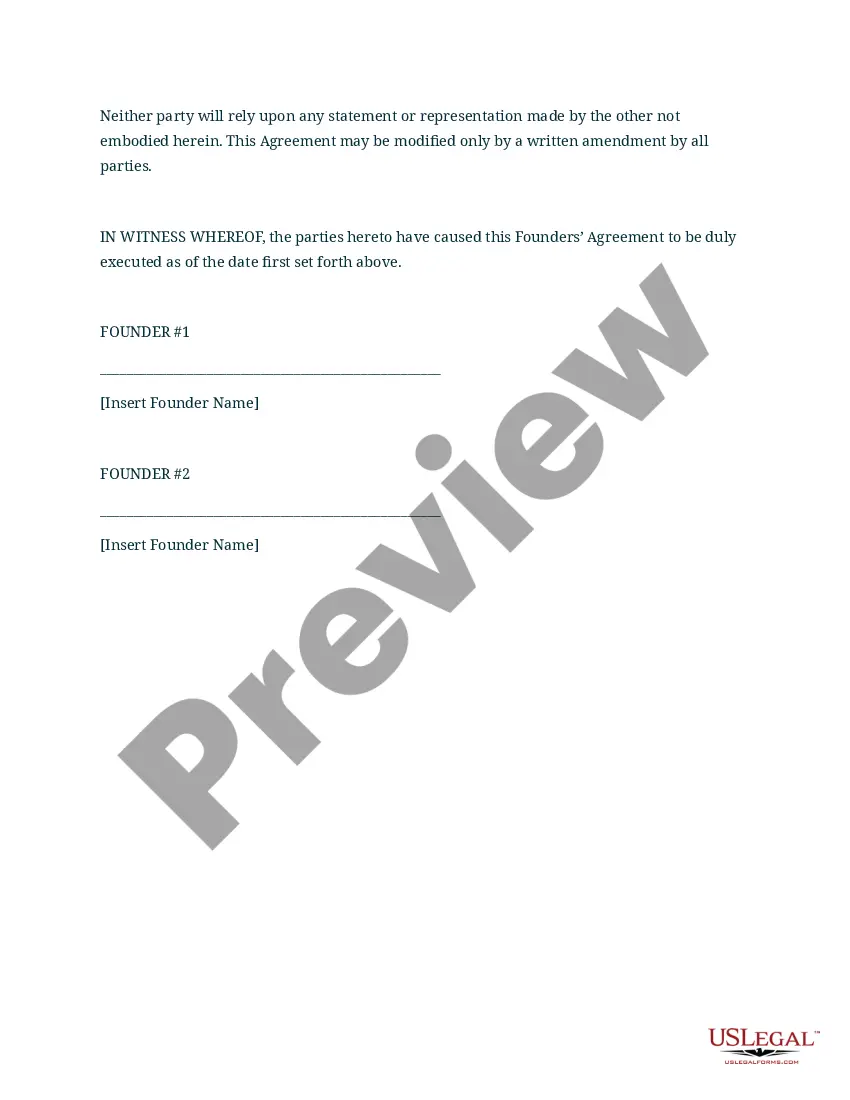
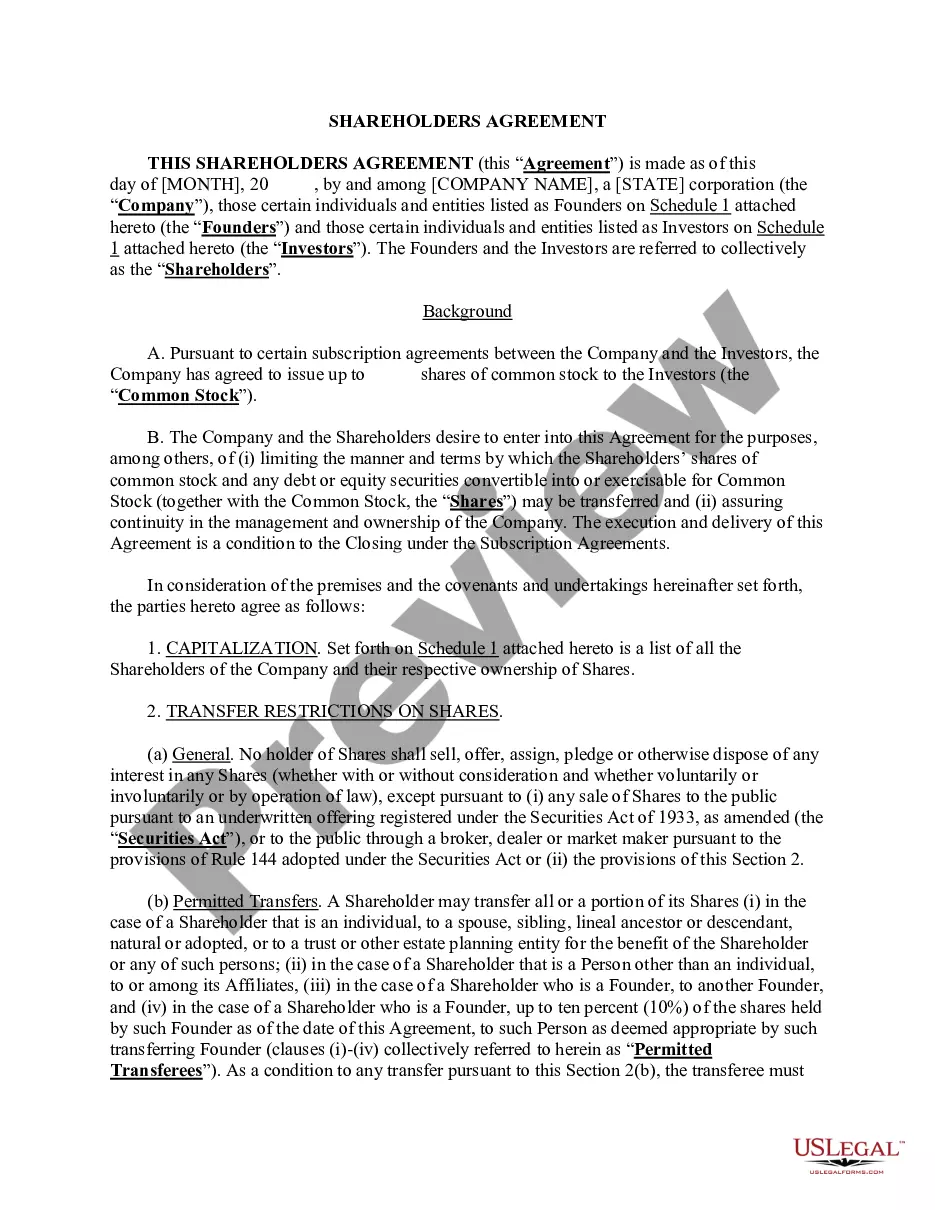
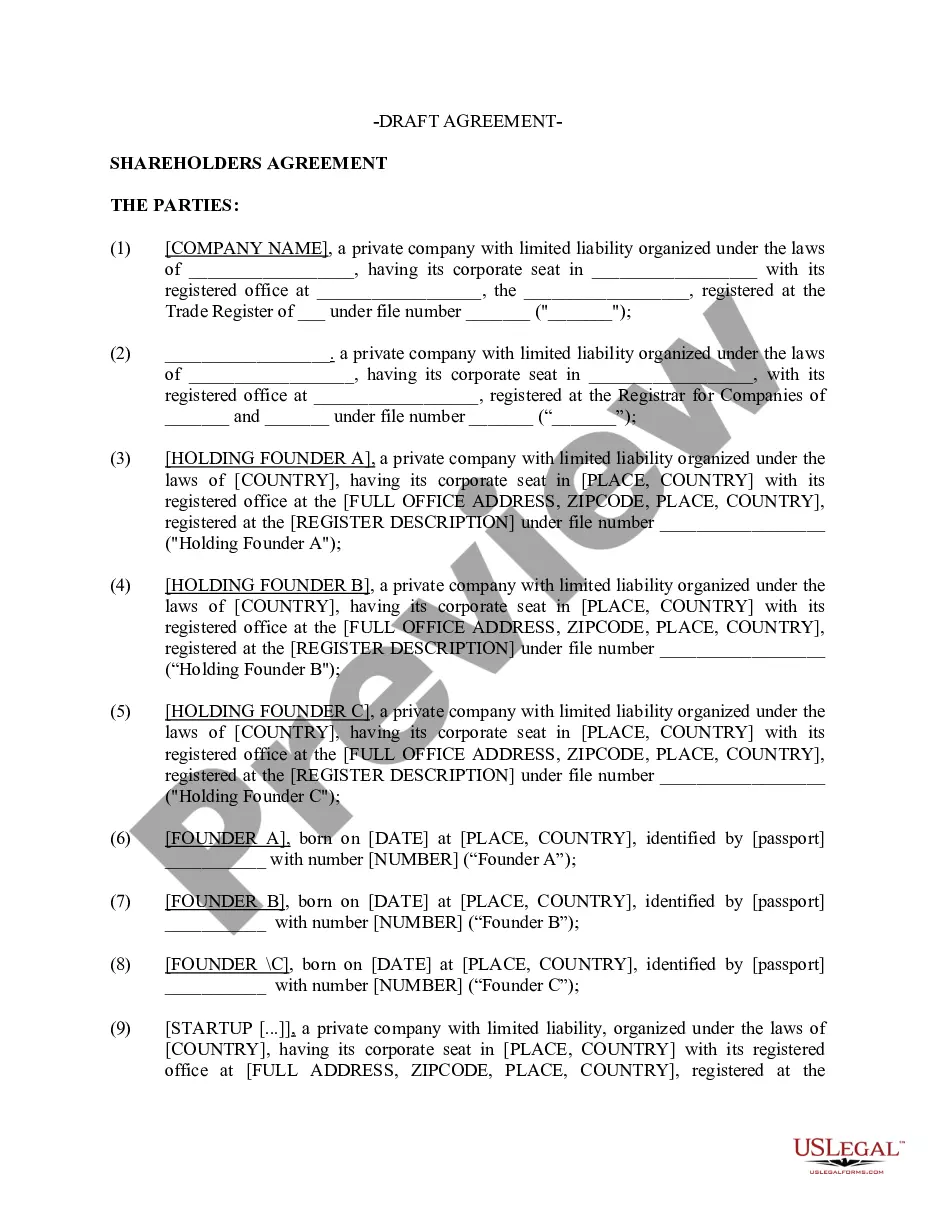
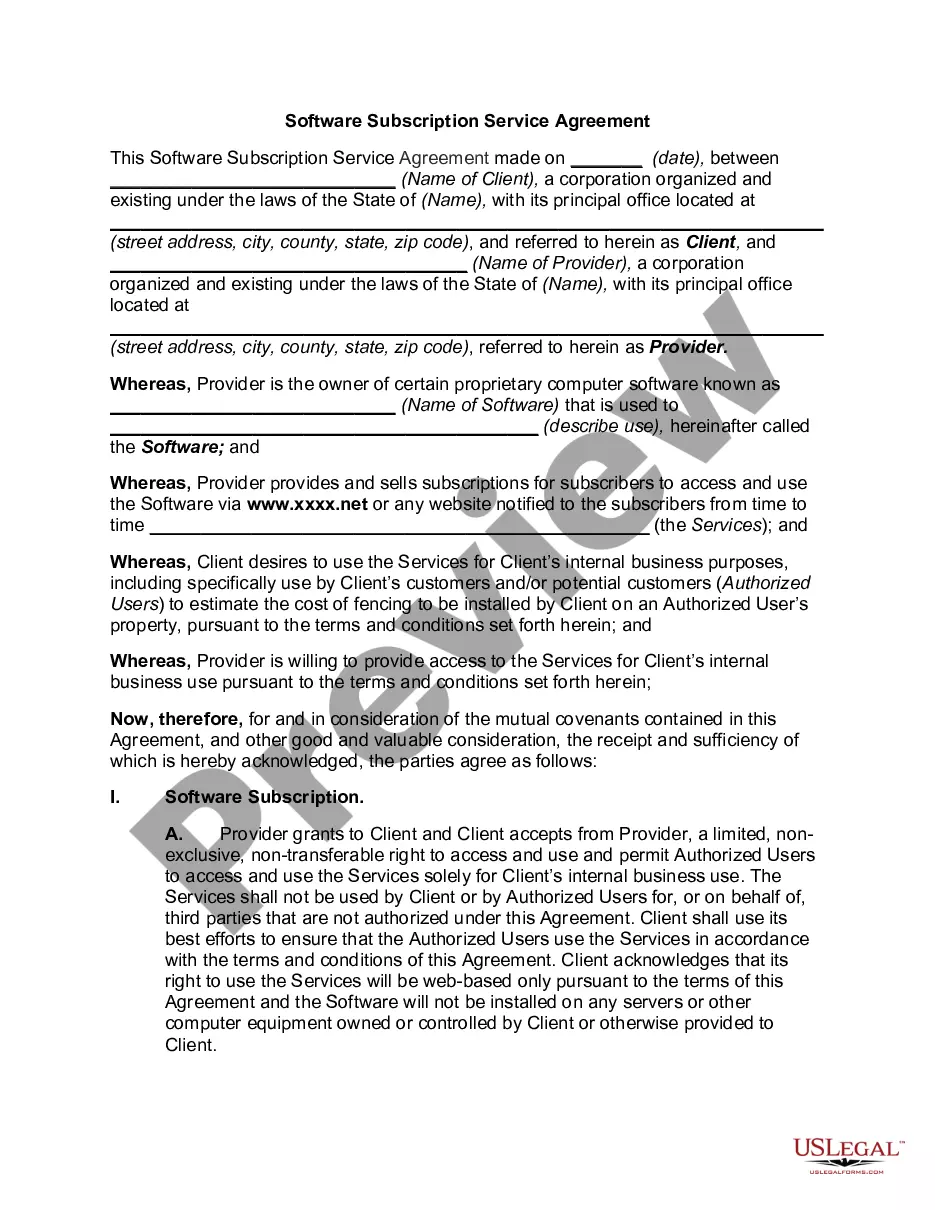
A founders' agreement is a document created by the founders of a company to establish how the company will function. It is the product of pre-incorporation discussions that should take place among the company's founders before they establish the company. It includes provisions on ownership structure, decision making, dispute resolution, choice of law, transfer of ownership, ownership percentages, voting rights, intellectual property rights, and more.
While it’s not mandatory to have a lawyer, it can be a smart move to get legal advice. They can help ensure that everything is in order and that you're covering all your bases, just to play it safe.
Absolutely! As your startup grows, your needs might change too. You can always revisit and revise the Founders Agreement to reflect any new circumstances or agreements amongst the founders.
Your Founders Agreement should outline what happens if a founder decides to go. This could include buyout terms or how to handle their shares in the company, ensuring that things don't get messy.
Equity can be a tricky subject, but it’s often based on each founder’s contribution, experience, and the role they'll play. It's worth sitting down together and discussing what feels fair for everyone involved.
You should cover key points like ownership percentages, roles and duties of each founder, how decisions are made, and what happens if someone leaves the company. It's all about clear communication and expectations.
Having a Founders Agreement is crucial. It sets the ground rules for how the business will operate, helping to prevent disputes among founders. Think of it as a safety net that protects everyone's interests.
A Founders Agreement is like a roadmap for startups, outlining the roles, responsibilities, and ownership stakes of each founder. It's meant to keep everyone on the same page and avoid misunderstandings down the line.