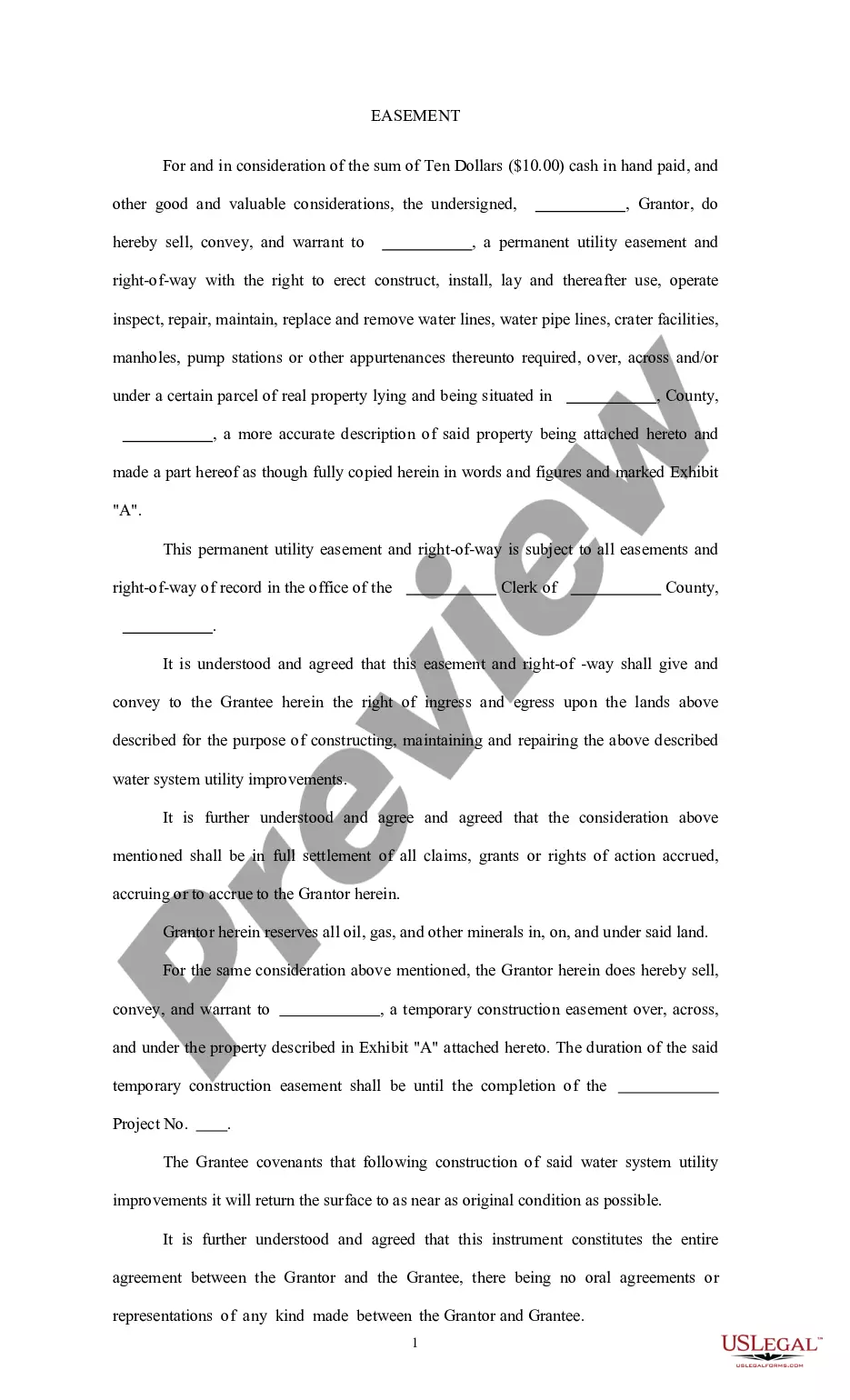
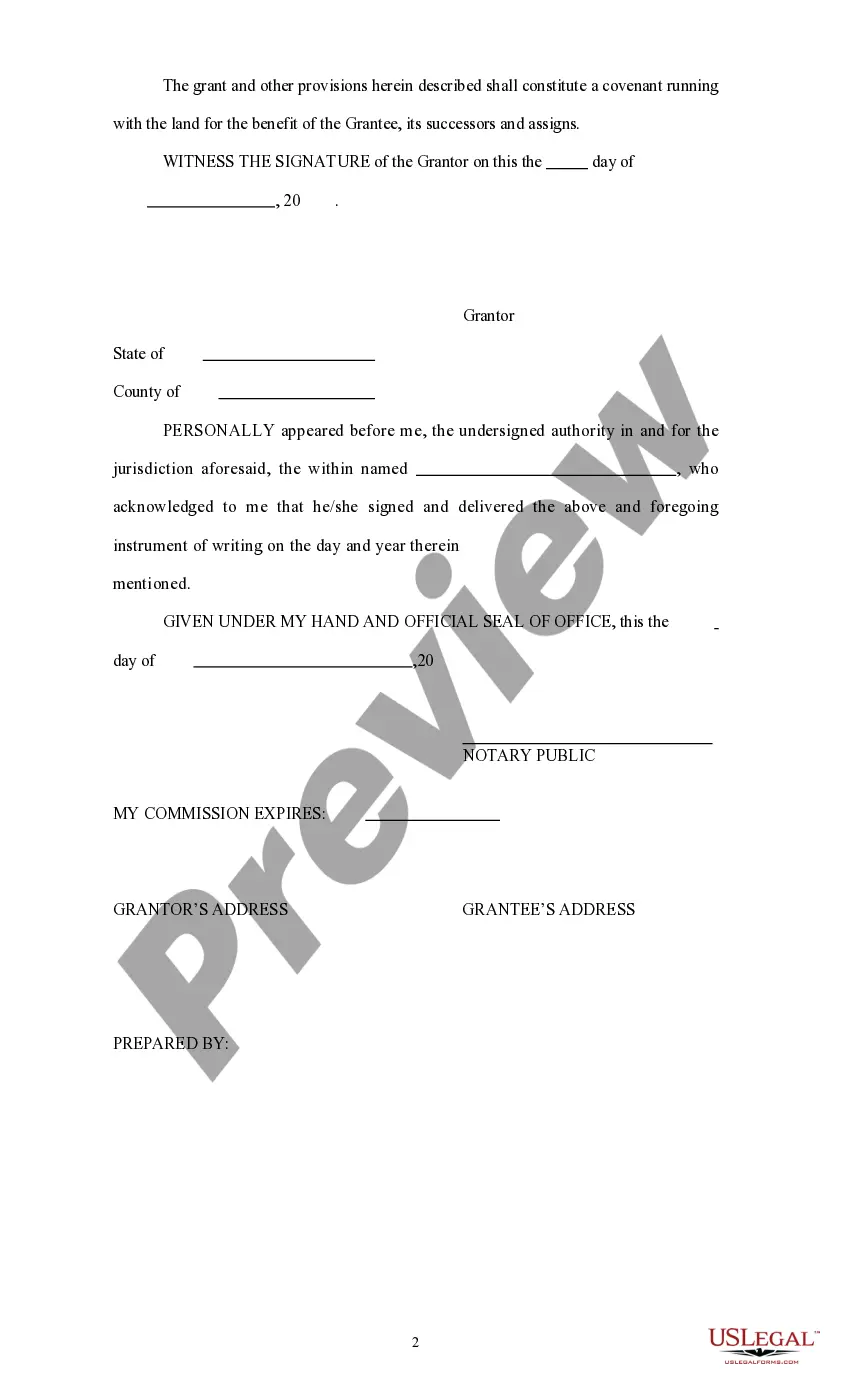
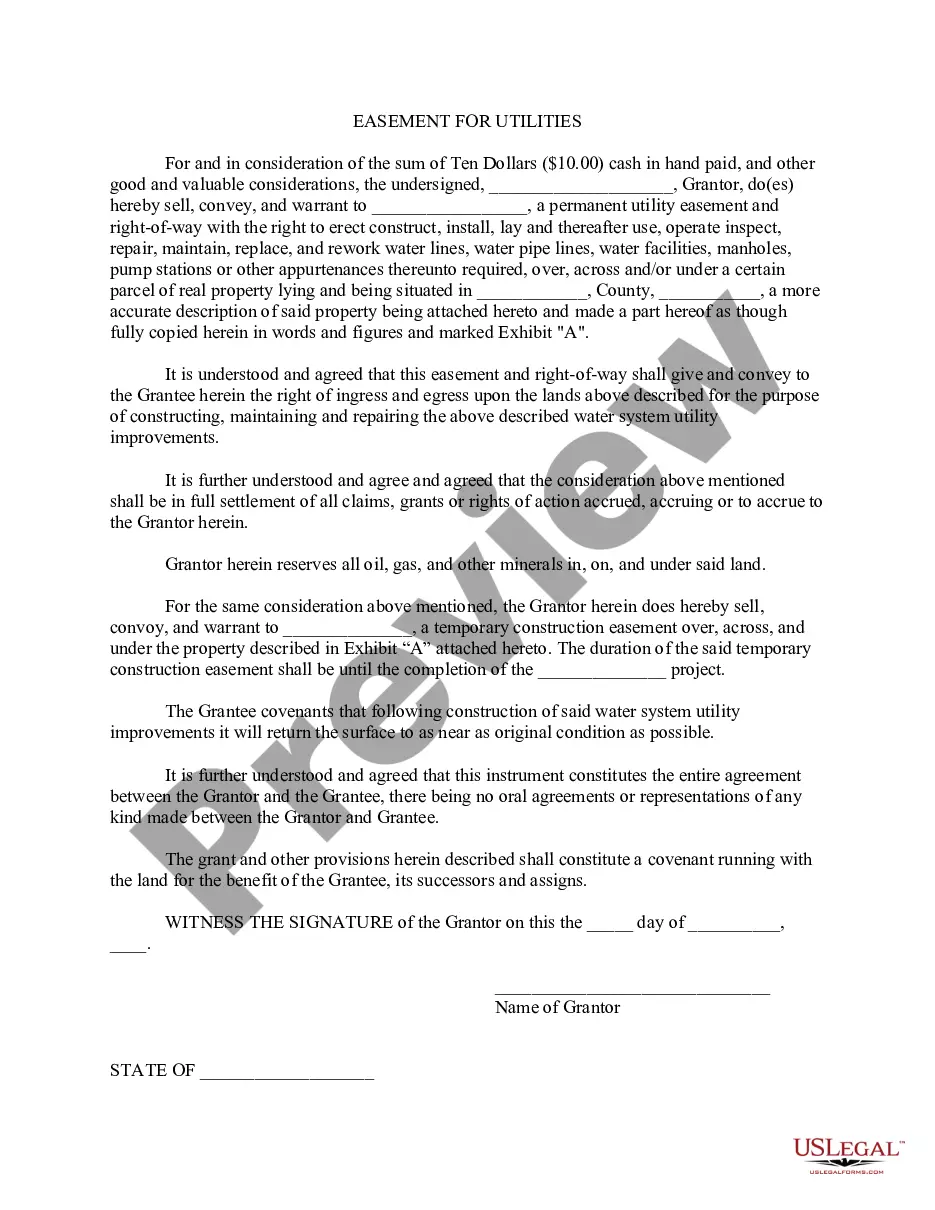
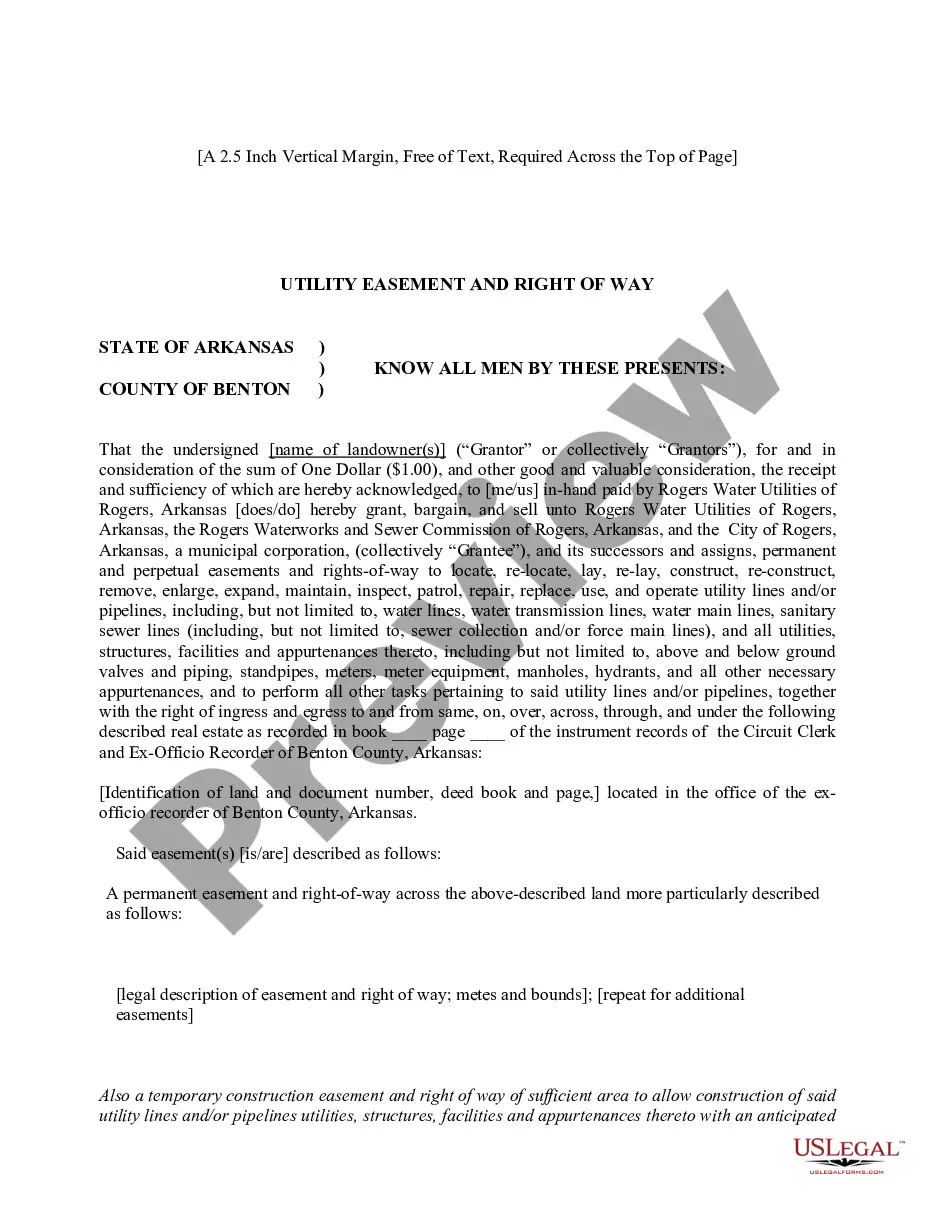
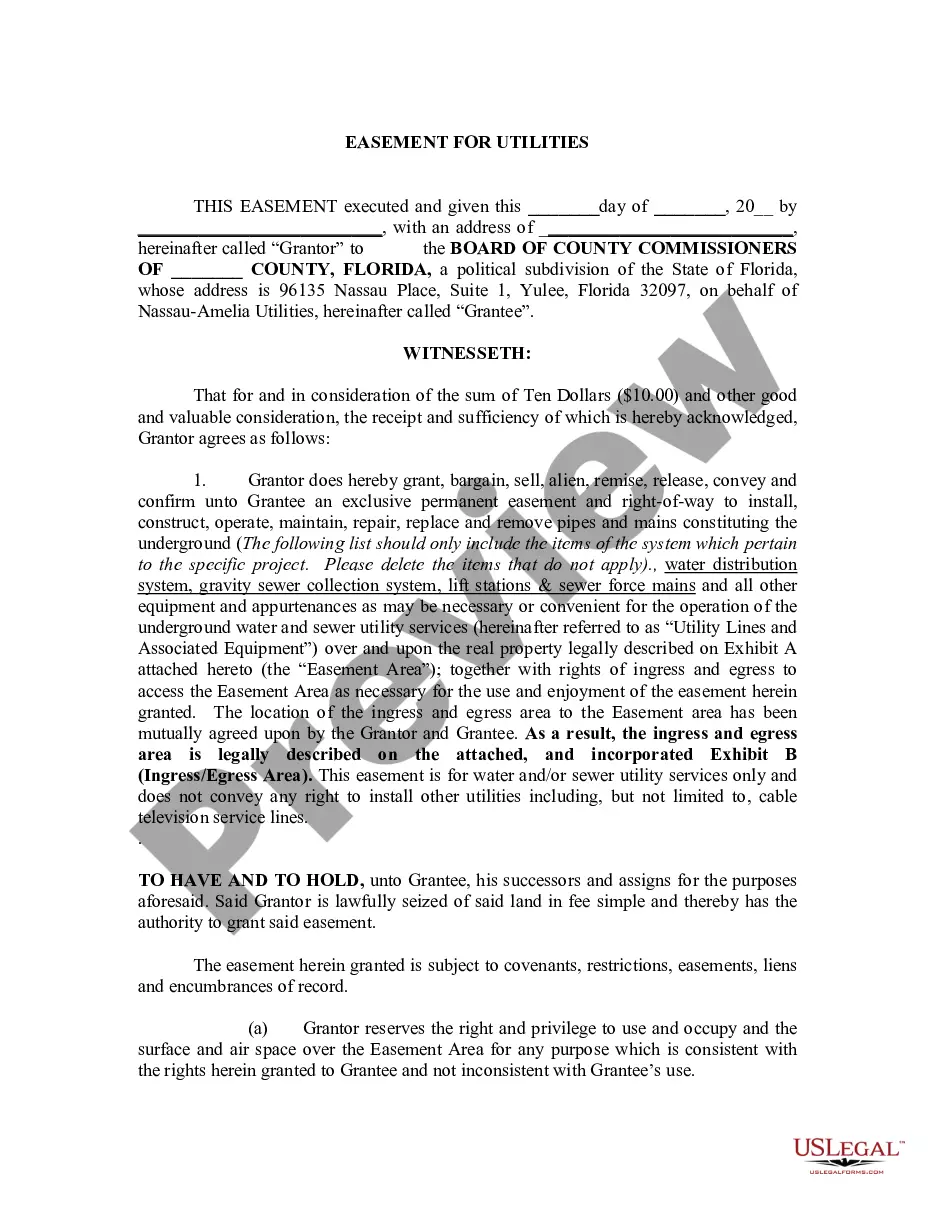
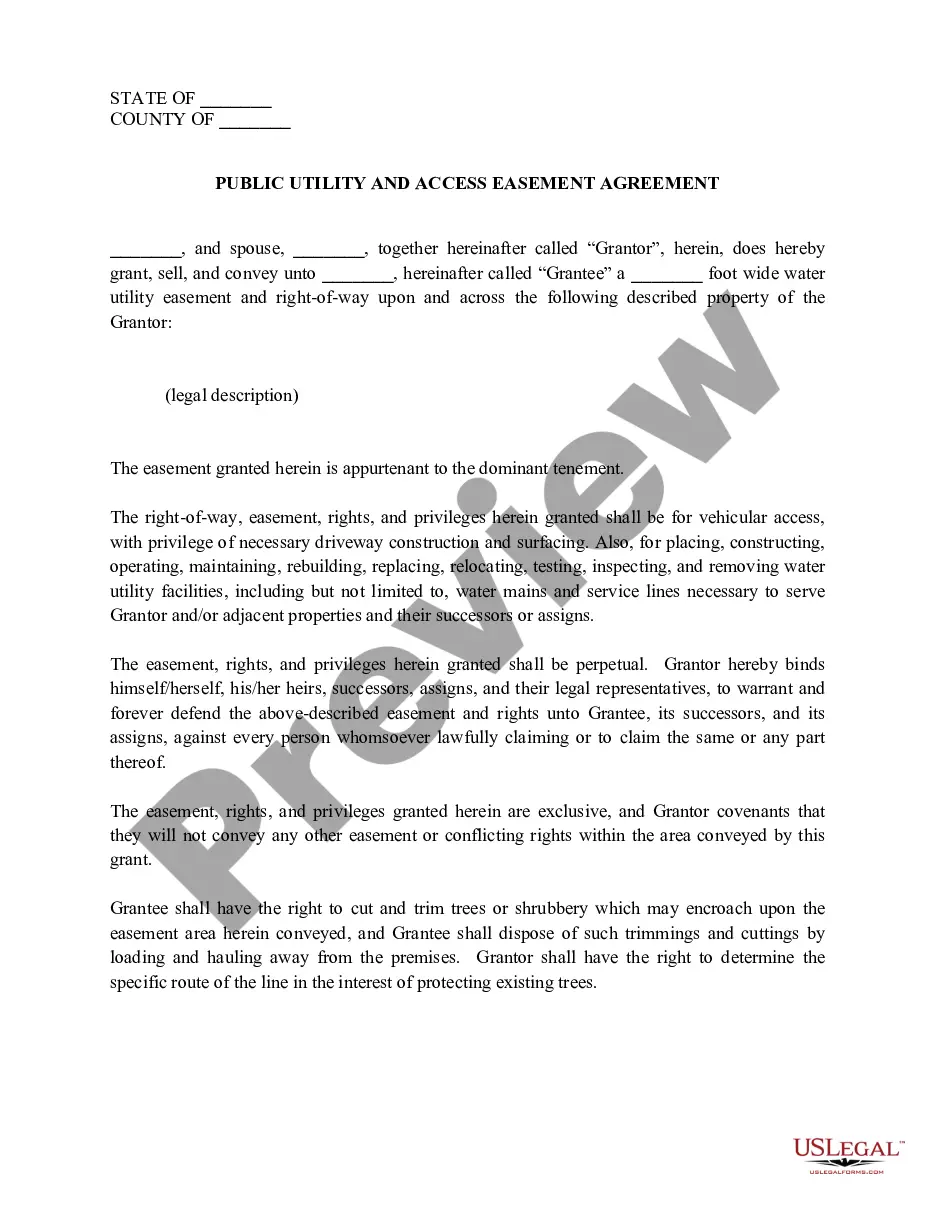
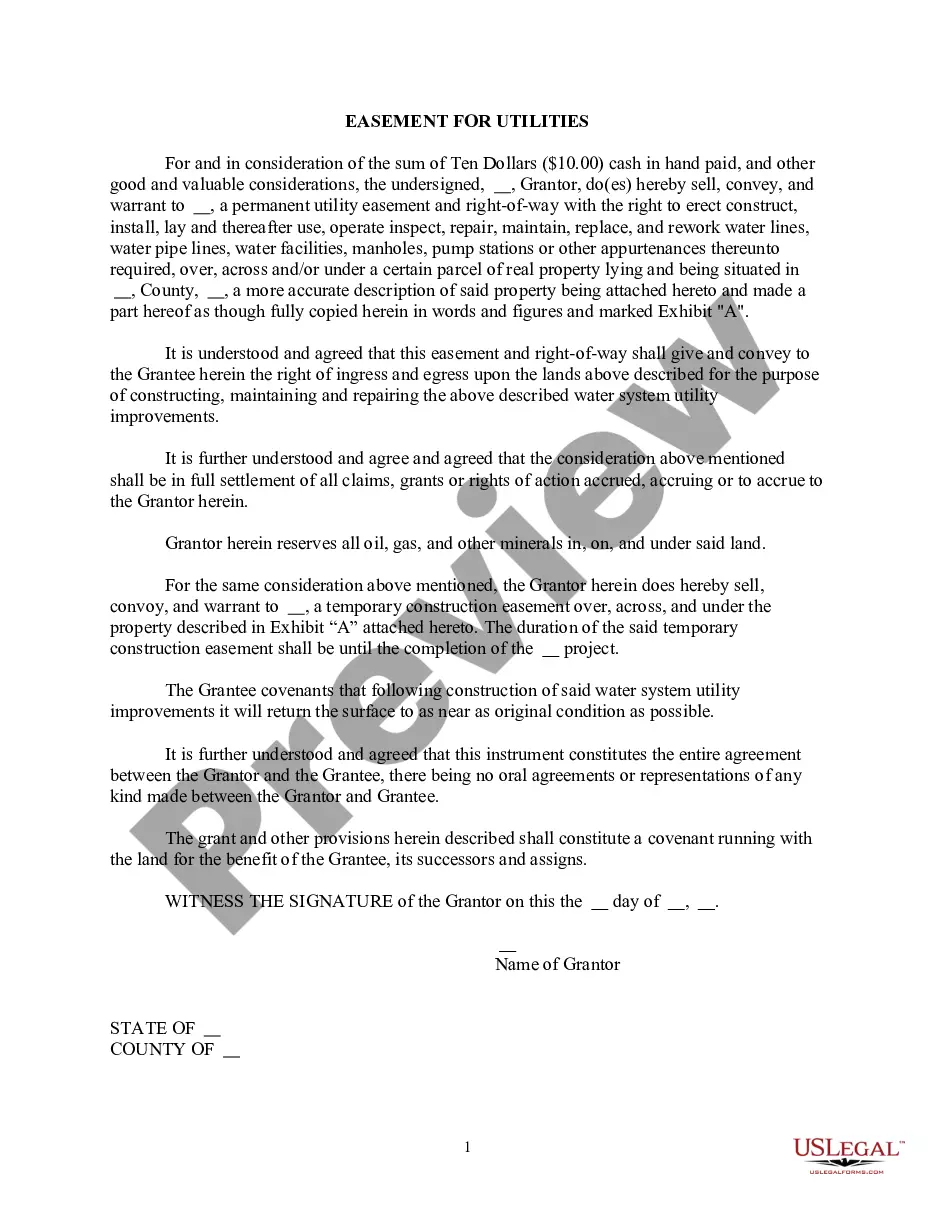
This is a sample form for use in transactions involving easements, a Utility Easement. Allows a permanent utility easement and right of way for water facilities.
An easement gives one party the right to go onto another party's property. That property may be owned by a private person, a business entity, or a group of owners. Utilities often get easements that allow them to run pipes or phone lines beneath private property. Easements may be obtained for access to another property, called "access and egress", use of spring water, entry to make repairs on a fence or slide area, drive cattle across and other uses. The easement is a real property interest, but separate from the legal title of the owner of the underlying land.
Yes, you can sell your property even with an easement. However, it’s important to disclose this to potential buyers, as it could affect their plans for the property.
The utility companies are generally responsible for maintaining their equipment within the easement. However, it's still wise to keep the area clean and accessible.
Utility easements are typically permanent, but some may have set time limits or conditions that can allow them to be revisited after a certain period.
If you run into a problem, the first step is to communicate with the utility company involved. They usually have policies in place to handle concerns or disputes.
It's not usually a good idea. Most utility easements have restrictions that could prevent you from building over them to keep access clear for repairs and maintenance.
You can check your property deed or title report. It's also a good idea to reach out to the city or local utility companies to find out if there are any easements in place.
A utility easement is like a permission slip that allows utility companies to have a slice of your property to install and maintain things like power lines, water pipes, or gas lines.