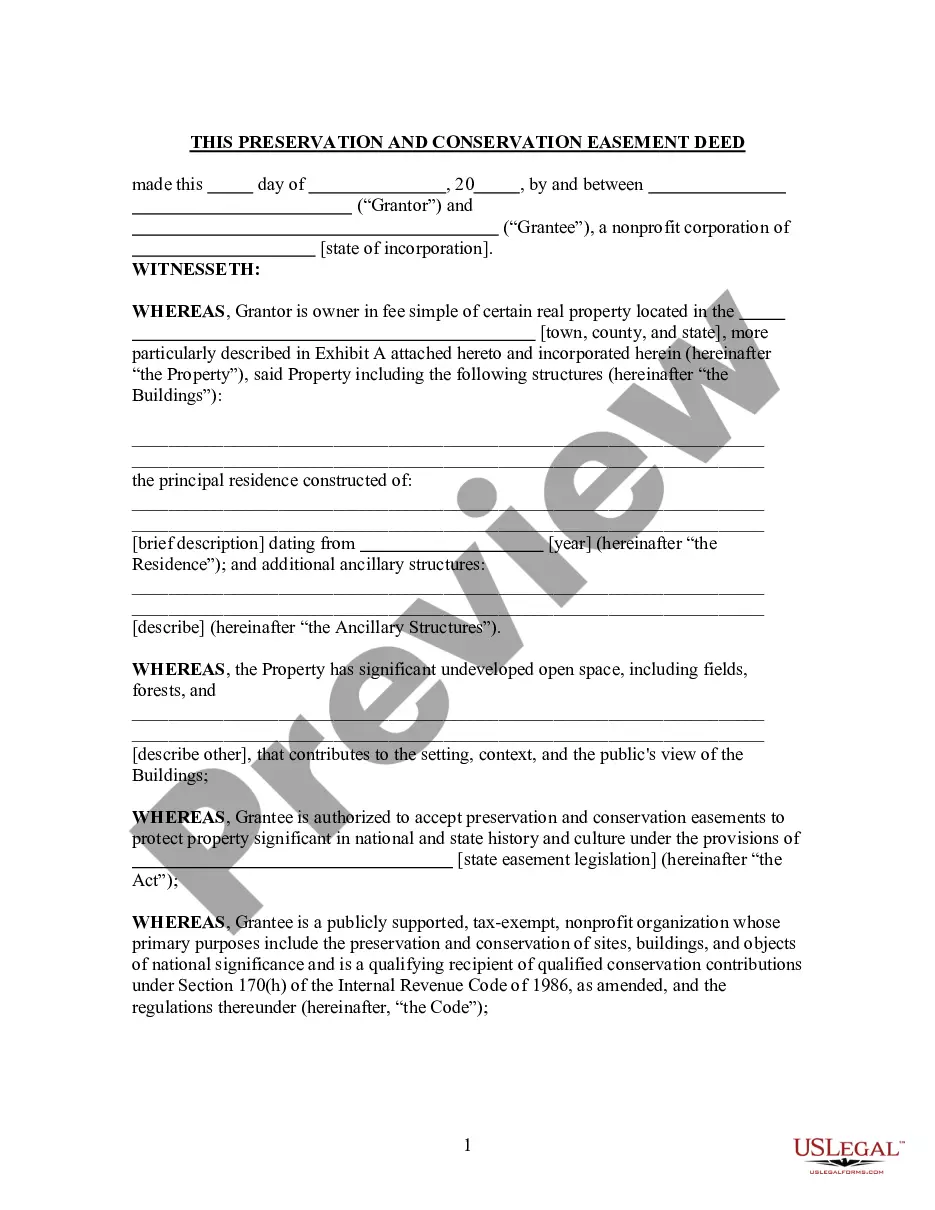
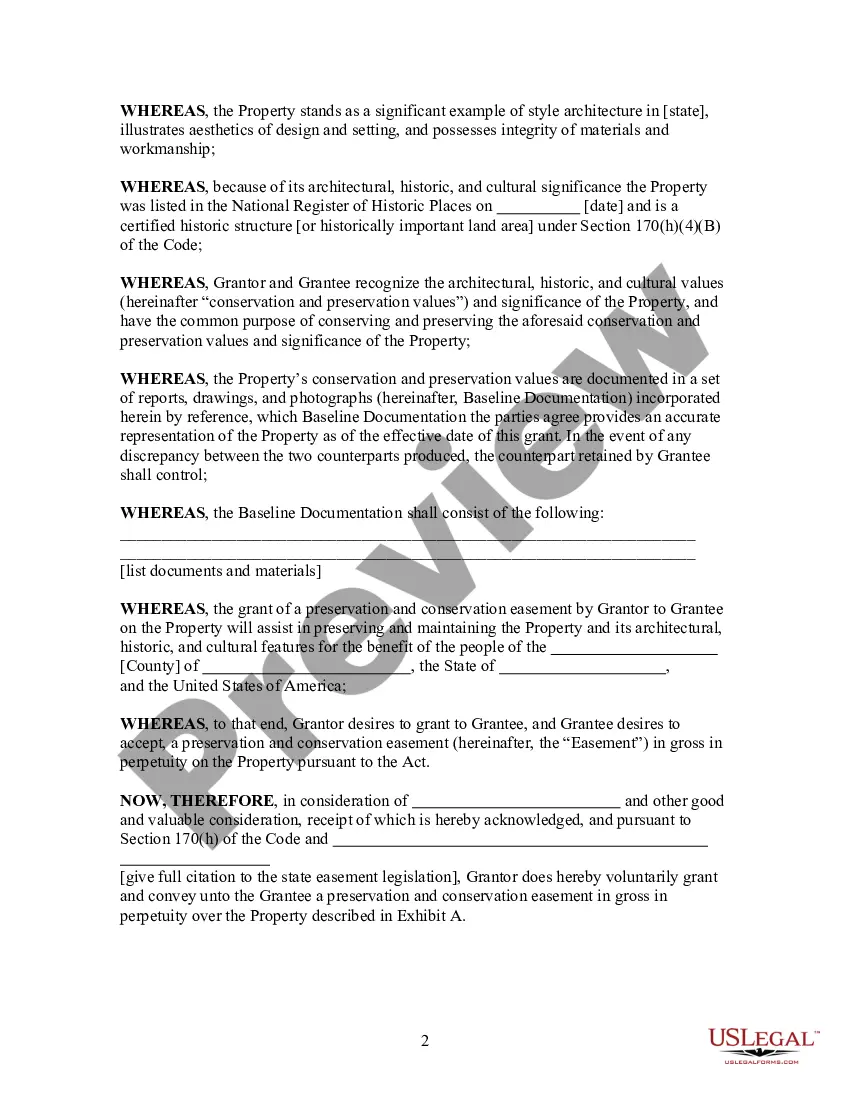
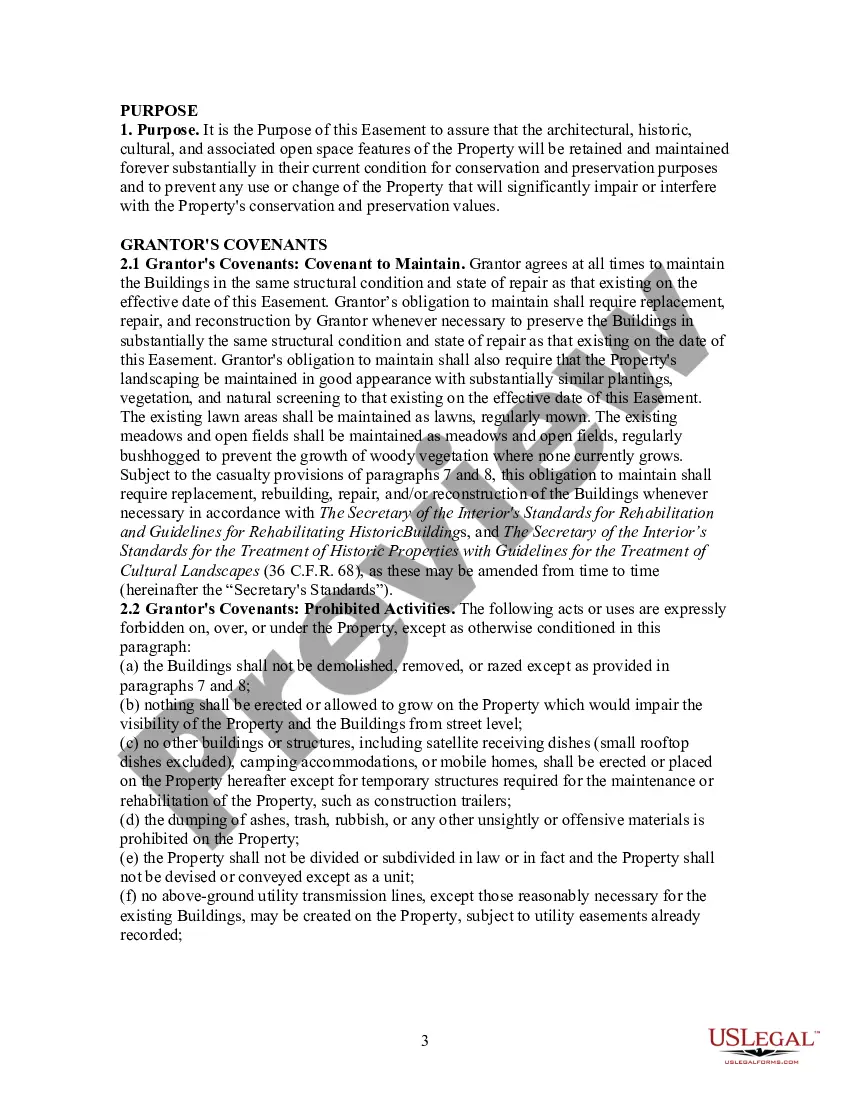
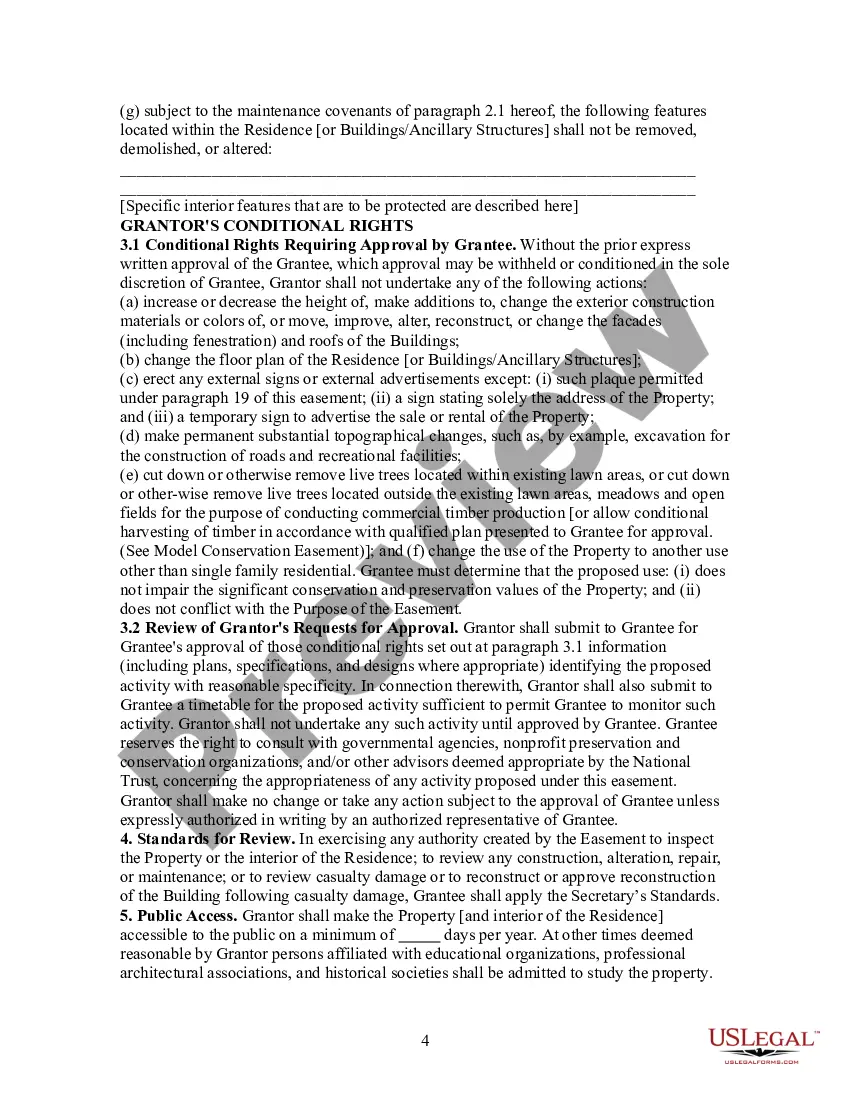
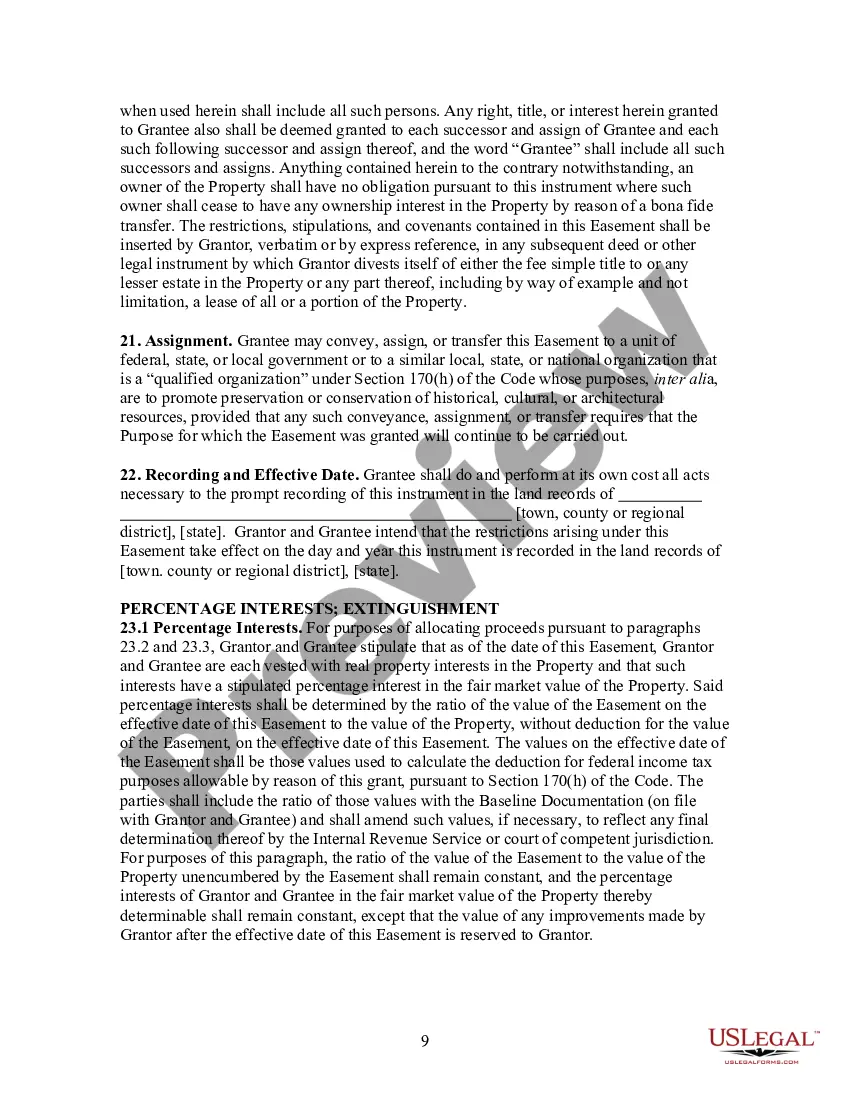
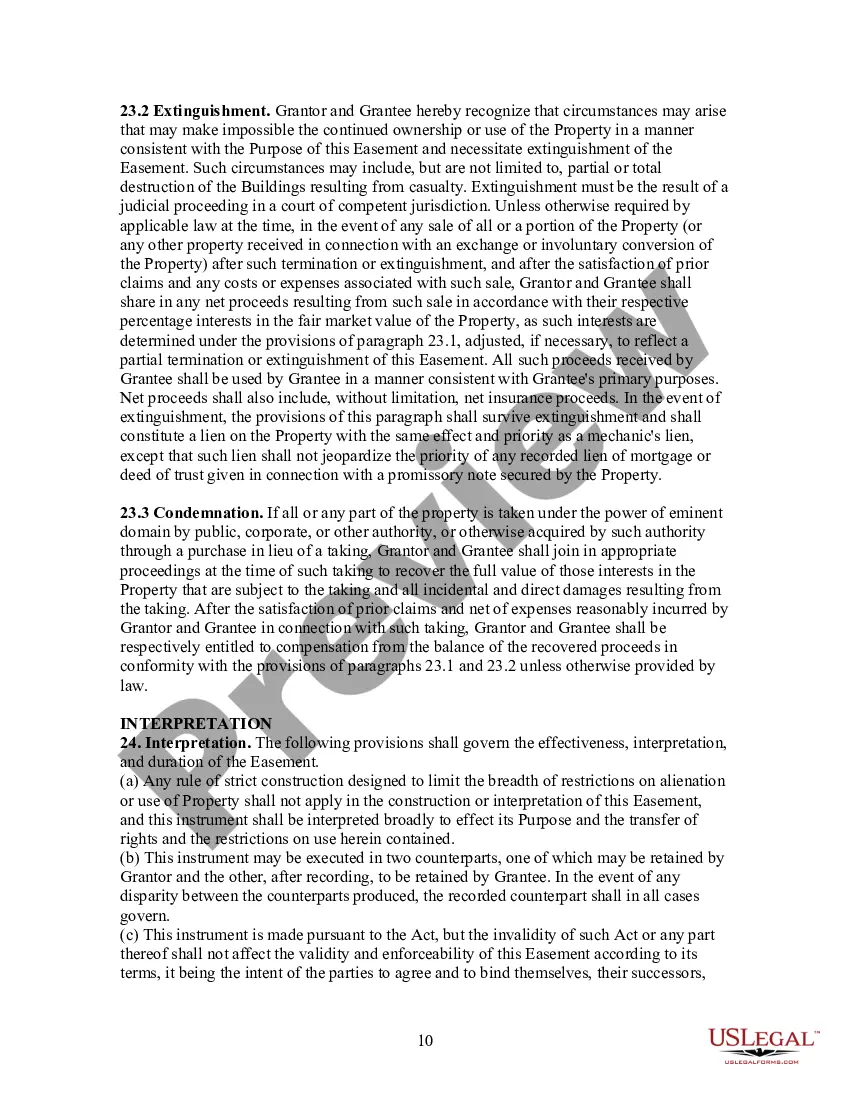
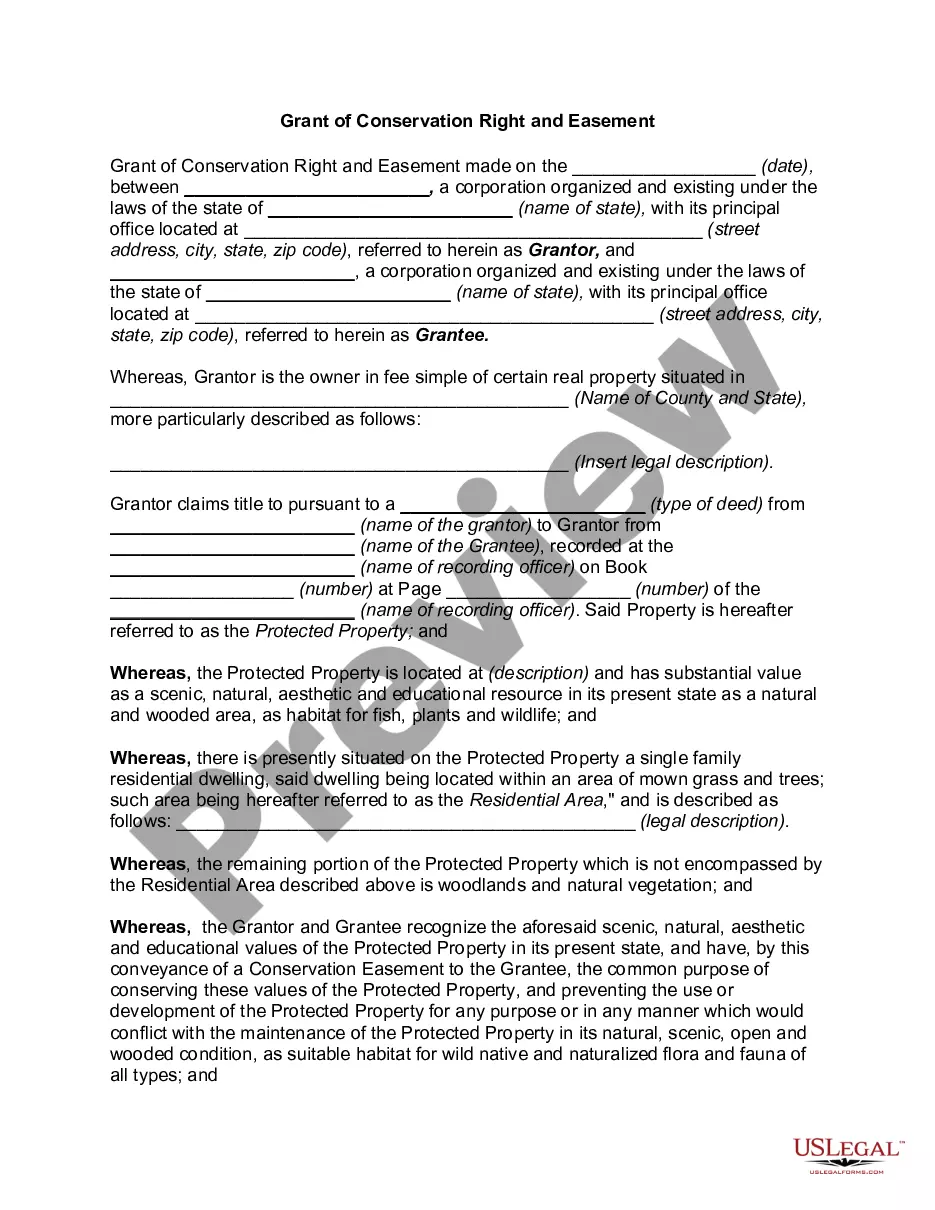
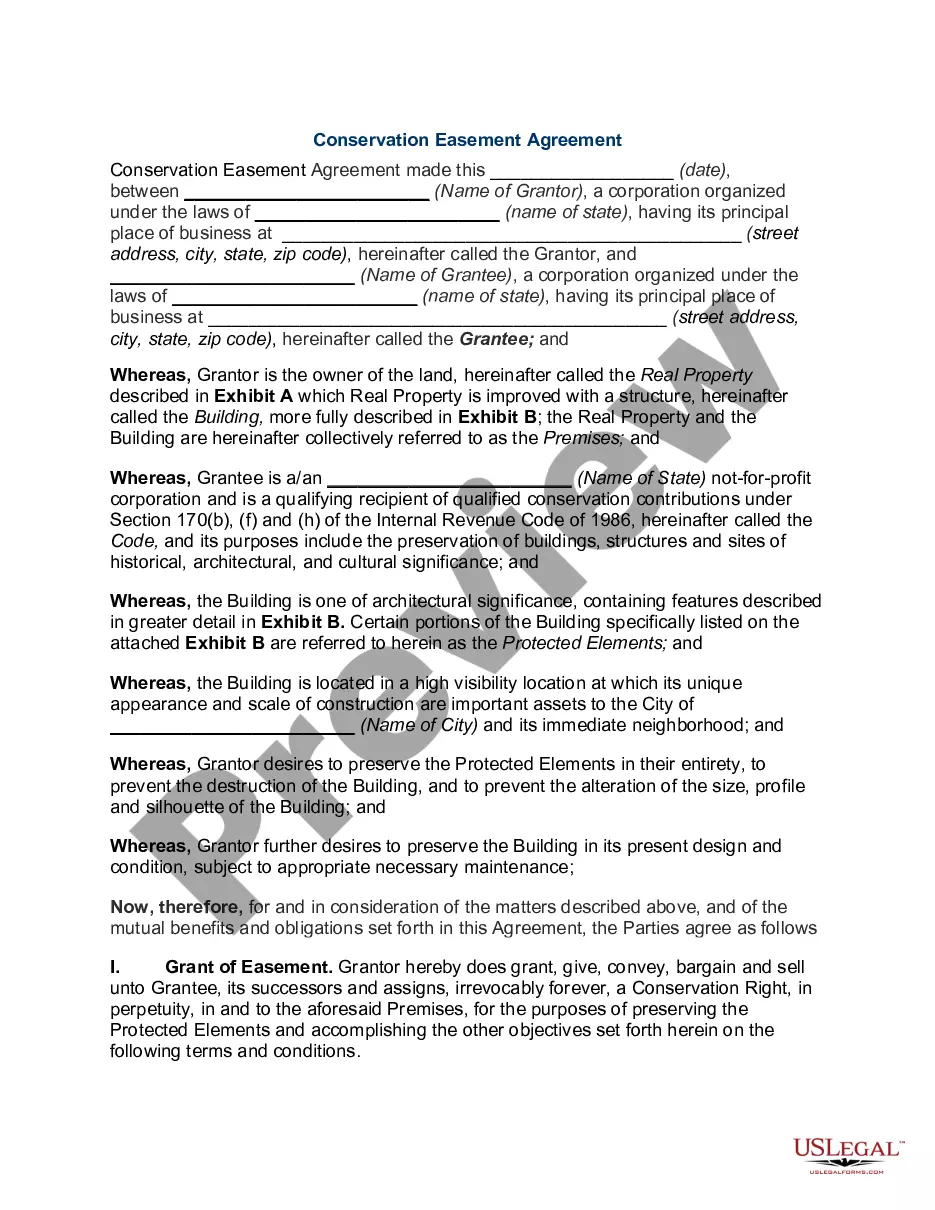
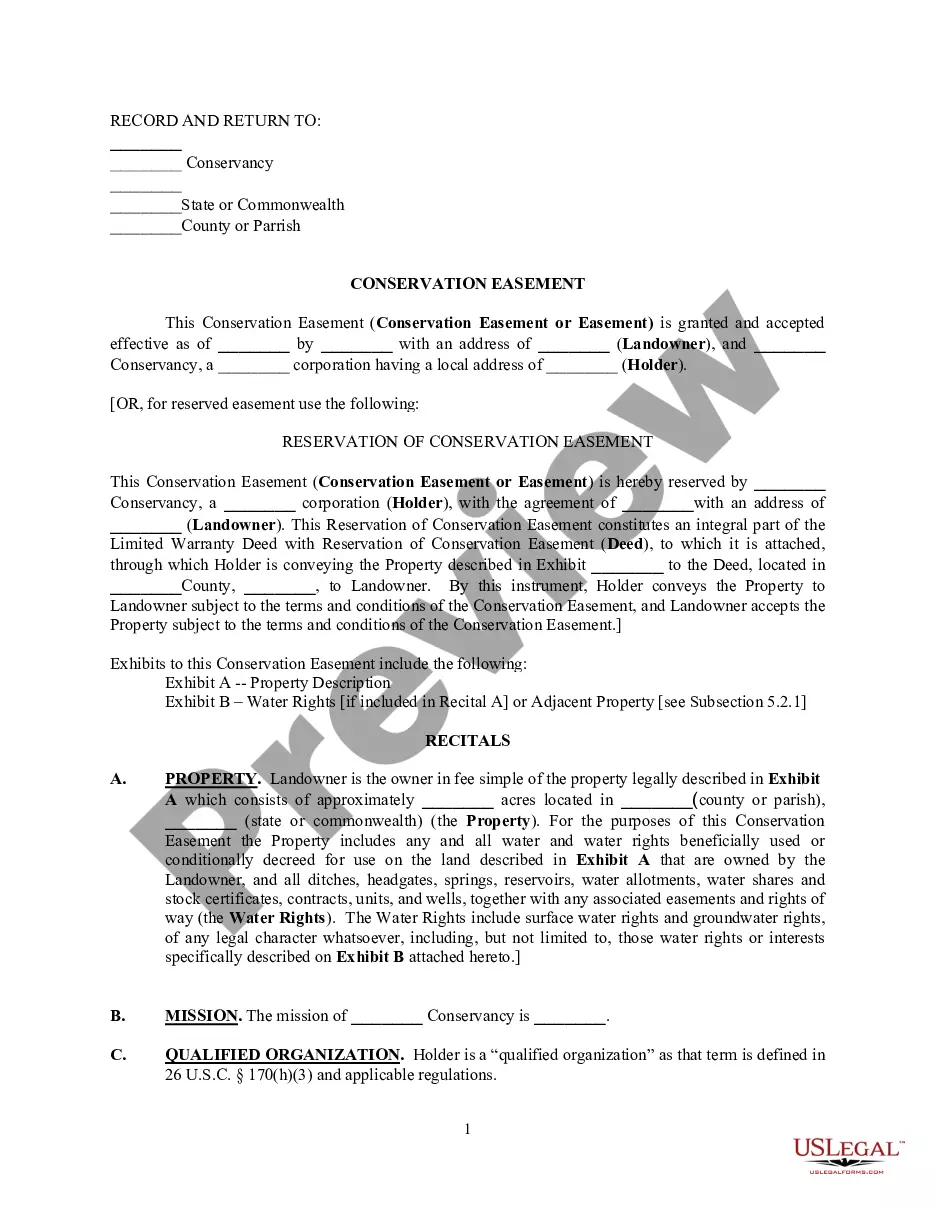
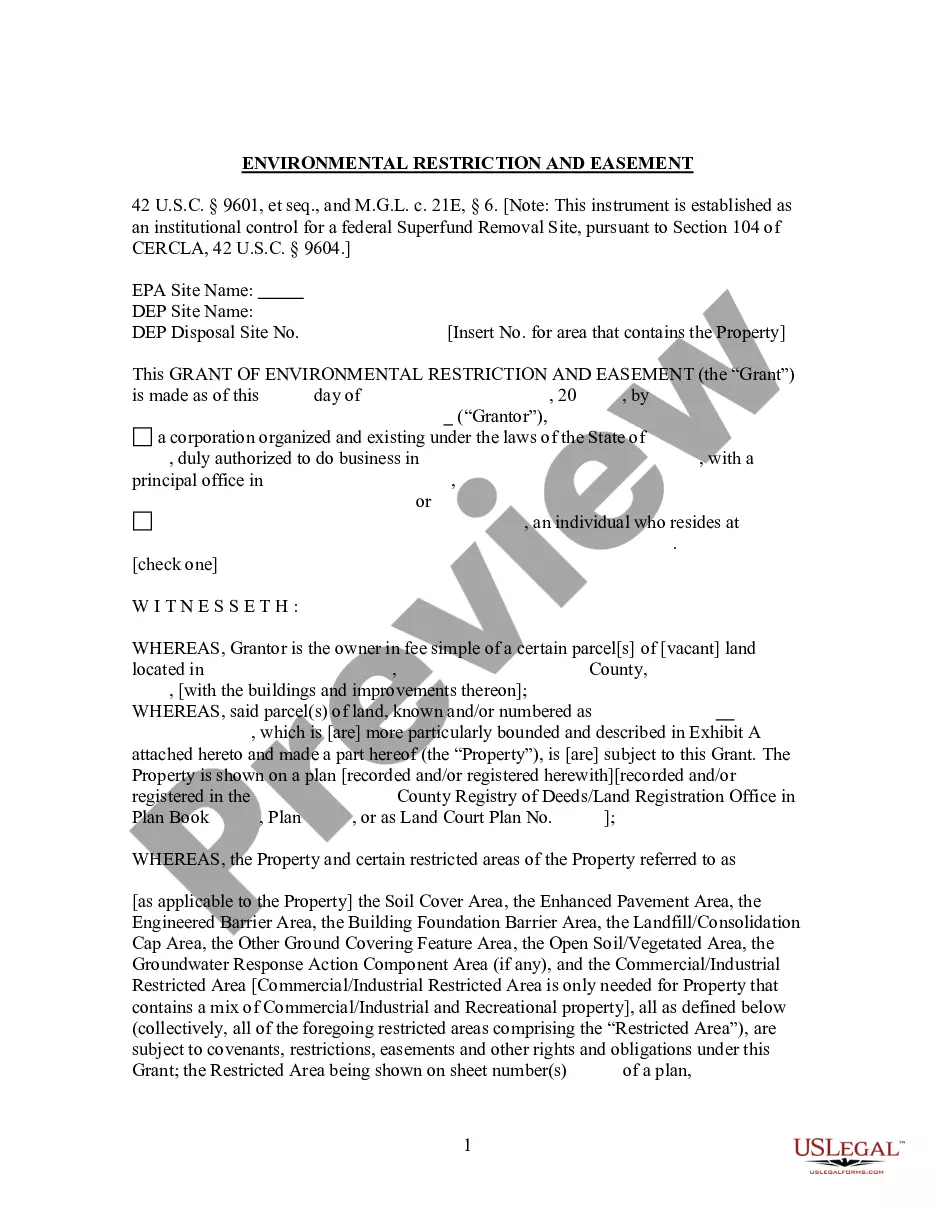
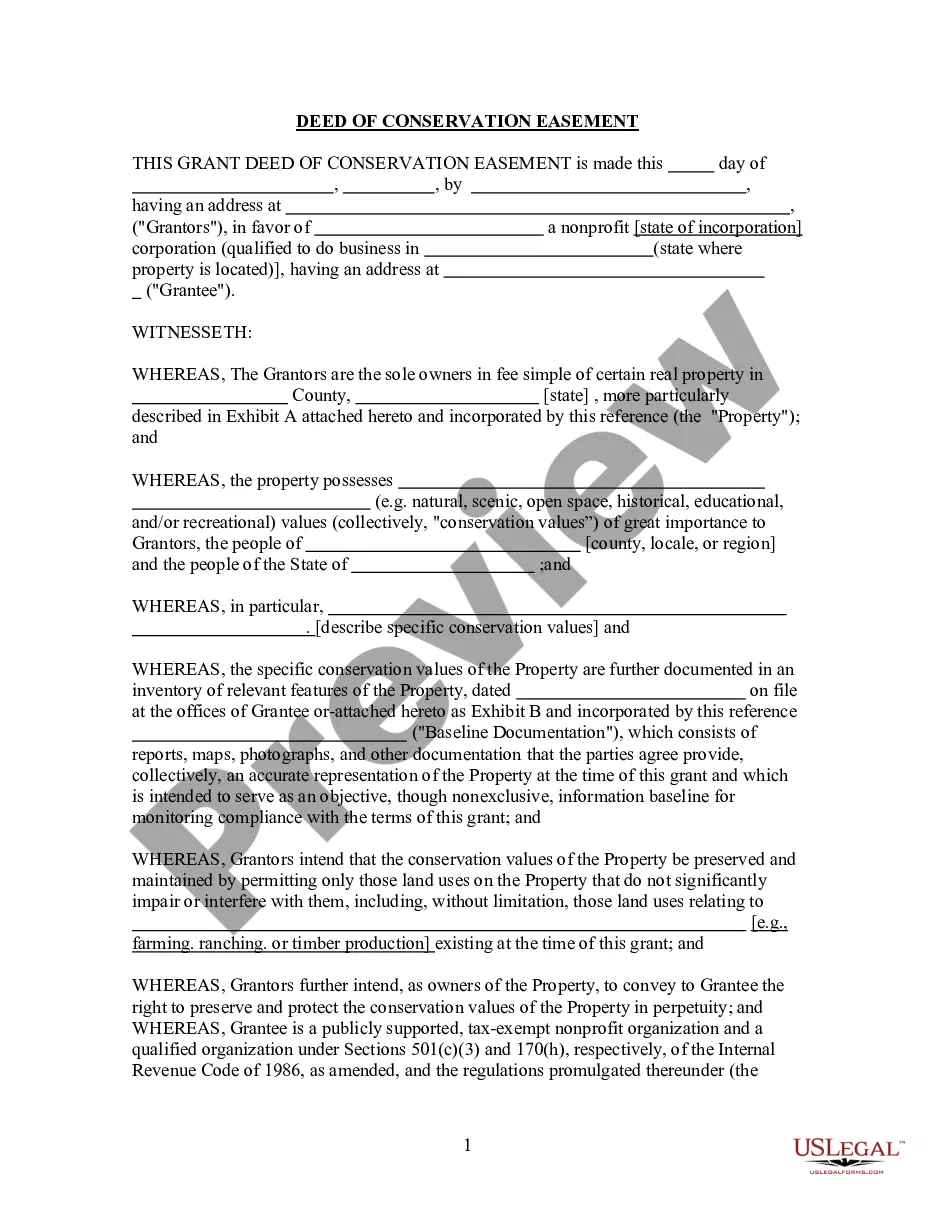
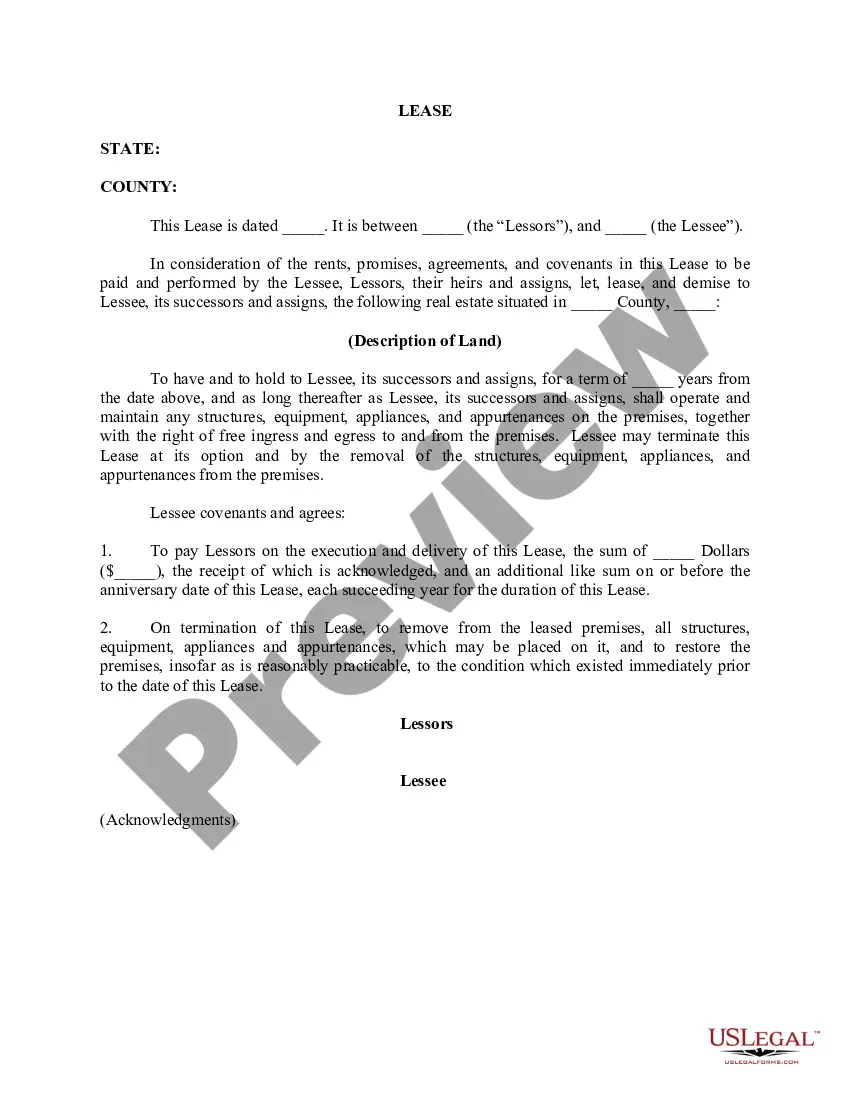
This is a sample form for use in transactions involving easements, a Conservation Easement. Easement to preserve undeveloped open space and property listed with the National Register of Historical Places.
Besides protecting nature, conservation easements can provide tax benefits and increase the overall value of your land since many buyers appreciate green space. It’s a win-win situation!
Yes, you can sell your property, but the new owner has to follow the same conservation rules. It’s like passing the torch to keep the land safe.
Usually, a land trust or government agency keeps an eye on the easement terms to make sure everything stays in check. Think of them as the guardians of the land.
Almost any piece of land can have a conservation easement, whether it's a farm, forest, or even a piece of wilderness. If it’s valuable for conservation, it’s worth considering.
When you put a conservation easement in place, you give up some rights to develop or alter the land, but you still own it. It’s like setting some ground rules for how the land can be used.
If you love the land and want to keep it safe for future generations, a conservation easement can help you do just that. You’ll be playing your part in preserving nature.
A conservation easement is a legal agreement that protects land by limiting its development. It's like making a promise to keep certain areas wild and natural.