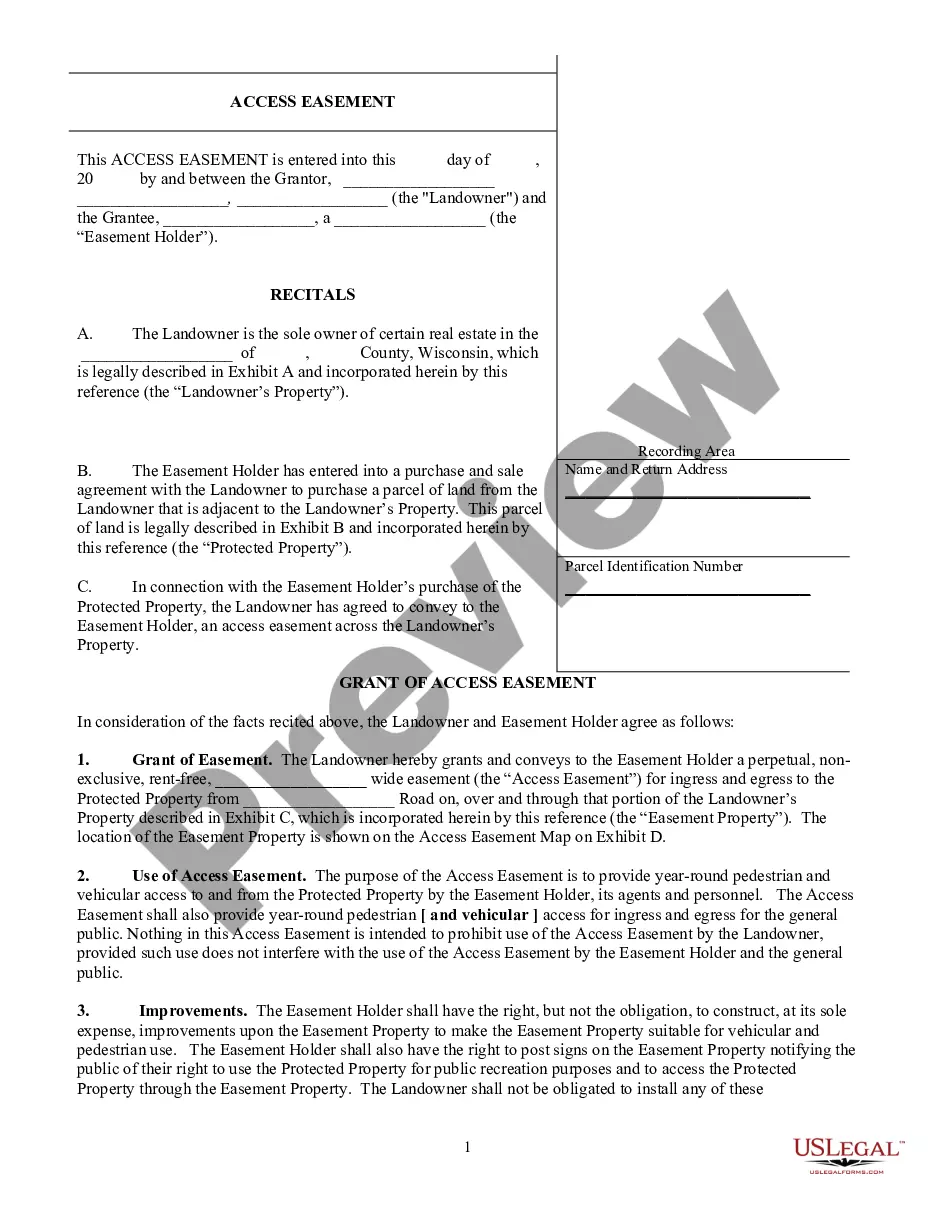
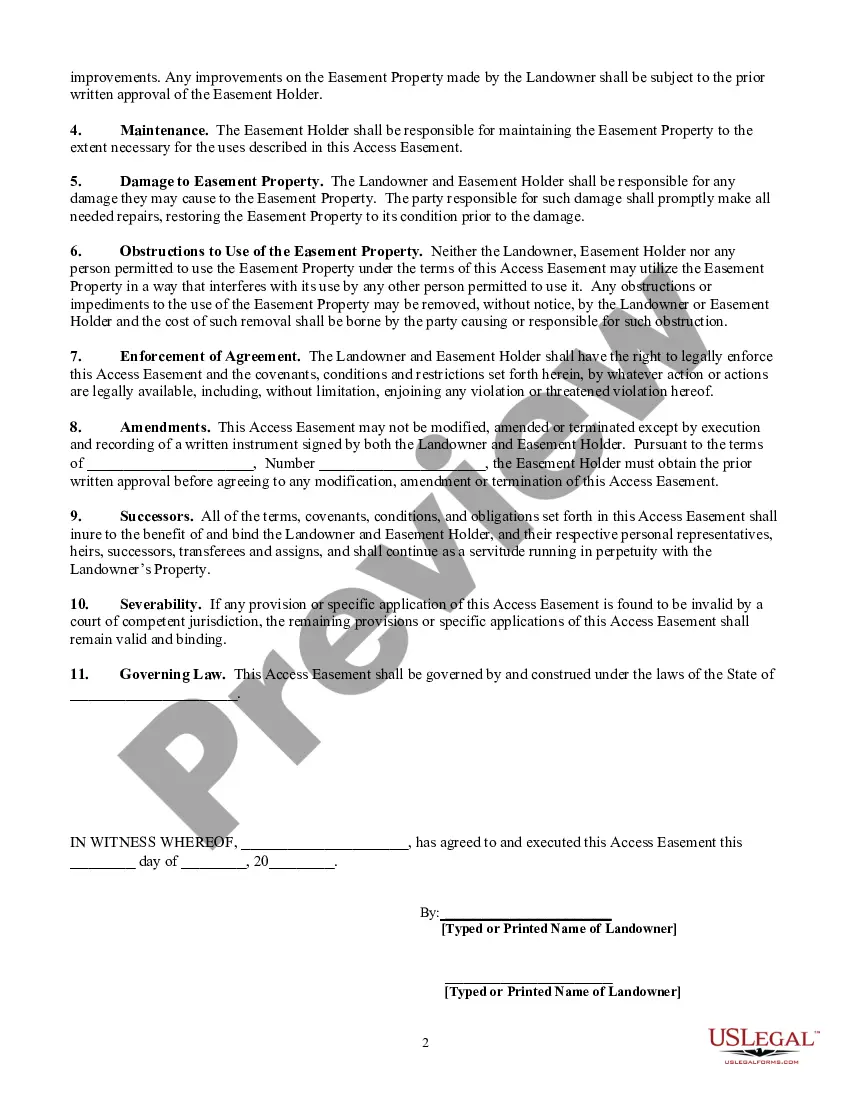
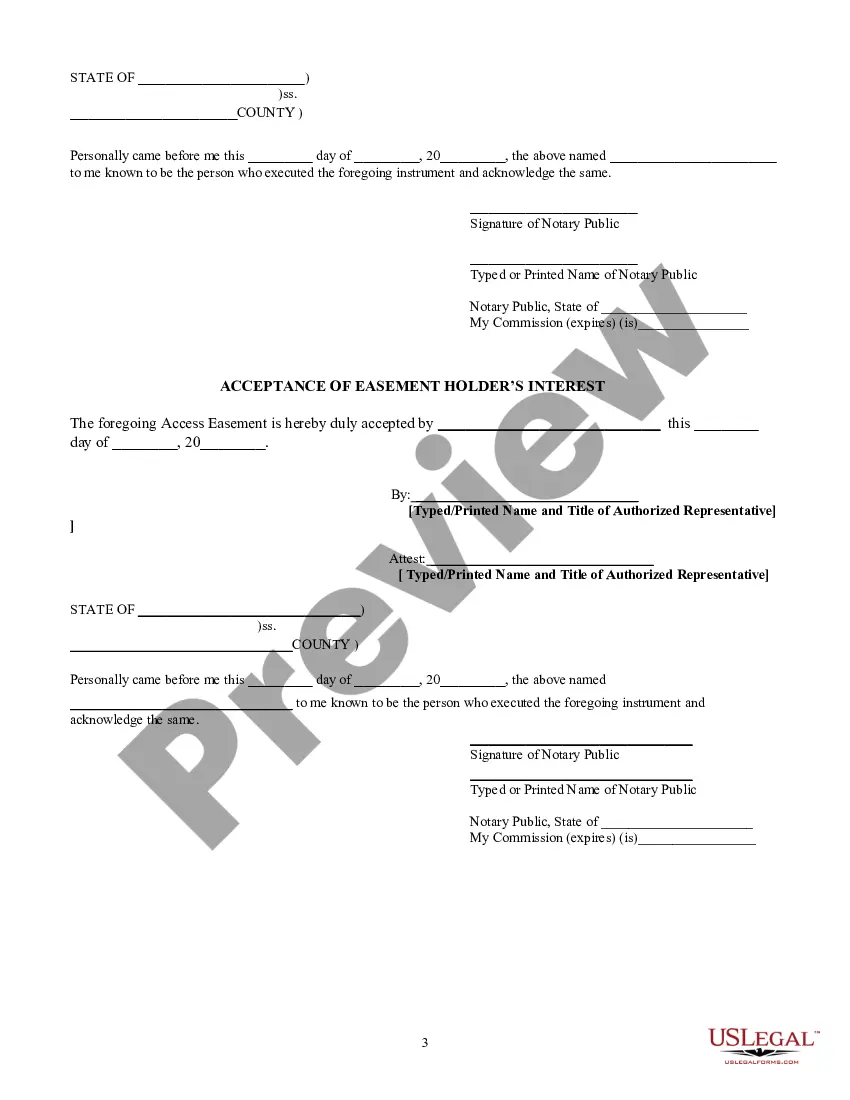
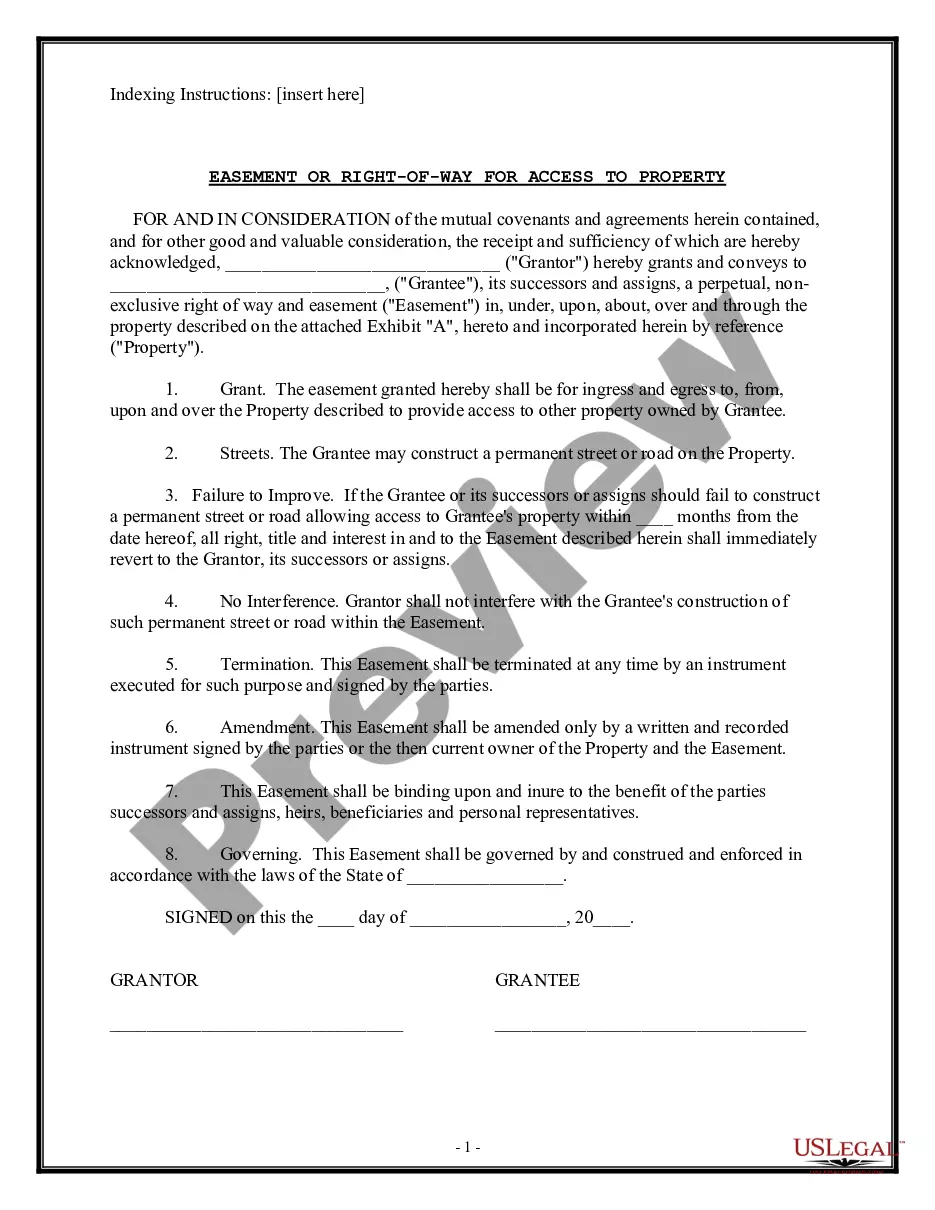
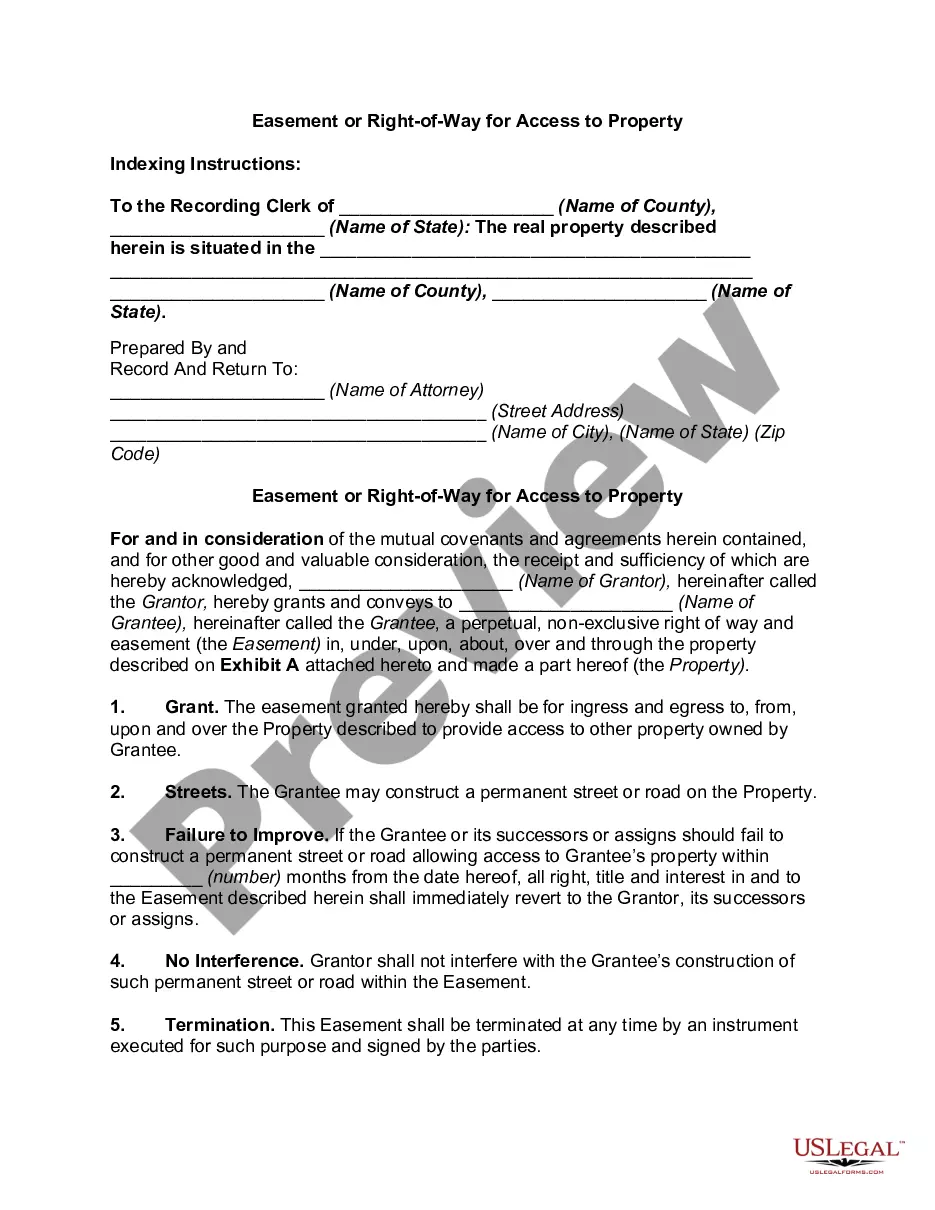
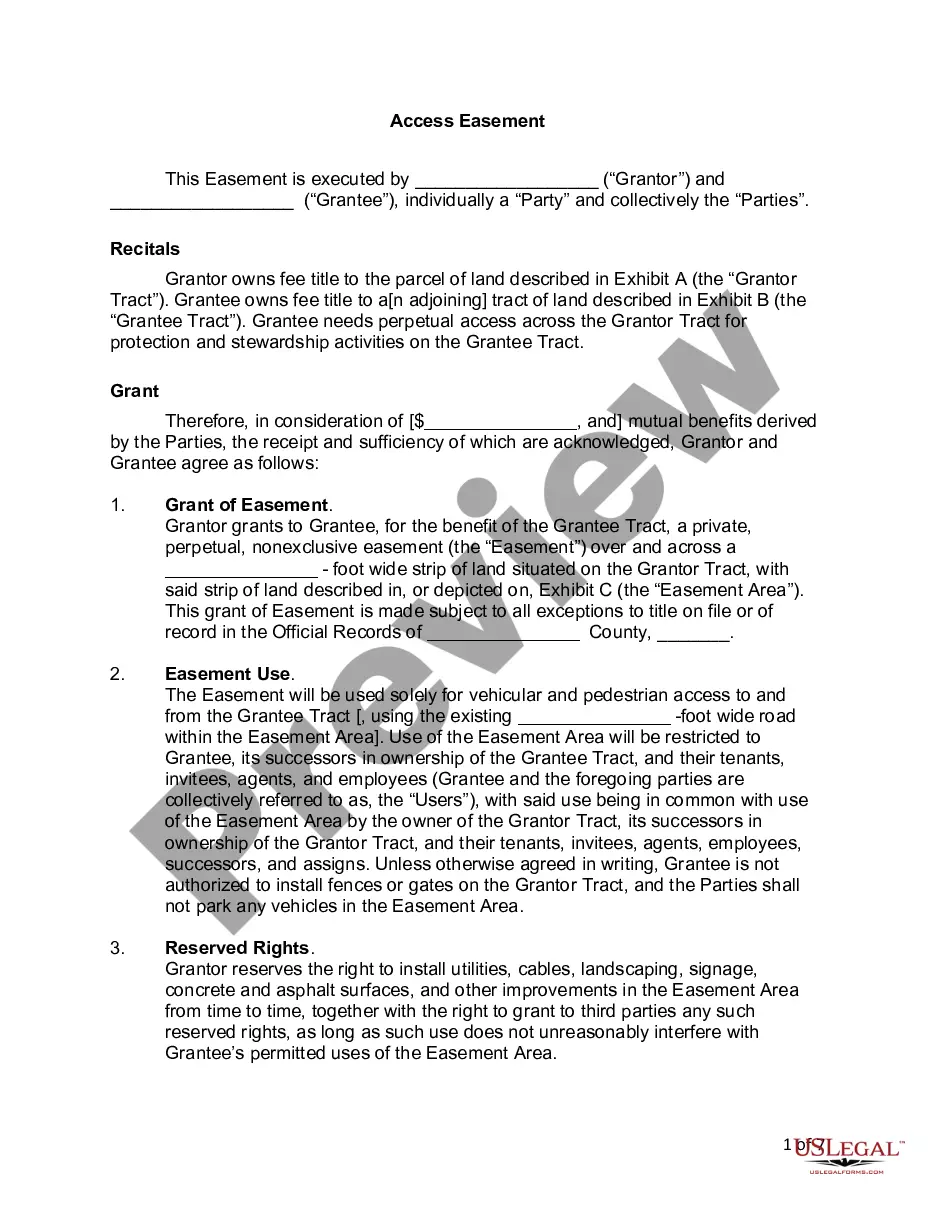
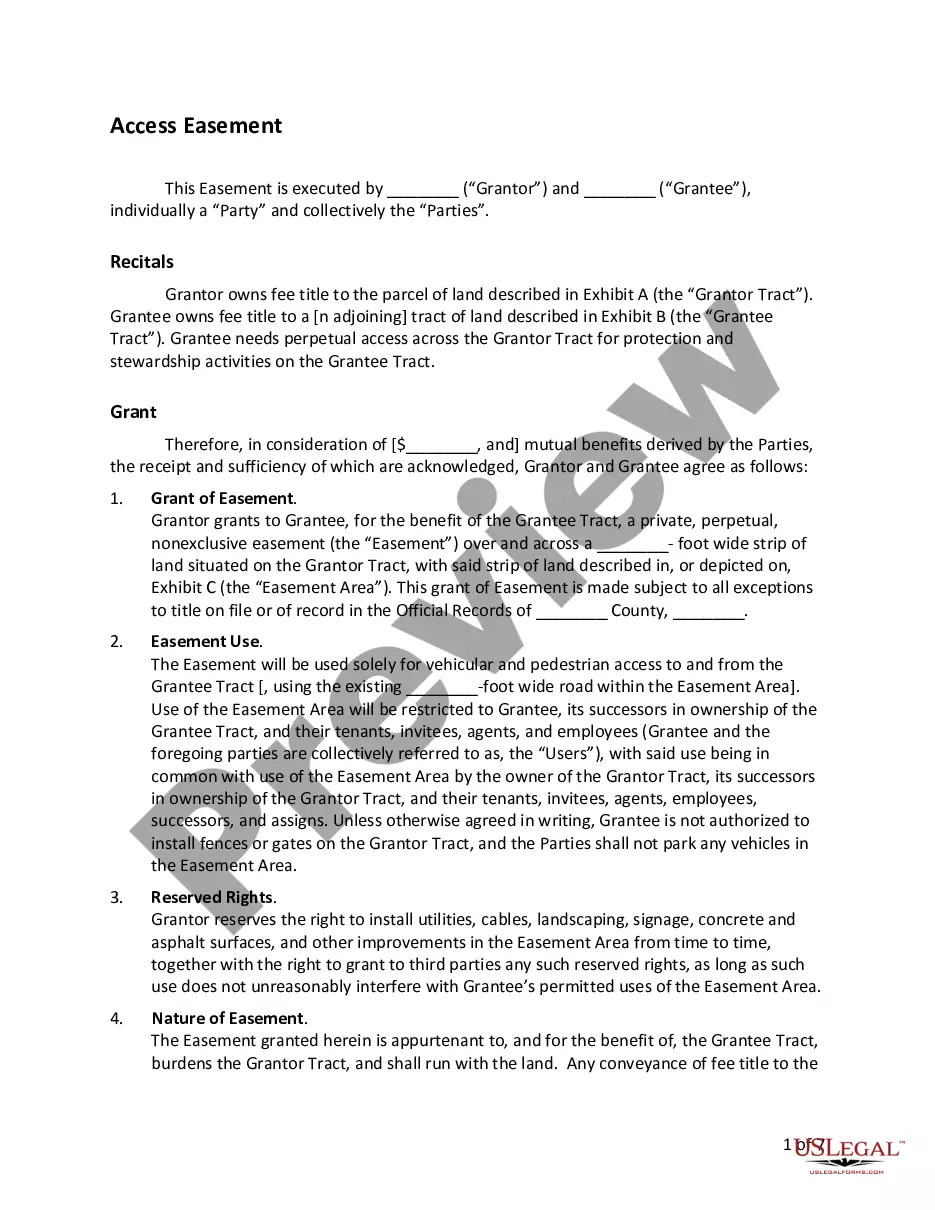
This form is an agreement to convey the use or benefit of a tract of land to another party for a specific limited purpose without giving the party the right to possess, take from, improve or sell the tract of land.
Yes, an access easement can be revoked under certain circumstances, like if the original terms are broken or if the need for it no longer exists. It's a bit like a library book — if you break the rules, you might just lose the privilege.
Absolutely! There are various types of access easements, such as public, private, and commercial. It's sort of like choosing between a main highway, a side street, or a private drive — each one serves a different purpose.
If the property owner says no, you might have to explore other options, like negotiating a different route or even seeking legal advice. Sometimes you have to think outside the box to find a solution.
Yes, an access easement can be permanent. Once it's granted, it sticks around, much like a family heirloom that gets passed down through generations.
To get an access easement, you typically need to approach the property owner and see if they're willing to grant you permission. It's like asking a friend if you can borrow their bike — a friendly conversation can go a long way.
You might need an access easement if your property is landlocked, meaning there's no direct way for you to get to the road without crossing someone else's land. It's your way of having a backdoor access without stepping on toes.
An access easement is like a permission slip that allows someone to cross someone else's property to get to their own. Think of it as a walking path through a neighbor's yard to reach your front door.