Broward Florida Employee Benefit Plan Workform
Description
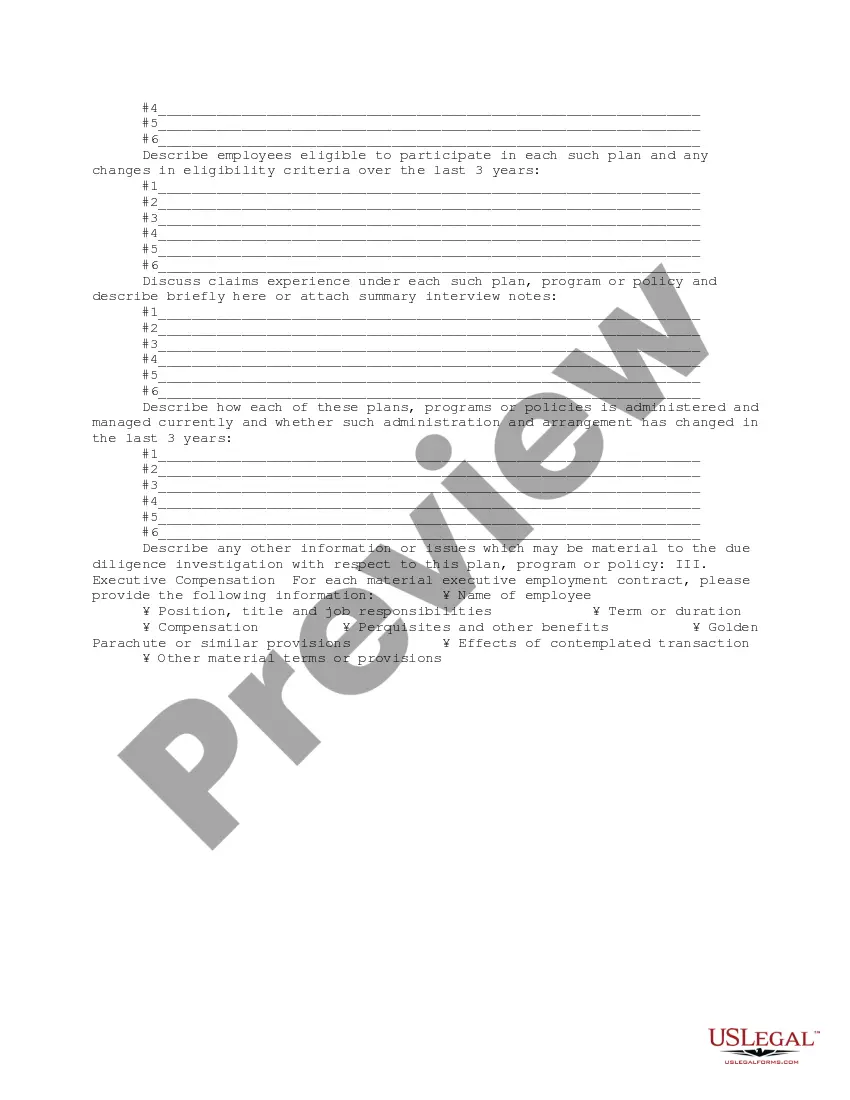






How to fill out Employee Benefit Plan Workform?
Drafting legal paperwork can be challenging. Additionally, if you opt to hire a lawyer to create a business agreement, documents for property transfer, pre-nuptial contract, divorce documentation, or the Broward Employee Benefit Plan Workform, it could be quite expensive.
So, what is the most effective method to save both time and money while producing legitimate forms that are fully compliant with your state and local laws? US Legal Forms provides an excellent solution, whether you’re looking for templates for personal or business requirements.
- US Legal Forms boasts the largest online repository of state-specific legal documents, offering users access to up-to-date and professionally verified forms for any situation all in one location.
- Consequently, if you require the latest version of the Broward Employee Benefit Plan Workform, you can easily find it on our platform.
- Acquiring the documents takes minimal time.
- Those who already have an account should ensure their subscription is active, Log In, and select the template using the Download button.
- If you haven't set up an account yet, here’s how to obtain the Broward Employee Benefit Plan Workform.
- Browse the webpage and confirm there’s a template for your locality.
- Review the form description and use the Preview option, if it exists, to ensure it's the form you require.
- Don't stress if the form does not meet your criteria - search for the appropriate one in the header.
- Select Buy Now once you identify the necessary template and choose the most appropriate subscription.
- Log in or create an account to buy your subscription.
- Make a payment using a credit card or via PayPal.
- Choose the file format for your Broward Employee Benefit Plan Workform and save it.
- When finished, you can print it out and complete it on paper or upload the templates to an online editor for quicker and more convenient filling.
- US Legal Forms allows you to utilize all documents purchased multiple times - you can locate your templates in the My documents section of your profile.
- Give it a go now!
Form popularity
FAQ
Employers are required to pay workers what they are owed and provide rest and meal breaks. Not doing so is called wage theft. Employers must: 1 Pay at least the minimum wage.
Employee welfare plans or welfare benefit plans These plans provide medical, health, and hospitalization benefits or income in the event of sickness, accident, or death. participants and/or employers to make tax-deferred contributions, that plan participants can access later (e.g., after they are 59½ years old).
An employer-sponsored plan is a type of benefit plan offered to employees at no or relatively low cost. These plans, such as a 401(k) or HSA, cover an array of services including retirement savings and healthcare. Employees who enroll in such programs capitalize on the benefit of receiving discounted services.
Employers offer employee benefits to attract new employees, retain their workforce, and boost productivity. A typical benefits package includes health insurance, retirement planning, and paid time off.
A 401(k) and a pension are both employer-sponsored retirement plans. The most significant difference between the two is that a 401(k) is a defined-contribution plan, and a pension is a defined-benefit plan.
Employers are not required to provide employee benefit plans. However, if an employer does decide to provide them, the rules against discrimination under the ESA must be complied with.
Employee benefit plans work as an effective strategy to retain talented employees within the organization. Employee benefits are not based on the specific performance of the employee. These benefits are given to employees for boosting their interest in the work and make their work even more productive.
Social Security and Medicare are benefits that are funded in part by the employer and the employee. Both entities fund Social Security and Medicare benefits through taxes prescribed by the Federal Insurance Contributions Act (FICA).
A defined benefit plan, more commonly known as a pension plan, offers guaranteed retirement benefits for employees. Defined benefit plans are largely funded by employers, with retirement payouts based on a set formula that considers an employee's salary, age and tenure with the company.
Benefits are any perks offered to employees in addition to salary. The most common benefits are medical, disability, and life insurance; retirement benefits; paid time off; and fringe benefits. Benefits can be quite valuable.